Oct 02 2026
Muso Soseki – At the Nachi Kan’non Hall
At the Nachi Kan’non Hall
by Muso Soseki
English version by W. S. Merwin
The Milky Way
pours waterfalls
over this human world
the cold
rushing tumbling sounds
echo through the blue sky
Veneration
to the Great Compassionate
Avilokiteshvara
How lucky I am
to have no trouble
hearing
 — from Sun at Midnight: Muso Soseki – Poems and Sermons, Translated by W. S. Merwin / Translated by Soiku Shigematsu
/ Image by Evgeni Tcherkasski /

I love that opening phase–
The Milky Way
pours waterfalls
over this human world
I imagine stepping outside after a long day, standing beneath the night sky, and letting the waters of the universe wash over me. It’s a cleansing image, purifying, healing to the wearied spirit.
the cold
rushing tumbling sounds
echo through the blue sky
Soseki emphasizes sound, the waterfall-like sound of the night. Try it sometime to remind yourself. Late at night, step outside, or just open the window and lean your head out. Close your eyes. Listen. Do you hear it? In the absence of all other noise, with no movement around and with thoughts at rest… a soft sound is heard. At first it might be like the quiet chirping of crickets in the night, the hum of beesong, or the flowing of gentle stream. It is heard as a random, soothing “white noise” that seems to emanate from the base of the skull.
As we quiet more, the sound grows into a rushing sound, like a waterfall. Sometimes this sound resolves into a clear pitch that can resemble the pure note of a flute or the ringing of a bell.
First it is heard and, finally, felt throughout the body.
This sound is Krishna’s flute calling his devotees to him. It is the ringing of the bells of paradise. It is Soseki’s heavenly waterfall.
This sound signals the beginning of deep meditation. The more we sit with this sound, the more the awareness expands and the heart naturally opens with inherent compassion, as the universal waters pour over us, refreshing us, revitalizing, awakening.
How lucky I am
to have no trouble
hearing
Recommended Books: Muso Soseki
|
 |
 |
||
| Sun at Midnight: Muso Soseki – Poems and Sermons | East Window: Poems from Asia | Roaring Stream: A New Zen Reader | ||
|
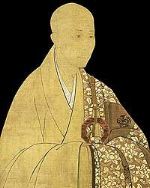
Muso Soseki
Japan (1275 – 1351) Timeline |
Musō Soseki was a Japanese Zen master of the fourteenth century, and today he is best remembered for his gardens. The gardens of Saihō-ji, the “Moss Temple,” and of Tenryū-ji in Kyoto still draw visitors from all over the world. Behind the art of gardening was a quiet man, a monk who longed for solitude, wrote poems of mountain stillness, but who kept being called back into the world to work for peace and reconciliation in a time of war.
He was born in 1275 in Ise Province into a family of minor nobility. His mother died when he was about four, and as a young boy he was placed in a temple, where he studied the esoteric teachings of the Shingon and Tendai schools. He was a gifted student, and at eighteen he was formally ordained at Tōdai-ji in Nara.
His spiritual journey began through grief, however. A teacher he respected died, and for all the teacher’s learning, the story goes, he did not die in peace. That left the young monk shaken, wondering what scripture study could really accomplish. He went into a hundred-day retreat, and near its end he dreamed that he visited two temples in China, Sozan and Sekitō, where a monk handed him a portrait of Bodhidharma, the founder of Zen. Inspired by the dream he took the name Soseki, combining the names from those two temples, and Musō meaning “Dream Window.”
His Zen training wasn’t easy. He first went to Yishan Yining, a Chinese master teaching in Kamakura. When Musō pressed him for instruction, the old master is said to have answered, “In our school there are no words, and no teaching to give.” Musō spent the next several years moving between teachers and remote hermitages, sitting alone in the mountains. In 1305, at a hermitage in Hitachi, he sat in meditation late into the night. When he finally went to lie down, he leaned toward a wall that he thought was there, but wasn’t. As he fell, something opened. He laughed out loud. In the poem he wrote afterward, he said he had spent years digging in the earth for the blue of the sky, and then, tripping in the dark, found that the sky had been there all along. His teacher Kōhō Kennichi confirmed the awakening.
He would happily have remained an unknown monk, but students and patrons found him. Japan at the time was sliding into civil war, and the powerful wanted him close. Emperor Go-Daigo made him abbot of Nanzen-ji in Kyoto. When Go-Daigo was overthrown, the new shogun, Ashikaga Takauji, became Musō’s student too. Musō used his influence to encourage peace in the realm. He persuaded Takauji to build a temple and a pagoda in every province for the dead of both sides of the war, and to found Tenryū-ji in memory of the very emperor Takauji had driven from power. Over his life, seven emperors honored him as their teacher.
Musō Soseki elevated the art of gardening to a high level and used it as an expression of his teaching. A pond, a slope of rocks, a dry waterfall made of stones were places for practice, where the mind could recognize its own nature in the landscape. He wrote that anyone who separates the garden from the practice hasn’t yet found the true Way.
His poems, written mostly in classical Chinese as Japanese Zen monks did then, are full of mountains, moonlight, wind in the pines, and the hermit’s hut. They are spacious, unhurried poems, often with a quiet smile in them, and they keep returning to the discovery of that night of stumbling into enlightenment: what we are searching for has never been anywhere else than right here.
He died in 1351. His many students carried his line forward, and the culture of the great Zen monasteries he helped shape, with their poetry, gardens, and ink painting, became one of the lasting treasures of Japan.
Poems made me think of david wagoner’s silence of the stars
Thank you
A wonderful poem, full of clear light. What a beautiful man.
Thanks Ivan. I’m curious about the translator too and will look him up. 🙏
Yes, definitely look up W S Merwin too. A powerful poet in his own right.