 |
Edmond Bordeaux Szekely Hungary/France/Mexico (1905 - 1979) Timeline Christian Poems by Edmond Bordeaux Szekely Books |
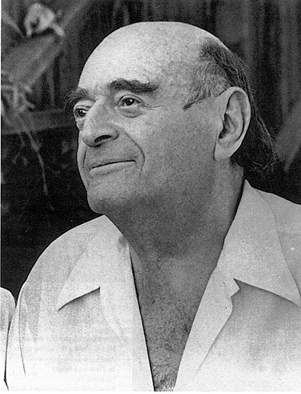
He was born in Hungary in the early 1900s, the grandson of Sandor Szekely, a respected poet and Unitarian Bishop of Cluj. Edmond Bordeaux Szekely became a linguist and philologist, with degrees from the University of Paris, and also from Vienna and Leipzig.
As a young adult, he was friends with such well-known European thinkers as Aldous Huxley and Romain Rolland.
Szekely became an immediately controversial figure when he published The Essene Gospel of Peace in the 1920s, and a revised version in the 1930s. It purports to be a previously unknown gospel of Jesus, in which Jesus teaches vegetarianism, natural health practices, an understanding of the natural world as an expression of the feminine aspect of God, and a unique view of angels as the embodiment of divine and natural forces. Szekely claimed that he discovered this scripture while doing research in the Vatican's "secret archives" -- which the Vatican denies exist.
Szekely later established a natural health retreat in Mexico following the health practices outlined in The Essene Gospel of Peace. He also published in later years further short scriptures and psalms which he asserts were part of his original discovery, publishing them as Books 2 - 4 of The Essene Gospel of Peace.
Critics and scholars generally agree that Szekely's Essene Gospel of Peace is not a genuine historical document, and instead reflects the natural health and back-to-nature spiritualities that became prominent in Europe following World War I, the period when the first of Szekely's books was released. But there remain to this day various Neo-Essene groups inspired by the lifestyle and spirituality of the The Essene Gospel of Peace.
This controversy parallels several other debates over the true origins of other esoteric writings. A similar question arises, for example, with the origin of the Zohar, one of the central texts of Jewish Kabbalah, which was presented in the late 1200s by the Spanish Jewish mystic Moses de Leon as a work originating in the third century CE, but which most scholars believe to have been written by Moses de Leon himself. Attribution to a more ancient authority is a fairly common practice in sacred writings throughout history. One can find this process in the Bible itself. Though in modern times it is much less acceptable for academic reasons. That does not necessarily diminish the spiritual insight and inspiration that can be found in such works.
In the Poetry Chaikhana, I have chosen to list the poetry and psalm excerpts from The Essene Gospels as being "by" Edmond Bordeaux Szekely, rather than "translated by" him.
Poems by Edmond Bordeaux Szekely
- God Speaks to Man
- Do not wait for death (from The Communions)
- I will praise thy works (from The Communions)
Recommended Books: Edmond Bordeaux Szekely