Archive for September, 2026

Sep 25 2026

Kabir – The Drop and the Sea

Published by under Poetry

The Drop and the Sea
by Kabir

English version by Andrew Harvey

I went looking for Him
And lost myself;
The drop merged with the Sea —
Who can find it now?

Looking and looking for Him
I lost myself;
The Sea merged with the drop —
Who can find it now?

— from Perfume of the Desert: Inspirations from Sufi Wisdom, by Andrew Harvey / Eryk Hanut


/ Image by Mark Harpur /

The drop and the sea — this is a classic spiritual metaphor used by many teachers in several traditions. We can think of the Sea as a metaphor for God, the vast reality which includes each of us as individual drops.

Kabir says, “I went looking for Him…” The drop went looking for the Sea. There is an absurdity in that. How can a drop go looking for the Sea? The drop is already IN the Sea, part of it. In discovering the Sea, the drop recognizes that the Sea is water, just as the drop itself is water. Water within water. Finally recognizing this, how can the drop maintain the illusion of separation? There is no dividing line between water and water — no skin, no barrier, no separation. The drop loses its false sense of being a drop. It loses itself, it loses its ‘dropness,’ and merges with the immense continuity of the Sea.

At that point there is no separate self, no one to go seeking. “Who can find it now?” There is only the Sea and no one to go looking for it.


Recommended Books: Kabir

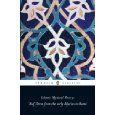
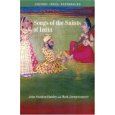
The Longing in Between: Sacred Poetry from Around the World (A Poetry Chaikhana Anthology) The Enlightened Heart: An Anthology of Sacred Poetry Islamic Mystical Poetry: Sufi Verse from the Early Mystics to Rumi Perfume of the Desert: Inspirations from Sufi Wisdom Songs of the Saints of India
More Books >>


Kabir, Kabir poetry, Muslim / Sufi poetry Kabir

India (15th Century) Timeline
Muslim / Sufi
Yoga / Hindu

Continue Reading »

3 responses so far

Sep 25 2026

break down the walls

Brick by brick
break down the walls
that divide you
from the open Mystery.

No responses yet

Sep 18 2026

Rabindranath Tagore – Listen, can you hear it?

Published by under Poetry

Listen, can you hear it? (from The Lover of God)
by Rabindranath Tagore

English version by Tony Stewart and Chase Twitchell

Listen, can you hear it?
His bamboo flute speaks
the pure language of love.
The moon enlightens the trees,
the path, the sinuous Yamuna.
Oblivious of the jasmine’s scent
I stagger around,
disheveled heart bereft of modesty,
eyes wet with nerves and delight.
Tell me, dear friend, say it aloud:
is he not my own Dark Lord Syama?
Is it not my name his flute pours
into the empty evening?

For eons I longed for God,
I yearned to know him.
That’s why he has come to me now,
deep emerald Lord of my breath.
O Syama, whenever your faraway flute thrills
through the dark, I say your name,
only your name, and will my body to dissolve
in the luminous Yamuna.

Go to her, Lord, go now.
What’s stopping you?
The earth drowns in sleep.
Let’s go. I’ll walk with you.

— from The Lover of God, by Rabindranath Tagore / Translated by Tony Stewart


/ Image by Rajesh Nagulakond /

There is a fascinating story behind this poem and the other poems of Tagore’s The Lover of God… In the late 19th century, a respected Bengali journal published a newly discovered collection poems by a previously unknown 17th century poet, Bhanusimha, or Sun Lion. The critics celebrated these newly unearthed bhakti masterpieces.

The problem was that Bhanusimha never actually existed. Bhanisimha was the pseudonym used by a brilliant 14-year-old boy — the young Rabindranath Tagore.

He of course matured into one of the greatest poets of modern India.

Tagore continued to edit and refine these poems over his lifetime, leaving us with a collection of modern bhakti masterpieces.

Just a few notes about this selection:

As with many bhakti poems, this is, on the surface, a poem of love and longing. Radha pines for her beloved, Krishna. But these are usually understood to reflect deeper truths. It’s always fascinating the response I notice when I recite a bhakti poem aloud — with emotion, with passion, but also with a sense of the deep spiritual longing that imbues the phrases. It evokes a direct, intimate form of worship and connection to the Divine.

Radha (the poem’s speaker) is the soul, the lover of God, the spiritual seeker. Krishna (Syama) is God, the Beloved.

Krishna plays a flute, an enchanting melody that calls all souls to himself. The sound of his flute is the hum that underlies all creation, the soft sound heard in the silence of meditation.

His beauty is often compared with the moon. This moon is also the luminescence of enlightenment.

The Yamuna is one of the great rivers of India, feeding into the mighty Ganges, but she is also a goddess who fell in love with Krishna. So the reference to the sinuous Yamuna is meant to evoke both an erotic femininity and also emphasize that love for Krishna. To dissolve in the Yamuna is to disappear into eternal love for God/Krishna.

The final verse switches from Radha’s voice to the poet’s, encouraging Krishna to respond to the longing of the soul. Something quite playful in that…

Go to her, Lord, go now.
What’s stopping you?
The earth drowns in sleep.
Let’s go. I’ll walk with you.


Recommended Books: Rabindranath Tagore

The Longing in Between: Sacred Poetry from Around the World (A Poetry Chaikhana Anthology) Gitanjali The Lover of God The Fugitive Lover’s Gift and Crossing
More Books >>


Rabindranath Tagore, Rabindranath Tagore poetry, Yoga / Hindu poetry Rabindranath Tagore

India (1861 – 1941) Timeline
Yoga / Hindu

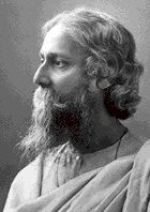
Rabindranath Tagore wrote the national anthems of two countries, founded a university, and in 1913 became the first non-European to receive the Nobel Prize for Literature. It is easy to let all of that stand in front of the poems. But the work readers actually love him for — the Gitanjali songs above all — came out of something much quieter: a dawn on a Calcutta veranda when he was twenty-one, when the world briefly came unveiled, and then a lifetime of learning how to live in the light of what he had seen. He spent that life refusing to keep God in a temple. He looked instead in the river, in the human face, in the man breaking stones by the roadside.

Continue Reading »

No responses yet

Sep 18 2026

stillness

Stillness is
the real praise, and prayer, and presence.

No responses yet

Sep 03 2026

Wendell Berry – A Spiritual Journey

Published by under Poetry

A Spiritual Journey
by Wendell Berry

And the world cannot be discovered by a journey of miles,
no matter how long,
but only by a spiritual journey,
a journey of one inch,
very arduous and humbling and joyful,
by which we arrive at the ground at our feet,
and learn to be at home.

— from The Collected Poems of Wendell Berry, 1957-1982, by Wendell Berry


/ Image by LittleLottexo /

The poet Wendell Berry passed away earlier this week, and I’ve been returning to his poems all week, his quiet voice speaking to me as I go about my work day and find silent moments amidst my activity.

Several of his poems have become part of my interior space. The Peace of Wild Things, The Real Work, How to Be a Poet, The Wild Geese, his Sabbath poems. But I chose to feature this one today. It’s short. It feels almost like a Zen koan. Yet it is speaking to me. I hope it says something to you too.

—

Few writers these days are truly willing to be still and to befriend the world of growing things outside the city limits. In the modern world, that’s practically blasphemy. Writers like that get labeled “poet” and “crank” so they can be safely ignored — unless their writing is unavoidably good. Unfortunately for the hyperactive world, Wendell Berry’s poetry is filled with the presence and heart secretly craved by us all, making his words difficult to ignore.

And the world cannot be discovered by a journey of miles,
no matter how long…


Recommended Books: Wendell Berry

The Collected Poems of Wendell Berry, 1957-1982 Given: Poems Selected Poems of Wendell Berry A Timbered Choir: The Sabbath Poems 1979-1997 The Mad Farmer Poems
More Books >>


Wendell Berry, Wendell Berry poetry, Secular or Eclectic poetry Wendell Berry

US (1934 – 2026) Timeline
Secular or Eclectic

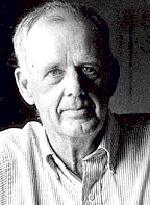
Wendell Berry spent nearly sixty years on a hillside farm above the Kentucky River, writing poems, novels, and essays that circled back again and again to a single conviction: the world is holy, it has been given to us rather than owned by us, and how we treat a field, a creek, or a neighbor is a spiritual act. He became one of America’s great dissenting voices — a patient, unyielding critic of industrial agriculture and extraction. But beneath the argument was something quieter: a lifelong practice of attention and reverence, carried out mostly on foot, in the woods, on Sunday mornings. He died at home in Port Royal, Kentucky, on August 31, 2026.

—

Life

He was born in Louisville on August 5, 1934, and raised in Henry County, Kentucky, on land his family had farmed for generations on both sides. That inheritance became the whole subject of his life’s work.

He was a gifted young writer. He took degrees at the University of Kentucky, went to Stanford on a Wallace Stegner Fellowship in 1958 (Ken Kesey, Larry McMurtry, and Ernest Gaines were among his classmates), traveled to Italy and France on a Guggenheim, and taught at New York University in the early sixties. He was on the path a promising American writer was supposed to take.

Then, on the Fourth of July in 1965, Continue Reading »

No responses yet

Sep 03 2026

A broken heart

A broken heart is a healing thing.
It makes us whole,
it connects us,
it reveals the larger sense of who we are,
and it highlights the beauty of our love in the world.

No responses yet