Archive for the 'Poetry' Category

Feb 22 2017

Angelus Silesius – So many droplets in the sea

Published by under Poetry

So many droplets in the sea, in bread so many grains
by Angelus Silesius

English version by Gabriel Rosenstock

So many droplets in the sea, in bread so many grains;
So too of our multiplicity, nothing but God remains.

— from Haiku: The Gentle Art of Disappearing, by Gabriel Rosenstock


/ Image by alexandre-deschaumes /

Short poem, short commentary: Many <-> One


Recommended Books: Angelus Silesius

The Longing in Between: Sacred Poetry from Around the World (A Poetry Chaikhana Anthology) Poetry for the Spirit: Poems of Universal Wisdom and Beauty The Enlightened Heart: An Anthology of Sacred Poetry German Mystical Writings: Hildegard of Bingen, Meister Eckhart, Jacob Boehme, and others Haiku: The Gentle Art of Disappearing
More Books >>


Angelus Silesius, Angelus Silesius poetry, Christian poetry Angelus Silesius

Poland/Germany (1624 – 1677) Timeline
Christian : Catholic

Continue Reading »

3 responses so far

Feb 17 2017

Hakuin – Hakuin’s Song of Zazen

Published by under Poetry

Hakuin’s Song of Zazen
by Hakuin

English version by Daisetz Teitaro Suzuki

All beings are primarily Buddhas.
It is like water and ice:
There is no ice apart from water;
There are no Buddhas apart from beings.

Not knowing how close the truth is to them,
Beings seek for it afar — what a pity!
They are like those who, being in the midst of water,
Cry out for water, feeling thirst.

They are like the son of the rich man,
Who, wandering away from his father,
Goes astray amongst the poor.
It is all due to their ignorance
That beings transmigrate in the darkness
Of the Six Paths of existence.

When they wander from darkness to darkness,
How can they ever be free from birth-and-death?

As for the Dhyana practice as taught in the Mahayana,
No amount of praise can exhaust its merits.
The Six Paramitas–beginning with the Giving, Observing the Precepts,
And other good deeds, variously enumerated,
Such as Nembutsu, Repentance, Moral Training, and so on —
All are finally reducible to the practice of Dhyana.

The merit of Dhyana practice, even during a single sitting,
Erases the countless sins accumulated in the past.
Where then are the Evil Paths to misguide us?
The Pure Land cannot be far away.

Those who, for once, listening to the Dharma
In all humility,
Praise it and faithfully follow it,
Will be endowed with innumerable merits.

But how much more so when you turn your eyes within yourselves
And have a glimpse into your self-nature!
You find that the self-nature is no-nature –
The truth permitting no idle sophistry.
For you, then, open the gate leading to the oneness of cause and effect;
Before you, then, lies a straight road of non-duality and non-trinity.

When you understand that form is the form of the formless,
Your coming-and-going takes place nowhere else but where you are.
When you understand that thought is the thought of the thought-less.
Your singing-and-dancing is no other than the voice of the Dharma.
How boundless is the sky of Samadhi!
How refreshingly bright is the moon of the Fourfold Wisdom!
Being so is there anything you lack?
As the Absolute presents itself before you
The place where you stand is the Land of the Lotus,
And your person — the body of the Buddha.

— from Essays in Zen Buddhism, First Series, by Daisetz Teitaro Suzuki


/ Image by Ed Schipul /

After Wednesday’s epic rambling Zen-Beat “scripture”-poem by Kerouac, I thought it might fit to follow up today with a more traditional, highly revered poem by the great Zen master Hakuin Zenji.

You will see that several of the ideas Kerouac was exploring are expressed here, as well, though in a much more contained and elegant manner. The essence of the two poems might be summed up as everything is already That, or, as Hakuin starts us off–

All beings are primarily Buddhas.

It is simply ignorance about one’s own nature that keeps us blind to our inherent enlightenment.

Not knowing how close the truth is to them,
Beings seek for it afar — what a pity!

It is not that we acquire enlightenment. Anything that can be gained, that has a beginning, necessarily has an end and is, therefore, not lasting. It is not that we are unenlightened and, at some point, become enlightened. The point here is that we — and all beings — are enlightened all along. What is necessary is not to become enlightened, but to stop clinging to the idea that we are not enlightened.

They are like those who, being in the midst of water,
Cry out for water, feeling thirst.

We can see this insight as absurd, even offensive to all of our struggles — or it can be the key that brings us immediately into the awareness of our own enlightened nature, right now.

A few terms that might help to appreciate this poem more fully:

Dhyana – Meditation. Read this not simply as the act of sitting still, but as the inner state of deeply collected awareness.

Dharma – Can be translated as the Way, the Path, the Law, Righteousness. We might think of it as the directional flow of universal consciousness and how we, through our focus and actions, enter into that flow.

Samadhi – The blissful union of the individual awareness with the Eternal, often considered the mark of enlightenment.

The Six Paramitas – These are six qualities or “perfections” that naturally appear along the spiritual path: generosity, morality, patience, joyful action, concentration, and wisdom.

Nembutsu – The practice of chanting the names of the Buddha.

As the Absolute presents itself before you
The place where you stand is the Land of the Lotus,
And your person — the body of the Buddha.


Recommended Books: Hakuin

Zen Poetry: Let the Spring Breeze Enter Essential Teachings of Zen Master Hakuin Wild Ivy: The Spiritual Autobiography of Zen Master Hakuin Secrets of the Blue Cliff Record: Zen Comments by Hakuin and Tenkei The Zen Koan


Hakuin, Hakuin poetry, Buddhist poetry Hakuin

Japan (1686 – 1768) Timeline
Buddhist : Zen / Chan

Continue Reading »

2 responses so far

Feb 15 2017

Jack Kerouac – The Scripture of the Golden Eternity

Published by under Poetry

The Scripture of the Golden Eternity
by Jack Kerouac

1
Did I create that sky? Yes, for, if it was anything other than a conception in my mind I wouldnt have said “Sky”-That is why I am the golden eternity. There are not two of us here, reader and writer, but one, one golden eternity, One-Which-It-Is, That-Which- Everything-Is.

2
The awakened Buddha to show the way, the chosen Messiah to die in the degradation of sentience, is the golden eternity. One that is what is, the golden eternity, or, God, or, Tathagata-the name. The Named One. The human God. Sentient Godhood. Animate Divine. The Deified One. The Verified One. The Free One. The Liberator. The Still One. The settled One. The Established One. Golden Eternity. All is Well. The Empty One. The Ready One. The Quitter. The Sitter. The Justified One. The Happy One.

3
That sky, if it was anything other than an illusion of my mortal mind I wouldnt have said “that sky.” Thus I made that sky, I am the golden eternity. I am Mortal Golden Eternity.

4
I was awakened to show the way, chosen to die in the degradation of life, because I am Mortal Golden Eternity.

5
I am the golden eternity in mortal animate form.

6
Strictly speaking, there is no me, because all is emptiness. I am empty, I am non-existent. All is bliss.

7
This truth law has no more reality than the world.

8
You are the golden eternity because there is no me and no you, only one golden eternity.

9
The Realizer. Entertain no imaginations whatever, for the thing is a no-thing. Knowing this then is Human Godhood.

10
This world is the movie of what everything is, it is one movie, made of the same stuff throughout, belonging to nobody, which is what everything is.

11
If we were not all the golden eternity we wouldnt be here. Because we are here we cant help being pure. To tell man to be pure on account of the punishing angel that punishes the bad and the rewarding angel that rewards the good would be like telling the water “Be Wet”-Never the less, all things depend on supreme reality, which is already established as the record of Karma earned-fate.

12
God is not outside us but is just us, the living and the dead, the never-lived and never-died. That we should learn it only now, is supreme reality, it was written a long time ago in the archives of universal mind, it is already done, there’s no more to do.

13
This is the knowledge that sees the golden eternity in all things, which is us, you, me, and which is no longer us, you, me.

14
What name shall we give it which hath no name, the common eternal matter of the mind? If we were to call it essence, some might think it meant perfume, or gold, or honey. It is not even mind. It is not even discussible, groupable into words; it is not even endless, in fact it is not even mysterious or inscrutably inexplicable; it is what is; it is that; it is this. We could easily call the golden eternity “This.” But “what’s in a name?” asked Shakespeare. The golden eternity by another name would be as sweet. A Tathagata, a God, a Buddha by another name, an Allah, a Sri Krishna, a Coyote, a Brahma, a Mazda, a Messiah, an Amida, an Aremedeia, a Maitreya, a Palalakonuh, 1 2 3 4 5 6 7 8 would be as sweet. The golden eternity is X, the golden eternity is A, the golden eternity is /\, the golden eternity is O, the golden eternity is [ ], the golden eternity is t-h-e-g-o-l-d-e-n-e-t-e-r- n-i-t-y. In the beginning was the word; before the beginning, in the beginningless infinite neverendingness, was the essence. Both the word “god” and the essence of the word, are emptiness. The form of emptiness which is emptiness having taken the form of form, is what you see and hear and feel right now, and what you taste and smell and think as you read this. Wait awhile, close your eyes, let your breathing stop three seconds or so, listen to the inside silence in the womb of the world, let your hands and nerve-ends drop, re-recognize the bliss you forgot, the emptiness and essence and ecstasy of ever having been and ever to be the golden eternity. This is the lesson you forgot.

15
The lesson was taught long ago in the other world systems that have naturally changed into the empty and awake, and are here now smiling in our smile and scowling in our scowl. It is only like the golden eternity pretending to be smiling and scowling to itself; like a ripple on the smooth ocean of knowing. The fate of humanity is to vanish into the golden eternity, return pouring into its hands which are not hands. The navel shall receive, invert, and take back what’d issued forth; the ring of flesh shall close; the personalities of long dead heroes are blank dirt.

16
The point is we’re waiting, not how comfortable we are while waiting. Paleolithic man waited by caves for the realization of why he was there, and hunted; modern men wait in beautified homes and try to forget death and birth. We’re waiting for the realization that this is the golden eternity.

17
It came on time.

18
There is a blessedness surely to be believed, and that is that everything abides in eternal ecstasy, now and forever.

19
Mother Kali eats herself back. All things but come to go. All these holy forms, unmanifest, not even forms, truebodies of blank bright ecstasy, abiding in a trance, “in emptiness and silence’ as it is pointed out in the Diamond-cutter, asked to be only what they are: GLAD.

20
The secret God-grin in the trees and in the teapot, in ashes and fronds, fire and brick, flesh and mental human hope. All things, far from yearning to be re-united with God, had never left themselves and here they are, Dharmakaya, the body of the truth law, the universal Thisness.

21
“Beyond the reach of change and fear, beyond all praise and blame,” the Lankavatara Scripture knows to say, is he who is what he is in time and time-less-ness, in ego and in ego-less-ness, in self and in self-less-ness.

22
Stare deep into the world before you as if it were the void: innumerable holy ghosts, buddhies, and savior gods there hide, smiling. All the atoms emitting light inside wavehood, there is no personal separation of any of it. A hummingbird can come into a house and a hawk will not: so rest and be assured. While looking for the light, you may suddenly be devoured by the darkness and find the true light.

23
Things dont tire of going and coming. The flies end up with the delicate viands.

24
The cause of the world’s woe is birth, The cure of the world’s woe is a bent stick.

25
Though it is everything, strictly speaking there is no golden eternity because everything is nothing: there are no things and no goings and comings: for all is emptiness, and emptiness is these forms, emptiness is this one formhood.

26
All these selfnesses have already vanished. Einstein measured that this present universe is an expanding bubble, and you know what that means.

27
Discard such definite imaginations of phenomena as your own self, thou human being, thou’rt a numberless mass of sun-motes: each mote a shrine. The same as to your shyness of other selves, selfness as divided into infinite numbers of beings, or selfness as identified as one self existing eternally. Be obliging and noble, be generous with your time and help and possessions, and be kind, because the emptiness of this little place of flesh you carry around and call your soul, your entity, is the same emptiness in every direction of space unmeasurable emptiness, the same, one, and holy emptiness everywhere: why be selfy and unfree, Man God, in your dream? Wake up, thou’rt selfless and free. “Even and upright your mind abides nowhere,” states Hui Neng of China. We’re all in heaven now.

28
Roaring dreams take place in a perfectly silent mind. Now that we know this, throw the raft away.

29
Are you tightwad and are you mean, those are the true sins, and sin is only a conception of ours, due to long habit. Are you generous and are you kind, those are the true virtues, and they’re only conceptions. The golden eternity rests beyond sin and virtue, is attached to neither, is attached to nothing, is unattached, because the golden eternity is Alone. The mold has rills but it is one mold. The field has curves but it is one field. All things are different forms of the same thing. I call it the golden eternity-what do you call it, brother? for the blessing and merit of virtue, and the punishment and bad fate of sin, are alike just so many words.

30
Sociability is a big smile, and a big smile is nothing but teeth. Rest and be kind.

31
There’s no need to deny that evil thing called GOOGOO, which doesnt exist, just as there’s no need to deny that evil thing called Sex and Rebirth, which also doesn’t exist, as it is only a form of emptiness. The bead of semen comes from a long line of awakened natures that were your parent, a holy flow, a succession of saviors pouring from the womb of the dark void and back into it, fantastic magic imagination of the lightning, flash, plays, dreams, not even plays, dreams.

32
“The womb of exuberant fertility,” Ashvhaghosha called it, radiating forms out of its womb of exuberant emptiness. In emptiness there is no Why, no knowledge of Why, no ignorance of Why, no asking and no answering of Why, and no significance attached to this.

33
A disturbed and frightened man is like the golden eternity experimentally pretending at feeling the disturbed-and-frightened mood; a calm and joyous man, is like the golden eternity pretending at experimenting with that experience; a man experiencing his Sentient Being, is like the golden eternity pretending at trying that out too; a man who has no thoughts, is like the golden eternity pretending at being itself; because the emptiness of everything has no beginning and no end and at present is infinite.

34
“Love is all in all,” said Sainte Therese, choosing Love for her vocation and pouring out her happiness, from her garden by the gate, with a gentle smile, pouring roses on the earth, so that the beggar in the thunderbolt received of the endless offering of her dark void. Man goes a-beggaring into nothingness. “Ignorance is the father, Habit-Energy is the Mother.” Opposites are not the same for the same reason they are the same.

35
The words “atoms of dust” and “the great universes” are only words. The idea that they imply is only an idea. The belief that we live here in this existence, divided into various beings, passing food in and out of ourselves, and casting off husks of bodies one after another with no cessation and no definite or particular discrimination, is only an idea. The seat of our Immortal Intelligence can be seen in that beating light between the eyes the Wisdom Eye of the ancients: we know what we’re doing: we’re not disturbed: because we’re like the golden eternity pretending at playing the magic cardgame and making believe it’s real, it’s a big dream, a joyous ecstasy of words and ideas and flesh, an ethereal flower unfolding a folding back, a movie, an exuberant bunch of lines bounding emptiness, the womb of Avalokitesvara, a vast secret silence, springtime in the Void, happy young gods talking and drinking on a cloud. Our 32,000 chillicosms bear all the marks of excellence. Blind milky light fills our night; and the morning is crystal.

36
Give a gift to your brother, but there’s no gift to compare with the giving of assurance that he is the golden eternity. The true understanding of this would bring tears to your eyes. The other shore is right here, forgive and forget, protect and reassure. Your tormenters will be purified. Raise thy diamond hand. Have faith and wait. The course of your days is a river rumbling over your rocky back. You’re sitting at the bottom of the world with a head of iron. Religion is thy sad heart. You’re the golden eternity and it must be done by you. And means one thing: Nothing-Ever-Happened. This is the golden eternity.

37
When the Prince of the Kalinga severed the flesh from the limbs and body of Buddha, even then the Buddha was free from any such ideas as his own self, other self, living beings divided into many selves, or living beings united and identified into one eternal self. The golden eternity isnt “me.” Before you can know that you’re dreaming you’ll wake up, Atman. Had the Buddha, the Awakened One, cherished any of these imaginary judgments of and about things, he would have fallen into impatience and hatred in his suffering. Instead, like Jesus on the Cross he saw the light and died kind, loving all living things.

38
The world was spun out of a blade of grass: the world was spun out of a mind. Heaven was spun out of a blade of grass: heaven was spun out of a mind. Neither will do you much good, neither will do you much harm. The Oriental imperturbed, is the golden eternity.

39
He is called a Yogi, his is called a Priest, a Minister, a Brahmin, a Parson, a Chaplain, a Roshi, a Laoshih, a Master, a Patriarch, a Pope, a Spiritual Commissar, a Counselor, and Adviser, a Bodhisattva-Mahasattva, an Old Man, a Saint, a Shaman, a Leader, who thinks nothing of himself as separate from another self, not higher nor lower, no stages and no definite attainments, no mysterious stigmata or secret holyhood, no wild dark knowledge and no venerable authoritativeness, nay a giggling sage sweeping out of the kitchen with a broom. After supper, a silent smoke. Because there is no definite teaching: the world is undisciplined. Nature endlessly in every direction inward to your body and outward into space.

40
Meditate outdoors. The dark trees at night are not really the dark trees at night, it’s only the golden eternity.

41
A mosquito as big as Mount Everest is much bigger than you think: a horse’s hoof is more delicate than it looks. An altar consecrated to the golden eternity, filled with roses and lotuses and diamonds, is the cell of the humble prisoner, the cell so cold and dreary. Boethius kissed the Robe of the Mother Truth in a Roman dungeon.

42
Do you think the emptiness of the sky will ever crumble away? Every little child knows that everybody will go to heaven. Knowing that nothing ever happened is not really knowing that nothing ever happened, it’s the golden eternity. In other words, nothing can compare with telling your brother and your sister that what happened, what is happening, and what will happen, never really happened, is not really happening and never will happen, it is only the golden eternity. Nothing was ever born, nothing will ever die. Indeed, it didnt even happen that you heard about golden eternity through the accidental reading of this scripture. The thing is easily false. There are no warnings whatever issuing from the golden eternity: do what you want.

43
Even in dreams be kind, because anyway there is no time, no space, no mind. “It’s all not-born,” said Bankei of Japan, whose mother heard this from her son did what we call “died happy.” And even if she had died unhappy, dying unhappy is not really dying unhappy, it’s the golden eternity. It’s impossible to exist, it’s impossible to be persecuted, it’s impossible to miss your reward.

44
Eight hundred and four thousand myriads of Awakened Ones throughout numberless swirls of epochs appeared to work hard to save a grain of sand, and it was only the golden eternity. And their combined reward will be no greater and no lesser than what will be won by a piece of dried turd. It’s a reward beyond thought.

45
When you’ve understood this scripture, throw it away. If you cant understand this scripture, throw it away. I insist on your freedom.

46
O everlasting Eternity, all things and all truth laws are no- things, in three ways, which is the same way: AS THINGS OF TIME they dont exist because there is no furthest atom than can be found or weighed or grasped, it is emptiness through and through, matter and empty space too. AS THINGS OF MIND they dont exist, because the mind that conceives and makes them out does so by seeing, hearing touching, smelling, tasting, and mentally-noticing and without this mind they would not be seen or heard or felt or smelled or tasted or mentally-noticed, they are discriminated that which they’re not necessarily by imaginary judgments of the mind, they are actually dependent on the mind that makes them out, by themselves they are no-things, they are really mental, seen only of the mind, they are really empty visions of the mind, heaven is a vision, everything is a vision. What does it mean that I am in this endless universe thinking I’m a man sitting under the stars on the terrace of earth, but actually empty and awake throughout the emptiness and awakedness of everything? It means that I am empty and awake, knowing that I am empty and awake, and that there’s no difference between me and anything else. It means that I have attained to that which everything is.

47
The-Attainer-To-That-Which-Everything-Is, the Sanskrit Tathagata, has no ideas whatever but abides in essence identically with the essence of all things, which is what it is, in emptiness and silence. Imaginary meaning stretched to make mountains and as far as the germ is concerned it stretched even further to make molehills. A million souls dropped through hell but nobody saw them or counted them. A lot of large people isnt really a lot of large people, it’s only the golden eternity. When St. Francis went to heaven he did not add to heaven nor detract from earth. Locate silence, possess space, spot me the ego. “From the beginning,” said the Sixth Patriarch of the China School, “not a thing is.”

48
He who loves all life with his pity and intelligence isnt really he who loves all life with his pity and intelligence, it’s only natural. The universe is fully known because it is ignored. Enlightenment comes when you dont care. This is a good tree stump I’m sitting on. You cant even grasp your own pain let alone your eternal reward. I love you because you’re me. I love you because there’s nothing else to do. It’s just the natural golden eternity.

49
What does it mean that those trees and mountains are magic and unreal?- It means that those trees and mountains are magic and unreal. What does it mean that those trees and mountains are not magic but real?- it means that those trees and mountains are not magic but real. Men are just making imaginary judgments both ways, and all the time it’s just the same natural golden eternity.

50
If the golden eternity was anything other than mere words, you could not have said “golden eternity.” This means that the words are used to point at the endless nothingness of reality. If the endless nothingness of reality was anything other than mere words, you could not have said “endless nothingness of reality,” you could not have said it. This means that the golden eternity is out of our word-reach, it refuses steadfastly to be described, it runs away from us and leads us in. The name is not really the name. The same way, you could not have said “this world” if this world was anything other than mere words. There’s nothing there but just that. They’ve long known that there’s nothing to life but just the living of it. It Is What It Is and That’s All It Is.

51
There’s no system of teaching and no reward for teaching the golden eternity, because nothing has happened. In the golden eternity teaching and reward havent even vanished let alone appeared. The golden eternity doesnt even have to be perfect. It is very silly of me to talk about it. I talk about it simply because here I am dreaming that I talk about it in a dream already ended, ages ago, from which I’m already awake, and it was only an empty dreaming, in fact nothing whatever, in fact nothing ever happened at all. The beauty of attaining the golden eternity is that nothing will be acquired, at last.

52
Kindness and sympathy, understanding and encouragement, these give: they are better than just presents and gifts: no reason in the world why not. Anyhow, be nice. Remember the golden eternity is yourself. “If someone will simply practice kindness,” said Gotama to Subhuti, “he will soon attain highest perfect wisdom.” Then he added: “Kindness after all is only a word and it should be done on the spot without thought of kindness.” By practicing kindness all over with everyone you will soon come into the holy trance, infinite distinctions of personalities will become what they really mysteriously are, our common and eternal blissstuff, the pureness of everything forever, the great bright essence of mind, even and one thing everywhere the holy eternal milky love, the white light everywhere everything, emptybliss, svaha, shining, ready, and awake, the compassion in the sound of silence, the swarming myriad trillionaire you are.

53
Everything’s alright, form is emptiness and emptiness is form, and we’re here forever, in one form or another, which is empty. Everything’s alright, we’re not here, there, or anywhere. Everything’s alright, cats sleep.

54
The everlasting and tranquil essence, look around and see the smiling essence everywhere. How wily was the world made, Maya, not-even-made.

55
There’s the world in the daylight. If it was completely dark you wouldnt see it but it would still be there. If you close your eyes you really see what it’s like: mysterious particle-swarming emptiness. On the moon big mosquitos of straw know this in the kindness of their hearts. Truly speaking, unrecognizably sweet it all is. Don’t worry about nothing.

56
Imaginary judgments about things, in the Nothing-Ever-Happened wonderful void, you dont even have to reject them, let alone accept them. “That looks like a tree, let’s call it a tree,” said Coyote to Earthmaker at the beginning, and they walked around the rootdrinker patting their bellies.

57
Perfectly selfless, the beauty of it, the butterfly doesnt take it as a personal achievement, he just disappears through the trees. You too, kind and humble and not-even-here, it wasnt in a greedy mood that you saw the light that belongs to everybody.

58
Look at your little finger, the emptiness of it is no different than the emptiness of infinity.

59
Cats yawn because they realize that there’s nothing to do.

60
Up in heaven you wont remember all these tricks of yours. You wont even sigh “Why?” Whether as atomic dust or as great cities, what’s the difference in all this stuff. A tree is still only a rootdrinker. The puma’s twisted face continues to look at the blue sky with sightless eyes, Ah sweet divine and indescribable verdurous paradise planted in mid-air! Caitanya, it’s only consciousness. Not with thoughts of your mind, but in the believing sweetness of your heart, you snap the link and open the golden door and disappear into the bright room, the everlasting ecstasy, eternal Now. Soldier, follow me! – there never was a war. Arjuna, dont fight! – why fight over nothing? Bless and sit down.

61
I remember that I’m supposed to be a man and consciousness and I focus my eyes and the print reappears and the words of the poor book are saying, “The world, as God has made it” and there are no words in my pitying heart to express the knowless loveliness of the trance there was before I read those words, I had no such idea that there was a world.

62
This world has no marks, signs, or evidence of existence, nor the noises in it, like accident of wind or voices or heehawing animals, yet listen closely the eternal hush of silence goes on and on throughout all this, and has been gong on, and will go on and on. This is because the world is nothing but a dream and is just thought of and the everlasting eternity pays no attention to it. At night under the moon, or in a quiet room, hush now, the secret music of the Unborn goes on and on, beyond conception, awake beyond existence. Properly speaking, awake is not really awake because the golden eternity never went to sleep; you can tell by the constant sound of Silence which cuts through this world like a magic diamond through the trick of your not realizing that your mind caused the world.

63
The God of the American Plateau Indian was Coyote. He says: “Earth! those beings living on your surface, none of them disappearing, will all be transformed. When I have spoken to them, when they have spoken to me, from that moment on, their words and their bodies which they usually use to move about with, will all change. I will not have heard them.”

64
I was smelling flowers in the yard, and when I stood up I took a deep breath and the blood all rushed to my brain and I woke up dead on my back in the grass. I had apparently fainted, or died, for about sixty seconds. My neighbor saw me but he thought I had just suddenly thrown myself on the grass to enjoy the sun. During that timeless moment of unconsciousness I saw the golden eternity. I saw heaven. In it nothing had ever happened, the events of a million years ago were just as phantom and ungraspable as the events of now, or the events of the next ten minutes. It was perfect, the golden solitude, the golden emptiness, Something-Or- Other, something surely humble. There was a rapturous ring of silence abiding perfectly. There was no question of being alive or not being alive, of likes and dislikes, of near or far, no question of giving or gratitude, no question of mercy or judgment, or of suffering or its opposite or anything. It was the womb itself, aloneness, alaya vijnana the universal store, the Great Free Treasure, the Great Victory, infinite completion, the joyful mysterious essence of Arrangement. It seemed like one smiling smile, one adorable adoration, one gracious and adorable charity, everlasting safety, refreshing afternoon, roses, infinite brilliant immaterial gold ash, the Golden Age. The “golden” came from the sun in my eyelids, and the “eternity” from my sudden instant realization as I woke up that I had just been where it all came from and where it was all returning, the everlasting So, and so never coming or going; therefore I call it the golden eternity but you can call it anything you want. As I regained consciousness I felt so sorry I had a body and a mind suddenly realizing I didn’t even have a body and a mind and nothing had ever happened and everything is alright forever and forever and forever, O thank you thank you thank you.

65
This is the first teaching from the golden eternity.

66
The second teaching from the golden eternity is that there never was a first teaching from the golden eternity. So be sure.

— from The Scripture of the Golden Eternity: (City Lights Pocket Poets Series), by Jack Kerouac


/ Image by Cyron /

I am the golden eternity in mortal animate form.

It’s sometimes difficult to recognize the revolutionary spiritual vision of the Beats from this side of the 20th century. In the aftermath of the hippie generation and the subsequent explosion of spiritual questing and art, we sometimes forget how much is owed to the Beat poets and seekers of the 50s and early 60s. In the midst of the post-WW II Eisenhower era of suburbs and the company man (“modern men wait in beautified homes and try to forget death and birth”), these noncomformists were seeking the marrow of life in city streets, jazz clubs, and along the open road (“Because we are here we cant help being pure”). We also forget that they were intensely interested in Eastern spirituality, reading books on Zen and sitting in meditation. We can thank the Beats for much of the Western spiritual renaissance still taking place today (“It came on time”).

Just read Kerouac’s “Scripture of the Golden Eternity.”

There is a blessedness surely to be believed, and that is that everything abides in eternal ecstasy, now and forever.

It certainly has his typical manic genius of words, but there is real wisdom here too (“Stare deep into the world before you as if it were the void: innumerable holy ghosts, buddhies, and savior gods there hide, smiling”). These lines are not simply amphetamine inspired word dance. Golden nuggets of genuine spiritual insight are scattered throughout. Read it. See for yourself…

It is not even discussible, groupable into words; it is not even endless, in fact it is not even mysterious or inscrutably inexplicable; it is what is; it is that; it is this.


Recommended Books: Jack Kerouac

The Scripture of the Golden Eternity: (City Lights Pocket Poets Series) Big Sky Mind: Buddhism and the Beat Generation Poets on the Peaks: Gary Snyder, Philip Whalen and Jack Kerouac in the Cascades Kerouak Angelheaded Hipster: A life of Jack Kerouac
More Books >>


Jack Kerouac, Jack Kerouac poetry, Secular or Eclectic poetry Jack Kerouac

US (1922 – 1969) Timeline
Secular or Eclectic : Beat
Buddhist : Zen / Chan

More poetry by Jack Kerouac

3 responses so far

Feb 10 2017

Mirabai – No one knows my invisible life

Published by under Poetry

No one knows my invisible life
by Mirabai

English version by Willis Barnstone

No one knows my invisible life.
Pain
and madness for Rama.
Our wedding bed is high up
in the gallows.
Meet him?
If the dark healer comes,
we’ll negotiate the hurt.
I love the man who takes care
of cows. The cowherd.
Cowherd and dancer.
My eyes are drunk,
worn out from making love
with him. We are one.
I am now his dark color.
People notice me, point fingers at me.
They see my desire,
since I’m walking about like a lunatic.
I’m wiped out, gone.
Yet no one knows I live with my prince,
the cowherd.
The palace can’t contain me.
I leave it behind.
I couldn’t care less about gossip
or my royal name.
I’ll be with him
in all his gardens.

— from To Touch the Sky: Poems of Mystical, Spiritual & Metaphysical Light, Translated by Willis Barnstone


/ Image by Cia de Foto /

Tonight is the full moon. And an eclipse. And a comet will be seen in the sky, as well. It should be power packed, a time for transformation.

I couldn’t pick just any old pleasant poem. We need something intense, passionate, with a hint of danger, and the determination that leads us into new awareness…

If the dark healer comes,
we’ll negotiate the hurt.

Isn’t that a great line?

This is a stunning love poem by Mirabai, erotic and dangerous in its passion for God.

I love the man who takes care
of cows. The cowherd.
Cowherd and dancer.

The cowherd and “dark healer” mentioned here is, of course, Krishna (often equated with the other great Vaishnava figure of Rama).

Our wedding bed is high up
in the gallows.

When Mirabai says their wedding bed is “high up in the gallows,” Mirabai is referring to the mystic’s marriage bed or bridal chamber — the point of union between the individual awareness and the Divine, which takes place “high up” within the chamber of the crown.

Of course, a gallows is not the same as a marriage bed. It is where people are hanged. It is where one goes to die… It is where you go to utterly lose yourself. In other words, this is both the place where the old ego-self is lost, but where supreme delight and fulfillment is found.

To be “worn out from making love” is a reference to the divine union of mystical ecstasy, when the individual identity completely disappears in the divine embrace. That old identity is “worn out,” replaced by the mystic’s bliss.

…We are one.
I am now his dark color.

Darkness, dark color, is associated with many Hindu gods, representing the vastness of mystery, the Eternal in its mysterious, invisible, undefinable form beyond manifestation. When Mirabai says she is now Krishna’s dark color, she suggests that her individuality has been so intimately and profoundly touched by divine union, that she has utterly become the same, taking on that vast, unfathomable quality.

The palace can’t contain me.
I leave it behind.

The “palace” most obviously suggests her early life among royalty, but it can also be understood as representing her body, her name, her limited identity, which can no longer contain her newly awakened awareness, so she leaves all of those self-limiting definitions behind.

Mirabai doesn’t care what people say about how she may step beyond social norms or how other people want to define her, for she is at rest with the Divine One within the eternal garden that is everywhere present.

Flow with the changes, embrace the unexpected, and have a magical weekend.


Recommended Books: Mirabai

Women in Praise of the Sacred: 43 Centuries of Spiritual Poetry by Women The Enlightened Heart: An Anthology of Sacred Poetry To Touch the Sky: Poems of Mystical, Spiritual & Metaphysical Light Songs of the Saints of India The Winged Energy of Delight
More Books >>


Mirabai, Mirabai poetry, Yoga / Hindu poetry Mirabai

India (1498 – 1565?) Timeline
Yoga / Hindu : Vaishnava (Krishna/Rama)

Continue Reading »

2 responses so far

Feb 01 2017

Wendell Berry – To Know the Dark

Published by under Poetry

To Know the Dark
by Wendell Berry

To go in the dark with a light is to know the light.
To know the dark, go dark. Go without sight,
and find that the dark, too, blooms and sings,
and is traveled by dark feet and dark wings.

— from Soul Food: Nourishing Poems for Starved Minds, Edited by Neil Astley / Edited by Pamela Robertson-Pearce


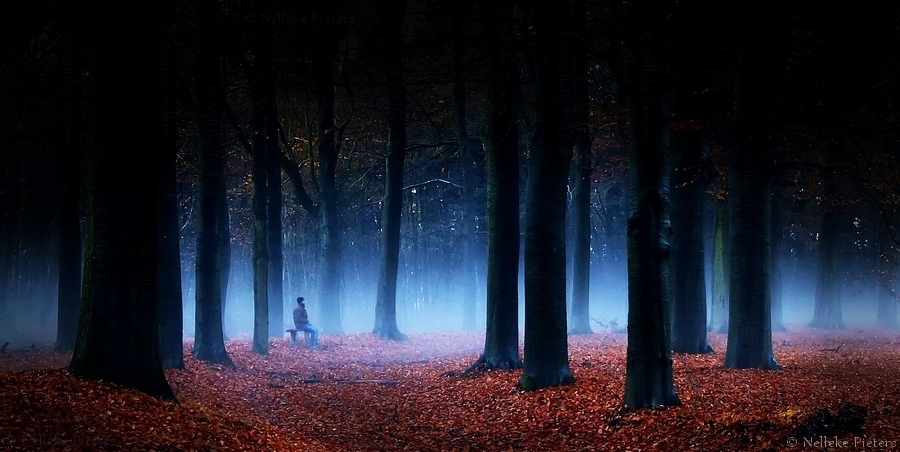
/ Image by Nelleke /

I have been thinking a lot about the dark recently, staring into the heart of darkness, so to speak.

Many of us who see ourselves as being on a “spiritual” pathway have a real difficulty with this — really looking at darkness, in ourselves and in others. We often want everything to be about light, light. But that can lead to a sort of frailty. To really witness the horror of a cruel heart in action can be devastating. Multiply that many times over when the cruelty is ingrained into a bureaucratic system.

For the kind hearted, that terrible recognition becomes a shattering confrontation with the abysses that humanity is capable of. To see another human heart turn cold and hard in the face of the suffering inflicted on others or, worse, to see a heart revel at that suffering, is a hellish vision that we instinctively seek to deny and unsee. This is partly because it whispers to us that we are capable of such cruelty ourselves. It also nags us with the thought that such cruelties have been taking place all along and we, in our complacency, did not acknowledge it before. It all becomes too much and we want to turn away.

But the job of engaged spirituality is not to paper over the world with flowers and happy faces so that we can breathe a sigh of relief. Real spirituality, deep spirituality requires seeing reality, all of reality, as it is, from its most luminous to its bleakest black and everything in between.

Whether we speak of Christian traditions of “witnessing” or Buddhist practices of holding a steady gaze in the presence of suffering, seeing the fullness of reality, the dark with the light, is essential for one to cultivate a deep, full, and strong spirituality. Though it breaks our hearts and fractures open fissures in our image of the world, it is necessary.

This fierce willingness to see everything is necessary to be fully present within the fulness of reality. It is necessary so that we do not wither in the face of confrontation. We must see suffering if we are to soothe wounds. And we must recognize cruelty that we may protect the vulnerable. To summon strength, we must recognize that conditions require strength. To express kindness and connection, we must see clearly who has been labeled an outsider.

Today I will practice holding an unwavering gaze in the dark so that I may see what I see, whatever changes that may bring in me…

…and find that the dark, too, blooms and sings,
and is traveled by dark feet and dark wings.


Recommended Books: Wendell Berry

The Collected Poems of Wendell Berry, 1957-1982 Given: Poems Selected Poems of Wendell Berry A Timbered Choir: The Sabbath Poems 1979-1997 The Mad Farmer Poems
More Books >>


Wendell Berry, Wendell Berry poetry, Secular or Eclectic poetry Wendell Berry

US (1934 – )
Secular or Eclectic

More poetry by Wendell Berry

6 responses so far

Jan 23 2017

Gabriela Mistral – Those Who Do Not Dance

Published by under Poetry

Those Who Do Not Dance
by Gabriela Mistral

English version by Helene Masslo Anderson

A crippled child
Said, “How shall I dance?”
Let your heart dance
We said.

Then the invalid said:
“How shall I sing?”
Let your heart sing
We said

Then spoke the poor dead thistle,
“But I, how shall I dance?”
Let your heart fly to the wind
We said.

Then God spoke from above
“How shall I descend from the blue?”
Come dance for us here in the light
We said.

All the valley is dancing
Together under the sun,
And the heart of him who joins us not
Is turned to dust, to dust.


/ Image by tasiaraye /

I thought this poem might be a good choice in honor of the weekend’s Women’s Marches across the world.

With this poem, the great Chilean poet, Gabriela Mistral, through simple language, is exploring how we move beyond our assumed limitations and express joy, creativity, life. How do we dance when the body does not respond? When we have grown dry and prickly and lost most of our substance, is it possible we can fly? Even God, at least the God of our imaginations, needs an invitation in which we gather together in the light.

The more we remember, as we see our limitations as new pathways rather than roadblocks, we begin to come alive, reconnect, and dance, until all valley is in movement with us under the sun.


Recommended Books: Gabriela Mistral

Women in Praise of the Sacred: 43 Centuries of Spiritual Poetry by Women Selected Poems of Gabriela Mistral


Gabriela Mistral, Gabriela Mistral poetry, Secular or Eclectic poetry Gabriela Mistral

Chile (1889 – 1957) Timeline
Secular or Eclectic
Christian : Catholic

Continue Reading »

5 responses so far

Jan 23 2017

The Power of Poetry — and “Nasty Women”

I posted this on the Poetry Chaikhana’s Facebook page over the weekend, but I thought I should share it here, as well. This is a video of the actress Ashley Judd reciting a poem by a 19-year-old young woman about “Nasty Women.” As she speaks this poem, she stalks across the stage and channeling the shared experience of outrage combined with a renewed spirit of self-assertion. It is blunt, the language and imagery will be uncomfortable for many. But I share it for this reason: This poem, and the way it is delivered, is undeniably powerful. This poem has become one of the focal points of this massive movement. Refusing to mince words, this poem gives voice to the feelings of so many women who participated in this weekend’s events.

That is the power of poetry. Crystalizing and magnifying the sense of identity and purpose within the collective awareness.

Whether or not you like the poem or the mood it represents, I encourage you to watch in order to see the power of poetry as it operates within society.

Ashley Judd’s “Nasty Woman” Speech

One response so far

Jan 18 2017

Muso Soseki – Satori Poem

Published by under Poetry

Toki-no-Ge (Satori Poem)
by Muso Soseki

English version by W. S. Merwin

Year after year
      I dug in the earth
            looking for the blue of heaven
only to feel
      the pile of dirt
            choking me
until once in the dead of night
      I tripped on a broken brick
            and kicked it into the air
and saw that without a thought
      I had smashed the bones
            of the empty sky

— from Sun at Midnight: Muso Soseki – Poems and Sermons, Translated by W. S. Merwin / Translated by Soiku Shigematsu


/ Image by Questavia /

Don’t you like the way this short Zen poem says so much?

Year after year
      I dug in the earth
            looking for the blue of heaven

The spiritual quest is first seen as some sort of construction project, but he doesn’t really know what to build or what he’s doing so he just digs deeper.

He is digging into the earth searching for heaven. We might take this to mean that he is delving into worldly, material existence. Or perhaps it is merely to suggest the heavy effort of spiritual striving. Either way, the effort, rather than freeing him is choking him.

only to feel
      the pile of dirt
            choking me

It is as if he has been digging his own grave. Even then he doesn’t know what else to do.

But insight, that moment of satori or enlightenment, comes almost by accident.

until once in the dead of night
      I tripped on a broken brick
            and kicked it into the air

Though it may be an accident, it is not random. If he hadn’t been digging in the first place, he never would have stumbled. So, in an ironic way, the effort has served its purpose, but not in the purposeful cause-and-effect manner he imagined.

Significantly, it is “in the dead of night” when he stumbles and falls, what we might interpret as the dark night of the soul when he feels most hopeless and drained.

and saw that without a thought
      I had smashed the bones
            of the empty sky

Yet in falling on his back he is face up and finally sees the sky. He’s stunned into silence (“without a thought”). The sky itself shatters. He pierces through the false sky, which is a construction of his mind — his thoughts about the sky and the heavenly realms, his concepts and assumptions of all that encompasses his world. He finally sees clearly sky, as it is, the living, empty spaciousness that overarches and permeates everything.

A reminder to us that earnest seekers labor hard, but the masters know how to fall back — and so see the sky.

=

Big energies are circulating because of the inauguration this week in the US. It’s okay to not go along with the pretense that things are okay.

The challenge going forward — cultivating a peaceful heart in coordination with a strong voice and a willing hand.


Recommended Books: Muso Soseki

Sun at Midnight: Muso Soseki – Poems and Sermons East Window: Poems from Asia Roaring Stream: A New Zen Reader


Muso Soseki, Muso Soseki poetry, Buddhist poetry Muso Soseki

Japan (1275 – 1351) Timeline
Buddhist : Zen / Chan

Continue Reading »

3 responses so far

Jan 12 2017

John O’Donohue – For Light

Published by under Poetry

For Light
by John O’Donohue

Light cannot see inside things.
That is what the dark is for:
Minding the interior,
Nurturing the draw of growth
Through places where death
In its own way turns into life.

In the glare of neon times,
Let our eyes not be worn
By surfaces that shine
With hunger made attractive.

That our thoughts may be true light,
Finding their way into words
Which have the weight of shadow
To hold the layers of truth.

That we never place our trust
In minds claimed by empty light,
Where one-sided certainties
Are driven by false desire.

When we look into the heart,
May our eyes have the kindness
And reverence of candlelight.

That the searching of our minds
Be equal to the oblique
Crevices and corners where
The mystery continues to dwell,
Glimmering in fugitive light.

When we are confined inside
The dark house of suffering
That moonlight might find a window.

When we become false and lost
That the severe noon-light
Would cast our shadow clear.

When we love, that dawn-light
Would lighten our feet
Upon the waters.

As we grow old, that twilight
Would illuminate treasure
In the fields of memory.

And when we come to search for God,
Let us first be robed in night,
Put on the mind of morning
To feel the rush of light
Spread slowly inside
The color and stillness
Of a found word.

— from To Bless the Space Between Us: A Book of Blessings, by John O’Donohue


/ Image by Darren Bertram /

After the holidays I have been having difficulty getting back into a regular rhythm of work and poetry and life in general. Do I need to refocus? Should I intensify my spiritual practice? Fast for a day or two? Should I be spending more time with poetry and writing, or should I let it sit until it bubbles up inside me? Do I push or do I putter?

There’s a part of me that starts to spin in agitation when I feel like the rhythm of my life has shifted and I don’t know my next step. But then there is also a nameless part of my awareness that finds a certain pleasure at resting in that uncertain space. That feeling of being out of sync and uncomfortable, as if I’m an alien in the center my own life, is also an opportunity to forget what it means to be “me.”

It can feel like a period of darkness, but it also allows us to see by a new light. When our accustomed patterns of feeling and activity shift, there is a period of time before we settle into the forward focus of new rhythms when the alleyways and secondary spaces of our lives become visible. Some of these are the most fascinating quirks of who we are. Here we may find troubled spaces, secret wounds, but also immense creativity, playfulness, and forgotten treasures and inner life.

O’Donohue’s poem seems like the perfect meditation. Light and darkness. The illumination of awareness and the shadow that allows us to see what is missed in the glare of too much light. How both shadow and light reveal in different ways. How light can be gentle or harsh, how the light and the dark can interact to shape the quality of the light and affect not just what we see but how we react to what is seen.

And just as important as seeing is how we choose to see.

When we look into the heart,
May our eyes have the kindness
And reverence of candlelight.


Recommended Books: John O’Donohue

To Bless the Space Between Us: A Book of Blessings Eternal Echoes: Celtic Reflections on Our Yearning to Belong Conamara Blues Anam Cara: A Book of Celtic Wisdom Echoes of Memory
More Books >>


John O'Donohue, John O'Donohue poetry, Christian poetry John O’Donohue

Ireland (1956 – 2008) Timeline
Christian : Catholic
Secular or Eclectic

Continue Reading »

4 responses so far

Jan 04 2017

Shah Nematollah Vali – The Point of the Circle

Published by under Poetry

The Point of the Circle
by Shah Nematollah Vali

The point appeared in the circle
And was not;
But it was the dot
That the circle begot.

The point appears
As a circle, as it revolves
In the eyes of him
Who a circle draws.

When the point
Completed the circle
Its beginning and end
Were one.

When the compass
Did the circle complete
It was wrapped up
And rested its feet.

Without existence
Not-being are we;
We who are Not
And You existence free.

I said the whole world was His dream;
Then I saw His dream was He.
Sweeter than the words of our guide,
Nimatullah knows no other words.

— from Islamic Mystical Poetry: Sufi Verse from the Early Mystics to Rumi, Translated by Mahmood Jamal


/ Image by ratravarman /

When I was in high school I loved geometry. Something about the visual, spatial nature of geometry just clicked for me. This poem reminds me of the way I’d get lost in geometrical contemplations on hot afternoons in the classroom…

The point appeared in the circle
And was not;
But it was the dot
That the circle begot.

The point appears
As a circle, as it revolves…

In geometry, a point has no dimension. It has no diameter, no depth. It does not really exist in space; it is only an idea, a point of reference. Yet when you start to move it in a single direction, its trail creates a line. Move it around another point, you create an arc. Continue describing that arc, and its end will eventually meet its beginning, and form an endless circle.

From nothing, something has taken form. From the point, a circle emerges. It is the existence of the circle that proves the existence of the point. The point is not-being; the circle is being.

Here’s another image: A circle encloses a limited area. We can calculate the area with the formula pi multiplied by the radius squared. Yet, although the area is limited and specific, we can still fit an infinite number of points within the circle. Since a point does not take up space but can still have a location, its possibilities within the circle are unlimited.

Let’s meditate on this for a moment. Imagine that you are that point and the circle is the canvas of reality — your life. Your life has a limited number of years to it, a limited number of places you can go, people you will meet, experiences you will have. Being human, we instinctively rebel against that feeling of limitation. But we are like the point within the circle: Within the limited area of our lives, the possibilities available to us are, in reality, without limit. Just the slightest shift in point-of-view, and everything around us is made new. So, is our limited life really limited?

These are the sorts of things nerdy teenaged Ivan used to daydream about in geometry class…

I said the whole world was His dream;
Then I saw His dream was He.


Recommended Books: Shah Nematollah Vali

Poetry for the Spirit: Poems of Universal Wisdom and Beauty The Drunken Universe: An Anthology of Persian Sufi Poetry Islamic Mystical Poetry: Sufi Verse from the Early Mystics to Rumi


Shah Nematollah Vali, Shah Nematollah Vali poetry, Muslim / Sufi poetry Shah Nematollah Vali

Iran/Persia (1330 – 1431) Timeline
Muslim / Sufi

Continue Reading »

4 responses so far

Dec 28 2016

Joseph Gikatilla – The Nut Garden

Published by under Poetry

The Nut Garden
by Joseph Gikatilla

English version by Peter Cole

The Nut Garden holds things felt and thought,
and feeling for thought is always a palace —

Sinai with flames of fire about it,
burning though never by fire devoured.

On all four sides surrounded so,
entrance is barred to pretenders forever.

For one who learns to be wise, however,
its doors are open toward the East:

he reaches out and takes a nut,
then cracks its shell, and eats…

— from The Dream of the Poem: Hebrew Poetry from Muslim and Christian Spain, 950-1492, Edited by Peter Cole


/ Image by Tatters /

I was trying to think of a poem in honor of Hanukkah today. This short selection by Joseph Gikatilla doesn’t directly deal with the traditional themes of Hanukkah like light, endurance, and renewal, but it came strongly to mind this morning, and so I thought I would share it with you…

This poem is from Rabbi Gikatilla’s major philosophical work of the same name — Ginnat Egoz or the Nut Garden. The title itself is imbued with layers of meaning — the nut (“egoz”) being a symbol for esoteric knowledge, and the word “ginat/GNT” being an acronym composed of the three main elements of his school of Kabbalah: Gematria (numerology of sacred texts), Notarikon (use of sacred acronyms), and Temurah (rearranging the letters of words in sacred texts to gain deeper esoteric insight).

But also, and perhaps most important, the reference to the “nut garden” or “nut orchard” evokes lines from the Song of Solomon :

I went down to the nut orchard,
to look at the blossoms of the valley,
to see whether the vines had budded,
whether the pomegranates were in bloom.
Before I was aware, my fancy set me in a chariot beside my prince.
(Song of Solomon 6:11-12)

In other words, this reference to a nut garden is also associated with a chariot. That image of a chariot is especially significant in Jewish mysticism. It is the Merkavah, the vehicle that transports the awareness to the eternal realms of the “prince” or the Messiah.

So, in the title alone, we have the “nut” of esoteric knowledge — difficult to open, but sweet and nourishing. It is discovered within the “nut garden” — the inner world, the psychic and spiritual landscape of the mystic. (And for the practitioner of this school of Kabbalah, this landscape is especially revealed through meditation on the permutations of letters and words within the sacred texts.) Entering this garden of secret, sacred knowledge, we discover the inner life budding and blossoming… and we find ourselves aboard the chariot of divine communion.

Sinai with flames of fire about it,
burning though never by fire devoured.

These lines are a reference to the overlapping Biblical images of the burning bush encountered by Moses, and the description of Mt. Sinai being surrounded by fire and lightning. These, too, are important images for mystics, interpreted by some to be a reference to the blissfully burning fire that often marks deep communion. When the mystic experiences that purifying and refining fire, it is as if the entire world is consumed, even one’s own outer self, and all that remains is what is eternal and lasting within — the inner Mt. Sinai.

On all four sides surrounded so,
entrance is barred to pretenders forever.

For one who learns to be wise, however,
its doors are open toward the East…

The summit of this inner mountain is holy ground that cannot be entered under false pretenses or with a selfish heart. One must approach in all humility, purity, and honesty, barefoot, without buffer or separation.

And then, “for one who learns to be wise,” the entrance is found to the East. The East is the direction of the rising sun, dawning awareness, the light of enlightenment. This the direction of awakening and new vision. This is why many sacred traditions pray and meditate facing East… it is the direction of opening.

he reaches out and takes a nut,
then cracks its shell, and eats…


Recommended Books: Joseph Gikatilla

The Dream of the Poem: Hebrew Poetry from Muslim and Christian Spain, 950-1492 Gates of Light: Sha’are Orah


Joseph Gikatilla

Spain (1248 – 1325?) Timeline
Jewish

Continue Reading »

One response so far

Dec 09 2016

William Stafford – Any Morning

Published by under Poetry

Any Morning
by William Stafford

Just lying on the couch and being happy.
Only humming a little, the quiet sound in the head.
Trouble is busy elsewhere at the moment, it has
so much to do in the world.

People who might judge are mostly asleep; they can’t
monitor you all the time, and sometimes they forget.
When dawn flows over the hedge you can
get up and act busy.

Little corners like this, pieces of Heaven
left lying around, can be picked up and saved.
People won’t even see that you have them,
they are so light and easy to hide.

Later in the day you can act like the others.
You can shake your head. You can frown.

— from The Way It Is: New & Selected Poems, by William Stafford


/ Image by incolor16 /

I think there is a great deal of wisdom in this poem. It is a reminder of how to conduct oneself while pretending to be part of the world. Yes, at work, at the store, saying hello to neighbors, do be practical, be responsible, be concerned. Or at least, appear to be.

But in those private moments, perhaps early in the morning before others have awakened, before the “important” activity of the day, before the clock has begun to tick, find those languid moments where sweetness abounds in the tiny movements and forgotten corners. On some fundamental level, this is our real job as human beings, to discover these moments, to bathe in them, to gather them like pollen — and then, to go about our lives making honey.

You can frown, if it is expected of you. But it is hard to do with the sweetness still on your tongue.


Recommended Books: William Stafford

The Way It Is: New & Selected Poems My Name is William Tell Dancing with Joy: 99 Poems Even in Quiet Places Ask Me: 100 Essential Poems of William Stafford
More Books >>


William Stafford, William Stafford poetry, Secular or Eclectic poetry William Stafford

US (1914 – 1993) Timeline
Secular or Eclectic

More poetry by William Stafford

3 responses so far

Nov 30 2016

Kamalakanta – The black bee of my mind
Published by under Poetry

The black bee of my mind is drawn in sheer delight
by Kamalakanta

The black bee of my mind is drawn in sheer delight
To the blue lotus flower of Mother Shyama’s feet,
The blue flower of the feet of Kali, Shiva’s Consort;
Tasteless, to the bee, are the blossoms of desire.
My Mother’s feet are black, and black, too, is the bee;
Black is made one with black! This much of the mystery
My mortal eyes behold, then hastily retreat.
But Kamalakanta’s hopes are answered in the end;
He swims in the Sea of Bliss, unmoved by joy or pain.

— from Kali: The Black Goddess of Dakshineswar, by Elizabeth U. Harding


/ Image by Meanest Indian /

In the imagery associated with the goddess Kali (Shyama), black is the divine color, for it is the color of mystery, of the night, that which is beyond knowing, the color that swallows all other colors.

My Mother’s feet are black, and black, too, is the bee…

With devotion, the busy bee of the mind becomes quiet and “black” like the vast, still mystery of God (or, rather, Goddess). Drawn to the center of awareness, it loses itself in the blissful nectar’s sweetness, until…

Black is made one with black!

Beautiful!

(Kali isn’t normally depicted as such an old woman, but the eyes of the woman in this photograph, so quiet and keen within that beautifully weathered face, just made me think, “Those are the eyes of the mother goddess peering into our hearts…”)

=

Many of you have expressed serious concerns and fears to me about the state of the world in recent weeks. Worldly problems need to be confronted and addressed on the practical level at which they exist, but if they are addressed only at that level, the underlying problems are never resolved or even fully recognized. I personally believe that the ideal is an integrated approach in which we cultivate deep quiet, and then combine that with vigorous action. What that looks like in each individual life is different, unique to our own strengths and circumstances.

This approach creates a dilemma, no doubt about it. It is very difficult to spend the day dealing with the intense, constant specificity of a busy life engaged with the challenges of the world, sometimes even having to navigate the psychic extremes of conflict and confrontation, yet returning again and again to meditation and prayerful quiet. What is the solution? Practice. Dedication. Acceptance of the difficulties that arise in a life lived with heart and compassion. But also, we can draw strength from recognizing how the active and the inner feed each other. When we tap into those moments of deep peace, we can discover in ourselves a clarity and purpose which strengthen our actions, while daily action and service in the world reinforce the deepest values of the heart. Whatever we do in the world becomes a ritual of sorts, an embodied affirmation through interaction, validating what we have learned, highlighting where we yet need strengthening and refinement.

I encourage each of us, each in our own unique way, to reach out and work for a better, kinder, safer, more just world. What we do can be small or it can be grand. It doesn’t have to be what other people expect or recognize or recognize as “service.” It just has to satisfy the heart’s instinct to help. And then support that with whatever creative or quiet pursuits feed the spirit — meditation, prayer, poetry, play.

Me, personally, I’m pretty good at the internal life, but fiery and erratic with the outer stuff, especially when I witness cruelty. That’s the balance I work at, learning steadiness and patience in my worldly activity, while not letting that draw too much energy away from my internal, creative life. Add ME/chronic fatigue syndrome to the mix and I have a rich practice that keeps me challenged and engaged. What is the particular balance you work at?

Sending love to everyone.


Recommended Books: Kamalakanta

Singing to the Goddess: Poems to Kali and Uma from Bengal Kali: The Black Goddess of Dakshineswar


Kamalakanta

India (1769? – 1821?) Timeline
Yoga / Hindu : Shakta (Goddess-oriented)

Continue Reading »

One response so far

Nov 23 2016

Pablo Neruda – Poetry

Published by under Poetry

Poetry
by Pablo Neruda

English version by Anthony Kerrigan

And it was at that age… Poetry arrived
in search of me. I don’t know, I don’t know where
it came from, from winter or a river.
I don’t know how or when,
no, they were not voices, they were not
words, nor silence,
but from a street I was summoned,
from the branches of night,
abruptly from the others,
among violent fires
or returning alone,
there I was without a face
and it touched me.

I did not know what to say, my mouth
had no way
with names
my eyes were blind,
and something started in my soul,
fever or forgotten wings,
and I made my own way,
deciphering
that fire
and I wrote the first faint line,
faint, without substance, pure
nonsense,
pure wisdom
of someone who knows nothing,
and suddenly I saw
the heavens
unfastened
and open,
planets,
palpitating planations,
shadow perforated,
riddled
with arrows, fire and flowers,
the winding night, the universe.

And I, infinitesimal being,
drunk with the great starry
void,
likeness, image of
mystery,
I felt myself a pure part
of the abyss,
I wheeled with the stars,
my heart broke free on the open sky.

— from Pablo Neruda: Selected Poems, by Pablo Neruda / Translated by Anthony Kerrigan


/ Image by futurowoman /

I often extol the virtue of silence and profound inner stillness, but today, in honor of the International Day of Words, let’s honor the healing and transformative power of words. The International Day of Words was started by a South American organization to remind us all how essential dialog, communication — words — are if we are to avoid violence.

Think about this beyond our surface platitudes about communication and peace for a moment. Violence only erupts when we feel unable to speak or be heard. The violence reflex occurs when words not being exchanged. Words are the preventative medicine against violence.

Of course, the dilemma is that it is never one way. All parties must be listening as well as talking. But when expression is suppressed and the pathways of communication are shut down, that’s the time to duck.

Poetry is the pathway to peace. We’re talking real words, deep words, not chatter. Words, and more generally all forms of expression that give voice to our hopes and humanity, are the sign of well-being within society.

So a few words by Neruda for us today in honor of the words that unleash us, that speak through us, that the world waits to hear spoken…

=

The autobiography of a poet and his art.

And it was at that age… Poetry arrived
in search of me.

It isn’t that he sought poetry but, rather, that poetry sought him. He was simply watching the world. In watching, he lost himself–

there I was without a face
and it touched me.

–and poetry came to him.

Every art beneath its surface craft is about seeing. And true seeing requires selflessness. (I use seeing in the widest sense of deep perception. Music and hearing fit comfortably within my definition of “seeing” too.) The ego-self always — always — colors and fogs our vision. Deep art requires stepping free from the ego’s blinders, to see honestly and fully. The ancient schools would say, only when we see — without self — do we have something to say. Only then is the artist ready.

and something started in my soul,
fever or forgotten wings,
and I made my own way,
deciphering
that fire

The path of the artist is also the path of awakening.

Egolessness, spiritual awakening, and art… This raises an obvious question: Why then do so many great artists embody just the opposite, exhibiting immense egos and imbalanced lives? Not everyone is taught to approach their art as a path of clarity and awakening, but there is still the artist’s desperate need to see beyond the limits of the ego. The result is that each artist develops his or her own unique way to lurch briefly free from ego to catch those pure moments of inspiration and vision.

and suddenly I saw
the heavens
unfastened
and open,
planets,
palpitating planations,
shadow perforated,
riddled
with arrows, fire and flowers,
the winding night, the universe.

But such an aggressive, chaotic approach becomes traumatic for the awareness, and the individual must then counterbalance by reinforcing the ego once again. This also explains why too many visionaries and artists turn to drink and other narcotics: to cope with these violent swings of consciousness.

Better to learn meditation and stillness and patience. Most of all, one must know the naked self. That’s how to stand whole before the immense vision.

Actually, you don’t just stand there, you step into it — a fulfillment, an overflowing, an expansion, a merging.

And I, infinitesimal being,
drunk with the great starry
void,
likeness, image of
mystery,
I felt myself a pure part
of the abyss,
I wheeled with the stars,
my heart broke free on the open sky.

That mystery then seeks you out, your arm, your hand, and the pen it holds.

and I wrote the first faint line,
faint, without substance, pure
nonsense,
pure wisdom…


Recommended Books: Pablo Neruda

The Book of Questions Neruda: Selected Poems On the Blue Shore of Silence: Poems of the Sea Pablo Neruda: Selected Poems Extravagaria: A Bilingual Edition
More Books >>


Pablo Neruda, Pablo Neruda poetry, Secular or Eclectic poetry Pablo Neruda

Chile (1904 – 1973) Timeline
Secular or Eclectic

More poetry by Pablo Neruda

2 responses so far

Nov 16 2016

Kahlil Gibran – Good and Evil

Published by under Poetry

Good and Evil
by Kahlil Gibran

And one of the elders of the city said, Speak to us of Good and Evil.
And he answered:
Of the good in you I can speak, but not of the evil.
For what is evil but good tortured by its own hunger and thirst?
Verily when good is hungry it seeks food even in dark caves, and when it thirsts it drinks even of dead waters.

You are good when you are one with yourself.
Yet when you are not one with yourself you are not evil.
For a divided house is not a den of thieves; it is only a divided house.
And a ship without rudder may wander aimlessly among perilous isles yet sink not to the bottom.

You are good when you strive to give of yourself.
Yet you are not evil when you seek gain for yourself.
For when you strive for gain you are but a root that clings to the earth and sucks at her breast.
Surely the fruit cannot say to the root, “Be like me, ripe and full and ever giving of your abundance.”
For the fruit giving is a need, as receiving is a need to the root.

You are good when you are fully awake in your speech,
Yet you are not evil when you sleep while your tongue staggers without purpose.
And even stumbling speech may strengthen a weak tongue.

You are good when you walk to your goal firmly and with bold steps.
Yet you are not evil when you go thither limping.
Even those who limp go not backward.
But you who are strong and swift, see that you do not limp before the lame, deeming it kindness.

You are good in countless ways, and you are not evil when you are not good,
You are only loitering and sluggard.
Pity that the stags cannot teach swiftness to the turtles.

In your longing for your giant self lies your goodness: and that longing is in all of you.
But in some of you that longing is a torrent rushing with might to the sea, carrying the secrets of the hillsides and the songs of the forest.
And in others it is a flat stream that loses itself in angles and bends and lingers before it reaches the shore.
But let not him who longs much say to him who longs little, “Wherefore are you slow and halting?”
For the truly good ask not the naked, “Where is your garment?” nor the houseless, “What has befallen your house?”

— from The Prophet, by Kahlil Gibran


/ Image by butler.corey /

As I was considering which poem to send out this morning, I came across this meditation on good and evil by Kahlil Gibran. I last featured this poem and commentary about six years ago, and I thought it might be worth sharing again…

I like this meditation on good and evil. It challenges assumptions and and raises important questions. Gibran suggests there is only good, for that is everyone’s inherent nature, and what we call evil is simply being lost and uninspired. He calls us to be compassionate to those who are selfish and cruel, for they suffer from greater poverty than the homeless and greater hunger than the starving; they suffer from poverty of the soul.

I strongly feel one should never passively allow the hard-hearted to inflict harm or hoard what belongs to all. Such actions must be opposed with strength and courage and cunning. The vulnerable must always be protected. That is a basic duty. But even complete success in one such action does not stop the fundamental dynamic of harm, just that particular instance. We must always remember that those who inflict harm and encode selfishness into systems and institutions, those people are also seeking their way, just blinded by their spiritual poverty. That’s where the real, patient work of the ages is found… finding how to open eyes and hearts long used to to being shut, finding how to redirect them toward the forgotten goodness and generosity held within.

One line I do question, however, is, “Pity that the stags cannot teach swiftness to the turtles.” To suggest that some people are stags and others turtles might be read to imply that our spiritual unfolding is fixed. Every human being harbors something of the heavenly within. There is no speed to the process. All that is needed is the right reminder of what we already are. Then begins the steady process of discovering how to encourage that ember and let its warmth permeate all aspects of our lives. Turtles don’t need to become stags. Humans simply need to become themselves. Humans just need to become more human.

But how to reach those who would armor themselves against the urging of their own hearts? No simple formula, nor single action nor organization can accomplish this. Not a year nor a generation nor a century will accomplish this. Still, that is what must be done. That is the real, hard, slow work given to us all to accomplish, each in our own lives, our work, our world.

Knowing our work, let’s be impatient to begin and supremely patient in its accomplishment. Knowing our work, what cause is there for anything but joy in turning to it each day?

In your longing for your giant self lies your goodness: and that longing is in all of you.


Recommended Books: Kahlil Gibran

The Prophet The Beloved: Reflections on the Path of the Heart Broken Wings Jesus the Son of Man Kahlil Gibran: His Life & World
More Books >>


Kahlil Gibran, Kahlil Gibran poetry, Christian poetry Kahlil Gibran

Lebanon/US (1883 – 1931) Timeline
Christian
Secular or Eclectic

Continue Reading »

4 responses so far

Nov 11 2016

Theodore Roethke – In a Dark Time (thoughts on the election)

Published by under Poetry

In a Dark Time
by Theodore Roethke

In a dark time, the eye begins to see,
I meet my shadow in the deepening shade;
I hear my echo in the echoing wood —
A lord of nature weeping to a tree,
I live between the heron and the wren,
Beasts of the hill and serpents of the den.

What’s madness but nobility of soul
At odds with circumstance? The day’s on fire!
I know the purity of pure despair,
My shadow pinned against a sweating wall.
That place among the rocks — is it a cave,
Or winding path? The edge is what I have.

A steady storm of correspondences!
A night flowing with birds, a ragged moon,
And in broad day the midnight come again!
A man goes far to find out what he is —
Death of the self in a long, tearless night,
All natural shapes blazing unnatural light.

Dark, dark my light, and darker my desire.
My soul, like some heat-maddened summer fly,
Keeps buzzing at the sill. Which I is I?
A fallen man, I climb out of my fear.
The mind enters itself, and God the mind,
And one is One, free in the tearing wind.

— from The Collected Poems of Theodore Roethke, by Theodore Roethke


/ Image by iNeedChemicalX /

I know many of us are deeply disturbed and frightened by the results of the US elections this week. I won’t say that things are okay. I will just say what I have said elsewhere in recent days:

Before election day and after election day, the work remains the same– to give a helping hand, to protect the vulnerable, to cultivate a livable future, to be less blind to others, to be fully present, to embody love in a troubled world.

=

This poem by Roethke is one of those poems to keep close in difficult times.

In a dark time, the eye begins to see

The struggle against despair, disorientation, darkness. The solitary individual lost in a lost world. We have all been there at some point in our lives. Deep seekers have a particular tendency to travel through those shadowed spaces.

I know the purity of pure despair,
My shadow pinned against a sweating wall.

That despair is often a deep seated sense that something is fundamentally wrong with the human world presented to us. It can feel uncaring, limited, violent, broken, and incomplete. In other words, it is a place that does not accept the individual as he or she is. To operate in the human world, we are forced into games of pretense and self-disguise. It is a feeling of homelessness and isolation.

What does one do when the soul is at odds with circumstance? It creates a terrible crisis. As social creatures, we align with the group mind, often without awareness or consent. The more naturally we do this, the better we fit into society and exist in the human world. But what about the eccentrics and visionaries, those who resist that psychic pull in order to answer the soul’s need to be itself and see beyond social artifice?

The edge is what I have.

They tend to dwell at the edges. That is where both danger and possibility are found. There we gain the possibility of seeing clearly for the first time, witnessing reality as a complete and self-fulfilled individual.

But the danger is very real, as well. No longer relying on socially constructed reality as our boundary we also lose our safe landmarks. The psyche becomes disoriented and fragile.

To navigate this necessary dark night of the soul, the seeker and the artist must cultivate a highly refined inner sense of balance and discipline. This is an important reason for developing a vigorous spiritual practice. Without the necessary inner solidity, the tendency is to rely on dangerous crutches, like excessive drinking and drug use — a terrible problem for so many creative non-conformists.

Think of it this way: The normal consensus reality is like the rigid shell of an egg. It does an excellent job of safely containing the unformed individual and protecting it from exposure to the unknown outside reality. But, if the individual remains within that shell forever, he never experiences the fullness of life. Through spiritual practice, one awakens the fire of life and takes on inner solidity and form. Then, when the shell has become too confining, we can break free into the open air without danger of fragmentation, ready to encounter the new world.

…Those dark periods we experience, they do actually serve a purpose, awakening clarity of vision and a compassionate heart. When we feel most vulnerable and lost, we are often going through our greatest growth and transformation, readying for the blaze of light.

Death of the self in a long, tearless night,
All natural shapes blazing unnatural light.

We must learn to work deeply amidst the darkness. We discover who we really are slowly emerging from the shadows, for that is our stable landmark when all else shifts about.

The mind enters itself, and God the mind,
And one is One, free in the tearing wind.

=

Which poem do you read when you are troubled or frightened? What gives you comfort, clarity, or courage? Let me know.

Sending love.


Recommended Books: Theodore Roethke

Poetry for the Spirit: Poems of Universal Wisdom and Beauty The Collected Poems of Theodore Roethke Theodore Roethke: Selected Poems On Poetry and Craft The Glass House: The Life of Theodore Roethke
More Books >>


Theodore Roethke, Theodore Roethke poetry, Secular or Eclectic poetry Theodore Roethke

US (1908 – 1963) Timeline
Secular or Eclectic

More poetry by Theodore Roethke

16 responses so far

Nov 04 2016

Yunus Emre – We entered the house of realization

Published by under Poetry

We entered the house of realization
by Yunus Emre

English version by Kabir Helminski & Refik Algan

We entered the house of realization,
we witnessed the body.

The whirling skies, the many-layered earth,
the seventy-thousand veils,
we found in the body.

The night and the day, the planets,
the words inscribed on the Holy Tablets,
the hill that Moses climbed, the Temple,
and Israfil’s trumpet, we observed in the body.

Torah, Psalms, Gospel, Quran —
what these books have to say,
we found in the body.

Everybody says these words of Yunus
are true. Truth is wherever you want it.
We found it all within the body.

— from The Drop That Became the Sea: Lyric Poems of Yunus Emre, Translated by Kabir Helminski / Translated by Refik Algan


/ Image by herfairytale /

We encountered the house of realization,
we witnessed the body.

Not only is the sacred always present — right here, right now — but that holiness is actually felt within the body.

When we talk of “the body” we tend to have a very concrete, materialistic idea of what we mean, this physical thing composed of muscle and bone. Its boundaries are hard and limited. In the end this body-thing contains very little.

But the body is more than this. Consider your dreams for a moment. In dreams, often you have a body there, as well. It is clearly not the same as the physical body, yet it too is your body within the reality of the dream. That dream body is capable of many actions and even transformations the physical body cannot. But is it not your body?

Both bodies, the physical body and the dream body, become the seat of our perception through which we experience the reality of the moment. Both bodies in some way are us.

These are just two of the many bodies we experience.

Let us call all of these collective bodies we inhabit the Body. Or we may call this the Self. This is the unedited and fully integrated being one is.

That limited package of organs and actions and sensory inputs doesn’t seem so claustrophobic to the spirit anymore.

The whirling skies, the many-layered earth,
the seventy-thousand veils,
we found in the body.

So when a mystic declares that entire worlds are found within the body, that isn’t just poetic metaphor. What this body actually is is much more than we first imagine. The boundaries of the body, which we once thought to end abruptly at the skin, are actually not there at all. The body continues, opening itself outward. All that we encounter and experience but imagine to be outside ourselves, all of that is actually contained within the body.

Here is what Yunus Emre is saying: By looking within the body, the body expands to encompass the universe. The fullness of reality is not outside oneself. It can never be fully recognized and integrated within the consciousness by looking outward. But by looking inward it is all there. And it is all you. Within the body.

Not only are all the pieces found within the body, but there they fit together harmoniously to form an integrated and harmonious whole. The natural interconnectedness of reality is recognized, which is the deep truth of all traditions.

Torah, Psalms, Gospel, Quran —
what these books have to say,
we found in the body.

In this expanded view of the Body/Self, let us not disregard the physical body, which was our starting point. The vision of harmonious immensity found within does, in fact, touch and affect the physical body too.

This vision is perceived as a rapturous bliss permeating all levels of awareness, including the physical body. In the physical body, every cell feels awakened, alive, sanctified. The whole body, from the most subtle to the most physical, vibrates with delight.

I am reminded of Kabir, the great Indian poet, who sang:

How could I ever express
How blessed I feel
To revel in such vast ecstasy
In my own body?

The touch of the Divine is tangible, it is felt… and it is always there, within the body.

Everybody says these words of Yunus
are true. Truth is wherever you want it.
We found it all within the body.


Recommended Books: Yunus Emre

The Longing in Between: Sacred Poetry from Around the World (A Poetry Chaikhana Anthology) Poetry for the Spirit: Poems of Universal Wisdom and Beauty Music of a Distant Drum: Classical Arabic, Persian, Turkish & Hebrew Poems The Drop That Became the Sea: Lyric Poems of Yunus Emre Quarreling with God: Mystic Rebel Poems of the Dervishes of Turkey
More Books >>


Yunus Emre, Yunus Emre poetry, Muslim / Sufi poetry Yunus Emre

Turkey (1238 – 1320) Timeline
Muslim / Sufi

Continue Reading »

2 responses so far

« Prev - Next »