Archive for the 'Poetry' Category

Aug 23 2024

Ko Un – Two beggars

Published by under Poetry

Two beggars
by Ko Un

Two beggars
sharing a meal of the food they’ve been given

The new moon shines intensely

— from This Dance of Bliss: Ecstatic Poetry from Around the World, Edited by Ivan M. Granger


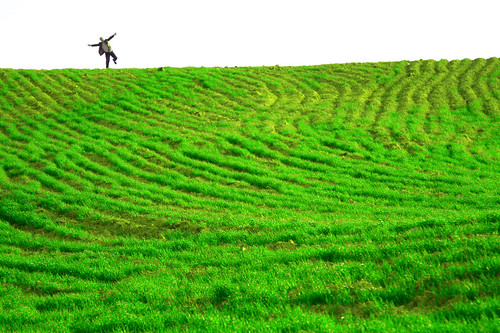
/ Image by Mr. Kris /

I find this short poem deeply moving. My first instinct is to say it is filled with compassion, but that’s not exactly what this poem is about. Ko Un isn’t telling us to see the hunger of these two beggars and to feed them. There is something else going on. He is, instead, calling on us to see not two beggars, but two human beings in communion, expressing their humanity even in their extremity. These two beggars aren’t objects of pity; they have become our teachers.

The two are hungry, yet they share the very little they have with one another. They have given us a moment to see a human connection at its most desperate, yet most profound moment.

In that simple act of human communion, something heavenly is recognized. And we, the witnesses, are that much more alive, awakened from our own spiritual lethargy, as a result.

The new moon shines intensely.


Recommended Books: Ko Un

What?: 108 Zen Poems Ten Thousand Lives The Three Way Tavern: Selected Poems Little Pilgrim: A Novel Flowers of a Moment


Ko Un, Ko Un poetry, Buddhist poetry Ko Un

Korea (1933 – )
Buddhist : Zen / Chan

Continue Reading »

2 responses so far

Aug 09 2024

Sarmad – Once I was bathed in the Light of Truth within

Published by under Poetry

Once I was bathed in the Light of Truth within
by Sarmad

English version by Isaac A. Ezekiel

Once I was bathed in the Light of Truth within,
      I abandoned all planning and scheming.
If you, too, seek this transcendence,
      leave your lower self — then from head to foot
      you will see your whole being as God’s refulgence.

— from Sarmad: Martyr to Love Divine, by Isaac A. Ezekiel


/ Image by Greyson Joralemon /

Once I was bathed in the Light of Truth within…

Light is one of the primary metaphors in sacred poetry, suggesting the Divine not framed within a mental concept. But for many genuine mystics, this light is directly experienced.

This light is perceived as being a living radiance that permeates everything, everywhere, always. The sense of boundaries and separation, long taken for granted by the mind as the fundamental nature of existence, suddenly seems illusory, for this light shines through all people and things. It has no edges, and the light of one is the light of all.

And it’s fitting to speak of being “bathed.” This light is not merely an airy phenomenon of the visual realm; it is tactile, permeating, embracing, profoundly soothing, revitalizing, healing. Some describe it in liquid language: water, fountain, lake, a shining white or golden ocean.

…I abandoned all planning and scheming.

I particularly like this line. Within this radiant encounter with Unity, the mind falls silent, and so too does the personal (selfish) will. The thinking mind can only create elaborate constructions, using discreet conceptual segments of reality as its building blocks. But in this wholeness there are no parts or segments to grab hold of. All blocks are already in place, with no seam or handhold found.

And with the heart full, overflowing… What want remains to scheme after?

Freed from the endless compulsive efforts of the mind and self-will, it’s breathtaking just how much buried life and energy is released through us. Mind becomes an open sky, with invisible, gentle breeze currents. Self-will becomes effortless selfless-will. Instead of you perceiving and acting, it’s as if perception and action take place through you — in joyous, flowing ease.

If you, too, seek this transcendence,
      leave your lower self — then from head to foot
      you will see your whole being as God’s refulgence.

This is “God’s refulgence,” the light of the true mystics.


Recommended Books: Sarmad

The Longing in Between: Sacred Poetry from Around the World (A Poetry Chaikhana Anthology) Real Thirst: Poetry of the Spiritual Journey The Drunken Universe: An Anthology of Persian Sufi Poetry Sarmad: Martyr to Love Divine Sarmad: Jewish Saint of India
More Books >>


Sarmad

Iran/Persia & India (? – 1659) Timeline
Muslim / Sufi
Jewish

Continue Reading »

One response so far

Jul 26 2024

Lynn Ungar – Camas Lilies

Published by under Poetry

Camas Lilies
by Lynn Ungar

Consider the lilies of the field,
the blue banks of camas
opening into acres of sky along the road.
Would the longing to lie down
and be washed by that beauty
abate if you knew their usefulness,
how the natives ground their bulbs
for flour, how the settlers’ hogs
uprooted them, grunting in gleeful
oblivion as the flowers fell?

And you — what of your rushed
and useful life? Imagine setting it all down —
papers, plans, appointments, everything —
leaving only a note: “Gone
to the fields to be lovely. Be back
when I’m through with blooming.”

Even now, unneeded and uneaten,
the camas lilies gaze out above the grass
from their tender blue eyes.
Even in sleep your life will shine.
Make no mistake. Of course
your work will always matter.

Yet Solomon in all his glory
was not arrayed like one of these.

— from Bread and Other Miracles, by Lynn Ungar


/ Image by https://unsplash.com/@dynamiclx /

A lovely reminder to us– Being useful is useful. And sometimes we must rush. But our real gift to the world is not what we do, but what we are.

leaving only a note: “Gone
to the fields to be lovely. Be back
when I’m through with blooming.”

Have a beautiful day!


Recommended Books: Lynn Ungar

Bread and Other Miracles Poetry of Presence: An Anthology of Mindfulness Poems Blessing the Bread: Meditations


Lynn Ungar, Lynn Ungar poetry, Christian poetry Lynn Ungar

US (Contemporary)
Christian
Secular or Eclectic

Continue Reading »

2 responses so far

Jul 19 2024

Shih Shu – as flowing waters disappear into the mist

Published by under Poetry

as flowing waters disappear into the mist
by Shih Shu

English version by James H. Sanford

as flowing waters disappear into the mist
we lose all track of their passage.
every heart is its own Buddha;
to become a saint, do nothing.

enlightenment: the world is a mote of dust,
you can look right through heaven’s round mirror
slip past all form, all shape
and sit side by side with nothing, save Tao.

— from A Drifting Boat: Chinese Zen Poetry, Edited by J. P. Seaton / Edited by Dennis Maloney


/ Image by Ivana Cajina /

Just reading these words tensions cease, the mind settles, and the glow of deep truth naturally shines forth.

I especially like these lines:

every heart is its own Buddha;
to become a saint, do nothing.

What we look for when we seek the Buddha, or enlightenment, or the Truth, is already seated within our own hearts. The way to enlightenment is not to do more — make new journeys, comprehend new teachings, perfect new practices, think more profound thoughts. Those can be important aids, yes, but the real goal is always to discover what is already in the heart. When the seat of the Buddha has not been discovered, it is because we are still distracting ourselves with too much doing.

This is not what we’re taught as we try to find a place in the world. We are always pressed to Do. Do more. Do brilliantly. Do efficiently. Do.

But try it sometime: Do less. Do nothing. Try to understand what doing nothing means. It is not about being inactive or unproductive. Truly doing nothing becomes internal, when not only thoughts are quiet, but the selfish will no longer exerts itself, when the subtle energies from which the mind arises have settled. You won’t believe the immense sense of relief you’ll then feel! Like a cramped muscle relaxing for the first time in years.

Don’t do more. Don’t do at all. Do nothing. Embrace nothing. Come to rest in that wide open plain. Sit side by side with it. See what it reveals.

slip past all form, all shape
and sit side by side with nothing, save Tao.


Recommended Books: Shih Shu

A Drifting Boat: Chinese Zen Poetry Sunflower Splendor: Three Thousand Years of Chinese Poetry The Clouds Should Know Me By Now: Buddhist Poet Monks of China


Shih Shu

China (1660? – 1740?) Timeline
Buddhist : Zen / Chan

Continue Reading »

One response so far

Jul 12 2024

Ikkyu – The vast flood

Published by under Poetry

The vast flood
by Ikkyu

English version by R. H. Blyth

The vast flood
Rolls onward
But yield yourself,
And it floats you upon it.

— from Zen and Zen Classics, by R. H. Blyth


/ Image by bimjo /

This short poem feels like it is saying a lot.

The vast flood
Rolls onward

Day after day, experience after experience, terrors and tragedies, joys and victories, everything — life. It can feel like an onslaught. Most of us learn to dampen down the awareness in order to cope and mimic those around us.

Yet even with dimmed senses we feel overwhelmed.

But yield yourself,
And it floats you upon it.

This is the liberating wisdom of surrender.

Most of our intense efforts in life, whether directed toward work, family, even spirituality, are about trying to control the flow of life. We want to master the flood, bring it under our will. We want to tame it so we can be safe.

But it never really works.

This lifelong effort is like a duck on a great river who imagines he controls the current by the action of his paddling feet. When he happens to face downstream — Amazing! The river goes just where he commanded! When he turns left or right, he imagines that he needs to increase his effort and improve his technique to get the river flowing where he wants. And when he turns upstream — Calamity! He has lost control of the river.

Or… he can just sit on top of the river and let its current carry him.

Yielding ourselves to this great river, no longer imagining that we control it, we can finally begin to discover its true nature and direction — and beauty. We come to see its flow as a unifying harmony and not a threat. Importantly, we notice our natural buoyancy. We are built to float upon it.


Recommended Books: Ikkyu (Ikkyu Sojun)

Zen Poetry: Let the Spring Breeze Enter Haiku Enlightenment: New Expanded Edition The Poetry of Zen: (Shambhala Library) Crow With No Mouth: Fifteenth Century Zen Master Ikkyu Zen and Zen Classics
More Books >>


Ikkyu (Ikkyu Sojun), Ikkyu (Ikkyu Sojun) poetry, Buddhist poetry Ikkyu (Ikkyu Sojun)

Japan (1394 – 1481) Timeline
Buddhist : Zen / Chan

Continue Reading »

4 responses so far

Jun 30 2024

al-Shushtari – The night’s journey

Published by under Poetry

The night’s journey
by Abu al-Hasan al-Shushtari

English version by Stephen Hirtenstein

You who look in the mirror.
      Do you see whom you see there?
Is the looker someone other than you,
      or a reflection of your fantasy?
Turn your glance toward the glance itself,
      for it holds wisdom concealed from the others.
When day breaks, may people
      praise the night’s journey.


/ Image by Rishab Dharmani /

I am just beginning to discover and explore the poetry of al-Shushtari. He is a fascinating poet and mystic who, like ibn Arabi, was from Andalusia, that is, Spain when it was under Muslim rule. He was a Sufi who taught a radically unified vision of reality in which only God exists. Everything one might perceive, every person, every place, even finally oneself, is really just a passing phenomenon within the single reality that is God. We might say his poetry and teachings were a sort of non-dualism that can be compared in some ways to other non-dualist traditions, such as Advaita in India.

In fact, these lines sound like statements that could have been made by the famous 20th century Hindu Advaita teacher, Ramana Maharshi.

You who look in the mirror.
      Do you see whom you see there?
Is the looker someone other than you,
      or a reflection of your fantasy?

I think the real power of this short selection is in the lines:

Turn your glance toward the glance itself,
      for it holds wisdom concealed from the others.

At first it sounds like a riddle that can’t be solved, almost a Zen koan (another non-dualist tradition). How can you “turn your glance toward the glance itself”?

Let’s back up for a moment and contemplate the image al-Shushtari has given us. We are looking in a mirror gazing at the face — our own face — reflected back at us. But is it our face? Reach out to touch your face and your fingers hit hard glass. It is a reflection, after all, a play of light on a reflective surface. It is not actually our face, but an image that represents our face. So is it really our face or a “fantasy,” a semblance? When we finally see through the illusion and recognize that the reflection is not actually our face we have to then accept that we have never seen our own face, and we never will.

The more deeply we work with this fundamental psychic dilemma, our certainty about who or what we are begins to slip. We cannot see ourselves, but– we can see ourselves seeing. We think of ourselves as this eye perceiving the world, this face fronting the world, this body interacting with the world. What if, instead, we are life moving through this body? What if we are this magical act of seeing happening through the eye? When we stop looking at the face in the mirror, saying, “That is me,” and begin to notice the one looking through us our identity radically shifts and we come to know ourselves for the first time. We open to reality in was previously unimaginable and see everything as a living, glowing, blissful interconnectedness. And only That is real. The pretense drops and everything “else” is seen as a play of appearance within that light — like a face reflected in the mirror.

When day breaks, may people
      praise the night’s journey.

Have a beautiful day!

==

There is not a lot of information available in English about al-Shushtari right now. You can probably find the book Songs of Love and Devotion, by Lourdes Maria Alvarez. There is also a very good video about al-Shushtari on Filip Holm’s YouTube channel Let’s Talk Religion: https://youtu.be/Te-ohX1qfHs?si=QNClire3DaPJlZ_a. I highly recommend his channel for a broad exploration of religious and mystical thought from various cultures.


Recommended Books: Abu al-Hasan al- Shushtari

Abu al’Hasan al-Shushtari: Songs of Love and Devotion


Abu al-Hasan al- Shushtari, Abu al-Hasan al- Shushtari poetry, Muslim / Sufi poetry Abu al-Hasan al- Shushtari

Spain (1212 – 1269) Timeline
Muslim / Sufi

More poetry by Abu al-Hasan al- Shushtari

2 responses so far

Jun 21 2024

e. e. cummings – i thank You God for most this amazing

Published by under Poetry

i thank You God for most this amazing
by e. e. cummings

i thank You God for most this amazing
day:for the leaping greenly spirits of trees
and a blue true dream of sky; and for everything
which is natural which is infinite which is yes

(i who have died am alive again today,
and this is the sun’s birthday; this is the birth
day of life and of love and wings: and of the gay
great happening illimitably earth)

how should tasting touching hearing seeing
breathing any–lifted from the no
of all nothing–human merely being
doubt unimaginable You?

(now the ears of my ears awake and
now the eyes of my eyes are opened)

— from E.E. Cummings: Complete Poems 1904-1962, by e. e. cummings


/ Image by Shahram Sharif /

It is the summer solstice. A gorgeous morning here in Oregon, a day that inspires me to step outside and feel utter gratitude for simply being…

i thank You God for most this amazing
day:for the leaping greenly spirits of trees
and a blue true dream of sky; and for everything
which is natural which is infinite which is yes

I first read this more than thirty years ago, and I still get shivers reading those opening lines.

The delightfully anarchic poetry of e. e. cummings is more than poetic art, there is something of the mystic experience in it, as well. This poem is a good example.

The two parenthetical verses hint that he is describing much more than simply the natural joy of a beautiful day. There is something truly magical going on here…

He uses Biblical, ecstatic phrasing when he proclaims “(now the ears of my ears are awake and / now the eyes of my eyes are opened).” He isn’t just saying this, he seems to shout it out to the “great happening illimitably earth.” This is seeing the inner nature of things, as they are in their true essence. This is not just seeing; he is seeing, not with the eyes, but with the “eyes of my eyes.” Perceiving in this way, we invite the natural world in, as if we are ingesting it, integrating it into ourselves. Every experience becomes vivifying nutrition for the soul.

In this new awareness, we perceive not only the living day all around us, we also recognize ourselves for the first time. It is a radical awakening, a new life, a birth of Self —

i who have died and am alive again today.

Have an amazing day!


Recommended Books: e. e. cummings

E.E. Cummings: Complete Poems 1904-1962 73 Poems 1 x 1 [One Times One] 50 Poems 95 Poems
More Books >>


e. e. cummings, e. e. cummings poetry, Secular or Eclectic poetry e. e. cummings

US (1894 – 1962) Timeline
Secular or Eclectic

More poetry by e. e. cummings

One response so far

Jun 14 2024

Tukaram – Smaller than the smallest mote

Published by under Poetry

Smaller than the smallest mote
by Tukaram

English version by Ivan M. Granger

Smaller than the smallest mote,
All embracing as the heavens,
I finally see the world as it is —
All appearance but a dream.
Realizing the true nature of things,
I drop my mask like a snake shedding its skin.
I leave the three-fold nature of things behind me,
as I pass beyond them.
Miraculously, this dull clay has been shaped, formed into a lamp
      and begins to shine!
Filled with that radiance, I Tuka
Live to light the world.


/ Image by Alejandro /

I am rebounding from the oral surgery, but it went well. I already notice the difference of no longer carrying the hidden weight of a dental infection in the body. That endless dance of balance with the body and the light that shines through it…

I like this short abhang by the great Vishnu devotee, Tukaram.

I finally see the world as it is —
All appearance but a dream.

The experience of sudden opening is very much like waking up. We thought we saw clearly within our dream, but then we surprise ourselves by actually opening our eyes.

It is as if we have been drifting through life in a dream state and just not known it. Nothing around us has changed, but we finally, truly see things as they are. The dream-like barrier of mental filters and projections that has stifled our perception for so long falls away like a heavy blanket. We blink, look around, and are surprised to realize we’ve been in a sort of half-seeing trance all our life… and now we are awake.

Realizing the true nature of things,
I drop my mask like a snake shedding its skin.

Not only do we see the world through a filter upon the awareness, we also raise this same veil across our own faces. We mask ourselves — from ourselves, from others, most of all, from the Divine. We hide ourselves and become aliens within our own being.

Real spiritual opening occurs when we become honest and humble with ourselves (“smaller than the smallest mote”), when we drop our games and evasions, when we allow ourselves to be naked. That is when we truly come to know ourselves. The reality is more stunning than we imagined: In that supreme humility, we discover that we are immense, boundaryless beings. We finally see that we are “all embracing as the heavens.”

Miraculously, this dull clay has been shaped, formed into a lamp
      and begins to shine!

Alive to this new, ageless sense of self, one is bathed in light, filled with light. Light pours through you. Somehow, miraculously, this dense body has been refashioned into a vessel through which that light shines.

Filled with that radiance, I Tuka
Live to light the world.


Recommended Books: Tukaram

Poetry for the Spirit: Poems of Universal Wisdom and Beauty Real Thirst: Poetry of the Spiritual Journey Love Poems from God: Twelve Sacred Voices from the East and West Says Tuka: Selected Poetry of Tukaram Wild Poets of Ecstasy: An Anthology of Ecstatic Verse
More Books >>


Tukaram, Tukaram poetry, Yoga / Hindu poetry Tukaram

India (1608 – 1649) Timeline
Yoga / Hindu : Vaishnava (Krishna/Rama)

Continue Reading »

One response so far

May 31 2024

Yeats – The Lake Isle of Innisfree

Published by under Poetry

The Lake Isle of Innisfree
by William Butler Yeats

I will arise and go now, and go to Innisfree,
And a small cabin build there, of clay and wattles made:
Nine bean-rows will I have there, a hive for the honeybee,
And live alone in the bee-loud glade.

And I shall have some peace there, for peace comes dropping slow,
Dropping from the veils of the morning to where the cricket sings;
There midnight’s all a glimmer, and noon a purple glow,
And evening full of the linnet’s wings.

I will arise and go now, for always night and day
I hear lake water lapping with low sounds by the shore;
While I stand on the roadway, or on the pavements grey,
I hear it in the deep heart’s core.

— from The Collected Poems of W. B. Yeats, by William Butler Yeats


/ Image by hideraldo dwight leitao /

A few days ago I was standing beneath a tree covered in late spring blossoms. Standing there enveloped in the perfumed shade, I slowed down enough to hear the hum of the bees who were contentedly at work among the tree’s flowers. As I listened more deeply, the the beesong surrounded me until it seemed as if I felt it vibrating within my body.

I thought of this poem by Yeats and his bee-loud glade… a portrait of peace.

I love the rhythms of this poem. To really appreciate it, you need to say it aloud and slowly. Let it roll off the tongue.

Yeats paints with his words, running them together like brushstrokes in watercolor.

And a small cabin build there, of clay and wattles made:
Nine bean-rows will I have there, a hive for the honeybee

There midnight’s all a glimmer, and noon a purple glow,
And evening full of the linnet’s wings.

What stands out more is how Yeats awakens our sense of hearing against a background of silence:

…the bee-loud glade.

…where the cricket sings

I hear the lake water lapping with low sounds by the shore

And finally–

I hear it in the deep heart’s core.

To me, this is a poem about quiet, slowing down, and listening with all our senses.

In the beauty of this rustic scene, we discover something of the eternal in the sounds and rhythms of the world around us.

And I shall have some peace there, for peace comes dropping slow


Recommended Books: William Butler Yeats

The Oxford Book of English Mystical Verse Holy Fire: Nine Visionary Poets and the Quest for Enlightenment The Collected Poems of W. B. Yeats Byzantium The Secret Rose
More Books >>


William Butler Yeats, William Butler Yeats poetry, Secular or Eclectic poetry William Butler Yeats

Ireland (1865 – 1939) Timeline
Secular or Eclectic
Primal/Tribal/Shamanic : Celtic

More poetry by William Butler Yeats

2 responses so far

May 24 2024

AE – The Place of Rest

Published by under Poetry

The Place of Rest
by AE (George William Russell)

The soul is its own witness and its own refuge.

Unto the deep the deep heart goes,
It lays its sadness nigh the breast:
Only the Mighty Mother knows
The wounds that quiver unconfessed.

It seeks a deeper silence still;
It folds itself around with peace,
Where thoughts alike of good or ill
In quietness unfostered cease.

It feels in the unwounding vast
For comfort for its hopes and fears:
The Mighty Mother bows at last;
She listens to her children’s tears.

Where the last anguish deepens — there
The fire of beauty smites through pain:
A glory moves amid despair,
The Mother takes her child again.

— from The Longing in Between: Sacred Poetry from Around the World (A Poetry Chaikhana Anthology), Edited by Ivan M. Granger


/ Image by Karsten Winegeart /

Several of those phrases resonate in my mind:

Unto the deep the deep heart goes…

…the unwounding vast…

And what a beautiful evocation of the mystic’s inner quiet:

It seeks a deeper silence still;
It folds itself around with peace,
Where thoughts alike of good or ill
In quietness unfostered cease.

But I think the final verse it what especially draws my interest:

Where the last anguish deepens — there
The fire of beauty smites through pain:
A glory moves amid despair,
The Mother takes her child again.

At a certain point, the courage to face pain becomes central to spiritual awakening. This is not where we grit our teeth and endure, but we must relax into it. We must allow ourselves to truly feel that pain, to yield to it… to accept it. Here’s why: The inner pain we all experience is ultimately recognized as the illusory perception of one’s separation from the Eternal. But that pain itself is the doorway to reunion. It is only by looking straight at the illusion that we begin to see through it. By allowing oneself to become completely vulnerable to our pain, to surrender to it, the mystic finds the pain transformed into the blissful touch of the Beloved.

For this reason, mystics and saints describe the pain as being “sweet” or joyful or beautiful… and the path to escape from pain — “there / The fire of beauty smites through the pain.”

Unto the deep the deep heart goes…


Recommended Books: AE (George William Russell)

The Longing in Between: Sacred Poetry from Around the World (A Poetry Chaikhana Anthology) Wild Poets of Ecstasy: An Anthology of Ecstatic Verse Collected Poems of George William Russell By Still Waters: Lyrical Poems Old and New The Nuts of Knowledge: Lyrical Poems Old and New
More Books >>


AE (George William Russell), AE (George William Russell) poetry, Secular or Eclectic poetry AE (George William Russell)

Ireland (1867 – 1935) Timeline
Secular or Eclectic

Continue Reading »

2 responses so far

May 17 2024

Tulsi Sahib – Within This Body

Published by under Poetry

Within This Body
by Tulsi Sahib

English version by Ivan M. Granger

Within this body
breathes the secret essence.
Within this body
beats the heart of the Vedas.

Within this body
shines the entire Universe,
      so the saints say.

Hermits, ascetics, celibates —
all are lost
seeking Him
      in endless guises.

Seers and sages perfectly parrot
the scriptures and holy books,
      blinded by knowledge.

      Their pilgrimage,
      and fasting,
      and striving
            but delude.
Despite their perfect practice,
they discover no destination.

Only the saints
who know the body’s heart
have attained the Ultimate, O Tulsi.

Realize this, and you’ve found your freedom
      (while teachers trapped in tradition
      know only the mirage
            in the mirror).

— from Real Thirst: Poetry of the Spiritual Journey, by Ivan M. Granger


/ Image by vaticanus /

This poem really cuts right through the delusion of fundamentalism on the one hand—

Seers and sages perfectly parrot
the scriptures and holy books,
      blinded by knowledge.

–and being overly enamored with spiritual practices and rituals, on the other–

Their pilgrimage,
      and fasting,
      and striving
            but delude.

This is not to say that one should not study sacred texts or that we should ignore the value of spiritual practices. The problem is that it’s easy to forget what their true purpose is. Sacred writing, sacred striving, they are signposts that remind us to turn inward and discover the true heart that shines with the light of the universe.

Within this body
breathes the secret essence.
Within this body
beats the heart of the Vedas.

Within this body
shines the entire Universe,
      so the saints say.

If we just memorize words or pray in the mountains, even if we do it perfectly, we are idolizing the trappings of spirituality, without understanding, without making the real journey. This is one of the reasons why there is so much anger among fundamentalists in all the world’s traditions — they push to fit into an externalized idea of what it means to be perfect, yet they are not transformed, and they secretly know it.

Despite their perfect practice,
they discover no destination.

Unable to face the pain of that failure, they externalize it, and blame the imperfections of the world around them for holding them back. That pain becomes anger at the outer world, and that anger is reflexively attributed to God. Then that angry God is imagined to punish by withholding heaven from the individual until the whole world rigidly falls into order. The more desperate these individuals become for release from spiritual pain, the more violently they try to enforce their vision upon society in the hopes that they will finally appease God and find freedom.

So sad, when all that is necessary is to slip through that pain, let go of the ego’s self-importance, and discover the immense joy quietly glowing deep within. No one and nothing else holds us back.

Only the saints
who know the body’s heart
have attained the Ultimate, O Tulsi.

So Tulsidas is reminding us: Study, yes, and strive. But always more important is to yield and open and finally settle into the secret shining heart that awaits discovery. Those are the true fundamentals.

Realize this, and you’ve found your freedom

…Okay, Ivan will now step down from his soapbox. Have a wonderful weekend, and remember to take some sweet quiet time to settle within.


Recommended Books: Tulsi Sahib

Real Thirst: Poetry of the Spiritual Journey Songs of the Saints from the Adi Granth Songs of the Saints of India Tulsi Sahib: Saint of Hathras


Tulsi Sahib, Tulsi Sahib poetry, Yoga / Hindu poetry Tulsi Sahib

India (1763 – 1843) Timeline
Yoga / Hindu : Vaishnava (Krishna/Rama)
Sikh

Continue Reading »

5 responses so far

May 12 2024

Ramakrishna – Is there anyone in the universe

Published by under Poetry

Is there anyone in the universe
by Ramakrishna

English version by Lex Hixon

Is there anyone in the universe,
among heavenly or earthly beings,
who can understand what Kali is?
The systems of all traditions
are powerless to describe Her.
Is Mother a feminine being
or greater than Being itself?

Chanting Her transforming Name —
OM KALI OM KALI OM KALI,
empowers Lord Shiva,
Who is transcendent Knowledge,
to drink the negativity of all beings,
turning His Throat dark blue.
Without Her protection
such poison would be deadly,
even to the highest Divinity.

More than Creator and creation,
Mother is sheer Creativity
beyond the notion of duality.
Universe and Father-God
are thrilling glances
from Her seductive Eyes.
Always pregnant with ecstasy,
She gives birth to manifest Being
from Her Womb of primal Awareness,
nursing it tenderly at Her Breast,
then playfully consumes Her Child.
The world dissolves instantly
upon touching Her white Teeth,
attaining the realization
of Her brilliant Voidness.

The various Divine Forms
that manifest throughout history
take refuge at Her Lotus Feet.
The Essence of Divinity,
the Great Ground of Being,
lies in ecstatic absorption
beneath Her red-soled Feet.

Is Mother simply a Goddess?
Does She need a male consort
to protect or complete Her?
The cycle of birth and death
bows reverently before Her.
Is She simply naked
or is She naked Truth?
No veil can conceal Her.
Her naked radiance slays demons
not with weapons but with splendor.

If Mother is a conventional wife,
why is She dancing fiercely
on the breast of Shiva?
Her timeless play destroys
conventions and conceptions.
She is primal purity,
Her ecstatic lovers are purity.
Purity merges into purity,
with no remainder.

I am totally inebriated
by Her wine of timeless bliss.
The wine cup is Her Name —
OM KALI OM KALI OM KALI.
Those drunk on ordinary wine
assume I am one of them.

Not everyone will encounter
the dazzling darkness
called Goddess Kali.
Not everyone can consciously receive
the infinite treasure of Her Nature.
The foolish mind refuses
to perceive and accept
that She alone exists.
Even the noble Lord Shiva,
most enlightened of beings,
can barely catch a glimpse
of Her flashing crimson Feet.

The wealth of world-emperors
and the richness of Paradise
are but abject poverty
to those who meditate on Her.
To swim in a single Glance
from Her three Cosmic Eyes
is to be immersed
in an ocean of ecstasy.

Not even Shiva, prince of yogis,
can focus upon Her dancing Feet
without falling into trance.
Yet the worthless lover
who sings this mad song
aspires to conscious union with Her
during waking, dream, and deep sleep.

— from Great Swan: Meetings with Ramakrishna, by Lex Hixon


/ Image by Chobist /

Happy Mother’s Day. It is worth remembering today that Mother’s Day was originally created as a day of international peace as a reminder to us all that every single person on all sides of every conflict has a mother who loves them. It was hoped that remembering this would make war difficult to justify.

It is also worth remembering today that we are all children of the Divine Mother.

In Hindu tradition and metaphysics, the Goddess represents many aspects of the Divine. The iconography we find in Hinduism gives us a fascinating kaleidoscope of meaning. The Goddess can represent Mother, the Great Source, the Void/Womb from which all are born, Manifestation, Creation, Vibration, Speech, Song, the Arts, Beauty, Darkness, Mystery, all of the World (and all its Illusions). But with birth, also comes death, with manifestation, also comes dissolution; anything with a beginning also has an end. Only the eternal is eternal. So the Goddess, Mother and Manifester, is also sometimes portrayed as Destroyer. She is Life and Death both. She is the Power that brings all into being, animates and enlivens the universe, and also draws it back into non-being. But even in Her fiercest aspect, the Mother Goddess is loving. For Her, death is merely the death of illusion and the return to Self.

This poem — I call it a poem, but it is more of an ecstatic utterance by the great Ramakrishna — plays with a particular descriptive challenge in the representations of Kali. On the one hand, Kali is a Goddess, often paired with the God Shiva. A popular representation of the two is with Shiva lying prone on the ground, while Kali dances upon his breast, slaying demons. It can be a disturbing image to people not familiar with the iconography of Kali. But what is it saying, and how does it fit in with the philosophy of this gentle, greatly revered Hindu saint, Ramakrishna?

Hinduism often expresses the fundamental polarity of Male and Female in images of the divine couple, the God and Goddess paired together. Within this God-Goddess dichotomy, the masculine aspect of the Divine usually represents transcendent spirit, while the feminine expresses manifestation, power, and action. So prone Shiva represents the transcendent, which is inactive, but which holds the divine potential. Kali dances upon his breast, representing that potential coming into manifestation. Through Her sheer power, Kali destroys the demons that represent illusion and disharmony.

But, just as this God-Goddess pairing represents different facets of the Divine, any God or Goddess can simultaneously be understood to embody the whole of the Divine. In this way, Kali can both be an aspect and also the Absolute.

And this is what Ramakrishna is teasing us with here. Is Kali the consort of Shiva? Is She the feminine aspect of God, or God entire?

Is Mother a feminine being
or greater than Being itself?…

Is Mother simply a Goddess?
Does She need a male consort
to protect or complete Her?

Even within Hinduism and its rich, varied depictions of the Feminine aspect of the Divine, there is still a tendency to elevate the Male forms, such as Shiva. Ramakrishna seems to delight in overturning convention. To him, one must simply follow the Mother and, as She reveals more and more of Her nature — her manifestation, her play of illusions and revelations — our vision of Her expands to encompass the All. To Ramakrishna, the Goddess is Mother and Consort, but She is equally the Totality itself. He taunts us to untangle that conundrum through our own direct perception.

Whether we are talking about Kali or Saraswati or Cerridwen, Mother Mary or Shekinah, let us not forget to honor the feminine in the Divine — and in our world, and in ourselves.

=

I should mention that there is some question about the attribution for this poem. I know that Ramakrishna often quoted Ramprasad, but the source I found this in seems to be attributing it directly to Ramakrishna, though the attribution is not specific. In the same book, the author mentions how Ramakrishna would often break into spontaneous song, making up lyrics as insight and inspiration flooded through him, but also sometimes interweaving famous lines from Ramprasad and others, as well. So the truth is, I don’t know for certain who the poet is. This poem could be by Ramprasad (though I haven’t come across another version of this attributed to Ramprasad), or it could include a few lines by Ramprasad, or it could be entirely original to Ramakrishna. I’d love to hear if you know any more about these verses.


Recommended Books: Ramakrishna

Poetry for the Spirit: Poems of Universal Wisdom and Beauty Kali: The Black Goddess of Dakshineswar Great Swan: Meetings with Ramakrishna The Gospel of Sri Ramakrishna The Condensed Gospel of Sri Ramakrishna
More Books >>


Ramakrishna, Ramakrishna poetry, Yoga / Hindu poetry Ramakrishna

India (1836 – 1886) Timeline
Yoga / Hindu : Shakta (Goddess-oriented)

Continue Reading »

One response so far

May 03 2024

Attar – Looking for your own face

Published by under Poetry

Looking for your own face
by Farid ud-Din Attar

English version by Coleman Barks

Your face is neither infinite nor ephemeral.
You can never see your own face,
only a reflection, not the face itself.

So you sigh in front of mirrors
and cloud the surface.

It’s better to keep your breath cold.
Hold it, like a diver does in the ocean.
One slight movement, the mirror-image goes.

Don’t be dead or asleep or awake.
Don’t be anything.

What you most want,
what you travel around wishing to find,
lose yourself as lovers lose themselves,
and you’ll be that.

— from The Hand of Poetry: Five Mystic Poets of Persia, with Lectures by Inayat Khan, Translated by Coleman Barks


/ Image by Noah Buscher /

I like this idea of searching for one’s own face — something so central to our identity but which we can never see directly.

You can never see your own face,
only a reflection, not the face itself.

How then can we see our own face?

We seek its reflection constantly, everywhere. All the world becomes a mirror showing ourselves back to us.

But our vision is unclear, distorted, veiled…

So you sigh in front of mirrors
and cloud the surface.

The ego within us covers our self-perception with a thin film, so we think we are seeing ourselves, but we see only a vague shadow of our true nature behind the ego’s haze.

In some traditions, this is represented by the compulsion of the breath, its continuous inflow and outflow perpetually disrupting true, still perception. Some yogic and Sufi techniques seek to profoundly quiet the breath and the rhythms of the body so that the vision of Reality may come through undistorted:

It’s better to keep your breath cold.
Hold it, like a diver does in the ocean.
One slight movement, the mirror-image goes.

Most people try to shape the story they tell about themselves. Seekers try to shape themselves. But if we are wise, we shape neither story nor self; we lose ourselves, instead. We let the disrupting ego-self melt away in the fires of our fierce love for the Beloved.

What you most want,
what you travel around wishing to find,
lose yourself as lovers lose themselves,
and you’ll be that.

In the search for our true face, a reflection will never satisfy. No journey. We won’t ever properly see our faces by looking outside of ourselves. To know our true face, we inhabit ourselves, instead.

Have a beautiful day — and always remain true to your heart’s instinct to open, even in tumultuous times.


Recommended Books: Farid ud-Din Attar

Poetry for the Spirit: Poems of Universal Wisdom and Beauty The Drunken Universe: An Anthology of Persian Sufi Poetry Music of a Distant Drum: Classical Arabic, Persian, Turkish & Hebrew Poems Perfume of the Desert: Inspirations from Sufi Wisdom The Conferences of the Birds
More Books >>


Farid ud-Din Attar, Farid ud-Din Attar poetry, Muslim / Sufi poetry Farid ud-Din Attar

Iran/Persia (1120? – 1220?) Timeline
Muslim / Sufi

Continue Reading »

2 responses so far

Apr 21 2024

Lisel Mueller – Monet Refuses the Operation

Published by under Poetry

Monet Refuses the Operation
by Lisel Mueller

Doctor, you say that there are no haloes
around the streetlights in Paris
and what I see is an aberration
caused by old age, an affliction.
I tell you it has taken me all my life
to arrive at the vision of gas lamps as angels,
to soften and blur and finally banish
the edges you regret I don’t see,
to learn that the line I called the horizon
does not exist and sky and water,
so long apart, are the same state of being.
Fifty-four years before I could see
Rouen cathedral is built
of parallel shafts of sun,
and now you want to restore
my youthful errors: fixed
notions of top and bottom,
the illusion of three-dimensional space,
wisteria separate
from the bridge it covers.
What can I say to convince you
the Houses of Parliament dissolve
night after night to become
the fluid dream of the Thames?
I will not return to a universe
of objects that don’t know each other,
as if islands were not the lost children
of one great continent. The world
is flux, and light becomes what it touches,
becomes water, lilies on water,
above and below water,
becomes lilac and mauve and yellow
and white and cerulean lamps,
small fists passing sunlight
so quickly to one another
that it would take long, streaming hair
inside my brush to catch it.
To paint the speed of light!
Our weighted shapes, these verticals,
burn to mix with air
and changes our bones, skin, clothes
to gases. Doctor,
if only you could see
how heaven pulls earth into its arms
and how infinitely the heart expands
to claim this world, blue vapor without end.

— from Second Language: Poems, by Lisel Mueller


/ Image by Nik Shuliahin /

A rare Sunday poem this week. Last week was especially full with work and dental appointments, so I didn’t get to the poem on Friday. I received several thoughtful emails following the previous week’s poem, and I didn’t get many responses out — but I read them all.

Here’s something to remind us of the hidden glory in aging. (A big thank you to Mirabai Starr and her email newsletter for remind me of this poem.)

Permission, I suppose, to be a little less focused and a little more present. I hope you feel the heavenly nearness in those haloed lamps!


Recommended Books: Lisel Mueller

Alive Together: New and Selected Poems Second Language: Poems The Need to Hold Still: Poems Dependencies: Poems


Lisel Mueller, Lisel Mueller poetry, Secular or Eclectic poetry Lisel Mueller

US & Germany (1924 – )
Secular or Eclectic

More poetry by Lisel Mueller

4 responses so far

Apr 12 2024

Ivan M. Granger – First dawn

First dawn
by Ivan M. Granger

First dawn. Even the
birds in the tallest pines are
surprised by the sun.

— from Real Thirst: Poetry of the Spiritual Journey, by Ivan M. Granger


/ Image by Evgeni Dinev /

I have been enjoying the spring mornings here in Eugene, Oregon. Some mornings there is a light rain falling, the world is sleepy and self-enclosed, then on other days we get morning sunshine, everything glistens and awakens to a sense of celebration. Sometimes before we begin work, my wife and I will go to a local coffee shop. I’ll get a warm cup of tea. We read and chat, listening to the hum of the community, people talking in hushed tones, the life of our small city recognizing itself. Such moments are nourishing to the soul.

I am especially appreciative of all this because of a few milestones in my life. Last week I had my birthday. I turned 55. The number feels foreign to me. It’s as if time stopped when I was 35. I haven’t really aged. My hair has just gotten grayer. Can anyone else relate to that feeling?

The other milestone: I was just honored at my work for 30 years of employment. For someone who has moved around the country and, because of health issues, has not always been able to work full time hours in the week, I am amazed — and grateful — to have found early on an employer who has been stable and adaptable and accepting. Wherever I’ve lived and whatever my work rhythms, they were always there, so I never felt the need to move on.

The renewal of springtime and these experiences invite me to reflect back on the year and a half since my wife and I moved back to Eugene. We have had so many wonderful moments returning to our childhood hometown, but the year following our move was also quite challenging. At the beginning of last year my wife was hospitalized and kept in the ICU for several days following a severe asthma attack. As she recovered, we were able to get her on new medication, and the change has been profound. It was a year of difficult finances, requiring me to put as many hours as possible into my day job. At times I felt badly, as if I have been neglecting you, the Poetry Chaikhana community, as a result. I hope to be able to do more with the Poetry Chaikhana in the future.

We never really control the circumstances of our lives. We make plans, formulate expectations, and try to build the daily structures of our lives that will lead to those outcomes — but then life plays out as it will. That regular, steady, structural process has not been my strongest suit, though I have gotten better at it in those timeless twenty years from 35 to 55. Where I have found strength, however, is in the ability to ride the flow of life, even when the details have gotten messy.

I look outside the window. It’s a cloudy morning. The ground is still damp with last night’s rainfall. But the birds are cautiously emerging and sharing their song. We have the promise of a beautiful day. That’s when our work begins, amidst the requirements of life, to discover for ourselves the beauty waiting for us.


Recommended Books: Ivan M. Granger

The Longing in Between: Sacred Poetry from Around the World (A Poetry Chaikhana Anthology) This Dance of Bliss: Ecstatic Poetry from Around the World Real Thirst: Poetry of the Spiritual Journey For Lovers of God Everywhere: Poems of the Christian Mystics Diamond Cutters: Visionary Poets in America, Britain & Oceania
More Books >>


Ivan M. Granger, Ivan M. Granger poetry, Secular or Eclectic poetry Ivan M. Granger

US (1969 – )
Secular or Eclectic
Yoga / Hindu : Advaita / Non-Dualist

Continue Reading »

2 responses so far

Mar 29 2024

Naropa – The Summary of Mahamudra

Published by under Poetry

The Summary of Mahamudra
by Naropa

English version by Khenchen Thrangu Rinpoche and Erik Pema Kunsang

Homage to the state of great bliss!
Concerning what is called Mahamudra
All things are your own mind.
Seeing objects as external is a mistaken concept;
Like a dream, they are empty of concreteness.
This mind, as well, is a mere movement of attention
That has no self-nature, being merely a gust of wind.
Empty of identity, like space.
All things, like space, are equal.
When speaking of ‘Mahamudra’
It is not an entity that can be shown.
There the mind’s suchness
Is itself the state of Mahamudra.
It is neither something to be corrected nor transformed,
But when anyone sees and realizes its nature
All that appears and exists is Mahamudra,
The great all-encompassing Dharmakaya.
Naturally and without contriving, allowed simply to be,
This unimagined Dharmakaya,
Letting it be without seeking is the meditation training.
But to meditate while seeking is deluded mind.
Just as with space and a magical display,
While neither cultivating nor not cultivating
How can you be separate and not separate!
This is a yogi’s understanding.
All good deeds and harmful actions
Dissolve by simply knowing this nature.
The emotions are the great wisdom.
Like a jungle fire, they are the yogi’s helpers.
How can there be staying or going?
What meditation is there by fleeing to a hermitage?
Without understanding this, all possible means
Never bring more than temporary liberation.
When understanding this nature, what is there to bind you?
While being undistracted from its continuity,
There is neither a composed nor an uncomposed state
To be cultivated or corrected with a remedy.
It is not made out of anything
Experience self-liberated is dharmadhatu.
Thinking self-liberated is great wisdom,
Non-dual equality is dharmakaya.
Like the continuous flow of a great river,
Whatever you do is meaningful,
This is the eternal awakened state,
The great bliss, leaving no place for samasara.
All things are empty of their own identities.
This concept fixed on emptiness has dissolved in itself.
Free of concept, holding nothing in mind,
Is in itself the path of the Buddhas.
For the most fortunate ones,
I have made these concise words of heartfelt advice.
Through this, may every single sentient being
Be established in Mahamudra.

— from The Songs of Naropa: Commentaries on songs of Realization, Translated by Khenchen Thrangu Rinpoche / Translated by Erik Pema Kunsang


/ Image by Best Picko /

Today is Good Friday leading into Easter Sunday in the Christian calendar. We are in the middle of the holy month of Ramadan for Muslims. In the Jewish calendar, Purim was just celebrated and Passover is coming up. For Hindus, colorful Holi was just celebrated. Let us take a moment during this time of the new life and new birth to remember the holiness and wholeness of the world we all share.

=

If you have been reading the Poetry Chaikhana emails in recent years, then you know that my wife and I moved back to our childhood home of Eugene, Oregon a little over a year ago. Before that we lived for years in and around Boulder, Colorado.

My wife and I first moved to Boulder, Colorado in the early 1990s. We were young and felt like adventurous vagabonds, exploring the world by moving from place to place. Several things drew us to the area, including the natural beauty of the Rocky Mountains, better work opportunities than in our home state of Oregon, as well as the spirituality, creativity and health-focus of the community.

One other thing drew us: Naropa University, a school in the area well known for its poetry and psychology programs, combined with classes on meditation and Eastern philosophies. Ironically, we never attended classes there, but we have friends who are graduates, and the school has helped to shape Boulder culture in beautiful ways.

Yet I don’t think I have ever featured a poem by the great Buddhist master Naropa, until today.

Concerning what is called Mahamudra

Mahamudra literally translates as “the Great Seal.” This term is rich in meaning, especially within Tibetan Buddhism. We might say that Mahamudra is the clear and enlightened recognition of all levels of reality.

We can think of it as a “seal” in that it has the stamp of confirmation. This is unfettered awareness of how reality really is.

Mahamudra is both the goal and it is also the practice or the pathway to reach that goal.

All things are your own mind.
Seeing objects as external is a mistaken concept

This is a difficult one for most of us reared within the Western mindset that has a primarily materialistic understanding of reality. Even if we hold to religious or spiritual ideals, that relationship to the world around us as a physical and sensory experience is often quite ingrained.

So what do we make of statements like “all things are your own mind”? How can external objects not be external?

We can read a lot of Eastern philosophy and begin to build a conceptual framework that allows a statement like that to seem less absurd, but at best it is a fragile idea that comes under heavy assault when we are confronted with life’s next intense, apparently external challenge. The conceptualizing mind can’t fully encompass this notion, no matter how subtle and refined we think it out.

The problem for the intellect is that, as our meditation deepens and the mind clears, this is precisely what we perceive. Everything we imagine to be outside of ourselves is actually within ourselves. And everything we think of as tangible, fixed, and “real,” is actually revealed to be merely a surface appearance that is part of a deeper, highly fluid reality.

Like a dream, they are empty of concreteness.

Naturally, we must explore what the mind is. We often imagine that we are the mind, that the mind is the self. Thinking that, we have little or no control over the mind. But the mind isn’t really a lasting “thing” in oneself or outside of oneself. What we think of as the mind only exists when the awareness is in motion.

This mind, as well, is a mere movement of attention
That has no self-nature, being merely a gust of wind.
Empty of identity, like space.

When we bring the awareness to deep stillness, we discover that the mind doesn’t exist at all. Awareness remains, but mind is nowhere to be found.

It is like the wind: The air is always there, but the wind only exists when the air is disturbed and in motion. Its true nature is wide open, reaching in all directions at once.

There the mind’s suchness
Is itself the state of Mahamudra.

In Buddhist writings, we often come across an odd term that is usually rendered as “suchness” or “thusness.” This is a translation of the word Tathata. Tathata is the way a thing truly is beyond the ability of names or concepts to define it. It is the true nature of reality.

Naropa is affirming that the mind’s true nature, that is, full and open awareness, is nothing less than the full embodiment of reality.

It is neither something to be corrected nor transformed,

So often in spiritual practice we try to bring the mind under control. We work so hard to keep the mind focused on “spiritual” things and away from distractions or fixations. And, yes, that can be important.

But Naropa is giving us a deeper teaching. The shifting surface focus we call mind is only problematic when we imagine that is all that mind is and all that we are. As we begin to recognize the full awareness, we see that its expanse already encompasses everything, needing nothing added or subtracted, while the phenomenon of “mind” is simply the shifting of currents that settles of its own accord when we let it.

But when anyone sees and realizes its nature
All that appears and exists is Mahamudra,

Another key Buddhist term is then mentioned: Dharmakaya–

The great all-encompassing Dharmakaya.
Naturally and without contriving, allowed simply to be,

Dharmakaya literally means “truth body.” It is one’s true spacious being underlying all appearance or phenomenal experience. It is the foundation ground of self and being experienced by awakened masters.

Naropa is showing how these important concepts are linked, that their elevated states actually flow into each other and reveal themselves to be the same.

No-Mind -> Full Awareness -> Inherent Being -> Truth Body

Letting it be without seeking is the meditation training

This, I think, is Naropa’s core statement for the seeker: Don’t seek. Instead, recognize the true nature of things already present. Don’t look to the horizon. Wherever we are, just stop and see. That’s the tricky part. Before we can see, we must first stop. We don’t need to dominate the mind and force it to stop, but we do need to stop being carried away by every little thing caught in the shifting movements of the mind. That’s when the vision clears and we see all around for the first time.

While neither cultivating nor not cultivating
How can you be separate and not separate!

We don’t actually need to change anything about ourselves. Rather, we need to settle into ourselves. We need to be as we are. When we do that, then our outer selves naturally become an expression of the true being we actually are — no effort required to coax or curtail our actions and energies.

Like the continuous flow of a great river,
Whatever you do is meaningful,

Rather than an endless effort of trying to catch and correct every thought and emotion (and the actions that proceed from them), Naropa’s teachings allow us to recognize our destination in this very moment, discovering our true nature in our very selves right now.

Through this, may every single sentient being
Be established in Mahamudra.


Recommended Books: Naropa

The Songs of Naropa: Commentaries on songs of Realization Illusion’s Game: The Life and Teachings of Naropa


Naropa, Naropa poetry, Buddhist poetry Naropa

India (1016 – 1100) Timeline
Buddhist : Tibetan

More poetry by Naropa

3 responses so far

Mar 22 2024

Stephen Levine – Millennium Blessing

Published by under Poetry

Millennium Blessing
by Stephen Levine

There is a grace approaching
that we shun as much as death,
it is the completion of our birth.

It does not come in time,
      but in timelessness
when the mind sinks into the heart
and we remember.

It is an insistent grace that draws us
to the edge and beckons us to surrender
safe territory and enter our enormity.

We know we must pass
      beyond knowing
and fear the shedding.

But we are pulled upward
      none-the-less
through forgotten ghosts
      and unexpected angels,
luminous.

And there is nothing left to say
but we are That.

And that is what we sing about.

— from The Longing in Between: Sacred Poetry from Around the World (A Poetry Chaikhana Anthology), Edited by Ivan M. Granger


/ Image by DCist /

That opening statement is so true—

There is a grace approaching
that we shun as much as death,
it is the completion of our birth.

Most of us spend our entire lives avoiding that inner opening. It is that quiet itch at the back of the awareness that makes us squirm and turn away. And when it really presses on us, it can arouse terror, as if we were facing down death.

That’s the thing: That oh-so-sweet moment of awakening is only sweet on the other side of the threshold. But to approach it is to face death. It is the death of our old worldview, the death of patterned awareness, the death of our limited notion of who we are. All we thought ourselves to be stops—and so it is a sort of death. To feel that grace approaching, to welcome it, requires a wild sort of courage.

It is an insistent grace that draws us
to the edge and beckons us to surrender
safe territory and enter our enormity.

It requires courage and, yes, surrender. We have this idea that spiritual opening is a terrible effort. No. That unfolding wants to occur within us. The only effort is to let go of our endless strategies to halt the process. We all feel it, a gentle prodding to let the heart open, to know ourselves truly, to be present and radiate ourselves into the world.

That opening is insistent, trying to happen within us. Call it grace, if you like. The question is before us: Do we courageously accept the invitation to grace?

It does not come in time,
      but in timelessness
when the mind sinks into the heart
and we remember.

For those of us who live in modern urban society, think how hard it is to stop the ticking of the clock. From an early age we internalize the sense of time and progress and deadlines. Yet, in doing so, we forget that these are all just concepts, just one way to understand the unfolding of being and experience. That sense of time is a powerful tool for doing and accomplishment, but it isn’t inherently real. It doesn’t have much to do with who or what we are. There is a flow of days and months, but they are the surface current of a much deeper timelessness.

I remember as a young man trying to figure out what timelessness was. I sought to live in remote places. I got rid of the television (to which, as a child raised on 70s sitcoms, I had a serious addiction). I spent a lot of time in nature. I slowly learned to let go of the endless buzzing of thoughts. This might sound like a brutal endurance sport, but that wasn’t how I experienced it. I wanted to feel what life was without the filters of the 20th century mindset and 20th century time. I wanted to know who I was in the space of timelessness.

It is fascinating how we use the hyperactivity of thought to define the world, to frame our perception of the world, and in some ways to limit our notion of the world. The other thing about thought: It creates time. When thought settles down, we discover timelessness. And as the poet said, the mind comes to rest, not in the head, but in the heart.

Having come to rest, we remember. It is not through intellection but through stillness that we remember. Remember. Re-member. To remember is to finally see how the apparent separation of reality actually fits together in a single wholeness. Discursive thought can only ever examine pieces of the whole. To re-member is to have the full vision of Wholeness, as things actually are. But this vision is found in timelessness and stillness, through the quiet mind unfiltered.

And there is nothing left to say
but we are That.

And that is what we sing about.


Recommended Books: Stephen Levine

The Longing in Between: Sacred Poetry from Around the World (A Poetry Chaikhana Anthology) Breaking the Drought: Visions of Grace A Year to Live: How to Live This Year as If It Were Your Last Who Dies?: An Investigation of Conscious Living and Conscious Dying Healing into Life and Death
More Books >>


Stephen Levine, Stephen Levine poetry, Secular or Eclectic poetry Stephen Levine

US (1937 – 2016) Timeline
Secular or Eclectic

Continue Reading »

3 responses so far

« Prev - Next »