Archive for the 'Poetry' Category

Jul 21 2023

Mevlana Jelaluddin Rumi – During the day I was singing with you

Published by under Poetry

During the day I was singing with you
by Mevlana Jelaluddin Rumi

English version by Coleman Barks

During the day I was singing with you.
At night we slept in the same bed.
I wasn’t conscious day or night.
I thought I knew who I was,
but I was you.

— from Open Secret: Versions of Rumi, Translated by Coleman Barks / Translated by John Moyne


/ Image by Sergiu Valenas /

A snippet of a verse by Rumi today…

During the day I was singing with you.
At night we slept in the same bed.

When Rumi speaks of sleeping in the same bed with God, he is drawing a parallel — as have many mystics — between the ecstatic state and the union of lovers. This can be shocking to more orthodox religious sensibilities, but the comparison can be appropriate.

The sacred experience can be described as orgasmic. There is a sense of ecstasy that goes beyond words, a sense of profound release, and a rising heat often felt to originate from the seat. But, whereas physical pleasure is focused outward and quickly dissipates, this sacred energy turns inward and upward, spreading a glowing awareness of bliss throughout the body and mind.

On an even deeper level, this union is the merging of the individual sense of self with the Divine, the Eternal Self.

When Rumi says he “wasn’t conscious day or night,” he is talking of the mystical experience of being radically free from what most people think of as the normal state of awareness; all of the mental chatter and concepts no longer rule perception. There is no separation between things, no “night and no “day.” And there is no little sense of self from which to view it. What remains, instead, is a blissful, silent, awareness that drinks in everything unfiltered. There is perception, but there is no “I” to perceive or to be “conscious.”

We have spent an entire life time imagining that we know who we are, but do we? In such utter stillness, we discover that this long cultivated me-thing is a mere phantom. We are stunned to discover that there is no difference between oneself and the pure vastness that is the Beloved, that is God.

I thought I knew who I was,
but I was you.


Recommended Books: Mevlana Jelaluddin Rumi

The Longing in Between: Sacred Poetry from Around the World (A Poetry Chaikhana Anthology) This Dance of Bliss: Ecstatic Poetry from Around the World Poetry for the Spirit: Poems of Universal Wisdom and Beauty Music of a Distant Drum: Classical Arabic, Persian, Turkish & Hebrew Poems Perfume of the Desert: Inspirations from Sufi Wisdom
More Books >>


Mevlana Jelaluddin Rumi, Mevlana Jelaluddin Rumi poetry, Muslim / Sufi poetry Mevlana Jelaluddin Rumi

Afghanistan & Turkey (1207 – 1273) Timeline
Muslim / Sufi

Continue Reading »

6 responses so far

Jul 07 2023

Pablo Neruda – Poetry

Published by under Poetry

Poetry
by Pablo Neruda

English version by Anthony Kerrigan

And it was at that age… Poetry arrived
in search of me. I don’t know, I don’t know where
it came from, from winter or a river.
I don’t know how or when,
no, they were not voices, they were not
words, nor silence,
but from a street I was summoned,
from the branches of night,
abruptly from the others,
among violent fires
or returning alone,
there I was without a face
and it touched me.

I did not know what to say, my mouth
had no way
with names
my eyes were blind,
and something started in my soul,
fever or forgotten wings,
and I made my own way,
deciphering
that fire
and I wrote the first faint line,
faint, without substance, pure
nonsense,
pure wisdom
of someone who knows nothing,
and suddenly I saw
the heavens
unfastened
and open,
planets,
palpitating planations,
shadow perforated,
riddled
with arrows, fire and flowers,
the winding night, the universe.

And I, infinitesimal being,
drunk with the great starry
void,
likeness, image of
mystery,
I felt myself a pure part
of the abyss,
I wheeled with the stars,
my heart broke free on the open sky.

— from Pablo Neruda: Selected Poems, by Pablo Neruda / Translated by Anthony Kerrigan
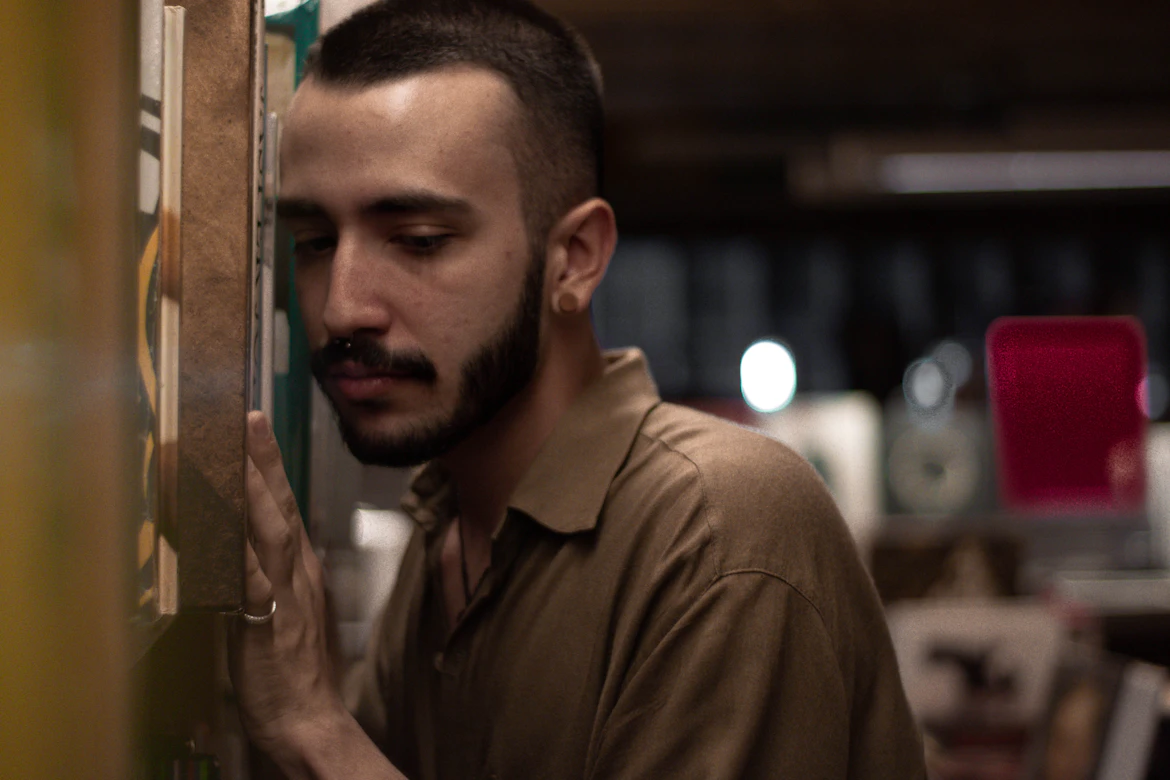

/ Image by Carol Magalhaes /

I often extol the virtue of silence and inner stillness, but today let’s honor the healing and transformative power of words.

We need to remind ourselves how essential dialog, communication — words — are if we hope to lessen the violence in the world.

This may sound like another platitude about communication and peace but there is something more essential to recognize here. Violence only erupts when we feel unable to speak or be heard. This is true in individuals and it is just as true in nation states. At first this may sound overly simplistic, but it is true — beneath the emotions and apparent complexities, violence is always an expression of feeling thwarted. The violence reflex occurs when words are not being exchanged. Words are the preventative medicine against violence.

Of course, the dilemma is that it is never one way. All parties must be listening as well as talking. But when expression is suppressed and the pathways of communication are shut down, that’s the time to duck.

Poetry is the pathway to peace. We’re talking real words, deep words. Words that matter. Words that speak with the weight of spirit.

Words, and more generally all forms of expression that give voice to our hopes and humanity, are the sign of well-being within society. Their absence signals violence brewing.

So a few words by Neruda for us today in honor of the words that free us, words the world waits to hear…

=

And it was at that age… Poetry arrived
in search of me.

The poet doesn’t seek poetry. Poetry seeks him. He is open, waiting, watching. He gives himself to that moment, until he became nameless, faceless–

there I was without a face
and it touched me.

–and that’s when poetry arrives.

Every art beneath its surface craft is about witnessing, seeing. And true seeing requires selflessness. (I use “seeing” in the fullest sense of deep perception. Music and listening fit comfortably within my definition of “seeing” too.) The ego-self always fogs our vision. When the ego is in the way, we just see reflections of ourselves, what the awareness has become used to. We see the surfaces of things.

Deep art requires stepping free from the ego’s blinders, to see honestly and fully. The ancient schools would say that only when we see without self do we have something to say. Only then is the artist ready.

and something started in my soul,
fever or forgotten wings,
and I made my own way,
deciphering
that fire

The path of the artist is also the path of awakening.

Egolessness, spiritual awakening, and art… This raises an obvious question: Why then do so many great artists embody just the opposite, exhibiting immense egos and imbalanced lives? Not everyone is taught to approach their art as a path of clarity and awakening, but there is still the artist’s desperate need to see beyond the limits of the ego. The result is that each artist develops his or her own unique way to lurch briefly free from ego to catch those pure moments of inspiration and vision.

and suddenly I saw
the heavens
unfastened
and open,
planets,
palpitating planations,
shadow perforated,
riddled
with arrows, fire and flowers,
the winding night, the universe.

Imbalanced and willful attempts to shake off the limits of mundane perception become traumatic for the psyche. The individual must then counterbalance by reinforcing the ego once again. This is why too many visionaries and artists turn to drink and other narcotics. It is in order to shift the consciousness and then to settle the resulting vertigo.

Better to cultivate openness, quiet, and wonder. Most of all, one must know the naked self. Only when we come to know who we really are free from the pretenses of the ego, only then are we able stand whole and unshaken before the immense vision.

And I, infinitesimal being,
drunk with the great starry
void,
likeness, image of
mystery,
I felt myself a pure part
of the abyss,
I wheeled with the stars,
my heart broke free on the open sky.

That mystery floods into us. We become it, and it moves through us, through arm, through hand and the pen it holds.

and I wrote the first faint line,
faint, without substance, pure
nonsense,
pure wisdom…

The best poets don’t write poetry. They don’t do anything at all. The best poets step aside and let the mystery speak through them.

May your heart break free on the open sky!


Recommended Books: Pablo Neruda

The Book of Questions Neruda: Selected Poems On the Blue Shore of Silence: Poems of the Sea Pablo Neruda: Selected Poems Extravagaria: A Bilingual Edition
More Books >>


Pablo Neruda, Pablo Neruda poetry, Secular or Eclectic poetry Pablo Neruda

Chile (1904 – 1973) Timeline
Secular or Eclectic

More poetry by Pablo Neruda

4 responses so far

Jun 30 2023

Kahlil Gibran – Good and Evil

Published by under Poetry

Good and Evil
by Kahlil Gibran

And one of the elders of the city said, Speak to us of Good and Evil.
And he answered:
Of the good in you I can speak, but not of the evil.
For what is evil but good tortured by its own hunger and thirst?
Verily when good is hungry it seeks food even in dark caves, and when it thirsts it drinks even of dead waters.

You are good when you are one with yourself.
Yet when you are not one with yourself you are not evil.
For a divided house is not a den of thieves; it is only a divided house.
And a ship without rudder may wander aimlessly among perilous isles yet sink not to the bottom.

You are good when you strive to give of yourself.
Yet you are not evil when you seek gain for yourself.
For when you strive for gain you are but a root that clings to the earth and sucks at her breast.
Surely the fruit cannot say to the root, “Be like me, ripe and full and ever giving of your abundance.”
For the fruit giving is a need, as receiving is a need to the root.

You are good when you are fully awake in your speech,
Yet you are not evil when you sleep while your tongue staggers without purpose.
And even stumbling speech may strengthen a weak tongue.

You are good when you walk to your goal firmly and with bold steps.
Yet you are not evil when you go thither limping.
Even those who limp go not backward.
But you who are strong and swift, see that you do not limp before the lame, deeming it kindness.

You are good in countless ways, and you are not evil when you are not good,
You are only loitering and sluggard.
Pity that the stags cannot teach swiftness to the turtles.

In your longing for your giant self lies your goodness: and that longing is in all of you.
But in some of you that longing is a torrent rushing with might to the sea, carrying the secrets of the hillsides and the songs of the forest.
And in others it is a flat stream that loses itself in angles and bends and lingers before it reaches the shore.
But let not him who longs much say to him who longs little, “Wherefore are you slow and halting?”
For the truly good ask not the naked, “Where is your garment?” nor the houseless, “What has befallen your house?”

— from The Prophet, by Kahlil Gibran


/ Image by Aymeric Lamblin /

As I was considering which poem to send out this morning, I came across this meditation on good and evil by Kahlil Gibran. I last featured this poem and commentary several years ago, and I thought it might be worth sharing again…

I like this meditation on good and evil. It challenges assumptions and and raises important questions.

You are good when you are one with yourself.

Gibran suggests there is only good, for that is everyone’s inherent nature, and what we call evil is simply being lost and uninspired. He calls us to be compassionate to those who are selfish and cruel, for they suffer from greater poverty than the homeless and greater hunger than the starving; they suffer from a poverty of the soul.

I strongly feel one should never passively allow the hard-hearted to inflict harm or hoard what belongs to all. Such actions must be opposed with strength and courage and clarity. The vulnerable must always be protected. That is a basic duty. But even success in such action does not stop the fundamental dynamic of harm, just that particular instance. We must always remember that those who inflict harm and encode selfishness into systems and institutions, those people are also seeking their way, just blinded by their spiritual poverty. That’s where the real, patient work of the ages is found… finding how to open eyes and hearts long used to to being shut, finding how to redirect them toward the forgotten goodness and generosity held within.

One line I do question, however, is, “Pity that the stags cannot teach swiftness to the turtles.” To suggest that some people are stags and others turtles might be read to imply that our spiritual unfolding is fixed. Every human being harbors something of heaven within. There is no speed to the process. All that is needed is the right reminder of what we already are. Then begins the steady process of discovering how to encourage that ember and let its warmth permeate all aspects of our lives. Turtles don’t need to become stags. Humans simply need to become themselves. Humans just need to become more human.

But how to reach those who would armor themselves against the urging of their own hearts? No simple formula, nor single action nor organization can accomplish this. Not a year nor a generation nor a century will accomplish this. Still, that is what must be done. That is the real, hard, slow work given to us all to accomplish, each in our own lives, our work, our world.

Knowing our work, let’s be impatient to begin and supremely patient in its accomplishment. Knowing our work, what cause is there for anything but joy in turning to it each day?

In your longing for your giant self lies your goodness: and that longing is in all of you.


Recommended Books: Kahlil Gibran

The Prophet The Beloved: Reflections on the Path of the Heart Broken Wings Jesus the Son of Man Kahlil Gibran: His Life & World
More Books >>


Kahlil Gibran, Kahlil Gibran poetry, Christian poetry Kahlil Gibran

Lebanon/US (1883 – 1931) Timeline
Christian
Secular or Eclectic

Continue Reading »

6 responses so far

Jun 09 2023

John Fox – The Poem Waits at Its Own Core

Published by under Poetry

The Poem Waits at Its Own Core
by John Fox

The poem at its core
Is snow or egg,
The new moon or grass
In spring.

All these pause at the edge
Of change. There is a deep
Stillness you must pass through
To get close to what waits.

At this edge, you leave
Everything behind
Except what the poem needs:
Warmth, rain, silence,
Gravity —
Make it something you know
Only for the first time:

A river, heartbeat,
Cradle, field of play.
The place where all things
Begin again.


/ Image by Nicolas Messifet /

I like the idea that animates this poem, that there is a sort of a poem within a poem, the real poem, so to speak, at the heart of the surface poem. And that inner poem, like “the new moon or grass in spring” is always on the edge of change.

To uncover that living part of the poem, we must cultivate stillness within ourselves–

There is a deep
Stillness you must pass through
To get close to what waits.

To get there we must let everything fall away, cling to nothing, arrive empty handed–

At this edge, you leave
Everything behind…”

And then we have that surprising line,

Except what the poem needs

What is it that the poem needs from us?

Warmth, rain, silence,
Gravity —

Then we are told to–

Make it something you know
Only for the first time

That’s something not to rush past. I’ve thought a lot about this idea in various forms as it applies to awareness and the spiritual path. The awareness is most alive and receptive when encountering something utterly new and for the first time. As we get older, however, with more experiences under our belt, very little feels new to us. As a result, our perception of life can feel coated with a heave veneer. We can feel numb, experiences are no longer fresh, meaning feels flattened. The real issue is not whether or not the experience is new, but whether we approach with openness. It’s not a question of always having new experiences, it is about cultivating still and receptive awareness.

A river, heartbeat,
Cradle, field of play.

It requires a sense of flow and centeredness and play.

Every experience, even one encountered daily, is unique and magical. Every experience is potentially a doorway into the unknown — when approached honestly and without projection.

Even a poem. Perhaps especially a poem.

It too becomes–

The place where all things
Begin again.

===

John Fox is the founder of the Institute for Poetic Medicine and the author of several excellent books on the healing power of poetry, including Poetic Medicine and Finding What You Didn’t Lose. Highly recommended reading!

Have a beautiful day!


Recommended Books: John Fox

Diamond Cutters: Visionary Poets in America, Britain & Oceania Poetic Medicine: The Healing Art of Poem-Making Finding What You Didn’t Lose: Expressing Your Truth and Creativity Through Poem-Making


John Fox, John Fox poetry, Secular or Eclectic poetry John Fox

US (Contemporary)
Secular or Eclectic

More poetry by John Fox

No responses yet

Jun 02 2023

Pat Schneider – Instructions for the Journey

Published by under Poetry

Instructions for the Journey
by Pat Schneider

The self you leave behind
is only a skin you have outgrown.
Don’t grieve for it.
Look to the wet, raw, unfinished
self, the one you are becoming.
The world, too, sheds its skin:
politicians, cataclysms, ordinary days.
It’s easy to lose this tenderly
unfolding moment. Look for it
as if it were the first green blade
after a long winter. Listen for it
as if it were the first clear tone
in a place where dawn is heralded by bells.

And if all that fails,

wash your own dishes.
Rinse them.
Stand in your kitchen at your sink.
Let cold water run between your fingers.
Feel it.

— from Olive Street Transfer, by Pat Schneider


/ Image by Alice Popkorn /

The self you leave behind
is only a skin you have outgrown.
Don’t grieve for it.

We are alive, and because we are alive, we change. We imagine we know who we are, that we are a fixed, certain self. But the truth is that we are continuously emerging from the old self into a new, unknown self.

If we think we are a certain thing, a certain person and that we fully understand that person, then we are not truly seeing ourselves as we are. The only fixed self is the old self, the past self, the self we have already shed. If we think we are that old self, then we feel a sense of loss and bewilderment. We are always working against the flow of life to become who we were yesterday or ten years ago.

Look to the wet, raw, unfinished
self, the one you are becoming.

There is something messy and uncertain about who we actually are right now. The self we are does not fit easily into the simple ideas of who we should be. And our evolution continues in this very moment. We are still becoming.

But that is where the life is. That is where the potential is.

Let us be kind to ourselves and accept the changing, emerging self. Let us be at ease with our own internal movement. Even at our most still, there is a gentle flow.

The world, too, sheds its skin…

The more we seek a static understanding of the self or the world, the more we miss the magic unfolding before us:

It’s easy to lose this tenderly
unfolding moment.

The more we set aside our ideas and expectations and past histories, the more we can simply be, with a sense of openness and wonder, the more we truly encounter the living mystery we are already participants in.

Look for it
as if it were the first green blade
after a long winter.

I rather like the pithy, down-to-earth final piece of advice:

And if all that fails,

wash your own dishes.
Rinse them.
Stand in your kitchen at your sink.
Let cold water run between your fingers.
Feel it.

I’ll let you in on a personal secret: I love to do dishes. That’s one of my household chores. I do dishes by hand several times a day. There is something satisfying about creating cleanliness and order from the moderate mess of daily domestic activity. The mind shifts into a low gear as the hands begin to work their own pattern while water and soap suds run through the fingers. It is a gentle massage for the entire household. It is a meditation made tactile.

Just doing that with easy attention can bring us back to truths that we miss amidst our grand efforts.

Have a beautiful weekend!


Recommended Books: Pat Schneider

Another River: New and Selected Poems Writing Alone and with Others Olive Street Transfer How the Light Gets In: Writing as a Spiritual Practice Wake Up Laughing: A Spiritual Autobiography
More Books >>


Pat Schneider, Pat Schneider poetry,  poetry Pat Schneider

US (Contemporary)

More poetry by Pat Schneider

3 responses so far

May 26 2023

Gabriel Rosenstock – a star

a star
by Gabriel Rosenstock

a star
a tree
and the longing in between

réalta
crann
is an tnúthán eatarthu

— from The Longing in Between: Sacred Poetry from Around the World (A Poetry Chaikhana Anthology), Edited by Ivan M. Granger

/ Image by AlicePopkorn /

Yesterday I was a guest on Dr. Laurel Trujillo’s podcast The Yoga Hour. We had a delightful, far reaching conversation on sacred poetry, healing, the importance of inspiration to feed the spirit… and the path of longing.

We started our conversation off with this poem by Gabriel Rosenstock, so naturally I decided to share it with all of you.

Without even formulating a complete sentence, Irish poet Gabriel Rosenstock gives us the whole spiritual endeavor—rootedness and aspiration, life, light, a terrible void, and the aching heart that impels us onward.

If longing poses the question, then union is the answer.

This vibrant tension between longing and union reminds me of a story told by the 10th century Persian Sufi master Junayd. When asked why spiritually realized masters weep, he responded by telling of two brothers who had been apart for years. Upon their reunion, they embraced and were filled with tears. The first brother declared, “What longing!” to which the second brother replied, “What joy!” Longing and fulfillment, the one is not separate from the other.

We think of longing as a state of lack. There is something or someone we want in our lives, but it is not there. Longing can feel hopeless. But longing is really a spectrum. That ache, that longing pulsates on one end, while union, wholeness, and completion eternally await on the other. It’s not that they’re separate, longing and union; they are connected. The one naturally flows into the other. Longing is not the lack of union; longing leads to union. Longing is an aspect of union. Longing is a landscape we learn and explore as part of the spiritual journey. As seekers we traverse that space between longing and union, becoming its student.

The mystic maps the territory between the soul and God, between lover and Beloved, between the little self and the true Self, between the transitory and the Eternal. The road connecting these is the road of longing. Mysticism is the science of longing.

Star and tree, longing fills their dreams, but they awaken touching.

=

Ivan Interview on The Yoga Hour

If you want to listen my discussion of sacred poetry on The Yoga Hour podcast, you can find it here:
https://www.theyogahour.com/episodes/sacred-poetry-insight-and-inspiration


Recommended Books: Gabriel Rosenstock

The Longing in Between: Sacred Poetry from Around the World (A Poetry Chaikhana Anthology) Haiku Enlightenment: New Expanded Edition Bliain an Bhandé – Year of the Goddess Uttering Her Name Where Light Begins: Haiku
More Books >>


Gabriel Rosenstock, Gabriel Rosenstock poetry, Secular or Eclectic poetry Gabriel Rosenstock

Ireland (1949 – )
Secular or Eclectic
Primal/Tribal/Shamanic : Celtic

Continue Reading »

2 responses so far

May 12 2023

Abhishiktananda, Swami (Henri Le Saux) – Return within

Published by under Poetry

Return within
by Abhishiktananda, Swami (Henri Le Saux)

English version by H. Sandeman (?)

Return within,
to the place where there is nothing,
and take care that nothing comes in.
Penetrate to the depths of yourself,
to the place where thought no longer exists,
and take care that no thought arises there!
There where nothing exists,
Fullness!
There where nothing is seen,
the Vision of Being!
There where nothing appears any longer,
the sudden appearing of the Self!
Dhyana is this!

— from Guru and Disciple: An Encounter with Sri Gnanananda, a Contemporary Spiritual Master, by Swami Abhishiktananda / Translated by H. Sandeman


/ Image by MikkoLagerstedt /

Return within…

A powerful description of deep meditation. (The word dhyana in the last line means meditation.)

There where nothing exists,
Fullness!

Abhishiktananda keeps mentioning nothing and nothingness, but each time that nothingness is entered into, we are greeted with fullness, the vision of Being, and ultimately, the appearance of the Self.

In the practice of Advaita Vedanta, everything is recognized as the Self — which a Catholic might recognize as the purified sense of being that is utterly identified with God until only God remains. When the thinking mind is brought to deep silence (“the place where thought no longer exists”), and we get so quiet that we allow the spacious stillness to wash over us, clearing away everything, including the small, grasping ego-self, that is the place “where nothing exists.”

But, in that place “where there is nothing,” that is, nothing that feels like a thing or an object, not even the personal self-thing, we then discover an unexpected flood of life and fullness and bliss.

There where nothing is seen,
the Vision of Being!

Perception shifts and everything is seen as a radiant Unity, the Vision of Being

There where nothing appears any longer,
the sudden appearing of the Self!

One’s very identity changes. What one was has ceased to exist, swept away in the vision of vastness. One’s sense of self is no longer a collection of qualities and habits and social projections. Instead, everything is found within and that Self has no boundaries!

Dhyana is this!

That is dhyana, true meditation.


Recommended Books: Abhishiktananda, Swami (Henri Le Saux)

Guru and Disciple: An Encounter with Sri Gnanananda, a Contemporary Spiritual Master The Secret of Arunachala: A Christian Hermit on Shiva’s Holy Mountain The Further Shore Swami Abhishiktananda: Essential Writings Prayer
More Books >>


Abhishiktananda, Swami (Henri Le Saux), Abhishiktananda, Swami (Henri Le Saux) poetry, Christian poetry Abhishiktananda, Swami (Henri Le Saux)

France, India (1910 – 1973) Timeline
Christian : Catholic
Yoga / Hindu : Advaita / Non-Dualist

Continue Reading »

5 responses so far

May 05 2023

Nizamoglu – The Path of Amazement

Published by under Poetry

The Path of Amazement
by Seyyid Seyfullah Nizamoglu

English version by Jennifer Ferraro and Latif Bolat

I cannot say who it is I am
      I am amazed, I am amazed!

I cannot call this self ‘myself’
      I am amazed, I am amazed!

Who is in my eyes seeing?
Who is in my heart enduring?
Who is inhaling and exhaling?
      I am amazed, I am amazed!

Who is speaking with my tongue?
Who is listening with my ears?
Who is understanding with my mind?
      I am amazed, I am amazed!

Who is stepping with these feet?
Who is tasting with my mouth?
Who is chewing and who swallowing?
      I am amazed, I am amazed!

Who holds these riches in his hand?
Who is the one throwing them away?
Who is buying and who selling?
      I am amazed, I am amazed!

Why is there life coursing below my skin?
Why are my eyes bloodshot from crying?
Why this religion, why this faith?
      I am amazed, I am amazed!

O Seyyid Nizamoglu, hear this:
Everything comes from the One.
Abandon yourself to this mighty beauty
      I am amazed, I am amazed!

— from Quarreling with God: Mystic Rebel Poems of the Dervishes of Turkey, Translated by Jennifer Ferraro / Translated by Latif Bolat


/ Image by Randy Jacob /

I cannot say who it is I am
      I am amazed, I am amazed!

This poem so interesting to me because of the way it fits with non-dualist traditions. The term “non-dualism” comes from the assertion or realization that there is no so such thing as duality. Despite the apparent multiplicity of existence, with its dizzying kaleidoscope of people and places and things, there is in reality only one unified Being. Carrying this insight further, there is no separate self, no self separate from other selves, no self separate from God.

Who is in my eyes seeing?
Who is in my heart enduring?
Who is inhaling and exhaling?

Some non-dualist pathways specifically use practices like this, a rigorous inquiry into the senses and perception, working through the layers of awareness. You might start by asking, What is it I see? What is it I feel with my touch? Then, How does perceiving this make me feel? What are my reactions? How do I tense or relax? Do I become agitated with anticipation of pleasure or pain? What thoughts does this perception trigger, and do I believe them?

And so the practice progresses, moving deeper until we begin to ask questions about the source of perception and awareness, from what to who. Who is thinking and feeling and perceiving? Who is it looking through my eyes? Who is it, really, who tastes that orange or listens to that songbird?

When we really look for that self, we don’t find it. There is an unexpected emptiness where we have always imagined the most important thing in the universe — one’s self — to be.

But then something wondrous happens. That emptiness lights up! We find instead a spacious, radiant being of bliss that is timeless and utterly whole.

We find not the self, but the Self.

I cannot call this self ‘myself’
      I am amazed, I am amazed!

We find that we are not the wounded, isolated being we so long imagined ourselves to be.

Instead, seated there in grandeur is something unimagined, immense beyond description, filled with an all-embracing love and quiet clarity. And amazingly, that someone is at rest within you! (If you can say you exist at all, which you can’t.)

Abandon yourself to this mighty beauty
      I am amazed, I am amazed!

Have a beautiful day on this path of amazement!


Recommended Books: Seyyid Seyfullah Nizamoglu

Quarreling with God: Mystic Rebel Poems of the Dervishes of Turkey


Seyyid Seyfullah Nizamoglu

Turkey (16th Century) Timeline
Muslim / Sufi

Continue Reading »

2 responses so far

Apr 28 2023

Ramprasad – Meditate on Kali!

Published by under Poetry

Meditate on Kali! Why be anxious?
by Ramprasad (Ramprasad Sen)

English version by Rachel Fell McDermott

Meditate on Kali! Why be anxious?
The night of delusion is over; it’s almost dawn.
The sun is rising, dispelling
thick nets of darkness, and lotuses are blooming thanks to Siva
at the top of your head.
The Vedas throw dust in your eyes; blind too
the six philosophies. If even the planets
can’t fathom Her
who will break up these fun and games?
There are no lessons between teacher and student
in a market of bliss.
Since She owns the actors, the stage, and the play itself
who can grasp the truth of the drama?
      A valiant devotee who knows the essence — he
      enters that city.
Ramprasad says, My delusion is broken;
who can bundle up fire?

— from Singing to the Goddess: Poems to Kali and Uma from Bengal, Translated by Rachel Fell McDermott


/ Image by Keenan Constance /

I have been rereading The Gospel of Sri Ramakrishna. Ramakrishna was a devotee of the Mother Goddess Kali and, in fact, was a priest in the Kali temple of Dakshineswar in Kolkata (Calcutta). He loved to recite the poems of Ramprasad…

Meditate on Kali! Why be anxious?
The night of delusion is over; it’s almost dawn.

Kali is a form of the Great Mother who is usually associated with darkness and the night. As the Mother, she brings all into birth, but she is also often identified with death and destruction. The death she brings, however, is the death of illusion. For this reason she is sometimes thought of as representing the terrifying aspect of the Divine, but Kali is only terrifying when we cling to our illusions. She destroys our illusions to free us from them. Her destruction, properly understood, is an act of maternal love. So, why be anxious?

The sun is rising, dispelling
thick nets of darkness, and lotuses are blooming thanks to Siva
at the top of your head.

In Indian metaphysics, there is often discussion of the Kundalini energy — which is an expression of the Goddess — rising from the base of the spine up lighting up the chakras and the awareness until it reaches the crown chakra, which is often described as a thousand-petalled lotus and the seat of Siva. Ramprasad’s simple line is an encapsulation of enlightenment, where the Goddess energy of Kundalini/Kali joins with the God energy of Siva “at the top of your head.” That marriage of divine energies within the individual dispels the “thick nets of darkness” amidst enlightenment.

Ramprasad then goes wild! Filled with the ecstasy of enlightenment, he taunts us with the ineffectiveness of scriptures and philosophy:

The Vedas throw dust in your eyes; blind too
the six philosophies.

We can’t read our way to Truth. We can’t philosophize our way to Truth. We can’t think our way into heaven. The intellect can find truths but not Truth.

What to do?

If even the planets
can’t fathom Her
who will break up these fun and games?

Ramprasad refers to the fundamental dilemma of existence as “fun and games.” The Divine Mother is mistress of creation, existence, as well as the karmas and illusions that keep us caught within them. But so too does She clear them away. To Kali, this is all play — lila — a vast game of manifestation and return to Source.

So, what if we’ve grown tired of these fun and games?

There are no lessons between teacher and student
in a market of bliss.

This is the line that stands out to me. Ramprasad seems to be saying that techniques and philosophies — the lessons — are not the essential element passed from teacher to student. It is the bliss. Bliss is direct and pure, the experience itself, free from conceptual trappings.

To use a modern analogy, we might think of the lessons, the teachings and techniques and rituals, as being the capsule. They are the delivery mechanism. But bliss is the medicine.

Of course, at a certain point we recognize that bliss is everywhere. We stand in the midst of a bustling “market of bliss.”

Ramprasad says, My delusion is broken;
who can bundle up fire?

Can the fire of enlightenment be contained? Can it be organized into a nice, neat teaching? Or do we just let it consume us and light up the world in the process?

=

It’s a beautiful spring day here in Oregon. I hope you are having a lovely day too!


Recommended Books: Ramprasad (Ramprasad Sen)

This Dance of Bliss: Ecstatic Poetry from Around the World Singing to the Goddess: Poems to Kali and Uma from Bengal Kali: The Black Goddess of Dakshineswar Mother of the Universe: Visions of the Goddess and Tantric Hymns of Enlightenment Great Swan: Meetings with Ramakrishna
More Books >>


Ramprasad (Ramprasad Sen)

India (1718? – 1775?) Timeline
Yoga / Hindu : Shakta (Goddess-oriented)

Continue Reading »

One response so far

Apr 14 2023

Abu-Said Abil-Kheir – If you keep seeking

Published by under Poetry

If you keep seeking the jewel of understanding
by Abu-Said Abil-Kheir

English version by Vraje Abramian

If you keep seeking the jewel of understanding,
then you are a mine of understanding in the making.
If you live to reach the Essence one day,
then your life itself is an expression of the Essence.
Know that in the final analysis you are that
which you search for.

— from Nobody, Son of Nobody: Poems of Shaikh Abu-Saeed Abil-Kheir, Translated by Vraje Abramian


/ Image by saeed mhmdi /

Easter was last Sunday. Passover just ended. And, for my Muslim friends, it is the holy month of Ramadan. Regardless of spiritual tradition, it is a good time of year to recognize new life and renewed spirit ready to awaken within us…

This poem speaks a direct truth that should be obvious, but somehow isn’t.

If you live to reach the Essence one day,
then your life itself is an expression of the Essence.

When we focus on a goal, when we turn our hearts and all our thoughts and energies toward it, we begin to take on the qualities of that which we strive for. We could say that we become what we seek, but that’s not exactly what Abu-Said Abil-Kheir is saying; rather, we eventually discover that we are what we seek. What we seek we find inside. It has always been there, we must simply search.

When we are reminded of this truth, a hidden tension in the soul eases. There is always a nagging question: Will I achieve my goal? Am I foolish to even pursue it? This poem’s insight dismantles that self-defeating inner dialog. Through seeking we necessarily succeed. The seeking itself defines us and opens us, awakening recognition of the goal with us always.

Know that in the final analysis you are that
which you search for.

Have a beautiful day!


Recommended Books: Abu-Said Abil-Kheir

The Longing in Between: Sacred Poetry from Around the World (A Poetry Chaikhana Anthology) This Dance of Bliss: Ecstatic Poetry from Around the World The Drunken Universe: An Anthology of Persian Sufi Poetry Nobody, Son of Nobody: Poems of Shaikh Abu-Saeed Abil-Kheir Love’s Alchemy: Poems from the Sufi Tradition
More Books >>


Abu-Said Abil-Kheir

Turkmenistan (967 – 1049) Timeline
Muslim / Sufi

Continue Reading »

4 responses so far

Mar 24 2023

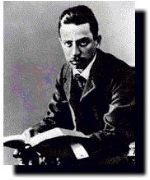
Rainer Maria Rilke – I live my life in widening circles

Published by under Poetry

I live my life in widening circles
by Rainer Maria Rilke

English version by Anita Barrows and Joanna Macy

I live my life in widening circles
that reach out across the world.
I may not ever complete the last one,
but I give myself to it.

I circle around God, that primordial tower.
I have been circling for thousands of years,
and I still don’t know: am I a falcon,
a storm, or a great song?


/ Image by GPS /

I don’t normally pay much attention to website statistics, but a few days ago I received a notice that one page on the Poetry Chaikhana website was spiking — the page with this poem by Rilke. That always gets me wondering, why the sudden interest in this poem? Is this poem part of a school curriculum and all the students decided to Google the same poem at once? Was this poem featured somewhere, on a radio program maybe, and all of the listeners wanted to look it up online? Another mystery of the Poetry Chaikhana…

But, when I went to my website and reread the poem myself, I thought, Ooh, this is good. I should share it again with everyone. So here you go, thanks to the mysterious actions of the world wide web…

I live my life in widening circles
that reach out across the world…

I circle around God, that primordial tower.

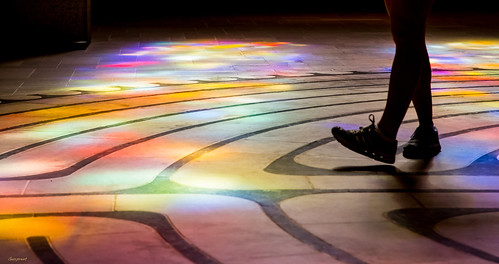
These images of circles and circling, revolving around a great center he names God, it makes me think of the cathedral labyrinths of Europe. Or the ancient spiral glyphs carved into rocks and cave faces. I see the circling pathway around some secret center. The road can be bewildering, twisting and turning, keeping us disoriented and uncertain of how near we are, but ever moving inward.

And that courageous line–

I may not ever complete the last one,
but I give myself to it.

We walk the winding path, not out of certainty, but because it is the only path worth walking. Walking that road, quietly, with attention, one foot in front of the other, becomes meditation. It becomes worship. Each ring, whether near or far, is a layer of our lives that is blessed by our passing through it.

Walking the circling path is not only the way to the center, it is actually part of the center. We learn to participate in the center by first walking the path. Obsession with the destination becomes an impediment to reaching it. Instead, by patiently inhabiting each step, we discover the center in ourselves… and then our feet naturally end up there.

We walk with our whole selves–

but I give myself to it…

and I still don’t know: am I a falcon,
a storm, or a great song?

On this roundabout road to God, we question our own nature. We encounter the mystery of self. Who and what are we really? Ultimately, it is in that questioning of a self that eludes definition where we find the still center.


Recommended Books: Rainer Maria Rilke

The Enlightened Heart: An Anthology of Sacred Poetry Ahead of All Parting: The Selected Poetry and Prose of Rainer Maria Rilke The Soul is Here for its Own Joy: Sacred Poems from Many Cultures Rilke’s Book of Hours: Love Poems to God In Praise of Mortality: Rilke’s Duino Elegies & Sonnets to Orpheus
More Books >>


Rainer Maria Rilke, Rainer Maria Rilke poetry, Secular or Eclectic poetry Rainer Maria Rilke

Germany (1875 – 1926) Timeline
Secular or Eclectic

More poetry by Rainer Maria Rilke

6 responses so far

Mar 17 2023

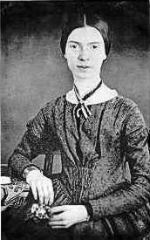
Emily Dickinson – I taste a liquor never brewed

I taste a liquor never brewed
by Emily Dickinson

I taste a liquor never brewed —
From Tankards scooped in Pearl —
Not all the Vats upon the Rhine
Yield such an Alcohol!

Inebriate of Air — am I —
And Debauchee of Dew —
Reeling — thro endless summer days —
From inns of Molten Blue —

When “Landlords” turn the drunken Bee
Out of the Foxglove’s door —
When Butterflies — renounce their “drams” —
I shall but drink more!

Till Seraphs swing their snowy Hats —
And Saints — to windows run —
To see the little Tippler
Leaning against the — Sun —

— from The Complete Poems of Emily Dickinson, Edited by Thomas H. Johnson


/ Image by Matheus Ferrero /

I taste a liquor never brewed —
From Tankards scooped in Pearl…

This poem should be read alongside the ecstatic wine poems of the Sufi saints.

None but the drunkard knows
      the tavern’s secrets —
how could the sober unveil
      the mysteries of that street?
~ Fakhruddin Iraqi

So let him weep for himself,
      one who wasted his life
            never having won a share
      or measure of this wine.
~ Umar ibn al-Farid

Wine… Why do so many mystics from all traditions talk of wine and drunkenness when speaking of ecstatic states of enlightenment? How do I, as a person who does not drink alcohol, understand this sacred wine fixation? Is it just a universally agreed upon metaphor to shock the orthodox? Well, yes, but it is more than that. The mystic’s wine is not wine, yet it is also more than a game of words. This wine is subtle but very real. It can be experienced in a profound, even physical manner.

Inebriate of Air — am I —
And Debauchee of Dew —

In certain states, a flowing substance is felt upon the palette, with a taste of ethereal sweetness that can be compared with wine or honey. This is the amrita of yogis, the ambrosia of the Greeks, the prophetic mead of the Norse shamans, the awen of the druids. There is a sensation of drinking a subtle liquid, accompanied by a warming and expanding of the heart. The attention blissfully turns inward, the eyelids grow pleasantly heavy and the gaze may become unfocused. A giddy smile naturally spreads across the face for no apparent reason. When the ecstasy comes on strongly, the body can tremble, sometimes the consciousness even leaves the body.

With these experiences, it not only makes sense for mystics to use the language of wine. Observers sometimes mistake this state for actual drunkenness.

This is the drink of initiation.

To many modern commentators, Emily Dickinson was a victim of unfulfilled love, a recluse who had become obsessed with death. I read this poem and I hear the words of a radiant awakened soul, someone ecstatically reeling through endless summer days.

Have a beautiful day discovering that sweet, secret dew!


Recommended Books: Emily Dickinson

The Longing in Between: Sacred Poetry from Around the World (A Poetry Chaikhana Anthology) The Complete Poems of Emily Dickinson This Dance of Bliss: Ecstatic Poetry from Around the World Women in Praise of the Sacred: 43 Centuries of Spiritual Poetry by Women The Enlightened Heart: An Anthology of Sacred Poetry
More Books >>


Emily Dickinson, Emily Dickinson poetry, Secular or Eclectic poetry Emily Dickinson

US (1830 – 1886) Timeline
Secular or Eclectic
Christian : Protestant

Continue Reading »

One response so far

Mar 10 2023

Czeslaw Milosz – On Angels

Published by under Poetry

On Angels
by Czeslaw Milosz

All was taken away from you: white dresses,
wings, even existence.
Yet I believe in you,
messengers.

There, where the world is turned inside out,
a heavy fabric embroidered with stars and beasts,
you stroll, inspecting the trustworthy seams.

Short is your stay here:
now and then at a matinal hour, if the sky is clear,
in a melody repeated by a bird,
or in the smell of apples at close of day
when the light makes the orchards magic.

They say somebody has invented you
but to me this does not sound convincing
for the humans invented themselves as well.

The voice — no doubt it is a valid proof,
as it can belong only to radiant creatures,
weightless and winged (after all, why not?),
girdled with the lightening.

I have heard that voice many a time when asleep
and, what is strange, I understood more or less
an order or an appeal in an unearthly tongue:

day draw near
another one
do what you can.

— from Against Forgetting: Twentieth-Century Poetry of Witness, Edited by Carolyn Forche


/ Image by Sixteen Miles Out /

This poem raises some interesting questions as it wrestles with the idea of angels and spiritual realities in general.

In the opening verse, although Milosz asserts that he believes in the “messengers” or angels, it also speaks from a thoroughly modern viewpoint. First, he points out the process of demythologizing, the stripping away of tangibility from the notion of angels in modern consciousness: “All was taken away from you: white dresses, / wings, even existence.”

When Milosz proclaims “Yet I believe in you, messengers,” he knows he is making a bold statement. Because of modern sensibilities, it is assumed that one does not believe in angels, at least not publicly among intellectuals. What would have been, in past centuries, a bland statement of belief, reads as startlingly sincere, maybe even intentionally naive in a modern poem.

As the poem continues, however, we begin to wonder if he is talking about the same notion of angels that the religiously minded might imagine. He offers us not winged, robed titans of the sky, but instead something ephemeral, delicate, all too easily missed. Milosz’s angels are the presence that rides in upon living moments and touch a hidden part of ourselves…

Short is your stay here:
now and then at a matinal hour, if the sky is clear,
in a melody repeated by a bird…

His angels seem to be that special touch upon the awareness when we truly encounter the moment… through the call of a bird before dawn, the warm scent of apples at sunset, when we pause and recognize that magic reaching out to us. What is it that reaches out to us? What is it that touches us and revives? Why not name it an angel? A messenger, a voice.

Czeslaw Milosz is a modern poet writing for a modern audience, what isn’t modern is his internal quiet. The modern mind is too often caught in staccato details, yet gently filling this entire poem is a sense of rest, wholeness, even timelessness. This poem quietly glows.

When we adopt Milosz’s stillness and learn to truly pay attention, we might just feel the brush of angel wings “in the smell of apples at close of day / when the light makes the orchards magic.”


Recommended Books: Czeslaw Milosz

New and Collected Poems 1931 – 2001 The Collected Poems Against Forgetting: Twentieth-Century Poetry of Witness To Begin Where I Am: The Selected Prose of Czeslaw Milosz A Treatise on Poetry
More Books >>


Czeslaw Milosz, Czeslaw Milosz poetry, Secular or Eclectic poetry Czeslaw Milosz

Poland (1911 – 2004) Timeline
Secular or Eclectic
Christian : Catholic

Continue Reading »

One response so far

Feb 17 2023

Dorothy Walters – The Abundance of Brightness

The Abundance of Brightness
by Dorothy Walters

      God is not unknown on account of obscurity
      but on account of the abundance of brightness.
            — St. Thomas Aquinas

1.
Dante Mounting to the Rose of Heaven

Not one of us
could breathe this air,
face this naked radiance
unscathed.
Here music turns to light,
a tone so sweet
that we, dulled by
our familiar calliope,
mistake its sound for silence.

Dante, mounting to tiers of
trembling flame,
found light. Light everywhere.
Circles, wheels,
light on light,
a dance of invisibles.
The flames pulsating, as if
measuring the breath of heaven.
At the last, he falls forward,
caught in widening rings
of implacable bright.

2.
At Eleusis

Even at Eleusis,
after the long journey,
the sea-bath among the sacred waves,
the accounts of the grieving mother
and her vanished child,
at the end
the shouts rang out
like birth-cries in the throats
of the startled pilgrims, blinded
by the flare of torches sweeping
from frames of darkness.
Then silence. Then they saw.

3.
A Celebration

And then quiet.
Someone who whispers:
now we are free.

Which was, almost,
true,
but only in the way
a bird,
leaving a limb,
goes freely into
a different realm,
an atmosphere
more pure,
more transparent,
but that, too,
maintaining its fixities.

4.
The Clinging

[for those who] have beheld the Tao… gems sparkle on dusty roads; puddles appear as pools of lapis lazuli; tough weeds acquire fragile beauty…
      — John Blofield

The I Ching calls it clinging, fire:
“Fire has no definite form,”
it says,
“but clings to the burning object
and thus is bright.”

— from Marrow of Flame : Poems of the Spiritual Journey, by Dorothy Walters


/ Image by Jackson David /

I found out a few days ago that Dorothy Walters passed away at the beginning of this week. She would have been 95 next month.

Dorothy and I had been good friends for nearly 20 years. She reached out to me over the Internet in the early days of the Poetry Chaikhana, back when I had just put the website up and had begun circulating these poetry emails. At the time, she still lived in San Francisco but, as a retired professor, she had deep ties to where I lived in Boulder, Colorado and its university, and she soon moved back.

We liked to meet for brunch and far-ranging conversations. We also, for awhile, met together with a few others to read and discuss spiritual poetry.

Though a few decades younger than her, I was often in awe of her energy. She attended multiple groups exploring questions of spirituality, psychology, and human awareness. Invariably, everyone was drawn to her small frame and big heart. She contributed essays to a few different books on Kundalini experience, and she spoke several times at different Kundalini conferences. On top of all that, she maintained many rich, personal correspondences with people all over the country and the world who contacted her to discuss their experiences of spiritual and energetic opening.

She has been a special presence in the world — and in my own life. As I enter my elder years, I hope to follow her example of joyful, enthusiastic, and heartfelt service. She continues to be an inspiration.

Thank you, Dorothy!


Recommended Books: Dorothy Walters

The Longing in Between: Sacred Poetry from Around the World (A Poetry Chaikhana Anthology) This Dance of Bliss: Ecstatic Poetry from Around the World Marrow of Flame : Poems of the Spiritual Journey The Ley Lines of the Soul: Poems of Ecstasy and Ascension Diamond Cutters: Visionary Poets in America, Britain & Oceania
More Books >>


Dorothy Walters, Dorothy Walters poetry, Secular or Eclectic poetry Dorothy Walters

US (1928 – 2023) Timeline
Secular or Eclectic

Continue Reading »

No responses yet

Jan 27 2023

Yoka Genkaku – Just take hold of the source (from The Shodoka)

Published by under Poetry

Just take hold of the source (from The Shodoka)
by Hsuan Chueh of Yung Chia / Yoka Genkaku

English version by Robert Aitken

Just take hold of the source
And never mind the branches.
It is like a treasure-moon
Enclosed in a beautiful emerald.
Now I understand this Mani-jewel
And my gain is the gain of everyone endlessly.


/ Image by Unknown. Child: Ivan_M_Granger /

Just take hold of the source
And never mind the branches.

These lines express the essentialism of Zen so well. We are reminded not to dally about with the endless manifestations of the mind and its experiences — even ‘spiritual’ experiences.

Picture a tree for a moment, an ancient tree with a strong trunk. This is the tree of pure awareness. The trunk is the central structure, the source, the foundation of reality, while the branches are the many phenomena that emerge. Each branch is the perception of an experience, an object, a sensation, an encounter, an event. Most people hover at the outer reaches of the tree, and they only ever know the touch of its branches. It is easy to spend an entire lifetime there fascinated by the play of light upon the leaves, endlessly seeking the sweet fruits that grow there, imagining each branch to be its own separate, unrelated experience. And there is always one more branch to explore. There is always one more experience to be had.

But if we really want to know the nature of this tree that is everything to us, then we must find a sturdy branch and trace its route in to the central trunk. We follow the pathways of the mind to the core of still awareness from which mind emerges. Only then do we see what it is that the branches express. Only then do we understand the nature of experience, mind, and awareness. Only then do we know ourselves and our true relationship to the world we experience.

When Hsuan Chueh proclaims that “my gain is the gain of everyone endlessly,” he is reaffirming what mystics have always asserted, that, in that moment of pure awareness, all conflicts, opposites, disharmonies, even past and future, are resolved within the individual. For those who, through compassion, wish to bring healing to the world, the way to do this is to first bring the world to resolution within oneself, and then all actions naturally lead toward establishing that balance externally. Or perhaps we should say all of the world is found to be within oneself. When the world is resolved within, the mind ceases to project false images externally. Resolving the world within, brings “gain” to oneself and automatically brings “gain” to everyone else since everything emanates from that single point of resolution and there is nothing truly external.

And my gain is the gain of everyone endlessly.

(PS- That photo of the boy in the tree… that’s me in the early 1970s.)


Recommended Books: Hsuan Chueh of Yung Chia / Yoka Genkaku

This Dance of Bliss: Ecstatic Poetry from Around the World Buddhism and Zen


Hsuan Chueh of Yung Chia / Yoka Genkaku

China (665 – 713) Timeline
Buddhist : Zen / Chan
Taoist

Continue Reading »

3 responses so far

Jan 16 2023

Jane Hirshfield – The Task

Published by under Poetry

The Task
by Jane Hirshfield

It is a simple garment, this slipped-on world.
We wake into it daily — open eyes, braid hair —
a robe unfurled
in rose-silk flowering, then laid bare.

And yes, it is a simple enough task
we’ve taken on,
though also vast:
from dusk to dawn,

from dawn to dusk, to praise, and not
be blinded by the praising.
To lie like a cat in hot
sun, fur fully blazing,

and dream the mouse;
and to keep too the mouse’s patient, waking watch
within the deep rooms of the house,
where the leaf-flocked

sunlight never reaches, but the earth still blooms.

— from The October Palace: Poems, by Jane Hirshfield


/ Image by Kinga Cichewicz /

I just recently rediscovered this poem by Jane Hirshfield.

Some of her phrases grab hold of you–

It is a simple garment, this slipped-on world.

And–

And yes, it is a simple enough task
we’ve taken on,
though also vast

This poem seems to me to be an exploration of the way we awaken each morning to the day, and to the world. It’s a simple enough action; we do it every day, day after day, seemingly without effort or thought. Yet, it is also an immense undertaking each morning: We emerge from a land of rest and sleep and the fluid reality of dreams, we stretch, and rise into the immense reality of the shared tangible world. We step from one immense reality and step into a new immense reality. Simple, right?

What is she suggesting with her imagery of cat and mouse? This is just my reading of it, but knowing Jane Hirshfield to be a Buddhist practitioner, I suspect she is saying something about meditation and mind. Perhaps the meditator’s mind is like the cat; it must come to rest within the luminosity of consciousness. Then perhaps it can dream the mouse.

And the mouse is that hidden, hard-to-find deep mind, nestled safely in the secret corners of the house. The sunlight of daily consciousness may not reach there, but still awareness sees, and life blooms.

What do you think? Do you read it a different way?


Recommended Books: Jane Hirshfield

Women in Praise of the Sacred: 43 Centuries of Spiritual Poetry by Women Given Sugar, Given Salt: Poems The Lives of the Heart: Poems The October Palace: Poems Of Gravity & Angels
More Books >>


Jane Hirshfield, Jane Hirshfield poetry, Secular or Eclectic poetry Jane Hirshfield

US (Contemporary)
Secular or Eclectic
Buddhist

More poetry by Jane Hirshfield

4 responses so far

Jan 06 2023

Ryokan – The thief left it behind

Published by under Poetry

The thief left it behind
by Ryokan

English version by Stephen Mitchell

The thief left it behind:
the moon
at my window.

— from The Enlightened Heart: An Anthology of Sacred Poetry, by Stephen Mitchell


/ Image by Ganpathy Kumar /

A poem for us on this full moon–

Ryokan’s reputation for gentleness was sometimes carried to comical extremes. A tale is told that, one day when Ryokan returned to his hut he discovered a robber who had broken in and was in the process of stealing the impoverished monk’s few possessions. In the thief’s haste to leave, he left behind a cushion. Ryokan grabbed the cushion and ran after the thief to give it to him.

This event prompted Ryokan to compose this haiku, one of his best known poems.

The moon is a common metaphor, especially among the Zen poets, to represent enlightened awareness. In this haiku Ryokan is laughing at the absurdity of the theft. “The thief left it behind,” he foolishly couldn’t recognize the one great treasure the poor monk possessed — “the moon,” enlightenment — and, instead, took an armload of worthless junk. (To point out what a petty haul it was, Ryokan even ran after the thief with the missed cushion — perhaps a nudge toward meditation.) Any sort of theft of Ryokan’s possessions was a pointless act because, of course, who can take the moon from his window — or enlightenment from his awareness? Ryokan is amused and invites us to join in his laughter.


Recommended Books: Ryokan

The Longing in Between: Sacred Poetry from Around the World (A Poetry Chaikhana Anthology) The Enlightened Heart: An Anthology of Sacred Poetry Haiku Enlightenment: New Expanded Edition The Poetry of Zen: (Shambhala Library) Dewdrops on a Lotus Leaf: Zen Poems of Ryokan
More Books >>


Ryokan, Ryokan poetry, Buddhist poetry Ryokan

Japan (1758 – 1831) Timeline
Buddhist : Zen / Chan

Continue Reading »

3 responses so far

« Prev - Next »