Jul 12 2017
Confusion to certainty
Confusion to certainty.
Certainty to disillusionment.
Disillusionment to understanding.
But wonder wipes the slate clean!
Jul 12 2017
Confusion to certainty.
Certainty to disillusionment.
Disillusionment to understanding.
But wonder wipes the slate clean!
Jun 23 2017
It is Not Enough
by David Whyte
It is not enough to know.
It is not enough to follow
the inward road conversing in secret.
It is not enough to see straight ahead,
to gaze at the unborn
thinking the silence belongs to you.
It is not enough to hear
even the tiniest edge of rain.
You must go to the place
where everything waits,
there, when you finally rest,
even one word will do,
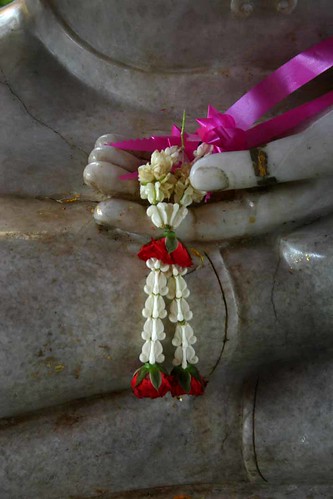
one word or the palm of your hand
turning outward
in the gesture of gift.
And now we are truly afraid
to find the great silence
asking so little.
One word, one word only.
“It is Not Enough” from Where Many Rivers Meet by David Whyte. Copyright © 1990, 2004 by David Whyte. Used by permission of the author and Many Rivers Press (www.davidwhyte.com) All rights reserved.
/ Image by babasteve /
As I know many of you have experienced in recent weeks, we too here in Colorado have had several hot days. Then last night, a burst of rain. This morning cool, damp, overcast. Even the starlings are stunned with relief and are quiet.
Reading today’s poem by David Whyte, it feels as if he is exploring a deep insight, but what he is actually saying is not entirely clear. Let’s try to puzzle it out together.
It is not enough to see straight ahead,
to gaze at the unborn
thinking the silence belongs to you.
I suspect he is saying something about not becoming too self-satisfied even with our most spiritually open states, that we shouldn’t become convinced that we possess those moments.
You must go to the place
where everything waits…
When I think of waiting, I imagine a patient stillness, but also uncertainty. And in that uncertainty our awareness remains open, receptive, alive. In possession and certainty, the awareness becomes fixed, taking in less and less of the flowing mystery.
there, when you finally rest,
even one word will do,
one word or the palm of your hand
turning outward
in the gesture of gift.
This, to me, is the heart of the poem.
But what is this “one word” the poet refers to? David Whyte’s writings aren’t particularly steeped in Christian terminology, so he is not likely to be making a reference to The Word as Christians understand it.
He draws an equivalency between that one word and the palm of an open hand in the gesture of a gift — a beautiful image. This one word suggests a lack of self and lack of clinging, and that becomes a gift or an offering.
And now we are truly afraid
to find the great silence
asking so little.
Now that we are resting, waiting, having passed through insight without clinging to it, free from self, bathing in the great silence, that’s when he brings up fear. But the fear is not of the silence, rather that so little is asked of us.
I take this to mean that we are so intent on action, on doing. Even in our spiritual opening, we expect some impulse or divine command to do something with it. But instead the reflex to act fades away. One profoundly and simply IS.
We don’t do, we open. Like a hand in a gesture of gift. Like the lips parting to utter one single word.
One word, one word only.
What do you think this poem is saying? Do you read this poem differently?
Recommended Books: David Whyte
 |
 |
|||
| The House of Belonging | Where Many Rivers Meet | |||

|
David Whyte
US (1955 – ) |
Jun 21 2017
You who want
by Hadewijch
English version by Jane Hirshfield
You who want
knowledge,
seek the Oneness
within
There you
will find
the clear mirror
already waiting
 — from Women in Praise of the Sacred: 43 Centuries of Spiritual Poetry by Women, Edited by Jane Hirshfield

/ Image by Lea Chvrl /
“You who want
knowledge…”
I suppose that is all of us. We all want knowledge.
Society tells us that “knowledge is power,” but we don’t really have a clear sense of what knowledge is. In the modern era, we tend to think of knowledge as information, data. We think of knowledge as the feeding and exercise of the intellect. All of that is certainly important, but real knowledge is something else.
We can’t think our way into heaven.
When mystics speak of “knowledge” they speak of gnosis. This is not information, but a profound Knowing. The knowledge we are talking about has more to do with full awareness. It is as if one floats in the vast ocean of knowingness itself. This “knowledge” is an all-encompassing recognition of meaning and interrelationship. It is direct and permeates one’s whole being. It is the full bodied perception that living meaning somehow flows through all of existence, unifying everything within a living self-awareness.
Information is observational, external, and always limited. This is not to say that gnostic knowledge has nothing to do with informational knowledge, however. In spiritually open states, one’s intuition may be refined and heightened. Clear insight about a certain person or situation may just pop into your mind as a fully formed understanding, as if you suddenly see the whole pattern without having to work so hard to connect all of the individual bits of information. But this is more of a byproduct, an ornamentation on the face of knowledge, not the knowledge itself.
Real knowing, gnosis, is alive, all-permeating, all-unifying. It reconnects us within the living whole… and leads us into ecstasy.
…seek the Oneness
within
This is why, real knowing is about seeking oneness, turning within, learning to see ourselves honestly, truly, clearly.
Surprisingly, none of this knowledge is ever acquired. It isn’t a new possession or experience or even a new thought. It is already here, at rest in the center of things. When it is found, it is as familiar as our bones. It is our very nature. It is already waiting.
There you
will find
the clear mirror
already waiting
Have a beautiful day!

|
Hadewijch |
Jun 09 2017
What is Left to Say
by Lisel Mueller
The self steps out of the circle;
it stops wanting to be
the farmer, the wife, and the child.
It stops trying to please
by learning everyone’s dialect;
it finds it can live, after all,
in a world of strangers.
It sends itself fewer flowers;
it stops preserving its tears in amber.
How splendidly arrogant it was
when it believed the gold-filled tomb
of language awaited its raids!
Now it frequents the junkyards
knowing all words are secondhand.
It has not chosen its poverty,
this new frugality.
It did not want to fall out of love
with itself. Young,
it celebrated itself
and richly sang itself,
seeing only itself
in the mirror of the world.
It cannot return. It assumes
its place in the universe of stars
that do not see it. Even the dead
no longer need it to be at peace.
Its function is to applaud.
 — from Alive Together: New and Selected Poems, by Lisel Mueller

/ Image by matoses /
I have read several of Lisel Mueller’s poems in the past, and liked them very much, but I haven’t particularly sought them out. Earlier this week a friend in Australia sent me this poem, however, and I now realize I have been missing out.
There is so much gentle wisdom in this poem, how we think of our self.
Language gives us so many opportunities to trip ourselves up. This is especially true when speaking of grand but intangible concepts. We can speak of the self and mean the Self, the eternal presence we all are at the core of our being, or we can say the self and mean the mask, the social identity, the ego. It is this smaller, constructed self that the poet explores here.
The self steps out of the circle;
it stops wanting to be
the farmer, the wife, and the child.
We adopt roles in life, or they are given to us — child, spouse, parent, with a certain career, a social status, a circle of friends, a set of interests — we gather up that collection of roles, and we say to ourselves and the world, “This is me. This is who I am. This is my self.”
We try so hard to be those things. But it never quite works.
It is not necessarily that those roles don’t suit us. The real problem is that, no matter how fulfilling or well-suited those roles may be for us, we are not our roles. Each role we enact is a form of expression, a story we tell within the larger social story. But, as I have said elsewhere, no story can contain us.
At some point wisdom guides us to stop identifying with those stories, whether or not we continue to live through them. We cease to be farmer, wife, or child. Instead, we are as we are. Then, from that unlimited sense of who we really are, we may choose to engage in make-believe, playing at being farmer, wife, or child.
It stops trying to please
by learning everyone’s dialect;
it finds it can live, after all,
in a world of strangers.
So much of the self facade we create is an attempt to fit in, to see acceptance in the eyes of those around us. Even when we are in conflict, that clash is itself a taut sort of partnership.
To really emerge from the confines of this artificial self, we need to curtail the reflex to please and be understood by others. As we allow ourselves to be ourselves, we become mysterious, undefined, fluid.
Some can only see that surface self and so become strangers. Others may not know exactly what is happening with you, but they feel the change, the deeper currents in who you are, allowing a deeper part of themselves to respond and adjust to you.
It sends itself fewer flowers;
it stops preserving its tears in amber.
Uh huh.
This confection we have created of how we want to present ourselves to the world, it’s no longer the constant focus of our infatuation. And the dramas and hurts we’ve cherished and defined ourselves by, they are simply part of the story, and not the most interest part.
I particularly like these lines–
Young,
it celebrated itself
and richly sang itself,
seeing only itself
in the mirror of the world.
This really gets to the heart of how this limited sense of self becomes a hindrance to spiritual unfolding. Even when the self we have constructed is positive and compassionate and noble, even then the little self eclipses our vision and we do not see reality directly as it is. It is as if we live inside an egg-shaped bubble, and all we see, wherever we go, with whomever we interact, is our own face reflected back to ourselves. Every relationship is really us interacting with some part of ourselves. Every action and accomplishment is us in worshipful communion with that reflection.
But at some point we just grow tired and stop projecting that constructed face up against the mirror of the world that surrounds us. We grow quiet and stop telling stories in our heads about who we are. And we just look. We see for the first time.
What do we see then? We witness a splendid tapestry of being laid out across the stars. A strange shift in perspective occurs: On the one hand, that little self we primped and pushed over a lifetime seems insignificant and lifeless; yet, on the other hand, we feel a new sense of self, wide open, at home among the stars.
Its function is to applaud.
Have a beautiful weekend!
Recommended Books: Lisel Mueller
|
 |
 |
 |
|
| Alive Together: New and Selected Poems | Second Language: Poems | The Need to Hold Still: Poems | Dependencies: Poems | |

|
Lisel Mueller
US & Germany (1924 – ) |
Jun 02 2017
No tongue can tell Your secret
by Hakim Sanai
English version by Priya Hemenway
No tongue can tell Your secret
for the measure of the word obscures Your nature.
But the gift of the ear
is that it hears
what the tongue cannot tell.
 — from The Book of Everything: Journey of the Heart’s Desire, by Hakim Sanai Al-Ghaznavi / Translated by Priya Hemenway
/ Image by Sophie Charlotte /
Today we contemplate a verse by the great Sufi poet Sanai. I especially wanted to feature Sanai out of respect the the many people killed by the recent bombing in Afghanistan. In a country traumatized for centuries by the colonial intentions of world superpowers from without and harassed by pockets of reactionary extremism from within, it is worth remembering that Rumi was born in Afghanistan, Sanai was from Afghanistan, Ansari, Rahman Baba… Afghanistan has given the world some of our greatest spiritual and poetic voices. I bow in deep respect to the people of Afghanistan.
=
This verse has an elegant subtlety, and is trimmed with a thin edge of wit. Here Sanai is playing with the mystic’s dilemma of words.
No tongue can tell Your secret
for the measure of the word obscures Your nature.
The direct encounter with the Divine can’t truly be put into words. Words are a creation of the limited mind, powerful, certainly, but limited. Words, even when masterfully wielded, can only describe limited aspects of limited reality. Words imply a fracturing of reality into countless objects, an impassible duality of observer and observed, describer and described. How can words properly convey the undivided Wholeness?
(There is really no ‘encounter’ the way I just phrased it, because that implies two separates meeting, when there is really only the profound recognition of unity. Words fail the Wholeness.)
Seeing this limitation, some teachers construct complex frameworks of descriptions. Some hint and suggest and riddle. Some fall silent. What is said and what is left unsaid… a fascinating game. But it is only the encounter (which is not really an encounter) that conveys the truth of all this.
The “tongue cannot tell” these things properly. “But the gift of the ear / is that it hears” anyway. That is, when we truly and openly listen, an inner whisper begins to draw the awareness beyond the descriptions, the suggestions, the silences. And suddenly there we stand, outside of all words and concepts that obscure while they define. There we stand, witnessing, participating in the living Wholeness that is the divine nature of undivided Reality.
I like the game of words, perhaps too much. But it is time for my tongue to rest and let the ear enjoy its gift…
=
And to all of our Muslim friends and neighbors, Ramadan Mubarak! May this Ramadan season be one of blessings and spiritual renewal for you.
Recommended Books: Hakim Sanai

|
Hakim Sanai
Afghanistan (1044? – 1150?) Timeline |
May 26 2017
I Am Like a Rose
by D. H. Lawrence
I am myself at last; now I achieve
My very self, I, with the wonder mellow,
Full of fine warmth, I issue forth in clear
And single me, perfected from my fellow.
Here I am all myself. No rose-bush heaving
Its limpid sap to culmination has brought
Itself more sheer and naked out of the green
In stark-clear roses, than I to myself am brought.
 — from The Complete Poems of D. H. Lawrence, by D. H. Lawrence

/ Image by *clairity* /
I am myself at last
This is the feeling of it.
We finally recognize what has always been present, most intimate, the foundation of everything. The “you” you thought of as yourself has faded like a ghost, and you discover the real You, the solid You, that has been quietly waiting to be noticed.
Full of fine warmth, I issue forth in clear
And single me…
Often this awareness is accompanied by a delightful sense of heat, a joyous fire smoldering in the body, a “fine warmth” indeed.
No rose-bush heaving
Its limpid sap to culmination has brought
Itself more sheer and naked out of the green
In stark-clear roses, than I to myself am brought.
I love his lines about bringing himself “sheer and naked out of the green” like a “rose-bush heaving / Its limpid sap to culmination” … “In stark-clear roses.” The true Self flowers while standing naked and “stark-clear”. It needs nothing to clothe itself or hide behind. The Self is too immense and free to be anything other than it is. It knows itself as it is and requires no false mask of appearance, so it stands joyful, singular, clear, naked, with contented “wonder mellow.”
Here I am all myself.
Recommended Books: D. H. Lawrence

|
D. H. Lawrence
England (1885 – 1930) Timeline |
May 24 2017
My heart breaks for the people of Manchester traumatized by the recent bombing there.
Every time a terrible incident like this happens, whether it occurs in the west, or Turkey, India, Pakistan, wherever, I always want to make a statement. But it is easy to sound bland or ineffective or, worse, hypocritical.
I won’t try to suggest simplistic solutions, political or spiritual. What it absolutely does require is an engaged heart, courage, rather than fear, and clear seeing.
May 24 2017
The Temple and the Body
by Basava
English version by A. K. Ramanujan
The rich
will make temples for Siva.
What shall I,
a poor man,
do?
My legs are pillars,
the body the shrine,
the head a cupola
of gold.
Listen, O lord of the meeting rivers,
things standing shall fall,
but the moving ever shall stay.
 — from Speaking of Siva, by A K Ramanujan

/ Image by wharman /
The wealthy prove their piety by financing temples (or churches or mosques…). Their devotion is concretized in stone and gold. It’s easy for a poor man, witnessing the splendor of a wealthy shrine, to imagine himself far behind on the road to heaven. What can he offer to compete with that? What temple can he build to offer proper worship?
Basava gives us the solution offered by saints everywhere: Make of yourself a temple.
My legs are pillars,
the body the shrine,
the head a cupola
of gold.
This is where all true meditation, prayer, communion occurs. The built temple is but a reflection of the temple of the self. And that true temple is available to all, rich and poor, equally.
Basava carries it further, pointing out how far superior the inner temple is. “Things standing,” structures built of wood or stone, no matter how lovely or inspiring, are destined to fall. A temple of stone stands but does not move. It lacks the life necessary to continually adjust itself to the shifting forces of time and gravity and the flow of nature all around; it is already crumbling.
…but the moving ever shall stay.
That which is animated, the temple of the embodied self, has life! It dances with the flow of existence… and that life continues. Worship that takes place within that living temple lives as well, and lasts.
Basava’s reminder to us: Regardless of whether we worship beneath a golden cupola or beneath the arch of the open sky, only meditation and prayer and communion that takes place within the living temple of the self matters, because that is what lives and lasts. Wherever you are, whatever your role in life, make of yourself a holy temple. More important than monuments of stone are monumental living souls.
|
 |
|||
| Speaking of Siva | The Yoga Tradition: Its History, Literature, Philosophy and Practice | |||
|
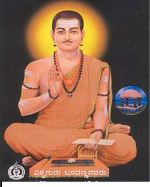
Basava
India (1134 – 1196) Timeline |
May 19 2017
OM
by Paramahansa Yogananda
Whence, whence this soundless roar doth come,
When drowseth matter’s dreary drum?
On shores of bliss, Om, booming, breaks!
All earth, all heaven, all body shakes!
Cords bound to flesh are broken all,
Vibrations burst, meteors fall!
The hustling heart, the boasting breath,
No more shall cause the yogi’s death;
All nature lies in darkness soft,
Dimness of starlight seen aloft;
Subconscious dreams have gone to bed…
‘Tis then that one doth hear Om’s tread;
The bumble-bee now hums along —
Hark! Baby Om doth sing His song!
From Krishna’s flute the call is sweet:
‘Tis time the Watery God to meet!
Now, the God of Fire is singing!
Om! Om! Om! His harp is ringing.
God of Prana now is sounding —
Wondrous, breathing-bells resounding!
O! Upward climb the living tree;
Hark to the cosmic symphony.
From Om, the soundless roar! From Om
The call for light o’er dark to roam.
From Om the music of the spheres!
From Om the mist of nature’s tears!
All things of earth and heaven declare,
Om! Om! Resounding everywhere!
 — from Whispers from Eternity, by Paramahansa Yogananda

/ Image by Marketa /
A meditation today on Omkara, the primal sound of being, by the great early 20th century ambassador of yogic philosophy, Paramahansa Yogananda.
Whence, whence this soundless roar doth come
When the attention is turned inward a soft sound is heard. At first it might be like the quiet chirping of crickets in the night, the hum of beesong (“The bumble-bee now hums along –“), or the flowing of a gentle stream. It is heard as a random, soothing “white noise” that seems to emanate from the base of the skull.
‘Tis then that one doth hear Om’s tread
When focused upon with a still mind and deep attention, this sound resolves into a clearer pitch that can resemble the pure note of a flute or the ringing of a bell. First it is heard and, finally, felt throughout the body.
This sound is Krishna’s flute calling his devotees to him (“From Krishna’s flute the call is sweet”). It is the ringing of the bells of paradise (“Wondrous, breathing-bells resounding”). Wordless, it is the vibratory Word through which creation manifests.
On shores of bliss, Om, booming, breaks!
This sound signals the beginning of deep meditation. The more we open to the sound, the more the attention is drawn heavenward while the divine flow pours through us.
Yogananda makes some other important yogic references in this poem worth our contemplation:
The hustling heart, the boasting breath,
No more shall cause the yogi’s death
In some forms of yogic practice, part of the goal is to settle the energies of the body so profoundly that breath and heartbeat themselves are suspended, allowing the subtler energies to flow unimpeded. The energetic demands and rhythms of the body no longer disrupt the deepest communion and, thus, no longer “cause the yogi’s death,” which is separation from the Eternal. (It should be obvious, however, that attempting such practices can be dangerous without knowledgeable guidance.)
Dimness of starlight seen aloft…
Most meditation practices encourage the restful centering of the eyes beneath closed lids, focusing either upward toward the center of the brow (common in most yogic practices), or downward to the tip of the nose (some Buddhist practices). Either focal point causes the attention to settle at the point between the eyebrows — the ajna chakra or “third eye.” When this energetic center becomes spiritually activated, and the meditator is in deep quiet, a glowing point or ball of light is witnessed internally. This is the initiate’s star, the “Star of the East” that leads us to enlightenment. As the meditator focuses on this point of light, the subtle energies awaken and begin to rise upward, toward the light, toward enlightenment…
O! Upward climb the living tree…
Yogananda is referring here to the shushumna, the central energetic pathway that runs up the spine. It is often described as a tree. A primary goal of yoga is to awaken the spiritual energies and awareness commonly trapped at the base of the spine until they rise up the shushumna “tree” to the crown, initiating enlightenment.
So let’s remember to pause, to grow quiet, and to listen for that sweet, secret sound…
OM
Recommended Books: Paramahansa Yogananda
|
 |
 |
||
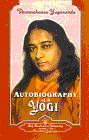
| Whispers from Eternity | Autobiography of a Yogi | The Rubaiyat of Omar Khayyam Explained | ||

|
Paramahansa Yogananda
India (1893 – 1952) Timeline |
May 19 2017
The path of forgiveness
is the path of freedom.
Forgiveness is a rebellion
against the ego’s self-importance.
May 18 2017
The Welsh have a tradition of honoring the winner of their National Eisteddfod poetry competitions with with a custom made chair. These chairs are works of art, many of them, thrones dedicated to their great poets.
Several known chairs from the last century and a half have gone missing, however. This is a fascinating half-hour documentary of one poet’s search for those lost chairs, especially for the chairs awarded to Dewi Emrys, the only poet to have been awarded four chairs.
The video is in the Welsh language, with English subtitles, making it that much more of a cultural adventure.
May 12 2017
Coming to know You
by Ayaz
Coming to know You
Is like being
Dismantled from the inside
One tenacious fibre
At a time
Slowly a space opens
Then a chamber
Then the sky
Into which
Flocks of doves
Are constantly being released.
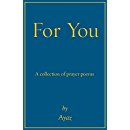 — from For You: A Collection of Prayer Poems, by Ayaz

/ Image by EquinomChaidez /
The poetry of Ayaz arrived in my mail box a few years ago. The small paperback book came with a brief note, and no contact information. All I have been able to find out is that Ayaz is the Sufi name of Angus Landman.
Ayaz’s poems are short prayers and flashes of insight. Despite their simplicity and lack of ornamentation, these poems keep inviting me to re-read them.
Just two statements in this poem. Being dismantled. Opening up.
Coming to know You
Is like being
Dismantled from the inside
One tenacious fibre
At a time
The more we come to know the divine, the more our old sense of self is taken apart. Each resistant piece is gently, patiently worked free and set aside to be viewed for what it is.
Slowly a space opens
Then a chamber
Then the sky
Into which
Flocks of doves
Are constantly being released.
The gaps created may feel like wounds at first, but slowly, as more of the artificial self is dismantled, the spaces created reveal more and more. Until an inner sky opens before us. How can such unexpected joy and life be found there?
Perhaps we should we just call it the smile of the Beloved.
Have a beautiful day!
|
 |
|||
| For You: A Collection of Prayer Poems | For You Too | |||
|
Ayaz
England (Contemporary) |
May 09 2017
Sorrow looted this heart
by Abu-Said Abil-Kheir
English version by Vraje Abramian
Sorrow looted this heart,
and Your Love threw it to the winds.
This is how the secret which saints and seers were denied
was whispered to me.
 — from Nobody, Son of Nobody: Poems of Shaikh Abu-Saeed Abil-Kheir, Translated by Vraje Abramian

/ Image by Lin Zhizhao /
Why does Abu-Said open this poem with such a gloomy line about sorrow?
Sorrow and loss have an important role in sacred traditions. When we lose something or someone important to us, it is natural to grieve. But there is more going on there — a painful sort of awakening is occurring.
When things or people become important to us, when we think of them as being necessary to our daily lives, that is a sign that we have begun to identify with them. We see ourselves in those people, things, experiences.
Yet, because we have identified with them and come to believe that they are essential to our ongoing existence, their loss is seen by the confused ego as a form of self-death.
In loss, there is an opportunity: We get to witness our own “death.” Over a lifetime, loss happens periodically. Yet, when we start to really pay attention, we are surprised by our continuing life in the midst of that loss. Over time, if we approach loss with heart and attention, we stop identifying with the naturally shifting world around us. This doesn’t mean we stop loving the people in our lives, nor do we need to stop valuing important objects and experiences in our lives — it just means that when they recede from our lives at the proper time, it is no longer a life and death crisis for the ego.
Ultimately, the only sorrow that is real is the burning desire for return to unity with the Divine. This is what Abu-Said is talking about when he opens this poem with the line, “Sorrow looted my heart.” That fundamental ache for union takes over the sincere seeker’s heart, emptying it of all else.
The irony is that when we finally stop identifying with the endless parade of external experiences — the many external gains and losses — we discover that we have never been in any way separated from the essential unity. By clinging to external gain and struggling to prevent external loss, we train our awareness to fixate on the outward shifting phenomena of life… and lose sight of the stable unity that we inherently are amidst that kaleidoscopic show.
Through courageous openness, through utter surrender to the natural process of change and occasional loss, we slowly (at times, painfully) lose our false identification with what was not truly our self. Through fearless “sorrow,” possessiveness is slowly lost or, as the poet says, the heart is “looted.” We become completely free from false identification and attachments that no longer serve the spirit.
It is at that moment of freedom that the point of identity settles properly within our true nature, finally witnessing our being everywhere, without limit, without true loss. We are flooded with an indescribable joy and love and sense of wholeness. It is as if the heart has been expanded incomprehensibly by that love and thrown “to the [formless, everywhere present] winds.”
This is one of the very difficult lessons for us all, the willingness to embrace sorrow, fearlessly, with unedited awareness, with profound self-kindness. This slowly frees us from misidentification with external experiences that come and go. It loosens our grip on the limited ideas of who and what we really are. Slowly, the awareness returns to rest at the center — and from there expands beyond our imaginings.
It is the broken heart that opens.
Recommended Books: Abu-Said Abil-Kheir
|
Abu-Said Abil-Kheir
Turkmenistan (967 – 1049) Timeline |
May 05 2017
In Silence
by Thomas Merton
Be still.
Listen to the stones of the wall.
Be silent, they try
to speak your
name.
Listen
to the living walls.
Who are you?
Who
are you? Whose
silence are you?
Who (be quiet)
are you (as these stones
are quiet). Do not
think of what you are
still less of
what you may one day be.
Rather
be what you are (but who?)
be the unthinkable one
you do not know.
O be still, while
you are still alive,
and all things live around you
speaking (I do not hear)
to your own being,
speaking by the unknown
that is in you and in themselves.
“I will try, like them
to be my own silence:
and this is difficult. The whole
world is secretly on fire. The stones
burn, even the stones they burn me.
How can a man be still or
listen to all things burning?
How can he dare to sit with them
when all their silence is on fire?”
— from The Strange Islands: Poems by Thomas Merton, by Thomas Merton

/ Image by bpkuk1978 /
I thought I’d continue with the theme of silence from Monday’s poem…
I love the questions that impregnate this poem.
Be silent, they try
to speak your
name.
Does your name have any inherent meaning?
Are you your name?
When people call your name, are they calling you, or some idea of you?
If you are not your name, what is the purpose of a name?
If you are not your name, what then do you call yourself?
Listen
to the living walls.
Who are you?
Who
are you? Whose
silence are you?
This is more than a question, really, almost an insistent demand: Who are you? Who are you?
But the question isn’t tossed to the busy, thinking mind, which has a thousand quick answers. Merton insists on silence. Remove the background of environment, society, relationship, even thoughts about yourself. THEN ask the question, Who are you? WHO are you?
Who (be quiet)
are you (as these stones
are quiet).
In that open silence, the question shifts and morphs. WHAT are you?
Perhaps you are someone else’s dream…?
Or someone else’s silence…?
Are you separate from the silence?
Do you even exist in that emptiness?
Have you simply imagined yourself?
Can you re-imagine yourself?
HOW would you re-imagine yourself?
Rather
be what you are (but who?)
be the unthinkable one
you do not know.
Who (be quiet) are you?
O be still, while
you are still alive,
and all things live around you
speaking (I do not hear)
to your own being,
speaking by the unknown
that is in you and in themselves.
Merton suggests that there is a grand, universal dialog occurring all around us — in that overlooked silence. Everything is alive, and flowing through that life is a silence, and that silence is speaking to us.
You say you do not hear. But be silent, be quiet, be still. And you will realize that you are already part of the conversation.
“I will try, like them
to be my own silence:
Yes! We want to BE our own silence!
To be filled with noise is to be distracted from one’s own self. To recognize our own silence, to be comfortable with it, to BE it — that requires nothing less than to be at ease with one’s heart and to rest like royalty there.
…and this is difficult. The whole
world is secretly on fire.
The whole world burns with this stillness. There is a light and a dancing life hidden in the silence.
How can a man be still or
listen to all things burning?
How can he dare to sit with them
when all their silence is on fire?
And that silent fire can be overwhelming, frightening, for it consumes everything, including one’s ego and one’s name. So how can one be still in the midst of such a conflagration?
The bold dare the heat… and come to rest in the silence.
Recommended Books: Thomas Merton
 |
 |
 |
|
|
| Selected Poems of Thomas Merton | The Collected Poems of Thomas Merton | A Thomas Merton Reader | The Strange Islands: Poems by Thomas Merton | Thomas Merton Monk & Poet: A Critical Study |
|
Thomas Merton |
May 01 2017
I create silences
by Gabriel Rosenstock
Dar Óma
I create silences
wherever I go
in silence You come to me
I close my eyes and ears
to worlds
my lips
if people ask for directions
I point to the gibbous moon
when asked how I am
I smile the cusp of an eclipse
should someone ask the time
they’ll see in my eyes
it is Dar Óma time
to pray
and to praise
all of creation
is getting in the mood
insects flit silently
movement
but no rustle from trees
I cannot hear my heartbeat
in a distant land
You move noiselessly
sunlight briefly strokes the haggard face of a mountain
a hare cocks his ears
You listen
 — from Uttering Her Name, by Gabriel Rosenstock

/ Image by JolieARTphotography /
I am back. Let’s resume our poetic conversations…
Thoughts about the Goddess have been in my mind recently, the feminine face of God, the Divine Mother. Going through rough periods in life, especially when our pretense of control is brushed aside by circumstance, we naturally turn to the Divine in the loving, protective, creative, supportive aspect of the Mother.
I was reminded of the cycle of goddess poems in Uttering Her Name by the wonderful Irish poet, Gabriel Rosenstock.
Dar Óma, is an Irish goddess, daughter of Oghma, who gave the gift of writing to the Celts. So we might relate to Dar Óma as a goddess of poetry and inspiration, a divine muse.
If we spend much time with her, the goddess’s enchanting wordplay somehow leads us into a world of secret silences.
in silence You come to me
It is from the well of silence that poetry in its full magic comes to us. Real words are born in silence. The magic of ourselves is shown to us in silence. Life awakens in silence. And a little-known goddess of poetry stands revealed as the Mother Goddess Herself, the Source from which all being is born.
Time to notice the sunlight caressing the face of the weary mountain, and fall silent…
should someone ask the time
they’ll see in my eyes
it is Dar Óma time
to pray
and to praise
Have a beautiful day, full of sweet silences!
Recommended Books: Gabriel Rosenstock

|
Gabriel Rosenstock
Ireland (1949 – ) |