Jan 24 2025
excluding
Who am I excluding from my heart?
How can I fix that?
Jan 17 2025
may my heart always be open to little
by e. e. cummings
may my heart always be open to little
birds who are the secrets of living
whatever they sing is better than to know
and if men should not hear them men are old
may my mind stroll about hungry
and fearless and thirsty and supple
and even if it’s sunday may i be wrong
for whenever men are right they are not young
and may myself do nothing usefully
and love yourself so more than truly
there’s never been quite such a fool who could fail
pulling all the sky over him with one smile
 — from E.E. Cummings: Complete Poems 1904-1962, by e. e. cummings
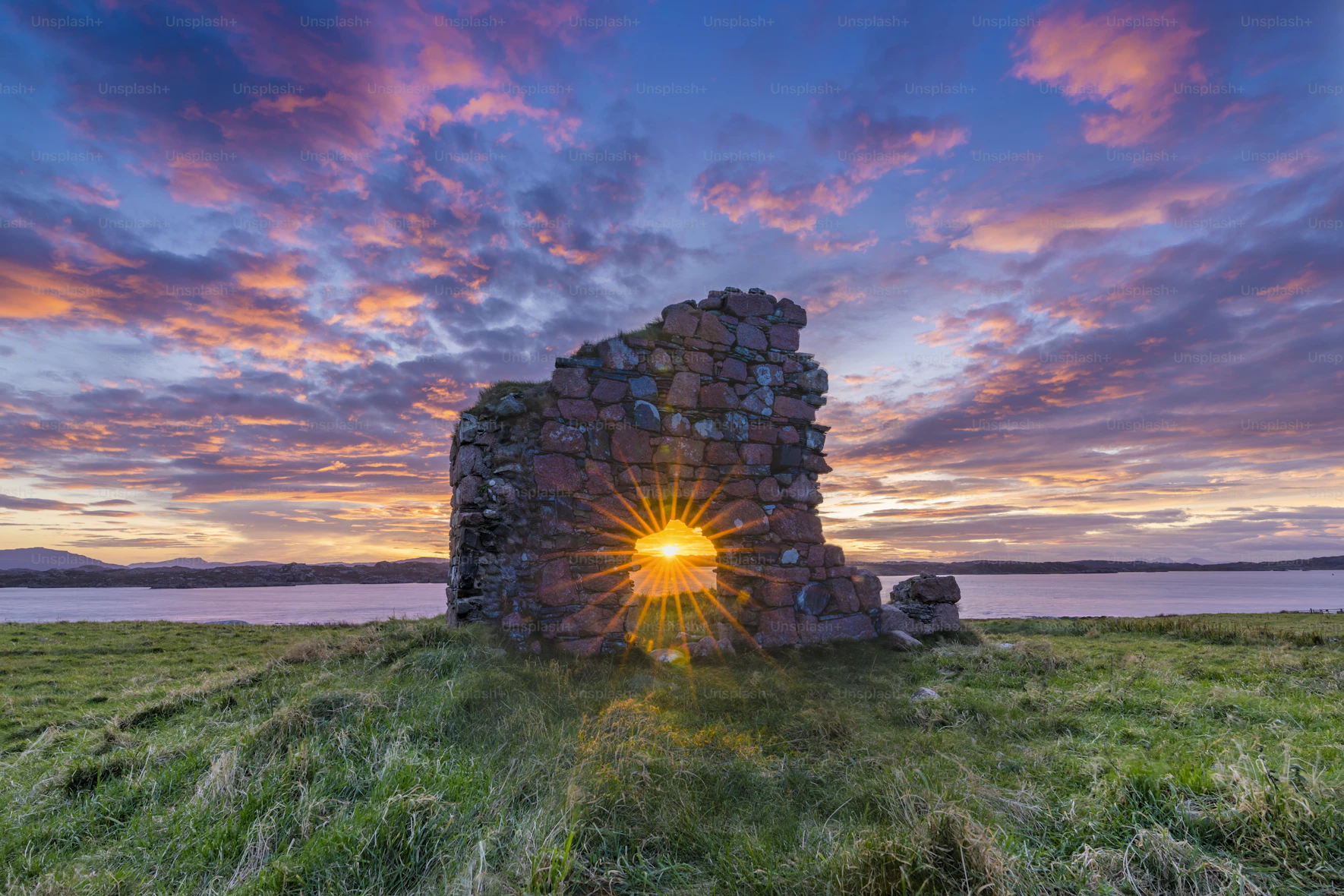
/ Image by Dan Bojorquez /
I want to start by addressing the fires still raging in Southern California. I was an adolescent in the LA area, not far from where many of the fires are now burning. I no longer have family in the area and I haven’t been back in many years, but I have history there, formative moments associated with those places. I carry the imprint of the land with me. So, even from a distance, the fires feel personal.
To all of you affected more directly by the fires, my heart goes out to you and your communities.
The rhythms of the world feel as if they have shifted. The hills surrounding LA have always been prone to fires, but never with such destruction and size. Just as many areas have always been vulnerable to hurricanes, but never with such size and ferocity and frequency. It feels as if few places on the planet are truly stable and reliable these days, requiring us to dig deep to discover an inner source of security while becoming supremely flexible in dealing with a shifting landscape — all while trying to help and ease suffering where we can. I guess our work is laid out for us…
Now, on to today’s poem–
Boy… e.e. cummings.
Any commentary or thoughts you want to share? Me, I’m not sure I want to touch this one! Anything that betrays too much of a fixed reading of this poem feels misplaced. (“for whenever men are right they are not young”)
far better to roll wordlets with otherthan meanings
and let them pool slow in the honey-glad heart
I think I’ll just reread the poem…
may my mind stroll about hungry
and fearless and thirsty and supple
Be well making your way through this perilous, wondrous world.
Recommended Books: e. e. cummings
|
 |
 |
 |
|
| E.E. Cummings: Complete Poems 1904-1962 | 73 Poems | 1 x 1 [One Times One] | 50 Poems | 95 Poems |
| More Books >> | ||||
|
e. e. cummings
US (1894 – 1962) Timeline |
Jan 17 2025
Love and compassion are effortless.
The soul is exhausted by the effort
to stop this natural outpouring
of the living heart.
Jan 03 2025
What is Tao?
by Lu Tung Pin
English version by T. C. Lai
What is Tao?
It is just this.
It cannot be rendered into speech.
If you insist on an explanation,
This means exactly this.
/ Image by Mael Balland /
Happy New Year!
What is Tao?
It is just this.
I remember the first time I tried to navigate through the Tao Te Ching as a teenager. There was undeniably something beautiful and poetic about it, but it was so infuriatingly vague! What is “the Tao”? Calling it The Way doesn’t help. Are we talking about God? A path or a practice? Something else? Other Taoist writings were the same, taunting me with endless non-definitions. (I wanted clear goals I could aggressively pursue!)
It took me years to begin to appreciate this approach…
It cannot be rendered into speech.
There’s a real dilemma at the heart of religion and spiritual endeavor. The Eternal, the Whole cannot be adequately held by such small containers as words. Yet we humans are instinctively communicators and word-makers. What are the sages and saints to do with their perceptions? How do they render the Eternal comprehensible to others and inspire new seekers? Describe the profound love and bliss and unity, and we naturally name it Mother. Convey the immensity and power, we name it Father. Or we say Beloved. Or Friend.
All of these are valid ways to begin to form a notion of the Eternal. Through these words we as individuals can form a relationship to this vast Reality. And through this relationship we can be drawn into deeper awareness, into deeper opening, and into our own direct encounter… at which point we realize how inadequate all words are.
The problem arises when the mystics are no longer heard or are relegated to history, when too few people have their own direct wordless encounter. Then we end up with entire religions stuck at the level of words. No matter how sacred and truth-filled those words may be, words are always incomplete. Words alone are soon taken literally, and then true knowledge is lost. Not knowing what is real, religion becomes embalmed, self-protective, sectarian, and sometimes violent.
The wounds of religion are healed through compassion and through direct perception. Instead of forcing meaning, we settle into ourselves and come to see things as they are.
If you insist on an explanation,
This means exactly this.
Have a beautiful, undefined day!
Recommended Books: Lu Tung Pin

|
Lu Tung Pin |
Jan 03 2025
We don’t float to heaven.
Like a tree, we sink roots deep into the rocky soil,
and so, year-by-year, reach higher into the heavens.
Dec 20 2024
The Fountain
by John of the Cross
English version by Willis Barnstone
How well I know that flowing spring
in black of night.
The eternal fountain is unseen.
How well I know where she has been
in black of night.
I do not know her origin.
None. Yet in her all things begin
in black of night.
I know that nothing is so fair
and earth and firmament drink there
in black of night.
I know that none can wade inside
to find her bright bottomless tide
in black of night.
Her shining never has a blur;
I know that all light comes from her
in black of night.
I know her streams converge and swell
and nourish people, skies and hell
in black of night.
The stream whose birth is in this source
I know has a gigantic force
in black of night.
The stream from but these two proceeds
yet neither one, I know, precedes
in black of night.
The eternal fountain is unseen
in living bread that gives us being
in black of night.
She calls on all mankind to start
to drink her water, though in dark,
for black is night.
O living fountain that I crave,
in bread of life I see her flame
in black of night.
 — from To Touch the Sky: Poems of Mystical, Spiritual & Metaphysical Light, Translated by Willis Barnstone
/ Image by John Wilson /
As we enter the Christmas season, my thoughts turn to one of my favorite Christian poets, John of the Cross. This is a relatively simple poem, but it touches on several key themes in John of the Cross’s writings: a dark night, unknowing, and a fountain.
In this poem, John of the Cross is speaking of a secret fountain as if it is a divine, living being — and it is. This isn’t merely a poetic metaphor, it is a description of actual mystical experience rendered into the language of poetry.
Mystics throughout the world and in all traditions describe an awareness of a flowing of water, a water that is alive. Coming into contact with that water, touching it, drinking it, feeling it flow inside you and all around you, quickens a new sense of life within. Everything, yourself included, is suddenly seen as radically alive in a way that could not have been imagined before. It is this water that is the foundational “stuff” of the manifest world, all things are formed of it and exist within it.
Accompanying this is a sense of a rising up and overflowing of energy — a fountain. This is felt as originating in the seat, beginning to spread out in the solar plexus, flowing generously in the heart, and anointing the crown with a glistening light.
John of the Cross refers to this fountain as “she,” equating it with the Holy Spirit in Christian tradition.
And why is this fountain always discovered “in black of night”? Night, the dark night of the soul, is fundamental to the mystical language developed by John of the Cross. One way to understand it is as the disorienting space of initiation, when the awareness has released its identification with material creation, and waits uncertainly for the Divine. Understood this way, the night is the spiritual threshold. It is within this psychic emptiness that we discover the fountain.
May this Christmas, Solstice, Hanukkah, New Year be one of healing and renewal. May we all rediscover the spiritual light amidst the dark of winter. Sending love to you all.
Recommended Books: John of the Cross
|
John of the Cross |
Dec 20 2024
The Divine is experienced by the heart.
The intellect, at best, can only trail behind
and take notes.
Dec 07 2024
For a New Beginning
by John O’Donohue
In out-of-the-way places of the heart,
Where your thoughts never think to wander,
This beginning has been quietly forming,
Waiting until you were ready to emerge.
For a long time it has watched your desire,
Feeling the emptiness growing inside you,
Noticing how you willed yourself on,
Still unable to leave what you had outgrown.
It watched you play with the seduction of safety
And the gray promises that sameness whispered,
Heard the waves of turmoil rise and relent,
Wondered would you always live like this.
Then the delight, when your courage kindled,
And out you stepped onto new ground,
Your eyes young again with energy and dream,
A path of plenitude opening before you.
Though your destination is not yet clear
You can trust the promise of this opening;
Unfurl yourself into the grace of beginning
That is at one with your life’s desire.
Awaken your spirit to adventure;
Hold nothing back, learn to find ease in risk;
Soon you will be home in a new rhythm,
For your soul senses the world that awaits you.
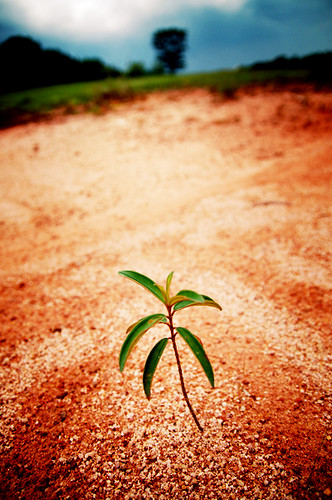
/ Image by Shermeee /
A poem for a new beginning–
Though your destination is not yet clear
You can trust the promise of this opening
Isn’t this a wonderful reminder of hope and new pathways?
For a long time it has watched your desire,
Feeling the emptiness growing inside you,
We might read these lines as poetically phrased wish fulfillment, but there is a deeper insight here. This is the underlying technique, consciously or unconsciously, mostly unconsciously, that we bring anything into existence. We feel an emptiness or a void or a yearning. It be energetically charged until it magnetically draws to itself its own fulfillment. The more we can befriend that aching space in ourselves and our lives, the more we can nurture it and enliven it, until it magically flips from emptiness to fullness and manifestation.
Unfurl yourself into the grace of beginning
That is at one with your life’s desire.
I like that this poem is kind to the phases of our lives when we feel stuck or reluctant to change and explore. Yet, at the same time, it recognizes that the safety of familiar routine can be a seductive illusion.
When I was young I actively undermined any routines I found in myself, convinced that they led to a sort of psychic numbness and lack of deep fulfillment. I think there was truth in that perspective, but there was also self-cruelty in that approach and it led to instability. Once I came to see that, I worked very hard, sometimes painfully, at the cultivation of routine, and began to find unexpected life nourishment there. The crucial element, I think, is that those routines should be consciously selected rather than imposed on us by societal expectation or unexamined habit.
And we can’t fall into the seductive idea that we are those routines or happiness depends on them. Routine creates essential structure, but endless stasis is death. Life and growth require change. Regular encounters with the new and the unknown reinvigorate the soul.
Awaken your spirit to adventure;
Hold nothing back, learn to find ease in risk
New avenues can sometimes be frightening, occasionally bringing genuine peril, so one shouldn’t be brash or blind to the situation. But a certain boldness is natural to our nature when we come to know ourselves. We need awareness, dynamism, creativity, a diversity of life skills — all wrapped in a vital joy. Then even the perils themselves serve to accentuate the magic and wonder of each stage of the journey.
Soon you will be home in a new rhythm,
For your soul senses the world that awaits you.
Sending love, courage, and new rhythms…
Recommended Books: John O’Donohue

|
John O’Donohue
Ireland (1956 – 2008) Timeline |
Nov 25 2024
Give Me
by Khwaja Abdullah Ansari
English version by Andrew Harvey
O Lord, give me a heart
I can pour out in thanksgiving.
Give me life
So I can spend it
Working for the salvation of the world.
 — from Perfume of the Desert: Inspirations from Sufi Wisdom, by Andrew Harvey / Eryk Hanut

/ Image by Cristian Bernal /
Something for us today as we approach the Thanksgiving holiday, a contemplation of heart and service and true thanksgiving.
There is something so simple and profound… and universal in this prayer-poem. These words were given to us by a devout Muslim Sufi, but they could as well have been spoken by a Hindu satyagrahi, a Catholic liberation theologian, a Buddhist peace worker, a Protestant homeless advocate, or any sincere soul striving to awaken the Divine within themself and the world.
Notice that Sheikh Ansari gives us two parallel statements, and they balance each other.
The first statement–
O Lord, give me a heart
I can pour out in thanksgiving.
–addresses our interior state. It is a prayer that we are “given” a heart, or that we may recognize our heart, awakening it. It is a prayer of centering, of coming to know the center of one’s being… and allowing that self to flow.
That flow naturally expresses itself through gratitude, thanksgiving. The flow of the heart is a gift we pour out into the world. It is the offering of one’s self.
So, first he asks for self-recognition, centering, and a gratitude which can be shared with the world.
Next–
Give me life
So I can spend it
Working for the salvation of the world.
–the poet turns that awareness outward through action. He requests life, but not for selfish reasons, not because he thinks is only that earthly life; he asks for life that he may be of service.
Now, that phrase “working for the salvation of the world,” may make some of us cringe. The term “salvation” has been abducted by rigid religious literalists, equating salvation with subscribing to their specific belief systems. But, despite what is thundered from the pulpits and the minbars, salvation has little to do with belief or which group one joins. It is about healing, the easing of pain, the renewal of hope, and a deepening relationship with truth. On a social level, this is best expressed through selfless, nonjudgmental service. On the spiritual level, working for salvation is about humbly peeling away the obstructions that keep individuals and the world as a whole from recognizing their inherent beauty and heavenly potential.
On a certain level, service in the world is a sort of religious ritual, an outward enactment of an inner process. We may help one person or a hundred or a thousand, but suffering continues in the world. The numbers game leads to discouragement. But with each kind act, small or large, we give away a little more ego, we open our eyes a little more, we feel a little more connected, and more and more we come to discover that serene, heavenly Self at rest within.
Ansari seems to be saying to us, when we discover beauty within, it naturally flows out of us into the world. And when we pour ourselves out for the healing of the world, we find wholeness within.
Recommended Books: Khwaja Abdullah Ansari

|
Khwaja Abdullah Ansari
Afghanistan (1006 – 1088) Timeline |
Nov 25 2024
Religion that does not inspire
outward compassion and inward awakening
is not religion.
Nov 15 2024
Let nothing disturb you
by Teresa of Avila
English version by Ivan M. Granger
(Lines written on a bookmark found in Teresa of Avila’s Breviary)
Let nothing disturb you;
Feel no fear.
All things pass;
God remains.
Patience and steadiness
Achieve all things.
When you are at one with God,
Nothing is found
to be missing.
Of all things
God alone
fills all.
/ Image by Jonny Gios /
If you’ve been wondering what’s been up with me lately, I have, of course, been aware of world events lately, paying attention to the shifting energetic pathways that are unfolding and, on a more personal level, I have been especially busy with my day job as a computer programmer. But also, in my quiet moments, I have been reading. I have been re-reading Thoreau’s Walden.
Walden was a defining book for me. Reading it at about age 20, when I was struggling because, standing at the threshold of adulthood, I saw little I valued in the academic and career paths open to me at the time. I was out of sync with the world. I had immense, unnamed ambitions of an inner nature while being jostled about by a world that was excessively busy with its own ends, but largely empty. In that dark moment, I came across Thoreau, and I finally found a companion, someone who gave me permission think my own thoughts and see the world my own way. We need examples, those who inspire, yes, but also those who are clear seeing curmudgeons to call out stupidity and cruelty masquerading as unquestioned convention.
Thoreau taught me to seek the essential.
Simplify, simplify, simplify.
He also taught me to be a fighter, to examine and overturn every cherished truth in society.
He gave me the courage to be unique.
Rereading Thoreau today, I realize that he is crankier than I remembered, and I don’t as readily agree with every critique he lays before society, but his voice, like an American prophet, still resonates. His words still ring through the lengthening years.
But man’s capacities have never been measured; nor are we to judge of what he can do by any precedents, so little has been tried.
Maybe I’ll find a way to share more of my thoughts on Walden in future Poetry Chaikhana emails. I’m nurturing a few ideas.
Have the writings of Thoreau meant something to you? Which other writers or books have been transformative to you at key points in your life?
=
Something for us today by the great Catholic saint and reformer, Teresa of Avila.
I like that this selection, unlike more formally composed poems and songs, feels jotted down by St. Teresa, personal notes to herself, poetic reminders from herself to herself, to be seen each time she refers to her book of daily prayers.
Simple observations on the relationship between one’s self, “all things” — the world, the externalized world, the world of people and things and experiences — and God.
All things pass;
God remains.
Everything we can separate out and label within the mind, every “thing,” is inherently transitory. Even the most concrete fixture of the landscape or in society eventually changes and disappears.
This recognition is often terrifying to the little self. What can we call a certainty? With everything coming into and out of existence and continuously changing in the process, can we even know what a thing is before it is something else or gone completely? Since we so often define ourselves by the things in our lives, how can we safely know who or what we are?
Fear becomes the continuous experience of the small self.
Let nothing disturb you;
Feel no fear.
Yes, all things pass. Nothing remains the same. Even who we imagine ourselves to be changes. But when we recognize the rightness of this, that there is, in fact, a flow to existence, then we can relax and let go of that fear.
Patience and steadiness
Achieve all things.
I particularly like these lines. As an Aries child, full of fire and bursts of erratic action, I was just as likely to bloody my head against the wall as achieve my half-formed goals. The long lesson of adulthood has been, for me, the cultivation of patience and steadiness. The truth of this line is not as transactional as stating that persistent action eventually pays off — though that is often the case. The deeper truth, I find, is that steady action, steady purpose, cultivates a steadiness of mind, regardless of outcome. When the mind is steady, it is less easily unsettled by things shifting around us. When the mind is steady, it more naturally settles into stillness. When we are steady, we settle into oneness with God.
When you are at one with God,
Nothing is found
to be missing.
We find this statement by mystics throughout the world’s traditions. In God we find all things.
It is the final line explains it to me:
Of all things
God alone
fills all.
I’m sure you’ve had this happen to you before: There was something you desperately wanted, a promotion at work, a new lover, some prized object, anything, and then you got it and — you felt deflated. It was nice for a moment or a week, and then you felt nothing. Worse than nothing, you had poured so much energy into attaining this yearned for thing, and then it betrayed you by not fulfilling its promise of joy and satisfaction. That’s just it. Everything — every thing we can call a “thing” — is not only constantly changing and disappearing, it is also empty. One empty thing leaves us empty. Ten empty things still just leaves us empty, A really huge empty thing just leaves us feeling hugely empty.
God alone fills all. Fulfillment is found only in the Eternal.
That doesn’t mean everyone should abandon their house and take religious vows. And, of course, so many of the people and even things in our lives can bring us a certain amount of fulfillment and meaning. But it is not really having that person or thing in our lives that fills us up. When we really look, we see that each relationship or thing that is meaningful to us is acting as a sort of metaphor or outer representation of something already within ourselves. That person or experience or thing mirrors back to us something about ourselves that shines. We use the outer “thing” as permission to witness our own inner light. In other words, whether in the smile of a beloved spouse, the achievement of a hard earned goal, or the glory of a rosy sunset spread across the ocean, it is the light of the Divine we see, and that is when we come back to ourselves, and that is what fills us up, returning us to wholeness.
Have a beautiful day!
Recommended Books: Teresa of Avila

|
Teresa of Avila |
Nov 15 2024
All objects, all people
that tug at your desire:
unzip them.
See what tumbles out.
Oct 25 2024
I feel this yen
by Hafiz
English version by Erfan Mojib & Gary Gach
I feel this yen
To tell you
Of my heart
–
The language of love
Remains untold
In any human tongue
–
My words are veiled
The way the rose
Emerges from a bud
–
I don’t know who is living
Inside this weary heart of mine
For I am silent but he
Is always full of sound & fury
–
If you’re not our classmate
In the School of Love —
Drown your notebook !
( True knowledge isn’t there. )
–
Where is the mystic
Who understands
The language
Of
The lilies
?
Why do they leave
Only to return again
?
 — from Hafiz’s Little Book of Life, Translated by Erfan Mojib / Translated by Gary Gach
/ Image by Jon Butterworth /
Even though he is greatly beloved, I don’t feature Hafiz as often as his status might merit. The main reason for that is because, frankly, there is a lot of confusion in the English-speaking world about what is and is not genuine Hafiz poetry.
The confusion arises because of Daniel Ladinsky’s popular book of poetry, The Gift. Ladinsky’s books put me in an awkward spot. I really like the poetry from Ladinsky’s books… but, well, they aren’t actually by Hafiz. Ladinsky’s The Gift: Poems by Hafiz the Great Sufi Master actually contains no lines of poetry written by the great Sufi poet Hafiz!
Daniel Ladinsky seems to acknowledge this in his introduction to the book, when he writes, “I feel my relationship to Hafiz defies all reason… I had an astounding dream in which I saw Hafiz as an Infinite Fountaining Sun (I saw him as God), who sang hundreds of lines of his poetry to me in English, asking me to give that message to ‘my artists and seekers.’”
You might say that Ladinsky’s poetry is “inspired by” Hafiz. Or, if you prefer a broader interpretation, you could say Ladinsky channels Hafiz. But his “translations” are not the historical writings of Hafiz. From the more limited scholar’s definition, these are poems by Daniel Ladinsky, not Hafiz.
So here’s what I do: I enjoy Ladinsky’s playful, profound poetry, but I look to other books to savor the historical poetry of Hafiz that Sufis and seekers have delighted in for centuries…
These snippets that I am featuring today are genuine lines of Hafiz poetry, however. The collection I found them in Hafiz’s Little Book of Life is an inspired, mischievous sampler of lines from Hafiz, often just one or two couplets per page, inviting you to open to any page to see what the poet has to say to you in the moment — a practice common with Hafiz poetry in many parts of the Persian-speaking world.
I love the images of these lines–
My words are veiled
The way the rose
Emerges from a bud
They suggest the way deep meaning is hidden within simple words, the way all of reality, really, holds such life within it, just waiting to blossom into fullness within our awareness.
Where is the mystic
Who understands
The language
Of
The lilies
?
Why do they leave
Only to return again
?
|
Hafiz
Iran/Persia (1320 – 1389) Timeline |
Oct 25 2024
To a materialist,
appearance is reality.
To a mystic
appearance is an expression of reality
–which can reveal, but also deceive,
and always holds secrets.
Oct 19 2024
A pruned branch
by Shiki (Masaoka Tsunenori)
English version by Hart Larrabee
A pruned branch
And dawn comes easily
To my little window
 — from Haiku Illustrated: Classic Japanese Short Poems, Translated by Hart Larrabee
/ Image by Jonas Denil /
I don’t think I have featured a poem by the great modern haiku poet Shiki. I was sipping tea this morning, reading through a selection of haiku, and this haiku caused me to stop and smile.
Let’s pause and really contemplate this haiku for a moment. Because of a pruned branch, the dawn light is able to flood the poet’s window. Specific details precisely observed, yet they resonate in the awareness. We don’t need to conceptualize anything beyond that imagery for energy to brew and ferment in the mind, slowly expanding our awareness of the morning.
Perhaps the window is the poet’s awareness, our awareness, our view out onto the world. Working from there, we can then say that the dawn light in our ability to perceive clearly, that moment of satori or true insight, the dawning of enlightenment. The branch then, can be said to be all the things that normally block the view from window, impeding a clear view. The act of pruning that branch, then, might be said to be the things we do to clear that view, our spiritual practices and discipline, or perhaps pruning our lives down to an elegant simplicity.
Spiritual practice and simplicity prepare the way so enlightenment can reach the window of our perception.
Or perhaps we simply enjoy a moment enjoying the play of light at the window as we sip from a cup of tea.
Have a beautiful day!
Recommended Books: Shiki (Masaoka Tsunenori)
|
||||
| Haiku Illustrated: Classic Japanese Short Poems | ||||

|
Shiki (Masaoka Tsunenori)
Japan (1867 – 1902) Timeline |
Oct 19 2024
The map of the human soul
is a topographical map, with mountains
and valleys, and rivers of life everywhere.