Archive for September, 2016

Sep 28 2016

Fakhruddin Iraqi – The world but seems to be

Published by under Poetry

The world but seems to be
by Fakhruddin Iraqi

English version by William Chittick and Peter Lamborn Wilson

The world but seems to be
      yet is nothing more
than a line drawn
      between light and shadow.
Decipher the message
      of this dream-script
and learn to distinguish time
      from Eternity.

— from Fakhruddin Iraqi: Divine Flashes (Classics of Western Spirituality) , Translated by William Chittick / Translated by Nasr Seyyed Hossein


/ Image by tanakawho /

There is actually quite a bit being said in this brief poem that gets into both the mystical experience of reality and also certain aspects of Muslim theology.

First, consider the picture Iraqi has drawn for us: We have light and shadow — together making a whole or a circle — and a line drawn between them. The line divides the circle, the wholeness, into two semi-circles with a black half and a white half. Those semi-circles each has the shape of a bow. Thus the light and shadow together, as a wholeness, form… two bows.

The image of two bows is important in Islam. In the Quran, the Prophet Mohammed is said to have ascended to heaven where he drew near to God, “two bows’ lengths away.” The significance of the distance of two bows has been endlessly debated and contemplated in the Muslim world. Why two bows’ lengths away from God? What does this mean?

In this poem, Iraqi expands on the mystical explanation given by the Sufi philosopher Ibn Arabi that the two bows represent the two aspects of reality: light and shadow, the Bow of Necessary Being (light, that which is) and the Bow of Possible Existence (void, potential, that which may be). When these two “bows” are joined, reality is seen in its wholeness, and that is when one witnesses the face of God.

Isn’t that a wonderful way to understand this image?

Iraqi’s poem also suggests that the world itself is not a stable, fixed reality. “The world but seems to be…” It does not truly exist in its own sense. It is simply a meeting point between what has already come into being and what remains obscured in possibility, just as the present moment is the meeting point between the past and the future. But, when we steady the mind and expand our vision, we can truly discern that line of meeting — and then it no longer divides the two halves; it joins them. It is then that the whole vision comes upon us and we “learn to distinguish time [the separated pieces] / from Eternity [the wholeness].”

In the text of his “Divine Flashes,” Iraqi follows this poem with a note and another brief poem:

Break the code of this line and know beyond all doubt that

All is nothing,
      nothing.
All is He,
      all is HE.


Recommended Books: Fakhruddin Iraqi

Poetry for the Spirit: Poems of Universal Wisdom and Beauty The Drunken Universe: An Anthology of Persian Sufi Poetry Fakhruddin Iraqi: Divine Flashes (Classics of Western Spirituality) Love’s Alchemy: Poems from the Sufi Tradition


Fakhruddin Iraqi

Iran/Persia/India/Turkey (? – 1289) Timeline
Muslim / Sufi

Continue Reading »

2 responses so far

Sep 23 2016

Mevlana Jelaluddin Rumi – Only Breath

Published by under Poetry

Only Breath
by Mevlana Jelaluddin Rumi

English version by Coleman Barks

Not Christian or Jew or Muslim, not Hindu
Buddhist, sufi, or zen. Not any religion

or cultural system. I am not from the East
or the West, not out of the ocean or up

from the ground, not natural or ethereal, not
composed of elements at all. I do not exist,

am not an entity in this world or in the next,
did not descend from Adam and Eve or any

origin story. My place is placeless, a trace
of the traceless. Neither body or soul.

I belong to the beloved, have seen the two
worlds as one and that one call to and know,

first, last, outer, inner, only that
breath breathing human being.

— from The Essential Rumi, Translated by Coleman Barks


/ Image by FredG /

First, let me say how much I appreciate the warm response to my message on Wednesday. I have already received several donations, which are a huge help in covering my expenses necessary to keep the Poetry Chaikhana running smoothly, especially through this bumpy period when my personal income is down due to illness. More support is needed, but we have a good start. Thank you to everyone!

Also, thank you for the many kind notes wishing me renewed health, often with good suggestions and advice. In the last 24 hours I have finally begun to feel some noticeable improvement, a trend that I hope to nurture and continue. So much adventure and drama to be had without even having to step out the front door… 🙂

=

Now, on to today’s poem.

I was surprised to realize that I have never featured this poem by Rumi on the Poetry Chaikhana, especially given how well known and loved it is. Actually, I did feature this poem years ago, but in a different, less known translation by Bernard Lewis.

This morning I read the two versions side-by-side, the one above by Coleman Barks, and the version below by Lewis. It occurred to me that this might a good opportunity to invite some discussion about the nature of poetry and translation.

Here is the Lewis translation of the poem. Take a moment to read it, while the Barks version is fresh in your mind, and think about the differences, why they are different, how those differences affect our reading of the poem…

What can I do, Muslims? I do not know myself.
I am neither Christian nor Jew, neither Magian nor Muslim,
I am not from east or west, not from land or sea,
not from the shafts of nature nor from the spheres of the firmament,
not of the earth, not of water, not of air, not of fire.
I am not from the highest heaven, not from this world,
not from existence, not from being.
I am not from India, not from China, not from Bulgar, not from Saqsin,
not from the realm of the two Iraqs, not from the land of Khurasan.
I am not from the world, not from beyond,
not from heaven and not from hell.
I am not from Adam, not from Eve, not from paradise and not from Ridwan.
My place is placeless, my trace is traceless,
no body, no soul, I am from the soul of souls.
I have chased out duality, lived the two worlds as one.
One I seek, one I know, one I see, one I call.
He is the first, he is the last, he is the outer, he is the inner.
Beyond “He” and “He is” I know no other.
I am drunk from the cup of love, the two worlds have escaped me.
I have no concern but carouse and rapture.
If one day in my life I spend a moment without you
from that hour and that time I would repent my life.
If one day I am given a moment in solitude with you
I will trample the two worlds underfoot and dance forever.
O Sun of Tabriz, I am so tipsy here in this world,
I have no tale to tell but tipsiness and rapture.

(version by Bernard Lewis)

So, what do you think? Do you prefer one version over the other?

The Barks version is much leaner. It’s easier on the eyes, especially when grouped together into couplets with line breaks. The language arguably flows a bit more easily. But the biggest difference to me is that Barks is obviously taking huge liberties with the language, trimming out entire phrases and ideas, while significantly reformulating others.

The Lewis version is generally using modern English, as well, but my impression is that he is sticking much closer to a literal translation of Rumi’s original. He doesn’t do as much to try to replicate the poetic flow that the original undoubtedly has, but the more literal the translation, the more difficult it becomes to also reproduce rhythm and rhyme. Still, there are some juicy bits that Lewis manages to keep which I miss in the Barks translation.

There are always imperfect compromises in translation, especially so in poetry:

– How literally should the poem be translated?

– Should it be so literal that the poetry is lost?

– When the original poem has meter and rhyme or alliteration, as most classic poetry does, should the translation attempt to reproduce it or create a new pattern suggestive of the original or completely abandon meter and rhyme?

– How free should the translator be with introducing line breaks to make the poem flow more naturally to the modern eye or to emphasize specific words and ideas?

– What should the translator do when even a strictly literal translation looses the poem’s inner meaning? Metaphor and word play are culturally specific. A word-for-word translation often doesn’t carry the same meaning in another culture or time. How much liberty should the translator take in order to convey the intended meaning by introducing new phrases and metaphors?

– At what point does a translation become so loose that it is more the work of the translator than the original poet?

– Barks or Lewis? (Or both?)

I have my own answers to these questions, but I am particularly interested in your thoughts. Post a comment on the blog or send me an email. These are issues I find myself weighing in my work with the Poetry Chaikhana. What do you think?

=

Once again, thank you for all of the heartfelt messages you have been sending me lately. I’m sending all of you love in return.

And… Have a beautiful day!

Ivan


Recommended Books: Mevlana Jelaluddin Rumi

The Longing in Between: Sacred Poetry from Around the World (A Poetry Chaikhana Anthology) Poetry for the Spirit: Poems of Universal Wisdom and Beauty Music of a Distant Drum: Classical Arabic, Persian, Turkish & Hebrew Poems Perfume of the Desert: Inspirations from Sufi Wisdom Open Secret: Versions of Rumi
More Books >>


Mevlana Jelaluddin Rumi, Mevlana Jelaluddin Rumi poetry, Muslim / Sufi poetry Mevlana Jelaluddin Rumi

Afghanistan & Turkey (Persia) (1207 – 1273) Timeline
Muslim / Sufi

Continue Reading »

10 responses so far

Sep 21 2016

A Vote for Sacred Poetry

Let us bless
The imagination of the Earth,
That knew early the patience
To harness the mind of time,
Waited for the seas to warm,
Ready to welcome the emergence
Of things dreaming of voyaging
Among the stillness of land.

And how light knew to nurse
The growth until the face of the Earth
Brightened beneath a vision of color.

– John O’Donohue
from “In Praise of the Earth”

Hi [First Name]-

As many of you know, I have dealt with chronic fatigue/ME issues for years. Actually, I have been doing pretty well with stable health and energy since last year. But just over a week ago I had an unexpectedly serious crash in energy that has left me reeling while struggling to maintain minimal hours with my day job. I have been using all of my strategies to try to rebound, but so far only with partial success.

Even when I go for several days without sending out a poem email, however, I want you to know that all of you in the Poetry Chaikhana community are very much in my thoughts.

I know from your emails that I am not alone in dealing with serious health challenges. I am always humbled by the quiet courage and strength so many people exercise daily without fanfare or outer drama. Even in the most quiet life, stories of surprising beauty and struggle unfold.

Last year I shared some of my thoughts on Health, Suffering & Meaning that I hope inspires some new perspectives on the subject. (“Sometimes, though, dis-ease is an annoyingly persistent teacher…”)


Poetry is what in a poem makes you laugh, cry, prickle, be silent, makes your toe nails twinkle, makes you want to do this or that or nothing, makes you know that you are alone in the unknown world, that your bliss and suffering is forever shared and forever all your own.
~ Dylan Thomas

Please Support for the Poetry Chaikhana

It has been many months since I last requested donations for the Poetry Chaikhana, but your support especially means a lot right now. I am very aware of everyone who sends in a donation, either singly or as a regular monthly contribution, and I am so grateful for all of your support! But, naturally, some people’s attention moves elsewhere over time, and donations fluctuate, so I regularly need to reach out for new support.

Now is a time when I need to ask more of you to join in and support the Poetry Chaikhana.

Nearly 10,000 people are receiving this email. We are a large community with creativity, vision, and resources that I hope can draw on.

Do you think, as a group, we cover the Poetry Chaikhana’s modest expenses each day?

(For those curious about the sort of work I do each day with the Poetry Chaikhana, I invite you to take a look at Behind the Scenes with the Poetry Chaikhana.)


If you feel a connection to the Poetry Chaikhana, please consider making a donation.

Ways you can contribute:

  • You can send a check or money order in US funds made out to “Poetry Chaikhana”, addressed to:

    Poetry Chaikhana
    PO Box 2320
    Boulder, CO 80306

  • You can make a secure online donation in any amount through PayPal by clicking the “Donate” button below or on the Poetry Chaikhana home page www.poetry-chaikhana.com
  • You can sign up for a voluntary subscription of $2/month or $10/month by clicking either the “Subscribe” or “Support” PayPal button, also below or at www.poetry-chaikhana.com. (A regular monthly amount is often easier on your pocketbook and allows the Poetry Chaikhana to plan finances over the long term.)

I am also grateful for your supportive thoughts and prayers. Every contribution, financial and energetic, is sincerely appreciated.


/ Photo by AlicePopkorn /

I regularly receive emails telling me how much the Poetry Chaikhana means to you. The daily poem brings a moment of calm to the morning, inspires creativity at work, offers comfort in a period of crisis, carries hope when assaulted by the headlines, suggests a focus for meditation or prayer before bed. These notes from you continuously remind me why the Poetry Chaikhana is so important. And I am so grateful to be able to share my love of this poetry with such an engaged community.

Sacred poetry is transformative on both a personal and a global level, something I believe we need more than ever today. As I have written elsewhere:

“Sacred poetry has the unique benefit of being a deeply personal expression of spiritual truth while, at the same time, being largely free from dogma… Sacred poetry is the natural goodwill ambassador for the world’s religions. Poetry can reach across cultural divides, soften prejudices, and shed light on misunderstandings. I hope the Poetry Chaikhana can help to facilitate that process.”

Or, as Rumi said–

Let the beauty we love be what we do.
There are hundreds of ways to kneel and kiss the ground.
~ Rumi


It is coming up on election season here in the U.S. As you are contemplating your vote, remember also to vote for the sanity and beauty of sacred poetry!

Poetry is like a bird, it ignores all frontiers.
~ Yevgeny Yevtushenko

Thank you, and sending my love!

Ivan

2 responses so far

Sep 12 2016

Mary Oliver – The Journey

Published by under Poetry

The Journey
by Mary Oliver

One day you finally knew
what you had to do, and began,
though the voices around you
kept shouting
their bad advice–
though the whole house
began to tremble
and you felt the old tug
at your ankles.
“Mend my life!”
each voice cried.
But you didn’t stop.
You knew what you had to do,
though the wind pried
with its stiff fingers
at the very foundations,
though their melancholy
was terrible.
It was already late
enough, and a wild night,
and the road full of fallen
branches and stones.
But little by little,
as you left their voices behind,
the stars began to burn
through the sheets of clouds,
and there was a new voice
which you slowly
recognized as your own,
that kept you company
as you strode deeper and deeper
into the world,
determined to do
the only thing you could do–
determined to save
the only life you could save.

— from Dream Work, by Mary Oliver


/ Image by along mekong /

Saturday was Mary Oliver’s birthday. I posted this poem on the Poetry Chaikhana Facebook page and people really responded to it. I thought I should share it with the wider Poetry Chaikhana email list today.

I hope this inspires some courage for the journey — your own journey.

(And Happy Birthday, Mary Oliver. Thank you for all of your wonderful, quietly transformative poetry through the years.)


Recommended Books: Mary Oliver

Why I Wake Early New and Selected Poems House of Light Dream Work Thirst: Poems
More Books >>


Mary Oliver, Mary Oliver poetry, Secular or Eclectic poetry Mary Oliver

US (1935 – )
Secular or Eclectic

Continue Reading »

One response so far

Sep 02 2016

Rasakhan – Enchanted

Published by under Poetry

Enchanted
by Rasakhan

English version by Shyamdas

I put my fingers in my ears
      to block the sound
            whenever Krishna gently plays His flute!

Declares Raskhan,
      “It happens when enchanter Mohan
            climbs to the rooftop
                  to call His cows.

“I issue a warning to all the people of Braja.
      Tomorrow, I will not be able to console them.

“O, friend! Having glimpsed His smile,
      I cannot…
            I cannot…
                  I will not
                        control my love.”

— from Treasure House of Love: Poems of Rasakhan, Translated by Shyamdas


/ Image by vishalmisra /

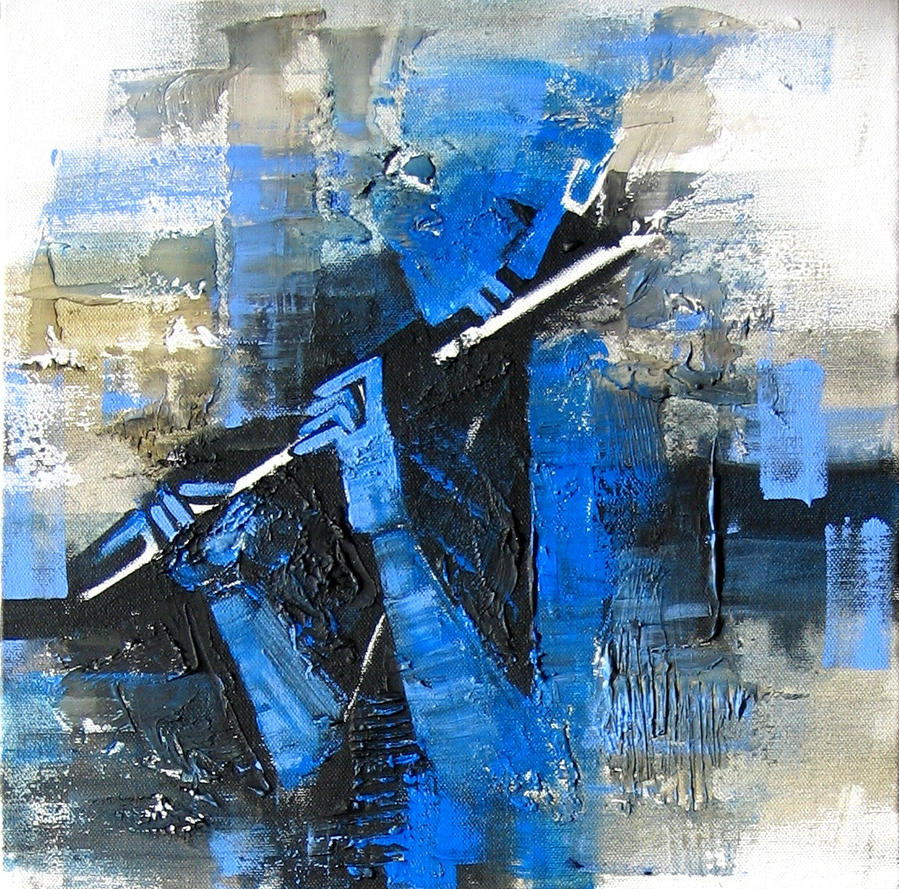
Krishna is often depicted standing in a relaxed posture holding a flute to his lips. Think of Krishna as the pied piper of India, but it is lost souls he calls to himself.

I put my fingers in my ears
      to block the sound
            whenever Krishna gently plays His flute!

When you think about it, this opening line can be read in two different ways. On the surface, Rasakhan (speaking as Radha, the cowherd girl who loves Krishna) seems to be petulantly blocking out the music of Krishna’s flute, not wanting to come when called. Of course, even this implies that the Lord’s music is so enchanting that the only way not to be drawn by it is to try to block it out. This hints that we are already hooked by the call of God, that union is inevitable, and we can only temporarily put it off.

But there is another, esoteric way to read this, as well. The flute of Krishna is the quiet tone heard deep within the base of the skull when we sit in silent, devoted meditation and prayer. It is this whisper in the inner ear that draws us to deepest union with the Eternal. So, understood this way, Rasakhan could actually be describing a yogic technique of blocking out sound and quieting the external senses in order to better hear Krishna’s call within.

Declares Raskhan,
      “It happens when enchanter Mohan
            climbs to the rooftop
                  to call His cows.

We hear the flute when Mohan, another name for Krishna, climbs to the rooftop. Again, in the language of yoga, this can be understood as a reference to the skull in general or, more specifically, the crown chakra.

“O, friend! Having glimpsed His smile,
      I cannot…
            I cannot…
                  I will not
                        control my love.”

I love those lines! That’s the passion felt by a true lover of God! “I cannot… I cannot… I will not control my love.”


Recommended Books: Rasakhan

Treasure House of Love: Poems of Rasakhan


Rasakhan

India (1534? – 1619?) Timeline
Yoga / Hindu : Vaishnava (Krishna/Rama)
Muslim / Sufi

Continue Reading »

5 responses so far