Archive for June, 2017

Jun 23 2017

David Whyte – It is Not Enough

Published by under Poetry

It is Not Enough
by David Whyte

It is not enough to know.
It is not enough to follow
the inward road conversing in secret.

It is not enough to see straight ahead,
to gaze at the unborn
thinking the silence belongs to you.

It is not enough to hear
even the tiniest edge of rain.

You must go to the place
where everything waits,
there, when you finally rest,
even one word will do,
one word or the palm of your hand
turning outward
in the gesture of gift.

And now we are truly afraid
to find the great silence
asking so little.

One word, one word only.

“It is Not Enough” from Where Many Rivers Meet by David Whyte.  Copyright © 1990, 2004 by David Whyte.  Used by permission of the author and Many Rivers Press (www.davidwhyte.com)  All rights reserved.
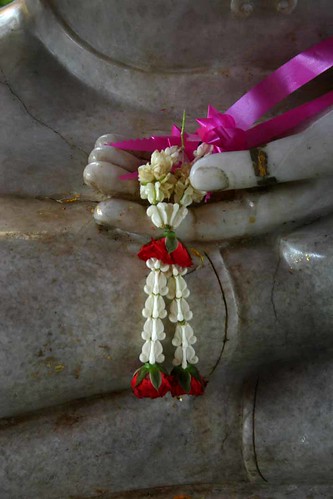

/ Image by babasteve /

As I know many of you have experienced in recent weeks, we too here in Colorado have had several hot days. Then last night, a burst of rain. This morning cool, damp, overcast. Even the starlings are stunned with relief and are quiet.

Reading today’s poem by David Whyte, it feels as if he is exploring a deep insight, but what he is actually saying is not entirely clear. Let’s try to puzzle it out together.

It is not enough to see straight ahead,
to gaze at the unborn
thinking the silence belongs to you.

I suspect he is saying something about not becoming too self-satisfied even with our most spiritually open states, that we shouldn’t become convinced that we possess those moments.

You must go to the place
where everything waits…

When I think of waiting, I imagine a patient stillness, but also uncertainty. And in that uncertainty our awareness remains open, receptive, alive. In possession and certainty, the awareness becomes fixed, taking in less and less of the flowing mystery.

there, when you finally rest,
even one word will do,
one word or the palm of your hand
turning outward
in the gesture of gift.

This, to me, is the heart of the poem.

But what is this “one word” the poet refers to? David Whyte’s writings aren’t particularly steeped in Christian terminology, so he is not likely to be making a reference to The Word as Christians understand it.

He draws an equivalency between that one word and the palm of an open hand in the gesture of a gift — a beautiful image. This one word suggests a lack of self and lack of clinging, and that becomes a gift or an offering.

And now we are truly afraid
to find the great silence
asking so little.

Now that we are resting, waiting, having passed through insight without clinging to it, free from self, bathing in the great silence, that’s when he brings up fear. But the fear is not of the silence, rather that so little is asked of us.

I take this to mean that we are so intent on action, on doing. Even in our spiritual opening, we expect some impulse or divine command to do something with it. But instead the reflex to act fades away. One profoundly and simply IS.

We don’t do, we open. Like a hand in a gesture of gift. Like the lips parting to utter one single word.

One word, one word only.

What do you think this poem is saying? Do you read this poem differently?


Recommended Books: David Whyte

The House of Belonging Where Many Rivers Meet


David Whyte, David Whyte poetry, Secular or Eclectic poetry David Whyte

US (1955 – )
Secular or Eclectic

Continue Reading »

5 responses so far

Jun 21 2017

Hadewijch – You who want knowledge

Published by under Poetry

You who want
by Hadewijch

English version by Jane Hirshfield

You who want
knowledge,
seek the Oneness
within

There you
will find
the clear mirror
already waiting

— from Women in Praise of the Sacred: 43 Centuries of Spiritual Poetry by Women, Edited by Jane Hirshfield


/ Image by Lea Chvrl /

“You who want
knowledge…”

I suppose that is all of us. We all want knowledge.

Society tells us that “knowledge is power,” but we don’t really have a clear sense of what knowledge is. In the modern era, we tend to think of knowledge as information, data. We think of knowledge as the feeding and exercise of the intellect. All of that is certainly important, but real knowledge is something else.

We can’t think our way into heaven.

When mystics speak of “knowledge” they speak of gnosis. This is not information, but a profound Knowing. The knowledge we are talking about has more to do with full awareness. It is as if one floats in the vast ocean of knowingness itself. This “knowledge” is an all-encompassing recognition of meaning and interrelationship. It is direct and permeates one’s whole being. It is the full bodied perception that living meaning somehow flows through all of existence, unifying everything within a living self-awareness.

Information is observational, external, and always limited. This is not to say that gnostic knowledge has nothing to do with informational knowledge, however. In spiritually open states, one’s intuition may be refined and heightened. Clear insight about a certain person or situation may just pop into your mind as a fully formed understanding, as if you suddenly see the whole pattern without having to work so hard to connect all of the individual bits of information. But this is more of a byproduct, an ornamentation on the face of knowledge, not the knowledge itself.

Real knowing, gnosis, is alive, all-permeating, all-unifying. It reconnects us within the living whole… and leads us into ecstasy.

…seek the Oneness
within

This is why, real knowing is about seeking oneness, turning within, learning to see ourselves honestly, truly, clearly.

Surprisingly, none of this knowledge is ever acquired. It isn’t a new possession or experience or even a new thought. It is already here, at rest in the center of things. When it is found, it is as familiar as our bones. It is our very nature. It is already waiting.

There you
will find
the clear mirror
already waiting

Have a beautiful day!


Recommended Books: Hadewijch

Women in Praise of the Sacred: 43 Centuries of Spiritual Poetry by Women The Shambhala Anthology of Women’s Spiritual Poetry Hadewijch: The Complete Works (Classics of Western Spirituality) Christian Mystics: Their Lives and Legacies throughout the Ages Meister Eckhart and the Beguine Mystics: Hadewijch of Brabant, Mechthild of Magdeburg, and Marguerite Porete
More Books >>


Hadewijch, Hadewijch poetry, Christian poetry Hadewijch

Belgium (13th Century) Timeline
Christian : Catholic

Continue Reading »

4 responses so far

Jun 09 2017

Lisel Mueller – What is Left to Say

Published by under Poetry

What is Left to Say
by Lisel Mueller

The self steps out of the circle;
it stops wanting to be
the farmer, the wife, and the child.

It stops trying to please
by learning everyone’s dialect;
it finds it can live, after all,
in a world of strangers.

It sends itself fewer flowers;
it stops preserving its tears in amber.

How splendidly arrogant it was
when it believed the gold-filled tomb
of language awaited its raids!
Now it frequents the junkyards
knowing all words are secondhand.

It has not chosen its poverty,
this new frugality.
It did not want to fall out of love
with itself. Young,
it celebrated itself
and richly sang itself,
seeing only itself
in the mirror of the world.

It cannot return. It assumes
its place in the universe of stars
that do not see it. Even the dead
no longer need it to be at peace.
Its function is to applaud.

— from Alive Together: New and Selected Poems, by Lisel Mueller


/ Image by matoses /

I have read several of Lisel Mueller’s poems in the past, and liked them very much, but I haven’t particularly sought them out. Earlier this week a friend in Australia sent me this poem, however, and I now realize I have been missing out.

There is so much gentle wisdom in this poem, how we think of our self.

Language gives us so many opportunities to trip ourselves up. This is especially true when speaking of grand but intangible concepts. We can speak of the self and mean the Self, the eternal presence we all are at the core of our being, or we can say the self and mean the mask, the social identity, the ego. It is this smaller, constructed self that the poet explores here.

The self steps out of the circle;
it stops wanting to be
the farmer, the wife, and the child.

We adopt roles in life, or they are given to us — child, spouse, parent, with a certain career, a social status, a circle of friends, a set of interests — we gather up that collection of roles, and we say to ourselves and the world, “This is me. This is who I am. This is my self.”

We try so hard to be those things. But it never quite works.

It is not necessarily that those roles don’t suit us. The real problem is that, no matter how fulfilling or well-suited those roles may be for us, we are not our roles. Each role we enact is a form of expression, a story we tell within the larger social story. But, as I have said elsewhere, no story can contain us.

At some point wisdom guides us to stop identifying with those stories, whether or not we continue to live through them. We cease to be farmer, wife, or child. Instead, we are as we are. Then, from that unlimited sense of who we really are, we may choose to engage in make-believe, playing at being farmer, wife, or child.

It stops trying to please
by learning everyone’s dialect;
it finds it can live, after all,
in a world of strangers.

So much of the self facade we create is an attempt to fit in, to see acceptance in the eyes of those around us. Even when we are in conflict, that clash is itself a taut sort of partnership.

To really emerge from the confines of this artificial self, we need to curtail the reflex to please and be understood by others. As we allow ourselves to be ourselves, we become mysterious, undefined, fluid.

Some can only see that surface self and so become strangers. Others may not know exactly what is happening with you, but they feel the change, the deeper currents in who you are, allowing a deeper part of themselves to respond and adjust to you.

It sends itself fewer flowers;
it stops preserving its tears in amber.

Uh huh.

This confection we have created of how we want to present ourselves to the world, it’s no longer the constant focus of our infatuation. And the dramas and hurts we’ve cherished and defined ourselves by, they are simply part of the story, and not the most interest part.

I particularly like these lines–

Young,
it celebrated itself
and richly sang itself,
seeing only itself
in the mirror of the world.

This really gets to the heart of how this limited sense of self becomes a hindrance to spiritual unfolding. Even when the self we have constructed is positive and compassionate and noble, even then the little self eclipses our vision and we do not see reality directly as it is. It is as if we live inside an egg-shaped bubble, and all we see, wherever we go, with whomever we interact, is our own face reflected back to ourselves. Every relationship is really us interacting with some part of ourselves. Every action and accomplishment is us in worshipful communion with that reflection.

But at some point we just grow tired and stop projecting that constructed face up against the mirror of the world that surrounds us. We grow quiet and stop telling stories in our heads about who we are. And we just look. We see for the first time.

What do we see then? We witness a splendid tapestry of being laid out across the stars. A strange shift in perspective occurs: On the one hand, that little self we primped and pushed over a lifetime seems insignificant and lifeless; yet, on the other hand, we feel a new sense of self, wide open, at home among the stars.

Its function is to applaud.

Have a beautiful weekend!


Recommended Books: Lisel Mueller

Alive Together: New and Selected Poems Second Language: Poems The Need to Hold Still: Poems Dependencies: Poems


Lisel Mueller, Lisel Mueller poetry, Secular or Eclectic poetry Lisel Mueller

US & Germany (1924 – )
Secular or Eclectic

More poetry by Lisel Mueller

5 responses so far

Jun 02 2017

Hakim Sanai – No tongue can tell Your secret

Published by under Poetry

No tongue can tell Your secret
by Hakim Sanai

English version by Priya Hemenway

No tongue can tell Your secret
for the measure of the word obscures Your nature.
But the gift of the ear
is that it hears
what the tongue cannot tell.

— from The Book of Everything: Journey of the Heart’s Desire, by Hakim Sanai Al-Ghaznavi / Translated by Priya Hemenway


/ Image by Sophie Charlotte /

Today we contemplate a verse by the great Sufi poet Sanai. I especially wanted to feature Sanai out of respect the the many people killed by the recent bombing in Afghanistan. In a country traumatized for centuries by the colonial intentions of world superpowers from without and harassed by pockets of reactionary extremism from within, it is worth remembering that Rumi was born in Afghanistan, Sanai was from Afghanistan, Ansari, Rahman Baba… Afghanistan has given the world some of our greatest spiritual and poetic voices. I bow in deep respect to the people of Afghanistan.

=

This verse has an elegant subtlety, and is trimmed with a thin edge of wit. Here Sanai is playing with the mystic’s dilemma of words.

No tongue can tell Your secret
for the measure of the word obscures Your nature.

The direct encounter with the Divine can’t truly be put into words. Words are a creation of the limited mind, powerful, certainly, but limited. Words, even when masterfully wielded, can only describe limited aspects of limited reality. Words imply a fracturing of reality into countless objects, an impassible duality of observer and observed, describer and described. How can words properly convey the undivided Wholeness?

(There is really no ‘encounter’ the way I just phrased it, because that implies two separates meeting, when there is really only the profound recognition of unity. Words fail the Wholeness.)

Seeing this limitation, some teachers construct complex frameworks of descriptions. Some hint and suggest and riddle. Some fall silent. What is said and what is left unsaid… a fascinating game. But it is only the encounter (which is not really an encounter) that conveys the truth of all this.

The “tongue cannot tell” these things properly. “But the gift of the ear / is that it hears” anyway. That is, when we truly and openly listen, an inner whisper begins to draw the awareness beyond the descriptions, the suggestions, the silences. And suddenly there we stand, outside of all words and concepts that obscure while they define. There we stand, witnessing, participating in the living Wholeness that is the divine nature of undivided Reality.

I like the game of words, perhaps too much. But it is time for my tongue to rest and let the ear enjoy its gift…

=

And to all of our Muslim friends and neighbors, Ramadan Mubarak! May this Ramadan season be one of blessings and spiritual renewal for you.


Recommended Books: Hakim Sanai

The Longing in Between: Sacred Poetry from Around the World (A Poetry Chaikhana Anthology) Real Thirst: Poetry of the Spiritual Journey The Drunken Universe: An Anthology of Persian Sufi Poetry Perfume of the Desert: Inspirations from Sufi Wisdom Islamic Mystical Poetry: Sufi Verse from the Early Mystics to Rumi
More Books >>


Hakim Sanai, Hakim Sanai poetry, Muslim / Sufi poetry Hakim Sanai

Afghanistan (1044? – 1150?) Timeline
Muslim / Sufi

Continue Reading »

6 responses so far