Archive for January, 2019

Jan 30 2019

May Sarton – The Work of Happiness

Published by under Poetry

The Work of Happiness
by May Sarton

I thought of happiness, how it is woven
Out of the silence in the empty house each day
And how it is not sudden and it is not given
But is creation itself like the growth of a tree.
No one has seen it happen, but inside the bark
Another circle is growing in the expanding ring.
No one has heard the root go deeper in the dark,
But the tree is lifted by this inward work
And its plumes shine, and its leaves are glittering.

So happiness is woven out of the peace of hours
And strikes its roots deep in the house alone:
The old chest in the corner, cool waxed floors,
White curtains softly and continually blown
As the free air moves quietly about the room;
A shelf of books, a table, and the white-washed wall —
These are the dear familiar gods of home,
And here the work of faith can best be done,
The growing tree is green and musical.

For what is happiness but growth in peace,
The timeless sense of time when furniture
Has stood a life’s span in a single place,
And as the air moves, so the old dreams stir
The shining leaves of present happiness?
No one has heard thought or listened to a mind,
But where people have lived in inwardness
The air is charged with blessing and does bless;
Windows look out on mountains and the walls are kind.

— from May Sarton, Collected Poems, 1930-1993, by May Sarton


/ Image by Holly Lay /

This morning I rediscovered this poem and thought, I have to share this with everyone.

I thought of happiness, how it is woven
Out of the silence in the empty house each day
And how it is not sudden and it is not given
But is creation itself like the growth of a tree.

I like the poet’s vision of happiness as a quiet, steady reality that comes upon us almost unnoticed. Real happiness does not come upon us in a hot rush, only to leave just as unexpectedly. It is not dependent on what is happening to us; it is not the result of events or experiences.

Happiness is cultivated. It is nurtured. It grows from silence, from peace, and from inner strengthening and unseen growth.

No one has heard the root go deeper in the dark,
But the tree is lifted by this inward work
And its plumes shine, and its leaves are glittering.

If we are constantly focused outward on action and accomplishment and experience, at best we find fleeting, overly caffeinated, under satisfying versions of the happiness we truly crave.

For Sarton, happiness is about quiet presence, that which is steady and always there, yet unnoticed in the background — like solid furniture. It is what supports us and makes our lives functional. It is what populates the corners of our homes, defining the spaces in which we live:

A shelf of books, a table, and the white-washed wall —
These are the dear familiar gods of home,
And here the work of faith can best be done…

She sees in furniture something of timelessness. The chest or table sits there, year after year, timeless in its unchanging presence, as the days wash over it.

For what is happiness but growth in peace,
The timeless sense of time when furniture
Has stood a life’s span in a single place…?

And, when we think about it, our furniture, our rooms, our apartments and houses are where we do our growth. They are the outer containers of our inner worlds. We move amongst them as we feel and contemplate and realize.

Tables, chairs, and beds are our intimate companions, knowing our movement and our silences. They are bathed in our breath and our thoughts. Over time they take on our energies.

No one has heard thought or listened to a mind,
But where people have lived in inwardness
The air is charged with blessing and does bless

When we do our inner work to cultivate happiness, our mundane material world frames and focuses our inner contentment.

Windows look out on mountains and the walls are kind.

=

To everyone affected by the intensely cold weather, stay bundled up and warm and safe.

May Sarton, May Sarton poetry, Secular or Eclectic poetry May Sarton

US (1912 – 1995) Timeline
Secular or Eclectic

More poetry by May Sarton

6 responses so far

Jan 23 2019

Mary Oliver

Published by under Poetry

When Death Comes
by Mary Oliver

When death comes
like the hungry bear in autumn;
when death comes and takes all the bright coins from his purse

to buy me, and snaps the purse shut;
when death comes
like the measle-pox;

when death comes
like an iceberg between the shoulder blades,

I want to step through the door full of curiosity, wondering:
what is it going to be like, that cottage of darkness?

And therefore I look upon everything
as a brotherhood and a sisterhood,
and I look upon time as no more than an idea,
and I consider eternity as another possibility,

and I think of each life as a flower, as common
as a field daisy, and as singular,

and each name a comfortable music in the mouth,
tending, as all music does, toward silence,

and each body a lion of courage, and something
precious to the earth.

When it’s over, I want to say: all my life
I was a bride married to amazement.
I was the bridegroom; taking the world into my arms.

When it’s over, I don’t want to wonder
if I have made my life something particular, and real.
I don’t want to find myself sighing and frightened,
or full of argument.

I don’t want to end up simply having visited this world.

— from New and Selected Poems, by Mary Oliver


/ Image by AlicePopkorn /

Mary Oliver passed away last week. She is a favorite poet among the Poetry Chaikhana readers. When I feature her poems, I always receive lots of responses. Her sense of the natural world and how it opens us up and invites us into a deeper sense of self has made her poetry beloved the world over. Even when her poems contemplate difficult subjects, illness and death, she has a gentle touch, a universal kindness that comes from inner quiet and wisdom.

Thank you, Ms. Oliver, for your gift of poetry to the world. We are better people because you passed through…

When death comes
like the hungry bear in autumn

This poem is a meditation on death, but it isn’t really a poem that dwells on fear or loss. Instead, Mary Oliver uses death as a way to be present, to see, and to open to the big questions.

<I want to step through the door full of curiosity, wondering:
what is it going to be like, that cottage of darkness?

I love the lines–

And therefore I look upon everything
as a brotherhood and a sisterhood

She gives us a wonderful vision in which all of existence is an interwoven tapestry. Without grand images, she suggests a communion of all things where every experience is recognized as a shared experience. Even crossing the threshold of death becomes part of that brotherhood and sisterhood of being.

and each name a comfortable music in the mouth,
tending, as all music does, toward silence,

These are words that make me giddy… and silent. These two lines are, for me, the heart of the entire poem. “Each name” is each individual person or thing, each unit of unique, life-filled identity. They have become “comfortable” and “music,” a sense of restful, meaningful harmony. Yet this symphony of life that is the music made by so many voices, that music tends to subside into silence. This is both a suggestion of death, but also a recognition that the real beauty of music is in how its vibration subtly reminds us of the grand silence it fills. We can expand this idea to say that all of life, all of manifestation, is a magical pageant that, through its moments of cruelty and compassion and grand dramas, eventually brings us to the recognition of the living stillness that underlies it all.

Sidestepping all fearful projections, death becomes a restful expansion, the embodiment of peace, the return to source.

When it’s over, I want to say: all my life
I was a bride married to amazement.
I was the bridegroom; taking the world into my arms.

Now there’s a good motto to live by: I want to say: all my life I was a bride married to amazement. Satisfaction at the time of death isn’t about bucket lists or bank accounts. It’s not found through having possessed things or even experiences, nor by impressive accomplishments. I suspect, along with Mary Oliver, that real contentment is found at the end of a life when we can say that we lived our lives, that we gave it our full attention, embraced it, so that everything, the great and the terrible and all the mundane in between, revealed its wonder.

The goal isn’t to have had a perfect life but to have participated in life — with eyes and heart open.

I don’t want to end up simply having visited this world.

A reminder to us all to keep our curiosity and wonder — and to participate!

Have a beautiful day!

PS- I didn’t quite get things organized enough to send out a poem on Monday, as I had planned, in honor of Martin Luther King. I did, however, post a Langston Hughes poem on Facebook, along with some thoughts I shared last year about King’s powerful legacy and how we tend to get a comfortably sanitized version of his message in popular culture today.

If you’d like to read it, here’s the link to the Poetry Chaikhana Facebook page.


Recommended Books: Mary Oliver

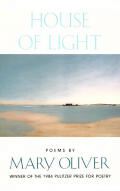
New and Selected Poems Why I Wake Early Dream Work House of Light Thirst: Poems
More Books >>


Mary Oliver, Mary Oliver poetry, Secular or Eclectic poetry Mary Oliver

US (1935 – 2019) Timeline
Secular or Eclectic

Continue Reading »

5 responses so far

Jan 17 2019

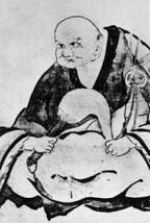
Hakuin – The monkey is reaching

Published by under Poetry

The monkey is reaching
by Hakuin

English version by Norman Waddell

The monkey is reaching
For the moon in the water.
Until death overtakes him
He’ll never give up.
If he’d let go the branch and
Disappear in the deep pool,
The whole world would shine
With dazzling pureness.

— from Essential Teachings of Zen Master Hakuin, by Norman Waddell


/ Image by NinjaRisu /

Hakuin paints for us an elaborate picture. First, we have the moon. It is reflected in water. A monkey hangs from a branch above the water, and it yearns for the moon that it sees reflected in the water. The monkey continually reaches into the water to grasp the moon, but the prize eludes his grip. He has constructed for us a Zen allegorical image.

Who is the monkey? Well, we are. Or, more specifically, it is the busy, grasping mind — the monkey mind. It is that chattering, erratic aspect of the awareness that we most often identify with.

The moon, as I have often pointed out, is a common representation in Zen poetry of enlightened awareness.

So the monkey, the mind, is seeking enlightenment, though it fails to understand what it is really grasping at. It just notices something shiny, and desires to possess it. The mind is not truly reaching for enlightenment; instead it grasps at a mere reflection of that light in the water below it.

What is this water? It can be understood as the world of manifest reality. It reflects the light of enlightenment. In fact, that is the world’s purpose. But while it appears to be real, it is fleeting, changing, ultimately intangible.

The monkey mind never tires of grasping at what shines and shimmers in reflection. This is partly because, in addition to the moon, the monkey sees itself reflected as well — and it loves its own face.

Hakuin laughs and gives us the solution: The monkey mind must let go of the branch it clings to and “disappear into the deep pool” of reality. The monkey’s fall represents the insight that the way is not attained through effort but through supreme yielding. When the mind stops grasping at reflections and, instead, fades into stillness, only then does the whole world shine “with dazzling pureness.” In other words, the mind can never possess enlightenment; it can only lose itself within it. When it finally yields itself, then enlightenment is discovered everywhere.

Have a beautiful day!


Recommended Books: Hakuin

Zen Poetry: Let the Spring Breeze Enter Essential Teachings of Zen Master Hakuin Wild Ivy: The Spiritual Autobiography of Zen Master Hakuin Secrets of the Blue Cliff Record: Zen Comments by Hakuin and Tenkei The Zen Koan


Hakuin, Hakuin poetry, Buddhist poetry Hakuin

Japan (1686 – 1768) Timeline
Buddhist : Zen / Chan

Continue Reading »

3 responses so far

Jan 17 2019

the solution

The solution
is in the present.

One response so far

Jan 09 2019

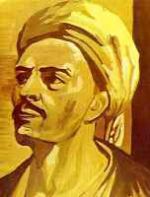
Yunus Emre – Those who became complete

Published by under Poetry

Those who became complete
by Yunus Emre

English version by Kabir Helminski & Refik Algan

Those who became complete
didn’t live this life in hypocrisy,
didn’t learn the meaning of things
by reading commentaries.

Reality is an ocean; the Law is a ship.
Many have never left the ship,
never jumped into the sea.

They might have come to Worship
but they stopped at rituals.
They never knew or entered the Inside.

Those who think the Four Books
were meant to be talked about,
who have only read explanations
and never entered meaning,
are really in sin.

Yunus means “true friend”
for one whose journey has begun.
Until we transform our Names,
we haven’t found the Way.

— from The Drop That Became the Sea: Lyric Poems of Yunus Emre, Translated by Kabir Helminski / Translated by Refik Algan


/ Image by Jono Colliver /

The Poetry Chaikhana is back! I hope you had a magical, renewing holiday and new year.

Let’s start the year off with something feisty–

Those who became complete
didn’t live this life in hypocrisy,
didn’t learn the meaning of things
by reading commentaries.

I love these cantankerous mystic poets. They come in all shades of religious sentiment, but they do tend to congregate outside the halls of orthodoxy. Most are profoundly devout and fiercely focused in their spirituality. But for the mystic to truly open to the Divine, one must clearly see the nature of reality and the nature of one’s very self — without blinders or pretense.

Reality is an ocean; the Law is a ship.
Many have never left the ship,
never jumped into the sea.

That’s why mystics don’t write poems in praise of rules, hierarchies, or secondhand knowledge. They want the wide ocean, not the creaking ship.

For this very reason, I often find myself more in alignment with the viewpoints of atheists than with religionists. I share the atheist ideal of questioning, critical thinking, testing and examination, a basic distrust of institutions, and an awareness of the danger of “true believers.” Whether we call ourselves theists or atheists, we must never settle into unquestioning belief.

There is a superficial way of being religious, joining the right group, following the right rules, reading the right sacred texts and commentaries, performing the right rituals and prayers. Don’t get me wrong, those practices can be important, but if our spiritually goes no deeper, then it becomes increasingly brittle and slips into pretense. That’s what happens with fundamentalism.

They might have come to Worship
but they stopped at rituals.
They never knew or entered the Inside.

The problem is that there is an increasing assumption that that is what religion is. Both religious-types and their atheist critics tend to define religion by that depthless definition. In that cultural debate, I have to side with the critics of religion. Superficial, rule-following religion lacks integrity and it tends to be sectarian in ways that can be goaded into violence.

But there has always been a deeper form of religion in every culture, an engaged spirituality that transforms the awareness in ways that awaken clarity and compassion. This is not a religion of blind faith or adherence to formulaic creeds; it is about direct experience of a wider reality, profound personal transformation… and bubbling joy.

This is where the common atheist critique of religion falls apart, especially the more strident voices of the so-called New Atheists. They tend to acknowledge only the most superficial and, frankly, idiotic expressions of modern religion. There is a willful blindness to the full spectrum of religious life and experience.

The argument I hear put forward by the New Atheists is that all religion is founded on a mythological fantasy at odds with firm reality, which results in a schizophrenic mindset which, in turn, leads to dysfunctional society. If only people would drop their attachment “made up men in the sky,” we could then start building a sane and rational world. That sounds like a pretty good argument, doesn’t it? If that was truly all that religion was, I might agree with their argument. But because they are so convinced that religion is nothing beyond fantasy and social control, they don’t feel the need to actually try to understand actual religious belief or history or what it means to people, let alone genuine mystical experience. There is no knowledge about religion in their argument, only disdain. And there is an underlying threat of force, as well: The religious delusion must be crushed in order to give us the sane world we deserve. It’s no coincidence that many prominent New Atheists have been vocal advocates for the recent wars in the Middle East, as they see Muslim Jihadist sects as the embodiment of their worst religious nightmares. The New Atheists have, in effect, become an increasingly violent fundamentalist sect of atheism.

There are certainly serious problems in religion, ranging from mere superficiality to violent extremism (in all religions). But those problems are not religious problems, they are human social problems. They are not problems that occur because of religion itself; they are manifesting because of complex social, political, economic, and even environment stresses, where very few authoritative institutions are addressing them honestly or coherently. Under those unrelenting stresses, people turn to religion, but not for religious reasons. Religion then becomes more extreme because other, more healthy responses are not available in society. We see the same toxic patterns in non-religious institutions, as well. It’s not a religious problem, but the resulting religious extremism grabs the headlines.

We don’t need enforced religion or non-religion. Instead, we need engaged hearts. We need minds that explore and question. We need a willingness to seek truth above approval. Whether we belong to a church, a mosque, a synagogue, a temple, an atheist discussion group, or stand alone beneath the night sky — it’s not a question of belief or faith, but of what is, who we truly are, and the kindness we show in the world.

Yunus means “true friend”
for one whose journey has begun.


Recommended Books: Yunus Emre

The Longing in Between: Sacred Poetry from Around the World (A Poetry Chaikhana Anthology) Poetry for the Spirit: Poems of Universal Wisdom and Beauty Music of a Distant Drum: Classical Arabic, Persian, Turkish & Hebrew Poems The Drop That Became the Sea: Lyric Poems of Yunus Emre Quarreling with God: Mystic Rebel Poems of the Dervishes of Turkey
More Books >>


Yunus Emre, Yunus Emre poetry, Muslim / Sufi poetry Yunus Emre

Turkey (1238 – 1320) Timeline
Muslim / Sufi

Continue Reading »

2 responses so far

Jan 09 2019

new way

Find a new way each day
to let love pour
through your being.

One response so far