Archive for February, 2019

Feb 27 2019

Yoka Genkaku – The hungry are served a king’s repast (from The Shodoka)

Published by under Poetry

[56] The hungry are served a king’s repast (from The Shodoka)
by Hsuan Chueh of Yung Chia / Yoka Genkaku

English version by Robert Aitken

The hungry are served a king’s repast,
And they cannot eat.
The sick meet the king of doctors;
Why don’t they recover?
The practice of Zen in this greedy world —
This is the power of wise vision.
The lotus lives in the midst of the fire;
It is never destroyed.


/ Image by ursrules1 /

I have passed over this verse from The Shodoka before without paying much attention, but reading it this morning it struck me as powerful for the first time. The words aren’t especially poetic, but it unlocks many thoughts as I read it.

The hungry are served a king’s repast,
And they cannot eat.
The sick meet the king of doctors;
Why don’t they recover?

I take the king here to refer to the Buddha. The “king’s repast” would be the teachings of the Buddha. The medicine offered by the “king of doctors” would be the relief from suffering as one walks the path of wisdom.

These gifts are available to all, yet most of humanity seems unwilling partake and unable to even recognize that it is what we all hunger for amidst our confusion and suffering. Sadly, this blindness to our basic need is the common state “in this greedy world.”

But, regardless of how few actively walk the path, regardless of how lost and chaotic the world may seem, the way of truth remains:

The lotus lives in the midst of the fire;
It is never destroyed.

But also, reading this selection, do you by any chance think of the story of King Midas? The king’s repast that cannot be eaten and the mention of a greedy world… Ever since childhood, I have been fascinated with the Greek myths, and it seems to me that most people don’t quite understand the message of the Midas myth. It depends on how much of the story one knows and how deeply it has been contemplated.

Many just know the phrase that someone “has the Midas touch,” that is, everything they touch turns to gold. If that’s all one knows, then the Midas touch is imagined to be a good thing. Look at the businesses that foolishly incorporate Midas into their business name. The notion that turning everything into gold is a good thing is precisely the opposite meaning of the myth.

For those who know a little more of the story, they see it as a comical tale about the problems of greed. That is closer to the truth, but it still misses the world-threatening horror of uncontrolled greed evoked by this potent Greek myth.

A quick recap of the tale: Midas was a foolish, small-minded king who was granted a wish by one of the gods. He requested the boon that whatever he touched be turned to gold — which he immediately received. Thrilled with this new power, he raced back to his palace, touching trees and animals and everything as he went, turning all to gold. Arriving at his palace, he was famished, so he had food brought to him. But as soon as he put the food in his mouth, it turned to gold and became inedible. In desperation, he grabbed a flagon of wine to drink from it, but he nearly choked when it too immediately turned to gold. In his horror, he cried out, which brought his daughter running to him. Frightened by his obvious distress, she ran into his arms… and, yes, was turned to gold. The gods, in order to prevent the entire world from being being destroyed by being entirely turned into gold, intervened and removed the power from King Midas’s touch, leaving him a broken man in his palace of gold.

If we think about the implications of this story, especially in this modern era of hypercapitalism, it illustrates the terrible world created by commodifying everything and everyone. When people and things and all the natural world are only seen in terms of their quantifiable economic value, we end up turning living beings and the planet itself into dead wealth. When an entire society is built on the Midas model, the only question is, will Midas starve to death before he destroys the entire world?

When we are enthralled by the perspective of the “greedy world” we measure all of life’s pathways and experiences using a crippled calculus. Spiritual truths, deep meaning, living connection– there is no column on our ledger for these things, and so they become unreal to us, valueless, invisible. In the greedy world’s cost-benefit analysis, we become unable to eat the “king’s repast” or receive the medicine from the “king of doctors.” When we assign mere financial value to anything, any person or creature, any experience, we blind ourselves to its inner nature, rendering us unable to imagine genuine connection, starved for spiritual nourishment and healing.

We weaken our capacity to interact with the world or engage with our friends and loved ones in a meaningful way. We become blind to life itself. People end up starved for meaning and purpose, not from a lack of meaning in life, but because that meaning, which is inherent and everywhere, remains unrecognized in the Midas worldview.

What then is the solution? On the personal, most human level, we remember how to see what is commonly overlooked. We remember to feel what the inner heart tells us is worth feeling. And we learn to measure value with the scales of the heart. In this way, slowly, steadily, we recover the full vision of ourselves and the world as an interwoven living panorama rich with endless illumination of meaning and value.

The mindset of the “greedy world” leads to blindness and lack of meaning. The greed of King Midas would have destroyed the world. We must seek instead the touch that connects and enlivens. That is what allows us to awaken and see and finally enjoy the feast laid out before us.

The practice of Zen in this greedy world —
This is the power of wise vision.


Recommended Books: Hsuan Chueh of Yung Chia / Yoka Genkaku
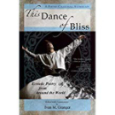
This Dance of Bliss: Ecstatic Poetry from Around the World Buddhism and Zen


Hsuan Chueh of Yung Chia / Yoka Genkaku

China (665 – 713) Timeline
Buddhist : Zen / Chan
Taoist

Continue Reading »

4 responses so far

Feb 21 2019

Abu-Said Abil-Kheir – Love came and emptied me of self

Published by under Ivan's Story,Poetry

Love came and emptied me of self
by Abu-Said Abil-Kheir

English version by Vraje Abramian

Love came and emptied me of self,
every vein and every pore,
made into a container to be filled by the Beloved.
Of me, only a name is left,
the rest is You my Friend, my Beloved.

— from The Longing in Between: Sacred Poetry from Around the World (A Poetry Chaikhana Anthology), Edited by Ivan M. Granger


/ Image by Olga-Zervou /

Long-time readers of the Poetry Chaikhana know that I have dealt with chronic fatigue/ME for a long time. It has generally been much better in the last couple of years — thankfully. My energies have been more steady and dependable for the most part. Still, it is something always in the background that must be carefully managed. Navigating my way through the activities of each day is often an exercise of careful strategy and measured choices.

I woke up this morning thinking about my journey along the way with that demanding teacher, and I returned to my commentary on this poem from several years ago. I share it again in the hopes that it is helpful to those of you who deal with difficult health issues or other challenges that can make life feel constrained. It’s easy to feel sorry for oneself, to rage at circumstance, to just give up. Or we can uncover hidden vistas within ourselves…

=

I have dealt with chronic fatigue on and off for years. As part of that pattern, I sometimes feel an intense sensation of tremors, even though my body is entirely still. Sitting on the couch with my wife, I’ll turn to see if she is shaking her foot, causing the couch to vibrate. But, no, she is quietly sitting there with no agitating movements. Each time this happens I’m surprised to find that nothing is actually shaking at all, neither my body nor the environment around me.

When the chronic fatigue symptoms are that strong I usually don’t have the energy to do a full day’s work, yet my body isn’t at rest enough to meditate either. What is a person to do who strives to be “spiritual,” when he can neither meditate nor take action? Interesting things happen at such moments.

When the stories we tell ourselves about ourselves can no longer be sustained, one option is to cling to the crumbling edifice and be injured by its collapse. Another option is to construct a new story. Or we can let all stories fall away. We can stop struggling to be either this or that. We can step beyond our stories. That is when we rediscover what we actually are. That is when hidden doorways open.
The little self is simply the sum total of all the stories we tell ourselves. When those stories fall away, the self becomes empty of itself. We then become a cup, empty and ready to be filled.

Of me, only a name is left,
the rest is You my Friend, my Beloved.

This is the hard wisdom that chronic illness teaches. Any life struggle—really any experience, pleasant or unpleasant—can be transformed into a teacher of wisdom when we stop taking it personally. Wisdom roots itself most deeply when we keep our hearts engaged and our eyes open in the midst of our shifting self-stories.

What can one do but stand in silent awe of the vision that emerges, showing us how much bigger we are than even our grandest stories?

Sending love!


Recommended Books: Abu-Said Abil-Kheir

The Longing in Between: Sacred Poetry from Around the World (A Poetry Chaikhana Anthology) This Dance of Bliss: Ecstatic Poetry from Around the World The Drunken Universe: An Anthology of Persian Sufi Poetry Nobody, Son of Nobody: Poems of Shaikh Abu-Saeed Abil-Kheir Love’s Alchemy: Poems from the Sufi Tradition
More Books >>


Abu-Said Abil-Kheir

Turkmenistan (967 – 1049) Timeline
Muslim / Sufi

Continue Reading »

4 responses so far

Feb 15 2019

Ellen Grace O’Brian – Maya

Published by under Poetry

Maya
by Ellen Grace O’Brian

Buddha points to the earth
Zen master points to the moon
Arjuna points to the target
Mary points to her child
Jesus points to the heart
Rumi points to Shams


We all look
until we see

— from The Moon Reminded Me, by Ellen Grace O’Brian


/ Image by hapal /

I’m not quite sure why, but reading this poem this morning makes me want to laugh.

Everyone is pointing in all directions, yet they all somehow point at the same spot.

We all look until we see.


Recommended Books: Ellen Grace O’Brian

The Moon Reminded Me Living for the Sake of Your Soul A Single Blade of Grass: Finding the Sacred in Everyday Life Living The Eternal Way: Spiritual Meaning and Practice for Daily Life


Ellen Grace O'Brian, Ellen Grace O'Brian poetry, Yoga / Hindu poetry Ellen Grace O’Brian

US (Contemporary)
Yoga / Hindu

Continue Reading »

2 responses so far

Feb 15 2019

the slightest contact

Every person: God.
Every animal, every plant: God.
Everything: God, God!
The slightest contact is worship.

One response so far

Feb 13 2019

Rasakhan – Nectar Radha

Published by under Poetry

Nectar Radha
by Rasakhan

English version by Shyamdas

When Radha’s eyes bashfully meet Hari’s,
      their delightful gestures
            entice His heart.

Her enchanting banter swindles His mind.
      Her words divulge an exquisite disposition.

She puts Her lips to His,
      filling that Abode of elixir
            with the nectar of Her very soul.

Although Krishna is an expert in all of love’s spells,
      Radha captivates God
            with a few soft syllables.

— from Treasure House of Love: Poems of Rasakhan, Translated by Shyamdas


/ Image by Vishnu108 /

How about some bhakti verses in honor of Valentine’s Day?

As with many bhakti poems, this is, on the surface, a poem of lovers, Radha and Krishna (also referred to as Hari). But these, like the Song of Songs in the Bible, are usually understood to reflect deeper spiritual truths. Radha is the soul, the spiritual seeker. Krishna is the one the soul seeks, the eternal Beloved, God. Radha’s yearning and seeking is the spiritual journey. Their love play is spiritual union.

Most bhakti poems dwell on how Krishna’s enchanting beauty draws Radha (the soul) to him. God/Krishna is, after all, “an expert in all of love’s spells,” for all sincere seekers are in love with the Divine One. In truth, every soul, no matter how closed off, has a deep-seated hunger for something, and that yearning, whether recognized or not, is ultimately for the eternal Beloved. Every single being is caught up in Krisnha’s love spell.

But these lines by Rasakhan point out that there is a reciprocal attraction, as well. The soul doesn’t just reach out to the Divine. Turning one’s attention eagerly toward the Beloved magnetically draws the Divine to the individual soul, as well. When done with total sincerity and with one’s full, unedited being, a response from the Beloved becomes unavoidable.

In this way, “Radha captivates God / with a few soft syllables.” We can be more specific and understand Radha’s “enchanting banter” and “few soft syllables” as being her use of mantra. The repetition of mantra helps the mind, the heart, all of our energies to be enlivened with a focused attention on the Divine. It awakens awareness of the inner mantra, the inner vibration. One’s whole being becomes a love song directed toward God. How can the Beloved not be lured by this enticing melody?

The soul and God draw each other, the two becoming enfolded within their mutual love.

Have a beautiful Valentine’s Day with your beloved / Beloved.


Recommended Books: Rasakhan

Treasure House of Love: Poems of Rasakhan


Rasakhan

India (1534? – 1619?) Timeline
Yoga / Hindu : Vaishnava (Krishna/Rama)
Muslim / Sufi

Continue Reading »

One response so far