Archive for August, 2019

Aug 30 2019

Hogen Bays – In this passing moment

Published by under Poetry

In this passing moment
by Hogen Bays

“In the presence of Sangha, in the light of Dharma,
in oneness with Buddha — may my path
to complete enlightenment benefit everyone!”

In this passing moment karma ripens
and all things come to be.
I vow to choose what is:
If there is cost, I choose to pay.
If there is need, I choose to give.
If there is pain, I choose to feel.
If there is sorrow, I choose to grieve.
When burning — I choose heat.
When calm — I choose peace.
When starving — I choose hunger.
When happy — I choose joy.
Whom I encounter, I choose to meet.
What I shoulder, I choose to bear.
When it is my death, I choose to die.
Where this takes me, I choose to go.
Being with what is — I respond to what is.


This life is as real as a dream;
the one who knows it cannot be found;
and, truth is not a thing — Therefore I vow
to choose THIS dharma entrance gate!
May all Buddhas and Wise Ones
help me live this vow.

— from The Longing in Between: Sacred Poetry from Around the World (A Poetry Chaikhana Anthology), Edited by Ivan M. Granger


/ Image by Agustin Ruiz /

There’s something both delightful and deeply challenging about this vow poem.

The entire poem is summed up at the beginning:

I vow to choose what is

You would think the unavoidable nature of “what is” makes a statement like this meaningless, but the human mind is not entirely sane. It often chooses fantasy and imaginings, shoulds and coulds, possibilities and even impossibilities over what is. Very few of us truly dwell in reality. Rarely do we fully experience the moments of our lives.

What is it that we are straining for as we constantly lean away from “what is”? What do we think is missing that we need? We don’t need someone else’s life. We don’t need a perfect marriage, better finances, or a better place in society. We don’t even need to be a saint living in the mountains. What’s missing is ourselves. What we really need is to stand in our own shoes, to be utterly ourselves. We need that missing ingredient—being present. We need to live, with honesty and an open heart, the life that already moves through us.

When starving–I choose hunger.
When happy–I choose joy.

When we are hungry, can we choose anything other than hunger? When happy, isn’t joy automatic? The truth is that we constantly choose. Ask yourself, how often do we really sit with our hunger and sorrow? How often do we allow ourselves to dance with the joy bubbling up inside us? How often do we notice these things at all?

The power of a practice like Zen is that it defines the human journey, not as escape, but as coming home, of settling into ourselves and being present with the present. It challenges us to actually live the moment that continuously arrives and passes and renews itself.

By making this journey to “what is,” we finally meet ourselves and learn what this amazing thing is that we call life, with all its rich, joyful, painful, and transitory beauty.

May all Buddhas and Wise Ones
help me live this vow.


Recommended Books: Hogen Bays

The Longing in Between: Sacred Poetry from Around the World (A Poetry Chaikhana Anthology) Morning Dewdrops of the Mind: Teachings of a Contemporary Zen Master Path to Bodhidharma


Hogen Bays

United States (Contemporary)
Buddhist : Zen / Chan

Continue Reading »

7 responses so far

Aug 30 2019

Don’t resent the work

Don’t resent the work.
It gives you the strength to stand
whole and silent
before the Mystery.

One response so far

Aug 23 2019

Rasakhan – Enchanted

Published by under Poetry

Enchanted
by Rasakhan

English version by Shyamdas

I put my fingers in my ears
      to block the sound
            whenever Krishna gently plays His flute!

Declares Raskhan,
      “It happens when enchanter Mohan
            climbs to the rooftop
                  to call His cows.

“I issue a warning to all the people of Braja.
      Tomorrow, I will not be able to console them.

“O, friend! Having glimpsed His smile,
      I cannot…
            I cannot…
                  I will not
                        control my love.”

— from Treasure House of Love: Poems of Rasakhan, Translated by Shyamdas


/ Image by vishalmisra /

Today is Krishna Jayanti or Krishna Janmashtami in the Hindu calendar, the day celebrating the birth of Krishna. Naturally, I thought we should select a poem in honor of Krishna…

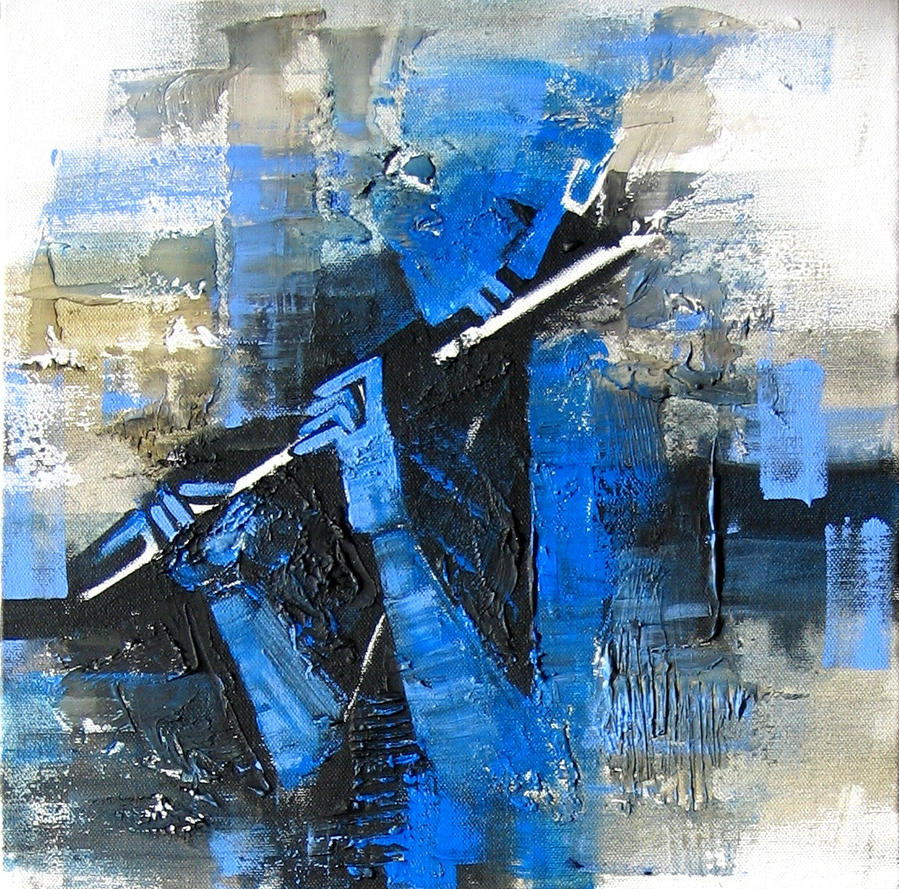
Krishna is often depicted standing in a relaxed posture holding a flute to his lips. Think of Krishna as the pied piper of India, but it is lost souls he calls to himself.

I put my fingers in my ears
      to block the sound
            whenever Krishna gently plays His flute!

When you think about it, this opening line can be read in two different ways. On the surface, Rasakhan (speaking as Radha, the cowherd girl who loves Krishna) seems to be petulantly blocking out the music of Krishna’s flute, not wanting to come when called. Of course, even this implies that the Lord’s music is so enchanting that the only way not to be drawn by it is to try to block it out. This hints that we are already hooked by the call of God, that union is inevitable, and we can only temporarily put it off.

But there is another, esoteric way to read this, as well. The flute of Krishna is the quiet tone heard deep within the base of the skull when we sit in silent, devoted meditation and prayer. It is this whisper in the inner ear that draws us to deepest union with the Eternal. Understood this way, Rasakhan could actually be describing a yogic technique of blocking out sound and quieting the external senses in order to better hear Krishna’s call within.

Declares Raskhan,
      “It happens when enchanter Mohan
            climbs to the rooftop
                  to call His cows.

We hear the flute when Mohan, another name for Krishna, climbs to the rooftop. In the language of yoga, this “rooftop” can be understood as a reference to the skull in general or, more specifically, the crown chakra.

“O, friend! Having glimpsed His smile,
      I cannot…
            I cannot…
                  I will not
                        control my love.”

I love those lines! That’s the passion felt by a true lover of God! “I cannot… I cannot… I will not control my love.”

=

Website Fixes

The reason there was no poem email last week was that I was focused on fixing some technical issues with the Poetry Chaikhana website. It turned out to be a more challenging undertaking than I first imagined, but everything should be running smoothly once again.


Recommended Books: Rasakhan

Treasure House of Love: Poems of Rasakhan


Rasakhan

India (1534? – 1619?) Timeline
Yoga / Hindu : Vaishnava (Krishna/Rama)
Muslim / Sufi

Continue Reading »

4 responses so far

Aug 09 2019

Lalla – Learning the scriptures is easy

Published by under Poetry

Learning the scriptures is easy
by Lalla

English version by Ivan M. Granger

Learning the scriptures is easy;
but living them, that’s hard.
Far easier to read words on a page
than to seek the living heart of things.


Fumbling through the fog of study,
stumbling, I lost my last words.
      — And my vision cleared.
      Oh the sight that met me then!

— from The Longing in Between: Sacred Poetry from Around the World (A Poetry Chaikhana Anthology), Edited by Ivan M. Granger

It has been a heartrending week if you follow the news. Here in the US, we had two mass shootings in a row last weekend perpetrated by racist right-wing extremists. The governmental response has been one of dogged inaction, despite huge support among the population for reinstating the assault weapons ban.

To heighten the sense of cruelty this week, there have also been a series of brutal raids on immigrant families by ICE in several US states.

I tend to feel these public traumas in very personal, physical ways. More than once I have woken up in the middle of the night flooded with a nameless agitated energy just hours before one of these events. It happened to me on the morning of 9/11. It has happened with several previous mass shootings. Needless to say, it has been a restless week.

I tend to see public violence like these events as dark rituals. They evoke darkness in the cultural consciousness, summoning fear in most and vicious exhilaration in a few. Each of these public rituals of violence and cruelty makes similar actions more conceivable, as if a doorway is being forced opened. The way to respond is not through fear but through engaged compassion. Feeling compassion in the midst of trauma, feeling anything in the midst of trauma, can be excruciating at first and requires immense courage — but it is the way of life, to keep life flowing within us and within the world. Preventing the heart from shutting down is just the first step. Our compassion must be engaged. It must be active. The energy of compassion naturally wants to act, to move through us and reach out into the world in order to help, to heal, and to protect the vulnerable. As more and more people light up with this compassion and offer their hands in genuine service, that doorway to violence and cruelty is again closed.

I have been talking about American events, but let’s not overlook the ratchetting up of tensions between India and Pakistan over Kashmir, which is perhaps the most concerning on the global stage. While the two nations have been skirmishing over the region since Partition, a genuine war between the two would be catastrophic, not just for them but for the planet.

I thought some words of clarity and wisdom from the great Kashmiri poet-saint Lalla might help–

Learning the scriptures is easy;
but living them, that’s hard.

Too often people slip into the bad habit of fundamentalism, confusing the ability to quote scripture and rules with actually embodying that truth in their daily lives. Memorization and carefully controlled behavior doesn’t do the job. It keeps things safely in the intellect and then we never have to truly confront the heart’s urge to open.

But Lalla reminds us:

Far easier to read words on a page
than to seek the living heart of things.

Not only is it not easy to seek the deep reality, it’s messy. We are confronted by aspects of ourselves that are frightening and frightened, hidden even from our own awareness. History, hopes, angers, ambitions…

Each human life is far too rich and multi-layered to be truncated into the safe, neat, predefined stories we are told to live out. The human soul is not a cartoon, without depth or detail. No, a full spirituality incorporates all that we are. To be holy is to be whole — nothing left out. The map of the human soul is a topographical map, with mountains and valleys, and rivers of life everywhere. Until we’ve acknowledged that entire landscape, we only have an incomplete sense of all that we are, and all that humanity is — that’s when compassion collapses, the world appears fragmented, and the vision of the the living heart of things is lost in the cracks.

Fumbling through the fog of study,
stumbling, I lost my last words.

After learning the scriptures, Lalla has swept her mental space clean. Now that’s real work! Instead of just memorizing the words of scripture, she has become the blank page that effortlessly displays them.

— And my vision cleared.
Oh the sight that met me then!

Sending love out into the world in the form of awakening empathy and compassion and self-awareness… and the will to act in their service.


Recommended Books: Lalla

The Longing in Between: Sacred Poetry from Around the World (A Poetry Chaikhana Anthology) Women in Praise of the Sacred: 43 Centuries of Spiritual Poetry by Women Poetry for the Spirit: Poems of Universal Wisdom and Beauty This Dance of Bliss: Ecstatic Poetry from Around the World Naked Song
More Books >>


Lalla, Lalla poetry, Yoga / Hindu poetry Lalla

Kashmir (India/Pakistan) (14th Century) Timeline
Yoga / Hindu : Shaivite (Shiva)

Continue Reading »

3 responses so far

Aug 09 2019

trance

We are always in trance.
The trick is to shift
from low trance
to high trance.

One response so far

Aug 02 2019

Hsu Yun – Searching for the Dharma

Published by under Poetry

Searching for the Dharma
by Hsu Yun

You’ve traveled up ten thousand steps in search of the Dharma.
So many long days in the archives, copying, copying.
The gravity of the Tang and the profundity of the Sung
make heavy baggage.
Here! I’ve picked you a bunch of wildflowers.
Their meaning is the same
but they’re much easier to carry.


/ Image by Riki-Tiki-Myu /

Something I wrote a few years back, in the springtime…

Walking yesterday, the trees are shyly showing their green buds, returning color to the world. I turned a corner and was bathed in the honey scent of new plum blossoms. These are the true books of the Dharma.

The great masters don’t wear an academic scowl; a silly grin sits easy on their faces. Must be from so much study on such a Spring day…


Recommended Books: Hsu Yun

The Longing in Between: Sacred Poetry from Around the World (A Poetry Chaikhana Anthology) A Drifting Boat: Chinese Zen Poetry A Pictoral Biography of the Venerable Master Hsu Yun Empty Cloud: The Autobiography of Chinese Zen Master, Hsu Yun


Hsu Yun, Hsu Yun poetry, Buddhist poetry Hsu Yun

China (1839 – 1959) Timeline
Buddhist : Zen / Chan

Continue Reading »

5 responses so far