Archive for February, 2021

Feb 26 2021

Mary Oliver – Spring

Published by under Poetry

Spring
by Mary Oliver

Somewhere
a black bear
has just risen from sleep
and is staring

down the mountain.
All night
in the brisk and shallow restlessness
of early spring

I think of her,
her four black fists
flicking the gravel,
her tongue

like a red fire
touching the grass,
the cold water.
There is only one question:

how to love this world.
I think of her
rising
like a black and leafy ledge

to sharpen her claws against
the silence
of the trees.
Whatever else

my life is
with its poems
and its music
and its glass cities,

it is also this dazzling darkness
coming
down the mountain,
breathing and tasting;

all day I think of her —
her white teeth,
her wordlessness,
her perfect love.

— from New and Selected Poems, by Mary Oliver


/ Image by Marie Hale /

We have snow on the ground here in Colorado, but spring is coming. You can see it in the brilliant morning sunlight, in the first tentative buds on branches. We are, all of us, beginning to shake off the long hibernation of winter to encounter the world once again, like Mary Oliver’s bear.

The poem evokes for us the image of this black bear, this huge being, “like a black and leafy ledge,” waking from its slumbers and rather roughly encountering the world once again. But that renewed interaction between bear and gravel, grass, and tree is a form a sacrament. It is the embodiment of a questions: how to love this world.

The poem circles back to the poet, her human life filled with creativity and cities…

Whatever else

my life is
with its poems
and its music
and its glass cities…

But we sense that the list is incomplete. Something fundamental has been left out of the first part of that list. That connection with nature. No… deeper even than that. Something archetypal. The great primal being within as it awakens and encounters the world.

it is also this dazzling darkness
coming
down the mountain,
breathing and tasting;

Despite its massive presence, it is silent. Without words. Beyond words.

(The phrase “dazzling darkness” is of particular significance within Western esoteric traditions, tracing back to a poem by the important early Christian mystic Dionysius the Areopagite. I suspect Ms. Oliver used it intentionally to suggest the same mysterious, vast, silent presence.)

all day I think of her -–
her white teeth,
her wordlessness,
her perfect love.

I have always felt a special connection with the animal world. As a child, for a time I planned to become a veterinarian. I remember often meditating as a boy on the wordlessness of animals. What sort of world do they inhabit without words, without names for things or places or people… or even for themselves? I tried to imagine that world, to enter it with my own wordlessness. Like Mary Oliver’s bear. In our wordlessness, when we stop naming things, we find that we encounter everything more immediately, more fully. When we name a thing or person or experience, we have labeled it, categorized it and, as a result, moved it outside of the realm of direct experience and shunted it safely into a mental idea of the moment, rather than the living moment itself. When we name things through incessant thought, we then encounter our thoughts about the experience and not the actual experience. We end up seeing only reflections of the mind and forget how to see the world as it is.

Mary Oliver’s bear reminds us to let that great black bear rise from its sleep and encounter the world in its wordlessness. This is how we can begin to answer the “only one question: how to love this world.” We embody perfect love when we are truly present in our dazzling silence and not elsewhere in our words and thoughts. Love is connection, contact, encountering a person or place as it is, as we are. Love is being right here.

Have a beautiful day, one of wordless spring awakening!


Recommended Books: Mary Oliver

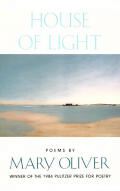
New and Selected Poems Why I Wake Early Dream Work House of Light Thirst: Poems
More Books >>


Mary Oliver, Mary Oliver poetry, Secular or Eclectic poetry Mary Oliver

US (1935 – 2019) Timeline
Secular or Eclectic

Continue Reading »

5 responses so far

Feb 26 2021

battered heart

somehow the battered heart
blossoms with such beauty,
no hint of past hurts

One response so far

Feb 12 2021

Patrul Rinpoche – Use the time of your life

Published by under Poetry

Use the time of your life
by Patrul Rinpoche

Use the time of your life.
Develop your inner happiness.
Recognize the impermanence
of all outer pleasure.

Live as a Yogi
Do your spiritual practices.
Work as a Bodhisattva
for a happy world.

Become an Amitabha
a Buddha of love and light.
Turn your world into the paradise Sukhavati,
by unfolding the enlightenment energy within you.

Search you a spiritual master,
who knows the goal of enlightenment.
Change your world into a place of grace,
by understanding all the phenomena as spiritual exercises.

Dedicate your actions to the benefit of all beings.
Send all beings light.
Live for the happiness of all beings.
So you get the energy of light.


/ Image by Hartwig HKD /

Today, February 12, is the beginning of Losar, the Tibetan New Year, a good time to release the old and welcome in the new.

I don’t often feature poetry from the Tibetan tradition, even though I love this rich heritage. The reason is that much of the sacred poetry that comes to us from Tibetan practitioners can seem to the casual reader to be rather technical and philosophically didactic. It is rarely the fluid and ecstatic outpouring of the heart, like Rumi’s poetry, for example. But, once you have explored Tibetan expressions of Buddhism a bit and understand some of the sacred terminology, then Tibetan poetry reveals itself to be a treasure trove of wisdom and beauty.

For today, I thought I’d choose a relatively simple and direct poem by Patrul Rinpoche.

Use the time of your life.
Develop your inner happiness.

This poem is a direct appeal to seize the opportunity of our being. We have the blessing of life and awareness, so let’s joyfully use them for what they were really made for — awakening.

The outer satisfaction of pleasures and acquisitions, while they may have their place in our lives too, are always limited and, because of their exterior nature, never provide us with lasting fulfillment.

Recognize the impermanence
of all outer pleasure.

When we are wise, we cultivate our inner happiness, our wellspring of inherent bliss, which does not fluctuate with outer experiences.

We can find parallels in the Christian tradition when Jesus advises his followers to store one’s treasures in heaven where they are not vulnerable to decay or theft.

Patrul Rinpoche gives us simple, clear guidance for a life of spiritual fruition:

Live as a Yogi
Do your spiritual practices.

He reminds us to remain engaged in the practices and activities that return our focus, again and again, to our higher purposes in life. Yes, we have our daily roles and responsibilities, but we must always return to the deeper meaning of our lives and find ways to infuse even our most mundane tasks with that extra spiritual magnetic charge so that increasingly every activity becomes a spiritual practice filled with inner purpose.

Work as a Bodhisattva
for a happy world.

A Bodhisattva is one who has taken vows to work for the healing and spiritual awakening of all beings. In other words, he advises us to live in service and act with kindness, healing the world as we move through it.

Become an Amitabha
a Buddha of love and light.

An Amitabha is a Buddha of light, a radiant and loving expression of pure awakening. The spiritual path is not one of drudgery or rigid progress. We blossom with love and light.

Turn your world into the paradise Sukhavati,
by unfolding the enlightenment energy within you.
…Change your world into a place of grace.

As we discover our inner bliss, we unleash it into the world, letting it do its transformative work. Allowing that energy to move through us, we naturally strive to build outer manifestations of that inner joy, trying to awaken that awareness of paradise in others and in the social fabric we collectively weave.

The well-lived spiritual life becomes a dance of inner and outer, in which kindness and joy are both natural and logical as we more fully recognize the interrelationship of being we all share.

Dedicate your actions to the benefit of all beings.
Send all beings light.
Live for the happiness of all beings.
So you get the energy of light.

May this be a time of cleansing endings and joyful new beginnings. Happy Losar!


[BOOK LIST REPEATING]

Patrul Rinpoche, Patrul Rinpoche poetry, Buddhist poetry Patrul Rinpoche

Tibet (1808 – 1887) Timeline
Buddhist : Tibetan

Continue Reading »

6 responses so far

Feb 12 2021

gathering silence

Once you have gathered enough silence,
silence gathers you.

One response so far

Feb 05 2021

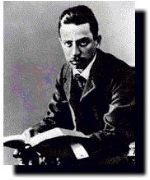
Rainer Maria Rilke – Want the change

Published by under Poetry

Want the change
by Rainer Maria Rilke

English version by Anita Barrows and Joanna Macy

Want the change. Be inspired by the flame
where everything shines as it disappears.
The artist, when sketching, loves nothing so much
as the curve of the body as it turns away.

What locks itself in sameness has congealed.
Is it safer to be gray and numb?
What turns hard becomes rigid
and is easily shattered.

Pour yourself out like a fountain.
Flow into the knowledge that what you are seeking
finishes often at the start, and, with ending, begins.

Every happiness is the child of a separation
it did not think it could survive. And Daphne, becoming
a laurel,
dares you to become the wind.

— from In Praise of Mortality: Rilke’s Duino Elegies & Sonnets to Orpheus, by Rainer Maria Rilke / Translated by Joanna Macy


/ Image by Lulu Lovering /

This poem is a lovely meditation on change and transitoriness — as signs of life. It is only those relationships and experiences which move, and evolve, and eventually disappear that are fully alive.

Want the change. Be inspired by the flame
where everything shines as it disappears.

We so want the opposite to be true. We reflexively want to grasp the world, to hold it fixed, so we can trust reality, know its rules, and feel secure every day. But Rilke invites us to see with the poet’s keen eye the truth of the matter: that which doesn’t change lacks life and loses beauty–

What locks itself in sameness has congealed.
Is it safer to be gray and numb?
What turns hard becomes rigid
and is easily shattered.

We can’t hold our lives fixed, and we can’t hold ourselves fixed within our lives. The only thing to do is to step fully into each mysterious unknown day.

I love the line–

Pour yourself out like a fountain.

This statement so powerfully evokes the courage each day requires and the generosity of self that we can bring to each encounter.

We give of ourselves not to secure our lives but to live our lives in fullness. And, in doing so, we discover more life in our lives.

Flow into the knowledge that what you are seeking
finishes often at the start, and, with ending, begins.

If you’re not a mythology nerd, you may not have picked up on Rilke’s reference to Daphne and the laurel…

And Daphne, becoming
a laurel,
dares you to become the wind.

In Greek mythology, Daphne was a stunningly beautiful nymph who lived and hunted in the woods. Because of her beauty men constantly sought her favors, but she refused everyone. Then the god Apollo fell in love with her, but she refused him as well. Daphne fled from Apollo, who continued to pursue her. When Apollo was about to grasp Daphne, she called upon her father’s magical power, and she was instantly transformed into a laurel tree. The god Apollo, still in love with Daphne, but unable to embrace her, plucked a branch of the laurel and wore it as a wreath upon his head.

By evoking Daphne, Rilke is calling up this rich myth of beauty, and the inability to posses it. Yet that beauty, in transforming itself into something that can no longer be truly held or lusted after, takes on a new life all its own, a life that yet dances in the wind.

Rilke seems to be inviting us to encounter life with full presence and, with the courage of a witness rather than one who grasps, to appreciate beauty both in the coming and goings of life.


Recommended Books: Rainer Maria Rilke

The Enlightened Heart: An Anthology of Sacred Poetry Ahead of All Parting: The Selected Poetry and Prose of Rainer Maria Rilke The Soul is Here for its Own Joy: Sacred Poems from Many Cultures Rilke’s Book of Hours: Love Poems to God In Praise of Mortality: Rilke’s Duino Elegies & Sonnets to Orpheus
More Books >>


Rainer Maria Rilke, Rainer Maria Rilke poetry, Secular or Eclectic poetry Rainer Maria Rilke

Germany (1875 – 1926) Timeline
Secular or Eclectic

Continue Reading »

4 responses so far

Feb 05 2021

non-believer

The goal is to become a non-believer,
to abandon belief — and dogma and hearsay —
in favor of direct knowing.

One response so far