Archive for June, 2021

Jun 25 2021

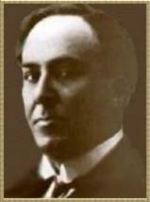
Antonio Machado – Last night, as I was sleeping

Published by under Poetry

Last night, as I was sleeping
by Antonio Machado

English version by Ivan M. Granger

      Last night, as I was sleeping,
I dreamt — blessed vision! —
that a fountain flowed
here in my heart.
I said: Why, O water, have you come
along this secret waterway,
spring of new life,
which I have never tasted?

      Last night, as I was sleeping,
I dreamt — blessed vision! —
that I had a beehive
here in my heart;
and the golden bees
were making
from all my old sorrows
white wax and sweet honey.

      Last night, as I was sleeping,
I dreamt — blessed vision! —
a blazing sun shone
here in my heart.
It was blazing because it gave heat
from a red home,
and it was sun because it gave light
and because it made me weep.

      Last night, as I was sleeping,
I dreamt — blessed vision! —
that it was God I had
here in my heart.

— from The Longing in Between: Sacred Poetry from Around the World (A Poetry Chaikhana Anthology), Edited by Ivan M. Granger


/ Image by Ecstatic Mark /

This is my favorite poem by the Spanish poet Antonio Machado. Actually, it’s one of my favorite poems, period.

Robert Bly’s English version is probably the best known. Although I generally like the feel and rhythm of Bly’s rendition, I find one important detail frustrating, even misleading: The repeated line, which I’ve translated as “blessed vision,” he renders as “marvelous error.” Machado’s actual line in Spanish is bendita ilusión. A more exact translation might be “blessed vision or dream.” Perhaps the poet can’t quite believe the beauty of his vision, but he hardly regards it as an “error.” Reading the original Spanish, I have the feeling Machado is teasing us by calling the experience a dream, seeing if we are foolish enough to cast it aside.

Let’s take just a moment to explore how this poem parallels the mystic’s ecstatic experience…

Machado discovers continual delights in his heart: a flowing fountain, a honey-filled beehive, a blazing sun, God… all found within the heart. Read enough descriptions of mystical union, and the same descriptions come up again and again — a heart ablaze with light and heat, filled with sweetness, bubbling and overflowing, a heart expanding to embrace all creation.

The fountain flows from the heart, running along a “secret waterway.” It is a “spring of new life.” This is often part of sacred ecstasy. Mystics experience a sensation of drinking some unknown liquid that warms the heart and fills one with a bubbling sense of life previously unknown and unimagined.

This “drink” is perceived as being sweet, eliciting comparisons to honey or wine. Thus, Machado discovers “white wax / and sweet honey” in his heart.

In such overwhelming delight one feels radically restored and whole. All past guilts and sorrows seem somehow resolved, transformed into the very matter from which this joy emerges.

And the awareness is filled with the perception of a radiant light, while the body is permeated with a great warmth — like a “blazing sun.”

Indeed, caught up in this experience, how can we doubt that it is God we have inside our hearts?


Recommended Books: Antonio Machado
The Longing in Between: Sacred Poetry from Around the World (A Poetry Chaikhana Anthology) Real Thirst: Poetry of the Spiritual Journey The Enlightened Heart: An Anthology of Sacred Poetry Times Alone: Selected Poems of Antonio Machado Border of a Dream: Selected Poems of Antonio Machado
More Books >>


Antonio Machado, Antonio Machado poetry, Secular or Eclectic poetry Antonio Machado

Spain (1875 – 1939) Timeline
Secular or Eclectic

Continue Reading »

3 responses so far

Jun 25 2021

Knowing our work

Knowing our work, let’s be impatient to begin
and supremely patient in its accomplishment.
Knowing our work, what cause is there
for anything but joy in turning to it each day?

No responses yet

Jun 11 2021

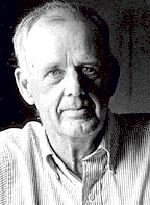
Wendell Berry – How to Be a Poet

Published by under Poetry

How to Be a Poet
by Wendell Berry

(To remind myself)

i
Make a place to sit down.
Sit down. Be quiet.
You must depend upon
affection, reading, knowledge,
skill — more of each
than you have — inspiration,
work, growing older, patience,
for patience joins time
to eternity. Any readers
who like your poems,
doubt their judgment.

ii
Breathe with unconditional breath
the unconditioned air.
Shun electric wire.
Communicate slowly. Live
a three-dimensioned life;
stay away from screens.
Stay away from anything
that obscures the place it is in.
There are no unsacred places;
there are only sacred places
and desecrated places.

iii
Accept what comes from silence.
Make the best you can of it.
Of the little words that come
out of the silence, like prayers
prayed back to the one who prays,
make a poem that does not disturb
the silence from which it came.

— from Given: Poems, by Wendell Berry


/ Image by Louis Vest /

One doesn’t have to be a poet to inspired by this poem. In fact, it’s not really about writing poetry at all, is it? It’s really about how to be present, how to inhabit the world quietly and notice more than ourselves. That is when the best poetry is born.

The first verse invites is to settle down. Reading those first few lines, I feel my own bones settling awkwardly into a state of rest and stillness. And there is the slow interior work of reading, cultivating inspiration, the private work on the blank page. I love that he lists “growing older” as one of the necessary tasks of the poet. And patience–

for patience joins time
to eternity.

The second verse seems to be more about our relationship to place, both exterior and interior space. In recent years I haven’t done so well with avoiding electric wire and screens, but there was a time some years ago when I did just that, literally. I embraced my Luddite instincts as much as practical. It does shift one’s sense of reality and connection to the world. The transition feels stressful at first, and then, slowly, the world around us starts to take on a new depth and life, becoming a slow-speaking friend in constant, quiet communication.

What are the ways we have been taught to not recognize our ongoing dialog with all around us?

There are no unsacred places;
there are only sacred places
and desecrated places.

And he concludes with that wonderful meditation on silence. We think a poem is a collection of words, but the best poetry simply gives shape to silence.

Accept what comes from silence…

make a poem that does not disturb
the silence from which it came.

Have a beautiful weekend, remembering to breathe the unconditional breath!


Recommended Books: Wendell Berry

The Collected Poems of Wendell Berry, 1957-1982 Given: Poems Selected Poems of Wendell Berry A Timbered Choir: The Sabbath Poems 1979-1997 The Mad Farmer Poems
More Books >>


Wendell Berry, Wendell Berry poetry, Secular or Eclectic poetry Wendell Berry

US (1934 – )
Secular or Eclectic

Continue Reading »

3 responses so far

Jun 11 2021

extreme and balanced

In your pursuit of God,
sometimes — you must be extreme;
always — you must be supremely balanced.

No responses yet

Jun 04 2021

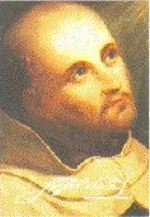
John of the Cross – I Entered the Unknown

Published by under Poetry

I Entered the Unknown
by John of the Cross

English version by Ivan M. Granger

I entered the unknown,
and there I remained unknowing,
all knowledge transcended.

Where I entered I knew not,
but seeing myself there,
not knowing where,
great things then made themselves known.
What I sensed I cannot say,
for I remained unknowing,
all knowledge transcended.

In this peace and purity
was perfect knowledge.
In profoundest solitude
I understood with absolute clarity
something so secret
that I was left stammering,
all knowledge transcended.

So deep was I within,
so absorbed, transported,
that all senses fled,
and outer awareness fell away.
My spirit received the gift
of unknowing knowing,
all knowledge transcended.

He who reaches this realm
loses himself,
for all he once knew
now is beneath his notice,
and his mind so expands
that he remains unknowing,
all knowledge transcended.

And the higher he rises
the less he knows:
That is the dark cloud
that shines in the night.
The one who knows this
always remains unknowing,
all knowledge transcended.

This knowing by unknowing
is of such exalted power,
that the disputations of the learned
fail to grasp it,
for their knowledge does not reach
to knowing by unknowing,
all knowledge transcended.

Of such supreme perfection
is this knowledge
that no faculty or method of mind
can comprehend it;
but he who conquers himself
with this unknowing knowing,
will always transcend.

And if you are ready to receive it,
this sum of all knowledge is discovered
in the deepest ecstasy
of the Divine Essence.
Goodness and grace
grant us this unknowing,
all knowledge transcended.

— from This Dance of Bliss: Ecstatic Poetry from Around the World, Edited by Ivan M. Granger


/ Image by oddsock /

St. John of the Cross repeatedly contrasts knowledge with unknowing.

I entered the unknown,
and there I remained unknowing,

all knowledge transcended.

The Spanish word rendered here as “knowledge” is ciencia, which has the more obvious translation of “science.” But the poem’s archaic use of “science” implies not the scientific process, but a more general sense of knowledge acquired through reason and the testimony of the senses.

And John of the Cross emphasizes that his unknowing is superior.

He is not advocating ignorance, however. The Spanish saint is instead speaking about the mystical idea of “unknowing,” the state in which all concepts and mental filters have been set aside. In that state of unknowing, we rise above the elaborate constructions of the logical mind and come to rest in pure awareness (“knowing by unknowing”). He is contrasting true, unfiltered knowing, gnosis, with the mere accumulation and organization of information.

To be unknowing in this sense is to encounter every instant entirely as it is, in pure wonder, without projection, without anticipation or agitation. The intellectual mind—a hugely important tool!—has one very serious weakness: It never encounters the present moment nakedly. It is always processing, analyzing, making everything fit within its comprehension. It never truly witnesses; it only interprets.

We certainly want to cultivate a critical intellect, but we must always remember that it is not the whole of consciousness. The awareness can step beyond the intellect. To fully apprehend reality, it must.

So deep was I within,
so absorbed, transported,
that all senses fled,
and outer awareness fell away.

This state of supreme unknowing is not perception in the sense of drawing in and interpreting exterior input through the senses. In normal perception, the intellect sifts and sorts that sensory data and formulates it into a working hypothesis of what reality is. That hypothesis, however, is always an incomplete shorthand that only approximates reality.

By contrast, the mystic’s unknowing is the centered awareness of unfiltered reality. This awareness does not tilt off its seat in order to reach out through the senses. It is at rest, poised. It witnesses without an egoic agenda. The full awareness in this state of unknowing does not sift reality, it bathes in it.

Rather than an interpretation, one sees clearly, free from artificial mental constructions–knowing by unknowing.

And if you are ready to hear it,
this sum of all knowledge is discovered
in the deepest ecstasy
of the Divine Essence.
Goodness and grace
grant us this unknowing,

…all knowledge transcended.


Recommended Books: John of the Cross

The Longing in Between: Sacred Poetry from Around the World (A Poetry Chaikhana Anthology) Poetry for the Spirit: Poems of Universal Wisdom and Beauty Real Thirst: Poetry of the Spiritual Journey To Touch the Sky: Poems of Mystical, Spiritual & Metaphysical Light For Lovers of God Everywhere: Poems of the Christian Mystics
More Books >>


John of the Cross, John of the Cross poetry, Christian poetry John of the Cross

Spain (1542 – 1591) Timeline
Christian : Catholic

Continue Reading »

5 responses so far

Jun 04 2021

settles into the heart

Awareness settles into the heart,
touching everything
without reaching out to do so.

No responses yet