Archive for April, 2022

Apr 22 2022

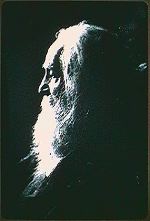
Walt Whitman – It is time to explain myself

Published by under Poetry

[44] It is time to explain myself — let us stand up (from Song of Myself)
by Walt Whitman

It is time to explain myself — let us stand up.
What is known I strip away,
I launch all men and women forward with me into the Unknown.
The clock indicates the moment — but what does eternity indicate?
We have thus far exhausted trillions of winters and summers,
There are trillions ahead, and trillions ahead of them.
Births have brought us richness and variety,
And other births will bring us richness and variety.
I do not call one greater and one smaller,
That which fills its period and place is equal to any.

Were mankind murderous or jealous upon you, my brother, my sister?
I am sorry for you, they are not murderous or jealous upon me,
All has been gentle with me, I keep no account with lamentation,
(What have I to do with lamentation?)

I am an acme of things accomplished, and I am encloser of things to be.
My feet strike an apex of the apices of the stairs,
On every step bunches of ages, and larger bunches between the steps,
All below duly traveled, and still I mount and mount.
Rise after rise bow the phantoms behind me,
Afar down I see the huge first Nothing, I know I was even there,
I waited unseen and always, and slept through the lethargic mist,
And took my time, and took no hurt from the fetid carbon.

Long was I hugged close — long and long.
Immense have been the preparations for me,
Faithful and friendly the arms that have helped me.

Cycles ferried my cradle, rowing and rowing like cheerful boatmen,
For room to me stars kept aside in their own rings,
They sent influences to look after what was to hold me.
Before I was born out of my mother generations guided me,
My embryo has never been torpid, nothing could overlay it.

For it the nebula cohered to an orb,
The long slow strata piled to rest it on,
Vast vegetables gave it sustenance,
Monstrous sauroids transported it in their mouths and deposited it with care.
All forces have been steadily employed to complete and delight me,
Now on this spot I stand with my robust soul.

— from Song of Myself, by Walt Whitman


/ Image by Nandhu Kumar /

I know this is a bit longer than most of the poems I send out, but don’t rush through it. Take a restful few moments to read this slowly. Enjoy the flavor of the words on your tongue, let them sweeten your thoughts.

Several of the lines from this selection ring through the decades. Find the lines that sing to you.

Like so much of Walt Whitman’s ‘Song of Myself,’ this chapter has a wonderful sense of the sacred tumult of life. He is especially meditating upon how all of life and the ages of the past “trillions of winters and summers” has led up to this moment, to this scintillating instant.

And it is in the present moment that he discovers himself resting upon the crest of the wave of eternity:

Long was I hugged close — long and long.
Immense have been the preparations for me…

Whitman isn’t interested in some sort of religious idea of perfection. For him, what is important is to inhabit the present (“That which fills its period and place is equal to any.”) and to recognize in the present (and in yourself) the fulfillment of eons (“I am an acme of things accomplished…”).

Yet, in the messy and sometimes tragic or “murderous” fullness of the present, nothing is static. The present continuously flows into the future: “…I am the encloser of things to be,” “…and still I mount and mount.”

Whitman comes to a profound realization when he sees back to “the huge first Nothing,” and proclaims, “I know I was even there.” He is not talking about some ancient event that he was present for in the historical sense. He is recognizing a fundamental truth of reality, that all of life and form is given birth from a living Void or Womb… and his awareness was there, and is still there now. In other words, he has discovered and is shouting out the realization that awareness precedes the world of physicality and form and time, that everything is born from a spacious emptiness full of living potential. That line, “I see the huge first Nothing, I know I was even there,” sounds startlingly like a Buddhist teaching that leads the practitioner to discover Nirvana or the Nothingness that is the true foundation of reality.

In this mighty vision of reality, Whitman continuously asserts that everything has led up to the immensity of the present moment, and to the vastness of the one who inhabits it — his very own Self. “All forces have been steadily employed to complete and delight me.”

Whitman invites us to call out with him:

Now on this spot I stand with my robust soul.


Recommended Books: Walt Whitman

The Longing in Between: Sacred Poetry from Around the World (A Poetry Chaikhana Anthology) The Oxford Book of English Mystical Verse Song of Myself Leaves of Grass Dead Poets Society (DVD)


Walt Whitman, Walt Whitman poetry, Secular or Eclectic poetry Walt Whitman

US (1819 – 1892) Timeline
Secular or Eclectic : Transcendentalist

Continue Reading »

2 responses so far

Apr 22 2022

altar

All the world
is an altar.

No responses yet

Apr 08 2022

Hafiz – Cupbearer, it is morning, fill my cup with wine

Cupbearer, it is morning, fill my cup with wine
by Hafiz

English version by Bernard Lewis

Cupbearer, it is morning, fill my cup with wine.
Make haste, the heavenly sphere knows no delay.
Before this transient world is ruined and destroyed,
ruin me with a beaker of rose-tinted wine.
The sun of the wine dawns in the east of the goblet.
Pursue life’s pleasure, abandon dreams,
and the day when the wheel makes pitchers of my clay,
take care to fill my skull with wine!
We are not men for piety, penance and preaching
but rather give us a sermon in praise of a cup of clear wine.
Wine-worship is a noble task, O Hafiz;
rise and advance firmly to your noble task.

— from Music of a Distant Drum: Classical Arabic, Persian, Turkish & Hebrew Poems, Translated by Bernard Lewis


/ Image by Jessica.Tam /

I have been witnessing an ecstatic sky ballet during the past few days. Here in Colorado, we have been getting high winds lately. Most sane land creatures, humans included, have kept hidden in their dens and holes and houses. But I, not always being so sane, have been going for walks with my fluffy dog, Apollo. While the pathways of our walk have been empty, I’ve watched as the birds delight in the strong currents of air. One day recently I looked up to watch as perhaps three dozen large hawks rode the wind, hardly ever needing to flap their wings, catching thermal columns and circling around as a group, Sufis of the sky, whirling round and round.

Another day I saw a curious group of white birds forming two, sometimes three groups, gliding together and apart, forming patterns of shared movement. At first I mistook them for seagulls, but seagulls are usually more independent in their movements, kiting and turning and challenging one another as individuals. This group of birds was engaged in a communal dance of shared movement. I then saw that they were thicker bodied, with their heads cocked back slightly and resting on their shoulders even in flight — and I realized that they were pelicans! We tend to think of pelicans as awkward when they walk, but in the sky and on water, they have an elegance and grace. In the air this day they danced as a group in balletic arcing movements.

Even on the most blustery of days, we might just look up and witness a heavenly dance…

==

It has been far too long since we last featured a poem by the great Hafiz. So today’s poem, the ecstatic words of Hafiz glow like wine in sunlight

Wine, as I have often pointed out, is a metaphor for the bliss experienced in the presence of the Beloved, in the presence of God. So, when Hafiz opens this verse with the line, “Cupbearer, it is morning, fill my cup with wine,” he is proclaiming that enlightenment, the dawn, is upon him — quick, bring the divine bliss also and make me worthy to meet the Beloved!

And that stunning line, “Before this transient world is ruined and destroyed, / ruin me with a beaker of rose-tinted wine…” Hafiz is inviting total self-annihilation in the bliss of divine communion, saying he must experience it while alive. He wants to be so completely “drunk” on the presence of God within, that all of his personal sense of self dissolves.

When he tells us to “pursue life’s pleasure, abandon dreams,” Hafiz is using the common Sufi device of equating self-abandonment and sacred practices with earthly indulgence. He is not advocating hedonism. But this one parallel exists between the hedonist and the saint that the Sufis capitalize on — you must step outside of society’s norms. You must be willing to abandon everything, every aspiration and thought, every fixed perception of reality, every “dream,” for the “pleasure” of the divine embrace.

The next section, “and the day when the wheel makes pitchers of my clay, / take care to fill my skull with wine!” has a very precise mystical meaning. The “clay” he speaks of is the earthen nature of the physical body. To make “pitchers” of that clay is to purify it and form it — in order to receive the heavenly wine. Hafiz specifically wants his skull to be filled with wine. The skull is often described as the true cup that holds the divine nectar. On an energetic level, this is where the sacred drink — the wine, or amrita (or the “tea” that gave the Poetry Chaikhana it’s name) — is first received. When it is imbibed, it can then be felt in the throat, before it descends and warms the heart and belly, finally spreading throughout the entire body and awareness.

Hafiz then declares he would rather listen to a “sermon in praise of a cup of clear wine” than follow “piety, penance and preaching” for “Wine-worship is a noble task…” Here, he is poking fun at blind religious formalism. He is reminding us that true holiness comes from the direct experience of ecstatic communion — the drinking of wine — not from merely following prescribed actions that make us seem to others to be devout.

Understanding this, Hafiz exhorts himself — and us — to “rise and advance firmly” in that “noble task” of “wine-worship.” The rising he speaks of also has a specific meaning, for there is often a sensation of an energy that rises or bubbles up which accompanies the blissful drinking of the mystic’s wine. It begins in the seat and rises up through the crown. Sometimes this rising is compared with a fountain or a spring. At other times it is called a fire since the body may feel as if it is delightfully burning up. In the terminology of Yoga, this is the Kundalini Shakti, but it is a universal experience, and Hafiz knows it must fully rise and advance for the Cupbearer to fill the cup with wine.

(And I say all this as someone who has never drunk alcohol in his life. Go figure.)


Recommended Books: Hafiz

The Gift: Poems by Hafiz the Great Sufi Master Music of a Distant Drum: Classical Arabic, Persian, Turkish & Hebrew Poems Islamic Mystical Poetry: Sufi Verse from the Early Mystics to Rumi Love’s Alchemy: Poems from the Sufi Tradition The Hand of Poetry: Five Mystic Poets of Persia, with Lectures by Inayat Khan
More Books >>


Hafiz

Iran/Persia (1320 – 1389) Timeline
Muslim / Sufi

If you are looking for versions of Hafiz by Daniel Ladinsky, click here.

More poetry by Hafiz

8 responses so far

Apr 08 2022

supremely complete

Remember, you are
supremely complete
in every circumstance.

One response so far