Archive for September, 2022

Sep 30 2022

Ivan M. Granger – Trinket

Published by under Ivan's Story,Poetry

Trinket
by Ivan M. Granger

Mother,
you are too practical,

trying to put
this odd lump
to good use.

Melt me down.

Make of me
some golden trinket,
some frivolous, bejeweled thing
to please
your eye.

Hang me
from your ear;
let me rest
against the warm pulse
of your neck.

Go ahead, Mother,
it is just you and I
before the mirror.
I won’t tell
if you want to spin
and laugh
like a girl
to see
this bit of glitter
set off
your smile.
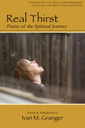
— from Real Thirst: Poetry of the Spiritual Journey, by Ivan M. Granger


/ Image by lois komolafe /

It is the middle of Navratri for my Hindu friends, the nine nights of the Goddess. I thought of one of my own poems to the Divine Mother, Trinket.

Jaya Jagadambe, he Ma Durga
All praise to the Cosmic Mother, Ma Durga!

Along with all of the natural beauty of our new home here in Eugene, Oregon, we notice a significant homeless population for a relatively small city. Colorado had its homeless too, but in smaller numbers, and usually panhandling on street corners hoping for drivers to stop and stretch across the passenger seat to hand over a bill through the window.

Here in Eugene, the homeless are more part of the city, more present and somehow more integrated with the city. We no longer notice someone through the windshield as we’re driving by, deciding if we want to slow down and give a couple of dollars or continue on our way. In Eugene, we share the sidewalks, walking by each other downtown. Many have their regular spots, they have their place in the community, they are known, they are still people.

Earlier this week we spoke with a neighbor who is getting rid of some items and she mentioned that she like to donate to individuals, when she can. She knew the name of a homeless person who regularly stands outside the local grocery store, so she took the items directly to him.

We recently noticed an article in the local paper about a homeless man who had died and was much loved in the community for the music he used to play around downtown. An entire article about the passing of a homeless man who was still an important part of the community.

I find that profoundly touching.

Of course, my wife and I are having to recalibrate our comfort levels as well as learn to assess safety differently. Some of the people we encounter are clearly dealing with substance abuse issues. Some have obvious mental health issues (and with social programs having been slashed in this country for decades, often the street is the only place for them). Behaviors can be erratic, unpredictable. Some are people just struggling to regain a foothold in society. Some are carried by a threadbare high while seeking an ever lower bottom to hit.

But they are us. Seeing them in and among the rhythms of this small city reminds me that, regardless of their struggles or rough appearance, they are our brothers and sisters. They are part of my community too.

So how do we interact with these individuals? How do my wife and I judge safety walking through downtown? When do we make eye contact, maybe offer a friendly word, perhaps hand over a dollar, and when is it best to cross to the other side of the street and keep our distance? We’re still figuring that out.

I’m curious what your thoughts and experiences are. What sort of charities do you give to that you think are doing good work with the complex issues of hunger and homelessness? And do you have special ways of interacting with the homeless? I know of one person who used to put together care packs of clean socks, toothbrushes, dry foods, miscellaneous necessities and just kept them with him to hand out. Have you come up with creative ideas to help or meaningful ways to connect?

May the Mother’s love connect us all and care for us all!


Recommended Books: Ivan M. Granger

The Longing in Between: Sacred Poetry from Around the World (A Poetry Chaikhana Anthology) This Dance of Bliss: Ecstatic Poetry from Around the World Real Thirst: Poetry of the Spiritual Journey For Lovers of God Everywhere: Poems of the Christian Mystics Diamond Cutters: Visionary Poets in America, Britain & Oceania
More Books >>


Ivan M. Granger, Ivan M. Granger poetry, Secular or Eclectic poetry Ivan M. Granger

US (1969 – )
Secular or Eclectic
Yoga / Hindu : Advaita / Non-Dualist

Continue Reading »

5 responses so far

Sep 30 2022

blind eye

If I turn a blind eye to the suffering of another
…I become a little more blind.

One response so far

Sep 23 2022

Edmond Bordeaux Szekely – God Speaks to Man

Published by under Poetry

God Speaks to Man
by Edmond Bordeaux Szekely

I speak to you.
Be still
Know
I am
God.

I spoke to you
When you were born.
Be still
Know
I am
God.

I spoke to you
At your first sight.
Be still
Know
I am
God.

I spoke to you
At your first word.
Be still
Know
I am
God.

I spoke to you
At your first thought.
Be still
Know
I am
God.

I spoke to you
At your first love.
Be still
Know
I am
God.

I spoke to you
At your first song.
Be still
Know
I am
God.

I speak to you
Through the grass of the meadows.
Be still
Know
I am
God.

I speak to you
Through the trees of the forests.
Be still
Know
I am
God.

I speak to you
Through the valleys and the hills.
Be still
Know
I am
God.

I speak to you
Through the Holy Mountains.
Be still
Know
I am
God.

I speak to you
Through the rain and the snow.
Be still
Know
I am
God.

I speak to you
Through the waves of the sea.
Be still
Know
I am
God.

I speak to you
Through the dew of the morning
Be still
Know
I am
God.

I speak to you
Through the peace of the evening.
Be still
Know
I am
God.

I speak to you
Through the splendor of the sun.
Be still
Know
I am
God.

I speak to you
Through the brilliant stars
Be still
Know
I am
God.

I speak to you
Through the storm and the clouds.
Be still
Know
I am
God.

I speak to you
Through the thunder and the lightning.
Be still
Know
I am
God.

I speak to you
Through the mysterious rainbow.
Be still
Know
I am
God.

I will speak to you
When you are alone.
Be still
Know
I am
God.

I will speak to you
Through the Wisdom of the Ancients.
Be still
Know
I am
God.

I will speak to you
At the end of time.
Be still
Know
I am
God.

I will speak to you
When you have seen my Angels.
Be still
Know
I am
God.

I will speak to you
Throughout Eternity.
Be still
Know
I am
God.

I speak to you
Be still
Know
I am
God.

— from The Essene Gospel of Peace: Book Two: The Unknown Books of the Essenes, by Edmond Bordeaux Szekely


/ Image by Sage Friedman /

This selection feels like a song, or a chant. It’s repeated lines — Be still know I am God — endlessly pull us back to the same spot. They become a command to the mind (which, frankly, needs all the help it can get to discover stillness).

We also have the contrast of the stillness and speaking. The only way we hear God speaking to us is through profound stillness. But it is not that the God speaks in words. God speaks to us through all of life’s experiences, and through the natural world — through the trees and the mountains, through our first sight and first thought and first love. God speaks to us through our perception and our consciousness. But when we lack stillness, we take everything at face value and don’t know what’s really happening.

The deep truth is that every experience is an experience of consciousness. When we are still enough to truly see this, then we witness an expansive presence permeating the vast panorama, we ‘hear’ a voice that speaks not in words but in the fulness of meaning. Then it’s no longer theory or theology, that’s when we recognize what “I am” — Being — really is. That’s when we know God.

Be still
Know
I am
God.

It’s a quiet morning here in Oregon. A light mist clings to the treetops, bringing the circle of the world in close and comforting.

Did you pause to acknowledge the equinox? We stand at that delicate moment of balance between light and dark, when light and life are once again ascendant.

These cardinal points of the calendar, the equinoxes and solstices, celebrated by every religion and culture the world over, remind us of the rhythms of the world, the eternal cycle of life, death, and new life. They remind us that there is a pattern in the world, and we have a place in its unfolding.

The mind can hardly conceive of so much history in the land, the countless turnings of the seasons, year upon year, life upon life, the rising and falling of all things. Even so nature never tires and always brings us once again to renewal.

When we look deeply to the natural world, we recognize it as an embodiment of the sustaining presence of spirit, just as a mother cares for her children.

A reminder to us all: when we ignore and damage the natural world, we not only imperil our physical survival, we sever our very connection to the Divine. A book and a building are not enough. The human spirit needs cathedrals of trees, towering mountains, and fields of spring wildflowers as places of prayer. Wild, living places — cherish them, fight for them; they whisper to us of our true home.

I speak to you.
Be still
Know
I am
God.

If you’re not feeling shifting rhythms of the equinox yet, go outside, remove your shoes and walk upon the earth, wrap your arms around a tree. See what happens.


Recommended Books: Edmond Bordeaux Szekely

The Essene Gospel of Peace: Book Two: The Unknown Books of the Essenes A Book of Uncommon Prayer The Essene Gospel of Peace: Book One The Essene Gospel of Peace: Book Three: Lost Scrolls of the Essene Brotherhood The Essene Gospel of Peace: Book Four: Teachings of the Elect
More Books >>


Edmond Bordeaux Szekely, Edmond Bordeaux Szekely poetry, Christian poetry Edmond Bordeaux Szekely

Hungary/France/Mexico (1905 – 1979) Timeline
Christian

Continue Reading »

One response so far

Sep 23 2022

every instant

Encounter every instant
entirely as it is,
in pure wonder.

No responses yet

Sep 16 2022

Shabistari – The Tavern Haunters

Published by under Poetry

The Tavern Haunters
by Mahmud Shabistari

English version by Andrew Harvey

Being a tavern haunter means
Being sprung free of yourself.

The tavern is where lovers tryst,
Where the bird of the soul comes to rest
In a sanctuary beyond space and time.
The tavern haunter wanders lonely in a desert
And sees the whole world as a mirage.
The desert is limitless and endless —
No one has seen its beginning or its end,
And even if you wandered in it a hundred years
You would not find yourself, or anyone else.
Those who live there have no feet or heads,
Are neither “believers” nor “unbelievers.”
Drunk on the wine of selflessness,
They have given up good and evil alike.
Drunk, without lips or mouth, on Truth
They have thrown away all thoughts of name and fame,
All talk of wonders, visions, spiritual states,
Dreams, secret rooms, lights, miracles.

The aroma of the Divine Wine
Has made them abandon everything;
The taste for Annihilation
Has sent them all sprawling like drunkards.
For one sip of the wine of ecstasy,
They have thrown away pilgrim staff, water jar, and rosary.
They fall, and then they rise again,
Sometimes bright in union,
Sometimes lost in the pain of separation;
Now pouring tears of blood,
Now raised to a world of bliss,
Stretching out their necks like racers;
Now, with blackened faces, staring at a wall,
Or faces reddened with Unity, chained to a gibbet;
Now whirling in mystic dance,
Lost in the arms of the Beloved,
Losing head and foot like the revolving heavens.
Every passage that the Singer sings them
Transmits the rapture of the invisible world,
For mystic singing is not only words and sounds;
Each note unveils a priceless mystery.

They have thrown away their senses
And run from all color and perfume,
And washed in purified wine
All the different dyes: black, green, or blue.
To them, devotion and piety are only hypocrisy;
They are weary of being either masters or disciples;
They have swept the dust of dunghills from their souls,
Without telling even a tiny part of what they see,
And grasped in bliss at the swirling robes of drunkards.
They have drunk one cup of the pure wine
And have become — at last, at long last — real Sufis.

— from Perfume of the Desert: Inspirations from Sufi Wisdom, by Andrew Harvey / Eryk Hanut


/ Image by Batmunkh Ch /

The aroma of the Divine Wine
Has made them abandon everything;
The taste for Annihilation
Has sent them all sprawling like drunkards.
For one sip of the wine of ecstasy,

Wine… Why do so many mystics from all traditions talk of wine and drunkenness and taverns when speaking of ecstatic states of enlightenment? How do I, as a person who does not drink alcohol, understand this sacred wine fixation? Is it just a universally agreed upon metaphor to shock the orthodox? Well, yes, but it is more than that. The mystic’s wine is not wine, yet it is also more than a game of words. This wine is subtle but very real. It can be experienced in a profound, even physical manner.

In certain states, a flowing substance is felt upon the palette, with a taste of ethereal sweetness that can be compared with wine or honey. This is the amrita of yogis, the ambrosia of the Greeks, the prophetic mead of the Norse shamans, the awen oil of the druids. There is a sensation of drinking a subtle liquid, accompanied by a warming and expanding of the heart. The attention blissfully turns inward, the eyelids grow pleasantly heavy and the gaze may become unfocused. A giddy smile naturally spreads across the face for no apparent reason. When the ecstasy comes on strongly, the body can tremble, sometimes the consciousness even leaves the body.

With these experiences, it not only makes sense for mystics to use the language of wine. Observers sometimes mistake this state for actual drunkenness.

Being a tavern haunter means
Being sprung free of yourself.

To someone who has been overcome by this sacred drunkenness, filled with its bliss, all encompassing love, and the vision of universal oneness, religion’s petty formalism seems worse than absurd, it is an offense.

To them, devotion and piety are only hypocrisy

Drinking deep from the tavern’s draught teaches us what religion is really about, and it is not about joining the right group or following the rules exactly so. The mystic’s wine is the proper measure of piety, the mark of initiation, not the number of days spent in church or mosque or synagogue.

I’m not an advocate of heavy drinking, but if you can find that special vintage, drink deep.

They have drunk one cup of the pure wine
And have become — at last, at long last — real Sufis.


Recommended Books: Mahmud Shabistari

The Longing in Between: Sacred Poetry from Around the World (A Poetry Chaikhana Anthology) Perfume of the Desert: Inspirations from Sufi Wisdom The Secret Rose Garden: Mahmud Shabistari Beyond Faith and Infidelity: The Sufi Poetry and Teachings of Mahmud Shabistari


Mahmud Shabistari, Mahmud Shabistari poetry, Muslim / Sufi poetry Mahmud Shabistari

Iran/Persia (1250? – 1340) Timeline
Muslim / Sufi

Continue Reading »

No responses yet

Sep 16 2022

true face

A reflection never satisfies.
In the search for our true face, there is
no journey,
nothing to reach for.
We inhabit ourselves, instead.

2 responses so far

Sep 09 2022

Rainer Maria Rilke – Silent friend of many distances

Published by under Poetry

Silent friend of many distances, feel
by Rainer Maria Rilke

English version by Stephen Mitchell

Silent friend of many distances, feel
how your breath enlarges all of space.
Let your presence ring out like a bell
into the night. What feeds upon your face

grows mighty from the nourishment thus offered.
Move through transformation, out and in.
What is the deepest loss that you have suffered?
If drinking is bitter, change yourself to wine.

In this immeasurable darkness, be the power
that rounds your senses in their magic ring,
the sense of their mysterious encounter.

And if the earthly no longer knows your name,
whisper to the silent earth: I’m flowing.
To the flashing water say: I am.

— from The Enlightened Heart: An Anthology of Sacred Poetry, by Stephen Mitchell


/ Image by switon.michal /

It has been a while we had a poem by Rilke.

This is one to reread and savor, I think. Even before we let the meaning of the poem seep into the awareness, the imagery and language draws us into an open state, doesn’t it? Lines like–

Silent friend of many distances, feel
how your breath enlarges all of space.

Let your presence ring out like a bell
into the night.

Move through transformation, out and in.

whisper to the silent earth: I’m flowing.
To the flashing water say: I am.

I basically reproduced two-thirds of the poem there, didn’t I? That’s always a sign of how enamored I am with a poem.

With all its beauty, this poem is a bit haunting. The poet keeps referring to night and darkness. The spaciousness of night, its mystery, the limit of one’s senses. Those final lines put us in the position of being a thing unknown, even to ourselves.

But this doesn’t seem to me a poem of fear or loss, but of encounter. Reading these lines, I feel invited to participate in the great unknown mystery of existence, including my own existence. When we have come to feel trapped by a mundane, too familiar world, that’s a sign that we have forgotten just how immense and terrifyingly beautiful reality is. We need to retrain our eyes to see the spaces between and the secrets behind. We need to remember what it is to be overwhelmed by our own being. And to this ungraspable, always changing world, we can still find it in ourselves to say: I am.

Let your presence ring out like a bell
into the night.


Recommended Books: Rainer Maria Rilke

The Enlightened Heart: An Anthology of Sacred Poetry Ahead of All Parting: The Selected Poetry and Prose of Rainer Maria Rilke The Soul is Here for its Own Joy: Sacred Poems from Many Cultures Rilke’s Book of Hours: Love Poems to God In Praise of Mortality: Rilke’s Duino Elegies & Sonnets to Orpheus
More Books >>


Rainer Maria Rilke, Rainer Maria Rilke poetry, Secular or Eclectic poetry Rainer Maria Rilke

Germany (1875 – 1926) Timeline
Secular or Eclectic

More poetry by Rainer Maria Rilke

One response so far

Sep 09 2022

sling shot

Spiritual practice is a sling shot.
You tug and strain,
but when you have enough tension
— just let go and soar!

One response so far

Sep 02 2022

Sachal Sarmast – Friend, this is the only way

Published by under Poetry

Friend, this is the only way
by Sachal Sarmast

English version by Ivan M. Granger

Friend, this is the only way
to learn the secret way:

      Ignore the paths of others,
      even the saints’ steep trails.

            Don’t follow.
            Don’t journey at all.

Rip the veil from your face.

— from The Longing in Between: Sacred Poetry from Around the World (A Poetry Chaikhana Anthology), Edited by Ivan M. Granger


/ Image by paola capelletto /

I have been rereading my book, The Longing in Between, and this poem and commentary caught my attention. I thought I would reshare it…

In July 2010, I was driving home from work, listening to BBC news on the radio, and was saddened to hear of a bombing at a shrine dedicated to a Sufi saint in Lahore, Pakistan. More than 40 people were killed and many more badly injured. People speculated that the bombing was by an extremist group that objected to the inclusive nature of Sufi practice in the region.

Islamic extremists have certainly grabbed headlines in recent years, but the world also has its Christian extremists, Jewish extremists, Hindu extremists… as well as plenty of atheist and non-religious extremist groups. Extremism is not a problem of a particular religion; it is a disruption in the human psyche in general.

Religious extremism has very little to do with religion if you think about it. It is partly a reflexive response to the intensely fragmenting nature of the modern world. And it is partly a reaction against unavoidable, sometimes unsettling encounters with different peoples and cultures and beliefs in our ever more integrated and multi-layered world. But mostly—mostly it is an act of desperation when the heart of true religion has been lost. People become violently obsessed with rules and traditions and texts only when they have lost the sense of what they really point to.

If you know where the Beloved lives, you are content, no need to argue with others over street names. Conflict only arises when you aren’t so certain you know the way; that’s when another person’s map threatens your certainty. Fundamentalism and extremism are an admission of that spiritual uncertainty. Absolutism is not an expression of faith; it is a symptom of the lack of faith. It is a symptom of the lack of true spiritual experience and knowledge.

The real long-term solution to the problem of violent religious extremism in the world is to reawaken that sweet, secret, sacred bliss within ourselves, to gently and generously share it with others, and to create environments nurturing to that continuing quest. The more we fill the world’s dry troughs with fresh water, the less likely it is that people will go insane with blind thirst.


Recommended Books: Sachal Sarmast

The Longing in Between: Sacred Poetry from Around the World (A Poetry Chaikhana Anthology) Real Thirst: Poetry of the Spiritual Journey Sachal Sarmast: Sindhi Poet Yaar di Gharoli / Kaafi – Sachal Sarmast: From Songs of the Mystics (mp3 song) The Story of Melting: Sachal Sarmast’s Persian Masnavi Gudaz-nama


Sachal Sarmast, Sachal Sarmast poetry, Muslim / Sufi poetry Sachal Sarmast

Pakistan/India (1739 – 1829) Timeline
Muslim / Sufi

Continue Reading »

4 responses so far