Archive for June, 2023

Jun 30 2023

Kahlil Gibran – Good and Evil

Published by under Poetry

Good and Evil
by Kahlil Gibran

And one of the elders of the city said, Speak to us of Good and Evil.
And he answered:
Of the good in you I can speak, but not of the evil.
For what is evil but good tortured by its own hunger and thirst?
Verily when good is hungry it seeks food even in dark caves, and when it thirsts it drinks even of dead waters.

You are good when you are one with yourself.
Yet when you are not one with yourself you are not evil.
For a divided house is not a den of thieves; it is only a divided house.
And a ship without rudder may wander aimlessly among perilous isles yet sink not to the bottom.

You are good when you strive to give of yourself.
Yet you are not evil when you seek gain for yourself.
For when you strive for gain you are but a root that clings to the earth and sucks at her breast.
Surely the fruit cannot say to the root, “Be like me, ripe and full and ever giving of your abundance.”
For the fruit giving is a need, as receiving is a need to the root.

You are good when you are fully awake in your speech,
Yet you are not evil when you sleep while your tongue staggers without purpose.
And even stumbling speech may strengthen a weak tongue.

You are good when you walk to your goal firmly and with bold steps.
Yet you are not evil when you go thither limping.
Even those who limp go not backward.
But you who are strong and swift, see that you do not limp before the lame, deeming it kindness.

You are good in countless ways, and you are not evil when you are not good,
You are only loitering and sluggard.
Pity that the stags cannot teach swiftness to the turtles.

In your longing for your giant self lies your goodness: and that longing is in all of you.
But in some of you that longing is a torrent rushing with might to the sea, carrying the secrets of the hillsides and the songs of the forest.
And in others it is a flat stream that loses itself in angles and bends and lingers before it reaches the shore.
But let not him who longs much say to him who longs little, “Wherefore are you slow and halting?”
For the truly good ask not the naked, “Where is your garment?” nor the houseless, “What has befallen your house?”

— from The Prophet, by Kahlil Gibran


/ Image by Aymeric Lamblin /

As I was considering which poem to send out this morning, I came across this meditation on good and evil by Kahlil Gibran. I last featured this poem and commentary several years ago, and I thought it might be worth sharing again…

I like this meditation on good and evil. It challenges assumptions and and raises important questions.

You are good when you are one with yourself.

Gibran suggests there is only good, for that is everyone’s inherent nature, and what we call evil is simply being lost and uninspired. He calls us to be compassionate to those who are selfish and cruel, for they suffer from greater poverty than the homeless and greater hunger than the starving; they suffer from a poverty of the soul.

I strongly feel one should never passively allow the hard-hearted to inflict harm or hoard what belongs to all. Such actions must be opposed with strength and courage and clarity. The vulnerable must always be protected. That is a basic duty. But even success in such action does not stop the fundamental dynamic of harm, just that particular instance. We must always remember that those who inflict harm and encode selfishness into systems and institutions, those people are also seeking their way, just blinded by their spiritual poverty. That’s where the real, patient work of the ages is found… finding how to open eyes and hearts long used to to being shut, finding how to redirect them toward the forgotten goodness and generosity held within.

One line I do question, however, is, “Pity that the stags cannot teach swiftness to the turtles.” To suggest that some people are stags and others turtles might be read to imply that our spiritual unfolding is fixed. Every human being harbors something of heaven within. There is no speed to the process. All that is needed is the right reminder of what we already are. Then begins the steady process of discovering how to encourage that ember and let its warmth permeate all aspects of our lives. Turtles don’t need to become stags. Humans simply need to become themselves. Humans just need to become more human.

But how to reach those who would armor themselves against the urging of their own hearts? No simple formula, nor single action nor organization can accomplish this. Not a year nor a generation nor a century will accomplish this. Still, that is what must be done. That is the real, hard, slow work given to us all to accomplish, each in our own lives, our work, our world.

Knowing our work, let’s be impatient to begin and supremely patient in its accomplishment. Knowing our work, what cause is there for anything but joy in turning to it each day?

In your longing for your giant self lies your goodness: and that longing is in all of you.


Recommended Books: Kahlil Gibran

The Prophet The Beloved: Reflections on the Path of the Heart Broken Wings Jesus the Son of Man Kahlil Gibran: His Life & World
More Books >>


Kahlil Gibran, Kahlil Gibran poetry, Christian poetry Kahlil Gibran

Lebanon/US (1883 – 1931) Timeline
Christian
Secular or Eclectic

Continue Reading »

6 responses so far

Jun 30 2023

be rude

You have permission
to be rude
when protecting the vulnerable.

No responses yet

Jun 09 2023

John Fox – The Poem Waits at Its Own Core

Published by under Poetry

The Poem Waits at Its Own Core
by John Fox

The poem at its core
Is snow or egg,
The new moon or grass
In spring.

All these pause at the edge
Of change. There is a deep
Stillness you must pass through
To get close to what waits.

At this edge, you leave
Everything behind
Except what the poem needs:
Warmth, rain, silence,
Gravity —
Make it something you know
Only for the first time:

A river, heartbeat,
Cradle, field of play.
The place where all things
Begin again.


/ Image by Nicolas Messifet /

I like the idea that animates this poem, that there is a sort of a poem within a poem, the real poem, so to speak, at the heart of the surface poem. And that inner poem, like “the new moon or grass in spring” is always on the edge of change.

To uncover that living part of the poem, we must cultivate stillness within ourselves–

There is a deep
Stillness you must pass through
To get close to what waits.

To get there we must let everything fall away, cling to nothing, arrive empty handed–

At this edge, you leave
Everything behind…”

And then we have that surprising line,

Except what the poem needs

What is it that the poem needs from us?

Warmth, rain, silence,
Gravity —

Then we are told to–

Make it something you know
Only for the first time

That’s something not to rush past. I’ve thought a lot about this idea in various forms as it applies to awareness and the spiritual path. The awareness is most alive and receptive when encountering something utterly new and for the first time. As we get older, however, with more experiences under our belt, very little feels new to us. As a result, our perception of life can feel coated with a heave veneer. We can feel numb, experiences are no longer fresh, meaning feels flattened. The real issue is not whether or not the experience is new, but whether we approach with openness. It’s not a question of always having new experiences, it is about cultivating still and receptive awareness.

A river, heartbeat,
Cradle, field of play.

It requires a sense of flow and centeredness and play.

Every experience, even one encountered daily, is unique and magical. Every experience is potentially a doorway into the unknown — when approached honestly and without projection.

Even a poem. Perhaps especially a poem.

It too becomes–

The place where all things
Begin again.

===

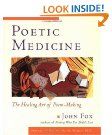
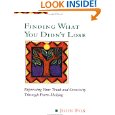
John Fox is the founder of the Institute for Poetic Medicine and the author of several excellent books on the healing power of poetry, including Poetic Medicine and Finding What You Didn’t Lose. Highly recommended reading!

Have a beautiful day!


Recommended Books: John Fox

Diamond Cutters: Visionary Poets in America, Britain & Oceania Poetic Medicine: The Healing Art of Poem-Making Finding What You Didn’t Lose: Expressing Your Truth and Creativity Through Poem-Making


John Fox, John Fox poetry, Secular or Eclectic poetry John Fox

US (Contemporary)
Secular or Eclectic

More poetry by John Fox

No responses yet

Jun 09 2023

in front of you

The answer is in front of you.
Find a way to see.

No responses yet

Jun 02 2023

Pat Schneider – Instructions for the Journey

Published by under Poetry

Instructions for the Journey
by Pat Schneider

The self you leave behind
is only a skin you have outgrown.
Don’t grieve for it.
Look to the wet, raw, unfinished
self, the one you are becoming.
The world, too, sheds its skin:
politicians, cataclysms, ordinary days.
It’s easy to lose this tenderly
unfolding moment. Look for it
as if it were the first green blade
after a long winter. Listen for it
as if it were the first clear tone
in a place where dawn is heralded by bells.

And if all that fails,

wash your own dishes.
Rinse them.
Stand in your kitchen at your sink.
Let cold water run between your fingers.
Feel it.

— from Olive Street Transfer, by Pat Schneider


/ Image by Alice Popkorn /

The self you leave behind
is only a skin you have outgrown.
Don’t grieve for it.

We are alive, and because we are alive, we change. We imagine we know who we are, that we are a fixed, certain self. But the truth is that we are continuously emerging from the old self into a new, unknown self.

If we think we are a certain thing, a certain person and that we fully understand that person, then we are not truly seeing ourselves as we are. The only fixed self is the old self, the past self, the self we have already shed. If we think we are that old self, then we feel a sense of loss and bewilderment. We are always working against the flow of life to become who we were yesterday or ten years ago.

Look to the wet, raw, unfinished
self, the one you are becoming.

There is something messy and uncertain about who we actually are right now. The self we are does not fit easily into the simple ideas of who we should be. And our evolution continues in this very moment. We are still becoming.

But that is where the life is. That is where the potential is.

Let us be kind to ourselves and accept the changing, emerging self. Let us be at ease with our own internal movement. Even at our most still, there is a gentle flow.

The world, too, sheds its skin…

The more we seek a static understanding of the self or the world, the more we miss the magic unfolding before us:

It’s easy to lose this tenderly
unfolding moment.

The more we set aside our ideas and expectations and past histories, the more we can simply be, with a sense of openness and wonder, the more we truly encounter the living mystery we are already participants in.

Look for it
as if it were the first green blade
after a long winter.

I rather like the pithy, down-to-earth final piece of advice:

And if all that fails,

wash your own dishes.
Rinse them.
Stand in your kitchen at your sink.
Let cold water run between your fingers.
Feel it.

I’ll let you in on a personal secret: I love to do dishes. That’s one of my household chores. I do dishes by hand several times a day. There is something satisfying about creating cleanliness and order from the moderate mess of daily domestic activity. The mind shifts into a low gear as the hands begin to work their own pattern while water and soap suds run through the fingers. It is a gentle massage for the entire household. It is a meditation made tactile.

Just doing that with easy attention can bring us back to truths that we miss amidst our grand efforts.

Have a beautiful weekend!


Recommended Books: Pat Schneider

Another River: New and Selected Poems Writing Alone and with Others Olive Street Transfer How the Light Gets In: Writing as a Spiritual Practice Wake Up Laughing: A Spiritual Autobiography
More Books >>


Pat Schneider, Pat Schneider poetry,  poetry Pat Schneider

US (Contemporary)

More poetry by Pat Schneider

3 responses so far

Jun 02 2023

Where bliss begins

Where bliss begins

everything else ends.

2 responses so far