Archive for August, 2023

Aug 25 2023

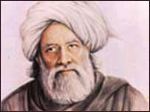
Bulleh Shah – I have got lost in the city of love

Published by under Poetry

I have got lost in the city of love
by Bulleh Shah

English version by J. R. Puri and T. R. Shangari

I have got lost in the city of love,
I am being cleansed, withdrawing myself from my head, hands and feet.
I have got rid of my ego, and have attained my goal.
Thus it has all ended well.
O Bullah, the Lord pervades both the worlds;
None now appears a stranger to me.

— from Bulleh Shah: The Love-Intoxicated Iconoclast (Mystics of the East series), by J. R. Puri / Tilaka Raja Puri


/ Image by Randy Jacob /

I have got rid of my ego, and have attained my goal.
Thus it has all ended well.

Sufis speak of the nafs or the false self. Yogis speak of the ahamkara or “I-maker.”

A few nights ago I was thinking about this troublesome, elusive thing we generically call the ego. There are really three ways of dealing with the ego on the spiritual path.

The first approach is to try to make the ego more functional, balanced, less in conflict with itself. The goal here might be thought of as finding stability and a basic amount of happiness while minimizing inner pain. This is generally the path of most psychotherapeutic work.

The second approach is to try to make the ego more virtuous. The goal is less focused on happiness in the personal sense and more focused on meaning and purpose, sanctity. This approach to the ego, when practiced well, can refine the ego, while lessening it. This is the ideal of most religious traditions.

The third path is the path of mystics. That path is to carry the first two paths to their logical conclusion and to boldly drop the ego. At a certain point we are not trying to get the ego to work better or to be more virtuous, we just step out from under it completely. It can be like shrugging off a heavy coat on a hot summer’s day.

The first two approaches imagine that we are the ego and, therefore, must improve its functioning and its goals in order to improve ourselves. As long the ego is there — or perceived to be there — it is important to work on it. But these two paths never fully attain their goals; at best, they can just bring us closer to them.

The mystic’s path is what actually achieves the goal, because it recognizes that we are not the ego at all. Ego improvement does not improve the self, it just polishes the ego. Here is the shocking insight: The self does not need improvement or changing at all; we just need to drop the muddiness of the ego to allow the self’s inherent goodness and divinity to shine through.

From this perspective, the ego is not a real thing at all. At best we can say that it is a tension in the awareness, and it limits our ability to perceive our full self and the full reality as they truly are. Once we stop viewing everything through the opaque lens of the ego, everything is so much more magical, immense, interconnected — and filled with love! — than we ever imagined.

We can think of the three approaches as:

Stable Ego – Virtuous Ego – No Ego

(A slight reframing in Buddhist language might be: Skillful Mind – Noble Mind – No Mind)

O Bullah, the Lord pervades both the worlds;
None now appears a stranger to me.


Recommended Books: Bulleh Shah

The Longing in Between: Sacred Poetry from Around the World (A Poetry Chaikhana Anthology) Real Thirst: Poetry of the Spiritual Journey Islamic Mystical Poetry: Sufi Verse from the Early Mystics to Rumi Bulleh Shah: The Love-Intoxicated Iconoclast (Mystics of the East series) Saint Bulleh Shah
More Books >>


Bulleh Shah, Bulleh Shah poetry, Muslim / Sufi poetry Bulleh Shah

Punjab (Pakistan/India) (1680 – 1758) Timeline
Muslim / Sufi

Continue Reading »

2 responses so far

Aug 25 2023

struggle and strength

It is the struggle to attain spiritual awakening
that makes us strong enough to actually receive it.

No responses yet

Aug 11 2023

Hawaiian – Oli Hooikaika / Prayer for Strength

Published by under Poetry

Oli Hooikaika/Prayer for Strength
by Hawaiian (Anonymous)


E iho ana a luna

E pi’i ana o lalo

E hui ana na moku

E ku ana ka paia

That which is above, be brought down.

That which is below, shall be lifted up.

The islands shall be united.

The walls shall stand upright!


/ Image by KGO Radio /

My wife and I lived on the island of Maui for four years in the early 2000s. Seeing images of the island burning is heartbreaking. Hearing reports of the rising death toll in the aftermath is devastating.

Lahaina, where the fires did the most damage, is being referred to in the media as a “popular tourist spot.” That may be how most outsiders think of the town, but it is so much more. It was the old capital of the Hawaiian Kingdom, a place of immense cultural importance. We lost cultural and historical artifacts in the fire that can never be replaced.

It wasn’t just a place of hotels, restaurants and gift shops. Small businesses of all sorts filled the side streets, supporting the daily rhythms of life. And, of course, people lived in Lahaina. Homes were lost. Lives have been lost.

The banyan tree that grew in Lahaina was a community center and a focal point for the island. The community gathered to celebrate it’s 150th birthday last year. To think it has burned down is like losing a spiritual elder. Photos in the aftermath show it scorched but still standing. Perhaps it may yet survive.

The fire that ravaged Lahaina was one of several that hit Maui. A smaller fire burned in the Upcountry area where we used to live near Kula. We haven’t received as much news about that area, but that was where we lived our days and nights. That’s where the pastures change into forest along the slopes of Haleakala. I used to walk barefoot in the forests of the area, light headed from fasting, to a small cave I found and there I would sit and meditate. I hope those places survived to reveal their secrets to others.

So many unique and special places across Maui. And, of course, the wonderful people of the island who are affected…

Communities on an island are a fragile thing. Rebuilding and healing will take a long time and heroic patience.

The devastation on Maui feels personal to me, touching on an important period of my earlier journey, but it also feels global. The world knows the island as a place of great natural beauty, and people travel from all over to experience its paradise. More than that, though, I think of Maui as one of the great holy places on the planet, a place of awakening. These fires on Maui seem to represent a harsh shift. A reminder to us all that the more we remain open, aware, and willing, even our sorrows and traumas can become points of transformation.

That which is above, be brought down.
That which is below, shall be lifted up.
The islands shall be united.
The walls shall stand upright!

Sending love to that special island and its people.
Maui no ka oi! Aloha nui loa!

Hear this Hawaiian prayer for strength chanted in its original language: https://soundcloud.com/kidnectedworld/oli-hooikaika


Recommended Books: Hawaiian (Anonymous)

The Unwritten Literature of Hawaii: The Sacred Songs of the Hula


Hawaiian (Anonymous)

Hawaii (17th Century) Timeline
Primal/Tribal/Shamanic : Hawaiian

Continue Reading »

8 responses so far

Aug 11 2023

even in darkness

Even in darkness we see,
and we see we are not alone.

No responses yet

Aug 01 2023

Hogen Bays – In this passing moment

Published by under Poetry

In this passing moment
by Hogen Bays

“In the presence of Sangha, in the light of Dharma,
in oneness with Buddha — may my path
to complete enlightenment benefit everyone!”

In this passing moment karma ripens
and all things come to be.
I vow to choose what is:
If there is cost, I choose to pay.
If there is need, I choose to give.
If there is pain, I choose to feel.
If there is sorrow, I choose to grieve.
When burning — I choose heat.
When calm — I choose peace.
When starving — I choose hunger.
When happy — I choose joy.
Whom I encounter, I choose to meet.
What I shoulder, I choose to bear.
When it is my death, I choose to die.
Where this takes me, I choose to go.
Being with what is — I respond to what is.

This life is as real as a dream;
the one who knows it cannot be found;
and, truth is not a thing — Therefore I vow
to choose THIS dharma entrance gate!
May all Buddhas and Wise Ones
help me live this vow.

— from The Longing in Between: Sacred Poetry from Around the World (A Poetry Chaikhana Anthology), Edited by Ivan M. Granger


/ Image by Ales Dusa /

There’s something both delightful and deeply challenging about this vow poem.

The entire poem is summed up at the beginning:

I vow to choose what is

You would think the unavoidable nature of “what is” makes a statement like this meaningless, but the human mind is not entirely sane. It often chooses fantasy and imaginings, shoulds and coulds, possibilities and even impossibilities over what is. Very few of us truly dwell in reality. Rarely do we fully experience the moments of our lives.

What is it that we are straining for as we constantly lean away from “what is”? What do we think is missing that we need? We don’t need someone else’s life. We don’t need a perfect marriage, better finances, or a better place in society. We don’t even need to be a saint living in the mountains. What’s missing is ourselves. What we really need is to stand in our own shoes, to be utterly ourselves. We need that missing ingredient—being present. We need to live, with honesty and an open heart, the life that already moves through us.

When starving–I choose hunger.
When happy–I choose joy.

When we are hungry, can we choose anything other than hunger? When happy, isn’t joy automatic? The truth is that we constantly choose. Ask yourself, how often do we really sit with our hunger and sorrow? How often do we allow ourselves to dance with the joy bubbling up inside us? How often do we notice these things at all?

The power of a practice like Zen is that it defines the human journey, not as escape, but as coming home, of settling into ourselves and being present with the present. It challenges us to actually live the moment that continuously arrives and passes and renews itself.

By making this journey to “what is,” we finally meet ourselves and learn what this amazing thing is that we call life, with all its rich, joyful, painful, and transitory beauty.
May all Buddhas and Wise Ones
help me live this vow.


Recommended Books: Hogen Bays

The Longing in Between: Sacred Poetry from Around the World (A Poetry Chaikhana Anthology) Morning Dewdrops of the Mind: Teachings of a Contemporary Zen Master Path to Bodhidharma


Hogen Bays

United States (Contemporary)
Buddhist : Zen / Chan

Continue Reading »

3 responses so far

Aug 01 2023

see

Stumble
and so see the sky.

No responses yet