Archive for November, 2023

Nov 29 2023

Holiday Book Recommendations – 2023

Published by under Poetry

I know it is a challenging time in the world. Things might feel off kilter. But this is also a special time of the year. It is a holy time, a time to recall what is sacred. It is a time to reconnect with what illuminates our minds and awakens our hearts. We enter the cave of interior awareness during this darkest period of the winter and rediscover the light within ourselves, renewing ourselves for the new year.

I thought this might be a good time share this meditation on the relationship between poetry and spirituality from the Introduction in my book The Longing in Between.

Mystics write poetry, universally. Saints and sages, shamans and seers, wise women and medicine men — they sing songs, they riddle, they rhyme.

Numinous experiences are not easily communicated through words. The sacred can be witnessed and participated in, but not conveyed through limited concepts. Any attempt to communicate what is perceived in states of encompassing unity and mental quiet is necessarily an act of translation. Prose is a poor medium for the task. Its descriptive language works best with known definitions and accepted meaning. Prose is a language of boundaries. Yet the most profound experiences refuse to be contained.

Poetry, on the other hand, does not define; it suggests. Where prose describes, poetry allows meaning to gather. It is this elastic nature that makes poetry well suited to the sacred, enabling language to relay truth without circumscribing it.

Sacred experience is beyond word and form, yet the limited mind, in trying to understand what it has witnessed, reflexively interprets its experience in terms of the world known to the senses. What emerges is a primal language of metaphor, a rich and spontaneous pidgin that develops between the limited mind and the unlimited awareness.

Bliss, perceived through the senses as sweetness upon the palate, evokes the taste of honey. The mystic’s trembling ecstasy, accompanied by the sense of imbibing an ethereal drink, leads to language of wine and drunkenness. Profound stillness and the perception of an all-pervading light paints before the mind’s eye scenes of the full moon glowing quietly above the resting landscape at midnight. The fiery rising of the Kundalini paired with the loss of ego inspires verses on the moth’s ecstatic annihilation in fire.

Regardless of culture and religious tradition, mystics everywhere fill their songs with these same metaphors.

In mundane perception, when everyone and everything is seen as separate and isolated, at most one can speak in simile, recognizing that one thing is like another. In that mind-set, metaphor is merely artistic pretense. But to the seer, enraptured by the holistic vision of reality as a fluid interconnectedness, one thing truly is another. Metaphor ceases to be a literary device or a dramatic mode of expression; it is observed reality.

It is from this visionary metaphor that sacred poetry is born.


It has been a two or three years since I last sent out a list of poetry books as suggestions for holiday gifts. I thought I should revive that annual tradition!

Poetry Chaikhana Publications

Of course, first we have to list Poetry Chaikhana’s publications! The Poetry Chaikhana has published several collections of poetry.

  • Some are anthologies accompanied by my commentary, like The Longing in Between and This Dance of Bliss. (I am stunned that, years after its initial publication, The Longing in Between continues to appear in the top 100 of Amazon’s best selling poetry anthologies, alongside many classics and popular new collections.)
  • Honestly, I think Gabriel Rosenstock has given us a masterpiece of crazy wisdom and creative insight with Haiku Enlightenment. This book should be read in college classrooms, shared through haiku associations, and contemplated in Zen meditation groups everywhere.
  • A couple of years ago the Poetry Chaikhana published The Awakened One, a fascinating dialog of sorts between classical Japanese haiku masters and contemporary haikuists from cultures and countries all over the world. The perfect taste of haiku ancient and modern.
  • Marrow of Flame is a pure delight! An enlightening collection of poetry born of personal awakening by Dorothy Walters. She was a friend and mentor who passed away in her 90s last year. Her poetry continues to find ways to speak to the awakening heart.
  • I still find sweet surprises in the pages of Real Thirst, poems I had forgotten, turns of phrase that startle, though, supposedly, I was their author. A good sampler of my own early poetry and translations.
  • Probably the most overlooked Poetry Chaikhana publication, but perhaps the one that I return to most often personally, is Gathering Silence, which brings together many of my meditative sayings, ‘thoughts for the day’ and snippets of poetry to form a single voice of insight that is not always my own. Vibrant collage-like artwork of Rashani Réa throughout makes it a pleasure to gaze at any page.
To satisfy that longing (or awaken it)…

The Longing in Between

Sacred Poetry from Around the World
A Poetry Chaikhana Anthology

Edited with Commentary by Ivan M. Granger

In many ways this is my most personal publication, combining favorite soul-inspiring poems from the world’s great religious and spiritual traditions, accompanied by the thoughts, meditations, commentary, and occasional tangents that have been central to the Poetry Chaikhana poem emails for years. Selections from Rumi, Whitman, Kabir, Machado, Issa, Teresa of Avila, Dickinson, Blake, Yunus Emre, John of the Cross, Lalla, and many others.

These are poems of seeking and awakening… and the longing in between.

The Longing in Between is a work of sheer beauty. Ivan M. Granger has done a great service, not only by bringing [these poems] to public attention, but by opening their deeper meaning with his own rare poetic and mystic sensibility.”

ROGER HOUSDEN
author of the best-selling Ten Poems to Change Your Life series


READ MOREPURCHASE


This Dance of Bliss, Ecstatic Poetry from Around the World, A Poetry Chaikhana Anthology, Ivan M. Granger


This Dance of Bliss

Ecstatic Poetry From Around the World

A Poetry Chaikhana Anthology

Edited with Commentary by Ivan M. Granger

This Dance of Bliss is an inspiring collection of poems and wisdom stories from the world’s great sacred traditions. Rumi, St. John of the Cross, Lalla, Goethe, Hildegard von Bingen, Dogen, Khayyam, and many others gather together within these pages to sing their ecstatic songs.

Ivan M. Granger accompanies each poem with his own reflections and meditative commentaries, inviting us to explore the insights and private raptures of these mystics, seers, and saints-until we too are swept up in this dance of bliss!

This book is a treasure, a feast, an oasis. Ivan M. Granger’s profound gift for selecting the kind of poetry that lights up the cave of the heart and melts the boundaries between the soul and the Divine is fully met by his lucid reflections on the soul-transfiguring power of each piece in this magnificent collection.

MIRABAI STARR
author of God of Love: A Guide to the Heart of Judaism, Christianity & Islam


READ MOREPURCHASE

Haiku Enlightenment, Gabriel Rosenstock

Haiku Enlightenment
New Expanded Edition

by Gabriel Rosenstock


PURCHASE


or ask at your local independent book store

Haiku Enlightenment is a delightful, often playful look at haiku as both a poetic craft and a pathway of awakening – for poets, seekers and creative rebels.

Gabriel Rosenstock has given us a rich collection of insights, distilled from a lifetime dedicated to the art and practice of poetry, on stepping into inspired moments. Using a generous selection of contemporary and classical haiku, he explores ideas of creativity and perception, encouraging us to calm the restless mind, notice what is overlooked, explore the world around us, and fully encounter each glowing moment.

From such moments, haiku – and enlightenment – emerge.

Haiku happens in this world of daily miracles and is a perfect prism through which Nature herself enlightens us.
– Gabriel Rosenstock, from Haiku Enlightenment

READ MORE

the moon    
has found it for me    
a mountain path    

    Michael McClintock   

with every gust
the butterfly finds a new home
on the willow

Basho

    the body of the Buddha
    accepts it–
    winter rain

         Issa

heavenly mystery . . .
autumn leaves
descend on a stone buddha

    Imaizumi Sogetsu-ni

sudden wind
the garden buddha’s head crowned
with cherry blossoms

Olivier Schopfer (Switzerland)

The Awakened One, Buddha haiku, Adjei Agyei-Baah, Gabriel Rosenstock

The Awakened One
Buddha-Themed Haiku from Around the World

Edited by Adjei Agyei-Baah and Gabriel Rosenstock


PURCHASE


or ask at your local independent book store

This is one to sit with on a chilly winter morning, reading one haiku at a time.

Pairing contemporary haiku by poets from around the world with classical Japanese haiku, The Awakened One offers us a poetic dialog on the nature of awareness across culture and time. Modern haikuists from the UK, the US, Croatia, India, Nigeria and a dozen other countries converse via haiku with Japanese masters, like Basho, Issa and Buson, sharing moments of insight expressed in poetry of a single breath.

READ MORE


Gathering Silence

Sayings by Ivan M. Granger
Collages by Rashani Réa

All of mysticism comes down to this:
to recognize
what is already
and always here.

Gathering Silence is a collection of meditative sayings and bits of poetry, accompanied throughout by stunning full-color artwork by internationally-known collage artist, Rashani Réa. This is a beautiful book, filled with color, creative thoughts, and meditative moments. Perfect for an altar or meditation space, by your bed or on a coffee table. A wonderful gift for family, friends, and fellow seekers!

READ MOREPURCHASE

Marrow of the Flame
Poems of the Spiritual Journey
by Dorothy Walters

Introduction by Andrew Harvey

Dorothy Walters explores the spiritual journey through its ecstasies, struggles, and vistas. Each step is observed with the keen insight and clear voice of a modern woman who is both a skilled poet and genuine mystic.

READ MORE
PURCHASE


“Poetry has an immediate effect on the mind. The simple act of reading poetry alters thought patterns and the shuttle of the breath. Poetry induces trance. Its words are chant. Its rhythms are drumbeats. Its images become the icons of the inner eye. Poetry is more than a description of the sacred experience; it carries the experience itself.”


A Sampling of Sufi Wisdom…

Perfume of the Desert: Inspirations from Sufi Wisdom
By Andrew Harvey and Eryk Hanut

Something about Andrew Harvey’s selections and translations always strike a pure note. This book is a delightful collection of poetry and Sufi wisdom stories. Rumi, Kabir, al-Hallaj, Shabistari, Ansari… This is one I return to again and again.

Nobody, Son of Nobody: Poems of Shaikh Abu-Saeed Abil-Kheir
Renditions by Vraje Abramian

I read this book early in my exploration of Sufi poetry — and I was hooked! Abu Said Abil-Kheir’s poetry ranges from the ecstatic and celestial, to struggles with abandonment. His poetry has an immediacy and even a sort of devoutly wry petulance. This book remains a personal favorite of mine.

For the wise woman…

Women in Praise of the Sacred: 43 Centuries of Spiritual Poetry by Women
Edited by Jane Hirshfield

This is the first anthology I got years ago that made me say, Wow! Includes Sappho, Rabia, Yeshe Tsogyel, Hildegard von Bingen, Mechthild of Magdeburg, Hadewijch of Antwerp, Lalla, Mirabai, Bibi Hayati, Marina Tsvetaeva. The best collection I’ve found of women’s voices in sacred poetry.

Kali: The Black Goddess of Dakshineswar
by Elizabeth U. Harding

Not really a poetry collection, but this was the book that first introduced me to the fierce and passionate poetry of the great Kali devotees, like Ramprasad and Kalamakanta. Elisabeth Harding has done a beautiful job of gathering together Kali lore and presenting it to a primarily Western audience, while remaining reverent toward Kali and traditions of Kali worship. She discusses the traditional symbolism of Kali and the shocking, violent images associated with Her. Kali emerges in the reader’s mind as the loving destroyer of illusion, ecstatic slayer of demonic qualities.

For illumination…

The Enlightened Heart: An Anthology of Sacred Poetry
Edited by Stephen Mitchell

This is a compact anthology, but a wonderful collection that includes Li Po, Wu-Men, Rumi, Kabir, Mirabai, Rilke… And the added bonus of Stephen Mitchell’s way with words. One of my personal favorites.

The Illuminated Rumi
Translations by Coleman Barks
Art by Michael Green

I keep recommending this year after year. It is a beautiful gift book with excerpts of Rumi’s poetry accompanied by amazing digital collage artwork that draws you deeply into each page. This book entrances on several levels. An excellent gift book.


For the Christian contemplative…

The Book of Mystical Chapters:
Meditations on the Soul’s Ascent from the Desert Fathers and Other Early Christian Contemplatives
Translated and Introduced by John Anthony McGuckin

This is the book that, years ago, introduced me to the stunning poetry of Symeon the New Theologian, igniting my passion for his visionary poetry of light and transformation. You’ll also find poems and poetic renditions of writings from many other saints and mystics of the Eastern Orthodox Church. Still a favorite of mine.

Selected Poems of Thomas Merton
by Thomas Merton

I can’t recommend this collection highly enough. Merton, in addition to being a deep mystic, was a truly excellent contemporary poet. His poems feel entirely modern, yet touch on the eternal. While drawing on Catholic imagery, one can hear whispers of Eastern philosophy and insight in his words. Poems to reread and meditate deeply upon.

Hadewijch: The Complete Works
Translations by Mother Columba Hart

I was introduced to the divine love poetry of the Flemish mystic Hadewijch in the excellent anthology Women in Praise of the Sacred, edited by Jane Hirshfield. I knew I had encountered a something amazing, but the sampling in that book was frustratingly small. I finally found this book with the complete works of this mysterious Beguine spiritual figure — visions, letters, and a beautiful collection of sacred poetry. The love mysticism of her poetry rightly draws comparisons to the rich traditions of Sufi and Bhakti poetry.


For the Jewish mystic…

The Penguin Book of Hebrew Verse
Edited and Translated by T. Carmi

The most complete collection I’ve found of sacred Hebrew poetry, including Judah ha Levi, Solomon ibn Gabirol, Samuel Hanagid, the early Hekhalot Hymns, and many more. My only complaint: the translations in this encyclopedic collection are not versified, even though the Hebrew originals were. I still love it simply because it pointed me in a dozen enlightening different directions.

The Poetry of Kabbalah: Mystical Verse from the Jewish Tradition
Translated and Edited by Peter Cole

Finally we have a truly excellent collection of sacred Jewish poetry. While T. Carmi’s Penguin Book of Hebrew Verse is more comprehensive, Cole’s The Poetry of Kabbalah has more of a poet’s sense of language and even catches of few sparks from the mystic’s fire. This is poetry that startles and transports. The Poetry of Kabbalah has become my favorite source for Jewish mystical poetry in English.
While T. Carmi’s Penguin Book of Hebrew Verse is more comprehensive, Cole has more of a poet’s sense of language. Very highly recommended.


A moment of Zen…

The Zen Poetry of Dogen: Verses from the Mountain of Eternal Peace
Translations by Steven Heine

Although best known for his Zen discourses and his role establishing Zen practice in Japan, Dogen was an exceptional poet too. Quiet moments of insight expressed in a bare minimum of lines. One of my favorites.

Zen Poetry: Let the Spring Breeze Enter
Edited by Lucien Stryk and Takashi Ikemoto

A good collection without being overwhelming. I especially like it’s selection of Japanese haiku: Basho, Buson, Issa, Masahide…

Sun at Midnight: Muso Soseki – Poems and Sermons
Translations by W. S. Merwin and Soiku Shigematsu

A friend introduced me to this collection, and I was entranced. Muso Soseki is known today for establishing rock gardening as meditative Zen practice, but his poetry — wonderful! And with translations by WS Merwin, you can’t ask for more!

(And don’t forget the Poetry Chaikhana’s publication of Gabriel Rosenstock’s, Haiku Enlightenment!)


Artist, Therapist, Shaman…

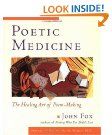
Poetic Medicine: The Healing Art of Poem-Making
By John Fox

Not a book of poetry, but a book that belongs on every poetry lover’s bookshelf. This is a book about the transformational nature of poetry – reading it, speaking it, writing it. Poetry as therapy. Poetry as a pathway to self-exploration. Poetry to rediscover your true voice. I was surprised how much I liked this book.


Transcendent Hindu verses…

Speaking of Siva
Translated by A. K. Ramanujan

This book became an immediate favorite of mine ever since I picked up a copy of it a few years ago. Stunning poems from the Shiva bhakti tradition of India. Basava, Devara Dasimayya, Akka Mahadevi, Allama Prabhu. The commentary in the book, though a little academic, is genuinely insightful. Enthusiastically recommended!

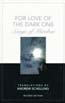
For Love of the Dark One: Songs of Mirabai
Translations by Andrew Schelling

Andrew Schelling’s translations embody that tension between heartbreak and ecstasy that runs through all of Mirabai’s poetry. These poems can be read as love poems or as spiritual poems — but, of course, they are both. A lovely collection.

And for blessings…

To Bless the Space Between Us: A Book of Blessings
by John O’Donohue

I keep being told by people how much they love this book of poetic blessings from the Irish philosopher, poet, and mystic, John O’Donohue. These poetically crafted blessings and meditations on the passages of life manage to elevate the spirit, warm the heart, and, on occasion, bring a tear to the eye.

For even more book recommendations, click here.


(Every year my list gets longer. Even so, I had to leave off so many amazing books.)


Let’s remember that, in the midst of winter’s dark, this is the time to renew the light — within ourselves and our world. Regardless of religion, may we recognize our shared brotherhood and sisterhood within the human family, all within the lap of the generous green earth that is our home.

I hope you and your loved ones have a wonderful holiday season — and that the new year offers you new life and new inspiration!

Ivan
One response so far

Nov 17 2023

Mary Oliver – The Buddha’s Last Instruction

Published by under Poetry

The Buddha’s Last Instruction
by Mary Oliver

“Make of yourself a light,”
said the Buddha,
before he died.
I think of this every morning
as the east begins
to tear off its many clouds
of darkness, to send up the first
signal — a white fan
streaked with pink and violet,
even green.
An old man, he lay down
between two sala trees,
and he might have said anything,
knowing it was his final hour.
The light burns upward,
it thickens and settles over the fields.
Around him, the villagers gathered
and stretched forward to listen.
Even before the sun itself
hangs, disattached, in the blue air,
I am touched everywhere
by its ocean of yellow waves.
No doubt he thought of everything
that had happened in his difficult life.
And then I feel the sun itself
as it blazes over the hills,
like a million flowers on fire —
clearly I’m not needed,
yet I feel myself turning
into something of inexplicable value.
Slowly, beneath the branches,
he raised his head.
He looked into the faces of that frightened crowd.

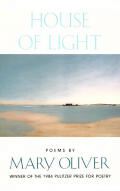
— from House of Light, by Mary Oliver


/ Image by Tyler Nix /

Like all of you I have been profoundly upset by the war on Gaza. What can one do but feel anguish when witnessing so much death and destruction and displacement? We can turn away, of course. Or we can numb ourselves with rationalizations. Or we can shrug our shoulders and declare it to be tragic for those people over there.

Seeing an entire population as a problem is an invitation for disaster. Nations inevitably try to contain or eliminate such “problems.” But those policies are doomed to fail. Trauma leads to rage, rage leads to more violence, more violence leads to new trauma. And so the terrible circle expands. Sometimes slowly, sometimes with horrifying rapidity.

What can we as individuals do? There are always actions we can take, appropriate to our own lives, whether that is pressuring our politicians, engaging in conversation and respectful debate, protesting… I try to regularly ask myself what is it I feel called to do?

While action and asserting oneself is important, there is something more fundamental. We need to be inwardly connected, centered, aware. Action and stillness both naturally proceed from that center point. When we are at rest within the awakened heart, we naturally radiate out into the world. Our actions take on a flow and strength and clarity. All the while stillness remains with us.

As Mary Oliver’s Buddha says, let us make of ourselves a light. Then we naturally shine. Effortlessly, we touch the world around us, warming it, bringing healing and comfort and illumination.

Speaking up is important. But being a bright presence in the world is everything.

=

This is as much a story as a poem, a retelling of the final moment of the Buddha’s life.

“Make of yourself a light,”
said the Buddha,
before he died.

Mm. This simple affirmation of illumination at the moment of death continues to resonate… through the lines of this poem, and through the centuries.

Mary Oliver immediately recognizes this as a statement, not of death, but of renewal and the continuation of life.

I think of this every morning…

We are brought, by Mary Oliver’s line, immediately to the dawn. Not the last dimming of light, but the beginning of the new day.

Knowing it is his last moment, with a life of great striving and penetrating insight behind him, “he might have said anything.” Of all the possible philosophical summations and encapsulations, he chooses instead the radiant wisdom embodied by the sun, which lights and warms the whole world.

The poet seems stunned by such a clear, unencumbered statement with the Buddha’s final breath. Stunned, we stumble into deeper awareness.

clearly I’m not needed,
yet I feel myself turning
into something of inexplicable value.

I love these lines. Contemplating the passage through death while affirming the fulness of light and life, somehow we, along with the poet, no longer stand at the center of the world’s narrative.

When we really pay attention to the story being told all around us, a story that’s been unfolding for ages, the attention shifts away from that perpetual certainty that it is all about “me.” But rather than feeling empty or betrayed, we find ourselves alive and aware and filled with a bubbling glee. We find ourselves made of a gossamer-thin tissue of light.

Slowly, beneath the branches,
he raised his head.
He looked into the faces of that frightened crowd.

These closing lines are so striking. We’ve had an entire scene laid out for us, villagers gathering to be present at the death of this great teacher. The weak and dying Buddha raises his head and looks into the faces of the crowd… and they are frightened. Now, why is that?

I imagine it is because of what they see in the Buddha’s eyes: the great mystery, naked and unguarded in that last loving glance.


Recommended Books: Mary Oliver

New and Selected Poems Why I Wake Early Dream Work House of Light Thirst: Poems
More Books >>


Mary Oliver, Mary Oliver poetry, Secular or Eclectic poetry Mary Oliver

US (1935 – 2019) Timeline
Secular or Eclectic

Continue Reading »

5 responses so far

Nov 17 2023

only game worth playing

A year or ten years
or ten thousand years,
what does it matter how long enlightenment takes?
It is the only game worth playing.

No responses yet

Nov 10 2023

Jay Ramsay – I saw a great light come down over London

Published by under Ivan's Story,Poetry

I saw a great light come down over London
by Jay Ramsay

I saw a great light come down over London,
And buildings and cars and people were still
They were held wherever they were under the sky’s
Clear humming radiance as it descended —
Everywhere, in shops, behind desks and on trains
Everything stopped as the stillness came down
And touched the crown of our heads
As our eyes closed, and the sky filled us
And our minds became the sky —
And everyone, regardless of crime class or creed
Was touched; as slowly we began to stir
Out of this penetrated light-filled sleep
Dizzily as the hand completed its dialing,
And the train lurched forward
And I saw faces looking at one another questioning,
I saw people meeting eye to eye and standing
Half amazed by each other’s presence
I saw their mouths silently shaping the word why
Why didn’t we know this? and yet knowing
They already knew, and without words
We all stood searching for the gesture
That would say it —

As the lights went green, and we drove on.

— from The Longing in Between: Sacred Poetry from Around the World (A Poetry Chaikhana Anthology), Edited by Ivan M. Granger


/ Image by Chad Walton /

I only recently discovered that Jay Ramsay died a few years ago. Though I never met him in person, there was a period when we conversed via email. He was warm-hearted and brought an infectious enthusiasm to his poetic endeavors. In hindsight, I suspect that he knew his time on this earth was limited and he wanted to do what good he could in the time he had. A good reminder to us all. We may not all know our departure date, but we are visitors, not permanent residents. Best to stop distracting ourselves and do what we came here to do. Offer a helping hand. Share a smile. Do what the soul always wanted to do. And discover the secret heart of things.

=

I was a poor child, but raised in an affluent area of Southern California. Several of my friends lived in large houses, with manicured lawns, some with swimming pools in their back yards. My friends had two parents, while I was raised by a single mother. They had family dinner times, Sunday church or Saturday temple, went on family vacations together.

They were living the “normal” life, the American upper middle-class ideal. And I had a strange relationship with their world — I craved its stability, the things and experiences my friends had that I didn’t, but their normalcy was also foreign to me, even a bit eerie. It just didn’t seem real to me somehow. In some ways I wanted it, but I didn’t want to be snared by it.

By the time I was a teenager, I became obsessed with seeing through the facades of that “normal” reality. I wanted to know what secrets were hidden away in the overlooked shadows. I became interested in everything from meditation to history to science to linguistics — all ways of trying to understand the hidden meaning behind the world that everyone takes for granted.

…And I was also fascinated by the phenomenon of UFOs.

I think that’s one of the things I really like about this poem — it can be read as a collective moment of awe, or of spiritual awakening, but it can just as easily suggest a city-wide encounter with a UFO. That’s the first thing I think of reading this poem. It’s not really clear what is happening, just that there is a shared moment of stillness and wonderment. Everyone stops and is confronted with a dazzling, otherworldly reality. What’s actually happening seems less important than the shared experience. Not only is this a witnessing of something that transcends the day-to-day existence, but there is also a recognition of fundamental connection with everyone else. To me it is almost the opposite of a terrorist event; instead of tragedy, everyone comes together in a unifying moment of bliss and amazement.

Then, of course, the lights turn green, and the business of living continues. But perhaps those people carry with them just a bit more sacred wonder into their daily activities… and who knows the many subtle, far-reaching ways it will continue to radiate out through their lives? This is how private experiences of transformation — otherworldy or of the inner world — quietly transform the world.


Recommended Books: Jay Ramsay

The Longing in Between: Sacred Poetry from Around the World (A Poetry Chaikhana Anthology) Diamond Cutters: Visionary Poets in America, Britain & Oceania Places of Truth: Journeys into Sacred Wilderness Out of Time Kingdom of the Edge: Poems for the Spirit
More Books >>


Jay Ramsay, Jay Ramsay poetry, Secular or Eclectic poetry Jay Ramsay

England (1959 – 2019) Timeline
Secular or Eclectic

Continue Reading »

5 responses so far

Nov 10 2023

The past

The past offers itself up
to feed the soul that seeks fullness
by continuously reclaiming itself

No responses yet