Archive for July, 2024

Jul 26 2024

Lynn Ungar – Camas Lilies

Published by under Poetry

Camas Lilies
by Lynn Ungar

Consider the lilies of the field,
the blue banks of camas
opening into acres of sky along the road.
Would the longing to lie down
and be washed by that beauty
abate if you knew their usefulness,
how the natives ground their bulbs
for flour, how the settlers’ hogs
uprooted them, grunting in gleeful
oblivion as the flowers fell?

And you — what of your rushed
and useful life? Imagine setting it all down —
papers, plans, appointments, everything —
leaving only a note: “Gone
to the fields to be lovely. Be back
when I’m through with blooming.”

Even now, unneeded and uneaten,
the camas lilies gaze out above the grass
from their tender blue eyes.
Even in sleep your life will shine.
Make no mistake. Of course
your work will always matter.

Yet Solomon in all his glory
was not arrayed like one of these.

— from Bread and Other Miracles, by Lynn Ungar


/ Image by https://unsplash.com/@dynamiclx /

A lovely reminder to us– Being useful is useful. And sometimes we must rush. But our real gift to the world is not what we do, but what we are.

leaving only a note: “Gone
to the fields to be lovely. Be back
when I’m through with blooming.”

Have a beautiful day!


Recommended Books: Lynn Ungar

Bread and Other Miracles Poetry of Presence: An Anthology of Mindfulness Poems Blessing the Bread: Meditations


Lynn Ungar, Lynn Ungar poetry, Christian poetry Lynn Ungar

US (Contemporary)
Christian
Secular or Eclectic

Continue Reading »

2 responses so far

Jul 26 2024

expanding circle

Ask yourself —

Am I expanding
my circle of compassion?

No responses yet

Jul 19 2024

Shih Shu – as flowing waters disappear into the mist

Published by under Poetry

as flowing waters disappear into the mist
by Shih Shu

English version by James H. Sanford

as flowing waters disappear into the mist
we lose all track of their passage.
every heart is its own Buddha;
to become a saint, do nothing.

enlightenment: the world is a mote of dust,
you can look right through heaven’s round mirror
slip past all form, all shape
and sit side by side with nothing, save Tao.

— from A Drifting Boat: Chinese Zen Poetry, Edited by J. P. Seaton / Edited by Dennis Maloney


/ Image by Ivana Cajina /

Just reading these words tensions cease, the mind settles, and the glow of deep truth naturally shines forth.

I especially like these lines:

every heart is its own Buddha;
to become a saint, do nothing.

What we look for when we seek the Buddha, or enlightenment, or the Truth, is already seated within our own hearts. The way to enlightenment is not to do more — make new journeys, comprehend new teachings, perfect new practices, think more profound thoughts. Those can be important aids, yes, but the real goal is always to discover what is already in the heart. When the seat of the Buddha has not been discovered, it is because we are still distracting ourselves with too much doing.

This is not what we’re taught as we try to find a place in the world. We are always pressed to Do. Do more. Do brilliantly. Do efficiently. Do.

But try it sometime: Do less. Do nothing. Try to understand what doing nothing means. It is not about being inactive or unproductive. Truly doing nothing becomes internal, when not only thoughts are quiet, but the selfish will no longer exerts itself, when the subtle energies from which the mind arises have settled. You won’t believe the immense sense of relief you’ll then feel! Like a cramped muscle relaxing for the first time in years.

Don’t do more. Don’t do at all. Do nothing. Embrace nothing. Come to rest in that wide open plain. Sit side by side with it. See what it reveals.

slip past all form, all shape
and sit side by side with nothing, save Tao.


Recommended Books: Shih Shu

A Drifting Boat: Chinese Zen Poetry Sunflower Splendor: Three Thousand Years of Chinese Poetry The Clouds Should Know Me By Now: Buddhist Poet Monks of China


Shih Shu

China (1660? – 1740?) Timeline
Buddhist : Zen / Chan

Continue Reading »

One response so far

Jul 19 2024

nutrition

Every experience
becomes nutrition for the soul.

No responses yet

Jul 12 2024

Ikkyu – The vast flood

Published by under Poetry

The vast flood
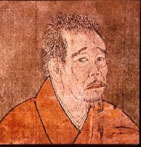
by Ikkyu

English version by R. H. Blyth

The vast flood
Rolls onward
But yield yourself,
And it floats you upon it.

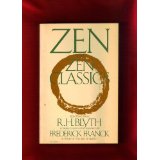
— from Zen and Zen Classics, by R. H. Blyth


/ Image by bimjo /

This short poem feels like it is saying a lot.

The vast flood
Rolls onward

Day after day, experience after experience, terrors and tragedies, joys and victories, everything — life. It can feel like an onslaught. Most of us learn to dampen down the awareness in order to cope and mimic those around us.

Yet even with dimmed senses we feel overwhelmed.

But yield yourself,
And it floats you upon it.

This is the liberating wisdom of surrender.

Most of our intense efforts in life, whether directed toward work, family, even spirituality, are about trying to control the flow of life. We want to master the flood, bring it under our will. We want to tame it so we can be safe.

But it never really works.

This lifelong effort is like a duck on a great river who imagines he controls the current by the action of his paddling feet. When he happens to face downstream — Amazing! The river goes just where he commanded! When he turns left or right, he imagines that he needs to increase his effort and improve his technique to get the river flowing where he wants. And when he turns upstream — Calamity! He has lost control of the river.

Or… he can just sit on top of the river and let its current carry him.

Yielding ourselves to this great river, no longer imagining that we control it, we can finally begin to discover its true nature and direction — and beauty. We come to see its flow as a unifying harmony and not a threat. Importantly, we notice our natural buoyancy. We are built to float upon it.


Recommended Books: Ikkyu (Ikkyu Sojun)

Zen Poetry: Let the Spring Breeze Enter Haiku Enlightenment: New Expanded Edition The Poetry of Zen: (Shambhala Library) Crow With No Mouth: Fifteenth Century Zen Master Ikkyu Zen and Zen Classics
More Books >>


Ikkyu (Ikkyu Sojun), Ikkyu (Ikkyu Sojun) poetry, Buddhist poetry Ikkyu (Ikkyu Sojun)

Japan (1394 – 1481) Timeline
Buddhist : Zen / Chan

Continue Reading »

4 responses so far

Jul 12 2024

The smallest thing

The smallest thing,
properly gazed upon with the whole self,
unmasks itself as the Beloved.

No responses yet