Archive for October, 2024

Oct 25 2024

Hafiz – I feel this yen

Published by under Poetry

I feel this yen
by Hafiz

English version by Erfan Mojib & Gary Gach

I feel this yen
To tell you
Of my heart

The language of love
Remains untold
In any human tongue

My words are veiled
The way the rose
Emerges from a bud

I don’t know who is living
      Inside this weary heart of mine
For I am silent but he
      Is always full of sound & fury

If you’re not our classmate
In the School of Love —
Drown your notebook !
( True knowledge isn’t there. )

Where is the mystic
Who understands
The language
Of
The lilies
?

Why do they leave
Only to return again
?

— from Hafiz’s Little Book of Life, Translated by Erfan Mojib / Translated by Gary Gach


/ Image by Jon Butterworth /

Even though he is greatly beloved, I don’t feature Hafiz as often as his status might merit. The main reason for that is because, frankly, there is a lot of confusion in the English-speaking world about what is and is not genuine Hafiz poetry.

The confusion arises because of Daniel Ladinsky’s popular book of poetry, The Gift. Ladinsky’s books put me in an awkward spot. I really like the poetry from Ladinsky’s books… but, well, they aren’t actually by Hafiz. Ladinsky’s The Gift: Poems by Hafiz the Great Sufi Master actually contains no lines of poetry written by the great Sufi poet Hafiz!

Daniel Ladinsky seems to acknowledge this in his introduction to the book, when he writes, “I feel my relationship to Hafiz defies all reason… I had an astounding dream in which I saw Hafiz as an Infinite Fountaining Sun (I saw him as God), who sang hundreds of lines of his poetry to me in English, asking me to give that message to ‘my artists and seekers.’”

You might say that Ladinsky’s poetry is “inspired by” Hafiz. Or, if you prefer a broader interpretation, you could say Ladinsky channels Hafiz. But his “translations” are not the historical writings of Hafiz. From the more limited scholar’s definition, these are poems by Daniel Ladinsky, not Hafiz.

So here’s what I do: I enjoy Ladinsky’s playful, profound poetry, but I look to other books to savor the historical poetry of Hafiz that Sufis and seekers have delighted in for centuries…

These snippets that I am featuring today are genuine lines of Hafiz poetry, however. The collection I found them in Hafiz’s Little Book of Life is an inspired, mischievous sampler of lines from Hafiz, often just one or two couplets per page, inviting you to open to any page to see what the poet has to say to you in the moment — a practice common with Hafiz poetry in many parts of the Persian-speaking world.

I love the images of these lines–

My words are veiled
The way the rose
Emerges from a bud

They suggest the way deep meaning is hidden within simple words, the way all of reality, really, holds such life within it, just waiting to blossom into fullness within our awareness.

Where is the mystic
Who understands
The language
Of
The lilies
?

Why do they leave
Only to return again
?


Recommended Books: Hafiz

The Gift: Poems by Hafiz the Great Sufi Master Music of a Distant Drum: Classical Arabic, Persian, Turkish & Hebrew Poems Islamic Mystical Poetry: Sufi Verse from the Early Mystics to Rumi Love’s Alchemy: Poems from the Sufi Tradition The Hand of Poetry: Five Mystic Poets of Persia, with Lectures by Inayat Khan
More Books >>


Hafiz

Iran/Persia (1320 – 1389) Timeline
Muslim / Sufi

Continue Reading »

No responses yet

Oct 25 2024

appearance and reality

To a materialist,
appearance is reality.

To a mystic
appearance is an expression of reality
–which can reveal, but also deceive,
and always holds secrets.

No responses yet

Oct 19 2024

Shiki – A pruned branch

Published by under Poetry

A pruned branch
by Shiki (Masaoka Tsunenori)

English version by Hart Larrabee

A pruned branch
And dawn comes easily
To my little window

— from Haiku Illustrated: Classic Japanese Short Poems, Translated by Hart Larrabee


/ Image by Jonas Denil /

I don’t think I have featured a poem by the great modern haiku poet Shiki. I was sipping tea this morning, reading through a selection of haiku, and this haiku caused me to stop and smile.

Let’s pause and really contemplate this haiku for a moment. Because of a pruned branch, the dawn light is able to flood the poet’s window. Specific details precisely observed, yet they resonate in the awareness. We don’t need to conceptualize anything beyond that imagery for energy to brew and ferment in the mind, slowly expanding our awareness of the morning.

Perhaps the window is the poet’s awareness, our awareness, our view out onto the world. Working from there, we can then say that the dawn light in our ability to perceive clearly, that moment of satori or true insight, the dawning of enlightenment. The branch then, can be said to be all the things that normally block the view from window, impeding a clear view. The act of pruning that branch, then, might be said to be the things we do to clear that view, our spiritual practices and discipline, or perhaps pruning our lives down to an elegant simplicity.

Spiritual practice and simplicity prepare the way so enlightenment can reach the window of our perception.

Or perhaps we simply enjoy a moment enjoying the play of light at the window as we sip from a cup of tea.

Have a beautiful day!


Recommended Books: Shiki (Masaoka Tsunenori)

Haiku Illustrated: Classic Japanese Short Poems


Shiki (Masaoka Tsunenori), Shiki (Masaoka Tsunenori) poetry, Buddhist poetry Shiki (Masaoka Tsunenori)

Japan (1867 – 1902) Timeline
Buddhist : Zen / Chan

More poetry by Shiki (Masaoka Tsunenori)

One response so far

Oct 19 2024

topographical

The map of the human soul
is a topographical map, with mountains
and valleys, and rivers of life everywhere.

No responses yet

Oct 04 2024

Anna Akhmatova – A land not mine

Published by under Poetry

A land not mine, still
by Anna Akhmatova

English version by Jane Kenyon

A land not mine, still
forever memorable,
the waters of its ocean
chill and fresh.

Sand on the bottom whiter than chalk,
and the air drunk, like wine,
late sun lays bare
the rosy limbs of the pinetrees.

Sunset in the ethereal waves:
I cannot tell if the day
is ending, or the world, or if
the secret of secrets is inside me again.

— from Women in Praise of the Sacred: 43 Centuries of Spiritual Poetry by Women, Edited by Jane Hirshfield


/ Image by Mohamed Nohassi /

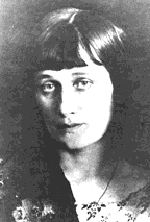
In honor of Navratri, the Hindu festival of nine nights in honor of the feminine face of God, I was thinking of selecting a poem dedicated to the Mother Goddess by Ramprasad or Kamalakanta, but then I thought I should select something by a female poet. As I started scanning through the women poets on the Poetry Chaikhana, I realized that it has been far too long since I last highlighted a poem by the great Russian poet Anna Akhmatova. Her writing and her life embody so much of the strength of women in a complex and often harsh world, while courageously retaining a vision of the inner life and the aspirations of the human spirit.

This is a favorite poem of mine from Anna Akhmatova. Though she wrote during some of the bleakest times of Soviet Russia, there are moments of radiant — one might even say, transcendent — joy that emerges in her poems.

A land not mine, still
forever memorable…

There is something of the mystic’s experience in these lines. An ocean. Light. Deep rest and the sense of life. A brilliant white. Wine…

Sand on the bottom whiter than chalk,
and the air drunk, like wine…

Soon, you find yourself asking, Is the day ending, or the world? Ultimately, it is you who are ending. The train of mental chatter has come to a halt. The world and what you called yourself are not as you thought at all, and both are new and alive and too vast to be called your own.

Then you know that the secret of secrets is within you. And it is so deeply familiar you must have known it before, and it is there again.

I cannot tell if the day
is ending, or the world, or if
the secret of secrets is inside me again.

During this time may we all see in the immensity of existence and in the challenges of life the face of the Eternal Mother.


Recommended Books: Anna Akhmatova

Women in Praise of the Sacred: 43 Centuries of Spiritual Poetry by Women The Complete Poems of Anna Akhmatova Poems of Akhmatova Dancing with Joy: 99 Poems


Anna Akhmatova, Anna Akhmatova poetry, Secular or Eclectic poetry Anna Akhmatova

Russia (1889 – 1966) Timeline
Secular or Eclectic

Continue Reading »

3 responses so far

Oct 04 2024

purpose

The purpose of life is awareness.

No responses yet