Archive for the 'Poetry' Category

Sep 01 2017

Mary Oliver – What I Have Learned So Far

Published by under Poetry

What I Have Learned So Far
by Mary Oliver

Meditation is old and honorable, so why should I
not sit, every morning of my life, on the hillside,
looking into the shining world? Because, properly
attended to, delight, as well as havoc, is suggestion.
Can one be passionate about the just, the
ideal, the sublime, and the holy, and yet commit
to no labor in its cause? I don’t think so.

All summations have a beginning, all effect has a
story, all kindness begins with the sown seed.
Thought buds toward radiance. The gospel of
light is the crossroads of — indolence, or action.

Be ignited, or be gone.

— from New and Selected Poems, by Mary Oliver

/ Image by Hamed Saber /

This, to me, is an interesting poem, the way it wrestles with that age-old question of spirituality: faith or works, jnana or karma… indolence or action.

Does the seeking of wisdom lead one into such an internalized state that one abandons the world to its confusion and suffering? Even when we awaken profound compassion within ourselves, is compassion enough without action to back it up? Ultimately the question boils down to, is enlightenment a good in and of itself, or does it only fulfill itself through service?

Different traditions and teachers give us different answers. Many teachers will say that trying to “do good” without first achieving some measure of inner clarity cannot achieve its full potential. Some even say that spiritual opening has a natural resonance; the enlightened are like radio transmitters, apparently doing little, apparently silent, they broadcasting powerful waves into the world. They argue that there can be action that is good intentioned, but meaningless or unstable. And there can be apparent inaction that shakes the universe.

Others say that spirituality and compassion without heartful action is anemic at best, that the physical and social world are themselves part of our spiritual landscape, that we must embody our spirituality on that level too. This criticism can go so far as to say that spirituality in a cave is easy, spirituality in the world is hard; that’s where we truly prove our awakening love. They argue that action always exists, even the avoidance of action is action. One must always seek to express the inner state with outer action. And for the spiritually minded, that action must be in the form of compassionate service to a struggling world.

Mary Oliver seems to, gently, favor the latter philosophy:

Can one be passionate about the just, the
ideal, the sublime, and the holy, and yet commit
to no labor in its cause? I don’t think so.

Me? I have a fiery nature, and I like a statement like Mary Oliver’s. I see too much passivity in good-hearted people, myself included sometimes.

But I don’t ultimately see a great conflict with any of these philosophies. The universe is a big universe, with endless pathways for the human spirit to travel. The more we release our enlightened selves, the more we naturally embody who we naturally are.

For some, that resolves itself into a profound stillness that is outer as well as inner. And do they not ring out from their mountaintops and closets? Do we not, on some level, hear them and ring out a little more ourselves?

For others, stillness and love seeks a pathway of expression through action and service. The way they use the same two hands we all possess — doesn’t it make our own fingers a little itchy for their own movement?

=

Sending out a special note of love and blessings to regions so affected by floods recently — Texas, and Northern India and Nepal. Sadly, these extreme weather patterns are becoming the new normal. Both as individuals and as a society in general, we need to adjust our thinking and preparations to expect more of these sorts of events. The most important lesson is that we come together, that we help when we can, and that we minimize suffering and destruction as much as possible through forethought and necessary changes in entrenched ways of doing things.


Recommended Books: Mary Oliver

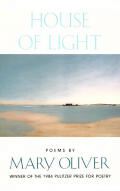
New and Selected Poems Why I Wake Early Dream Work House of Light Thirst: Poems
More Books >>


Mary Oliver, Mary Oliver poetry, Secular or Eclectic poetry Mary Oliver

US (1935 – )
Secular or Eclectic

Continue Reading »

2 responses so far

Aug 23 2017

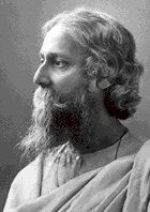
Rabindranath Tagore – I touch God in my song

Published by under Poetry

I touch God in my song
by Rabindranath Tagore

English version by Rabindranath Tagore

I touch God in my song
      as the hill touches the far-away sea
            with its waterfall.

The butterfly counts not months but moments,
      and has time enough.

Let my love, like sunlight, surround you
      and yet give you illumined freedom.

Love remains a secret even when spoken,
      for only a lover truly knows that he is loved.

Emancipation from the bondage of the soil
      is no freedom for thee.

In love I pay my endless debt to thee
      for what thou art.

— from The Fugitive, by Rabindranath Tagore


/ Image by Edgar Pierce /

…only a lover truly knows that he is loved.

In this poem’s few short lines, Rabindranath Tagore marries the bhakti path of utter love for God with the heart of karma yoga’s union through service and action.

In traditional Indian metaphysics, the goal is usually understood to be enlightenment and freedom from the karmic tug that traps us in the cycle of earthly embodiment, “emancipation from the bondage of the soil.” But here Tagore challenges the otherworldliness that often engenders.

Even the spiritual idea of liberation can become a selfish goal. For one utterly in love with God, the paying of that “debt” is simply a labor of love. Every effort, every experience, even suffering, is simply an expression of one’s love for God. That is enough right there for the true lover of God. Rather than seeking escape from “the soil,” the world is seen as a panorama that offers endless opportunities to worship and experience the Divine.

This is the great vision of karma yoga.

It is also the attitude that finally allows us to be at rest on our spiritual journey, rather than live as a convict on the run. What some see as the prison yard, becomes instead an exercise yard… or a playground! It is a courageous way of acknowledging that freedom is not escape, it is deep presence.

And we find that we live not in fleeting time, but in the ever expanding present moment.

The butterfly counts not months but moments,
      and has time enough.


Recommended Books: Rabindranath Tagore

The Longing in Between: Sacred Poetry from Around the World (A Poetry Chaikhana Anthology) Gitanjali The Lover of God The Fugitive Lover’s Gift and Crossing
More Books >>


Rabindranath Tagore, Rabindranath Tagore poetry, Yoga / Hindu poetry Rabindranath Tagore

India (1861 – 1941) Timeline
Yoga / Hindu

Continue Reading »

2 responses so far

Aug 16 2017

Meng Hao-jan – Master I’s Chamber in the Ta-yu Temple

Published by under Poetry

Master I’s Chamber in the Ta-yu Temple
by Meng Hao-jan

English version by J. P. Seaton

I-Kung’s place to practice Ch’an:
a hut in an empty grove.

Outside the door, a single pretty peak.
Before the stair, deep valleys.

Sunset confused in footprints of the rain.
Blue of the void in the shade of the court.

Look, and see the lotus blossom’s purity:
know then that nothing taints this heart.

— from The Poetry of Zen: (Shambhala Library), Edited by Sam Hamill / Edited by J. P. Seaton


/ Image by toehk /

The first several lines of this poem paint for us serene, somewhat lonely images:

a meditation hut in an empty grove…
a mountain peak spied through the doorway…
stairs descending into valleys…
rain puddles reflecting the sunset…
space enclosed by a shaded court…

(By the way, isn’t that a wonderful phrase, “footprints of the rain”? As if the rain — or some spirit of the natural world — is walking toward us in reflections upon the earth…)

Besides the peace and stillness suggested by these images, what else do you notice? These are human spaces at the edge of the natural world… but there is no human presence here.

These are all images of meditation: harmony, simplicity, nature, and no agitated ego there to stir up the dust.

That last couple of lines–

Look, and see the lotus blossom’s purity:
know then that nothing taints this heart.

The purity of the lotus blossom is an important esoteric theme in the poetry of both Hinduism and Buddhism. Picture a lotus flower for a moment. The lotus rises through the murky waters of ponds and lakes yet, when it blooms, it floats upon the surface, its petals shining and untainted by the mud from which it emerged. In the scriptural language and sacred poetry of Hinduism and Buddhism, the lotus perfectly embodies the soul, rising up through the murkiness of worldly experience until it reaches the surface of the spiritual realm and blooms, vibrant and pure, free from all taint and attachment.

This is why Meng Hao-jan immediately follows his mention of the lotus blossom’s purity with his reference to the untainted heart. No matter what the heart experiences, loss, sorrow, suffering, disgrace, when it truly opens, it is surprisingly untouched. So much of life wounds. Who can deny it? Yet somehow the battered heart blossoms with such beauty and love, no hint of past hurts.

This untainted opening of the heart is not an emotion, not even something one works at. This is simply what happens. With meditation or prayer, the cultivation of inner quiet and generosity and humility, the heart surprises with its unexpected budding and blossoming. Just wait and watch.


Recommended Books: Meng Hao-jan

The Poetry of Zen: (Shambhala Library) Sunflower Splendor: Three Thousand Years of Chinese Poetry The Mountain Poems of Meng Hao-jan


Meng Hao-jan

China (689 – 740) Timeline
Buddhist : Zen / Chan

Continue Reading »

3 responses so far

Aug 09 2017

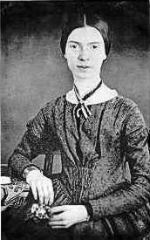
Emily Dickinson – Always Mine!

Published by under Poetry

Always Mine!
by Emily Dickinson

Always Mine!
No more Vacation!
Term of Light this Day begun!
Failless as the fair rotation
Of the Seasons and the Sun.

Old the Grace, but new the Subjects —
Old, indeed, the East,
Yet upon His Purple Programme
Every Dawn, is first.

— from The Complete Poems of Emily Dickinson, Edited by Thomas H. Johnson


/ Image by capt_tain Tom /

When I was first introduced to Emily Dickinson’s poetry as a teenager, I immediately responded to the power of her writing. Her short, staccato lines, words and phrases connected by dashes and strange punctuation. Statements filled with intensity, as if she can barely get the words out. But it wasn’t always clear to me what she was really saying.

It wasn’t until much later, re-reading her writing as an adult, that a light went off in my mind, and I realized that much of the commentary I had read of her poetry had missed the essential element of her poetry — that Emily Dickinson was, in fact, a mystic describing ecstatic states of awareness.

Don’t take my word for it, just consider the possibility. And then reread her poetry with that idea in mind.

This poem, for example. Why does she rapturously proclaim, “Always Mine!” Something or someone she had been passionately seeking is discovered to already belong to her, to have always been hers. There is “no more vacation,” no longer a sense of separation or distance. For her, it is as if a new day has begun, filled with light, as dependable as the seasons.

I especially respond to the line:

Old the Grace, but new the Subjects —

The sense of grace that fills her is “old,” ancient, familiar, as if it has always been there, yet she notices for the first time how it shines anew on everything. Everything is new when seen in this new light.

She expands on this with:

Old, indeed, the East,
Yet upon His Purple Programme
Every Dawn, is first.

The East, the direction of the sunrise, the direction of enlightenment, has always been there, yet amidst its royal purple majesty, every dawn is new and wondrous.

Re-reading this poem, does it seem like a lonely recluse’s breathless praise of the morning or perhaps a secret love, or is it genuinely ecstatic, describing an awareness that is profound and alive?


Recommended Books: Emily Dickinson

The Longing in Between: Sacred Poetry from Around the World (A Poetry Chaikhana Anthology) The Complete Poems of Emily Dickinson Women in Praise of the Sacred: 43 Centuries of Spiritual Poetry by Women The Enlightened Heart: An Anthology of Sacred Poetry Saved by a Poem: The Transformative Power of Words
More Books >>


Emily Dickinson, Emily Dickinson poetry, Secular or Eclectic poetry Emily Dickinson

US (1830 – 1886) Timeline
Secular or Eclectic
Christian : Protestant

Continue Reading »

4 responses so far

Aug 04 2017

Li Bai – You ask why I make my home in the mountain forest

Published by under Poetry

You ask why I make my home in the mountain forest
by Li Bai

English version by Sam Hamill

You ask why I make my home in the mountain forest,
and I smile, and am silent,
and even my soul remains quiet:
it lives in the other world
which no one owns.
The peach trees blossom,
The water flows.

— from Endless River: Li Po and Tu Fu: A Friendship in Poetry, Translated by Sam Hamill


/ Image by neil alejandro /

I thought I’d share a moment of peace…

I smile, and am silent,
and even my soul remains quiet…

These lines bring me to rest.

The mind at rest, the entire self at rest, all silt having settled, leaving only quiet clarity. One becomes empty, a spacious, silent witness to the world’s unfolding.

The peach trees blossom,
The water flows

Have a beautiful weekend!


Recommended Books: Li Bai

The Enlightened Heart: An Anthology of Sacred Poetry The Poetry of Zen: (Shambhala Library) Endless River: Li Po and Tu Fu: A Friendship in Poetry Li Pai: 200 Selected Poems A Feast of Lanterns
More Books >>


Li Bai, Li Bai poetry, Taoist poetry Li Bai

China (701 – 762) Timeline
Taoist

Continue Reading »

3 responses so far

Jul 28 2017

A. R. Ammons – Eyesight

Published by under Poetry

Eyesight
by A. R. Ammons

It was May before my
attention came
to spring and

my word I said
to the southern slopes
I’ve

missed it, it
came and went before
I got right to see:

don’t worry, said the mountain,
try the later northern slopes
or if

you can climb, climb
into spring: but
said the mountain

it’s not that way
with all things, some
that go are gone

— from Collected Poems: 1951 – 1971, by A. R. Ammons


/ Image by Warren Rohner /

I quite like the way this poem reminds us to pay attention, to be present.

It was May before my
attention came
to spring…

It is easy to get so busy with our lives that we miss life. Too much dedication to the minutia and the demands of each day can cause our peripheral vision to collapse. And then too often we miss the important stuff. We lose context and meaning. It is as if we go on a journey and then train ourselves to only stare down at our moving feet. Continuing this metaphor, we certainly can’t ignore our feet, particularly on difficult or uneven terrain. But if we don’t regularly look up we are more likely to lose our way… and the joy of the journey itself.

my word I said
to the southern slopes
I’ve

missed it, it
came and went before
I got right to see:

I love the poet’s phrase, that the spring came and went before he “got right to see.” Seeing is not simply a mechanical action, is it? It requires an inner readiness, a willingness to be open to the encounter of what is witnessed. We have to be receptive, and ready for surprise. We don’t just look, we have to get right to see.

don’t worry, said the mountain,
try the later northern slopes
or if

you can climb, climb
into spring…

I’m not sure if the meaning of this is obvious to everyone. In the natural world, seasonal patterns are cooler and move in reverse as we go away from the equator or higher in elevation. I live near the foothills of the Rocky Mountains in Colorado. If, like Ammons, May has come and I have forgotten to pause and appreciate spring — the wildflowers, the new grasses, the birdsong in the cool mornings — I can drive up into the mountains and find it all there waiting for me.

In other words, many of the things we were too preoccupied to recognize and appreciate at the right moment in life can still be found with a little “climbing,” a little effort, a change in perspective. If we missed it when it came to us, we can go to it.

…but
said the mountain

it’s not that way
with all things, some
that go are gone

But not all things are so. Some things, when they are gone, they are gone. We might say that this is closer to the greater truth, that all things, really, when they go are gone. Even an experience repeated is entirely new the second time. That first experience is gone. And, once experienced, that second experience is gone too.

This may sound tragic, but it is not really so. It is simply the nature of the flow of reality. Nothing is truly stable or repeatable. Everything, every encounter, every moment is entirely unique to itself. This is the blessing and the challenge of life. When we feel trapped in a sameness, we are simply not seeing. There is constant change and mystery unfolding within that apparent sameness.

The ephemeral, flowing nature of experience invites us to keep paying attention. Because that is what we truly have. We don’t “have” experiences. They can’t be grasped or held. We can catalog them, list them as part of our personal histories, but that doesn’t truly make them ours. All we truly have is our awareness of experiences as they pass through our lives. If our awareness isn’t engaged, then those experiences were never truly experienced.

So, yes, let’s climb the mountains to find the wildflowers, but better still not to miss them when they sprout in our own back yards.


Recommended Books: A. R. Ammons

Collected Poems: 1951 – 1971 Brink Road: Poems Selected Poems A Coast of Trees: Poems by A R Ammons Uplands: New Poems by A R Ammons
More Books >>


A. R. Ammons, A. R. Ammons poetry, Secular or Eclectic poetry A. R. Ammons

US (1926 – 2001) Timeline
Secular or Eclectic

More poetry by A. R. Ammons

3 responses so far

Jul 26 2017

Hafiz (Daniel Ladinsky) – The Great Religions

Published by under Poetry

The Great Religions
by Hafiz (Daniel Ladinsky)

The
Great religions are the
Ships,

Poets the life
Boats.

Every sane person I know has jumped
Overboard.

That is good for business
Isn’t it

Hafiz?

— from The Gift: Poems by Hafiz the Great Sufi Master, by Daniel Ladinsky


/ Image by Erik Hansen /

This is one of my favorite poems by Ladinsky. It winks knowingly at us, inviting us in on the joke. Without saying much, it suggests a lot about the relationship between formal ideas of religion, genuine insight, freedom, and the poetic impulse.

Ready, one, two, three — JUMP!


Recommended Books: Hafiz (Daniel Ladinsky)

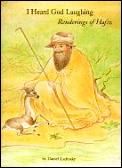
The Gift: Poems by Hafiz the Great Sufi Master Love Poems from God: Twelve Sacred Voices from the East and West The Subject Tonight Is Love: 60 Wild and Sweet Poems of Hafiz I Heard God Laughing: Renderings of Hafiz


Hafiz (Daniel Ladinsky)

US (1945? – )
Muslim / Sufi

People sometimes wonder why I don’t feature more of Hafiz’s poetry from Daniel Ladinsky’s book, The Gift. They are such delightful, ecstatic, irreverent poems that have inspired so many people…

Ladinsky’s books put me in an awkward spot. I really like the poetry from Ladinsky’s books… but, well, they aren’t actually by Hafiz. His collection of poetry entitled The Gift: Poems by Hafiz the Great Sufi Master actually contains no lines of poetry written by the great Sufi poet Hafiz!

Daniel Ladinsky seems to acknowledge this in his introduction to the book, when he writes, “I feel my relationship to Hafiz defies all reason… I had an astounding dream in which I saw Hafiz as an Infinite Fountaining Sun (I saw him as God), who sang hundreds of lines of his poetry to me in English, asking me to give that message to ‘my artists and seekers.’”

You might say that Ladinsky’s poetry is “inspired by” Hafiz. Or, if you prefer a broader interpretation, you could say Ladinsky channels Hafiz. But his “translations” are not the historical writings of Hafiz. From the more limited scholar’s definition, these are poems by Daniel Ladinsky, not Hafiz.

So here’s what I do: I enjoy Ladinsky’s playful, profound poetry, but I look to other books to savor the historical poetry of Hafiz that Sufis and seekers have delighted in for centuries.

If you’d like to explore and compare them, here are some links to start with:

More of Ladinsky’s Hafiz
Historical Hafiz.

More poetry by Hafiz (Daniel Ladinsky)

5 responses so far

Jul 21 2017

Shabkar – The mind has neither color nor form

Published by under Poetry

The mind has neither color nor form
by Shabkar (Shabkar Tsogdruk Rangdrol)

English version by Matthieu Ricard

The mind has neither color nor form.
Search for it: it is nowhere.
Emptiness!

— from Rainbows Appear: Tibetan Poems of Shabkar, Translated by Matthieu Ricard


/ Image by Venu Gopal /

[Fair warning: I ramble on a bit here…]

Something in human instinct recoils from statements like this: “The mind is… nowhere.” It’s a reflex of psychic self-preservation. Consciously or unconsciously we assume that we are the mind. So to say that the mind is nowhere and to speak of emptiness feels like we are marching headlong into our own negation.

It’s especially fascinating to watch earnest seekers become mental contortionists, trying in such creative ways to integrate this notion into their worldview, while still rejecting it in their gut. The mind can perform some amazing acrobatics while trying to comprehend its own non-existence!

This gets down to fundamental ground in the process of spiritual awakening. Trying to accept this because a respected teacher or text has told you it is so will only carry you so far. You must investigate yourself.

Here’s one way to understand this: The mind must begin the search, but it cannot complete it. At a certain point the mind — well, aspects of the mind — are recognized as being a hindrance to full, clear perception. Then there is usually a long process of trying to figure out how to sidestep the mind. This leads only to limited success; we begin to conceive that we are not the mind, but we have no real idea how to get around this uncertain thing we call the mind.

Eventually we begin to wonder, What is the mind anyway? We begin to watch it, observe it’s thoughts and images and feelings. We question: Is that me? That thought, this collection of thoughts, are they somehow what I am? What part of me feels that feeling? That image hovering at the back of my awareness, did I conjure it? I see a thing and then I form a mental image of the thing and then I think about the mental image I’ve formed; do I ever really see a thing as it is? This constant flow of intangibles that endlessly occupies my awareness and populates the world I perceive, what is it all really, and what is my relationship to it?

This is not some heady, intellectual process. We don’t necessarily even formulate these questions into words. We just watch. Through watching, we grow quiet Through watching, we learn to see.

A curious thing begins to happen: We become more stable, while the mind dissipates. It’s not even really that the mind fades; its reality fades. We begin to see that the mind is not a sustained thing at all. It has no existence in and of itself. It is found to be like ripples upon the surface of a running stream, simply the result of movement. When the movement stops, the water remains, but the ripples are gone.

Awareness remains. You remain. You are, in truth, more yourself. But what you always thought you were is gone — nowhere. Imagine what that means; you stand there finally witnessing yourself and everything, but without the intervening disruption of your thoughts about your thoughts about your thoughts. Rather than a universe filled with an endless catalogue of objects and experiences, there is seen to be a single radiance. Because this deep level is free from “things,” we might call it Emptiness. But the life, and the presence, and the beauty we find is so immense that you’d never make the mistake of describing it as a negation; it is a summation.

So that impish mind, search for it. Laugh at its escapes and evasions. You’ll find you can’t find the mind. And you’ll find so much more.


Recommended Books: Shabkar (Shabkar Tsogdruk Rangdrol)

Songs of Spiritual Experience: Tibetan Buddhist Poems of Insight & Awakening Rainbows Appear: Tibetan Poems of Shabkar The Life of Shabkar: The Autobiography of a Tibetan Yogin Food of Bodhisattvas: Buddhist Teachings on Abstaining from Meat


Shabkar (Shabkar Tsogdruk Rangdrol), Shabkar (Shabkar Tsogdruk Rangdrol) poetry, Buddhist poetry Shabkar (Shabkar Tsogdruk Rangdrol)

Tibet (1781 – 1851) Timeline
Buddhist : Tibetan

Continue Reading »

7 responses so far

Jul 14 2017

Dariya Sahib of Bihar – The musk is within the deer

Published by under Poetry

The musk is within the deer
by Dariya Sahib of Bihar

English version by K. N. Upadhyaya

The musk is within the deer,
But he searches for it outside in the grass
      instead of searching within himself.
He runs back and forth,
Wondering where the fragrance comes from.
The fragrance is nearby,
But he knows it not.

Caught by delusion, he roams about.
So do all people wander in pilgrimages
      and outer observances.
If you wish to obtain your own true Home,
Then find it by looking within yourself
      and dwell therein.

The true Lord resides within this body,
Recognize Him through the manifestation of true love.
By churning this body,
And by entering within yourself,
See the manifestation of true wisdom.

— from Dariya Sahib: Saint of Bihar, Translated by K. N. Upadhyaya


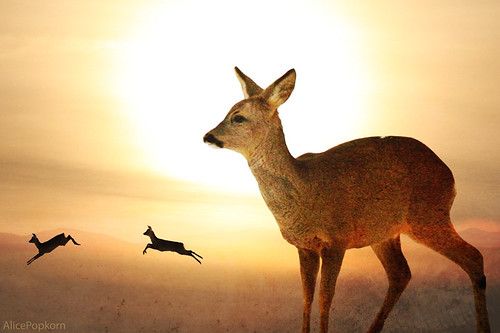
/ Image by Alice Popkorn /

The musk is within the deer

Sant Dariya Sahib is giving us a delightful spiritual metaphor that unfolds in several layers of meaning.

Musk is the aromatic oil produced by certain species of deer. It was traditionally said to be an aphrodisiac and was once used in perfumes.

We have a deer, and he smells this enticing, otherworldly scent, and so he searches everywhere in the grass around himself, but he cannot find its source.

The fragrance is nearby,
But he knows it not.

Because, of course, the musk is within himself. He just has not recognized this fundamental truth about his own nature.

The deer is obviously all of us, spiritual seekers endlessly looking outside of ourselves for God, the Eternal, the True Self.

There is a sort of turnabout in Dariya’s use of the deer to represent the spiritual aspirant. Very often in spiritual writings, the deer, being an elusive creature of profound silence and gentleness and beauty, is used as a metaphor for the Divine Beloved. Representing the spiritual seeker as a deer who does not know his own divinity adds further irony to the metaphor.

But why speak of musk or perfume at all?

In addition to a nectar-like sweetness, many mystics experience a scent that can be rapturously overwhelming or tantalizingly subtle. This blissful scent can also be understood as the perfume worn by the Beloved that awakens sacred ardor upon the spiritual journey.

And, of course, perfume is scented oil, oil being the substance used to anoint and initiate.

If you wish to obtain your own true Home,
Then find it by looking within yourself
      and dwell therein.

But let’s not get too far away from the poet’s point: If we want to find our “true Home,” then we need to cease our constant outward focus and and simply, deeply look within.

I just want to point out that the one line — “By churning this body” — is intriguing to me. That sounds almost like an alchemical phrase. He is saying something about “churning” the body, like forming butter by agitating the milk. He seems to be suggesting some practice of working with the body, overturning it, cycling the awareness through the body and its energetic pathways perhaps, as a way to draw out the concentrated spiritual essence. An interesting detail to contemplate.

And by entering within yourself,
See the manifestation of true wisdom.


Recommended Books: Dariya Sahib of Bihar

Dariya Sahib: Saint of Bihar


Dariya Sahib of Bihar, Dariya Sahib of Bihar poetry, Sikh poetry Dariya Sahib of Bihar

India (1634 – 1780) Timeline
Sikh
Yoga / Hindu

Continue Reading »

6 responses so far

Jul 12 2017

e. e. cummings – let it go

Published by under Poetry

let it go — the
by e. e. cummings

let it go — the
smashed word broken
open vow or
the oath cracked length
wise — let it go it
was sworn to
go

let them go — the
truthful liars and
the false fair friends
and the boths and
neithers — you must let them go they
were born
to go

let all go — the
big small middling
tall bigger really
the biggest and all
things — let all go
dear

so comes love

— from E.E. Cummings: Complete Poems 1904-1962, by e. e. cummings


/ Image by Mario Sánchez Nevado /

I apologize about my absence for the past couple of weeks. I had a dental crisis that led to a tooth extraction, which unexpectedly became dental surgery. I am recovering now and doing well.

It was quite an ordeal for more than a week leading up to the surgery, however. In a perverse way, it is fascinating to recognize just how much pain the body can be subjected to and what that experience is. When such sharp pain lasts for an extended period of time, over days, it is curious how our relationship to that pain can evolve and change. At first recognition of the discomfort, my instinct was to ignore it or shuffle it aside, hoping it would pass, not wanting to interrupt my rhythms and focus. Then when it became strong and undeniable, I had to reorder my sense of reality to acknowledge that it was an issue that was present and demanded attention and help. All too quickly the bravado crumbled and the desire to end the pain took over every thought.

But when pain medication only partially muted the pain and surgical relief was still days away, I realized that I had the option to either rage at the pain, tensing up and shutting down to fight my own senses, or I could do my best to relax, to accept the simple reality of its presence, to observe it, and to observe myself. Doing that, the pain started to become more fluid. It shifted out of “pain” and into a different sort of experience, something I might call “intensity.” For a a few days, that intensity became my worship, my meditation, my willing sacrifice.

But it was the actual surgery and the tooth extraction that prompted my selection of this poem. The tooth isn’t normally visible when I am talking or laughing, so its removal doesn’t have much social consequence. But it is a removal of a part of my body, a part that will never grow back. It can be replaced with a false tooth, sure, but the tooth itself, that part that was part of “me” is permanently gone. It is a partial death, if I want to look at it that way.

Of course, I don’t really believe that “I” am merely my body, nor is the loss of any part of that body an actual loss of self. But that’s easy to say or believe in an intellectual sense. Surgery forces me to prove it. It demands a deep examination of this belief. Do I truly relate to reality in this way, fully embodying it and living it from the inside out, or do I merely cultivate a facade in order to feel “spiritual”?

This was all encapsulated within the surgery itself — the intensity of physical sensation which held the potential to overwhelm my senses as pain, all the while thinking of that one tooth the dentist was working at. It had been a living part of my body for nearly the whole of my life. As part of my body, in some ways it had been part of me and I identified with it. Yet in a deeper sense it was more of an expression of me and my life energy, not truly me in my essence. I almost came to think of it as a companion along the journey. And it was time to let go.

That was my attitude during the surgery: Let go. With gratitude.

So many of our difficulties are caused by clinging to things and experiences when it is time for them to leave our lives. We cling to them because we identify with them. We believe they are somehow essential to who and what we are. We fear that without them, death or loss of self must result. Letting go, in the proper time, restores our balance and perspective. It reminds us that we are not those things and experiences, not even the body itself. It reminds us that even with loss and change, we ourselves remain — full of life and undiminished.

Let it go. With love. With gratitude.

This practice, enjoined on us by the impermanent nature of the world, reminds us of our eternal nature as we witness the pageantry and movement all about us.

— let all go
dear

so comes love


Recommended Books: e. e. cummings

E.E. Cummings: Complete Poems 1904-1962 73 Poems 1 x 1 [One Times One] 50 Poems 95 Poems
More Books >>


e. e. cummings, e. e. cummings poetry, Secular or Eclectic poetry e. e. cummings

US (1894 – 1962) Timeline
Secular or Eclectic

More poetry by e. e. cummings

5 responses so far

Jun 23 2017

David Whyte – It is Not Enough

Published by under Poetry

It is Not Enough
by David Whyte

It is not enough to know.
It is not enough to follow
the inward road conversing in secret.

It is not enough to see straight ahead,
to gaze at the unborn
thinking the silence belongs to you.

It is not enough to hear
even the tiniest edge of rain.

You must go to the place
where everything waits,
there, when you finally rest,
even one word will do,
one word or the palm of your hand
turning outward
in the gesture of gift.

And now we are truly afraid
to find the great silence
asking so little.

One word, one word only.

“It is Not Enough” from Where Many Rivers Meet by David Whyte.  Copyright © 1990, 2004 by David Whyte.  Used by permission of the author and Many Rivers Press (www.davidwhyte.com)  All rights reserved.


/ Image by babasteve /

As I know many of you have experienced in recent weeks, we too here in Colorado have had several hot days. Then last night, a burst of rain. This morning cool, damp, overcast. Even the starlings are stunned with relief and are quiet.

Reading today’s poem by David Whyte, it feels as if he is exploring a deep insight, but what he is actually saying is not entirely clear. Let’s try to puzzle it out together.

It is not enough to see straight ahead,
to gaze at the unborn
thinking the silence belongs to you.

I suspect he is saying something about not becoming too self-satisfied even with our most spiritually open states, that we shouldn’t become convinced that we possess those moments.

You must go to the place
where everything waits…

When I think of waiting, I imagine a patient stillness, but also uncertainty. And in that uncertainty our awareness remains open, receptive, alive. In possession and certainty, the awareness becomes fixed, taking in less and less of the flowing mystery.

there, when you finally rest,
even one word will do,
one word or the palm of your hand
turning outward
in the gesture of gift.

This, to me, is the heart of the poem.

But what is this “one word” the poet refers to? David Whyte’s writings aren’t particularly steeped in Christian terminology, so he is not likely to be making a reference to The Word as Christians understand it.

He draws an equivalency between that one word and the palm of an open hand in the gesture of a gift — a beautiful image. This one word suggests a lack of self and lack of clinging, and that becomes a gift or an offering.

And now we are truly afraid
to find the great silence
asking so little.

Now that we are resting, waiting, having passed through insight without clinging to it, free from self, bathing in the great silence, that’s when he brings up fear. But the fear is not of the silence, rather that so little is asked of us.

I take this to mean that we are so intent on action, on doing. Even in our spiritual opening, we expect some impulse or divine command to do something with it. But instead the reflex to act fades away. One profoundly and simply IS.

We don’t do, we open. Like a hand in a gesture of gift. Like the lips parting to utter one single word.

One word, one word only.

What do you think this poem is saying? Do you read this poem differently?


Recommended Books: David Whyte

The House of Belonging Where Many Rivers Meet


David Whyte, David Whyte poetry, Secular or Eclectic poetry David Whyte

US (1955 – )
Secular or Eclectic

Continue Reading »

5 responses so far

Jun 21 2017

Hadewijch – You who want knowledge

Published by under Poetry

You who want
by Hadewijch

English version by Jane Hirshfield

You who want
knowledge,
seek the Oneness
within

There you
will find
the clear mirror
already waiting

— from Women in Praise of the Sacred: 43 Centuries of Spiritual Poetry by Women, Edited by Jane Hirshfield


/ Image by Lea Chvrl /

“You who want
knowledge…”

I suppose that is all of us. We all want knowledge.

Society tells us that “knowledge is power,” but we don’t really have a clear sense of what knowledge is. In the modern era, we tend to think of knowledge as information, data. We think of knowledge as the feeding and exercise of the intellect. All of that is certainly important, but real knowledge is something else.

We can’t think our way into heaven.

When mystics speak of “knowledge” they speak of gnosis. This is not information, but a profound Knowing. The knowledge we are talking about has more to do with full awareness. It is as if one floats in the vast ocean of knowingness itself. This “knowledge” is an all-encompassing recognition of meaning and interrelationship. It is direct and permeates one’s whole being. It is the full bodied perception that living meaning somehow flows through all of existence, unifying everything within a living self-awareness.

Information is observational, external, and always limited. This is not to say that gnostic knowledge has nothing to do with informational knowledge, however. In spiritually open states, one’s intuition may be refined and heightened. Clear insight about a certain person or situation may just pop into your mind as a fully formed understanding, as if you suddenly see the whole pattern without having to work so hard to connect all of the individual bits of information. But this is more of a byproduct, an ornamentation on the face of knowledge, not the knowledge itself.

Real knowing, gnosis, is alive, all-permeating, all-unifying. It reconnects us within the living whole… and leads us into ecstasy.

…seek the Oneness
within

This is why, real knowing is about seeking oneness, turning within, learning to see ourselves honestly, truly, clearly.

Surprisingly, none of this knowledge is ever acquired. It isn’t a new possession or experience or even a new thought. It is already here, at rest in the center of things. When it is found, it is as familiar as our bones. It is our very nature. It is already waiting.

There you
will find
the clear mirror
already waiting

Have a beautiful day!


Recommended Books: Hadewijch

Women in Praise of the Sacred: 43 Centuries of Spiritual Poetry by Women The Shambhala Anthology of Women’s Spiritual Poetry Hadewijch: The Complete Works (Classics of Western Spirituality) Christian Mystics: Their Lives and Legacies throughout the Ages Meister Eckhart and the Beguine Mystics: Hadewijch of Brabant, Mechthild of Magdeburg, and Marguerite Porete
More Books >>


Hadewijch, Hadewijch poetry, Christian poetry Hadewijch

Belgium (13th Century) Timeline
Christian : Catholic

Continue Reading »

4 responses so far

Jun 09 2017

Lisel Mueller – What is Left to Say

Published by under Poetry

What is Left to Say
by Lisel Mueller

The self steps out of the circle;
it stops wanting to be
the farmer, the wife, and the child.

It stops trying to please
by learning everyone’s dialect;
it finds it can live, after all,
in a world of strangers.

It sends itself fewer flowers;
it stops preserving its tears in amber.

How splendidly arrogant it was
when it believed the gold-filled tomb
of language awaited its raids!
Now it frequents the junkyards
knowing all words are secondhand.

It has not chosen its poverty,
this new frugality.
It did not want to fall out of love
with itself. Young,
it celebrated itself
and richly sang itself,
seeing only itself
in the mirror of the world.

It cannot return. It assumes
its place in the universe of stars
that do not see it. Even the dead
no longer need it to be at peace.
Its function is to applaud.

— from Alive Together: New and Selected Poems, by Lisel Mueller


/ Image by matoses /

I have read several of Lisel Mueller’s poems in the past, and liked them very much, but I haven’t particularly sought them out. Earlier this week a friend in Australia sent me this poem, however, and I now realize I have been missing out.

There is so much gentle wisdom in this poem, how we think of our self.

Language gives us so many opportunities to trip ourselves up. This is especially true when speaking of grand but intangible concepts. We can speak of the self and mean the Self, the eternal presence we all are at the core of our being, or we can say the self and mean the mask, the social identity, the ego. It is this smaller, constructed self that the poet explores here.

The self steps out of the circle;
it stops wanting to be
the farmer, the wife, and the child.

We adopt roles in life, or they are given to us — child, spouse, parent, with a certain career, a social status, a circle of friends, a set of interests — we gather up that collection of roles, and we say to ourselves and the world, “This is me. This is who I am. This is my self.”

We try so hard to be those things. But it never quite works.

It is not necessarily that those roles don’t suit us. The real problem is that, no matter how fulfilling or well-suited those roles may be for us, we are not our roles. Each role we enact is a form of expression, a story we tell within the larger social story. But, as I have said elsewhere, no story can contain us.

At some point wisdom guides us to stop identifying with those stories, whether or not we continue to live through them. We cease to be farmer, wife, or child. Instead, we are as we are. Then, from that unlimited sense of who we really are, we may choose to engage in make-believe, playing at being farmer, wife, or child.

It stops trying to please
by learning everyone’s dialect;
it finds it can live, after all,
in a world of strangers.

So much of the self facade we create is an attempt to fit in, to see acceptance in the eyes of those around us. Even when we are in conflict, that clash is itself a taut sort of partnership.

To really emerge from the confines of this artificial self, we need to curtail the reflex to please and be understood by others. As we allow ourselves to be ourselves, we become mysterious, undefined, fluid.

Some can only see that surface self and so become strangers. Others may not know exactly what is happening with you, but they feel the change, the deeper currents in who you are, allowing a deeper part of themselves to respond and adjust to you.

It sends itself fewer flowers;
it stops preserving its tears in amber.

Uh huh.

This confection we have created of how we want to present ourselves to the world, it’s no longer the constant focus of our infatuation. And the dramas and hurts we’ve cherished and defined ourselves by, they are simply part of the story, and not the most interest part.

I particularly like these lines–

Young,
it celebrated itself
and richly sang itself,
seeing only itself
in the mirror of the world.

This really gets to the heart of how this limited sense of self becomes a hindrance to spiritual unfolding. Even when the self we have constructed is positive and compassionate and noble, even then the little self eclipses our vision and we do not see reality directly as it is. It is as if we live inside an egg-shaped bubble, and all we see, wherever we go, with whomever we interact, is our own face reflected back to ourselves. Every relationship is really us interacting with some part of ourselves. Every action and accomplishment is us in worshipful communion with that reflection.

But at some point we just grow tired and stop projecting that constructed face up against the mirror of the world that surrounds us. We grow quiet and stop telling stories in our heads about who we are. And we just look. We see for the first time.

What do we see then? We witness a splendid tapestry of being laid out across the stars. A strange shift in perspective occurs: On the one hand, that little self we primped and pushed over a lifetime seems insignificant and lifeless; yet, on the other hand, we feel a new sense of self, wide open, at home among the stars.

Its function is to applaud.

Have a beautiful weekend!


Recommended Books: Lisel Mueller

Alive Together: New and Selected Poems Second Language: Poems The Need to Hold Still: Poems Dependencies: Poems


Lisel Mueller, Lisel Mueller poetry, Secular or Eclectic poetry Lisel Mueller

US & Germany (1924 – )
Secular or Eclectic

More poetry by Lisel Mueller

5 responses so far

Jun 02 2017

Hakim Sanai – No tongue can tell Your secret

Published by under Poetry

No tongue can tell Your secret
by Hakim Sanai

English version by Priya Hemenway

No tongue can tell Your secret
for the measure of the word obscures Your nature.
But the gift of the ear
is that it hears
what the tongue cannot tell.

— from The Book of Everything: Journey of the Heart’s Desire, by Hakim Sanai Al-Ghaznavi / Translated by Priya Hemenway


/ Image by Sophie Charlotte /

Today we contemplate a verse by the great Sufi poet Sanai. I especially wanted to feature Sanai out of respect the the many people killed by the recent bombing in Afghanistan. In a country traumatized for centuries by the colonial intentions of world superpowers from without and harassed by pockets of reactionary extremism from within, it is worth remembering that Rumi was born in Afghanistan, Sanai was from Afghanistan, Ansari, Rahman Baba… Afghanistan has given the world some of our greatest spiritual and poetic voices. I bow in deep respect to the people of Afghanistan.

=

This verse has an elegant subtlety, and is trimmed with a thin edge of wit. Here Sanai is playing with the mystic’s dilemma of words.

No tongue can tell Your secret
for the measure of the word obscures Your nature.

The direct encounter with the Divine can’t truly be put into words. Words are a creation of the limited mind, powerful, certainly, but limited. Words, even when masterfully wielded, can only describe limited aspects of limited reality. Words imply a fracturing of reality into countless objects, an impassible duality of observer and observed, describer and described. How can words properly convey the undivided Wholeness?

(There is really no ‘encounter’ the way I just phrased it, because that implies two separates meeting, when there is really only the profound recognition of unity. Words fail the Wholeness.)

Seeing this limitation, some teachers construct complex frameworks of descriptions. Some hint and suggest and riddle. Some fall silent. What is said and what is left unsaid… a fascinating game. But it is only the encounter (which is not really an encounter) that conveys the truth of all this.

The “tongue cannot tell” these things properly. “But the gift of the ear / is that it hears” anyway. That is, when we truly and openly listen, an inner whisper begins to draw the awareness beyond the descriptions, the suggestions, the silences. And suddenly there we stand, outside of all words and concepts that obscure while they define. There we stand, witnessing, participating in the living Wholeness that is the divine nature of undivided Reality.

I like the game of words, perhaps too much. But it is time for my tongue to rest and let the ear enjoy its gift…

=

And to all of our Muslim friends and neighbors, Ramadan Mubarak! May this Ramadan season be one of blessings and spiritual renewal for you.


Recommended Books: Hakim Sanai

The Longing in Between: Sacred Poetry from Around the World (A Poetry Chaikhana Anthology) Real Thirst: Poetry of the Spiritual Journey The Drunken Universe: An Anthology of Persian Sufi Poetry Perfume of the Desert: Inspirations from Sufi Wisdom Islamic Mystical Poetry: Sufi Verse from the Early Mystics to Rumi
More Books >>


Hakim Sanai, Hakim Sanai poetry, Muslim / Sufi poetry Hakim Sanai

Afghanistan (1044? – 1150?) Timeline
Muslim / Sufi

Continue Reading »

6 responses so far

May 26 2017

D. H. Lawrence – I Am Like a Rose

Published by under Poetry

I Am Like a Rose
by D. H. Lawrence

I am myself at last; now I achieve
My very self, I, with the wonder mellow,
Full of fine warmth, I issue forth in clear
And single me, perfected from my fellow.

Here I am all myself. No rose-bush heaving
Its limpid sap to culmination has brought
Itself more sheer and naked out of the green
In stark-clear roses, than I to myself am brought.

— from The Complete Poems of D. H. Lawrence, by D. H. Lawrence


/ Image by *clairity* /

I am myself at last

This is the feeling of it.

We finally recognize what has always been present, most intimate, the foundation of everything. The “you” you thought of as yourself has faded like a ghost, and you discover the real You, the solid You, that has been quietly waiting to be noticed.

Full of fine warmth, I issue forth in clear
And single me…

Often this awareness is accompanied by a delightful sense of heat, a joyous fire smoldering in the body, a “fine warmth” indeed.

No rose-bush heaving
Its limpid sap to culmination has brought
Itself more sheer and naked out of the green
In stark-clear roses, than I to myself am brought.

I love his lines about bringing himself “sheer and naked out of the green” like a “rose-bush heaving / Its limpid sap to culmination” … “In stark-clear roses.” The true Self flowers while standing naked and “stark-clear”. It needs nothing to clothe itself or hide behind. The Self is too immense and free to be anything other than it is. It knows itself as it is and requires no false mask of appearance, so it stands joyful, singular, clear, naked, with contented “wonder mellow.”

Here I am all myself.


Recommended Books: D. H. Lawrence

The Complete Poems of D. H. Lawrence Birds, Beasts and Flowers: Poems The Selected Poems of D. H. Lawrence Acts of Attention: The Poems of D. H. Lawrence Self & Sequence: The Poetry of D. H. Lawrence
More Books >>


D. H. Lawrence, D. H. Lawrence poetry, Secular or Eclectic poetry D. H. Lawrence

England (1885 – 1930) Timeline
Secular or Eclectic

More poetry by D. H. Lawrence

One response so far

May 24 2017

Basava – The Temple and the Body

Published by under Poetry

The Temple and the Body
by Basava

English version by A. K. Ramanujan

The rich
will make temples for Siva.
What shall I,
a poor man,
do?

My legs are pillars,
the body the shrine,
the head a cupola
of gold.

Listen, O lord of the meeting rivers,
things standing shall fall,
but the moving ever shall stay.

— from Speaking of Siva, by A K Ramanujan


/ Image by wharman /

The wealthy prove their piety by financing temples (or churches or mosques…). Their devotion is concretized in stone and gold. It’s easy for a poor man, witnessing the splendor of a wealthy shrine, to imagine himself far behind on the road to heaven. What can he offer to compete with that? What temple can he build to offer proper worship?

Basava gives us the solution offered by saints everywhere: Make of yourself a temple.

My legs are pillars,
the body the shrine,
the head a cupola
of gold.

This is where all true meditation, prayer, communion occurs. The built temple is but a reflection of the temple of the self. And that true temple is available to all, rich and poor, equally.

Basava carries it further, pointing out how far superior the inner temple is. “Things standing,” structures built of wood or stone, no matter how lovely or inspiring, are destined to fall. A temple of stone stands but does not move. It lacks the life necessary to continually adjust itself to the shifting forces of time and gravity and the flow of nature all around; it is already crumbling.

…but the moving ever shall stay.

That which is animated, the temple of the embodied self, has life! It dances with the flow of existence… and that life continues. Worship that takes place within that living temple lives as well, and lasts.

Basava’s reminder to us: Regardless of whether we worship beneath a golden cupola or beneath the arch of the open sky, only meditation and prayer and communion that takes place within the living temple of the self matters, because that is what lives and lasts. Wherever you are, whatever your role in life, make of yourself a holy temple. More important than monuments of stone are monumental living souls.


Recommended Books: Basava

Speaking of Siva The Yoga Tradition: Its History, Literature, Philosophy and Practice


Basava, Basava poetry, Yoga / Hindu poetry Basava

India (1134 – 1196) Timeline
Yoga / Hindu : Shaivite (Shiva)

Continue Reading »

4 responses so far

May 19 2017

Paramahansa Yogananda – OM

Published by under Poetry

OM
by Paramahansa Yogananda

Whence, whence this soundless roar doth come,
When drowseth matter’s dreary drum?
On shores of bliss, Om, booming, breaks!
All earth, all heaven, all body shakes!
Cords bound to flesh are broken all,
Vibrations burst, meteors fall!
The hustling heart, the boasting breath,
No more shall cause the yogi’s death;
All nature lies in darkness soft,
Dimness of starlight seen aloft;
Subconscious dreams have gone to bed…
‘Tis then that one doth hear Om’s tread;
The bumble-bee now hums along —
Hark! Baby Om doth sing His song!
From Krishna’s flute the call is sweet:
‘Tis time the Watery God to meet!
Now, the God of Fire is singing!
Om! Om! Om! His harp is ringing.
God of Prana now is sounding —
Wondrous, breathing-bells resounding!
O! Upward climb the living tree;
Hark to the cosmic symphony.
From Om, the soundless roar! From Om
The call for light o’er dark to roam.
From Om the music of the spheres!
From Om the mist of nature’s tears!
All things of earth and heaven declare,
Om! Om! Resounding everywhere!

— from Whispers from Eternity, by Paramahansa Yogananda


/ Image by Marketa /

A meditation today on Omkara, the primal sound of being, by the great early 20th century ambassador of yogic philosophy, Paramahansa Yogananda.

Whence, whence this soundless roar doth come

When the attention is turned inward a soft sound is heard. At first it might be like the quiet chirping of crickets in the night, the hum of beesong (“The bumble-bee now hums along –“), or the flowing of a gentle stream. It is heard as a random, soothing “white noise” that seems to emanate from the base of the skull.

‘Tis then that one doth hear Om’s tread

When focused upon with a still mind and deep attention, this sound resolves into a clearer pitch that can resemble the pure note of a flute or the ringing of a bell. First it is heard and, finally, felt throughout the body.

This sound is Krishna’s flute calling his devotees to him (“From Krishna’s flute the call is sweet”). It is the ringing of the bells of paradise (“Wondrous, breathing-bells resounding”). Wordless, it is the vibratory Word through which creation manifests.

On shores of bliss, Om, booming, breaks!

This sound signals the beginning of deep meditation. The more we open to the sound, the more the attention is drawn heavenward while the divine flow pours through us.

Yogananda makes some other important yogic references in this poem worth our contemplation:

The hustling heart, the boasting breath,
No more shall cause the yogi’s death

In some forms of yogic practice, part of the goal is to settle the energies of the body so profoundly that breath and heartbeat themselves are suspended, allowing the subtler energies to flow unimpeded. The energetic demands and rhythms of the body no longer disrupt the deepest communion and, thus, no longer “cause the yogi’s death,” which is separation from the Eternal. (It should be obvious, however, that attempting such practices can be dangerous without knowledgeable guidance.)

Dimness of starlight seen aloft…

Most meditation practices encourage the restful centering of the eyes beneath closed lids, focusing either upward toward the center of the brow (common in most yogic practices), or downward to the tip of the nose (some Buddhist practices). Either focal point causes the attention to settle at the point between the eyebrows — the ajna chakra or “third eye.” When this energetic center becomes spiritually activated, and the meditator is in deep quiet, a glowing point or ball of light is witnessed internally. This is the initiate’s star, the “Star of the East” that leads us to enlightenment. As the meditator focuses on this point of light, the subtle energies awaken and begin to rise upward, toward the light, toward enlightenment…

O! Upward climb the living tree…

Yogananda is referring here to the shushumna, the central energetic pathway that runs up the spine. It is often described as a tree. A primary goal of yoga is to awaken the spiritual energies and awareness commonly trapped at the base of the spine until they rise up the shushumna “tree” to the crown, initiating enlightenment.

So let’s remember to pause, to grow quiet, and to listen for that sweet, secret sound…

OM


Recommended Books: Paramahansa Yogananda

Whispers from Eternity Autobiography of a Yogi The Rubaiyat of Omar Khayyam Explained


Paramahansa Yogananda, Paramahansa Yogananda poetry, Yoga / Hindu poetry Paramahansa Yogananda

India (1893 – 1952) Timeline
Yoga / Hindu

More poetry by Paramahansa Yogananda

4 responses so far

« Prev - Next »