Jan 26 2024
each day
Balance must be discovered
anew
each day.
Dec 22 2023
You are Christ’s Hands
by Teresa of Avila
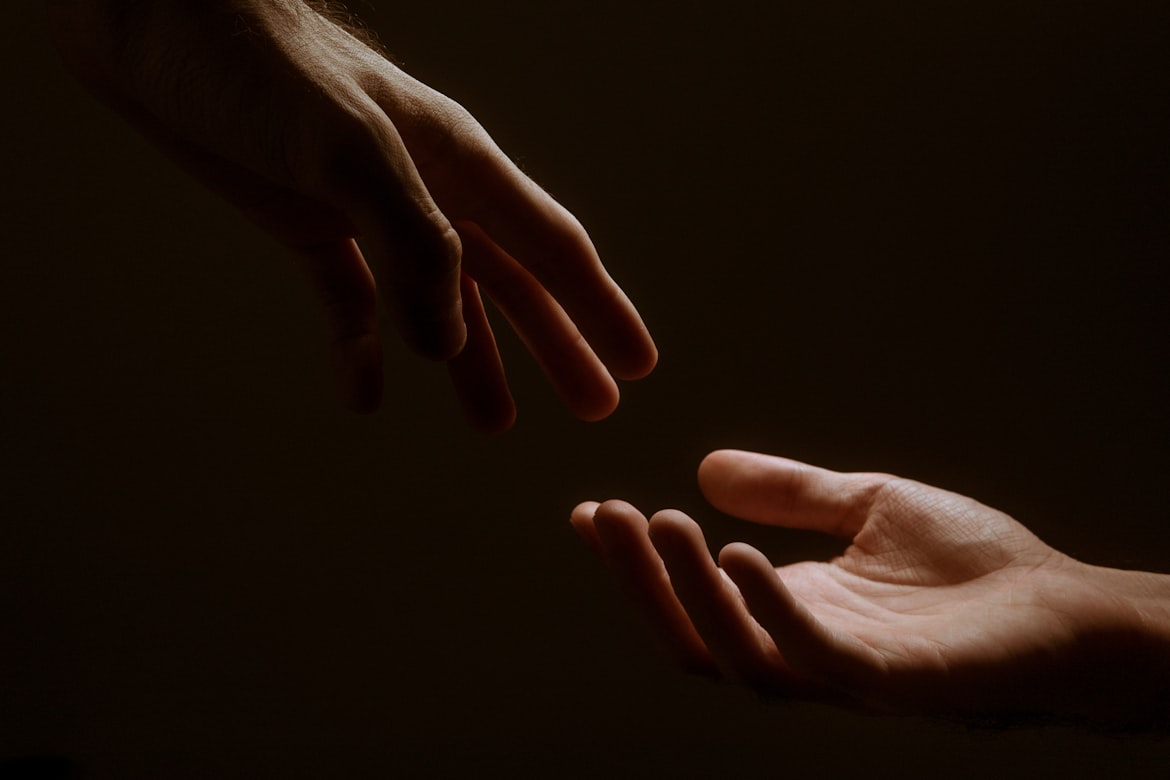
Christ has no body now on earth but yours,
no hands but yours,
no feet but yours,
Yours are the eyes through which to look out
Christ’s compassion to the world
Yours are the feet with which he is to go about
doing good;
Yours are the hands with which he is to bless men now.
 — from The Longing in Between: Sacred Poetry from Around the World (A Poetry Chaikhana Anthology), Edited by Ivan M. Granger
/ Image by Jackson David /
It is the Solstice and Christmas is just a few days away. It will be a modest one for myself and my wife this year, but one with a lot of gratitude. We recently moved, still within our hometown of Eugene, Oregon. Because previously we had been renting a furnished place and our new home is not pre-furnished, we had to scramble to buy the basics so we weren’t living in an empty house. Also, amidst the grief over the loss of our beloved family dog of many years, Apollo, we adopted a new dog, Bowie, through a local rescue organization. So, rather than exchange a lot of gifts this year, my wife and I decided to make a list of all the gifts we have received or given to ourselves and our household over the past couple of months — everything from dishes and silverware to a bed. Even without wrapped packages, it feels like an abundant Christmas.
As some of you may recall, soon after we moved back to Eugene a little over a year ago, I was taken aback by the homeless population here. Frankly, homelessness had not seemed like such a prominent issue where we previously lived in Colorado. But not only here in Eugene, we are discovering that America’s homeless population is rapidly growing in many cities.
My wife and I have been trying to find ways to help or, at a minimum, not turn our hearts away. Of course we offer a few dollars during street encounters, when we have the cash, and when the situation feels safe. And we contribute to some local groups that work with the homeless and the hungry in the area. I know I can do more, though remaining in balance, both with health and other life commitments, is always a challenge.
I feel a tug-of-war that plays out in me. There is the Aries part of my personality that is a natural activist, that part of me that wants to go out and fix things, that wants to make the world a better place, to help the world recognize what a beautiful place it can be and should be. It’s that part of me that wants to do (and sometimes wants to force). And then there is an inner part of me that whispers, “Don’t do. Flow. In that way the small actions born naturally from your heart, actions that hardly feel like actions, will resonate in the world.”
Is there such a thing as being an actionless activist?
I am still figuring that one out.
=
While this poem is popularly attributed to St. Teresa of Avila, it is not among her officially recognized works. Scholars tell us that it was probably actually written in the late 19th century by Guy Pearse, a Methodist minister, and Sarah Eliza Rowntree, an English Quaker.
Regardless of the actual composer, this is one of my favorite prayer-poems. It is a prayer of supreme spiritual maturity. It is not someone imploring Christ to come and fix everything in the external way imagined by so many fundamentalist sects; rather, it recognizes the presence of the Divine within each of us and our sacred responsibility to embody that compassion and service within the world. Each one of us is the vehicle through which Christ (or Ishwara or the Buddha) enacts blessings in the world. Our job is to let that sacred current flow through us unhindered.
Yours are the hands with which he is to bless men now…
May we each find ways to uncoil ourselves and allow the divine flow of compassion to run unhindered through our hearts and our hands.
Recommended Books: Teresa of Avila

|
Teresa of Avila |
Dec 15 2023
The Heat of Midnight Tears
by Mirabai
English version by Robert Bly
Listen, my friend, this road is the heart opening,
Kissing his feet, resistance broken, tears all night.
If we could reach the Lord through immersion in water,
I would have asked to be born a fish in this life.
If we could reach Him through eating nothing but berries and wild nuts,
Then surely the saints would have been monkeys when they came from the womb!
If we could reach him by munching lettuce and dry leaves,
Then the goats would surely go to the Holy One before us!
If the worship of stone statues could bring us all the way,
I would have adored a granite mountain years ago.
Mirabai says: The heat of midnight tears will bring you to God.
 — from The Winged Energy of Delight, Translated by Robert Bly

/ Image by Megyarsh /
Mirabai says that if we could reach God through bathing in sacred waters, fish would be the holiest creatures; if by subsisting only on nuts and berries, then monkeys would be better than saints. In other words, God is not limited to one thing or one place or one form of worship. God is not outside ourselves to be found elsewhere. And simple, mindless fixation on something we define as holy will not make us holy.
But what really caught my attention is how similar these lines are to the Gnostic Christian teachings in the Gospel of Thomas, which was only rediscovered in the early 1900s:
If those who lead you say, “Look, the kingdom is in the heavens,” then the birds of heaven will get there before you. If they say, “It is in the sea,” then the fish will be there first. Rather, the kingdom is within you and all around you. When you know yourself, you will be known, and you will know you are children of the living father…
– Jesus, The Gospel of Thomas
Now, reread Mirabai’s words. Pretty striking similarity, isn’t it? It’s so nearly identical that one suspects the Gospel of Thomas was circulating through India in Mirabai’s time.
Both the Gospel of Thomas and Mirabai’s song are telling us that the Eternal One is not found some-where, nor in one specific form of worship. No place or object or action embodies God to the exclusion of others. That Presence is, in truth, everywhere, but is always discovered within.
Mirabai says: The heat of midnight tears will bring you to God.
Midnight is the time of lovers and longing.
The ego acts as the prim nurse standing guard to make certain the secret tryst cannot occur. But lovers always find a way. The magnetic power of intense longing cannot be denied. Such midnight tears finally shame even the ego (“resistance broken”), who disappears into the shadows that the Beloved may emerge.
The pathway is open, and that pathway is the heart.
This is what Mirabai is telling us: God is already there, waiting, hidden, but we must clear the pathway of the heart. Only then can we finally recognize the smiling features of the Beloved that have always been there.
Listen, my friend, this road is the heart opening…
=
I have been dealing with chronic fatigue issues for the first time in quite a while. Maintaining work hours has been challenging. I haven’t been keeping up with all of my Poetry Chaikhana correspondence — apologies if you have been waiting on a response from me. Even when I may seem unreachable, you are all still very much in my heart.
Have a beautiful day!

|
Mirabai
India (1498 – 1565?) Timeline |
Dec 15 2023
A miracle isn’t an event or an experience.
It is a moment of recognition:
We glimpse the wider reality,
and what we witness washes us away.
Dec 01 2023
What is the grass?
by Walt Whitman
A child said What is the grass? fetching it to me with full hands,
How could I answer the child? I do not know what it is any more than he.
I guess it must be the flag of my disposition, out of hopeful green stuff woven.
Or I guess it is the handkerchief of the Lord,
A scented gift and remembrancer designedly dropped,
Bearing the owner’s name someway in the corners, that we may see and remark, and say Whose?
Or I guess the grass is itself a child, the produced babe of the vegetation.
Or I guess it is a uniform hieroglyphic,
And it means, Sprouting alike in broad zones and narrow zones,
Growing among black folks as among white,
Canuck, Tuckahoe, Congressman, Cuff, I give them the same, I receive them the same.
And now it seems to me the beautiful uncut hair of graves.
Tenderly will I use you curling grass,
It may be you transpire from the breasts of young men,
It may be if I had known them I would have loved them,
It may be you are from old people, or from offspring taken soon out of their mothers’ laps,
And here you are the mothers’ laps.
This grass is very dark to be from the white heads of old mothers,
Darker than the colorless beards of old men,
Dark to come from under the faint red roof of mouths.
O I perceive after all so many uttering tongues,
And I perceive they do not come from the roofs of mouths for nothing.
I wish I could translate the hints about the dead young men and women,
And the hints about old men and mothers, and the offspring taken soon out of their laps.
What do you think has become of the young and old men?
And what do you think has become of the women and children?
They are alive and well somewhere,
The smallest sprout shows there is really no death,
And if ever there was it led forward life, and does not wait at the end to arrest it,
And ceased the moment life appeared.
All goes onward and outward, nothing collapses,
And to die is different from what anyone supposed, and luckier.
— from The Longing in Between: Sacred Poetry from Around the World (A Poetry Chaikhana Anthology), Edited by Ivan M. Granger
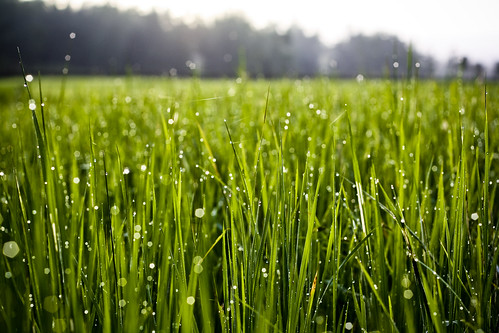
/ Image by NJ /
A comment on the Poetry Chaikhana blog from a couple days ago reminded me of this poem and commentary in The Longing in Between. I thought I’d share it with everyone.
=
Why does Whitman give us this prolonged meditation on grass? After all, it is just, well, grass. It is the same green plant surrounding every suburban home, and growing tall in every field and hillside all over the world. We tread on it every day. We know what grass is: it’s forgettable.
Not so, says Whitman. We think we know what grass is and remain ignorant. It is easy through familiarity to become blind. We see a lawn, mentally label it as “grass,” and never really look or bother to know this plant with which we share so much of the world.
This is what is so startling and refreshing about Whitman’s opening line–
A child said What is the grass? fetching it to me with full hands,
How could I answer the child? I do not know what it is any more than he
I love his utterly honest response. Most people presume they know exactly what grass is and can therefore dismiss it from their awareness. But the poet properly sees in the child’s fistful of grass a living mystery to be considered.
With Whitman we ask, what is grass really?
It is green hope. It is a handkerchief flirtatiously dropped by God to draw our thoughts to the lovely Face. It is the “babe of vegetation,” the embodiment of new life and new growth in the plant world.
What is grass? It is a hieroglyphic, a message layered with hidden meaning. It is a universal teaching encoded in life itself: Like the world’s green grasses, we must give generously of ourselves, equally to high and low, without regard to race or nation. Like the grass, it is our nature to grow and to be present, to share our life in every land and landscape.
Then Whitman enters an extended meditation on how grass connects life and death–
And now it seems to me the beautiful uncut hair of graves…
It may be you transpire from the breasts of young men…
Why this gloomy turn? He doesn’t just imagine the graves of the elderly who had lived the full measure of their lives, but he sees too the graves of young men and even infants “taken soon out of their mothers’ laps.” It is important to remember that Whitman is writing in the aftermath of the American Civil War. In fact, during the war, he worked in the New York hospitals. He well knew the bloody reality of young men sacrificed in war.
But here, and elsewhere in his poetry, Whitman makes room even for suffering and violence and death in his philosophy. While he clearly has a compassionate heart, he does not simply label some experiences as unjust, which then must be heroically opposed. Instead, it is as if he watches it all — the beauty and the suffering, everything — unfolding… within himself. It is all him. It is all in the scope of his being. Doing this, he accomplishes a truly courageous feat: integration.
Through that integration, we gain a new vision. We see not life with its end in death, but a living, organic flow of life becoming life becoming life: a perpetual vision of self-renewal. And the grass is the embodiment of this process.
While the dead lie beneath the ground, this green life grows from their now quiet bodies, nourished by their hopes. From the dead comes such pure, delicate new life.
Though there is much to be mourned in Whitman’s catalog of the dead, I find the totality of his vision to be reassuring. The grass, the growth of new life, draws even the most premature and unjust deaths into a realm of wholeness and continuity. This vision, which has made room for death, yet is understood as part of a greater unfolding of life, welcomes us back into the family of life.
The smallest sprout shows there is really no death
Don’t you love that line? And–
All goes onward and outward — nothing collapses;
And to die is different from what anyone supposed, and luckier.
That last line, every time I read it I am brought to a halt, ready to laugh out loud. What is he saying? “To die is different from what anyone supposed, and luckier.”
This whole poem has been his observation on how life renews itself, even through death. But here Whitman seems to be implying something more personal and open-ended, as if his meditation has led him to the notion that death is a sort of initiation into a new and unexpected participation in existence. He has left us with a teasing, Zen-like riddle that offers few answers, yet opens up a pathway of vibrant questions…
=
PS – If you missed it from earlier this week, check out my Holiday Book Recommendations for 2023. Some wonderful collections to spend some long quiet moments with.
Recommended Books: Walt Whitman
|
 |
 |
 |
 |
| The Longing in Between: Sacred Poetry from Around the World (A Poetry Chaikhana Anthology) | The Oxford Book of English Mystical Verse | Song of Myself | Leaves of Grass | Dead Poets Society (DVD) |
|
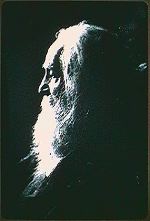
Walt Whitman
US (1819 – 1892) Timeline |
Walt Whitman grew up in Brooklyn and Long Island. He trained as a printer starting at the age of twelve. He learned to love the written word and read all he could. In his late teens he became a teacher, then turned to journalism in his 20s, eventually moving to New Orleans as editor of a local newspaper. Having witnessed the cruelties of slavery in the South, he returned to Brooklyn as a confirmed abolitionist. Whitman self-published the first edition of what would come to be seen as his masterpiece, Leaves of Grass, in 1855, revising it several times in subsequent years. During the Civil War, Walt Whitman worked as a reporter and aided the wounded in local hospitals. Whitman struggled financially for many years, but with the successful publication of the 1882 edition of Leaves of Grass he finally began to earn enough money to purchase a house and live comfortably through his final years.
Nov 29 2023
 |
I know it is a challenging time in the world. Things might feel off kilter. But this is also a special time of the year. It is a holy time, a time to recall what is sacred. It is a time to reconnect with what illuminates our minds and awakens our hearts. We enter the cave of interior awareness during this darkest period of the winter and rediscover the light within ourselves, renewing ourselves for the new year. I thought this might be a good time share this meditation on the relationship between poetry and spirituality from the Introduction in my book The Longing in Between. Mystics write poetry, universally. Saints and sages, shamans and seers, wise women and medicine men — they sing songs, they riddle, they rhyme. Numinous experiences are not easily communicated through words. The sacred can be witnessed and participated in, but not conveyed through limited concepts. Any attempt to communicate what is perceived in states of encompassing unity and mental quiet is necessarily an act of translation. Prose is a poor medium for the task. Its descriptive language works best with known definitions and accepted meaning. Prose is a language of boundaries. Yet the most profound experiences refuse to be contained. Poetry, on the other hand, does not define; it suggests. Where prose describes, poetry allows meaning to gather. It is this elastic nature that makes poetry well suited to the sacred, enabling language to relay truth without circumscribing it. Sacred experience is beyond word and form, yet the limited mind, in trying to understand what it has witnessed, reflexively interprets its experience in terms of the world known to the senses. What emerges is a primal language of metaphor, a rich and spontaneous pidgin that develops between the limited mind and the unlimited awareness. Bliss, perceived through the senses as sweetness upon the palate, evokes the taste of honey. The mystic’s trembling ecstasy, accompanied by the sense of imbibing an ethereal drink, leads to language of wine and drunkenness. Profound stillness and the perception of an all-pervading light paints before the mind’s eye scenes of the full moon glowing quietly above the resting landscape at midnight. The fiery rising of the Kundalini paired with the loss of ego inspires verses on the moth’s ecstatic annihilation in fire. Regardless of culture and religious tradition, mystics everywhere fill their songs with these same metaphors. In mundane perception, when everyone and everything is seen as separate and isolated, at most one can speak in simile, recognizing that one thing is like another. In that mind-set, metaphor is merely artistic pretense. But to the seer, enraptured by the holistic vision of reality as a fluid interconnectedness, one thing truly is another. Metaphor ceases to be a literary device or a dramatic mode of expression; it is observed reality. It is from this visionary metaphor that sacred poetry is born. |
It has been a two or three years since I last sent out a list of poetry books as suggestions for holiday gifts. I thought I should revive that annual tradition!
Poetry Chaikhana Publications
Of course, first we have to list Poetry Chaikhana’s publications! The Poetry Chaikhana has published several collections of poetry.
To satisfy that longing (or awaken it)…
In many ways this is my most personal publication, combining favorite soul-inspiring poems from the world’s great religious and spiritual traditions, accompanied by the thoughts, meditations, commentary, and occasional tangents that have been central to the Poetry Chaikhana poem emails for years. Selections from Rumi, Whitman, Kabir, Machado, Issa, Teresa of Avila, Dickinson, Blake, Yunus Emre, John of the Cross, Lalla, and many others. These are poems of seeking and awakening… and the longing in between. “The Longing in Between is a work of sheer beauty. Ivan M. Granger has done a great service, not only by bringing [these poems] to public attention, but by opening their deeper meaning with his own rare poetic and mystic sensibility.”
|
| ||||||||||
|
the moon Michael McClintock
with every gust Basho
the body of the Buddha Issa
|
|
heavenly mystery . . . Imaizumi Sogetsu-ni
sudden wind Olivier Schopfer (Switzerland)
|
|
|
Dorothy Walters explores the spiritual journey through its ecstasies, struggles, and vistas. Each step is observed with the keen insight and clear voice of a modern woman who is both a skilled poet and genuine mystic. | |
A Sampling of Sufi Wisdom…
Something about Andrew Harvey’s selections and translations always strike a pure note. This book is a delightful collection of poetry and Sufi wisdom stories. Rumi, Kabir, al-Hallaj, Shabistari, Ansari… This is one I return to again and again. |
I read this book early in my exploration of Sufi poetry — and I was hooked! Abu Said Abil-Kheir’s poetry ranges from the ecstatic and celestial, to struggles with abandonment. His poetry has an immediacy and even a sort of devoutly wry petulance. This book remains a personal favorite of mine. |
For the wise woman…
This is the first anthology I got years ago that made me say, Wow! Includes Sappho, Rabia, Yeshe Tsogyel, Hildegard von Bingen, Mechthild of Magdeburg, Hadewijch of Antwerp, Lalla, Mirabai, Bibi Hayati, Marina Tsvetaeva. The best collection I’ve found of women’s voices in sacred poetry. |
Not really a poetry collection, but this was the book that first introduced me to the fierce and passionate poetry of the great Kali devotees, like Ramprasad and Kalamakanta. Elisabeth Harding has done a beautiful job of gathering together Kali lore and presenting it to a primarily Western audience, while remaining reverent toward Kali and traditions of Kali worship. She discusses the traditional symbolism of Kali and the shocking, violent images associated with Her. Kali emerges in the reader’s mind as the loving destroyer of illusion, ecstatic slayer of demonic qualities. |
For illumination…
This is a compact anthology, but a wonderful collection that includes Li Po, Wu-Men, Rumi, Kabir, Mirabai, Rilke… And the added bonus of Stephen Mitchell’s way with words. One of my personal favorites. |
I keep recommending this year after year. It is a beautiful gift book with excerpts of Rumi’s poetry accompanied by amazing digital collage artwork that draws you deeply into each page. This book entrances on several levels. An excellent gift book. |
For the Christian contemplative…
This is the book that, years ago, introduced me to the stunning poetry of Symeon the New Theologian, igniting my passion for his visionary poetry of light and transformation. You’ll also find poems and poetic renditions of writings from many other saints and mystics of the Eastern Orthodox Church. Still a favorite of mine. |
I can’t recommend this collection highly enough. Merton, in addition to being a deep mystic, was a truly excellent contemporary poet. His poems feel entirely modern, yet touch on the eternal. While drawing on Catholic imagery, one can hear whispers of Eastern philosophy and insight in his words. Poems to reread and meditate deeply upon. |
I was introduced to the divine love poetry of the Flemish mystic Hadewijch in the excellent anthology Women in Praise of the Sacred, edited by Jane Hirshfield. I knew I had encountered a something amazing, but the sampling in that book was frustratingly small. I finally found this book with the complete works of this mysterious Beguine spiritual figure — visions, letters, and a beautiful collection of sacred poetry. The love mysticism of her poetry rightly draws comparisons to the rich traditions of Sufi and Bhakti poetry. |
For the Jewish mystic…
The most complete collection I’ve found of sacred Hebrew poetry, including Judah ha Levi, Solomon ibn Gabirol, Samuel Hanagid, the early Hekhalot Hymns, and many more. My only complaint: the translations in this encyclopedic collection are not versified, even though the Hebrew originals were. I still love it simply because it pointed me in a dozen enlightening different directions. |
Finally we have a truly excellent collection of sacred Jewish poetry. While T. Carmi’s Penguin Book of Hebrew Verse is more comprehensive, Cole’s The Poetry of Kabbalah has more of a poet’s sense of language and even catches of few sparks from the mystic’s fire. This is poetry that startles and transports. The Poetry of Kabbalah has become my favorite source for Jewish mystical poetry in English. |
A moment of Zen…
Although best known for his Zen discourses and his role establishing Zen practice in Japan, Dogen was an exceptional poet too. Quiet moments of insight expressed in a bare minimum of lines. One of my favorites. |
A good collection without being overwhelming. I especially like it’s selection of Japanese haiku: Basho, Buson, Issa, Masahide… |
A friend introduced me to this collection, and I was entranced. Muso Soseki is known today for establishing rock gardening as meditative Zen practice, but his poetry — wonderful! And with translations by WS Merwin, you can’t ask for more! |
Artist, Therapist, Shaman…
 |
Poetic Medicine: The Healing Art of Poem-Making By John Fox |
Not a book of poetry, but a book that belongs on every poetry lover’s bookshelf. This is a book about the transformational nature of poetry – reading it, speaking it, writing it. Poetry as therapy. Poetry as a pathway to self-exploration. Poetry to rediscover your true voice. I was surprised how much I liked this book.
Transcendent Hindu verses…
This book became an immediate favorite of mine ever since I picked up a copy of it a few years ago. Stunning poems from the Shiva bhakti tradition of India. Basava, Devara Dasimayya, Akka Mahadevi, Allama Prabhu. The commentary in the book, though a little academic, is genuinely insightful. Enthusiastically recommended! |
Andrew Schelling’s translations embody that tension between heartbreak and ecstasy that runs through all of Mirabai’s poetry. These poems can be read as love poems or as spiritual poems — but, of course, they are both. A lovely collection. |
And for blessings…
I keep being told by people how much they love this book of poetic blessings from the Irish philosopher, poet, and mystic, John O’Donohue. These poetically crafted blessings and meditations on the passages of life manage to elevate the spirit, warm the heart, and, on occasion, bring a tear to the eye. |
For even more book recommendations, click here.
(Every year my list gets longer. Even so, I had to leave off so many amazing books.)
Let’s remember that, in the midst of winter’s dark, this is the time to renew the light — within ourselves and our world. Regardless of religion, may we recognize our shared brotherhood and sisterhood within the human family, all within the lap of the generous green earth that is our home.
I hope you and your loved ones have a wonderful holiday season — and that the new year offers you new life and new inspiration!
Ivan
Nov 17 2023
The Buddha’s Last Instruction
by Mary Oliver
“Make of yourself a light,”
said the Buddha,
before he died.
I think of this every morning
as the east begins
to tear off its many clouds
of darkness, to send up the first
signal — a white fan
streaked with pink and violet,
even green.
An old man, he lay down
between two sala trees,
and he might have said anything,
knowing it was his final hour.
The light burns upward,
it thickens and settles over the fields.
Around him, the villagers gathered
and stretched forward to listen.
Even before the sun itself
hangs, disattached, in the blue air,
I am touched everywhere
by its ocean of yellow waves.
No doubt he thought of everything
that had happened in his difficult life.
And then I feel the sun itself
as it blazes over the hills,
like a million flowers on fire —
clearly I’m not needed,
yet I feel myself turning
into something of inexplicable value.
Slowly, beneath the branches,
he raised his head.
He looked into the faces of that frightened crowd.
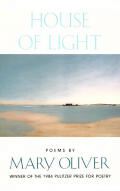 — from House of Light, by Mary Oliver
/ Image by Tyler Nix /
Like all of you I have been profoundly upset by the war on Gaza. What can one do but feel anguish when witnessing so much death and destruction and displacement? We can turn away, of course. Or we can numb ourselves with rationalizations. Or we can shrug our shoulders and declare it to be tragic for those people over there.
Seeing an entire population as a problem is an invitation for disaster. Nations inevitably try to contain or eliminate such “problems.” But those policies are doomed to fail. Trauma leads to rage, rage leads to more violence, more violence leads to new trauma. And so the terrible circle expands. Sometimes slowly, sometimes with horrifying rapidity.
What can we as individuals do? There are always actions we can take, appropriate to our own lives, whether that is pressuring our politicians, engaging in conversation and respectful debate, protesting… I try to regularly ask myself what is it I feel called to do?
While action and asserting oneself is important, there is something more fundamental. We need to be inwardly connected, centered, aware. Action and stillness both naturally proceed from that center point. When we are at rest within the awakened heart, we naturally radiate out into the world. Our actions take on a flow and strength and clarity. All the while stillness remains with us.
As Mary Oliver’s Buddha says, let us make of ourselves a light. Then we naturally shine. Effortlessly, we touch the world around us, warming it, bringing healing and comfort and illumination.
Speaking up is important. But being a bright presence in the world is everything.
=
This is as much a story as a poem, a retelling of the final moment of the Buddha’s life.
“Make of yourself a light,”
said the Buddha,
before he died.
Mm. This simple affirmation of illumination at the moment of death continues to resonate… through the lines of this poem, and through the centuries.
Mary Oliver immediately recognizes this as a statement, not of death, but of renewal and the continuation of life.
I think of this every morning…
We are brought, by Mary Oliver’s line, immediately to the dawn. Not the last dimming of light, but the beginning of the new day.
Knowing it is his last moment, with a life of great striving and penetrating insight behind him, “he might have said anything.” Of all the possible philosophical summations and encapsulations, he chooses instead the radiant wisdom embodied by the sun, which lights and warms the whole world.
The poet seems stunned by such a clear, unencumbered statement with the Buddha’s final breath. Stunned, we stumble into deeper awareness.
clearly I’m not needed,
yet I feel myself turning
into something of inexplicable value.
I love these lines. Contemplating the passage through death while affirming the fulness of light and life, somehow we, along with the poet, no longer stand at the center of the world’s narrative.
When we really pay attention to the story being told all around us, a story that’s been unfolding for ages, the attention shifts away from that perpetual certainty that it is all about “me.” But rather than feeling empty or betrayed, we find ourselves alive and aware and filled with a bubbling glee. We find ourselves made of a gossamer-thin tissue of light.
Slowly, beneath the branches,
he raised his head.
He looked into the faces of that frightened crowd.
These closing lines are so striking. We’ve had an entire scene laid out for us, villagers gathering to be present at the death of this great teacher. The weak and dying Buddha raises his head and looks into the faces of the crowd… and they are frightened. Now, why is that?
I imagine it is because of what they see in the Buddha’s eyes: the great mystery, naked and unguarded in that last loving glance.
Recommended Books: Mary Oliver
 |
 |
 |
|
 |
| New and Selected Poems | Why I Wake Early | Dream Work | House of Light | Thirst: Poems |
| More Books >> | ||||

|
Mary Oliver
US (1935 – 2019) Timeline |
Nov 17 2023
A year or ten years
or ten thousand years,
what does it matter how long enlightenment takes?
It is the only game worth playing.
Nov 10 2023
I saw a great light come down over London
by Jay Ramsay
I saw a great light come down over London,
And buildings and cars and people were still
They were held wherever they were under the sky’s
Clear humming radiance as it descended —
Everywhere, in shops, behind desks and on trains
Everything stopped as the stillness came down
And touched the crown of our heads
As our eyes closed, and the sky filled us
And our minds became the sky —
And everyone, regardless of crime class or creed
Was touched; as slowly we began to stir
Out of this penetrated light-filled sleep
Dizzily as the hand completed its dialing,
And the train lurched forward
And I saw faces looking at one another questioning,
I saw people meeting eye to eye and standing
Half amazed by each other’s presence
I saw their mouths silently shaping the word why
Why didn’t we know this? and yet knowing
They already knew, and without words
We all stood searching for the gesture
That would say it —
As the lights went green, and we drove on.
— from The Longing in Between: Sacred Poetry from Around the World (A Poetry Chaikhana Anthology), Edited by Ivan M. Granger
/ Image by Chad Walton /
I only recently discovered that Jay Ramsay died a few years ago. Though I never met him in person, there was a period when we conversed via email. He was warm-hearted and brought an infectious enthusiasm to his poetic endeavors. In hindsight, I suspect that he knew his time on this earth was limited and he wanted to do what good he could in the time he had. A good reminder to us all. We may not all know our departure date, but we are visitors, not permanent residents. Best to stop distracting ourselves and do what we came here to do. Offer a helping hand. Share a smile. Do what the soul always wanted to do. And discover the secret heart of things.
=
I was a poor child, but raised in an affluent area of Southern California. Several of my friends lived in large houses, with manicured lawns, some with swimming pools in their back yards. My friends had two parents, while I was raised by a single mother. They had family dinner times, Sunday church or Saturday temple, went on family vacations together.
They were living the “normal” life, the American upper middle-class ideal. And I had a strange relationship with their world — I craved its stability, the things and experiences my friends had that I didn’t, but their normalcy was also foreign to me, even a bit eerie. It just didn’t seem real to me somehow. In some ways I wanted it, but I didn’t want to be snared by it.
By the time I was a teenager, I became obsessed with seeing through the facades of that “normal” reality. I wanted to know what secrets were hidden away in the overlooked shadows. I became interested in everything from meditation to history to science to linguistics — all ways of trying to understand the hidden meaning behind the world that everyone takes for granted.
…And I was also fascinated by the phenomenon of UFOs.
I think that’s one of the things I really like about this poem — it can be read as a collective moment of awe, or of spiritual awakening, but it can just as easily suggest a city-wide encounter with a UFO. That’s the first thing I think of reading this poem. It’s not really clear what is happening, just that there is a shared moment of stillness and wonderment. Everyone stops and is confronted with a dazzling, otherworldly reality. What’s actually happening seems less important than the shared experience. Not only is this a witnessing of something that transcends the day-to-day existence, but there is also a recognition of fundamental connection with everyone else. To me it is almost the opposite of a terrorist event; instead of tragedy, everyone comes together in a unifying moment of bliss and amazement.
Then, of course, the lights turn green, and the business of living continues. But perhaps those people carry with them just a bit more sacred wonder into their daily activities… and who knows the many subtle, far-reaching ways it will continue to radiate out through their lives? This is how private experiences of transformation — otherworldy or of the inner world — quietly transform the world.
|
Jay Ramsay
England (1959 – 2019) Timeline |
Nov 10 2023
The past offers itself up
to feed the soul that seeks fullness
by continuously reclaiming itself
Oct 27 2023
Song of a Man Who Has Come Through
by D. H. Lawrence
Not I, not I, but the wind that blows through me!
A fine wind is blowing the new direction of Time.
If only I let it bear me, carry me, if only it carry me!
If only I am sensitive, subtle, oh, delicate, a winged gift!
If only, most lovely of all, I yield myself and am borrowed
By the fine, fine, wind that takes its course through the chaos of the world
Like a fine, an exquisite chisel, a wedge-blade inserted;
If only I am keen and hard like the sheer tip of a wedge
Driven by invisible blows,
The rock will split, we shall come at the wonder, we shall find the Hesperides.
Oh, for the wonder that bubbles into my soul,
I would be a good fountain, a good well-head,
Would blur no whisper, spoil no expression.
What is the knocking?
What is the knocking at the door in the night?
It is somebody wants to do us harm.
No, no, it is the three strange angels.
Admit them, admit them.
 — from The Complete Poems of D. H. Lawrence, by D. H. Lawrence
/ Image by Alief vinicius /
I have always been fascinated by this poem. It is haunting, unsettling, yet, at the same time, hopeful and filled with a sense of wondrous magic in the world.
Not I, not I, but the wind that blows through me!
I love this opening line. Have you ever noticed how wearying personal will is? Eventually everything feels like a dead effort. But when we learn the magician’s trick of yielding, of letting the currents of life flow through us, delight pours through us with such surprising ease and actions form into unexpected success…
Oh, for the wonder that bubbles into my soul,
I would be a good fountain, a good well-head,
Would blur no whisper, spoil no expression.
Why the following image of the wind becoming like a chisel?
By the fine, fine, wind that takes its course through the chaos of the world
Like a fine, an exquisite chisel, a wedge-blade inserted;
If only I am keen and hard like the sheer tip of a wedge
Driven by invisible blows…
The wind that moves through the world and through the poet seems to represent spirit or life itself. It makes of the individual a chisel, driving the clear seeing, solid individual (“if only I am keen and hard”) into the world to split apart its rigidity and walls, opening the hidden pathways to wondrous lands.
What is the reference to the Hesperides that follows?
The rock will split, we shall come at the wonder, we shall find the Hesperides.
The Hesperides is both a sacred garden at the edge of the world and the three nymphs who tend it. Their garden has a tree that produces the golden apples of immortality. The three nymphs are usually associated with night, mystery and magic. They embody all that the imagination envisions at the precipice of existence, the edge of the world, the edge of the night, the edge of life and death. It would take a heroic journey just to reach their garden, but it might open us to wonders.
And if we hear a knocking from something outside our comfortable known boundaries, the natural reaction is fear.
What is the knocking?
What is the knocking at the door in the night?
It is somebody wants to do us harm.
But the poet tells us to fear not, to welcome the strangers.
No, no, it is the three strange angels.
For they bear wonder and magic and the sweet secret of life.
Admit them, admit them.
When we yield and allow the wind to blow through us, sometimes throwing us against the world, we become stronger, sharper. We find chinks in the walls, hidden spaces. We widen them, pass through them, opening new pathways, until, finally, we receive that mysterious visit and the golden apple of the Hesperides.
Have a beautiful day!
Recommended Books: D. H. Lawrence

|
D. H. Lawrence
England (1885 – 1930) Timeline |
Oct 20 2023
A Walk
by Rainer Maria Rilke
English version by Robert Bly
My eyes already touch the sunny hill,
going far ahead of the road I have begun.
So we are grasped by what we cannot grasp;
it has its inner light, even from a distance–
and changes us, even if we do not reach it,
into something else, which, hardly sensing it,
we already are; a gesture waves us on,
answering our own wave…
but what we feel is the wind in our faces.
 — from Selected Poems of Rainer Maria Rilke, Translated by Robert Bly
/ Image by Michael Cummins /
Where has the Poetry Chaikhana been for the past several weeks? First of all, let me reassure everyone that I am okay. But things have been up in my life. We went through a move recently — local this time, still in the Eugene area, but a major effort, especially while I was trying to maintain my work hours with my day job as a computer programmer. Then, Apollo, our beloved dog of many years passed away unexpectedly. He was an important part of our family and we have been grieving his loss. And, of course, I have been paying attention to the terrible situation in Israel/Palestine. I have been balancing a lot while trying to remain open-hearted and an avenue for compassion, both in my family and in the world.
But you, the Poetry Chaikhana community, are my extended family, and I have missed our shared time together. I am so glad to be back with you!
Let’s take a walk with Rilke today…
=
My eyes already touch the sunny hill,
going far ahead of the road I have begun.
This is a fascinating truth that we tend to forget in the hard materiality of the modern world-view: We do not only touch the things with which we come into physical contact. We are often just as profoundly affected by what we see, even when it is out of our reach or not yet within our reach in the physical sense. Sight is a form of touch. It is contact. We touch, and are touched by, what we see.
Rilke’s insight invites us to expand our understanding further still. If what we see with our eyes is a vital sort of contact, then, naturally, what we see, but not with our eyes is just as vital. What we imagine, what we daydream, what we plan, what comes to us in dreams and meditative vision, these touch us too. They affect us. We react to them. They nurture us, feed us, or they may unsettle us and break our hearts.
So we are grasped by what we cannot grasp;
it has its inner light, even from a distance–
Real touch is not about fingertips on skin or hard metal. Real touch is heart to heart, mind to mind. Real touch is a process within the awareness, not about flat matter encountering more matter.
What we seek is never what we seek, but the affect it has on us. With everything we pursue in life, what we actually seek is self-transformation. But the truth is that we don’t even need that external other thing, physical or imagined, to be changed. The transformed self is already within us, just awaiting our own permission to be that. That is why Rilke says–
and changes us, even if we do not reach it,
into something else, which, hardly sensing it,
we already are…
Whether we yearn for a beloved person or place or circumstance, that encounter always awaits us within.
a gesture waves us on,
answering our own wave…
but what we feel is the wind in our faces.
We can read his final lines as suggesting something about the ephemeral nature of reality, or it can be the dawning recognition that we are continuously receiving communication, encouragement, contact. We have just been missing it because of our fixed ideas about what we seek and what is real.
Sending love to you all…
Recommended Books: Rainer Maria Rilke
|
Rainer Maria Rilke
Germany (1875 – 1926) Timeline |
Oct 20 2023
Opposites are not opposed,
but joined.
We dance along that seam of connection.
Sep 01 2023
The Absolute works with nothing
by Mevlana Jelaluddin Rumi
English version by Coleman Barks
The Absolute works with nothing.
The workshop, the materials
are what does not exist.
Try and be a sheet of paper with nothing on it.
Be a spot of ground where nothing is growing,
where something might be planted,
a seed, possibly, from the Absolute.
— from The Longing in Between: Sacred Poetry from Around the World (A Poetry Chaikhana Anthology), Edited by Ivan M. Granger
/ Image by Vasily Koloda /
It is a full moon, a time of energetic ripeness, but, but I suppose because I am something of a contrarian, this lovely poem of emptiness caught my attention this morning…
We are always making plans, building ourselves up, and projecting ourselves into the world. Amidst this constant fullness, Rumi reminds us that we must also have emptiness. If our hands are not empty, they cannot receive. For the soil to be ready for the seed, it must first be cleared.
Empty receptivity, that takes real courage. It requires the courage to be at ease with blank, still spaces in the soul, the courage to feel our own fecundity hidden beneath all our activity. Instead of filling that emptiness, we learn to wait, trusting that some new spark will land and glow and grow.
Recommended Books: Mevlana Jelaluddin Rumi
|
Mevlana Jelaluddin Rumi
Afghanistan & Turkey (1207 – 1273) Timeline |