Archive for October, 2016

Oct 28 2016

Dionysius the Areopagite – Lead us up beyond light

Published by under Poetry

Lead us up beyond light
by Dionysius the Areopagite

English version by Ivan M. Granger

Lead us up beyond light,
beyond knowing and unknowing,
to the topmost summit of truth,

where the mysteries lie hidden,
unchanging and absolute,
in the dazzling darkness
of the secret silence.
All light is outshined
by the intensity of their shade.

Our senses are flooded, our minds blinded
by such unseen beauty
beyond all beauty.


/ Image by Sudhamshu /

You may not be familiar with them, but the lines are hugely important in the history of Western mysticism and spirituality. Virtually all European esoteric traditions have drawn inspiration and meaning from them. So take a moment to reread them and consider what is being said and why Western mystics have been inspired by them through the centuries.

In particular, that phrase about the “dazzling darkness,” like a Christian koan, is contemplated endlessly and keeps reappearing in esoteric writings.

Dionysius is saying something about knowledge and the limitations of knowledge, using the metaphor of light and darkness.

Lead us up beyond light,
beyond knowing and unknowing,
to the topmost summit of truth…

We might say that intellectual knowledge is knowledge dependent on things being visible, in the light. But clearly Dionysius feels that such knowledge does not attain the “topmost summit of truth.”

There is another level of knowing, deeper, more obscure, yet all-encompassing. This is the knowledge sought by the mystic. This is the knowledge found within deep inner silence. This is the knowledge that connects us with genuine truth. Amidst this darkness, the truth shines.

…where the mysteries lie hidden,
unchanging and absolute,
in the dazzling darkness
of the secret silence.

But this language of darkness and blindness and unknowing as descriptions of this ultimate knowledge is more than evocative metaphor and playful contradiction.

That wonderful phrase, the “dazzling darkness,” is a reference to a very real state of awareness experienced in deep communion when the mind has settled completely into stillness and no longer projects a conceptual overlay upon reality.

We can even say that seeing (in the normal sense) stops, while perception opens as if for the first time. A person is no longer seen as a person, a table is no longer seen as a table. Surfaces and categories — the foundation of mundane perception — become ephemeral, dreamlike, insubstantial. One stops witnessing the surface level of reality in the common sense, and this can be compared to blindness or darkness. Yet everything shines! Everything is seen to be radiant with a living interpenetrating light. And the same light shines in everything.

This is the dazzling darkness of Dionysius. This is why many mystics assert they no longer even see the world and, instead, only see God. It is not that they bump into furniture when they walk across a room; perception on the mundane level doesn’t stop (except in the most ecstatic states), but surfaces take on a thin or unreal quality; it only occupies a minimal level of the awareness. It is as if the world everyone always assumes to be the real world, the visible world, is actually a world of shadow, but underlying that is an unseen world of brilliance and indescribably beauty.

Our senses are flooded, our minds blinded
by such unseen beauty
beyond all beauty.

This is the dazzling darkness sought by mystics throughout the ages.

=

Speaking of darkness, Halloween is coming up, Samhain in Celtic tradition, the Dia de los Muertos. This is considered to be a time of year when the veil between this world and the Otherworld thins, when we can reconnect with the spirits of our ancestors, when can gain unexpected insight. It is a time of magic and reconnection and stepping into the unknown.

And it is a time of the good darkness. This is the time of year (in the northern hemisphere) when the light of summer and the harvest season recedes, the days grow shorter, and the darkness of winter takes ascendance. This is the good darkness that balances the year. With darker, shorter, colder days, we are less active and turn inward. It is a time that reminds us to return to the dark cave of home and self. It is in this internal, inturning time that we gain insight and strength and, through endurance, find ourselves renewed and ready for the new light to come in springtime. This darkness is the time of spiritual practice that prepares us for the springtime of life and enlightenment. For only in darkness does new life gestate. Only in darkness do our eyes learn to see.

So let’s celebrate those who came before us and made a way for us in the world. Let’s celebrate the infinitely unknown possibilities yet available to us. And let’s celebrate the good darkness — and the light and life we discover there!


Recommended Books: Dionysius the Areopagite

The Essential Mystics: Selections from the World’s Great Wisdom Traditions Christian Mystics: Their Lives and Legacies throughout the Ages


Dionysius the Areopagite, Dionysius the Areopagite poetry, Christian poetry Dionysius the Areopagite

Syria (6th Century) Timeline
Christian

Continue Reading »

3 responses so far

Oct 21 2016

Ivan M. Granger – Every Shaped Thing

Published by under Ivan's Story,Poetry

Every Shaped Thing
by Ivan M. Granger

Sighing,
every shaped thing
turns
heavenward.

Your altar
cannot seat
the thousand thousand
idols.

Holding them,
what do you have?

Each gilded god
says:

“I am
impoverished
by the sun.

I can only
point
up.”

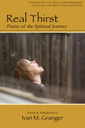
— from Real Thirst: Poetry of the Spiritual Journey, by Ivan M. Granger


/ Image by maxpower /

it has been quite a while since I featured one of my own poems. This morning I heard this one running through my thoughts…

I wrote this poem when I lived on Maui years ago. I had just finished a meditation and stepped outside to gaze at the forest of eucalyptus trees. Slowly looking around, I saw how everything is reaching, turning, pointing heavenward. The material world, when objectified can become a confusing tangle of solidity, separation, and objects of desire, but in that moment, with my mind at rest and my eyes clear, the world danced before me, filled with a golden light. And I saw that while the world hides the Eternal, at the same time it ardently reveals it.

In that pure moment it was clear to me that everything is giddy with its own inner light. Consciously or unconsciously, everything is always orienting itself toward the light from which it draws its own life. All of creation — every person, every thing, even every idea, “every shaped thing” — is just a reflection of the divine radiance present everywhere.

That beauty, that luminosity is both the snare and the key for us as souls active within the material world.

Whenever we desire a thing… or person or experience, we artificially deify it. The desire and mental fixation becomes a form of worship. We may tell ourselves, “I want this, I want that,” but what we unknowingly crave is not the thing itself, it is that spark of the Eternal glimpsed within it. The desired object becomes a “gilded god” — false in the sense that it is not truly the wholeness we seek; but also, like an “idol” or icon, when approached sincerely and openly, it embodies something essential for us: it points to the Divine which it reflects.

The frustrating truth is that no individual can ever gather enough objects of desire to satisfy desire. Every time we acquire that desired object or experience — a new job, a new lover, money, an ice cream sundae — there is a fleeting sense of satisfaction… and then it is gone. Within minutes we are once again feeling desire and looking for the next object to hang that desire on. We’re looking for the next thing that sparkles. But it is not the object we actually seek, it is that shine. And that shine is the spark of the Divine.

When we learn to see in gold the glimmer of the sun, then we see that everything shines — everything! — ourselves included. It is not possessing that object or experience that we desire, it is that we ache to recognize and participate in that glow. And everything glows. Recognizing this is when the heart is truly satisfied and comes to rest.


Recommended Books: Ivan M. Granger

The Longing in Between: Sacred Poetry from Around the World (A Poetry Chaikhana Anthology) Real Thirst: Poetry of the Spiritual Journey For Lovers of God Everywhere: Poems of the Christian Mystics Diamond Cutters: Visionary Poets in America, Britain & Oceania Poems of Awakening: An International Anthology of Spiritual Poetry
More Books >>


Ivan M. Granger, Ivan M. Granger poetry, Secular or Eclectic poetry Ivan M. Granger

US (1969 – )
Secular or Eclectic
Yoga / Hindu : Advaita / Non-Dualist

Continue Reading »

4 responses so far

Oct 19 2016

Fakhruddin Iraqi – These perfumes

Published by under Poetry

These perfumes
by Fakhruddin Iraqi

English version by William Chittick and Peter Lamborn Wilson

These perfumes:
      musk, clove…
all from the hyacinthine shadows
      of those tresses.
You think you hear
      a nightingale’s song…
No. It is the voice
      of the Rose.

— from Fakhruddin Iraqi: Divine Flashes (Classics of Western Spirituality) , Translated by William Chittick / Translated by Nasr Seyyed Hossein


/ Image by Zwoing /

I wanted to bring you a hint of perfume today…

This brief poem has that delightfully ambiguous Sufi tendency of using erotic language when describing the heart’s yearning for the Eternal.

Iraqi starts with several sensuous evocations of perfume: musk, clove, hyacinth. Can you smell them?

Many mystics experience a scent that can be rapturously overwhelming or tantalizingly subtle. This blissful scent can also be understood as the perfume worn by the Beloved (“of those tresses”) that awakens sacred ardor upon the spiritual journey.

And, of course, perfume is scented oil, oil being the substance used to anoint and initiate.

To suggest the almost erotic sense of divine union, sometimes the earthier scent of musk is described. Musk is the aphrodisiac oil of the musk deer. Deer, being creatures of profound silence and shyness, are themselves symbols of the elusive Beloved.

The scent of flowers is often evoked, as well. Blossoms and flowers are natural symbols of enlightenment, the unfolding of awareness and the opening of the heart.

And, of course, the flower precedes the fruit, whose juice ultimately yields wine…

Iraqi then shifts from perfume to song. He speaks of the nightingale and the rose.

The nightingale is said to sing such an enchanting, mournful song because it is hopelessly in love with the rose. The rose is the Beloved, the Heart of hearts, and the nightingale is the lover, the seeker, the Sufi. So the nightingale’s song is the crying out of creation for the Beloved.

But here Iraqi turns the imagery around and asserts that what is heard is not the nightingale, but the “voice of the Rose.” He seems to be saying that when we call out to God, we are actually hearing God calling to us. Said in an even more all-encompassing way, all of creation is a part of God, and its every song, when heard with an open ear, is really the song of God to God. Every song is the voice of the Rose. Your own song is the Rose’s song within you.


Recommended Books: Fakhruddin Iraqi

Poetry for the Spirit: Poems of Universal Wisdom and Beauty The Drunken Universe: An Anthology of Persian Sufi Poetry Fakhruddin Iraqi: Divine Flashes (Classics of Western Spirituality) Love’s Alchemy: Poems from the Sufi Tradition


Fakhruddin Iraqi

Iran/Persia/India/Turkey (? – 1289) Timeline
Muslim / Sufi

Continue Reading »

5 responses so far

Oct 19 2016

bigger than our stories

What can one do but stand
in silent awe of the vision that emerges,
showing us how much bigger we are
than even our best stories?

One response so far

Oct 12 2016

Rainer Maria Rilke – I believe in all that has never yet been spoken

Published by under Poetry

I believe in all that has never yet been spoken
by Rainer Maria Rilke

English version by Anita Barrows and Joanna Macy

I believe in all that has never yet been spoken.
I want to free what waits within me
so that what no one has dared to wish for

may for once spring clear
without my contriving.

If this is arrogant, God, forgive me,
but this is what I need to say.
May what I do flow from me like a river,
no forcing and no holding back,
the way it is with children.

Then in these swelling and ebbing currents,
these deepening tides moving out, returning,
I will sing you as no one ever has,

streaming through widening channels
into the open sea.

— from Rilke’s Book of Hours: Love Poems to God, by Rainer Maria Rilke / Translated by Joanna Macy


/ Image by Lel4nd /

What can I say to this poem — but Yes!

I want to free what waits within me
so that what no one has dared to wish for

may for once spring clear
without my contriving.

May we all find the key that unlocks within ourselves creativity, capability, compassion…. that our lives may become a more perfect song to the Eternal.

May what I do flow from me like a river,
no forcing and no holding back…

So what waits within you?


Recommended Books: Rainer Maria Rilke

The Enlightened Heart: An Anthology of Sacred Poetry Ahead of All Parting: The Selected Poetry and Prose of Rainer Maria Rilke The Soul is Here for its Own Joy: Sacred Poems from Many Cultures Rilke’s Book of Hours: Love Poems to God In Praise of Mortality: Rilke’s Duino Elegies & Sonnets to Orpheus
More Books >>


Rainer Maria Rilke, Rainer Maria Rilke poetry, Secular or Eclectic poetry Rainer Maria Rilke

Germany (1875 – 1926) Timeline
Secular or Eclectic

More poetry by Rainer Maria Rilke

6 responses so far

Oct 07 2016

Lisel Mueller – Why I Need the Birds

Published by under Poetry

Why I Need the Birds
by Lisel Mueller

When I hear them call
in the morning, before
I am quite awake,
my bed is already traveling
the daily rainbow,
the arc toward evening;
and the birds, leading
their own discreet lives
of hunger and watchfulness,
are with me all the way,
always a little ahead of me
in the long-practiced manner
of unobtrusive guides.

By the time I arrive at evening,
they have just settled down to rest;
already invisible, they are turning
into the dreamwork of trees;
and all of us together —
myself and the purple finches,
the rusty blackbirds,
the ruby cardinals,
and the white-throated sparrows
with their liquid voices —
ride the dark curve of the earth
toward daylight, which they announce
from their high lookouts
before dawn has quite broken for me.

— from Alive Together: New and Selected Poems, by Lisel Mueller


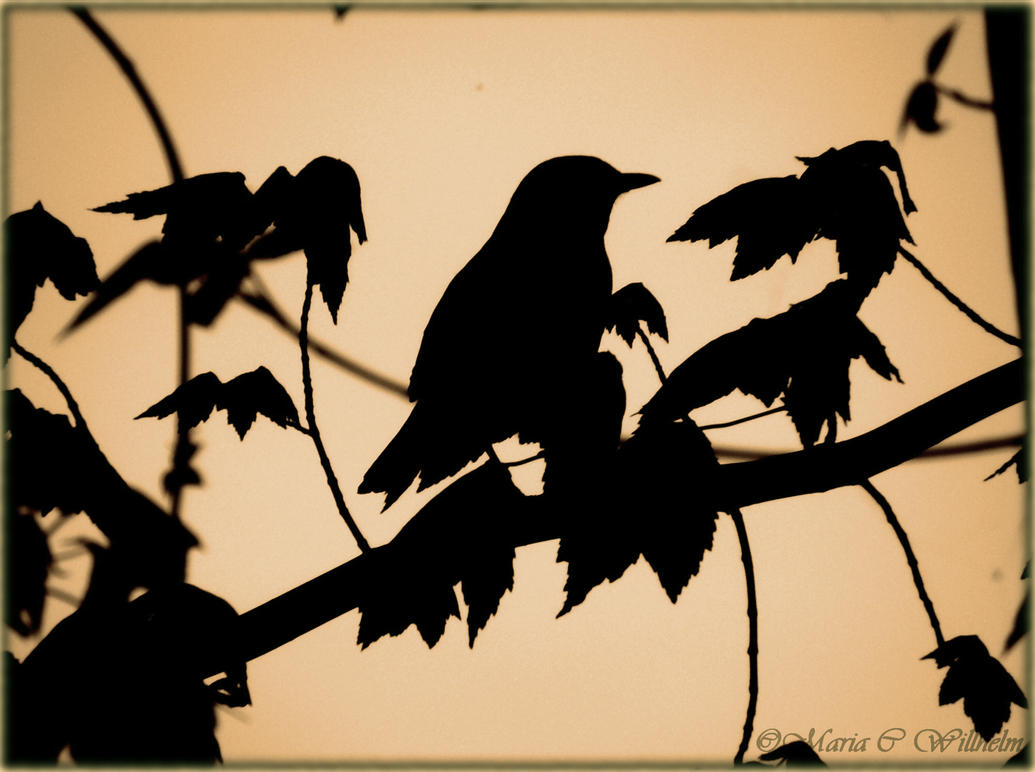
/ Image by MariaWillhelm /

This poem makes me think of my wife. She is always noticing the small encounters of the day and how they seem to draw our attention out of its patterns in order to whisper to us of what is coming up on our path.

…always a little ahead of me
in the long-practiced manner
of unobtrusive guides.

Birds are a particular favorite of hers. Their song, sometimes sharp, sometimes melodic, calls out for attention. With their gift of flight, the way they perch high on treetops and lampposts, they are messengers, watchers, sentinels. And among their own kind, they are gossips too.

My wife is always listening to what birds have to tell her.

Lisel Mueller’s poem especially evokes birdsong at those two liminal periods, dawn and dusk, when everything is changing, our reality is shifting, when the world is handed off between day and night.

There is a tree outside our bedroom window. When we leave the windows open, we can hear the birds’ first tentative calls in the gray light before dawn. But I especially like the communal, nestling chucks and soft chirps as they are settling themselves down among the branches in the early evening. At home within the descending dark, they become part of the fading branches and leaves until they are purely the voice of the slumbering tree itself–

already invisible, they are turning
into the dreamwork of trees

And the world quietly turns, carrying us all. From their high place, the birds see the coming dawn first. They call out to it, and call out to us to wake and witness and celebrate with them.

.myself and the purple finches…

ride the dark curve of the earth
toward daylight, which they announce
from their high lookouts
before dawn has quite broken for me.

Have a beautiful day!


Recommended Books: Lisel Mueller

Alive Together: New and Selected Poems Second Language: Poems The Need to Hold Still: Poems Dependencies: Poems


Lisel Mueller, Lisel Mueller poetry, Secular or Eclectic poetry Lisel Mueller

US & Germany (1924 – )
Secular or Eclectic

More poetry by Lisel Mueller

2 responses so far

Oct 05 2016

Mary Oliver – Mysteries, Yes

Published by under Poetry

Mysteries, Yes
by Mary Oliver

Truly, we live with mysteries too marvelous
to be understood.

How grass can be nourishing in the
mouths of the lambs.
How rivers and stones are forever
in allegiance with gravity
while we ourselves dream of rising.
How two hands touch and the bonds
will never be broken.
How people come, from delight or the
scars of damage,
to the comfort of a poem.

Let me keep my distance, always, from those
who think they have the answers.

Let me keep company always with those who say
“Look!” and laugh in astonishment,
and bow their heads.

— from Evidence: Poems, by Mary Oliver


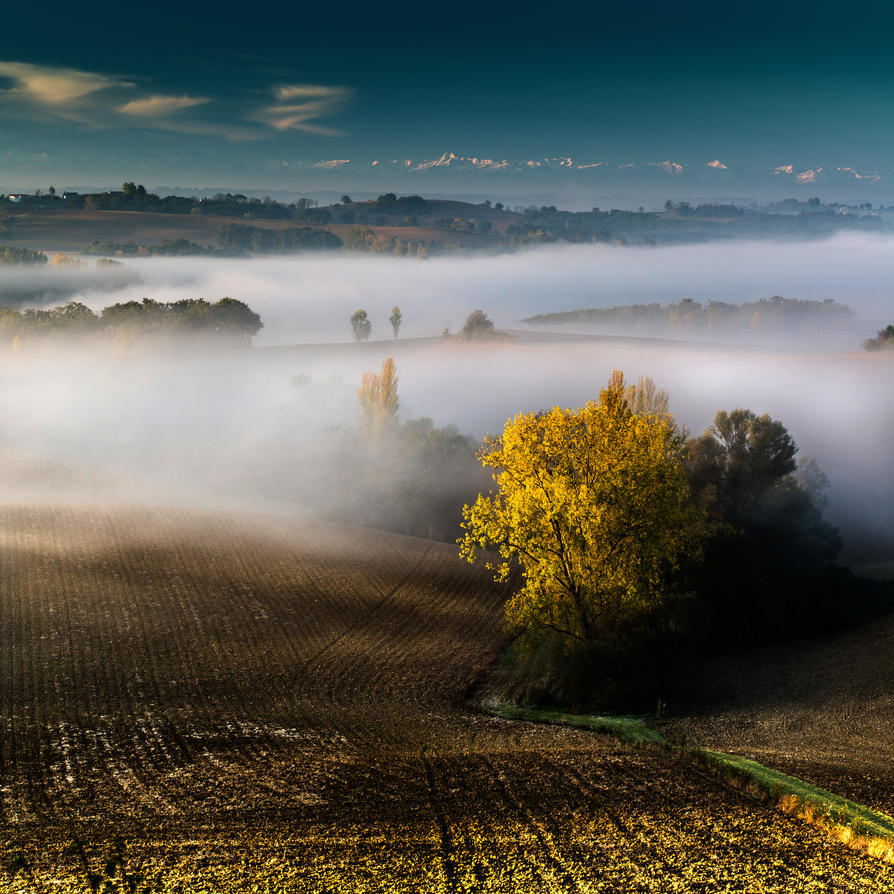
/ Image by OlivierAccart /

Truly, we live with mysteries too marvelous
to be understood.

It is so easy to go about our lives and our world, relegating every encounter to the realm of the familiar. Everything can feel mundane, known, uninteresting. In our minds, we name each object or person or experience, we label and categorize, and so we move on, numb, thinking we know our lives. Yet, doing so, we have missed something essential.

Though we may have known a person for a lifetime, each new encounter, each new moment, is an entirely new world. A familiar walk presents itself anew to us each day. Every square foot of ground, each new breath, the passing moment itself is a universe of marvels just waiting for us to pay attention once again. The way to drop that inured exterior is to hush the jaded mind, to simplify the purposes of the heart, and to open the eyes.

That’s when we discover the mysteries once again.

Let me keep my distance, always, from those
who think they have the answers.

Nice to have answers. They give us a sense of certainty, solid ground, landmarks.

But answers should be grasped loosely and occasionally allowed to slip away as we journey. Answers imply a certain vantage point. Every answer has a geometry to it. The individual stands at a point looking at some aspect of truth along a certain line of arc. Here’s the thing: As we journey and grow, we ourselves change, the landscape changes, the view changes. This doesn’t mean that the truth itself changes, but the angle has changed and perhaps the aspect of truth we are viewing has changed or expanded.

The old answer is not less true from the original point-of-view, but it no longer accommodates the new position and view.

This is why we should be cautious with people claiming THE answer. It implies stasis, rigidity. Such people are often stuck. Worse, their certainty is too often threatened by our movement and life.

Does this mean no answers? Of course not. But true answers, answers that hold up from many positions and angles, must necessarily be open-ended, adaptable, and inclusive. Real answers must welcome new questions. And, when they cannot adapt, they must allow themselves to fall away in favor of more complete representations of truth.

Of course, even the best “answer” is still but a description of truth, and not truth itself. When we want truth and not answers, we must go naked, free from artificial definitions, and encounter the entirety with mute astonishment.

Let me keep company always with those who say
“Look!” and laugh in astonishment,
and bow their heads.


Recommended Books: Mary Oliver

New and Selected Poems Why I Wake Early Dream Work House of Light Thirst: Poems
More Books >>


Mary Oliver, Mary Oliver poetry, Secular or Eclectic poetry Mary Oliver

US (1935 – )
Secular or Eclectic

Continue Reading »

One response so far