Archive for October, 2017

Oct 23 2017

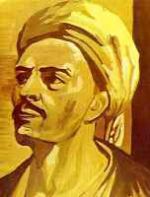
Yunus Emre – A single word can brighten the face

Published by under Poetry

A single word can brighten the face
by Yunus Emre

English version by Kabir Helminski & Refik Algan

A single word can brighten the face
of one who knows the value of words.
Ripened in silence, a single word
acquires a great energy for work.

War is cut short by a word,
and a word heals the wounds,
and there’s a word that changes
poison into butter and honey.

Let a word mature inside yourself.
Withhold the unripened thought.
Come and understand the kind of word
that reduces money and riches to dust.

Know when to speak a word
and when not to speak at all.
A single word turns the universe of hell
into eight paradises.

Follow the Way. Don’t be fooled
by what you already know. Be watchful.
Reflect before you speak.
A foolish mouth can brand your soul.

Yunus, say one last thing
about the power of words —
Only the word “I”
divides me from God.

— from The Drop That Became the Sea: Lyric Poems of Yunus Emre, Translated by Kabir Helminski / Translated by Refik Algan


/ Image by Graham Keen /

Here we are with a rare Monday poem email…

A single word can brighten the face
of one who knows the value of words.

This is one of my favorite poems by Yunus Emre, but I have never really written up a good commentary to accompany it. Perhaps it is because it is a poem about words, the singular power of words, or the power of a singular word — and I don’t want my meditative ramblings to take away from the poem itself. It says it all so beautifully.

Ripened in silence, a single word
acquires a great energy for work.

I love that line. I have been busy with my day job of late, and I haven’t been resting in deep meditation as much as I would like. The outer world has required a lot of energy from me lately. Yet I have still managed to catch moments of silence gently flowing beneath the activity. That’s where the ripening happens.

War is cut short by a word,
and a word heals the wounds,
and there’s a word that changes
poison into butter and honey.

I think this verse is the heart of the poem for me. I read it over and over again.

I think will say no more today, and let Yunus have the final word–

Yunus, say one last thing
about the power of words —
Only the word “I”
divides me from God.


Recommended Books: Yunus Emre

The Longing in Between: Sacred Poetry from Around the World (A Poetry Chaikhana Anthology) Poetry for the Spirit: Poems of Universal Wisdom and Beauty Music of a Distant Drum: Classical Arabic, Persian, Turkish & Hebrew Poems The Drop That Became the Sea: Lyric Poems of Yunus Emre Quarreling with God: Mystic Rebel Poems of the Dervishes of Turkey
More Books >>


Yunus Emre, Yunus Emre poetry, Muslim / Sufi poetry Yunus Emre

Turkey (1238 – 1320) Timeline
Muslim / Sufi

Continue Reading »

2 responses so far

Oct 23 2017

Simple contentment

Simple contentment
unlocks so many doors
along the way.

One response so far

Oct 23 2017

Popular Poets

I don’t point it out in the poem emails often, but on the Poetry Chaikhana website home page, I post a list of the most popular poets. This is essentially a list of the ten most visited pages organized by poet. The results may surprise you. Here is this week’s most popular poets:

Yunus Emre
Kabir
Dickinson
Attar
Rumi
O’Donohue
Mary Oliver
Szymborska
Bulleh Shah
Jacopone da Todi

Jacopone da Todi showed up on the list because I featured one of his poems last week.

Featured poets usually get a bump in attention. Other poets that regularly show up on this list include Kobayashi Issa, Basava, Hafiz/Ladinsky, Dogen, Ikkyu, Lalla, Abu-Said Abil-Kheir, among others.

I love to see who is gaining attention out there in the world. Yunus Emre, for example, is still not widely known in the west, but he is clearly beloved in Turkey and by many followers of Sufi traditions around the world. My hope is that, over time, appreciation of his wisdom and humor and humble spiritual genius will expand, as it has done with widely known figures like Rumi and Kabir. And the Poetry Chaikhana plays a part in that.

I am also fascinated by how this list changes week-to-week and also over the years. There was a period a few years back when the great Punjabi Sufi poet Bulleh Shah was the most visited page on the Poetry Chaikhana website week after week for months on end. But, like Yunus Emre, he is not well known in the West. Yet clearly there is a great love of his poetry and hunger for information on him out there.

Others that popped up regularly in this list only rarely do so now, like Han Shan (Cold Mountain), Basho, and Walt Whitman. What does that mean? I know the Poetry Chaikhana web statistics aren’t the best reflection of global interests, but does it suggest anything about the rising and falling popularity of specific poets? Or perhaps a general shift in attention as political and planetary crises vie for our focus? Are we just exploring different poetic and spiritual energies?

What do you think?

One response so far

Oct 18 2017

Jacopone da Todi – Love beyond all telling

Published by under Poetry

Love beyond all telling (from Self-Annihilation and Charity Lead the Soul…)
by Jacopone da Todi (Jacopone Benedetti)

English version by Serge and Elizabeth Hughes

Love beyond all telling,
Goodness beyond imagining,
Light of infinite intensity
Glows in my heart.

I once thought that reason
Had led me to You,
And that through feeling
I sensed Your presence,
Caught a glimpse of You in similitudes,
Knew You in Your perfection.
I know now that I was wrong,
That that truth was flawed.

Light beyond metaphor,
Why did You deign to come into this darkness?
Your light does not illumine those who think they see You
And believe they sound Your depths.
Night, I know now, is day,
Virtue no more to be found.
He who witnesses Your splendor
Can never describe it.

On achieving their desired end
Human powers cease to function,
And the soul sees that what it thought was right
Was wrong. A new exchange occurs
At that point where all light disappears;
A new and unsought state is needed:
The soul has what it did not love,
And is stripped of all it possessed, no matter how dear.

In God the spiritual faculties
Come to their desired end,
Lose all sense of self and self-consciousness,
And are swept into infinity.
The soul, made new again,
Marveling to find itself
In that immensity, drowns.
How this comes about it does not know.

— from Jacopone da Todi: Lauds (Classics of Western Spirituality), Translated by Serge and Elizabeth Hughes


/ Image by Sacha Fernandez /

Love beyond all telling,
Goodness beyond imagining,
Light of infinite intensity
Glows in my heart.

Too often statements like this can sound like a formula of religious piety, but it is more than that. These are the direct experiences of the mystic. The heart grows warm and blossoms, opening until it seems to encompass all of creation. This is not just an idea or some philosophical notion — it is felt tangibly in the body as well as the soul. Love floods in, and a sense of utter harmony, rightness, the “goodness” of being. Often one witnesses a dazzling golden-white light like a radiant ocean that flows through everything, showing the multiplicity of creation to secretly be a shining unity.

It is this that Jacopone da Todi is writing of.

I once thought that reason
Had led me to You,
And that through feeling
I sensed your presence…

I know now that I was wrong,
That that truth was flawed.

These verses are a call to the religious minded to not be content with thinking one has found the truth on assertions of belief alone. (“Your light does not illumine those who think they see You / And believe they sound Your depths.”) Or even to imagine that it is felt through elevated or refined emotions. He is proclaiming that the real truth is somehow more direct and surprising than that. All mental conceptualization is limited by the intellect and imagination, yet the reality we seek is beyond the thinking mind’s ability to conceive of…

Light beyond metaphor…

He who witnesses Your splendor
Can never describe it.

Here, words fail. The mind can only become a mute witness.

The very notion of self melts amidst that immensity…

In God the spiritual faculties
Come to their desired end,
Lose all sense of self and self-consciousness,
And are swept into infinity.
The soul, made new again,
Marveling to find itself
In that immensity, drowns.
How this comes about it does not know.


Recommended Books: Jacopone da Todi (Jacopone Benedetti)

Poetry for the Spirit: Poems of Universal Wisdom and Beauty Jacopone da Todi: Lauds (Classics of Western Spirituality) All Saints: Daily Reflections on Saints, Prophets, and Witnesses for Our Time


Jacopone da Todi (Jacopone Benedetti), Jacopone da Todi (Jacopone Benedetti) poetry, Christian poetry Jacopone da Todi (Jacopone Benedetti)

Italy (1230 – 1306) Timeline
Christian : Catholic

Continue Reading »

3 responses so far

Oct 13 2017

Lu Tung Pin – What is Tao?

Published by under Poetry

What is Tao?
by Lu Tung Pin

English version by T. C. Lai

What is Tao?
It is just this.
It cannot be rendered into speech.
If you insist on an explanation,
This means exactly this.


/ Image by legends2k /

What is Tao?
It is just this.

I remember the first time I tried to navigate through the Tao Te Ching as a teenager. There was undeniably something beautiful and poetic about it, but it was so infuriatingly vague! What is “the Tao”? Calling it the Way doesn’t help. Are we talking about God? Something else? Other Taoist writings were the same, taunting me with endless non-definitions. (I wanted clear goals I could aggressively pursue!)

It took me years to begin to appreciate this approach…

It cannot be rendered into speech.

There’s a real dilemma at the heart of religion and spiritual endeavor. The Eternal, the Whole cannot be adequately held by such small containers as words. Yet we humans are instinctively communicators and word-makers. What are the sages and saints to do with what they witness? How do they render the Eternal comprehensible to others and inspire new seekers? Describe the profound love and bliss and unity, and we naturally name it Mother. Convey the immensity and power, we name it Father. Or we say Beloved. Or Friend.

All of these are valid ways to begin to form a notion of the Eternal. Through these words we as individuals can form a relationship to this vast Reality. And through this relationship we can be drawn into deeper awareness, into deeper opening, and into our own direct encounter… at which point we realize how inadequate all words are.

The problem arises when the mystics are no longer heard or are relegated to history, when too few people have their own direct wordless encounter. Then we end up with entire religions stuck at the level of words. No matter how sacred and truth-filled those words may be, words are always incomplete. Words alone are soon taken literally, and then true knowledge is lost. Not knowing what is real, religion becomes embalmed, self-protective, sectarian, and sometimes violent.

The wounds of religion are healed through compassion and through direct perception. Instead of forcing meaning, we settle into ourselves and come to see things as they are.

If you insist on an explanation,
This means exactly this.

Have a beautiful, vaguely defined day!


Recommended Books: Lu Tung Pin

The Secret of the Golden Flower: The Classic Chinese Book of Life The Eight Immortals of Taoism: Legends and Fables of Popular Taoism Tales of the Taoist Immortals Tao of Health, Longevity, and Immortality: The Teachings of Immortals Chung and Lu


Lu Tung Pin, Lu Tung Pin poetry, Taoist poetry Lu Tung Pin

China (755 – 805) Timeline
Taoist

Continue Reading »

4 responses so far

Oct 11 2017

Abu-Said Abil-Kheir – The sum total of our life is a breath

Published by under Poetry

The sum total of our life is a breath
by Abu-Said Abil-Kheir

English version by Vraje Abramian

The sum total of our life is a breath
spent in the company of the Beloved.

— from Nobody, Son of Nobody: Poems of Shaikh Abu-Saeed Abil-Kheir, Translated by Vraje Abramian


/ Image by Cochalita /

I find it fascinating that “breath” and “life” and “spirit” are synonyms in many languages and cultures. When you read sacred writings and the word “spirit” is used, substitute the word “breath” and see how the meaning changes and expands.

This connection between breath – life – spirit is much deeper than the simple observation that the living breathe and the dead do not.

We tend to think in terms of borders and boundaries, constantly noting what separates ourselves, mentally and physically, from everything else. But the reality is that there is a constant flow of awareness across those borders. Every one of us has the unseen movement of the breath. Through the breath, what is outside becomes inside; what is non-self becomes self. And what was self is released again out into the world. This is communion, nothing less.

That inbreath of yours is the outbreath of another. The air we breathe is the breath of all.

A deep breath opens the chest and expands the heart. A full breath requires us to feel. We feel ourselves, and we feel others. Feeling, too, is communion. When feeling is shut down, the breath is shut down, and life has become limited.

The current of the breath continuously teaches us that the boundaries of self exist only in the mental map. In reality, we flow out into the universe, and the universe flows back in. The only way to secure our borders is to stop breathing, which is, of course, death. Life requires breath, and we live in each other, in the same breath.

When we really breathe, with a sense of the fulness of life, we might just come to the same conclusion that Sheikh Abu-Said Abil-Kheir came to: An individual’s lifetime may be brief or long, the experiences of life may be tangible or fleeting, but this communal breath – life – spirit in which we participate, is the very breath of the Beloved.


Recommended Books: Abu-Said Abil-Kheir

The Longing in Between: Sacred Poetry from Around the World (A Poetry Chaikhana Anthology) The Drunken Universe: An Anthology of Persian Sufi Poetry Nobody, Son of Nobody: Poems of Shaikh Abu-Saeed Abil-Kheir Love’s Alchemy: Poems from the Sufi Tradition The Mystics of Islam
More Books >>


Abu-Said Abil-Kheir

Turkmenistan (967 – 1049) Timeline
Muslim / Sufi

Continue Reading »

2 responses so far

Oct 06 2017

Pablo Neruda – Keeping Quiet (and thoughts on the Las Vegas shooting)

Keeping Quiet
by Pablo Neruda

English version by Alastair Reid

Now we will count to twelve
and we will all keep still.

For once on the face of the earth
let’s not speak in any language,
let’s stop for one second,
and not move our arms so much.

It would be an exotic moment
without rush, without engines,
we would all be together
in a sudden strangeness.

Fishermen in the cold sea
would not harm whales
and the man gathering salt
would look at his hurt hands.

Those who prepare green wars,
wars with gas, wars with fire,
victory with no survivors,
would put on clean clothes
and walk about with their brothers
in the shade, doing nothing.

What I want should not be confused
with total inactivity.
Life is what it is about;
I want no truck with death.

If we were not so single-minded
about keeping our lives moving,
and for once could do nothing,
perhaps a huge silence
might interrupt this sadness
of never understanding ourselves
and of threatening ourselves with death.
Perhaps the earth can teach us
as when everything seems dead
and later proves to be alive.

Now I’ll count up to twelve
and you keep quiet and I will go.

— from Extravagaria: A Bilingual Edition, Translated by Alastair Reid


/ Image by Maks Karochkin /

I live in Colorado, a state with lots of guns. Most of those guns are used in hunting and kept locked away and out of sight. But I have had the distinctly frightening experience of seeing someone walk into a local grocery store with a handgun strapped to his hip. This was not a police officer, not someone in uniform, but a “gun activist” asserting his “right” to walk around in public spaces with a weapon. When we later contacted the store manager to insist that they publicly declare themselves to be a weapons-free safe zone (as other stores have done in the state), the manager responded that the man was not breaking the law by openly carrying a gun into the store.

Another time, I found myself in the surreal position of holding a friend’s (unloaded) M-16 rifle while being told how simple it would be to convert it from semi-automatic to fully automatic, all while surrounded by several other rifles, handguns, and knives.

I don’t know what to make of this aspect of American culture. There is this sense that manhood is marked by the hard embrace of violence and death. And when that manhood is thwarted in its other social expressions, it then acts out through that violence and death. In that person’s dark moment, Lord help the society that makes these weapons of instant death and mass murder easily available.

Obviously, I have been meditating on this latest mass shooting in the United States, along with the fact that we seem to be getting used to this pattern in recent years. There is a certain comfortable insanity that is taking the place of problem solving in this country.

We accept shooting after shooting, rather than face difficult questions of gun control, underfunded mental health care, widespread economic desperation, re-emerging racism, and an increasingly dangerous cultural divide. Not all of those issues necessarily apply to the recent Las Vegas shooting, but they all add to the pressure cooker that keeps producing these terrible events.

We don’t need to “put our differences aside and come together as a nation.” Those differences are there. We need to be honest about it. We need to be honest with ourselves. We need to look at the full picture, look at it honestly. And then we need to engage in real conversation, uncomfortable conversation. Only then can we begin to formulate practical measures of responsibility and prevention, rather than after-the-fact prayer.

That’s what we need.

Now we will count to twelve
and we will all keep still.

…nine…ten…eleven…


Recommended Books: Pablo Neruda

The Book of Questions Neruda: Selected Poems On the Blue Shore of Silence: Poems of the Sea Pablo Neruda: Selected Poems Extravagaria: A Bilingual Edition
More Books >>


Pablo Neruda, Pablo Neruda poetry, Secular or Eclectic poetry Pablo Neruda

Chile (1904 – 1973) Timeline
Secular or Eclectic

More poetry by Pablo Neruda

2 responses so far