Archive for April, 2018

Apr 27 2018

Kahlil Gibran – Pain

Published by under Poetry

Pain
by Kahlil Gibran

And a woman spoke, saying, Tell us of Pain.
And he said:
Your pain is the breaking of the shell that encloses your understanding.
Even as the stone of the fruit must break, that its heart may stand in the sun, so must you know pain.
And could you keep your heart in wonder at the daily miracles of your life, your pain would not seem less wondrous than your joy;
And you would accept the seasons of your heart, even as you have always accepted the seasons that pass over your fields.
And you would watch with serenity through the winters of your grief.

Much of your pain is self-chosen,
It is the bitter potion by which the physician within you heals your sick self.
Therefore trust the physician, and drink his remedy in silence and tranquility:
For his hand, though heavy and hard, is guided by the tender hand of the Unseen,
And the cup he brings, though it burn your lips, has been fashioned of the clay which the Potter has moistened with His own sacred tears.

— from The Prophet, by Kahlil Gibran


/ Image by techn04life /

We hold idealized images of enlightened men and women who have risen above the struggles of the world. We tell ourselves, that is the spiritual life, while all of the pain and imperfection we feel in our own lives is proof of our own failures.

It is worth reminding ourselves that brokenness is often considered to be the marker of someone on the spiritual path. To open, we usually must be broken open. Our wounds become our doorways. Our bruises are marks of initiation. Compassion is awakened, self-awareness, the ability to see with one’s own eyes.

The shattered shaman, the wounded healer. Wisdom found in exile. Seekers are, by nature, outsiders and oddballs ill at ease in the world around them, forging their own path, sometimes painfully, but in the process learning to be truly themselves.

That pain is not proof of failure, it is our potential. It is the sign of life within us seeking fuller expression.

I don’t want to suggest that I believe pain is necessary. I do believe, however, that suffering can be used. Difficult experiences can serve a profound purpose — when we approach them with awareness and with heart.

Even as the stone of the fruit must break, that its heart may stand in the sun, so must you know pain.

But let’s explore this question from a few different angles. What if the suffering is the suffering of the ego?

When we believe that we are that ego, then we experience the ego’s suffering as pain. We take it personally, and fear it could lead to death and, worse, nonexistence.

But– when we carefully, elegantly free ourselves from the notion that we are the ego, not merely as a philosophical idea but as a directly experienced reality, then what does the suffering of the ego mean to us? What is the ego exactly? When we come to see the ego as nothing more than a phantom, a mental construction, then the suffering itself becomes phantom-like. It is more like the unfolding drama of a movie being watched. It can be intense, heart-breaking, occasionally beautiful, but we no longer experience it as personal. It is no longer seen as an attack on our being.

Suffering, from that perspective, is not about pain or loss of being; instead it is seen as a form of alchemical pressure. When we keep our awareness engaged, we can use suffering as a form of transformational intensity, turning the crushed grape into wine…

Let’s also keep in mind that mystics often use the language of pain to describe spiritual opening, often in a shockingly positive light. They may refer to a “sweet pain” or a “healing pain.” This “pain” has a few levels of meaning and types of experience.

On one level, the pain can be quite literal and even physical. But it might be more accurate to refer to this as “intensity” rather than “pain.” It can be as if the senses and the perceptual mind’s ability to process it all gets overloaded. The mystic then experiences a searing, cleansing sort of intensity, that might be called pain.

And could you keep your heart in wonder at the daily miracles of your life, your pain would not seem less wondrous than your joy;

Through profound opening, one feels everything more completely, a sort of universal empathy. There is a lot of hidden suffering in the world and, at a certain point, we feel it as our own. (Actually, we always feel it anyway, but the walls of denial fall away, and we become aware of it for the first time.) In a directly sentient way, we become aware of the interconnectedness of life. Initially, that flood of feeling is intense, even painful, but that is the pain of the heart breaking open. It becomes a sort of wound one carries, but it resolves itself to a beauty and sense of unity that manages to integrate even the most terrible suffering.

Other mystics speak of a wounding in a more metaphorical sense. The pain experienced is the perception of one’s separation from God. But that pain itself is the doorway to reunion. By allowing oneself to become completely vulnerable to that pain, to surrender to it, the mystic finds the pain transformed into the blissful touch of the Beloved.

Your pain is the breaking of the shell that encloses your understanding.

Ultimately, all of these forms of pain are the pain of the pierced ego. For one with inner balance, where the protective but limiting shell of the ego is no longer necessary, that pain points the way to freedom.

For this reason, mystics and saints describe the pain as being sweet or joyful or beautiful. It is, in fact, the beginning of bliss.

Be forgiving of your struggles. Rather than limiting you, let your secret wounds open new pathways. Sending much love to everyone!


Recommended Books: Kahlil Gibran

The Prophet The Beloved: Reflections on the Path of the Heart Broken Wings Jesus the Son of Man Kahlil Gibran: His Life & World
More Books >>


Kahlil Gibran, Kahlil Gibran poetry, Christian poetry Kahlil Gibran

Lebanon/US (1883 – 1931) Timeline
Christian
Secular or Eclectic

Continue Reading »

One response so far

Apr 27 2018

Stumble

Stumble
and so see the sky.

One response so far

Apr 25 2018

Philip Booth – First Lesson

Published by under Poetry

First Lesson
by Philip Booth

Lie back daughter, let your head
be tipped back in the cup of my hand.
Gently, and I will hold you. Spread
your arms wide, lie out on the stream
and look high at the gulls. A dead-
man’s float is face down. You will dive
and swim soon enough where this tidewater
ebbs to the sea. Daughter, believe
me, when you tire on the long thrash
to your island, lie up, and survive.
As you float now, where I held you
and let go, remember when fear
cramps your heart what I told you:
lie gently and wide to the light-year
stars, lie back, and the sea will hold you.

— from Lifelines: Selected Poems 1950-1999, by Philip Booth


/ Image by Vassilis /

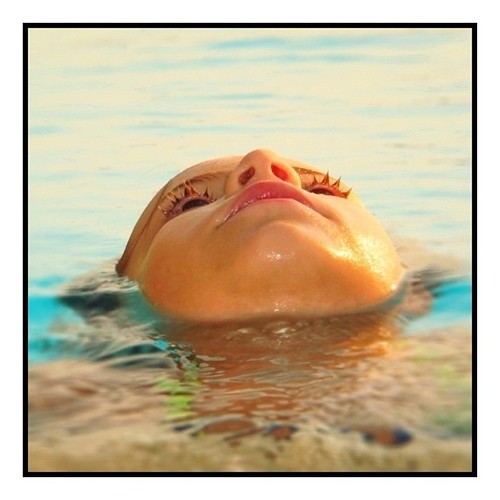
A father teaching his daughter to swim. The first lesson, how to float. He cradles her head in his hands and tells her to spread her arms and relax, looking up at the sky.

Very quickly this becomes a metaphor for life. Soon she will swim confidently. But it is a long effort to reach her “island.” When exhaustion inevitably sets in and fear seizes the heart, that first lesson comes back: rather than struggle, just rest, trust, lean back, float. Watch the stars.

the sea will hold you.


Recommended Books: Philip Booth

Lifelines: Selected Poems 1950-1999


Philip Booth, Philip Booth poetry, Secular or Eclectic poetry Philip Booth

US (1925 – 2007) Timeline
Secular or Eclectic

More poetry by Philip Booth

One response so far

Apr 20 2018

Janabai – You must accept those who surrender to you

Published by under Poetry

You must accept those who surrender to you
by Janabai

English version by Sarah Sellergren

If the Ganga flows to the ocean
and the ocean turns her away,
tell me, O Vitthal,
who would hear her complaint?

Can the river reject its fish?
Can the mother spurn her child?

Jan says,
Lord,
you must accept those
who surrender to you.

— from Images of Women in Maharashtrian Literature and Religion, Edited by Anne Feldhaus


/ Image by TheFoxAndTheRaven /

I wanted to highlight this poem today because of its emphasis on surrender.

The question of surrender is central to the spiritual journey, which is often a difficult idea for us to accept. The word “surrender” itself can seem terrifying or even hateful. Why surrender at all? Don’t we want victory and not surrender?

We need to surrender. Surrender is essential to the eventual victory of spiritual opening. Yet surrender can also be dangerous.

Different religious traditions frame the idea of surrender differently, but it is always present. There is the notion of submission to a guru or spiritual guide, which might make some of us wince. Or monastic vows of obedience, which probably makes even more of us cringe. Every tradition has some expression of surrender encoded within its practices. When both the seeker and the spiritual authority come to that relationship with pure intention, the dynamic of surrender becomes a very effective technique for swift unfolding.

The obvious problem is that surrender, particularly the profound forms of self-surrender that occur as part of the spiritual journey, make one deeply vulnerable to everything from mental manipulation to sexual abuse. Sadly, we can all cite several public examples of this very result.

So, we should never surrender, right? It’s not that simple. As I said, surrender is essential.

But to whom do we surrender? Why do we need to surrender? Leaving aside the religious trappings, let us first ask, what is the energetic purpose of surrender?

The surrender we need for success along our spiritual journey is the surrender of self — the little or false self, the ego. Not just the ego as an idea, but we must drop the limited reality the ego-self enforces upon our consciousness. We also need to surrender the ego-bolstering actions, or self-will, which continuously reaffirm the ego and its psychic hindrances.

Profound spiritual opening requires that we come to a place in which we deeply, utterly… let go. This does not even require effort. We merely have to cease all our efforts at maintaining the pretense of the little self. We have to give up what has, for most of us, become a lifelong endeavor. This may be disorienting or even frightening, so it should not be sought casually. But, done with determination and patience and balance, such surrender unlocks the doorway.

I have used rather solitary language so far. To whom do we surrender? A master or spiritual authority? Some would say yes. My personal perspective is that, such a figure can be helpful when, as I said earlier, everyone’s intentions are clear. But I still have trouble with that. Contrarian that I am, I tend to oppose most forms of authority, spiritual and secular.

What I have observed is that what we are surrendering to is not that teacher or guru or guide or institution. We are really surrendering to the universal divine spark that we have glimpsed in that person or ideal. That glowing essence is the real authority that we must surrender to. That is the real teacher. We may sense it in a guru or a saint or a teacher. We may recognize it in a spiritual organization or a holy book or a beloved icon. Or we may find it in a grove of trees, in the face of a homeless person on the street. When we are honest with ourselves, it is not the person or the institution or the teaching; they are its representatives or embodiments, but it is the shining spark itself that calls to us. It is to that do we bow. That is what we truly surrender to.

In this way, surrender need not be submission or the giving up of our critical faculties or appropriate forms of self-respect and self-protection. Perhaps it is appropriate to have an antiauthoritarian form of spiritual surrender.

Ultimately, that spirit-filled spark we see in some inspiration focus outside ourselves is what is trying to awaken within ourselves. This is really why surrender is required. We are dropping our resistance and allowing that ineffable presence to be born within. We surrender the small self as a sacred offering. Accepting this sacrifice, the divine Self, that sense of our being most deeply connected with God, steps forth. This is how surrender becomes victory.

Jan says,
Lord,
you must accept those
who surrender to you.


Recommended Books: Janabai

Women Writing in India: 600 BC to the Present: Volume 1 Images of Women in Maharashtrian Literature and Religion Women Saints in World Religions


Janabai

India (1298 – 1350?) Timeline
Yoga / Hindu : Vaishnava (Krishna/Rama)

Continue Reading »

2 responses so far

Apr 13 2018

Denise Levertov – Looking, Walking, Being

Published by under Poetry

Looking, Walking, Being
by Denise Levertov

“The World is not something to
look at, it is something to be in.”
— Mark Rudman

I look and look.
Looking’s a way of being: one becomes,
sometimes, a pair of eyes walking.
Walking wherever looking takes one.

The eyes
dig and burrow into the world.
They touch
fanfare, howl, madrigal, clamor.
World and the past of it,
not only
visible present, solid and shadow
that looks at one looking.

And language? Rhythms
of echo and interruption?
That’s
a way of breathing.

breathing to sustain
looking,
walking and looking,
through the world,
in it.

— from Poems of Denise Levertov: 1960-1967, by Denise Levertov


/ Image by Amizyolaroid /

Okay, let’s start off with those wonderful lines:

Looking’s a way of being: one becomes,
sometimes, a pair of eyes walking.

This poem is a response to the Mark Rudman quote, “The World is not something to / look at, it is something to be in.” Denise Levertov answers that looking IS being.

The eyes
dig and burrow into the world.
They touch…

I suspect that Rudman was discouraging passivity and lack of presence, but Levertov, I think, is getting at something deeper still. Humans, all beings, in fact, are fundamentally beings of awareness. Each individual is a point of perception, a viewpoint in the universe. We are, each of us, “a pair of eyes walking.”

We are present through perception, not action. Yes, action and interaction can be a powerful way to force us to pay attention, but it is also common to use action to shut down the awareness. Whether in movement or in stillness, the real goal is to keep the eyes open and feel fully with the heart and with the gut. We want to do more than look, but to see and see deeply. We need to see what is ignored and glossed over, to “dig and burrow in the world.”

Even in complete stillness, truly seeing is one of the most profound actions we can engage in. People are brought to tears by a gentle gaze in the eyes. This is what the soul craves, to be seen, to be recognized, to be truly acknowledged. This is true not just of the human soul, but of the world soul. I think of this when Denise Levertov writes of how the world “looks at one looking.”

And language? Rhythms
of echo and interruption?
That’s
a way of breathing.

We forget that language is built of breath. We see the written word and we read it silently. Words become mental concepts, tools of the intellect. But words are not fundamentally discrete units of meaning. They flow and stop and flow again, as the breath does. Words aren’t inherently meaningful; they are the ornaments that accompany the flow of awareness.

Words affect breath. Thoughts affect breath. Breath guides awareness.

…breathing to sustain
looking…

Through the breath, we bring the outside world inside us, inside the body, inside the awareness. The boundary between self and the world is bridged by the breath. Through breath, we touch, we feel, we internalize, we connect, we participate, we come alive. Through breath we move and we see.

…walking and looking,
through the world,
in it.

Vision, language, breath… communion.


Recommended Books: Denise Levertov

Denise Levertov: Selected Poems Poems of Denise Levertov: 1960-1967 Breathing the Water The Great Unknowing: Last Poems Candles in Babylon
More Books >>


Denise Levertov, Denise Levertov poetry, Secular or Eclectic poetry Denise Levertov

US (1923 – 1997) Timeline
Secular or Eclectic : Beat
Jewish

More poetry by Denise Levertov

3 responses so far

Apr 13 2018

Recognize the magical

Recognize the magical
in the mundane.

One response so far

Apr 06 2018

Buson – Clinging to the bell

Published by under Poetry

Clinging to the bell
by Buson

English version by Sam Hamill

Clinging to the bell,
he dozes so peacefully,
this new butterfly

— from The Poetry of Zen: (Shambhala Library), Edited by Sam Hamill / Edited by J. P. Seaton


/ Image by Rafaelfo /

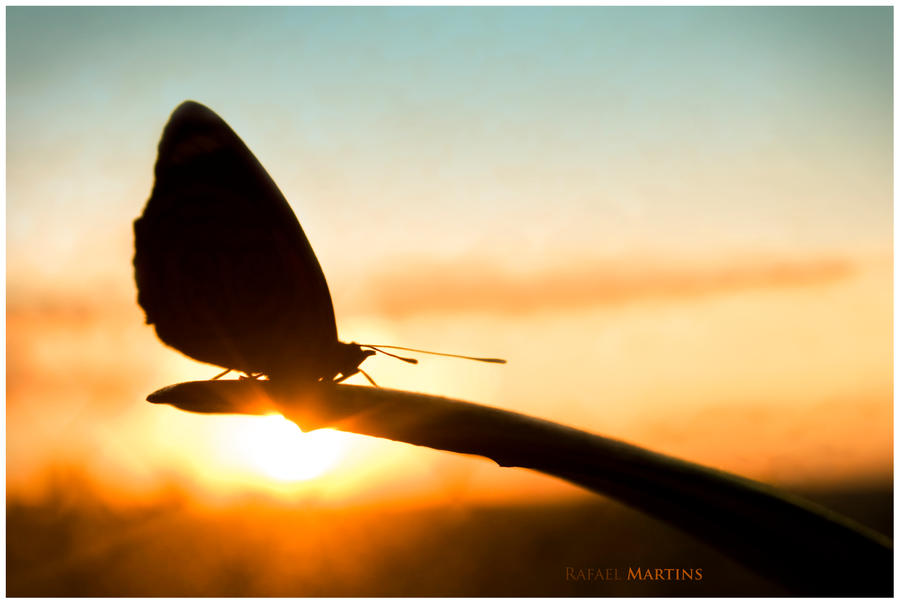
This haiku is so precise and specific that you can’t help but step into the scene sketched for us: A butterfly dozing, at peace on an unstruck bell.

The moment suggests such stillness, yet there is that underlying tension and anticipation. That bell can be rung at any moment, startling the butterfly.

The bell might suggest a temple or monastery. It signals a change in awareness, the call to prayer or to duty.

Should we think of the butterfly as a butterfly? Or a monk, perhaps? Or ourselves? It is “new,” young, inexperienced. Is its peaceful rest naive? Or is it the natural result of its simplicity?

When the bell is struck, will the butterfly attain wakefulness, or lose its peace?

I really like the way this haiku can be turned around and around, yet we keep returning to that perfect still point, dozing on the unstruck bell.


Recommended Books: Buson

Zen Poetry: Let the Spring Breeze Enter The Poetry of Zen: (Shambhala Library) The Moon Over Tagoto: Selected Haiku of Buson


Buson, Buson poetry, Buddhist poetry Buson

Japan (1716 – 1784) Timeline
Buddhist : Zen / Chan

Continue Reading »

One response so far

Apr 06 2018

perceived but not known

The great, flowing vastness
one is…
well, it is perceived,
but it is not known.

One response so far

Apr 04 2018

birthday wishes

Thank you for the many birthday emails and Facebook messages I received. It is my forty-ninth year to heaven, to paraphrase Dylan Thomas. Hopefully, that means I am a year wiser and a year kinder, as well. Certainly, I am a year richer in companionship, since I count all of you as friends and fellow-travellers. And I hope we are all growing in timelessness, which is the real yardstick.

2 responses so far

Apr 04 2018

Rainer Maria Rilke – Sunset

Published by under Poetry

Sunset
by Rainer Maria Rilke

English version by Robert Bly

Slowly the west reaches for clothes of new colours
which it passes to a row of ancient trees.
You look, and soon these two worlds both leave you,
one part climbs toward heaven, one sinks to earth,

leaving you, not really belonging to either,
not so helplessly dark as that house that is silent,
not so unswervingly given to the eternal as that thing
that turns to a star each night and climbs –-

leaving you (it is impossible to untangle the threads)
your own life, timid and standing high and growing,
so that, sometimes blocked in, sometimes reaching out,
one moment your life is a stone in you, and the next, a star.

— from Selected Poems of Rainer Maria Rilke, Translated by Robert Bly


/ Image by MD. Hasibul Haque Sakib /

I love the duality of this poem, which is the duality of our own mental states.

In the painterly beauty of a sunset, we see a transfer occurring, the passing of colors from sky to earth.

Slowly the west reaches for clothes of new colours
which it passes to a row of ancient trees.

We start to notice the “two worlds”: the brilliant but fading sky descending to the earth, while the earth’s horizon rises up into the night sky. Sky into earth, earth into sky, separating, yet also revolving into each other.

You look, and soon these two worlds both leave you,
one part climbs toward heaven, one sinks to earth,

The fixed world of the day is now on the move, dividing and departing. Which one shall we ride into the evening? Which is our home?

leaving you, not really belonging to either,

While, in some mysterious way, these separate worlds of shifting earth and sky are also reconnecting and recombining to form a magical new reality at night that may lead to an unimagined world tomorrow.

Who and what are we as its witnesses? Are we silent, like the somnolent earth, or are we celestial and immense, like the star-strewn night sky, which speaks even in its silence?

Which are we, timid, contained, withdrawn, or standing up, reaching out, growing? Like the earth and the sky at brilliant sunset, we are all of these at once, intermingled.

We embody both the earthly and the heavenly, and perhaps they are not in opposition to each other. These qualities contrast and strengthen each other, together creating a wholeness within the world and within each of us as individuals journeying along the horizon where earth and heaven meet.

We are neither stone nor star, but both.

one moment your life is a stone in you, and the next, a star.

Have a beautiful day, and a wondrous sunset!


Recommended Books: Rainer Maria Rilke

The Enlightened Heart: An Anthology of Sacred Poetry Ahead of All Parting: The Selected Poetry and Prose of Rainer Maria Rilke The Soul is Here for its Own Joy: Sacred Poems from Many Cultures Rilke’s Book of Hours: Love Poems to God In Praise of Mortality: Rilke’s Duino Elegies & Sonnets to Orpheus
More Books >>


Rainer Maria Rilke, Rainer Maria Rilke poetry, Secular or Eclectic poetry Rainer Maria Rilke

Germany (1875 – 1926) Timeline
Secular or Eclectic

More poetry by Rainer Maria Rilke

5 responses so far

Apr 04 2018

following the rules

No one gets to heaven
by following the rules
— or breaking them.
Heaven must burst forth from your breast.

One response so far