Archive for September, 2018

Sep 28 2018

Ivan M. Granger – Medusa

Published by under Poetry

Medusa
by Ivan M. Granger

Medusa says –

I was wisdom
once,
black as night.

Now they call me:
      monster,
      gorgon,
      hideous-faced.

So I hide
behind this hissing curtain
of hair.

Lost
little ones,
breathe easy;
you are free
to not see.

But
what is a lonely
old lady to do?

I still wait
for some daughter,
      some son,
so wounded by the world,
to seize these snakes
and part my locks wide.

I still wait
for some bold, tired
      wild child of mine,
determined to die
seeing what’s reflected
in my unblinking eye.
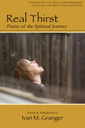
— from Real Thirst: Poetry of the Spiritual Journey, by Ivan M. Granger
Or order through Wordery and have it shipped anywhere in the world for free!


/ Image by Emanuello Brigant /

Something to honor the Divine Goddess today–

I don’t do it as often these days, but every now and then I awake early, before the sun. Observing the nighttime before dawn, its embodiment of mystery, the unknown, vastness. Night brings both peace and fear. It does not distract us from ourselves. Whatever we bring with us into the night we must confront…

I read a lot of Greek mythology in my childhood. I loved the fantastical adventures, the heroes, the monsters, the convoluted relationships of the gods. I was fascinated that so many common words and phrases have their origins in the names and stories of Greek myths. It connected me with the Greek ancestry I have through my father.

And I also had the vague, semi-formed idea that there was something deeper being said in these myth stories.

I discovered something several years back that struck me: Medusa, the quintessential monster of Greek mythology, was originally a much loved Goddess. Her name comes from the Greek word “metis” (related to the Sanskrit “medha”) meaning “wisdom.” Her worship is thought to have originated in North Africa and been imported into early Greek culture. She was black-skinned, wore wild, matted hair (with, of course, snakes), stood naked, wide-eyed, and embodied the mystery of woman, the wisdom of the night, the truths too profound or terrible to face in the daylight.

Medusa is, in effect, a Mediterranean version of the Bengali Goddess Kali.

Medusa was eventually subsumed into the safer, patriarchal worship of Athena, who carries Medusa’s head upon her shield.

This discovery inspired me to look at the figure of Medusa more deeply, more reverently. What is the wisdom that terrifies? Why the snakes? Why the petrifying open-eyed stare? And how does such a bringer of terrible wisdom feel about being rejected by her children as a “monster”?

So I hide
Behind this hissing curtain
Of hair.

One way to understand the snakes about Medusa’s head is as the awakened Kundalini energy, having risen from the base of the spine to the skull — something well-understood in the Mediterranean mystery schools of the ancient world. This vital, snake-like energy is the Goddess energy. Medusa, the Goddess, is the Snake Mother.

(The more monstrous aspect of Medusa can also be understood as a rageful expression of the Kundalini, the Divine Feminine energy, when it is repressed in society. A society that does not respect the strength and mystery of Woman, that does not allow the feminine energy to move freely, that society is lost in a state of calcifying fear. Too many societies see only the terrible Gorgon when looking at the Divine Mother.)

In my poem, Medusa has formed of this feminine life-energy a curtain, a veil that hides Her Face from a world not ready to bear witness to Her. This curtain is the veil of illusion that creates an artificial sense of separation between the world and the Divine.

And the curtain does indeed hiss. When you are quiet and your thoughts settle, we begin to hear a soft sound seeming to issue from the base of the skull. Initially, it sounds like a creaking or crackling noise, a white noise, a sort of a hissing. The deeper we go into silence, the more the sound resolves itself. Eventually, we recognize it permeating our whole body and all things.

We must pass through this hissing curtain in order to meet the deep truth waiting for us on the other side.

I still wait
For some bold, tired
      Wild child of mine,
Determined to die
Seeing what’s reflected
In my unblinking eye.

Medusa’s eye does not blink. This is partly what is so terrifying about her gaze. She stares boldly out and sees Reality as it is. She sees it plainly, fearlessly, and without interruption. There is no pause for interpretation or “filtering.” Medusa’s truth is raw. She is the Divine Mother who sees all of Her Creation in every living instant.

Looking in Medusa’s eye, what is it that we see reflected? Our own self, of course. And this truly is shattering, for we see the truth about ourselves. We see the unreality of the little self, the social self, the ego self we imagine ourselves to be. That little self is a phantom, a mental creation only.

Medusa, in her shattering wisdom, does not protect us from this realization. Her love will not allow us to struggle on with such a false notion holding us back from our true nature.

Seeing this truth, we die. The little self dies.

But, in dying to the little self, our true nature suddenly shines forth. The real Self, which is one with the Divine, emerges. Every aspect of ourselves that felt broken and that we labored so long to fix, is suddenly made whole. In fact, we realize that nothing was ever broken in the first place. That sense of incompleteness was the result of denying the vastness we already are while clinging to the illusion of the little self.

This is Medusa’s gift to Her children. This is Her terrible wisdom. It is the truth that blesses us through death, and then gives you greater life than we had previously imagined possible.


Recommended Books: Ivan M. Granger

The Longing in Between: Sacred Poetry from Around the World (A Poetry Chaikhana Anthology) Real Thirst: Poetry of the Spiritual Journey For Lovers of God Everywhere: Poems of the Christian Mystics Diamond Cutters: Visionary Poets in America, Britain & Oceania Poems of Awakening: An International Anthology of Spiritual Poetry
More Books >>


Ivan M. Granger, Ivan M. Granger poetry, Secular or Eclectic poetry Ivan M. Granger

US (1969 – )
Secular or Eclectic
Yoga / Hindu : Advaita / Non-Dualist

Continue Reading »

7 responses so far

Sep 26 2018

Wendell Berry – Manifesto: The Mad Farmer Liberation Front

Published by under Poetry

Manifesto: The Mad Farmer Liberation Front
by Wendell Berry

Love the quick profit, the annual raise,
vacation with pay. Want more
of everything ready-made. Be afraid
to know your neighbors and to die.
And you will have a window in your head.
Not even your future will be a mystery
any more. Your mind will be punched in a card
and shut away in a little drawer.
When they want you to buy something
they will call you. When they want you
to die for profit they will let you know.

So, friends, every day do something
that won’t compute. Love the Lord.
Love the world. Work for nothing.
Take all that you have and be poor.
Love someone who does not deserve it.
Denounce the government and embrace
the flag. Hope to live in that free
republic for which it stands.
Give your approval to all you cannot
understand. Praise ignorance, for what man
has not encountered he has not destroyed.

Ask the questions that have no answers.
Invest in the millennium. Plant sequoias.
Say that your main crop is the forest
that you did not plant,
that you will not live to harvest.
Say that the leaves are harvested
when they have rotted into the mold.
Call that profit. Prophesy such returns.

Put your faith in the two inches of humus
that will build under the trees
every thousand years.
Listen to carrion – put your ear
close, and hear the faint chattering
of the songs that are to come.
Expect the end of the world. Laugh.
Laughter is immeasurable. Be joyful
though you have considered all the facts.
So long as women do not go cheap
for power, please women more than men.
Ask yourself: Will this satisfy
a woman satisfied to bear a child?
Will this disturb the sleep
of a woman near to giving birth?

Go with your love to the fields.
Lie down in the shade. Rest your head
in her lap. Swear allegiance
to what is nighest your thoughts.
As soon as the generals and the politicos
can predict the motions of your mind,
lose it. Leave it as a sign
to mark the false trail, the way
you didn’t go. Be like the fox
who makes more tracks than necessary,
some in the wrong direction.
Practice resurrection.

— from The Mad Farmer Poems, by Wendell Berry


/ Image by legends2k /

A manifesto from the fields and the topsoil to mark the change of seasons. A reminder of what’s real. A reminder to regularly push that mental reset button. A reminder to remain a healthy, cantankerous human standing amidst wonders…

So, friends, every day do something
that won’t compute. Love the Lord.
Love the world.

Put your faith in the two inches of humus
that will build under the trees
every thousand years.

As soon as the generals and the politicos
can predict the motions of your mind,
lose it.

Practice resurrection.

Have a beautiful day!


Recommended Books: Wendell Berry

The Collected Poems of Wendell Berry, 1957-1982 Given: Poems Selected Poems of Wendell Berry A Timbered Choir: The Sabbath Poems 1979-1997 The Mad Farmer Poems
More Books >>


Wendell Berry, Wendell Berry poetry, Secular or Eclectic poetry Wendell Berry

US (1934 – )
Secular or Eclectic

More poetry by Wendell Berry

3 responses so far

Sep 26 2018

Each step

Each step is a step into
the unknown.

One response so far

Sep 19 2018

Niyazi Misri – Now No Trace Remains

Published by under Poetry

Now No Trace Remains
by Niyazi Misri

English version by Jennifer Ferraro & Latif Bolat

I thought that in this whole world
      no beloved for me remained.

Then I left myself.
      Now no stranger in the world remains.

I used to see in every object a thorn
      but never a rose–

the universe became a rose garden.
      Not a single thorn remains.

Day and night my heart
      was moaning “Ahhh!”

I don’t know how it happened–
      now no “Ahhh” remains.

Duality went, Unity came.
      I met with the Friend in private;

The multitude left, the One came.
      Only the One remains.

Religion, piety, custom, reputation–
      these used to matter greatly to me.

O Niyazi — what has happened to you?
      No trace of religion now remains.

— from Quarreling with God: Mystic Rebel Poems of the Dervishes of Turkey, Translated by Jennifer Ferraro / Translated by Latif Bolat


/ Image by Broken-Beloved /

I thought that in this whole world
      no beloved for me remained.

There is much that is beautiful and attractive in the world: people, possessions, experiences. But do we love them or only love how they bolster our own self-image? They evolve, change, come and go, and so do we. They may give us a glimpse of the Divine Beloved beneath the surface, but until we learn to really look, that beautiful glimpse is fleeting. And they don’t do a great job in the long run of sustaining our fragile egos. Natural evolution, ours and that of the world around us, can feel like a betrayal. When we cling to surfaces and our own needy egos, it can feel like we have been abandoned by the Beloved.

So long as we cling to the little self, everyone and everything else is separate and vaguely threatening. The ego asserts itself by continuously keeping itself in psychic opposition to everything it has defined as being outside itself. To the ego, everything is either a possession or an enemy.

The ego pretends it is the center of reality while separating itself from the holistic vision of reality. In doing so, the ego makes itself both the prisoner and the prison guard.

In that shattered vision of a reality of separated fragments, we become blind to the true nature of reality — and the beloved is not seen. Even those soul-healing glimpses are hard to come by, rarely acknowledged even when seen.

Then I left myself.
      Now no stranger in the world remains.

But when when we finally step outside the artificial boundaries of the little self, the mesmerizing but ever incomplete world of duality fades, to be replaced by the vision of beauty and unity, in which there is no other and everything reflects the Beloved.

Duality went, Unity came.
      I met with the Friend in private;

The multitude left, the One came.
      Only the One remains.

We finally see how we flow into each other, how we are interwoven into a single, unified fabric of Reality. No one and nothing is outside of ourselves. That is when we can truly proclaim with Niyazi Misri that “Now now stranger in the world remains.”

I used to see in every object a thorn
      but never a rose–

the universe became a rose garden.
      Not a single thorn remains.

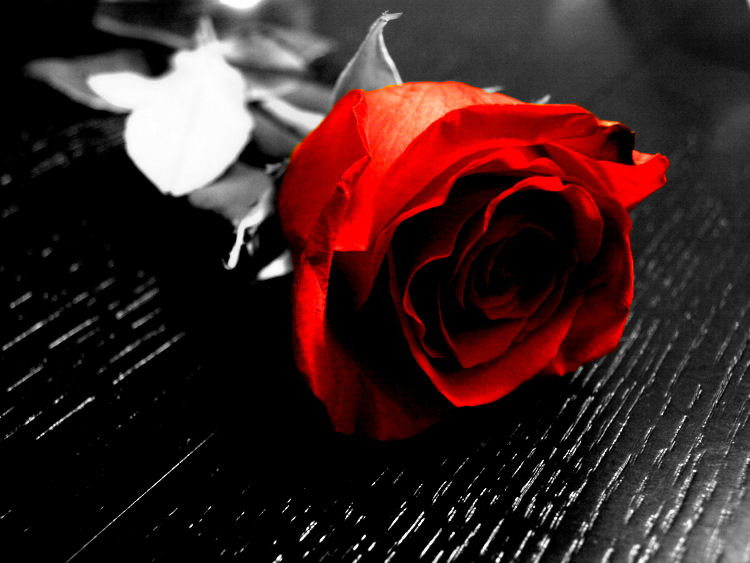
The rose unfolds in a gentle circling that invites one to yield inward. The rose is a symbol of lovers and of union. The rose resonates strongly with the gently awakened heart.

The rose, with its wine-like scent and deep red color, is sometimes thought of as a more tangible embodiment of wine — the drink of communion.

Religion, piety, custom, reputation–
      these used to matter greatly to me.

I love this Sufi iconoclasm. When deep realization comes, mystics have the troubling tendency to drop the forms of their religion. When the Eternal is finally recognized as here, now, alive in every way and in every form, the prescribed and proscribed ways of holiness lose their meaning.

O Niyazi — what has happened to you?
      No trace of religion now remains.

This is not to say that one should immediately reject the recommended practices of one’s tradition. It is simply a reminder for us that the path, whichever one we follow, leads us to a Goal. Having reached the destination, the path has then served its purpose. At that point, clinging to the old practices is more about wanting to be seen by others to be devout. Is that important? If one’s role is to act as a beacon to draw others to a similar path, then perhaps it is. For other realized individuals, however, it might suggest a vanity that has been left behind. To the person of attainment, there are no “others” anyway, so who is the pious show for?

Of course, the louder one proclaims this truth, the more friends one loses among the keepers of the faith. Those troublesome mystics…


Recommended Books: Niyazi Misri

Quarreling with God: Mystic Rebel Poems of the Dervishes of Turkey


Niyazi Misri

Turkey (1616 – 1694) Timeline
Muslim / Sufi

Continue Reading »

7 responses so far

Sep 12 2018

Statement about Amazon

Amazon has been in the news lately and rightly criticized for the absurd sums of money claimed by the CEO while many of its employees earn poverty wages and lack basic job security. Amazon is just one of the more notable companies among far too many that have come to embody a brutal and predatory corporate mindset.

But given how ubiquitous Amazon is in the world of online book sales, I have not yet come up with an entirely satisfying alternative that will work for everyone.

I regularly point out that Poetry Chaikhana books are available through other online sources, like Barnes & Noble, but they don’t cater to as many countries around the globe, and the Poetry Chaikhana is a global community.

There is also the more direct approach: I can take orders and ship the books myself, as I have been doing with the recent pre-orders for This Dance of Bliss. That is something I have generally done only for limited periods of time, when I want to offer personally inscribed books. My hesitation to do that on a more regular basis is primarily because I do my Poetry Chaikhana work in my spare time. Poetry Chaikhana publications provide some welcome income, but it is not yet enough to allow me to lessen my commitments to my day job. As many of you are aware, I need to be especially careful with my time and energy because of the chronic fatigue patterns I deal with, so I can’t casually add to my weekly workload. Even so, I am giving this option some serious thought.

One of the most positive ways to purchase Poetry Chaikhana books, in my opinion, is to request them through your local independent bookstore. I receive less of a sales royalty that way, but when you purchase through a neighborhood brick-and-mortar bookstore, you are supporting a local business, you get to chat with interesting people who love books, and it’s an excuse to browse their shelves for other hidden treasures. Bookstores build communities.

If you have other good recommendations, please share them with me. I welcome your suggestions.

2 responses so far