Archive for March, 2019

Mar 29 2019

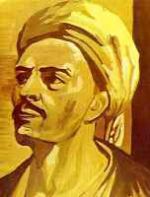
Yunus Emre – One Who Is Real Is Humble

Published by under Poetry

One Who Is Real Is Humble
by Yunus Emre

English version by Jennifer Ferraro & Latif Bolat

To be real on this path you must be humble —
If you look down at others you’ll get pushed down the stairs.

If your heart goes around on high, you fly far from this path.
There’s no use hiding it —
What’s inside always leaks outside.

Even the one with the long white beard, the one who looks so wise —
If he breaks a single heart, why bother going to Mecca?
If he has no compassion, what’s the point?

My heart is the throne of the Beloved,
the Beloved the heart’s destiny:
Whoever breaks another’s heart will find no homecoming
in this world or any other.

The ones who know say very little
while the beasts are always speaking volumes;
One word is enough for one who knows.

If there is any meaning in the holy books, it is this:
Whatever is good for you, grant it to others too —

Whoever comes to this earth migrates back;
Whoever drinks the wine of love
understands what I say —

Yunus, don’t look down at the world in scorn —

Keep your eyes fixed on your Beloved’s face,
then you will not see the bridge
on Judgment Day.

— from Quarreling with God: Mystic Rebel Poems of the Dervishes of Turkey, Translated by Jennifer Ferraro / Translated by Latif Bolat


/ Image by Hossein Ghodsi /

Yunus Emre gives us several wonderful lines in this poem…

There’s no use hiding it —
What’s inside always leaks outside.

That just about sums up the spiritual perspective of everything, doesn’t it? One way or another, the inner world always reveals itself. Whatever masks we wear eventually fall away or slowly take the shape of what lies beneath. Why hide what’s inside? We should cultivate and celebrate that inner self. It will show itself anyway.

This poem in general seems to be a critique of religious hypocrisy, and specifically it deflates the idea of religious superiority. Those first lines give us a strong image:

To be real on this path you must be humble —
If you look down at others you’ll get pushed down the stairs.

I imagine a stern imam (or bishop or preacher or rabbi) who has spent his life carefully studying the minutia of religious law and has come to see everyone as falling short. He casts a cold eye on flawed and worldly humanity and judges them all to be far beneath him. It’s as if he is looking down a long staircase at the world.

That figure is in far greater spiritual danger than most of the people he looks down upon. The thing he hasn’t recognized is how unstable those stairs are. Any distance of spiritual perfectionism we construct in our minds is inherently rigid and brittle, yet it must stand on a living, shifting ground. Those stairs will always collapse in the end.

The more people “look down on the world in scorn,” the further they fall. This is simple gravity.

Even the one with the long white beard, the one who looks so wise —
If he breaks a single heart, why bother going to Mecca?
If he has no compassion, what’s the point?

Yunus Emre gives us the essential keys: humility and compassion. Everything else leads to pretense, which disjoints the soul. False superiority enforces the illusion of separation and leads to collapse.

Yunus, don’t look down at the world in scorn —
Keep your eyes fixed on your Beloved’s face,
then you will not see the bridge
on Judgment Day.

We shouldn’t miss the logic of the first two lines: When we cast scornful eyes on the world, we can’t possibly see the Beloved’s face. The opposite is true, as well; when we are transfixed by the beauty of the Beloved, we see nothing but beauty. This is a clue… any religious figure who speaks with scorn, is not engulfed by the vision of the Divine and should be avoided.

The final couple of lines are also worth understanding. What does he mean about not seeing a bridge on Judgment Day? According Muslim tradition, in order to enter Paradise, one must cross as-Sirat, a bridge that is as thin as a hair and as sharp as a blade. But the purest never have to encounter the bridge. Yunus Emre is saying that it is only when we are not already lost in the vision of the Beloved that we must face the bridge. It is only when we cling to separation and duality that we encounter that cutting bridge. With that hair-thin bridge waiting, wasting focus on scorn is a dangerous thing, indeed.

To me, this is a powerful poem on the importance of compassion, humility, and proper spiritual focus. And it is a good reminder to us all that everything returns to the Golden Rule:

If there is any meaning in the holy books, it is this:
Whatever is good for you, grant it to others too —


Recommended Books: Yunus Emre

The Longing in Between: Sacred Poetry from Around the World (A Poetry Chaikhana Anthology) Poetry for the Spirit: Poems of Universal Wisdom and Beauty Music of a Distant Drum: Classical Arabic, Persian, Turkish & Hebrew Poems The Drop That Became the Sea: Lyric Poems of Yunus Emre Quarreling with God: Mystic Rebel Poems of the Dervishes of Turkey
More Books >>


Yunus Emre, Yunus Emre poetry, Muslim / Sufi poetry Yunus Emre

Turkey (1238 – 1320) Timeline
Muslim / Sufi

Continue Reading »

2 responses so far

Mar 22 2019

Izumi Shikibu – Watching the moon

Published by under Poetry

Watching the moon
by Izumi Shikibu

English version by Jane Hirshfield

Watching the moon
at midnight,
solitary, mid-sky,
I knew myself completely,
no part left out.

— from Women in Praise of the Sacred: 43 Centuries of Spiritual Poetry by Women, Edited by Jane Hirshfield


/ Image by Gautam & Chitrabhanu Chakrabarti /

We just had an equinox full moon. Did you see it? I watched the luminous orange moon rise through the bare branches of the trees and climb with maternal majesty into the night sky. The full moon, it seems to me, embodies something both earthly and otherworldly, both at the same time. When the world around us takes on a luminosity and reveals new realities interwoven within the neighborhood we walk daily, that’s a good time to encounter ourselves for the first time….

Whenever the moon appears in a poem, we can read it as a reference to illuminated awareness — whether intended or not by the poet — and the meaning of the poem unwraps itself in fascinating ways…

The blissful state reveals itself as a shining light, as a luminescence permeating the still field of the mind. There is a sense of light from an undefined ‘above,’ silence, a fullness of vitality, and deep rest. In sacred poetry, particularly in Zen poetry, this is often expressed as the full moon in the night sky.

The moon is the individual consciousness that shines only by reflecting the constant light of the sun, which is unbounded awareness. Individual consciousness, like the moon, waxes and wanes, sometimes bright and clear, sometimes dark.

When the moon, consciousness, is full, it is round, whole, complete, perfectly reflecting the light of divine awareness. The full moon is enlightenment. It is Buddha-mind. It is the soft light that illumines the land below when all is at rest.

With this understanding, reread Shikibu’s poem. Do you feel the power of the statement beneath its beautiful words?

When she says she is “Watching the moon,” she can be describing the deep meditation practice of witnessing the radiance of opened awareness. To do so “at midnight” carries the double meaning of a late night meditation (which is often the best time for deep contemplation), but midnight also suggests the depth of the great Void. We perceive the enlightened mind shining quietly within a pregnant emptiness. There is only awareness. (I have read alternate translations of this poem that say “at dawn” rather than midnight, which carry their own meanings.)

The poet specifically describes the moon as “solitary” and “mid-sky.” In this profound communion, the awareness is recognized as being absolutely alone in the sense that there is no ‘other,’ nothing outside of its sphere; it is “solitary.” And it is the center point of being; it is the heart, it is the core; the moon is “mid-sky.”

When we stand silently bathed by the light of the moonlight, we finally experience our true nature. We know ourselves “completely” — all of the seemingly disjointed and conflicting parts of ourselves are seen to be parts of a unified whole, “no part left out.” We are the wholeness.


Recommended Books: Izumi Shikibu

Women in Praise of the Sacred: 43 Centuries of Spiritual Poetry by Women The Enlightened Heart: An Anthology of Sacred Poetry


Izumi Shikibu

Japan (974? – 1034?) Timeline
Buddhist : Zen / Chan

Continue Reading »

One response so far

Mar 22 2019

claim them

When you pray,
don’t ask for enlightenment or wisdom or divine love.
Claim them!
They are yours by right!

One response so far

Mar 15 2019

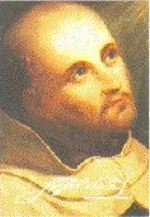
John of the Cross – Dark Night

Published by under Poetry

Dark Night
by John of the Cross

English version by Ivan M. Granger

(Songs of the soul delighted at having reached the high state of perfection, the union with God, by way of spiritual negation.)

On a darkened night,
Anxious, by love inflamed,
— O happy chance! —
Unnoticed, I took flight,
My house at last at peace and quiet.

Safe, disguised by the night,
By the secret ladder I took flight,
— O happy chance! —
Cloaked by darkness, I scaled the height,
My house at last at peace and quiet.

On that blessed night,
In secret, and seen by none,
None in sight,
I saw with no other guide or light,
But the one burning in my heart bright.

This guide, this light,
Brighter than the midday sun,
Led me to the waiting One
I knew so well — my delight!
To a place with none in sight.

O night! O guide!
O night more loving than the dawn!
O night that joined
The lover with the Beloved;
Transformed, the lover into the Beloved drawn!

Upon my flowered breast,
For him alone kept fair,
There he slept,
There I caressed,
There the cedars gave us air.

I drank the turret’s cool air,
Spreading playfully his hair.
And his hand, so serene,
Cut my throat. Drained
Of senses, I dropped unaware.

Lost to myself and yet remaining,
Inclined so only the Beloved I spy.
All has ceased, all rests,
Even my cares, even I;
Lost among the lilies, there I die.

— from Real Thirst: Poetry of the Spiritual Journey, by Ivan M. Granger


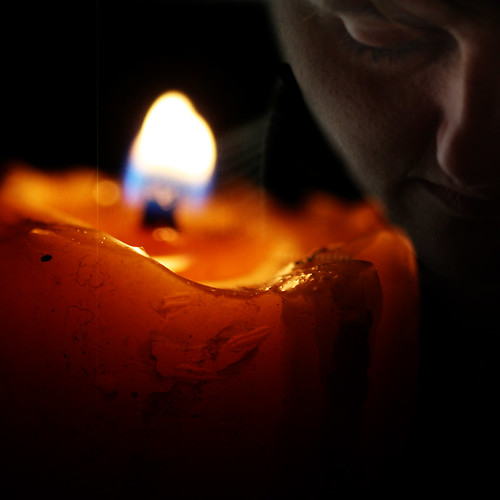
/ Image by lepiaf.geo /

I woke up this morning thinking about the great Spanish mystic, John of the Cross.

This poem is one of my favorites. It has a giddy sense of escape, a secret lover’s tryst, yet it haunts us with its images of darkness and death. Let’s contemplate a few of these themes…

Although mystics often experience the Divine as a radiant, all permeating light, sometimes God is described in terms of night or darkness.

On a darkened night…

Night is the great Mystery, the unknown. Darkness is the place of secrets. It is the time of sleep, rest, peace. We drop all of our activities and turn inward.

Because nighttime is associated with sleep and, by analogy, death, it can also represent the time when the ego sleeps and most easily can “die” or fade away. The ego is less in charge at night, less demanding that its every desire be instantly met. The busy mind is less active, more likely to be at rest.

Night is the time when lovers meet, when the soul meets its Divine Beloved.

Darkness, like God, envelops everything in its embrace. It is in the darkness of night that all things become one, losing their individuality as they disappear into that mystery. Nighttime is the time of nondual awareness, when dichotomies and artificial notions of separation fade.

John of the Cross is particularly known for speaking of “the dark night of the soul.” This is not so much a reference to the experience of the Divine as mentioned above, but a preliminary state. Prior to experiences of union, the soul loses its orientation, where worldly distractions seem pointless, but the blissful fulfillment of divine union hasn’t yet been experienced. This can be a period of confusion, being “anxious,” a period of intense spiritual thirst, and a feeling of blindness that is the equivalent of trying to find one’s way in the dark. But that too can be an important stage of the journey that indicates the nearness of the sacred goal, not its distance.

Yet in this “blessed night,” John of the Cross discovers light. This is not just any light but an overpowering radiance, “Brighter than the midday sun.”

For genuine mystics, light is not a mere concept or metaphor; it is directly experienced. This light is perceived as being a living radiance that permeates everything, everywhere, always. This light is immediately understood to be the true source of all things, the foundation on which the physicality of the material world is built.

The sense of boundaries and separation, long taken for granted by the mind as the fundamental nature of existence, suddenly seems illusory, for this light shines through all people and things. It has no edges, and the light of one is the light of another.

This light is recognized as one’s own Self, while simultaneously being the Self of all others. Since this light is you and, at the same time, it radiates within all, the question arises: How can there be separation? conflict? loss?

This is how John proceeds so boldly from the experience of light to union, the sacred marriage, “Transformed, the lover into the Beloved drawn!”

And what about death? Why does he startle us by shifting from the ecstasy of union to death?

And his hand, so serene,
Cut my throat. Drained
Of senses, I dropped unaware.

Without understanding of this imagery, it can sound as if every mystic and saint has some strange death wish.

In deep ecstasy, the sense of individuality, the sense of “I” thins and can completely disappear. Though you may still walk and breathe and talk, there is no “you” performing these actions. The separate identity, the ego, disappears, to be replaced by a vast, borderless sense of Self. Suddenly, who you have always thought yourself to be vanishes and, in its place, stands a radiant being whose boundaries are no longer perceived in terms of flesh or space.

And why does he become “unaware” in this state? This profound sense of union, while being a state of supreme awareness, is sometimes ironically compared with blindness or non-awareness. The reason is that the mind has become so completely still that it no longer projects a conceptual overlay upon reality. A person is no longer seen as a person, a table is no longer seen as a table. Surfaces and categories — the foundation of mundane perception — become ephemeral, dreamlike, insubstantial. One stops witnessing the surface level of reality in the common sense, and this can be compared to blindness or non-awareness. Yet everything shines! Everything is perceived as a radiance with a living interpenetrating light. And the same light shines in everything.

This is why many mystics assert they no longer see the world and, instead, only see God. It is not that they bump into furniture when they walk across a room; perception on the mundane level doesn’t stop (except in the most ecstatic states), but surfaces take on a thin or unreal quality; it only occupies a minimal level of the awareness. It is as if the world everyone always assumes to be the real world that populates normal awareness, the visible world, is actually a world of shadow, but underlying that is an unseen world of brilliance and indescribably beauty.

This is how one becomes “unaware” while being supremely aware.

Lost to myself and yet remaining,
Inclined so only the Beloved I spy.

It is this experience, this complete shedding of the limited ego and the transcendence of mundane awareness, that is the death so eagerly sought by mystics throughout time.

All has ceased, all rests,
Even my cares, even I;
Lost among the lilies, there I die.


Recommended Books: John of the Cross

The Longing in Between: Sacred Poetry from Around the World (A Poetry Chaikhana Anthology) Poetry for the Spirit: Poems of Universal Wisdom and Beauty Real Thirst: Poetry of the Spiritual Journey To Touch the Sky: Poems of Mystical, Spiritual & Metaphysical Light For Lovers of God Everywhere: Poems of the Christian Mystics
More Books >>


John of the Cross, John of the Cross poetry, Christian poetry John of the Cross

Spain (1542 – 1591) Timeline
Christian : Catholic

Continue Reading »

4 responses so far

Mar 01 2019

Symeon the New Theologian – How is it I can love You

Published by under Poetry

How is it I can love You
by Symeon the New Theologian

English version by Ivan M. Granger

How is it I can love You
      within me,
      yet see You from afar?

How is it I embrace You
      within myself,
      yet see You spread across the heavens?

You know. You alone.
      You, who made this mystery,
      You who shine
like the sun in my breast,
      You who shine
      in my material heart,
            immaterially.

— from The Longing in Between: Sacred Poetry from Around the World (A Poetry Chaikhana Anthology), Edited by Ivan M. Granger


/ Image by JudiLiosatos /

The mystic’s riddle: How can such immensity be found within? How can the Eternal be discovered within such a limited space as the human awareness? And yet, at the same time, the Eternal permeates the vastness of creation, which itself is ultimately limited. How can this be?

How is it I can love You
      within me,
      yet see You from afar?

Symeon is not asking these questions as an intellectual game. This is not a dry theological exercise. His questions arise from the genuine surprise at this paradox as it reveals itself through direct perception: The Divine is both intimate and all-encompassing; within, yet everywhere

How is it I embrace You
      within myself,
      yet see You spread across the heavens?

In blissful states, we look within and see God. We look outside ourselves, and equally we see God. Near and far: God. Above and below: God. The mountain seats God, but so too does the pebble, and also the mote of dust that settles upon it. Friend–God; enemy–God; self–God.

It cannot be. And yet it is. The intellect balks at it, yet the mystic is confronted with it undeniably. This is not just a pleasant idea; when we really learn to look, this is what we see.

You know. You alone.
      You, who made this mystery,
      You who shine
like the sun in my breast,
      You who shine
      in my material heart,
            immaterially.

Let theologies try–and fail–to solve this riddle. Let us, instead, join with the world’s mystics and watch in wonder.


Recommended Books: Symeon the New Theologian

The Longing in Between: Sacred Poetry from Around the World (A Poetry Chaikhana Anthology) This Dance of Bliss: Ecstatic Poetry from Around the World Real Thirst: Poetry of the Spiritual Journey The Enlightened Heart: An Anthology of Sacred Poetry The Book of Mystical Chapters: Meditations on the Soul’s Ascent from the Desert Fathers and Other Early Christian Contemplatives
More Books >>


Symeon the New Theologian, Symeon the New Theologian poetry, Christian poetry Symeon the New Theologian

Turkey (949 – 1032) Timeline
Christian : Eastern Orthodox

Continue Reading »

3 responses so far

Mar 01 2019

dive into the present

There is a misconception that Eternity
is somewhere in the future.

If you want to touch Eternity,
dive deep into the present.

One response so far