Apr 26 2019
Muso Soseki – Temple of Eternal Light
Temple of Eternal Light
by Muso Soseki
English version by W. S. Merwin
The mountain range
the stones in the water
all are strange and rare
The beautiful landscape
as we know
belongs to those who are like it
The upper worlds
the lower worlds
originally are one thing
There is not a bit of dust
there is only this still and full
perfect enlightenment
 — from Sun at Midnight: Muso Soseki – Poems and Sermons, Translated by W. S. Merwin / Translated by Soiku Shigematsu

/ Image by sagefille20 /
It has been a couple of years since I last featured something by Muso Soseki.
The mountain range
the stones in the water
all are strange and rare
Considering Soseki’s role as father of Zen gardening practice, whenever he says anything about the natural world, we should pause and pay special attention.
When he describes the mountain range and river stones as “strange and rare,” he is not shrugging his shoulders at something unusual or interesting. He sees something unique, utterly specific, a now-ness only truly recognized when we ourselves are present and genuinely seeing.
The beautiful landscape
as we know
belongs to those who are like it
We only ever perceive what we already are. We may all look and see the same lines and colors of a mountain range, but to actually see it and, on a deep level, recognize what it is, something within ourselves must recognize a shared being with the mountain range.
True seeing is about relationship. It is about inter-being.
This is how we lead into his next statement:
The upper worlds
the lower worlds
originally are one thing
When we settle into the original state, we perceive as part of an inherent oneness. We may still see a mountain range or individual stones in a river, but they are not truly separate from us or from each other. There really are not separate objects in the world, there is, in truth, just one thing with a variety of surfaces and vantage points.
From this perspective, there are no objects, nothing that can be separated out as its own self-existing thing, not even something as small as a mote of dust–
There is not a bit of dust
there is only this still and full
perfect enlightenment
–just this beautiful moment of living awareness we all are.
Have a beautiful day!
PS- I was devastated to hear about the Easter Sunday bombings in Sri Lanka. Always more reason to cultivate awareness, understanding, and healing within our hearts and within our societies.
Recommended Books: Muso Soseki
|
 |
 |
||
| Sun at Midnight: Muso Soseki – Poems and Sermons | East Window: Poems from Asia | Roaring Stream: A New Zen Reader | ||
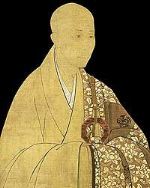 |
Muso Soseki
Japan (1275 – 1351) Timeline |
Muso Soseki first practiced Zen under the guidance of a Chinese teacher but he “failed miserably.” He later studied with the Japanese Zen master Koho Kennichi and soon began to unfold into profound awakening, receiving certification of enlightenment in 1339.
Muso Soseki went on to teach large numbers of students and, like many Zen practitioners, write poetry. He also became an advisor to the Shogun and helped to re-establish trade and communications between Japan and China.
Soseki is perhaps most famous, however, for his profound influence in the art of Zen gardening as spaces to cultivate awareness.
This poem by Muso Soseki is ‘ONEderFullllll’……….and with your excellent commentary
a very special couplet to keep close to heart always!
Thank you so very much! — pj
Thank you the poem and commentary. Your insights further elucidate the deep meanings!
Dear Ivan..
Hope you are feeling better these days.
Yes this is an excellent poem.
What you describe is true..
For a sage there is no difference between within and without.
And then we see beauty only when our mind is beautiful..when we know what actually the beauty is and then all is like that beautiful landscape Muso describes.
And when one is pure there is no dust..
Thanks
Stay blessed.. and I have a great respect and regard for you and the work that you are doing..
Again thanks for the book.
Bashir
How human body
and the wonderful nature
gets created out of
the five elements
air earth fire sky and water
How human minds
perceive and act in all
variety forms
How different thoughts
feelings and emotions arise
in the intellects
all these things are strange
and strangest is the current
running in the human body
How would a house look
whose lamp gets extinguished.
Dear Ivan
Simple complexity, inter-penetrating, one-seeing this, each syllable a drop of breath. A wonderful poem. Thank you. And thanks too for your incisive and cogent commentary. I treasure this.
Go well, as always,
Pete.