Archive for May, 2025

May 23 2025

Layman P’ang – My daily activity is not unusual

Published by under Poetry

My daily activity is not unusual
by P’ang Yun (Layman P’ang)

English version by Satyavayu

My daily activity is not unusual;
I just remain in spontaneous harmony.
Not grasping or rejecting,
nothing left to assert or oppose.
What use are fancy titles
and expensive clothes of vermilion and purple?
This entire mountain is free
of even a speck of dust.
Supernatural powers and miraculous activity:
fetching water and carrying firewood


/ Image by Alexander Klimm /

Something quiet today. A reminder to us of the magic found in our ordinary moments.

My daily activity is not unusual;
I just remain in spontaneous harmony.

When the mind comes to rest and ceases to kick up its own dust, we can finally, perhaps for the first time, see reality in its most beautiful, clear form.

This entire mountain is free
of even a speck of dust.

That’s when the miraculousness of each moment reveals itself.

Supernatural powers and miraculous activity:
fetching water and carrying firewood

So much beauty awaits us just beneath the disruptions of the mind. Whatever work we have before us, even when difficult or frightening, in whatever world we find ourselves moving through, let us set aside time to quiet down and truly see. We can deny the truth. We can cover it over with busyness and cruelty. But don’t be fooled. Heaven is barely held in by the surface rind of reality.


Recommended Books: P’ang Yun (Layman P’ang)
This Dance of Bliss: Ecstatic Poetry from Around the World The Enlightened Heart: An Anthology of Sacred Poetry Haiku Enlightenment: New Expanded Edition The Sayings of Layman P’ang: A Zen Classic


P'ang Yun (Layman P'ang), P'ang Yun (Layman P'ang) poetry, Buddhist poetry P’ang Yun (Layman P’ang)

China (740? – 808) Timeline
Buddhist : Zen / Chan

Continue Reading »

One response so far

May 23 2025

helping

A helping hand
is a holy thing.

No responses yet

May 16 2025

R. S. Thomas – Via Negativa

Published by under Poetry

Via Negativa
by R. S. Thomas

Why no! I never thought other than
That God is that great absence
In our lives, the empty silence
Within, the place where we go
Seeking, not in hope to
Arrive or find. He keeps the interstices
In our knowledge, the darkness
Between stars. His are the echoes
We follow, the footprints he has just
Left. We put our hands in
His side hoping to find
It warm. We look at people
And places as though he had looked
At them, too; but miss the reflection.

— from Through Corridors of Light: Poems of Consolation in Time of Illness, Edited by John Andrew Denny


/ Image by tanakawho /

This is a haunting poem, yet lovely and uplifting at the same time. God is a kind of a ghost in this poem, a tangible absence.

…God is that great absence
In our lives, the empty silence
Within…

And that is really the poet’s point. So often we struggle to imagine what God is, the qualities and awareness associated with that immense… Something. But this poem is a meditation on the Via Negativa, that is, the recognition that the Eternal is not a “thing” at all. Every definition or description or quality we attach to the Divine is necessarily a limitation on the Divine Nature and, therefore, incomplete. To turn God into an object that can be described is to make God a subset of Existence, when the Eternal is the Whole of Existence and beyond. The idea behind the Via Negativa is that God cannot be adequately conceptualized by the limited human intellect with attributes of a limited physical reality, and so God is best discovered through negation. In other words, God is all-encompassing, and therefore perceived as a sort of vibrant Absence, a sort of haunting Presence within the empty spaces of our perception…

…He keeps the interstices
In our knowledge, the darkness
Between stars. His are the echoes
We follow…

That ache we universally feel, that absence can feel to the soul like an existential betrayal inherent within reality. Most of us reflexively turn from that feeling and run from it, endlessly distracting our awareness so we don’t feel it so painfully. But, ultimately, that’s not very effective, and it is never satisfying.

We put our hands in
His side hoping to find
It warm.”

This is, of course, a reference the story in the Gospels when “doubting” Thomas would not believe that the risen Christ stood before him until he could touch the wounds in Christ’s side. Here the poet sees that wound as another representation of that hauntingly empty space, which reveals itself to be both real and also divine. There is a void we all sense and mostly try to ignore. When we no longer recoil and instead reach out to touch that emptiness, we hope to feel warmth, life, presence within the apparent absence — and we do.

Mystics encourage us to look deeper, to fully encounter that “great absence,” to sit with it. Eventually we discover to our surprise that that terrible void is, in truth, filled with immense life and an indescribable bliss. Our very being flows from that immense and spacious No-Thing-Ness. If we name It, if we describe or define It, that my help our understanding up to a point, but if we cling too tightly to those names and descriptions, we limit our full awareness and vision. This is the truth of the Via Negativa.


Recommended Books: R. S. Thomas

For Lovers of God Everywhere: Poems of the Christian Mystics Soul Food: Nourishing Poems for Starved Minds R. S. Thomas: Selected Poems R. S. Thomas (Everyman Poetry) R. S. Thomas: Collected Poems 1945-1990
More Books >>


R. S. Thomas, R. S. Thomas poetry, Christian poetry R. S. Thomas

Wales (1913 – 2000) Timeline
Christian

Continue Reading »

One response so far

May 16 2025

Unedited

Unedited memory.
Undistracted mind.
Unbound identity.
Unlimited awareness.

No responses yet

May 09 2025

Mechthild of Magdeburg – Effortlessly

Published by under Poetry

Effortlessly
by Mechthild of Magdeburg

English version by Jane Hirshfield

Effortlessly,
Love flows from God into man,
Like a bird
Who rivers the air
Without moving her wings.
Thus we move in His world
One in body and soul,
Though outwardly separate in form.
As the Source strikes the note,
Humanity sings —
The Holy Spirit is our harpist,
And all strings
Which are touched in Love
Must sound.

— from The Enlightened Heart: An Anthology of Sacred Poetry, by Stephen Mitchell


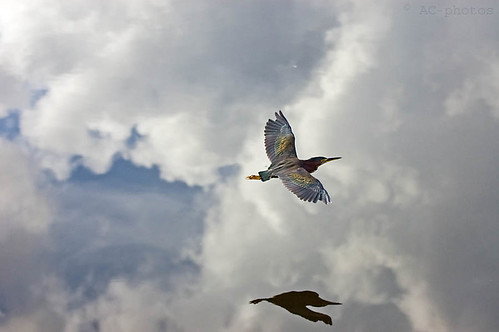
/ Image by ac4photos /

Effortlessly,
Love flows from God into man,
Like a bird
Who rivers the air
Without moving her wings.

Isn’t that image wonderful? The words themselves flow through us, like gentle music. That opening affirmation is so lovely that it’s easy to miss importance of the next few lines:

Thus we move in His world
One in body and soul,
Though outwardly separate in form.

When we discover that total integration of self, when every aspect of body and soul recognizes itself as a harmonious unity, the sense of the effortful self disappears. Our actions and movement through the world flow without friction. We normally take it for granted, the presence of a constant resistance in every action. What is that resistance? It is the fingerprint of the ego as it declares through each effort, “I am here! I did this!” It is a declaration of separation. But instead, when we are overcome with love and wholeness, the ego fades, no separation is seen, and we, in turn, flow.

Think of it this way: Just as swimmers shave their bodies to eliminate the constant drag of body hair in order to glide through the water, shedding the ego through love allows us to glide with surprising ease through the world. This is how saints and masters manage to act with such natural grace of spirit.

And all strings
Which are touched in Love
Must sound.

=

The Catholic Church has elected a new pope, who has taken the name Leo XIV. The previous pope, Francis, was a much-needed voice of compassion when it came to questions of global poverty, immigrants and refugees, the suffering of occupied and colonized peoples, and the desperate needs of the environment. It remains to be seen if the new pope will oppose the regressive factions within the Vatican and live up to the historical moment.

Ultimately, of course, we should not wait for perfect popes or presidents or prime ministers. It is ourselves we truly wait for. The goal is always to allow Love to flow into ourselves and through ourselves into the world until, one-by-one we light up and discover the underlying Unity. With so much threat and uncertainty in the world, it is easy to see and feel only that onslaught. But in complete disregard for our own fears, there yet remains that glowing, blissful Oneness beneath. The more we recognize and nurture it in ourselves and the more we help others to do the same, the more the world can let go of its terrible dramas and awaken to its inherent heavenly nature. It may take great striving to get there, but when it happens, it happens — effortlessly.

Have a beautiful day! Sending love to you all.


Recommended Books: Mechthild of Magdeburg

Poetry for the Spirit: Poems of Universal Wisdom and Beauty Women in Praise of the Sacred: 43 Centuries of Spiritual Poetry by Women The Enlightened Heart: An Anthology of Sacred Poetry German Mystical Writings: Hildegard of Bingen, Meister Eckhart, Jacob Boehme, and others The Mystic in Love: A Treasury of Mystical Poetry
More Books >>


Mechthild of Magdeburg, Mechthild of Magdeburg poetry, Christian poetry Mechthild of Magdeburg

Germany (1207 – 1297) Timeline
Christian : Catholic

Continue Reading »

One response so far

May 09 2025

this moment

The encounters of this moment
fill the world.

No responses yet