May 23 2025
Layman P’ang – My daily activity is not unusual
My daily activity is not unusual
by P’ang Yun (Layman P’ang)
English version by Satyavayu
My daily activity is not unusual;
I just remain in spontaneous harmony.
Not grasping or rejecting,
nothing left to assert or oppose.
What use are fancy titles
and expensive clothes of vermilion and purple?
This entire mountain is free
of even a speck of dust.
Supernatural powers and miraculous activity:
fetching water and carrying firewood
/ Image by Alexander Klimm /

Something quiet today. A reminder to us of the magic found in our ordinary moments.
My daily activity is not unusual;
I just remain in spontaneous harmony.
When the mind comes to rest and ceases to kick up its own dust, we can finally, perhaps for the first time, see reality in its most beautiful, clear form.
This entire mountain is free
of even a speck of dust.
That’s when the miraculousness of each moment reveals itself.
Supernatural powers and miraculous activity:
fetching water and carrying firewood
So much beauty awaits us just beneath the disruptions of the mind. Whatever work we have before us, even when difficult or frightening, in whatever world we find ourselves moving through, let us set aside time to quiet down and truly see. We can deny the truth. We can cover it over with busyness and cruelty. But don’t be fooled. Heaven is barely held in by the surface rind of reality.
Recommended Books: P’ang Yun (Layman P’ang)
 |
 |
 |
 |
|
| This Dance of Bliss: Ecstatic Poetry from Around the World | The Enlightened Heart: An Anthology of Sacred Poetry | Haiku Enlightenment: New Expanded Edition | The Sayings of Layman P’ang: A Zen Classic | |
|
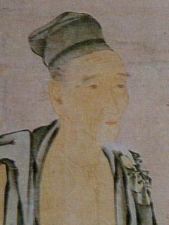
P’ang Yun (Layman P’ang)
China (740? – 808) Timeline |
The Sayings of Layman P’ang is an important Chinese Zen / Chan classic, a collection of short, sometimes enigmatic dialogs and poems from this unusual sage. He is one of the first of the great Chinese Buddhist masters to reject the life of a monk even after enlightenment, choosing instead to remain a simple “layman.” That act opened the way for subsequent generations of non-monastic seekers and householder sages.
He did, however, reject wealth and worldly attachments as a snare. He was prosperous in his youth, but decided that he worried too much about his wealth, so he decided to get rid of it. Initially, he was going to give his wealth away, but then thought that whoever received his wealth would become as attached to it as he had. So, instead, he piled all his worldly goods on a boat, floated it out to the middle of a lake, and sank it.
After that, he, his wife, and their children lived a simple life, supporting themselves by making bamboo utensils.
Despite his unique pathway, he lived a rich life interacting regularly with many of the enlightened Buddhist masters of his era, and they honored him as belonging among them..
Hi Ivan
I have nothing profound to say but just wanted to thank you for posting this as I have always loved it so much and needed reminding especially the living in spontaneous harmony – such a beautiful phrase