Sep 12 2025
Layman P’ang – A ghost in the mirror
A ghost in the mirror is the mind
by P’ang Yun (Layman P’ang)
English version by Ivan M. Granger
A ghost in the mirror is the mind:
Not there, yet not unreal.
When the mind is as it is,
the world too simply is.
Grasping neither reality nor emptiness,
you are neither holy nor wise,
just an ordinary man done with his work.
/ Image by Peter Schulz /

When the mind is as it is,
the world too simply is.
This is such a lovely statement that seems to feed so naturally into a serene state, but it is also saying something very powerful that overturns our common assumptions.
Most often we imagine that if our lives and society and the world as a whole would just settle down, then perhaps we could experience peace. And so we turn all of our efforts outward, trying to force a sense of peace in the world. That doesn’t usually work so well, does it?
It can get to the point that turning inward, prayer, meditation can feel like a betrayal, as if we are abandoning the outer world to chaos, while we selfishly seek a separate sense of peace.
But the strange truth is that we don’t create a peaceful environment and then experience peace. The reality is the reverse. We discover peace within, and only then can begin to build it outwardly. More surprising still is that we come to see that the “world” outside of ourselves as but a reflection of our own inner state. When we discover peace within, the world comes naturally to rest as well. Does that mean problems in the world disappear? No. But we recognize the peace that underlies even those problems, and we begin to see new ways to coax that peace to the surface. At peace, in peace, we invite peace.
Grasping neither reality nor emptiness,
Enlightened awareness is not a game of carefully constructed definitions. It is not a feat of the intellect, which tends to separate and categorize perceived reality. Even at its most subtle and incisive, when the intellect tries to separate the real from the non-real, it is setting up a filter upon the awareness.
When the mind is truly at peace, not only have thoughts come to a rest, but more importantly those unconscious mental filters no longer pre-sift our perception of reality.
The poet seems to be describing a trail for us to follow, a path found precisely where existence meets Nirvana, and we must gracefully walk between the two.
Without clinging to either “reality” or “emptiness,” the whole and unfiltered vision comes upon us.
Engulfed by this truth, we are not “wise” or “holy” — those are further categories. No, we just are. We are not this or that, we are.
just an ordinary man done with his work.
We no longer feel the need to do something to validate our existence; we undeniably are. No work remains to be done. One may still be active in the world, but there is no “work” behind it, simply the dance of stillness, presence, and flow. Observers may disagree, but you understand that all that seemed important about your identity has trickled away, and you have become unremarkable, purely as you are — an ordinary fellow, alive in this extraordinary world.
Recommended Books: P’ang Yun (Layman P’ang)
 |
 |
 |
 |
|
| This Dance of Bliss: Ecstatic Poetry from Around the World | The Enlightened Heart: An Anthology of Sacred Poetry | Haiku Enlightenment: New Expanded Edition | The Sayings of Layman P’ang: A Zen Classic | |
|
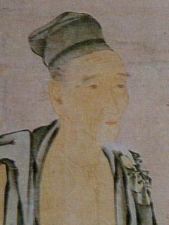
P’ang Yun (Layman P’ang)
China (740? – 808) Timeline |
The Sayings of Layman P’ang is an important Chinese Zen / Chan classic, a collection of short, sometimes enigmatic dialogs and poems from this unusual sage. He is one of the first of the great Chinese Buddhist masters to reject the life of a monk even after enlightenment, choosing instead to remain a simple “layman.” That act opened the way for subsequent generations of non-monastic seekers and householder sages.
He did, however, reject wealth and worldly attachments as a snare. He was prosperous in his youth, but decided that he worried too much about his wealth, so he decided to get rid of it. Initially, he was going to give his wealth away, but then thought that whoever received his wealth would become as attached to it as he had. So, instead, he piled all his worldly goods on a boat, floated it out to the middle of a lake, and sank it.
After that, he, his wife, and their children lived a simple life, supporting themselves by making bamboo utensils.
Despite his unique pathway, he lived a rich life interacting regularly with many of the enlightened Buddhist masters of his era, and they honored him as belonging among them..
Thank You for this poem Ivan, this line -‘When the mind is as it is, the world too
simply is’. . .
and for The Thought for the Day and your commentary all so meaningful and helpful
to our beautiful day!
Dear Ivan
The poem is lovely, but it is your commentary that touched and soothed my soul.
Thank you,
Danielle