Nov 11 2022
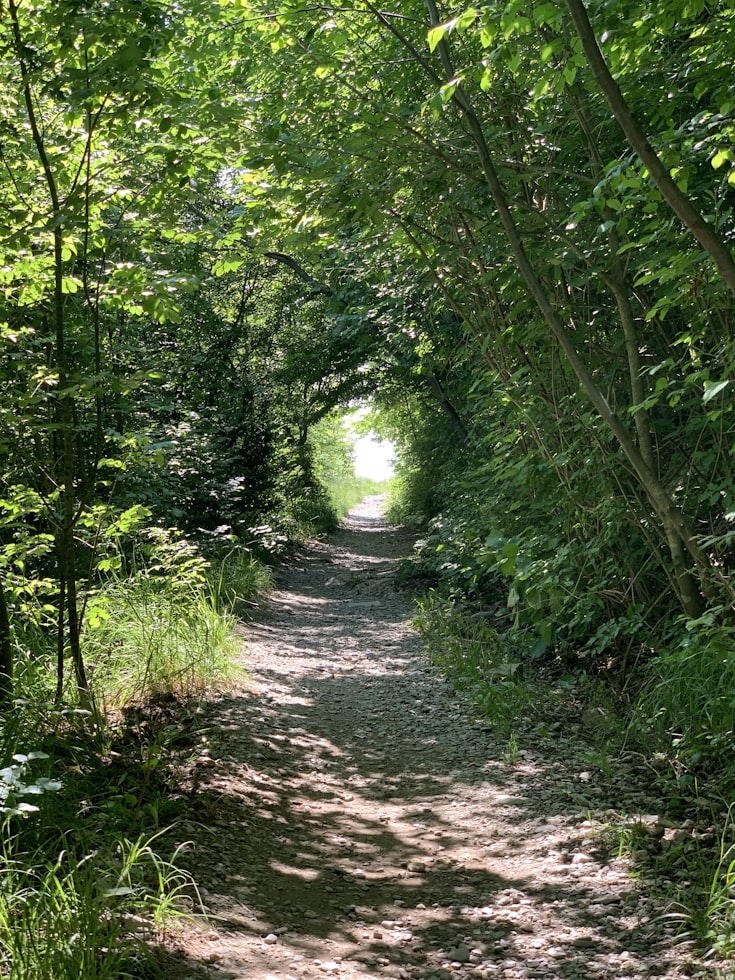
pathway
The pathway in life
runs along the seam
between the heart and the world.
Oct 28 2022
The peacock’s excuse
by Farid ud-Din Attar
English version by Afkham Darbandi and Dick Davis
Next came the peacock, splendidly arrayed
In many-coloured pomp; this he displayed
As if he were some proud, self-conscious bride
Turning with haughty looks from side to side.
‘The Painter of the world created me,’
He shrieked, ‘but this celestial wealth you see
Should not excite your hearts to jealousy.
I was a dweller once in paradise;
There the insinuating snake’s advice
Deceived me — I became his friend, disgrace
Was swift and I was banished from that place.
My dearest hope is that some blessed day
A guide will come to indicate the way
Back to my paradise. The king you praise
Is too unknown a goal; my inward gaze
Is fixed for ever on that lovely land —
There is the goal which I can understand.
How could I seek the Simorgh out when I
Remember paradise?’ And in reply
The hoopoe said: ‘These thoughts have made you stray
Further and further from the proper Way;
You think your monarch’s palace of more worth
Than Him who fashioned it and all the earth.
The home we seek is in eternity;
The Truth we seek is like a shoreless sea,
Of which your paradise is but a drop.
This ocean can be yours; why should you stop
Beguiled by dreams of evanescent dew?
The secrets of the sun are yours, but you
Content yourself with motes trapped in its beams.
Turn to what truly lives, reject what seems —
Which matters more, the body or the soul?
Be whole: desire and journey to the Whole.
 — from The Conference of the Birds, Translated by Afkham Darbandi / Translated by Dick Davis
/ Image by Avinash Kumar /
We have some delightful bird activity here at our new place in Eugene, Oregon. An elderly neighbor feeds the pigeons so, in the mornings, it is not uncommon to hear an explosion of feathered movement followed by the sight of thirty or more pigeons bursting from the nearby yard, flying in concert over our backyard, out and around the neighborhood, before circling back to settle into our neighbor’s yard again. Crows, one-by-one or in small groups of half a dozen also come by in search of food and community with their curiosity and friendly squabbling. Blue jays regularly hop around in the bushes, marking their presence with a sharp edged cry. I often hear more than see the occasional hummingbird, the deep buzzing wingbeats above a tree I happen to be standing beneath accompanied by the tik-tik-tik of their faint call. Yesterday, we had strange and delightful dance of finches in one of our bushes; dozens of the birds were flitting about between branches, pausing for a bare instant, before flying out and back in again to find new branches, reconfiguring themselves again and again. The bush was alive with their movement.
Appropriately, I have been rereading Attar’s Conference of the Birds. This is one of my favorite collections of poetry and I periodically return to enjoy it anew.
In The Conference of the Birds is a collection of poems that form a larger narrative about a group of birds who decide to go on a journey to find their king, the legendary Simurgh. This forms a rich spiritual allegory when we understand that the birds represent human souls and their leader, the hoopoe, is their sheikh or spiritual master. The elusive Simurgh is, of course, God. Through the poems and stores in The Conference of the Birds, the birds confront their fears while journeying through seven valleys before they ultimately find the Simurgh and complete their quest. The thirty birds who ultimately complete the quest discover that they themselves are already one with the Simurgh, playing on a pun in Persian (si and murgh can translate as 30 birds) while giving us an esoteric teaching on the presence of the Divine within us collectively.
I have read several English translations and, while several are good, I have yet to come across a version in English that I feel truly soars.
The version by Darbandi and Davis, excerpted here, in my opinion gives us the best poetic rendering, though I find it frustrating too. It manages to keep up a decent, if somewhat forced rhyming structure, while covering the full collection of poems that makes up The Conference of the Birds. Translating Attar’s poetry as a long series of rhyming couplets can feel to modern readers like a run-on sentence, however. It is difficult to keep the attention from wandering while reading this version cover to cover.
Edward FitzGerald, who famously rendered the Rubaiyat of Omar Khayyam into English, also did a translation of Attar’s masterpiece. FitzGerald had a rare gift for working with rhyme in English and that shows in his translation of The Conference of the Birds, but his poetic construction, which worked beautifully for the short four line quatrains of the Rubayat, can become exhausting and feel overwrought for longer pieces. He also only translated sections and those so loosely, that at times it feels as if important elements are missing.
I have a nice little version of Conference of the Birds by Raficq Abdulla. It contains selected passages accompanied by traditional Persian paintings of birds. At times this translation works beautifully, at others it feels awkward. This version of The Conference of the Birds, while a pleasant sampler, does not give us the overarching narrative.
The version I am currently reading is a new translation by Sholeh Wolpé. The poetry is rendered in modern English without attempting to rhyme. On some level I miss the rhyme but appreciate the choice — few modern poets can rhyme well in English. The rendering of this version does not feel especially “poetic” but it has a life to it and it’s very readable. What I especially like about this version is the format. In the beginning, where the birds are offering up excuses for not going on their journey, Wolpé gives us clear distinctions that allows each passage to stand on its own while fitting well in the larger narrative: The bird offers its excuse, the hoopoe answers, and then we get prose anecdote that illustrates the deeper wisdom of the hoopoe’s guidance. It works well with Attar’s structure.
So which version do I like best and hope to read again in the future? I have to say all of them. I find myself reading a passage in one and thinking, That’s good, but I feel like there’s something more. So I then turn to one of the other versions, comparing them, weighing them, trying to construct my vision of the Simurgh by combining them all.
A few notes about the peacock’s excuse…
With each bird we are invited to ask ourselves what qualities they represent in the human soul. The peacock is proud of its beauty, which displays a special attention from God during Creation. But the peacock is haunted by a terrible burden. It had dwelled in the Garden of Paradise but was seduced by the serpent, who coaxed the peacock to sneak it into paradise. As a result of this betrayal, the peacock was expelled from paradise. Now all the peacock longs for is a return to the Garden.
And this is the peacock’s excuse for not wanting to make the spiritual journey to find the Simurgh. The Simurgh (God) is a vague unknown goal. His love is for paradise, which he remembers as real. That is all he longs for. It may sound odd to separate paradise and God in this way, but that suggests the spiritual blindness of the peacock. Rather than recognizing that it is only the presence of God that imbues everything, including paradise, with beauty and meaning, the peacock seeks a lost memory that is more surface and feeling than real depth. This is a sort of spiritual nostalgia, a turning backward to a half-remembered perfect past, rather than looking forward toward the Source that makes every land a paradise.
As the hoopoe says in response:
You think your monarch’s palace of more worth
Than Him who fashioned it and all the earth.
I love the lines that follow:
The home we seek is in eternity;
The Truth we seek is like a shoreless sea,
Of which your paradise is but a drop.
Recommended Books: Farid ud-Din Attar
|
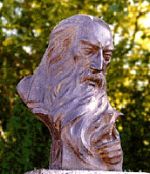
Farid ud-Din Attar
Iran/Persia (1120? – 1220?) Timeline |
Oct 21 2022
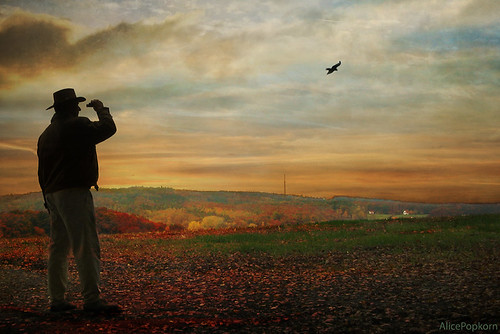
Ten thousand flowers in spring, the moon in autumn
by Wu Men Hui-k’ai
English version by Stephen Mitchell
Ten thousand flowers in spring, the moon in autumn,
a cool breeze in summer, snow in winter.
If your mind isn’t clouded by unnecessary things,
this is the best season of your life.
 — from The Enlightened Heart: An Anthology of Sacred Poetry, by Stephen Mitchell
/ Image by Alice Popkorn /
Since I haven’t sent out an email for the past few weeks, I missed commenting on the lovely autumn moon recently. Did you step outside to look at it?
Here in Oregon, the leaves are turning colors, the mornings are misty, the afternoons have a blue haze, and the autumn moon on a clear night gives a quiet glow to the land.
The flowers say it, the moon, the breeze, the snow. Each time we pause to notice the living world around us it blesses us and says, May your mind be unclouded, and may every season be the best season of your life!
A good meditation for us as we enter autumn.
this is the best season of your life.
Responses to Homelessness
I received so many touching and profound responses to my email about interacting with our brothers and sisters who are living on the streets. Some of you spoke of the work you do with distributing food, others about your own personal experiences of homelessness. Your insights and various forms of service continue to inspire my own journey.
I shared a couple of your letters, with permission, on the Poetry Chaikhana blog. Worth reading.
People Not Labels
Homeless Son
Recommended Books: Wu Men Hui-k’ai
|
Wu Men Hui-k’ai
China (1183 – 1260) Timeline |
Oct 02 2022
This short note sent to me is a good reminder to us all just how meaningful a helping hand can be. Shared with permission.
=
Homeless are people too. And yes you have to be mindful of the safe and unsafe personality.
My son has been homeless. Not our choice. He is now always safe with us.
We have many stories of kind people he met along his way.
He never considered himself homeless as he said he “even has his own bedroom.”
A couple in Williams Arizona called us and were worried about him. It was snowing and he was in swim trunks. The man gave him a coat. Later the couple had a motel and took him in for the night. Washed his clothes, ordered pizza for him and put him on the greyhound the next morning.
Beyond kindness.
Many stories of kind people.
Oct 02 2022
This response from a Poetry Chaikhana reader is so full of wise observations and insight that I paused several times reading it.
With permission I am sharing it with you.
=
Three years ago I was to leave my home due to financial reasons, but more deeply a soul calling to awaken more fully and find home within. I have lived in 5 different homes since then. The initial shock of being ” homeless” was one filled with fear and shame.
Ironically, one month after leaving my home and still in fear I was asked to be a chaplain for a Saturday noon meal program at a church which hosted an average of 75 persons facing homelessness and low income or poverty. It was the most incredible journey of my life to
be with them for 6 months and hear their stories and support them.
Your poem today recognizes the Mother. All in this world need the recognition and care that a mother can bring. Many young men with addictions shared their stories with me as I became a mother to them. They would stand up when they saw me enter the door, hold out their arms and give me a hug.They would also recognize the Light within me saying that there was something “different” about me.
I elected to attend a few workshops about homelessness and learned things that rapidly tore big holes in my preconceived ideas of “these people”.
I will mention a few items to answer your posted inquiry .
1. These are not homeless people. They are persons facing homelessness just as another may be facing addiction or cancer. Labeling just adds to the burden.
2. The number of persons attending each week was 75
and of various ages, race, religion, and professional backround. They all ate in peace and were respectful of staff and each other. A friend suggested that this was so because they had stopped their striving.
3. The faith of many of them would put most to embarrassment and shame.
4. Arrogance was missing and replaced with gratitude for what was.
5. Whatever food was left over they would ask to take back to their “neighbor”.
6. A shower with soap was a dream. Clean socks and warm coat, too. I invite you to watch videos on YouTube of persons facing homelessnes who are given a haircut and clean clothes. Self esteem skyrockets.
7. For women, being clean and looking pretty is a rare gift especially after 10 years of being on the street and possibly being raped along the way.
8. Rides to court appearances or medical appointments is needed for they have no transportation. Some do have surgery but are dumped on the street right afterwards by medical staff.
9. I met with one who was an artist and needed pencil and paper.
10. Some do not want to be touched because of prior severe abuse .
11. After this chaplain experience, I would keep brochures and information on city resources and shelters in an envelope to give to those standing on the corner. Some just arrive from other cities being just dropped off in a unfamiliar city. I always asked if they needed food or shelter.
12. Pray for them.
13. Get informed about the homeless population. Don’t assume you know whose there.
Many you can’t see.
14. Make a friend. I can tell you that I needed “family”. There can be a sense of isolation. Many street people do find family with other street people.
15. If you want to know what’s going on in your town, ask a street person. They know all.
Many are afraid to tell police what they see.
16. Many need help with shower, clothing and ID to go to a job interview. Stolen ID and backpacks are very common
In shelters. (So are bed bugs)
17. Some facing homelessness are mothers with children living in vehicles.
Children need help with homework. One church offered an after school program to help with homework. This offers healthy relationships too provided all helpers are screened. These children are often considered dumb or are assigned learning labels because they are homeless.
Not a good start to one’s life.
Remember that there are artists, writers, musicians and dancers among those you see on the street.
Sep 30 2022
Trinket
by Ivan M. Granger
Mother,
you are too practical,
trying to put
this odd lump
to good use.
Melt me down.
Make of me
some golden trinket,
some frivolous, bejeweled thing
to please
your eye.
Hang me
from your ear;
let me rest
against the warm pulse
of your neck.
Go ahead, Mother,
it is just you and I
before the mirror.
I won’t tell
if you want to spin
and laugh
like a girl
to see
this bit of glitter
set off
your smile.
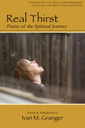 — from Real Thirst: Poetry of the Spiritual Journey, by Ivan M. Granger
/ Image by lois komolafe /
It is the middle of Navratri for my Hindu friends, the nine nights of the Goddess. I thought of one of my own poems to the Divine Mother, Trinket.
Jaya Jagadambe, he Ma Durga
All praise to the Cosmic Mother, Ma Durga!
…
Along with all of the natural beauty of our new home here in Eugene, Oregon, we notice a significant homeless population for a relatively small city. Colorado had its homeless too, but in smaller numbers, and usually panhandling on street corners hoping for drivers to stop and stretch across the passenger seat to hand over a bill through the window.
Here in Eugene, the homeless are more part of the city, more present and somehow more integrated with the city. We no longer notice someone through the windshield as we’re driving by, deciding if we want to slow down and give a couple of dollars or continue on our way. In Eugene, we share the sidewalks, walking by each other downtown. Many have their regular spots, they have their place in the community, they are known, they are still people.
Earlier this week we spoke with a neighbor who is getting rid of some items and she mentioned that she like to donate to individuals, when she can. She knew the name of a homeless person who regularly stands outside the local grocery store, so she took the items directly to him.
We recently noticed an article in the local paper about a homeless man who had died and was much loved in the community for the music he used to play around downtown. An entire article about the passing of a homeless man who was still an important part of the community.
I find that profoundly touching.
Of course, my wife and I are having to recalibrate our comfort levels as well as learn to assess safety differently. Some of the people we encounter are clearly dealing with substance abuse issues. Some have obvious mental health issues (and with social programs having been slashed in this country for decades, often the street is the only place for them). Behaviors can be erratic, unpredictable. Some are people just struggling to regain a foothold in society. Some are carried by a threadbare high while seeking an ever lower bottom to hit.
But they are us. Seeing them in and among the rhythms of this small city reminds me that, regardless of their struggles or rough appearance, they are our brothers and sisters. They are part of my community too.
So how do we interact with these individuals? How do my wife and I judge safety walking through downtown? When do we make eye contact, maybe offer a friendly word, perhaps hand over a dollar, and when is it best to cross to the other side of the street and keep our distance? We’re still figuring that out.
I’m curious what your thoughts and experiences are. What sort of charities do you give to that you think are doing good work with the complex issues of hunger and homelessness? And do you have special ways of interacting with the homeless? I know of one person who used to put together care packs of clean socks, toothbrushes, dry foods, miscellaneous necessities and just kept them with him to hand out. Have you come up with creative ideas to help or meaningful ways to connect?
May the Mother’s love connect us all and care for us all!
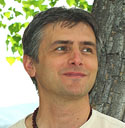
Recommended Books: Ivan M. Granger
|
Ivan M. Granger
US (1969 – ) |
Sep 30 2022
If I turn a blind eye to the suffering of another
…I become a little more blind.
Sep 23 2022
God Speaks to Man
by Edmond Bordeaux Szekely
I speak to you.
Be still
Know
I am
God.
I spoke to you
When you were born.
Be still
Know
I am
God.
I spoke to you
At your first sight.
Be still
Know
I am
God.
I spoke to you
At your first word.
Be still
Know
I am
God.
I spoke to you
At your first thought.
Be still
Know
I am
God.
I spoke to you
At your first love.
Be still
Know
I am
God.
I spoke to you
At your first song.
Be still
Know
I am
God.
I speak to you
Through the grass of the meadows.
Be still
Know
I am
God.
I speak to you
Through the trees of the forests.
Be still
Know
I am
God.
I speak to you
Through the valleys and the hills.
Be still
Know
I am
God.
I speak to you
Through the Holy Mountains.
Be still
Know
I am
God.
I speak to you
Through the rain and the snow.
Be still
Know
I am
God.
I speak to you
Through the waves of the sea.
Be still
Know
I am
God.
I speak to you
Through the dew of the morning
Be still
Know
I am
God.
I speak to you
Through the peace of the evening.
Be still
Know
I am
God.
I speak to you
Through the splendor of the sun.
Be still
Know
I am
God.
I speak to you
Through the brilliant stars
Be still
Know
I am
God.
I speak to you
Through the storm and the clouds.
Be still
Know
I am
God.
I speak to you
Through the thunder and the lightning.
Be still
Know
I am
God.
I speak to you
Through the mysterious rainbow.
Be still
Know
I am
God.
I will speak to you
When you are alone.
Be still
Know
I am
God.
I will speak to you
Through the Wisdom of the Ancients.
Be still
Know
I am
God.
I will speak to you
At the end of time.
Be still
Know
I am
God.
I will speak to you
When you have seen my Angels.
Be still
Know
I am
God.
I will speak to you
Throughout Eternity.
Be still
Know
I am
God.
I speak to you
Be still
Know
I am
God.
 — from The Essene Gospel of Peace: Book Two: The Unknown Books of the Essenes, by Edmond Bordeaux Szekely
/ Image by Sage Friedman /
This selection feels like a song, or a chant. It’s repeated lines — Be still know I am God — endlessly pull us back to the same spot. They become a command to the mind (which, frankly, needs all the help it can get to discover stillness).
We also have the contrast of the stillness and speaking. The only way we hear God speaking to us is through profound stillness. But it is not that the God speaks in words. God speaks to us through all of life’s experiences, and through the natural world — through the trees and the mountains, through our first sight and first thought and first love. God speaks to us through our perception and our consciousness. But when we lack stillness, we take everything at face value and don’t know what’s really happening.
The deep truth is that every experience is an experience of consciousness. When we are still enough to truly see this, then we witness an expansive presence permeating the vast panorama, we ‘hear’ a voice that speaks not in words but in the fulness of meaning. Then it’s no longer theory or theology, that’s when we recognize what “I am” — Being — really is. That’s when we know God.
Be still
Know
I am
God.
It’s a quiet morning here in Oregon. A light mist clings to the treetops, bringing the circle of the world in close and comforting.
Did you pause to acknowledge the equinox? We stand at that delicate moment of balance between light and dark, when light and life are once again ascendant.
These cardinal points of the calendar, the equinoxes and solstices, celebrated by every religion and culture the world over, remind us of the rhythms of the world, the eternal cycle of life, death, and new life. They remind us that there is a pattern in the world, and we have a place in its unfolding.
The mind can hardly conceive of so much history in the land, the countless turnings of the seasons, year upon year, life upon life, the rising and falling of all things. Even so nature never tires and always brings us once again to renewal.
When we look deeply to the natural world, we recognize it as an embodiment of the sustaining presence of spirit, just as a mother cares for her children.
A reminder to us all: when we ignore and damage the natural world, we not only imperil our physical survival, we sever our very connection to the Divine. A book and a building are not enough. The human spirit needs cathedrals of trees, towering mountains, and fields of spring wildflowers as places of prayer. Wild, living places — cherish them, fight for them; they whisper to us of our true home.
I speak to you.
Be still
Know
I am
God.
If you’re not feeling shifting rhythms of the equinox yet, go outside, remove your shoes and walk upon the earth, wrap your arms around a tree. See what happens.
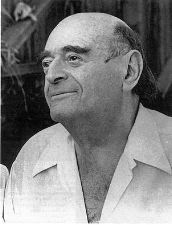
Recommended Books: Edmond Bordeaux Szekely
|
Edmond Bordeaux Szekely |
Sep 16 2022
The Tavern Haunters
by Mahmud Shabistari
English version by Andrew Harvey
Being a tavern haunter means
Being sprung free of yourself.
The tavern is where lovers tryst,
Where the bird of the soul comes to rest
In a sanctuary beyond space and time.
The tavern haunter wanders lonely in a desert
And sees the whole world as a mirage.
The desert is limitless and endless —
No one has seen its beginning or its end,
And even if you wandered in it a hundred years
You would not find yourself, or anyone else.
Those who live there have no feet or heads,
Are neither “believers” nor “unbelievers.”
Drunk on the wine of selflessness,
They have given up good and evil alike.
Drunk, without lips or mouth, on Truth
They have thrown away all thoughts of name and fame,
All talk of wonders, visions, spiritual states,
Dreams, secret rooms, lights, miracles.
The aroma of the Divine Wine
Has made them abandon everything;
The taste for Annihilation
Has sent them all sprawling like drunkards.
For one sip of the wine of ecstasy,
They have thrown away pilgrim staff, water jar, and rosary.
They fall, and then they rise again,
Sometimes bright in union,
Sometimes lost in the pain of separation;
Now pouring tears of blood,
Now raised to a world of bliss,
Stretching out their necks like racers;
Now, with blackened faces, staring at a wall,
Or faces reddened with Unity, chained to a gibbet;
Now whirling in mystic dance,
Lost in the arms of the Beloved,
Losing head and foot like the revolving heavens.
Every passage that the Singer sings them
Transmits the rapture of the invisible world,
For mystic singing is not only words and sounds;
Each note unveils a priceless mystery.
They have thrown away their senses
And run from all color and perfume,
And washed in purified wine
All the different dyes: black, green, or blue.
To them, devotion and piety are only hypocrisy;
They are weary of being either masters or disciples;
They have swept the dust of dunghills from their souls,
Without telling even a tiny part of what they see,
And grasped in bliss at the swirling robes of drunkards.
They have drunk one cup of the pure wine
And have become — at last, at long last — real Sufis.
 — from Perfume of the Desert: Inspirations from Sufi Wisdom, by Andrew Harvey / Eryk Hanut
/ Image by Batmunkh Ch /
The aroma of the Divine Wine
Has made them abandon everything;
The taste for Annihilation
Has sent them all sprawling like drunkards.
For one sip of the wine of ecstasy,
Wine… Why do so many mystics from all traditions talk of wine and drunkenness and taverns when speaking of ecstatic states of enlightenment? How do I, as a person who does not drink alcohol, understand this sacred wine fixation? Is it just a universally agreed upon metaphor to shock the orthodox? Well, yes, but it is more than that. The mystic’s wine is not wine, yet it is also more than a game of words. This wine is subtle but very real. It can be experienced in a profound, even physical manner.
In certain states, a flowing substance is felt upon the palette, with a taste of ethereal sweetness that can be compared with wine or honey. This is the amrita of yogis, the ambrosia of the Greeks, the prophetic mead of the Norse shamans, the awen oil of the druids. There is a sensation of drinking a subtle liquid, accompanied by a warming and expanding of the heart. The attention blissfully turns inward, the eyelids grow pleasantly heavy and the gaze may become unfocused. A giddy smile naturally spreads across the face for no apparent reason. When the ecstasy comes on strongly, the body can tremble, sometimes the consciousness even leaves the body.
With these experiences, it not only makes sense for mystics to use the language of wine. Observers sometimes mistake this state for actual drunkenness.
Being a tavern haunter means
Being sprung free of yourself.
To someone who has been overcome by this sacred drunkenness, filled with its bliss, all encompassing love, and the vision of universal oneness, religion’s petty formalism seems worse than absurd, it is an offense.
To them, devotion and piety are only hypocrisy
Drinking deep from the tavern’s draught teaches us what religion is really about, and it is not about joining the right group or following the rules exactly so. The mystic’s wine is the proper measure of piety, the mark of initiation, not the number of days spent in church or mosque or synagogue.
I’m not an advocate of heavy drinking, but if you can find that special vintage, drink deep.
They have drunk one cup of the pure wine
And have become — at last, at long last — real Sufis.
Recommended Books: Mahmud Shabistari

|
Mahmud Shabistari
Iran/Persia (1250? – 1340) Timeline |
Sep 16 2022
A reflection never satisfies.
In the search for our true face, there is
no journey,
nothing to reach for.
We inhabit ourselves, instead.
Sep 09 2022
Silent friend of many distances, feel
by Rainer Maria Rilke
English version by Stephen Mitchell
Silent friend of many distances, feel
how your breath enlarges all of space.
Let your presence ring out like a bell
into the night. What feeds upon your face
grows mighty from the nourishment thus offered.
Move through transformation, out and in.
What is the deepest loss that you have suffered?
If drinking is bitter, change yourself to wine.
In this immeasurable darkness, be the power
that rounds your senses in their magic ring,
the sense of their mysterious encounter.
And if the earthly no longer knows your name,
whisper to the silent earth: I’m flowing.
To the flashing water say: I am.
— from The Enlightened Heart: An Anthology of Sacred Poetry, by Stephen Mitchell

/ Image by switon.michal /
It has been a while we had a poem by Rilke.
This is one to reread and savor, I think. Even before we let the meaning of the poem seep into the awareness, the imagery and language draws us into an open state, doesn’t it? Lines like–
Silent friend of many distances, feel
how your breath enlarges all of space.
Let your presence ring out like a bell
into the night.
Move through transformation, out and in.
whisper to the silent earth: I’m flowing.
To the flashing water say: I am.
I basically reproduced two-thirds of the poem there, didn’t I? That’s always a sign of how enamored I am with a poem.
With all its beauty, this poem is a bit haunting. The poet keeps referring to night and darkness. The spaciousness of night, its mystery, the limit of one’s senses. Those final lines put us in the position of being a thing unknown, even to ourselves.
But this doesn’t seem to me a poem of fear or loss, but of encounter. Reading these lines, I feel invited to participate in the great unknown mystery of existence, including my own existence. When we have come to feel trapped by a mundane, too familiar world, that’s a sign that we have forgotten just how immense and terrifyingly beautiful reality is. We need to retrain our eyes to see the spaces between and the secrets behind. We need to remember what it is to be overwhelmed by our own being. And to this ungraspable, always changing world, we can still find it in ourselves to say: I am.
Let your presence ring out like a bell
into the night.
Recommended Books: Rainer Maria Rilke

|
Rainer Maria Rilke
Germany (1875 – 1926) Timeline |
Sep 09 2022
Spiritual practice is a sling shot.
You tug and strain,
but when you have enough tension
— just let go and soar!
Sep 02 2022
Friend, this is the only way
by Sachal Sarmast
English version by Ivan M. Granger
Friend, this is the only way
to learn the secret way:
Ignore the paths of others,
even the saints’ steep trails.
Don’t follow.
Don’t journey at all.
Rip the veil from your face.
 — from The Longing in Between: Sacred Poetry from Around the World (A Poetry Chaikhana Anthology), Edited by Ivan M. Granger
/ Image by paola capelletto /
I have been rereading my book, The Longing in Between, and this poem and commentary caught my attention. I thought I would reshare it…
In July 2010, I was driving home from work, listening to BBC news on the radio, and was saddened to hear of a bombing at a shrine dedicated to a Sufi saint in Lahore, Pakistan. More than 40 people were killed and many more badly injured. People speculated that the bombing was by an extremist group that objected to the inclusive nature of Sufi practice in the region.
Islamic extremists have certainly grabbed headlines in recent years, but the world also has its Christian extremists, Jewish extremists, Hindu extremists… as well as plenty of atheist and non-religious extremist groups. Extremism is not a problem of a particular religion; it is a disruption in the human psyche in general.
Religious extremism has very little to do with religion if you think about it. It is partly a reflexive response to the intensely fragmenting nature of the modern world. And it is partly a reaction against unavoidable, sometimes unsettling encounters with different peoples and cultures and beliefs in our ever more integrated and multi-layered world. But mostly—mostly it is an act of desperation when the heart of true religion has been lost. People become violently obsessed with rules and traditions and texts only when they have lost the sense of what they really point to.
If you know where the Beloved lives, you are content, no need to argue with others over street names. Conflict only arises when you aren’t so certain you know the way; that’s when another person’s map threatens your certainty. Fundamentalism and extremism are an admission of that spiritual uncertainty. Absolutism is not an expression of faith; it is a symptom of the lack of faith. It is a symptom of the lack of true spiritual experience and knowledge.
The real long-term solution to the problem of violent religious extremism in the world is to reawaken that sweet, secret, sacred bliss within ourselves, to gently and generously share it with others, and to create environments nurturing to that continuing quest. The more we fill the world’s dry troughs with fresh water, the less likely it is that people will go insane with blind thirst.
Recommended Books: Sachal Sarmast

|
Sachal Sarmast
Pakistan/India (1739 – 1829) Timeline |
Aug 26 2022
(84) It is the pang of separation that spreads throughout the world (from Gitanjali)
by Rabindranath Tagore
English version by Rabindranath Tagore
It is the pang of separation that spreads throughout the world and gives birth to shapes innumerable in the infinite sky.
It is this sorrow of separation that gazes in silence all night from star to star and becomes lyric among rustling leaves in rainy darkness of July.
It is this overspreading pain that deepens into loves and desires, into sufferings and joys in human homes; and this it is that ever melts and flows in songs through my poet’s heart.
 — from Gitanjali, by Rabindranath Tagore
/ Image by Abhijith P /
It is the pang of separation that spreads throughout the world and gives birth to shapes innumerable in the infinite sky.
Tagore’s poetry is the language of the soul, from its majestic heights to the most heartbreaking sense of separation.
We really get a sense of the void, the terrible gulf between everything that every soul quietly wrestles with…
It is this sorrow of separation that gazes in silence all night from star to star and becomes lyric among rustling leaves in rainy darkness of July.
So how then does he come to a sort of wholeness and universal empathy with his final line?
It is this overspreading pain that deepens into loves and desires, into sufferings and joys in human homes; and this it is that ever melts and flows in songs through my poet’s heart.
That sense of separation — separation from God, separation from Source, and separation from one another — is the fundamental pain of the soul. Every life pain, when we really trace its tendrils, reaches down to that root pain, the basic belief of separation. Every hunger, every craving, is an attempt to spread a thin layer of pleasure over that pain. Every self-inflicted hurt is an attempt to overpower that great ache with the sharp intensity of the moment. Most actions, when carefully dissected, are an attempt to distract ourselves from that terrible emptiness.
You can see that so much of our life force is spent in avoidance of confrontation with that gulf between self and other, the individual and the Eternal.
Most people look away, spend all their life running from that canyon of separation. But the mystic sits on the cliff edge and, though frightened, stares endlessly into the great space… until suddenly an amazing thing happens — in a flash the emptiness is seen to be not a distance but a connection, a joining. The gulf is itself the bridge spanning the distance, and we discover that we can walk upon it, that there was, in fact, never any separation or distance.
It is the very intensity of our yearning that is finally recognized as the point of connection with the Eternal. And then the pain flips, turning to such sweetness.
The next time you feel that pang of separation, just sit with it. Let your heart break. Let it break open. Feel the connection and life secretly spanning the gulf.
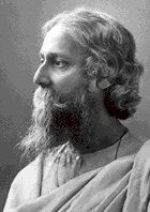
Recommended Books: Rabindranath Tagore
|
|
 |
 |
|
| The Longing in Between: Sacred Poetry from Around the World (A Poetry Chaikhana Anthology) | Gitanjali | The Lover of God | The Fugitive | Lover’s Gift and Crossing |
| More Books >> | ||||
|
Rabindranath Tagore
India (1861 – 1941) Timeline |