Dec 13 2018
perfection
Stop struggling for perfection,
and recognize the perfection
you already are.
Dec 13 2018
Stop struggling for perfection,
and recognize the perfection
you already are.
Dec 10 2018
 |
I sometimes make a particular effort to experience slow time. But the calendar seems to speed up each year. It’s easy to be surprised that the winter holidays are here. It is already the eight day of Hanukkah. Christmas is only a couple of weeks away. The Winter Solstice. New Year.
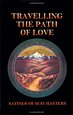
I have had a tradition in past years of sending out a list of recommended books around the holidays. In my mind, you received this email at least two weeks ago. Let’s just say that’s when this was sent out, shall we? If you’re still looking for some gifts to give, to family, to like-minded friends, or even to yourself as a way to begin the new year, consider the gift of poetry and inspiration. Poetry lasts in ways few other gifts can. A really good poem unwraps itself a little more each time it is read, becoming a continuously opening gift to the mind and the heart. Here is a a holiday sampler to consider as gifts for you and your loved ones: |
Let’s start, of course, with some Poetry Chaikhana publicatons…
== Poetry Chaikhana Publications ==
|
||||||
To satisfy that longing (or awaken it)…
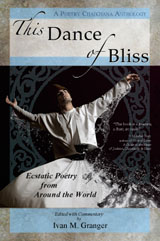
In many ways this is my most personal publication, combining favorite soul-inspiring poems from the world’s great religious and spiritual traditions, accompanied by the thoughts, meditations, commentary, and occasional tangents that have been central to the Poetry Chaikhana poem emails for years. Selections from Rumi, Whitman, Kabir, Machado, Issa, Teresa of Avila, Dickinson, Blake, Yunus Emre, John of the Cross, Lalla, and many others. These are poems of seeking and awakening… and the longing in between.
|
For the modern mystic…
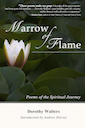
Dorothy Walters explores the spiritual journey through its ecstasies, struggles, and vistas. Each step is observed with the keen insight and clear voice of a modern woman who is both a skilled poet and genuine mystic. Dorothy Walters’s poems are immediate and inviting, transcendent and often playful. Many of these poems are in dialog, with Rumi and Rilke, Denise Levertov and Lalla, each poem contributing its own wisdom and humor to the ongoing conversation that passes between visionaries and sages through history and across cultures.
“These poems make me gasp. Dorothy Walters–part buddha, part elf–weaves mythic literacy with subversive compassion.” ~ Mirabai Starr |
A few words to find silence…
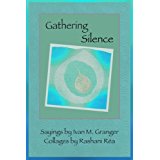 |
Sayings by Ivan M. Granger |
|||
|
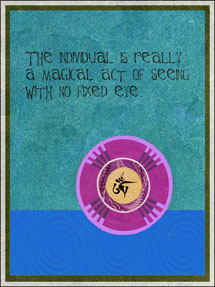
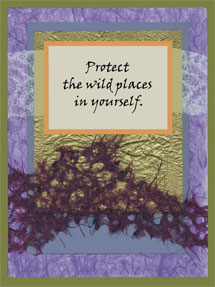
Gathering Silence is a collection of meditative sayings and bits of poetry, accompanied throughout by stunning full-color artwork by internationally-known collage artist, Rashani Réa. Gathering Silence is a truly beautiful book, filled with color, creative thoughts, and meditative moments. Perfect for an altar or meditation space, by your bed or on a coffee table. A wonderful gift for family, friends, and fellow seekers! I hope you will agree that this book is a work of art!
|
||||
For illumination…
 |
The Illuminated Rumi Translations by Coleman Barks Art by Michael Green |
Excerpts of Rumi’s poetry accompanied by amazing digital collage artwork that draws you deeply into each page. This book entrances on several levels. An excellent gift book.
For the wise woman…
This is the first anthology I got years ago that made me say, Wow! Includes Sappho, Rabia, Yeshe Tsogyel, Hildegard von Bingen, Mechthild of Magdeburg, Hadewijch of Antwerp, Lalla, Mirabai, Bibi Hayati, Marina Tsvetaeva. The best collection I’ve found of women’s voices in sacred poetry. |
Another very good anthology of spiritual poetry by women, from ancient to modern times. Poets like Mirabai, Mahadevi, Lal Ded, Sappho, Sun Buer, Dickenson, Tsvetaeva. The two books together — this with Women in Praise of the Sacred — make a good collection. |
 |
The Kundalini Poems: Reflections of Radiance and Joy by Dorothy Walters |
The continuing poetic dialog between Dorothy Walters and the unfolding dance of the Kundalini. Words of a modern mystic to be savored.
For the prayerful heart…
 |
Heaven on Earth: Timeless Prayers of Wisdom and Love Edited by Stephanie Dowrick |
Prayers as poems. Poems as prayers. A wonderful selection from Rumi to Rilke, from the Buddha to the Bible. Prayers of celebration. Prayers that heal. Prayers for sorrow. Prayers for daily life. Whether we formally pray or not, whether we connect to a personal sense of God or not, these prayer poems awaken the heart and revitalize the spirit, reconnecting us to life all around us.
A Sampling of Sufi Wisdom…
Not a collection of poetry, but good book to help you begin to understand who the Sufis really are. An intelligent, insightful look at the history, practices, philosophies, schools, and even politics of Sufism. If you’ve loved the poetry of Rumi but only have a vague idea of how Sufism fits within the Islamic faith, this book is a good place to start. |
Short wisdom stories from the Sufi tradition that surprise with unexpected insight, delightful humor, and enigmatic conclusions that invite deeper contemplation. I have been rereading this favorite collection for years. |
Llewellyn Vaughan-Lee has gathered together an excellent collection of short sayings and poetic excerpts from many of the great Sufi masters throughout the centuries. Gathered together in themed chapters, such as The Longing of the Heart, The Path, Mediatation and Prayer, and The Valley of Love. Open this book to any page late at night and find a hidden gem to contemplate. |
For the Christian contemplative…
This has quickly become one of my favorite collections of sacred poetry within the many Christian traditions. John of the Cross, Merton, Hildegard von Bingen, Gibran, Dante, Meister Eckhart, Blake… and Roger Housden’s brief, thoughtful insights. |
I can’t recommend this collection highly enough. Merton, in addition to being a deep mystic, was a truly excellent contemporary poet. His poems feel entirely modern, yet touch on the eternal. While drawing on Catholic imagery, one can hear whispers of Eastern philosophy and insight in his words. Poems to reread and meditate deeply upon. |
For the Jewish mystic…
 |
The Dream of the Poem: Hebrew Poetry from Muslim and Christian Spain Translated and Edited by Peter Cole |
An excellent collection of the great Hebrew poets and writers who emerged from the flowering of Jewish culture in Medieval Spain. A nice sampling of important figures of Kabbalah, philosophy, and culture, like Hanagid, ibn Gabirol, Halevi, Abulafia, and many more. While T. Carmi’s Penguin Book of Hebrew Verse is more comprehensive, Cole has more of a poet’s sense of language.
A little Zen in your pocket…
A good collection without being overwhelming. I especially like it’s selection of Japanese haiku: Basho, Buson, Issa, Masahide… |
This book is an excellent sampling of haiku, traditional and modern, and, at the same time a wise and playful exploration of the essence of haiku insight. A bit pricey for this slim volume, but enthusiastically recommended for meditators, writers, and haiku enthusiasts. Also look for its companion volume Haiku: The Gentle Art of Disappearing. |
For the Rilke lover…
There are several very good translations of Rilke available, but I’ve slowly come to the opinion that Barrows and Macy, more than any others, get the tone just right. Their Rilke translations glow and uplift, but without losing the shadows that also haunt the spaces between his words. Perfect! |
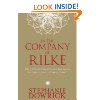
A lovely, insightful meditation of the poetry of Rilke and why it speaks so powerfully to us today. The perfect companion book to pair with your favorite Rilke collection. |
Artist, Therapist, Shaman…
 |
Poetic Medicine: The Healing Art of Poem-Making By John Fox |
Not a book of poetry, but a book that belongs on every poetry lover’s bookshelf. This is a book about the transformational nature of poetry – reading it, speaking it, writing it. Poetry as therapy. Poetry as a pathway to self-exploration. Poetry to rediscover your true voice. I was surprised how much I liked this book.
Lover and the Beloved…
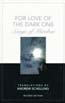
Andrew Schelling’s translations embody that tension between heartbreak and ecstasy that runs through all of Mirabai’s poetry. These poems can be read as love poems or as spiritual poems — but, of course, they are both. |
Another very good collection of Persian Sufi poetry. This book focuses on poems and poets that are not as well known in the West. A good place to discover some new names. |
A 20th century Indian Yogi commenting on the spiritual meaning of an 11th century Persian Sufi’s poetry. That combination yields both perfume and controversy — but plenty to contemplate. Lovely artwork and border scrollwork. And Fitzgerald’s delightful translation of this classic. Recommended. |
Transcendent Hindu verses…
This book became an immediate favorite of mine ever since I picked up a copy of it a few years ago. Stunning poems from the Shiva bhakti tradition of India. Basava, Devara Dasimayya, Akka Mahadevi, Allama Prabhu. The commentary in the book, though a little academic, is genuinely insightful. Enthusiastically recommended! |
There are several translations of the poetry of Lalla available in English now, good ones too, but Ranjit Hoskote’s versions are my favorite. They seem to marry a love of the original language with a poet’s sense of English, without ever losing the mystic’s fire at the center of each poem. Recommended. |
And for blessings…
I keep being told by people how much they love this book of poetic blessings from the Irish philosopher, poet, and mystic, John O’Donohue. These poetically crafted blessings and meditations on the passages of life manage to elevate the spirit, warm the heart, and, on occasion, bring a tear to the eye. |
For even more book recommendations, click here.
(I let the list get a little long this year, but, even so, I had to leave off so many amazing books. The drawback to loving so much poetry.)
Let’s remember that, in the midst of winter’s dark, this is the time to renew the light — within ourselves and our world. Regardless of religion, may we recognize our shared brotherhood and sisterhood within the human family, all within the lap of the generous green earth that is our home.
I hope you and your loved ones have a special holiday season —
— and that the new year brings you bright blessings!
Ivan
Dec 05 2018
Where I wander — You!
by Levi Yitzchak of Berditchov
English version by Perle Besserman
Where I wander — You!
Where I ponder — You!
Only You everywhere, You, always You.
You, You, You.
When I am gladdened — You!
And when I am saddened — You!
Only You, everywhere You!
You, You, You.
Sky is You!
Earth is You!
You above! You below!
In every trend, at every end,
Only You, everywhere You!
 — from The Way of the Jewish Mystics, Edited by Perle Besserman
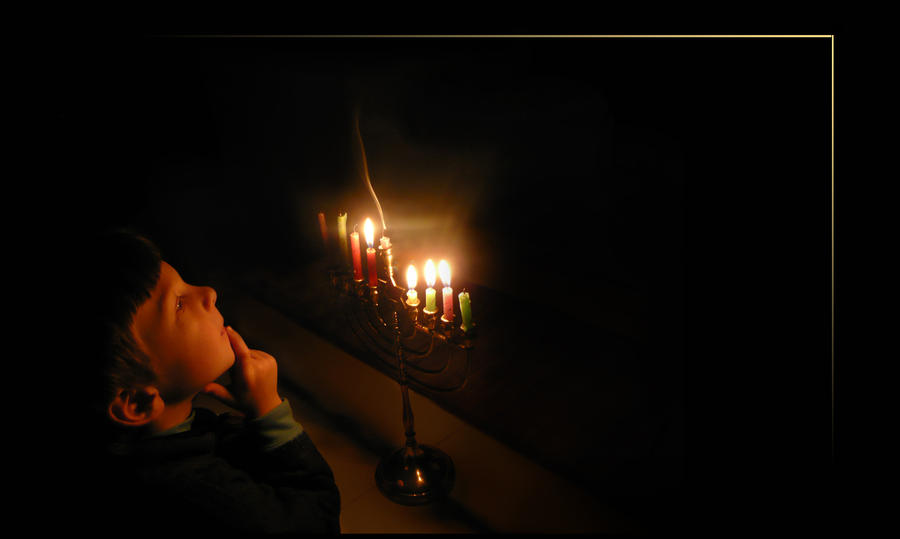
/ Image by Lidusha /
Happy Hanukkah! I thought this poem would be a nice celebration for us during this season of light…
I love the way this simple poem fills us with the ecstatic recognition that God is in everything, IS everything. All of existence becomes a grand game of hide-and-seek.
A chant that can open the heart and eyes:
Only You, everywhere You!
You, You, You.
Recommended Books: Levi Yitzchak of Berditchov
 |
|
|||
| Music of the Sky: An Anthology of Spiritual Poetry | The Way of the Jewish Mystics | |||
| Levi Yitzchak of Berditchov |
Dec 05 2018
In every moment reach out
to the One
barely hidden
behind the kaleidoscopic many.
Nov 21 2018
Unison Benediction
by May Sarton
Return to the most human,
nothing less will nourish the torn spirit,
the bewildered heart,
the angry mind:
and from the ultimate duress,
pierced with the breath of anguish,
speak of love.
Return, return to the deep sources,
nothing less will teach the stiff hands a new way to serve,
to carve into our lives the forms of tenderness
and still that ancient necessary pain preserve.
Return to the most human,
nothing less will teach the angry spirit,
the bewildered heart;
the torn mind,
to accept the whole of its duress,
and pierced with anguish…
at last, act for love.
 — from May Sarton, Collected Poems, 1930-1993, by May Sarton
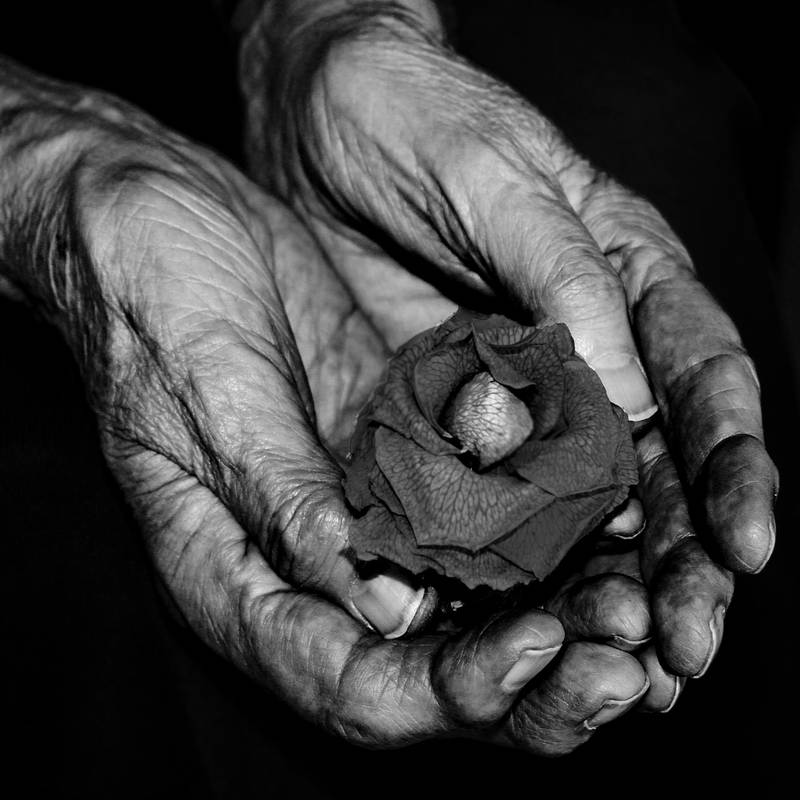
/ Image by me3009 /
I came across this poem today in Roger Housden’s Living and Writing Wild email newsletter (which I highly recommend). It felt like the perfect poem for today, so I thought I’d share it along with some of my own thoughts…
Return to the most human,
nothing less will nourish the torn spirit
I am so aware of how much frustration people feel over the dark turn in politics in recent years. More than frustration, there is a sense of anguish, even betrayal. For many, it is as if our vision of who we are and the future we might achieve has been defiled and damaged to the point that we no longer recognize ourselves as decent people.
As an American, how do I understand the racist, proto-fascist, violent forces emerging within my own country? At the same time, similar tendencies are appearing in the UK, India, the Philippines, and we could add several other nations to the list.
How can people of good heart not feel horrified at these developments?
While harmful forces must be answered with courage in the public arena, I want to suggest that there is something important happening on another level, as well: an enforced awakening.
We are going through a collective process of disillusionment, whether we like it or not. We are being required to drop our illusions and witness unpleasant truths, about ourselves and about the world around us. What have we ignored that has allowed such fear and hatred to fester? How have our political and social systems become so damaged that they are unresponsive to the needs and demands of society? What cruelties are encoded in society that I have ignored or made excuses for? How did we imagine things were solid, when they are so fragile? How can my neighbor believe such things, and what is his hurt that I was blind to? These are the questions we are forced to ask now.
Painful though it may be, devastating in some cases, we can only be strengthened by the process of disillusionment. We want to drop our illusions. We want to see things as they are, as fully and as clearly as possible.
Return, return to the deep sources
We might think of it as a meditative exercise. Let’s look at reality, everything we see, the terrible and the beautiful together, and just sit with it. It may break our hearts. But we just sit with it. It may fill us with moments of pure joy. But we just sit with it. It may overwhelm us with its immensity. But we don’t run, we don’t seek to merely feel good. Instead, we just sit with it. We allow ourselves to see and feel fully. We watch our reactions too, but are not hooked by them. In this way, we begin to inhabit a bigger reality, a fuller reality. Our personal sense of reality becomes more integrated and a truer reflection of what actually is. As we do this, we become more capable of fashioning healthier lives and healthier societies.
Here’s the thing that I’ve noticed in my own life, when I stop trying to assert some idea of how reality should work, and just really notice what is, at first I feel heartbroken and even humiliated. Then I feel overwhelmed. And then… everything just opens up into a vision of stunning beauty and possibility. The heart opens in unexpected ways, making healing possible where only walls seemed to stand. It’s easy to think that reality is somehow broken, but when we really look, we discover that we inhabit an improbable wholeness instead. It’s not entirely logical amidst the world’s fear and suffering, so I encourage you to look for yourself and see. Really see. Seeing the full picture, our actions become more effective and lasting. Looking honestly, we become capable of compassion and connection, where we only felt anger before.
Combining action with an expanding awareness, we return to what is most human, and by that I mean we return to what is most divine.
Return to the most human,
nothing less will teach the angry spirit,
the bewildered heart;
the torn mind,
to accept the whole of its duress,
and pierced with anguish…
at last, act for love.

|
May Sarton
US (1912 – 1995) Timeline |
Nov 09 2018
Let’s Take Yunus Emre
by Yunus Emre
English version by Jennifer Ferraro & Latif Bolat
Let’s be companions, the two of us.
Let’s go to the Friend, my soul.
Let’s be close intimates, the two of us.
Lets go to the Friend, my soul.
Let’s go before this life is over,
Before our bodies disappear,
Before enemies come between us —
Let’s go to the Friend, my soul.
Come on, let’s go. Don’t remain alone.
Let’s be a chisel in the Friend’s hand.
The only stop will be our sheikh’s station.
Let’s go to the Friend, my soul.
Let’s leave our towns and cities
and gladly suffer for the Friend.
Let’s wrap our arms around our Beloved’s waist.
Let’s go to the Friend, my soul.
Let’s not be bewildered by the world.
Let’s not be cheated by its sudden dying.
Let’s not sit together never touching.
Let’s go to the Friend, my soul.
Let’s give up this transient world
and fly to the lasting land of the Friend.
Let’s give up all the playthings of the nafs.
Let’s go to the Friend, my soul.
Be a guide to me on this journey.
Let’s set our destination at the Friend,
Not thinking where we begin or end.
Let’s go to the Friend, my soul.
This world isn’t everlasting.
With eyes half-open it is tempting.
Be a companion of lovers and a lover.
Let’s go to the Friend, my soul.
Before the news of death reaches us,
Before the hour when he grabs us by the collar,
Before Azrail makes his sudden move,
Let’s go to the Friend, my soul.
Let’s arrive at the Divine Truth
and inquire there about Reality.
Let’s take Yunus Emre with us —
and go to the Friend, my soul.
 — from Quarreling with God: Mystic Rebel Poems of the Dervishes of Turkey, Translated by Jennifer Ferraro / Translated by Latif Bolat
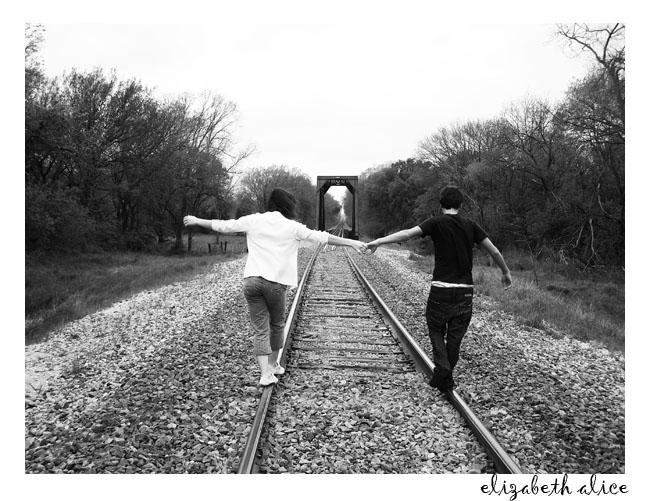
/ Image by Elizabeth Alice /
I like this image of calling to the soul to become a traveling companion on the road to the Friend.
Let’s go to the Friend, my soul.
It’s humorous when you think about it. The soul is already a part of ourselves, why should we have to coax it? We might even say that the soul is who we are. Wouldn’t the soul already be on the journey to the Friend, perhaps already at the Friend’s door?
Let’s be companions, the two of us.
Let’s go to the Friend, my soul.
Let’s be close intimates, the two of us.
Lets go to the Friend, my soul.
On that journey, best to convince the soul to be a close companion.
And what other part of the self is speaking? It would seem to be the surface sense of self, the little self, the ego, the nafs. You get the feeling that the self doing the speaking is actually the hesitant one, trying to convince itself. There’s a sort of self-teasing here, a bit of bravado while gathering courage for the journey.
Who is this Azrail who will make a “sudden move”? Azrail or Azrael is the name sometimes given to the angel of death. Many religious types have an idea that, so long as they have subscribed to the “right” form of religion, they will magically end up in some heavenly realm after death, with no journey involved. Mystics like Yunus Emre remind us that the soul’s journey is the only way to the Friend and the entire purpose of life, something to be engaged in now in the midst of life.
Let’s arrive at the Divine Truth
and inquire there about Reality.
We all need a nudge, and the best nudge comes from within.
Let’s go to the Friend, my soul.
And, oh yes–
Let’s take Yunus Emre with us
— take yourself with you.
|
Yunus Emre
Turkey (1238 – 1320) Timeline |
Oct 31 2018
Return within
by Abhishiktananda, Swami (Henri Le Saux)
English version by H. Sandeman (?)
Return within,
to the place where there is nothing,
and take care that nothing comes in.
Penetrate to the depths of yourself,
to the place where thought no longer exists,
and take care that no thought arises there!
There where nothing exists,
Fullness!
There where nothing is seen,
the Vision of Being!
There where nothing appears any longer,
the sudden appearing of the Self!
Dhyana is this!
 — from Guru and Disciple: An Encounter with Sri Gnanananda, a Contemporary Spiritual Master, by Swami Abhishiktananda / Translated by H. Sandeman

/ Image by MikkoLagerstedt /
Return within…
A powerful description of deep meditation. (The word dhyana in the last line means meditation.)
There where nothing exists,
Fullness!
=
I have received several notes asking when the poem emails will resume. I had a particularly challenging chronic fatigue crash a couple of weeks ago, and I have been regrouping since then, recalibrating my health regime while doing my best to maintain my work hours with my day job. It may take me a couple more weeks to get into a regular pattern with the poetry emails once again. But I am generally improving and more Poetry Chaikhana will be coming your way soon!
I am also very aware of how much our attention here in the US and in the world is being taken up by the upcoming mid-term elections, by the terrible shooting of worshippers at the synagogue in Pittsburgh, and, for many, the sense of betrayal at the recent confirmation of Kavanaugh to the US Supreme Court. That’s just a partial list.
It is important that, in the midst of however we reach out to help in the world, we remember to regularly “return within.” It is that inner connection that imbues our outer action with its meaning and strength and resonance in the world.
Sending love to you all.
Recommended Books: Abhishiktananda, Swami (Henri Le Saux)

|
Abhishiktananda, Swami (Henri Le Saux)
France, India (1910 – 1973) Timeline |
Oct 31 2018
The question is not
whether or not you believe.
The real question is
whether or not you are determined
to find out for yourself.
Oct 12 2018
O Kali, my Mother full of Bliss!
by Kamalakanta
O Kali, my Mother full of Bliss!
Enchantress of the almighty Shiva!
In Thy delirious joy Thou dancest,
clapping Thy hands together!
Eternal One! Thou great First Cause,
clothed in the form of the Void!
Thou wearest the moon upon Thy brow.
Where didst Thou find Thy garland of heads
before the universe was made?
Thou art the Mover of all that move,
and we are but Thy helpless toys;
We move alone as Thou movest us
and speak as through us Thou speakest.
But worthless Kamalakanta says,
fondly berating Thee:
Confoundress! With Thy flashing sword
Thoughtlessly Thou hast put to death
my virtue and my sin alike!
 — from Kali: The Black Goddess of Dakshineswar, by Elizabeth U. Harding

/ Image by Chobist /
Many of my Hindu friends are celebrating Navratri right now, the nine nights of the Great Goddess. Some traditions divide Navratri into three sets of three nights: the first three dedicated to Durga or Kali, who clears out the old and out of balance to make way for more divine manifestations of life; the next three nights are dedicated to Lakshmi, who grants wealth, both spiritual and material; while the final three nights are dedicated to Saraswati, the goddess of wisdom.
I thought I’d select this poem for us today…
To appreciate this poem we need to know a few things about the traditional Hindu representations of the Goddess.
In Hindu tradition and metaphysics, the Goddess represents many aspects of the Divine. The iconography we find in Hinduism gives us a fascinating kaleidoscope of meaning. The Goddess can represent Mother, the Great Source, the Void/Womb from which all are born, Manifestation, Creation, Vibration, Speech, Song, the Arts, Beauty, Darkness, Mystery, all of the World (and all its Illusions). But with birth, also comes death, with manifestation, also comes dissolution; anything with a beginning also has an end. Only the eternal is eternal. So the Goddess, Mother and Manifestor, is also sometimes portrayed as Destroyer. She is Life and Death both. She is the Power that brings all into being, animates and enlivens the universe, and also draws it back into non-being. But even in Her fiercest aspect, the Mother Goddess is loving. For Her, death is merely the death of illusion and the return to Self.
Many Westerners at first find the iconography associated with the goddess Kali unsettling and can’t understand why so many beloved saints, like the gentle Ramakrishna, were so deeply devoted to her. Let’s spend a few moments contemplating this powerful representation of the Divine Feminine…
Kali is sometimes called the Dark Mother: beautiful, wild, and terrible. She is depicted dancing in ecstasy upon a battle field, slaying demons in her fierce bliss.
Her skin is black and she is naked, symbolic of the Eternal Void with which she clothes herself.
Thou wearest the moon upon Thy brow.
She wears the moon upon her brow (as does her husband, Shiva), symbolizing the open spiritual eye and spiritual illumination. The crescent moon has the additional metaphorical meaning of mastery over the feminine, cyclical aspect of manifest nature, the way it ebbs and flows, grows full and then diminishes.
Where didst Thou find Thy garland of heads
before the universe was made?
Kali wears a garland of severed heads, a startling image, but one of deep spiritual significance. These are the heads of slain demons, each a spiritual impediment that she has removed. Well, she hasn’t really removed them; in slaying the demons, she has freed them, so that now their heads rest in bliss upon her breast.
Further, each head, severed at the neck, represents a specific sound; collectively, the heads represent the sound of divine speech, the foundational vibration or Eternal Word, through which the universe is manifested.
Confoundress! With Thy flashing sword
Thoughtlessly Thou hast put to death
my virtue and my sin alike!
We often get teasing lines like this in sacred poetry. In the deep spaces of bliss, when the ego identity has disappeared and thought has ceased, the tensions we associated with doing “good” or “bad” also disappear. This does not mean that one cannot distinguish between right and wrong, quite the opposite; one sees clearly for the first time. But there is no projection of “should” or “shouldn’t.” Instead, there is a profound sense of what simply is, and what is potential. The feeling of being caught in a tug-of-war between opposites and social compulsions vanishes. To the thinking mind, the mind chained to the ego, this is indeed confounding.
Kali can express a terrifying face of the Divine, but there is a reverse side to this. She may inspire terror, yes, but only in that which is out of harmony with the Eternal Will; seeing the Goddess, such energies know their end has come. If we ourselves cling to such disharmonious qualities, then we too may fear her. But when we let go of such clinging, approaching this great, formless Goddess with humility and courage, then terror is transformed into awe and overwhelming bliss.
You can say that this Dark Mother loves all her children so fiercely that she refuses to let any of us remain chained to comfortable but lethal delusions. Every soul needs such a loving, liberating mother, even when we don’t always appreciate her…
It’s a crisp autumn morning here. The snow from the last few days never quite stuck, the air is clear. The aspen leaves dance in green and gold, glistening in the light. Remember the beauty all around you!
Recommended Books: Kamalakanta
 |
|
|||
| Singing to the Goddess: Poems to Kali and Uma from Bengal | Kali: The Black Goddess of Dakshineswar | |||
|
Kamalakanta
India (1769? – 1821?) Timeline |
Oct 10 2018
Although the wind
by Izumi Shikibu
English version by Jane Hirshfield
Although the wind
blows terribly here,
the moonlight also leaks
between the roof planks
of this ruined house.
 — from Women in Praise of the Sacred: 43 Centuries of Spiritual Poetry by Women, Edited by Jane Hirshfield

/ Image by Manwathiell /
I have several loved ones feeling particular frustration and rage at how they have been treated after finding the courage to speak out about private traumas, only to be ignored and treated with contempt by a system that would rather maintain its fading myths than its heart.
An excerpt of something I posted on Facebook a few days ago–
I try to remind myself that the greatest healers in the world are often themselves wounded in some way. The ways we find to survive trauma can open us to deep truths about ourselves and the world, unlocking hidden strength. We might, for the first time, find our authentic voice. Sometimes our job is just to cry out with such a great pure ache that the world has no choice but to stop and let its heart break open. Survivors carry the medicine the world needs, whether or not the world is smart enough to recognizes it.
Recommended Books: Izumi Shikibu
|
 |
|||
| Women in Praise of the Sacred: 43 Centuries of Spiritual Poetry by Women | The Enlightened Heart: An Anthology of Sacred Poetry | |||
|
Izumi Shikibu
Japan (974? – 1034?) Timeline |
Oct 01 2018
Inner Wakefulness
by Mevlana Jelaluddin Rumi
English version by Coleman Barks
This place is a dream
only a sleeper considers it real
then death comes like dawn
and you wake up laughing
at what you thought
was your grief
A man goes to sleep in the town
where he has always lived
and he dreams
he’s living in another town
in the dream he doesn’t remember
the town he’s sleeping in his bed in
he believes the reality
of the dream town
the world is that kind of sleep
Humankind is being led
along an evolving course,
through this migration
of intelligences
and though we seem
to be sleeping
there is an inner wakefulness,
that directs the dream
and that will eventually
startle us back
to the truth of
who we are
 — from The Essential Rumi, Translated by Coleman Barks

/ Image by psdlights /
Yesterday, September 30th, was Rumi’s 811th birthday. Happy birthday, Rumi!
Mevlana Jelaluddin Rumi is a titanic, open-hearted figure in the world, and his influence throughout the world and down through the centuries is immense. The continuing ripple effects of his poetry and his spirit have much more impact on most lives today than mere kings or generals. That’s the sort of hero the world really needs.
There is something so gentle about this selection, an easy description of sleeping, dreaming, evolution, and waking up laughing. Yet it can startle us awake.
This place is a dream
only a sleeper considers it real
Dreams and waking up… The metaphor of being spiritually “awake” is used a lot but not always with deep reflection. It is an easy concept to grasp, though it’s not taken very seriously most of the time because, of course, the person thinking about the idea of waking up is already awake in the most literal sense, right? The surprising answer is, Not really.
The experience of sudden spiritual opening reported by most mystics is surprisingly one of actually waking up. It’s as if we have been drifting through life in a dream state and just not known it. Nothing around us has changed, but we finally, truly see things as they are. The dream-like trance-mind of assumptions and projections that has stifled our perception for so long falls away like a heavy blanket. We blink, look around, and are surprised to realize we have been in a sort of half-seeing fog all of our life… and now we are awake for the first time.
and you wake up laughing
at what you thought
was your grief
Perhaps just as surprising — and much more confusing to the intellect — is the simultaneous recognition that while we were in that dream state, there was still some part of our awareness that was always fully awake, patiently watching in the background. It’s just that now that inner wakefulness has come to the forefront.
and though we seem
to be sleeping
there is an inner wakefulness
…A reminder to us that we don’t really need to “wake up;” instead, we just need to get out of the way of that part of ourselves that is already awake.
From a purely poetic point of view, I really like the lines–
Humankind is being led
along an evolving course,
through this migration
of intelligences
To me this suggests that each experience, each “dream,” each person’s life is part of a grand migration of the human spirit, a journey of deepening remembrance and renewal.
Recommended Books: Mevlana Jelaluddin Rumi

|
Mevlana Jelaluddin Rumi
Afghanistan & Turkey (1207 – 1273) Timeline |
Sep 28 2018
Medusa
by Ivan M. Granger
Medusa says –
I was wisdom
once,
black as night.
Now they call me:
monster,
gorgon,
hideous-faced.
So I hide
behind this hissing curtain
of hair.
Lost
little ones,
breathe easy;
you are free
to not see.
But
what is a lonely
old lady to do?
I still wait
for some daughter,
some son,
so wounded by the world,
to seize these snakes
and part my locks wide.
I still wait
for some bold, tired
wild child of mine,
determined to die
seeing what’s reflected
in my unblinking eye.
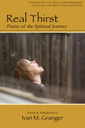 — from Real Thirst: Poetry of the Spiritual Journey, by Ivan M. Granger
Or order through Wordery and have it shipped anywhere in the world for free!

/ Image by Emanuello Brigant /
Something to honor the Divine Goddess today–
I don’t do it as often these days, but every now and then I awake early, before the sun. Observing the nighttime before dawn, its embodiment of mystery, the unknown, vastness. Night brings both peace and fear. It does not distract us from ourselves. Whatever we bring with us into the night we must confront…
I read a lot of Greek mythology in my childhood. I loved the fantastical adventures, the heroes, the monsters, the convoluted relationships of the gods. I was fascinated that so many common words and phrases have their origins in the names and stories of Greek myths. It connected me with the Greek ancestry I have through my father.
And I also had the vague, semi-formed idea that there was something deeper being said in these myth stories.
I discovered something several years back that struck me: Medusa, the quintessential monster of Greek mythology, was originally a much loved Goddess. Her name comes from the Greek word “metis” (related to the Sanskrit “medha”) meaning “wisdom.” Her worship is thought to have originated in North Africa and been imported into early Greek culture. She was black-skinned, wore wild, matted hair (with, of course, snakes), stood naked, wide-eyed, and embodied the mystery of woman, the wisdom of the night, the truths too profound or terrible to face in the daylight.
Medusa is, in effect, a Mediterranean version of the Bengali Goddess Kali.
Medusa was eventually subsumed into the safer, patriarchal worship of Athena, who carries Medusa’s head upon her shield.
This discovery inspired me to look at the figure of Medusa more deeply, more reverently. What is the wisdom that terrifies? Why the snakes? Why the petrifying open-eyed stare? And how does such a bringer of terrible wisdom feel about being rejected by her children as a “monster”?
So I hide
Behind this hissing curtain
Of hair.
One way to understand the snakes about Medusa’s head is as the awakened Kundalini energy, having risen from the base of the spine to the skull — something well-understood in the Mediterranean mystery schools of the ancient world. This vital, snake-like energy is the Goddess energy. Medusa, the Goddess, is the Snake Mother.
(The more monstrous aspect of Medusa can also be understood as a rageful expression of the Kundalini, the Divine Feminine energy, when it is repressed in society. A society that does not respect the strength and mystery of Woman, that does not allow the feminine energy to move freely, that society is lost in a state of calcifying fear. Too many societies see only the terrible Gorgon when looking at the Divine Mother.)
In my poem, Medusa has formed of this feminine life-energy a curtain, a veil that hides Her Face from a world not ready to bear witness to Her. This curtain is the veil of illusion that creates an artificial sense of separation between the world and the Divine.
And the curtain does indeed hiss. When you are quiet and your thoughts settle, we begin to hear a soft sound seeming to issue from the base of the skull. Initially, it sounds like a creaking or crackling noise, a white noise, a sort of a hissing. The deeper we go into silence, the more the sound resolves itself. Eventually, we recognize it permeating our whole body and all things.
We must pass through this hissing curtain in order to meet the deep truth waiting for us on the other side.
I still wait
For some bold, tired
Wild child of mine,
Determined to die
Seeing what’s reflected
In my unblinking eye.
Medusa’s eye does not blink. This is partly what is so terrifying about her gaze. She stares boldly out and sees Reality as it is. She sees it plainly, fearlessly, and without interruption. There is no pause for interpretation or “filtering.” Medusa’s truth is raw. She is the Divine Mother who sees all of Her Creation in every living instant.
Looking in Medusa’s eye, what is it that we see reflected? Our own self, of course. And this truly is shattering, for we see the truth about ourselves. We see the unreality of the little self, the social self, the ego self we imagine ourselves to be. That little self is a phantom, a mental creation only.
Medusa, in her shattering wisdom, does not protect us from this realization. Her love will not allow us to struggle on with such a false notion holding us back from our true nature.
Seeing this truth, we die. The little self dies.
But, in dying to the little self, our true nature suddenly shines forth. The real Self, which is one with the Divine, emerges. Every aspect of ourselves that felt broken and that we labored so long to fix, is suddenly made whole. In fact, we realize that nothing was ever broken in the first place. That sense of incompleteness was the result of denying the vastness we already are while clinging to the illusion of the little self.
This is Medusa’s gift to Her children. This is Her terrible wisdom. It is the truth that blesses us through death, and then gives you greater life than we had previously imagined possible.
Recommended Books: Ivan M. Granger
|
|
Ivan M. Granger
US (1969 – ) |
Sep 26 2018
Manifesto: The Mad Farmer Liberation Front
by Wendell Berry
Love the quick profit, the annual raise,
vacation with pay. Want more
of everything ready-made. Be afraid
to know your neighbors and to die.
And you will have a window in your head.
Not even your future will be a mystery
any more. Your mind will be punched in a card
and shut away in a little drawer.
When they want you to buy something
they will call you. When they want you
to die for profit they will let you know.
So, friends, every day do something
that won’t compute. Love the Lord.
Love the world. Work for nothing.
Take all that you have and be poor.
Love someone who does not deserve it.
Denounce the government and embrace
the flag. Hope to live in that free
republic for which it stands.
Give your approval to all you cannot
understand. Praise ignorance, for what man
has not encountered he has not destroyed.
Ask the questions that have no answers.
Invest in the millennium. Plant sequoias.
Say that your main crop is the forest
that you did not plant,
that you will not live to harvest.
Say that the leaves are harvested
when they have rotted into the mold.
Call that profit. Prophesy such returns.
Put your faith in the two inches of humus
that will build under the trees
every thousand years.
Listen to carrion – put your ear
close, and hear the faint chattering
of the songs that are to come.
Expect the end of the world. Laugh.
Laughter is immeasurable. Be joyful
though you have considered all the facts.
So long as women do not go cheap
for power, please women more than men.
Ask yourself: Will this satisfy
a woman satisfied to bear a child?
Will this disturb the sleep
of a woman near to giving birth?
Go with your love to the fields.
Lie down in the shade. Rest your head
in her lap. Swear allegiance
to what is nighest your thoughts.
As soon as the generals and the politicos
can predict the motions of your mind,
lose it. Leave it as a sign
to mark the false trail, the way
you didn’t go. Be like the fox
who makes more tracks than necessary,
some in the wrong direction.
Practice resurrection.
 — from The Mad Farmer Poems, by Wendell Berry
/ Image by legends2k /
A manifesto from the fields and the topsoil to mark the change of seasons. A reminder of what’s real. A reminder to regularly push that mental reset button. A reminder to remain a healthy, cantankerous human standing amidst wonders…
So, friends, every day do something
that won’t compute. Love the Lord.
Love the world.
Put your faith in the two inches of humus
that will build under the trees
every thousand years.
As soon as the generals and the politicos
can predict the motions of your mind,
lose it.
Practice resurrection.
Have a beautiful day!
Recommended Books: Wendell Berry
 |
 |
 |
 |
|
| The Collected Poems of Wendell Berry, 1957-1982 | Given: Poems | Selected Poems of Wendell Berry | A Timbered Choir: The Sabbath Poems 1979-1997 | The Mad Farmer Poems |
| More Books >> | ||||
|
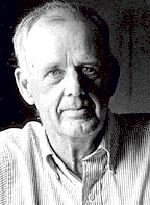
Wendell Berry
US (1934 – ) |
Sep 19 2018
Now No Trace Remains
by Niyazi Misri
English version by Jennifer Ferraro & Latif Bolat
I thought that in this whole world
no beloved for me remained.
Then I left myself.
Now no stranger in the world remains.
I used to see in every object a thorn
but never a rose–
the universe became a rose garden.
Not a single thorn remains.
Day and night my heart
was moaning “Ahhh!”
I don’t know how it happened–
now no “Ahhh” remains.
Duality went, Unity came.
I met with the Friend in private;
The multitude left, the One came.
Only the One remains.
Religion, piety, custom, reputation–
these used to matter greatly to me.
O Niyazi — what has happened to you?
No trace of religion now remains.
— from Quarreling with God: Mystic Rebel Poems of the Dervishes of Turkey, Translated by Jennifer Ferraro / Translated by Latif Bolat
/ Image by Broken-Beloved /
I thought that in this whole world
no beloved for me remained.
There is much that is beautiful and attractive in the world: people, possessions, experiences. But do we love them or only love how they bolster our own self-image? They evolve, change, come and go, and so do we. They may give us a glimpse of the Divine Beloved beneath the surface, but until we learn to really look, that beautiful glimpse is fleeting. And they don’t do a great job in the long run of sustaining our fragile egos. Natural evolution, ours and that of the world around us, can feel like a betrayal. When we cling to surfaces and our own needy egos, it can feel like we have been abandoned by the Beloved.
So long as we cling to the little self, everyone and everything else is separate and vaguely threatening. The ego asserts itself by continuously keeping itself in psychic opposition to everything it has defined as being outside itself. To the ego, everything is either a possession or an enemy.
The ego pretends it is the center of reality while separating itself from the holistic vision of reality. In doing so, the ego makes itself both the prisoner and the prison guard.
In that shattered vision of a reality of separated fragments, we become blind to the true nature of reality — and the beloved is not seen. Even those soul-healing glimpses are hard to come by, rarely acknowledged even when seen.
Then I left myself.
Now no stranger in the world remains.
But when when we finally step outside the artificial boundaries of the little self, the mesmerizing but ever incomplete world of duality fades, to be replaced by the vision of beauty and unity, in which there is no other and everything reflects the Beloved.
Duality went, Unity came.
I met with the Friend in private;
The multitude left, the One came.
Only the One remains.
We finally see how we flow into each other, how we are interwoven into a single, unified fabric of Reality. No one and nothing is outside of ourselves. That is when we can truly proclaim with Niyazi Misri that “Now now stranger in the world remains.”
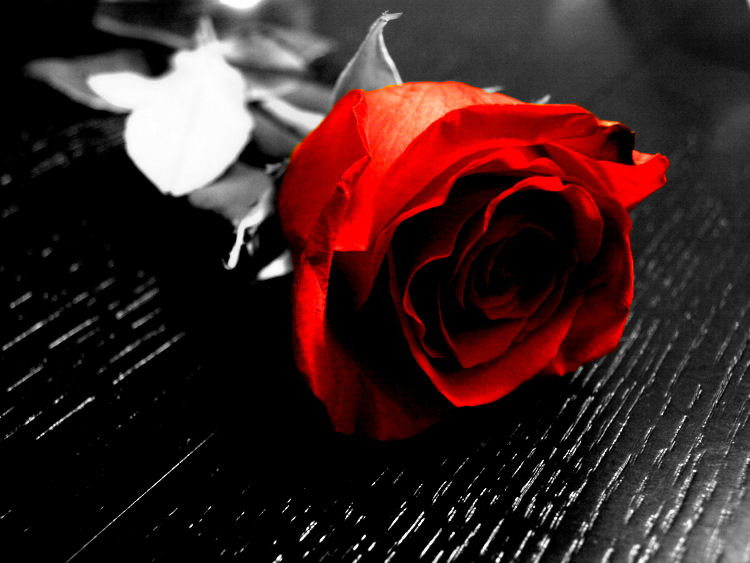
I used to see in every object a thorn
but never a rose–
the universe became a rose garden.
Not a single thorn remains.
The rose unfolds in a gentle circling that invites one to yield inward. The rose is a symbol of lovers and of union. The rose resonates strongly with the gently awakened heart.
The rose, with its wine-like scent and deep red color, is sometimes thought of as a more tangible embodiment of wine — the drink of communion.
Religion, piety, custom, reputation–
these used to matter greatly to me.
I love this Sufi iconoclasm. When deep realization comes, mystics have the troubling tendency to drop the forms of their religion. When the Eternal is finally recognized as here, now, alive in every way and in every form, the prescribed and proscribed ways of holiness lose their meaning.
O Niyazi — what has happened to you?
No trace of religion now remains.
This is not to say that one should immediately reject the recommended practices of one’s tradition. It is simply a reminder for us that the path, whichever one we follow, leads us to a Goal. Having reached the destination, the path has then served its purpose. At that point, clinging to the old practices is more about wanting to be seen by others to be devout. Is that important? If one’s role is to act as a beacon to draw others to a similar path, then perhaps it is. For other realized individuals, however, it might suggest a vanity that has been left behind. To the person of attainment, there are no “others” anyway, so who is the pious show for?
Of course, the louder one proclaims this truth, the more friends one loses among the keepers of the faith. Those troublesome mystics…
Recommended Books: Niyazi Misri
|
||||
| Quarreling with God: Mystic Rebel Poems of the Dervishes of Turkey | ||||
|
Niyazi Misri
Turkey (1616 – 1694) Timeline |