Sep 12 2018

Statement about Amazon

Amazon has been in the news lately and rightly criticized for the absurd sums of money claimed by the CEO while many of its employees earn poverty wages and lack basic job security. Amazon is just one of the more notable companies among far too many that have come to embody a brutal and predatory corporate mindset.

But given how ubiquitous Amazon is in the world of online book sales, I have not yet come up with an entirely satisfying alternative that will work for everyone.

I regularly point out that Poetry Chaikhana books are available through other online sources, like Barnes & Noble, but they don’t cater to as many countries around the globe, and the Poetry Chaikhana is a global community.

There is also the more direct approach: I can take orders and ship the books myself, as I have been doing with the recent pre-orders for This Dance of Bliss. That is something I have generally done only for limited periods of time, when I want to offer personally inscribed books. My hesitation to do that on a more regular basis is primarily because I do my Poetry Chaikhana work in my spare time. Poetry Chaikhana publications provide some welcome income, but it is not yet enough to allow me to lessen my commitments to my day job. As many of you are aware, I need to be especially careful with my time and energy because of the chronic fatigue patterns I deal with, so I can’t casually add to my weekly workload. Even so, I am giving this option some serious thought.

One of the most positive ways to purchase Poetry Chaikhana books, in my opinion, is to request them through your local independent bookstore. I receive less of a sales royalty that way, but when you purchase through a neighborhood brick-and-mortar bookstore, you are supporting a local business, you get to chat with interesting people who love books, and it’s an excuse to browse their shelves for other hidden treasures. Bookstores build communities.

If you have other good recommendations, please share them with me. I welcome your suggestions.

2 responses so far

Aug 30 2018

Wallace Stevens – The house was quiet and the world was calm

Published by under Poetry

The house was quiet and the world was calm
by Wallace Stevens

The house was quiet and the world was calm.
The reader became the book; and summer night

Was like the conscious being of the book.
The house was quiet and the world was calm.

The words were spoken as if there was no book,
Except that the reader leaned above the page,

Wanted to lean, wanted much to be
The scholar to whom his book is true, to whom

The summer night is like a perfection of thought.
The house was quiet because it had to be.

The quiet was part of the meaning, part of the mind:
The access of perfection to the page.

And the world was calm. The truth in a calm world,
In which there is no other meaning, itself

Is calm, itself is summer and night, itself
Is the reader leaning late and reading there.

— from The Collected Poems of Wallace Stevens, by Wallace Stevens


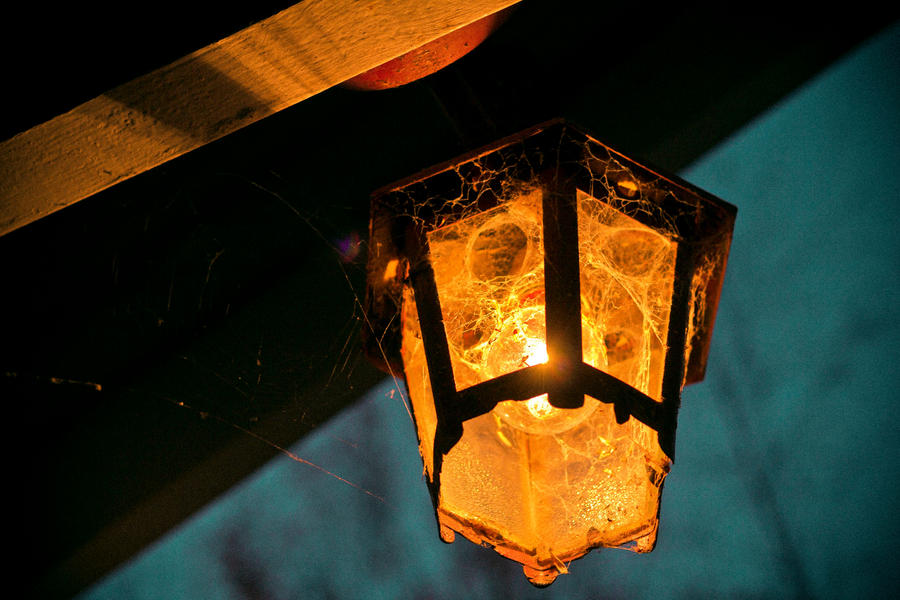
/ Image by AwakeNight /

Can’t you just feel the calm spreading out into the summer night? So quiet you hear the crackling of stillness like a whisper in the skull.

I picture the poet in the 1950s, on a cool night after an overlong hot day, sitting in a wooden chair outside on his porch, a porchlight above his shoulder drawing moths, a book open in his lap, and all the night seems to be leaning in to read with him. He shifts his weight, the chair creaks, and all falls into silence again.

Calm, quiet, meaning, mind…

One can say the poet is enjoying a sweet, timeless moment reading a book. Or it could be that he has been overtaken by communion with heaven and earth. The book is just an excuse to be there.

This summer night, I hope you too have a sweet, timeless moment when the house is quiet and the world calm

Sending much love!


Recommended Books: Wallace Stevens

The Enlightened Heart: An Anthology of Sacred Poetry Thirteen Ways of Looking at a Blackbird The Collected Poems of Wallace Stevens


Wallace Stevens, Wallace Stevens poetry, Secular or Eclectic poetry Wallace Stevens

US (1879 – 1955) Timeline
Secular or Eclectic

More poetry by Wallace Stevens

2 responses so far

Aug 23 2018

Pat Schneider – Instructions for the Journey

Published by under Poetry

Instructions for the Journey
by Pat Schneider

The self you leave behind
is only a skin you have outgrown.
Don’t grieve for it.
Look to the wet, raw, unfinished
self, the one you are becoming.
The world, too, sheds its skin:
politicians, cataclysms, ordinary days.
It’s easy to lose this tenderly
unfolding moment. Look for it
as if it were the first green blade
after a long winter. Listen for it
as if it were the first clear tone
in a place where dawn is heralded by bells.

And if all that fails,

wash your own dishes.
Rinse them.
Stand in your kitchen at your sink.
Let cold water run between your fingers.
Feel it.

— from Olive Street Transfer, by Pat Schneider


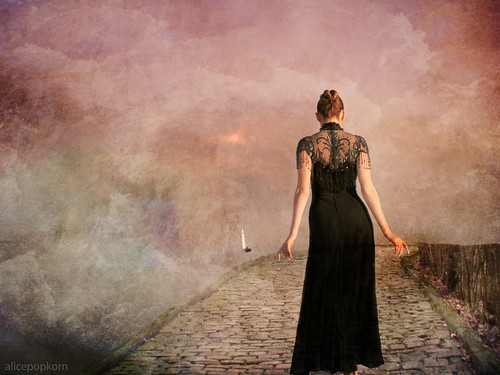
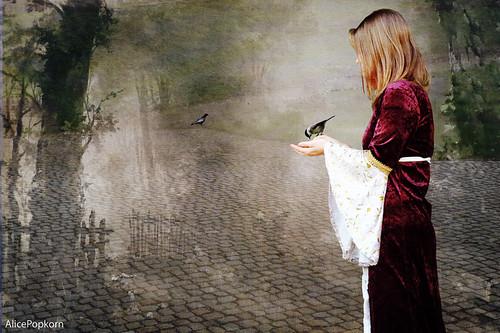
/ Image by Alice Popkorn /

The self you leave behind
is only a skin you have outgrown.
Don’t grieve for it.

We are alive, and because we are alive, we change. We imagine we know who we are, that we are a fixed, certain self. But the truth is that we are continuously emerging from the old self into a new, unknown self.

If we think we are a certain thing, a certain person and that we fully understand that person, then we are not truly seeing ourselves as we are. The only fixed self is the old self, the past self, the self we have already shed. If we think we are that old self, then we feel a sense of loss and bewilderment. We are always working against the flow of life to become who we were yesterday or ten years ago.

Look to the wet, raw, unfinished
self, the one you are becoming.

There is something messy and uncertain about who we actually are right now. The self we are does not fit easily into the simple ideas of who we should be. And our evolution continues in this very moment. We are still becoming.

But that is where the life is. That is where the potential is.

Let us be kind to ourselves and accept the changing, emerging self. Let us be at ease with our own internal movement. Even at our most still, there is a gentle flow.

The world, too, sheds its skin…

The more we seek a static understanding of the self or the world, the more we miss the magic unfolding before us:

It’s easy to lose this tenderly
unfolding moment.

The more we set aside our ideas and expectations and past histories, the more we can simply be, with a sense of openness and wonder, the more we truly encounter the living mystery we are already participants in.

Look for it
as if it were the first green blade
after a long winter.

I rather like the pithy, down-to-earth final piece of advice:

And if all that fails,

wash your own dishes.
Rinse them.
Stand in your kitchen at your sink.
Let cold water run between your fingers.
Feel it.

I’ll let you in on a personal secret: I love to do dishes. That’s one of my household chores. I do dishes by hand several times a day. There is something satisfying about creating cleanliness and order from the mild mess of daily domestic activity. The mind shifts into a low gear as the hands begin to work their own pattern while water and soap suds run through the fingers. It is a gentle massage for the entire household. It is a meditation made tactile.

Just doing that with easy attention can bring us back to truths that we miss amidst our grand efforts.

Have a beautiful weekend!


Recommended Books: Pat Schneider

Another River: New and Selected Poems Writing Alone and with Others Olive Street Transfer How the Light Gets In: Writing as a Spiritual Practice Wake Up Laughing: A Spiritual Autobiography
More Books >>


Pat Schneider, Pat Schneider poetry,  poetry Pat Schneider

US (Contemporary)

More poetry by Pat Schneider

5 responses so far

Aug 23 2018

Find the joy

Find the joy
that quietly glows in your chest,
the joy that glows with brazen disregard
for your lurching tears and laughter.

One response so far

Aug 20 2018

Book Announcement: This Dance of Bliss

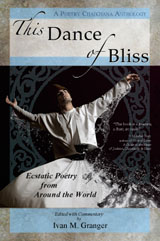
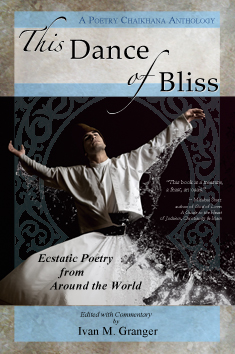
It’s ready! I am so happy to announce the publication of the latest Poetry Chaikhana anthology:

This Dance of Bliss, Ecstatic Poetry from Around the World, A Poetry Chaikhana Anthology, Ivan M. Granger


This Dance of Bliss

Ecstatic Poetry From Around the World
A Poetry Chaikhana Anthology


This Dance of Bliss is a new collection poems by beloved classical sacred poets along with a few modern visionaries — accompanied by my own thoughts, meditations, personal stories, and commentary.

The new anthology will officially be available in late September through Amazon and Barnes & Noble, as well as by request through your local independent bookstore.

But I wasn’t planning on making you wait that long.

For the Poetry Chaikhana community, I am offering a special pre-order deal on This Dance of Bliss. If your purchase a copy directly through the Poetry Chaikhana before September 1st–

  • You will receive a discounted price of $12.95 (rather than the regular retail price of $16.95 USD)
  • I will personally autograph your copy
  • You will receive a special extra or two, like a Poetry Chaikhana bookmark
  • Most importantly, you will be helping me greatly by making sure we cover initial publication expenses
This Dance of Bliss, Ecstatic Poetry from Around the World, A Poetry Chaikhana Anthology, Ivan M. Granger This Dance of Bliss
Ecstatic Poetry From Around the World

A Poetry Chaikhana Anthology

Edited with Commentary by Ivan M. Granger

Pre-Order
before Sept. 1

$12.95
$16.95


PURCHASE
This Dance of Bliss is an inspiring collection of poems and wisdom stories from the world’s great sacred traditions. Rumi, St. John of the Cross, Lalla, Goethe, Hildegard von Bingen, Dogen, Khayyam, and many others gather together within these pages to sing their ecstatic songs.

Ivan M. Granger accompanies each poem with his own reflections and meditative commentaries, inviting us to explore the insights and private raptures of these mystics, seers, and saints-until we too are swept up in this dance of bliss!


Available soon through Amazon, Barnes & Noble,
and by request through your local bookseller


This book is a treasure, a feast, an oasis. Ivan M. Granger’s profound gift for selecting the kind of poetry that lights up the cave of the heart and melts the boundaries between the soul and the Divine is fully met by his lucid reflections on the soul-transfiguring power of each piece in this magnificent collection.
     ~ MIRABAI STARR, author of God of Love: A Guide to the Heart of Judaism, Christianity & Islam


To purchase a special pre-order copy of This Dance of Bliss click here or the ‘Purchase’ link above for payment through PayPal.

     If you prefer to pay by check or money order, you can mail it to:

     Poetry Chaikhana
     PO Box 2320
     Boulder, CO 80306

Shipping and handling: $4.50 US, $7.50 Canada, $12.00 International.
(Payments should be made in US funds to “Poetry Chaikhana.”
And please don’t forget to include your mailing address.)

All pre-order copies will be shipped as soon as they are available, which will be at the beginning of September.

This Dance of Bliss, Ecstatic Poetry from Around the World, A Poetry Chaikhana Anthology, Ivan M. Granger


This Dance of Bliss

Ecstatic Poetry From Around the World
A Poetry Chaikhana Anthology


Here is a small sampling from This Dance of Bliss.

You can read more by clicking here: Read More:
Table of Contents + Introduction + Sample Poems


A hundred flowers in spring, the moon in autumn,
the breeze in summer, in winter snow.
When the mind is unclouded,
this is the best season of life.


Wu Men

IMG


A hundred flowers in spring, the moon in autumn,
the breeze in summer, in winter snow.

The shifting seasons against the living canvas of the world invite us to notice the cycles of life, how everything flows and changes and returns again. Because the world is filled with life, nothing remains the same. Everything grows and changes and comes around again renewed.

When the mind is unclouded…

Watching that flow, we witness such beauty. But we can only truly see it we let the mind quiet and become clear.

In such moments, a fullness of the soul overwhelms us. We become creatures of silent delight, content and complete in ourselves as we watch the parade of life’s seasons move past, leaving us fully alive in this very moment.

…this is the best season of life.


The sum total of our life is a breath
spent in the company of the Beloved.

Abu-Said Abil-Kheir
English version by Vraje Abramian


I find it intriguing that “breath” and “life” and “spirit” are synonyms in many languages. When you read sacred writings and the word “spirit” is used, substitute the word “breath” and see how the meaning changes and expands.

The relationship between breath, life, and spirit is more profound than the observation that the living breathe and the dead do not.

We think in terms of borders and boundaries, constantly noting what separates ourselves, mentally and physically, from everything else. But the reality is that there is a constant flow of awareness across those borders. Every one of us has the unseen movement of the breath. Through the breath, what is outside comes inside. What is non-self becomes self. And what was self is released again out into the world. This is communion, nothing less.

That inbreath of yours is the outbreath of another. The air we breathe is the breath of all.

A deep breath opens the chest and expands the heart. A full breath requires us to feel. We feel ourselves, and we feel others. Feeling, too, is communion. When feeling is shut down, the breath is shut down, and life has become limited.

The current of the breath continuously teaches us that the boundaries of self exist only in the mental map. In reality, we flow out into the universe, and the universe flows back in. The only way to secure our borders is to stop breathing, which is, of course, death. Life requires breath, and we live in each other, within the same shared breath.

When we really breathe, we might just come to the same conclusion as the poet: An individual’s lifetime may be brief or long, the experiences of life may be lasting or fleeting, but this communal breath-life-spirit in which we participate is the very breath of the Beloved.


Whoever finds love
beneath hurt and grief
disappears into emptiness
with a thousand new disguises

Rumi
English version by Coleman Barks


Ivan M. Granger writes as though God is looking over his shoulder. He inspires appreciation of the literature of awakening as he inspires the reader’s own heart awakening. This anthology features poetic masterpieces from around the world, each one revealing the profound interconnectedness of all things. The comments accompanying each selection are direct and engaging, unfolding layers of meaning, further enhancing the themes of union, interconnection, and non-separation.”
     ~ JERRY KATZ, editor of One: Essential Writings on Nonduality


This Dance of Bliss, Ecstatic Poetry from Around the World, A Poetry Chaikhana Anthology, Ivan M. Granger


This Dance of Bliss

Ecstatic Poetry From Around the World
A Poetry Chaikhana Anthology

Ivan M. Granger Consider purchasing a pre-order copy of This Dance of Bliss in support of the Poetry Chaikhana!

And thank you to everyone for all of the encouragement and support along the way!

Ivan

2 responses so far

Aug 15 2018

New Anthology Almost Ready

I know, I haven’t sent a poem out for the last couple of weeks. The reason is that I have been deep into the final edits on the printed proof of the new Poetry Chaikhana anthology.

The new book will be called This Dance of Bliss: Ecstatic Poetry from Around the World. Here’s an advanced glimpse at the cover:

I’m so pleased with how it is coming together. I hope you will be too. Like the previous Poetry Chaikhana anthology, This Dance of Bliss will feature historical sacred poets along with a few contemporary voices. Rumi, St. John of the Cross, Lalla, Goethe, Hildegard von Bingen, Dogen, Khayyam, and many other favorites. Each poem is accompanied by the same sort of short meditations, musings, and commentaries you know so well from these emails. I will share more of a sampling from the book soon.

Several of you have already asked about pre-ordering copies of the book and, yes, I will be making this new anthology available for pre-orders very soon. Pre-ordered copies will come with a discount and a few other extras. Stay tuned!

As I bring this new anthology to publication, I may not be able maintain my normal weekly pattern with these poem emails. I am also trying to keep my work hours up at my day job, which is not always an easy balance, so sometimes these poem emails have had to wait. But the new book is very nearly ready — and then we call all join in on this dance of bliss!

One response so far

Aug 15 2018

Ivan M. Granger – Holy Ground

Published by under Poetry

Holy Ground
by Ivan M. Granger

Let the vision
of the vastness
you are
leave you
in glorious
ruins.

Pilgrims will come
to imagine
the grand temple
that once stood,
not realizing

            the wreck
            made this empty plain
            holy ground.

— from Real Thirst: Poetry of the Spiritual Journey, by Ivan M. Granger


/ Image by Stuzal /

I thought I’d share one of my own poems with you today…

So often we imagine our spiritual journey to be one of construction. We want to build a great shining monument within ourselves. It comes as a terrible shock how much the real spiritual work is actually about tearing down our structures.

Watch a wild field at dawn. Sit among the uneven grasses and opening wildflowers. Look at that empty space all around you. It is empty, yes, empty of our own constructions. But it is filled with life. It is an inherently holy space.

The same is true of the quiet depths in the heart. No perfect construction of spirituality is needed. We need to reveal the holy life that is already the foundation of our being. With courage and supreme balance, stand back and do nothing. Staying poised, just look. Notice all those fine structures we’ve erected over a lifetime, proclaiming, “Here I am!” Look closely, look long enough, and we start to see fine cracks appear. When we don’t actively shore them up, the cracks quickly expand. And then, all of a sudden — RUMBLE — the whole facade collapses.

THAT is the moment we’re waiting for! That is when we discover the empty plain beneath our feet. And we are a part of that living space.

The saints and sages of the past, the great artists and visionaries too — we imagine the grandeur of spirit they attained. But the truth is that their greatness was attained in their own collapse, amidst the ruins… and the giddy open spaces they then discovered.


Recommended Books: Ivan M. Granger

The Longing in Between: Sacred Poetry from Around the World (A Poetry Chaikhana Anthology) Real Thirst: Poetry of the Spiritual Journey For Lovers of God Everywhere: Poems of the Christian Mystics Diamond Cutters: Visionary Poets in America, Britain & Oceania Poems of Awakening: An International Anthology of Spiritual Poetry
More Books >>


Ivan M. Granger, Ivan M. Granger poetry, Secular or Eclectic poetry Ivan M. Granger

US (1969 – )
Secular or Eclectic
Yoga / Hindu : Advaita / Non-Dualist

Continue Reading »

4 responses so far

Aug 15 2018

a good poem

We wake up a little more
when we read a good poem.

One response so far

Aug 08 2018

New Anthology Book Cover

Last week I received the printed proof copy of the new Poetry Chaikhana anthology, and I am now deep into reading it and making final edits to the text.

Here’s an advanced peek at the cover–

3 responses so far

Jul 31 2018

Emily Dickinson – Who has not found the Heaven–below

Published by under Poetry

Who has not found the Heaven–below
by Emily Dickinson

Who has not found the Heaven–below–
Will fail it above–
For Angels rent the House next ours,
Wherever we remove–

— from The Longing in Between: Sacred Poetry from Around the World (A Poetry Chaikhana Anthology), Edited by Ivan M. Granger


/ Image by Alice Popkorn /

These four lines by that reclusive American mystic, Emily Dickinson, proclaim a deep truth:

Who has not found the Heaven–below–
Will fail it above–

This statement has been getting mystics into trouble with orthodox religious authorities in every century. It is the assertion that heaven is not found somewhere ‘out there’–not in the future, not after death, not in some celestial otherworld. Heaven is here, now. It is within us and surrounds us, always! And–the most dangerous part of this insight—if we don’t discover it here “below,” it won’t be found elsewhere “above.”

A statement like this shatters the religious waiting game, waiting for death, waiting for the Second Coming (or for the Maitreya Buddha, or for a better rebirth, or whatever…) If the presence of Christ / Buddha-mind / fana / liberation is not recognized right here where we are, the passive expectation of it coming upon us some other day, at some other place, is sure to “fail.”

Another way of saying this is that, as we discover the heaven below, we find ourselves already dwelling in the heaven above. But, on the other hand, if we continue to deny the heaven below, we’ll fail to discover the gateway to heaven above.

Dickinson says, “For Angels rent the House next ours, / Wherever we remove–“ No matter where we go, the Divine Presence is right there with us. We just have to knock on the neighboring reality and introduce ourselves…


Recommended Books: Emily Dickinson

The Longing in Between: Sacred Poetry from Around the World (A Poetry Chaikhana Anthology) The Complete Poems of Emily Dickinson Women in Praise of the Sacred: 43 Centuries of Spiritual Poetry by Women The Enlightened Heart: An Anthology of Sacred Poetry Saved by a Poem: The Transformative Power of Words
More Books >>


Emily Dickinson, Emily Dickinson poetry, Secular or Eclectic poetry Emily Dickinson

US (1830 – 1886) Timeline
Secular or Eclectic
Christian : Protestant

Continue Reading »

2 responses so far

Jul 31 2018

true vision

A true vision is the voice of nature,
the intention of the universe,
uniquely tuned to our soul.

3 responses so far

Jul 20 2018

Hakim Sanai

Published by under Poetry

Naked in the Bee-House
by Hakim Sanai

English version by Coleman Barks

Being humble is right for you now.
Don’t thrash around showing your strength.

You’re naked in the bee-house!
It doesn’t matter how powerful
your arms and legs are.

To God, that is more of a lie
than your weakness is.

In his doorway your prestige
and your physical energy are just dust
on your face. Be helpless
and completely poor.

And don’t try to meet his eye!
That’s like signing a paper
that honors yourself.

If you can take care of things, do so!
But when you’re living at home with God,
you neither sew the world together
with desires nor tear it apart
with disappointments.

In that place existence itself
is illusion. All that is, is one.

Lost in that, your personal form
becomes a vast, empty mosque.

When you hold on to yourself,
you’re a fire-worshipping temple.
Dissolve, and let everything get done.
When you don’t, you’re an untrained colt,
full of erratic loving and biting.
Loyal sometimes, then treacherous.

Be more like the servant who owns nothing
and is neither hungry nor satisfied,
who has no hopes for anything,
and no fear of anyone.

An owl living near the king’s palace
is considered a bird of misfortune,
ragged and ominous. But off in the woods,
sitting alone, its feathers grow splendid
and sleek like the Phoenix restored.

Musk should not be kept near water or heat.
The dampness and the dryness spoil
its fragrance. But when the musk is at home
in the musk bladder, fire and wetness
mean nothing. In God’s doorway your guilt
and your virtue don’t count.

Whether you’re Muslim, or Christian, or
fire-worshipper, the categories disappear.

You’re seeking, and God is what is
sought, the essence beyond any cause.

External theological learning moves like a moon
and fades when the sun of experience rises.

We are here for a week, or less.
We arrive and leave almost simultaneously.

To be is not to be.

The Qur’an says, “They go hastening,
with the Light running on before them.”

Clear the way! Muhammed says, “How fine!”
A sigh goes out, and there is union.

Forget how you came to this gate, your history.
Let that be as if it had not been.

Do you think the day plans its course
by what the rooster says?

God does not depend on any of his creatures.
Your existence or non-existence is insignificant.
Many like you have come here before.

When the fountain of light is pouring,
there’s no need to urge it on!
That’s like a handful of straw
trying to help the sun. “This way!
Please, let this light through!”

The sun doesn’t need an announcer.
The lamp you carry is your self-reliance.
The sun is something else!

Half a sneeze might extinguish your lantern,
whereas all a winter’s windiness
cannot put That out.

The road you must take has no particular name.
It’s the one composed of your own sighing
and giving up. What you’ve been doing
is not devotion. Your hoping and worrying
are like donkeys wandering loose,
sometimes docile, or suddenly mean.

Your face looks wise at times,
and ashamed at others.

There is another way, a pure blankness
where those are one expression.

Omar once saw a group of boys on the road
challenging each other to wrestle.
They were all claiming to be champions,
but when Omar, the fierce and accomplished
warrior, came near, they scattered.

All but one, Abdullah Zubair.
Omar asked, “Why didn’t you run?”

“Why should I? You are not a tyrant,
and I am not guilty.”

When someone knows his own inner value,
he doesn’t care about being accepted
or rejected by anyone else.

The prince here is strong and just.
Stand wondering in his presence.
There is nothing but That.

— from The Hand of Poetry: Five Mystic Poets of Persia, with Lectures by Inayat Khan, Translated by Coleman Barks

/ Image by natureguy /

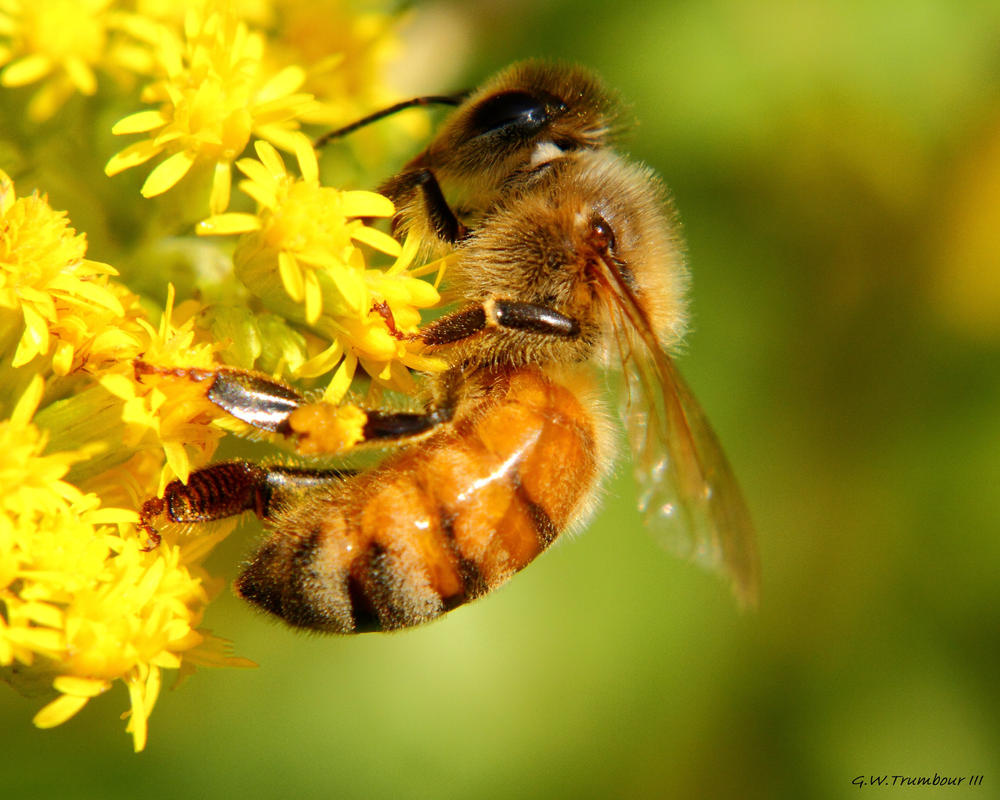
The cruelties of the world can make us feel like we are naked in the bee-house, entirely vulnerable, (Ooh. That image can make a person twitch with unease.) We’re not necessarily just talking about cruelties and frightening experiences, either. All experiences, even the pleasurable and satisfying, those too can overwhelm us. Trying to match human force against the endless variety of experience and sensory input is like standing naked in a bee house while boasting of our strength.

It doesn’t matter how strong or capable we imagine ourselves to be. Even Bruce Lee can’t fend off a swarm of bees if they are angered. The only appropriate response is humility and awareness.

There are so many delightful lines and images in this poem, but I thought I’d focus on a short section that is not the most transfixing on a poetic level, but one that I keep returning to…

If you can take care of things, do so!
But when you’re living at home with God,
you neither sew the world together
with desires nor tear it apart
with disappointments.

That first statement — “If you can take care of things, do so!” — immediately negates the temptation to interpret the poet’s words as a justification for passivity. We are given bodies for one purpose: to interact in a world of action. We are not disconnected spectators. As body dwellers, we are inherently beings of action, and being interconnected we act with each other and for each other.

But the intensity of action and the world perceived by the senses can confuse us, leading us to imagine that reality is somehow held together by our actions and injured by our failures. This belief leads to inflation of ego in success, and a crippling psychic burden when success evades us.

And then we get caught in the cycle of taking only actions we think will succeed and avoiding all others. Our actions grow smaller, safer, more predictable. We all feel this gravitational pressure to some extent.

But– when we remember that we are first and foremost beings with vast interior spaces, beings of awareness and intention, we break that ever tightening cycle. We step free from the idea of a mechanical world of action and reaction, action graded with a pass or fail. Instead, we understand action as a form of ritual. We begin to see action as enaction. Action flows outward from those great interior halls of the heart. Action becomes expression.

Yes, we still strive to take effective action, we measure the results and improve future actions, but we are not enthralled by those results. We take action simply because it is our nature to act. And we act because the awakening heart prompts us to act. The results are left to that greater Reality. Freed from “results” and “success,” we can then act in ways that are right for the simple reason that it is right.

Right action heals in ways that even “success” cannot match.

In Hinduism, this might be called Karma Yoga. I prefer not to call it anything. It is simply the nature of being in the world.

Have a beautiful day, inside and out.


Recommended Books: Hakim Sanai

The Longing in Between: Sacred Poetry from Around the World (A Poetry Chaikhana Anthology) Real Thirst: Poetry of the Spiritual Journey The Drunken Universe: An Anthology of Persian Sufi Poetry Perfume of the Desert: Inspirations from Sufi Wisdom Islamic Mystical Poetry: Sufi Verse from the Early Mystics to Rumi
More Books >>


Hakim Sanai, Hakim Sanai poetry, Muslim / Sufi poetry Hakim Sanai

Afghanistan (1044? – 1150?) Timeline
Muslim / Sufi

Continue Reading »

6 responses so far

Jul 20 2018

filled with magic

The world is so filled with magic
that we’ve become blind to it.

One response so far

Jul 13 2018

William Stafford – You Reading This, Be Ready

Published by under Poetry

You Reading This, Be Ready
by William Stafford

Starting here, what do you want to remember?
How sunlight creeps along a shining floor?
What scent of old wood hovers, what softened
sound from outside fills the air?

Will you ever bring a better gift for the world
than the breathing respect that you carry
wherever you go right now? Are you waiting
for time to show you some better thoughts?

When you turn around, starting here, lift this
new glimpse that you found; carry into evening
all that you want from this day. This interval you spent
reading or hearing this, keep it for life —

What can anyone give you greater than now,
starting here, right in this room, when you turn around?

— from The Way It Is: New & Selected Poems, by William Stafford


/ Image by Sloan Poe /

Starting here,,,

William Stafford starts his poem with this phrase and then repeats it prominently throughout. This is a poem about being present. It is a poem about noticing where we are within the present moment — and about noticing what shares the space of now with us.

Starting here, what do you want to remember?
How sunlight creeps along a shining floor?

Let’s take a moment to stop being lost in our thoughts and our plans for the day and just notice where we are, right now. As the mind settles, the senses become our allies. They start to wake up and notice the quiet beauty and little mysteries right next to us.

Everything awaits the gift of awareness. Every phenomenon, no matter how small, is a miracle just waiting for us to notice it, so that it can lead us back to right here.

What scent of old wood hovers, what softened
sound from outside fills the air?

This is how we can stop using the senses as one more distraction but as a gentle way to bring our awareness back to center.

Will you ever bring a better gift for the world
than the breathing respect that you carry
wherever you go right now?

Isn’t that a wonderful line? More important than anything we may do or think, it is our “breathing respect” that we bring with us into the present moment that is our true gift to the world. That sense of breathing, being present as we notice the world, means we are actually here, ourselves. This is showing proper respect to the world. Breath is communion. Breath is a living connection with the world. Breath brings us back to center in the heart within the living moment.

Breath and attention, these say, here I am. If we aren’t breathing fully, and if we aren’t paying attention, they we are saying that we’d rather be somewhere else. We have severed our connection. That is not showing proper respect.

Are you waiting
for time to show you some better thoughts?

We think we are waiting for that perfect thought that somehow gives us permission to be present. We already have that permission. And thoughts don’t work that way. We just notice. We settle into ourselves. We breathe. And we become present.

When you turn around, starting here, lift this
new glimpse that you found; carry into evening
all that you want from this day. This interval you spent
reading or hearing this, keep it for life —

This is important advice, whether talking about meditation and prayer or simply the artist’s reverie– what we notice, starting here in the present moment, that feeling of life and peace and magic, we don’t want to leave it behind. It should not be relegated to our moments of sitting still. We can learn to carry it with us as we shift into other activities and different phases of the day.

No strict dividing line between the bliss of the moment and the movement of the wider day. As we become more attuned to our meditation, we invite the meditation into our work, our social interactions, and the changing rhythms of the evening. It is all meditation. When we find the present moment in the day, it is not lost in the night.

What can anyone give you greater than now,
starting here, right in this room, when you turn around?

Being awake and fully ourselves right now, that is what we all want. Beneath our other drives that is what we truly seek. And it is always available to us. So why do we exile ourselves from being alive in this moment? All we have to do is turn around and start here.

Be ready.


Recommended Books: William Stafford

The Way It Is: New & Selected Poems My Name is William Tell Dancing with Joy: 99 Poems Even in Quiet Places Ask Me: 100 Essential Poems of William Stafford
More Books >>


William Stafford, William Stafford poetry, Secular or Eclectic poetry William Stafford

US (1914 – 1993) Timeline
Secular or Eclectic

More poetry by William Stafford

One response so far

Jul 13 2018

all the way

Enlightenment all the way to enlightenment.

One response so far

Jul 05 2018

Poems Once a Week (for now)

I have shifted to a rhythm of sending out poems once a week. Partly this is because I am dedicating more of my available time to completion of the new anthology. The other reason is purely financial. Recently, I shifted over to a new emailing service for these poetry emails. All seems to be going well, and they solved several technical issues that I had dealing with for some time. While their price is reasonable for higher volume of emails, they have an offer that saves considerable expense if I send out these emails once a week.

For both reasons, one email a week makes sense for now. Let me know what you think. Is one poem email per week enough? Or is it worth a bit of extra expense to switch back to several emails per week, once the new anthology is available?

5 responses so far

Jul 05 2018

Derek Walcott – Love After Love

Published by under Poetry

Love After Love
by Derek Walcott

The time will come
when, with elation,
you will greet yourself arriving
at your own door,
in your own mirror,
and each will smile at the other’s welcome,

and say, sit here. Eat.
You will love again the stranger who was your self.
Give wine. Give bread.
Give back your heart
to itself, to the stranger who has loved you

all your life, whom you ignored
for another, who knows you by heart.
Take down the love letters from the bookshelf,

the photographs, the desperate notes,
peel your own image from the mirror.
Sit. Feast on your life.

— from Saved by a Poem: The Transformative Power of Words, by Kim Rosen


/ Image by vanillapearl /

I feel like a latecomer to Derek Walcott’s poetry. I first discovered his writing just a few years ago. In fact, this was the first poem of his that I read. I found it in Saved by a Poem (a book I highly recommend — a profound exploration of the many ways poetry can be a healing and transformative presence in our lives).

There is always more wonderful poetry to discover and explore but, once found, I never want to rush through it, so I eagerly take slow steps…

The time will come
when, with elation,
you will greet yourself arriving

This is a magical moment, when we finally encounter ourselves… when we actually see through to something essential, when we see through to something that is what we really are.

Most of the time I think we carry a reflexive fear of that meeting, so we tense up and expend a great deal of effort to avoid it. But Derek Walcott rightly says it is a moment of elation, one that inspires a deep smile and a profound sense of homecoming.

and each will smile at the other’s welcome,

and say, sit here. Eat.
You will love again the stranger who was your self.

Is there more to say? Perhaps also a reminder to celebrate the journey that has brought us here…

Sit. Feast on your life.


Recommended Books: Derek Walcott

Sea Grapes The Poetry of Derek Wolcott 1948 – 2013 Omeros White Egrets: Poems Collected Poems 1948 – 1984
More Books >>


Derek Walcott, Derek Walcott poetry, Christian poetry Derek Walcott

St. Lucia & UK (1930 – )
Christian

More poetry by Derek Walcott

7 responses so far

« Prev - Next »