Jun 27 2018

New Anthology Update & Request for Help with Proofreading

The new Poetry Chaikhana anthology is now at a point that I can tell you a bit more about it. The manuscript is complete and I have all of the necessary poem permissions. It is now in the final stages of editing. I now am putting the final touches on the book cover design.

It is taking its final form.

The next step is to do a final proofreading. Since the anthology includes my commentary and poet biographies, as well as the poems themselves, there is a plenty to review (and plenty to enjoy as a reader!). Volunteer proofreaders were a great help with the previous anthology-I’d love to ask once again for your help. Ideally, I would like half a dozen or more people, and I will send each person a small section of pages to look over. You don’t need to be a professional proofreader, but it helps to have a keen eye, a solid sense of English grammar, and maybe just a drop of OCD.

I will gladly send a copy of the new anthology as a thank you for your help when it is published.

If you’d like to help with the proofreading, please let me know by sending me a note at ivan@poetry-chaikhana.com. Thank you so much!

Once the proofreading is done, I still have some marketing and publishing details to take care of, and then the book goes to the printers-and we have our new book!

2 responses so far

Jun 27 2018

The Story of Tea

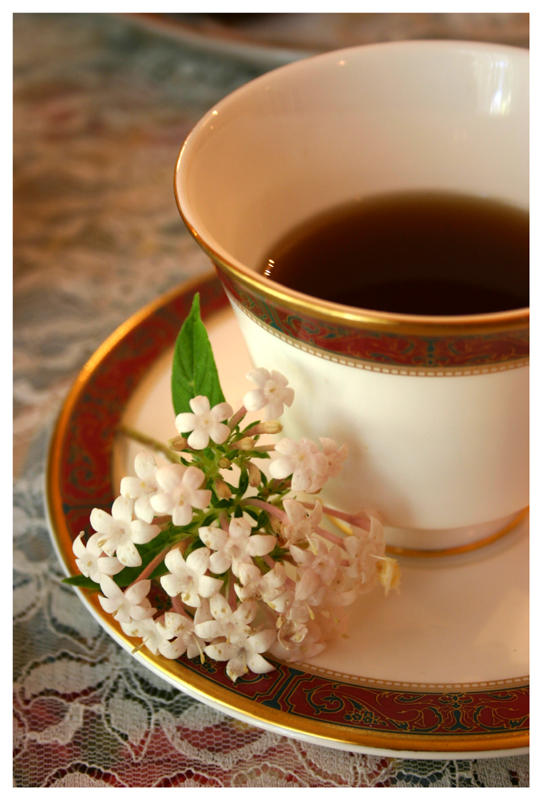
I often get asked what a “chaikhana” is. The short answer is that it is a tea house. (Chai = tea). The inevitable second question is, why a “poetry chaikhana”? What does poetry, especially sacred poetry, have to do with tea? The act of sipping tea naturally has a contemplative quality to it, but there’s a deeper reason why I chose the name Poetry Chaikhana all those years ago. It was inspired by a Sufi story–


/ Photo by Doubtful-Della /

The Story of Tea

In ancient times, tea was not known outside China. Rumours of its existence had reached the wise and the unwise of other countries, and each tried to find out what it was in accordance with what he wanted or what he thought it should be.

The King of Inja (‘here’) sent an embassy to China, and they were given tea by the Chinese Emperor. But, since they saw that the peasants drank it too, they concluded that it was not fit for their royal master: and, furthermore, that the Chinese Emperor was trying to deceive them, passing off some other substance for the celestial drink.

The greatest philosopher of Anja (‘there’) collected all the information he could about tea, and concluded that it must be a substance which existed but rarely, and was of another order than anything then known. For was it not referred to as being an herb, a water, green, black, sometimes bitter, sometimes sweet?

In the countries of Koshish and Bebinem, for centuries the people tested all the herbs they could find. Many were poisoned, all were disappointed. For nobody had brought the tea-plant to their lands, and thus they could not find it. They also drank all the liquids which they could find, but to no avail.

In the territory of Mazhab (‘Sectarianism’) a small bag of tea was carried in procession before the people as they went on their religious observances. Nobody thought of tasting it: indeed, nobody knew how. All were convinced that the tea itself had a magical quality. A wise man said: ‘Pour upon it boiling water, ye ignorant ones!’ They hanged him and nailed him up, because to do this, according to their belief, would mean the destruction of their tea. This showed that he was an enemy of their religion.

Before he died, he had told his secret to a few, and they managed to obtain some tea and drink it secretly. When anyone said: ‘What are you doing?’ they answered: ‘It is but medicine which we take for a certain disease.’

And so it was throughout the world. Tea had actually been seen growing by some, who did not recognize it. It had been given to others to drink, but they thought it the beverage of the common people. It had been in the possession of others, and they worshipped it. Outside China, only a few people actually drank it, and those covertly.

Then came a man of knowledge, who said to the merchants of tea, and the drinkers of tea, and to others: ‘He who tastes, knows. He who tastes not, knows not. Instead of talking about the celestial beverage, say nothing, but offer it at your banquets. Those who like it will ask for more. Those who do not, will show that they are not fitted to be tea-drinkers. Close the shop of argument and mystery. Open the teahouse of experience.’

The tea was brought from one stage to another along the Silk Road, and whenever a merchant carrying jade or gems or silk would pause to rest, he would make tea, and offer it to such people as were near him, whether they were aware of the repute of tea or not. This was the beginning of the Chaikhanas, the teahouses which were established all the way from Peking to Bokhara and Samarkand. And those who tasted, knew.

At first, mark well, it was only the great and the pretended men of wisdom who sought the celestial drink and who also exclaimed: ‘But this is only dried leaves!’ or: ‘Why do you boil water, stranger, when all I want is the celestial drink?’, or yet again: ‘How do I know that this is? Prove it to me. Besides the colour of the liquid is not golden, but ochre!’

When the truth was known, and when the tea was brought for all who would taste, the roles were reversed, and the only people who said things like the great and intelligent had said were the absolute fools. And such is the case to this day.

– Ayn al-Qozat Hamadani (1098 – 1131)

Tales of the Dervishes: Teaching Stories of the Sufi Masters over the Past Thousand Years
by Idries Shah

In this way, I hope the poems and thoughts I share through the Poetry Chaikhana bring a hint of that celestial drink to your lips. These are poems not to be praised for mere artistry, not to be worshipped from afar, not to be exclusively studied or analyzed. These are poems to be tasted. They are meant to be imbibed until we feel warmth in the belly and sweetness in the heart.

‘He who tastes, knows. He who tastes not, knows not… Close the shop of argument and mystery. Open the teahouse of experience.’

Have a beautiful day! I think I’m going to go to the local teahouse and order a tall glass of tea!

2 responses so far

Jun 21 2018

Denise Levertov – The Depths (Separation of Immigrant Families)

Published by under Poetry

The Depths
by Denise Levertov

When the white fog burns off,
the abyss of everlasting light
is revealed. The last cobwebs
of fog in the
black fir trees are flakes
of white ash in the world’s hearth.

Cold of the sea is counterpart
to this great fire. Plunging
out of the burning cold of ocean
we enter an ocean of intense
noon. Sacred salt
sparkles on our bodies.

After mist has wrapped us again
in fine wool, may the taste of salt
recall to us the great depths about us.

— from The Jacob’s Ladder, by Denise Levertov


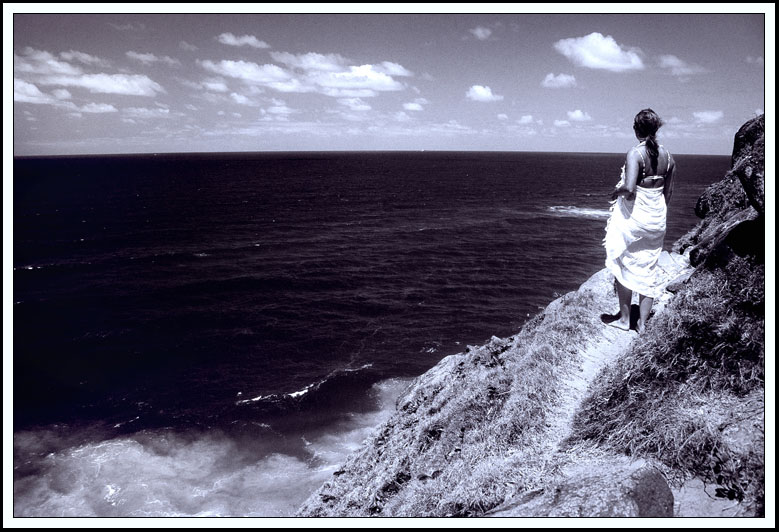
/ Image by Arathrim /

A reminder of light and the depths of the great ocean of life…

=

Like many of you, I have been preoccupied by the recent news of the forcible separation of children from their families in the US. I have felt for a long time that US policies toward immigration, legal and illegal, are racist and brutal. That has been true under both Democratic and Republican administrations. But it has taken an unconscionably cruel turn with the Trump administration’s forcible separation of children from their families, with no provision to reunite these traumatized families.

This is no less than institutionalized child abuse on a massive scale. The way we treat children and the vulnerable is a fundamental measure of our collective social morality. If you are a US citizen like me, that is a crime done in our name. And, if we are silent, it is done with our tacit approval.

There has been a partial sigh of relief that the outcry prompted an apparent reversal of the child separation policies. But while the news stories may begin to shift to other topics, be cautious in assuming that this latest offense is resolved.

My understanding is that forced family separations may still occur, just with a bureaucratic delay added. Also this latest change in government policy has a Trojan horse hidden within it: Many people don’t realize this, but crossing the border without legal documentation has at worst been classified as a misdemeanor offense in the US. This policy change now makes undocumented border crossing a felony. In other words, families desperately seeking asylum must first deal with the criminal justice system, because they have had to commit a major “crime” simply to seek safety.

Others have said it before me, but if we as a nation are concerned with immigration, than we should change our military and economic policies to not create immigrant crises. When an immigrant arrives, especially without formal documentation, it is always out of desperation. That always, always deserves a compassionate response. If that creates problems in other ways, then we accept those problems and deal with them in responsible, practical ways, as any decent society should.

With the current patterns of politics, economics, and climate change, immigrant issues and refugee crises are likely to remain major concerns in the world. If you are looking for more ways you can help, here are a few organizations doing courageous work in the world worth connecting to and contributing to.

Kids in Need of Defense (KIND)
supportkind.org

Women’s Refugee Commission
https://www.womensrefugeecommission.org

Asylum Seeker Advocacy Project (ASAP)
https://asylumadvocacy.org

=

may the taste of salt
recall to us the great depths about us.


Recommended Books: Denise Levertov

Denise Levertov: Selected Poems Poems of Denise Levertov: 1960-1967 Breathing the Water The Great Unknowing: Last Poems Candles in Babylon
More Books >>


Denise Levertov, Denise Levertov poetry, Secular or Eclectic poetry Denise Levertov

US (1923 – 1997) Timeline
Secular or Eclectic : Beat
Jewish

More poetry by Denise Levertov

2 responses so far

Jun 21 2018

crucial ingredient

Your life needs one crucial ingredient:

you!

2 responses so far

Jun 13 2018

Lynn Ungar – Boundaries

Published by under Poetry

Boundaries
by Lynn Ungar

The universe does not
revolve around you.
The stars and planets spinning
through the ballroom of space
dance with one another
quite outside of your small life.
You cannot hold gravity
or seasons; even air and water
inevitably evade your grasp.
Why not, then, let go?

You could move through time
like a shark through water,
neither restless nor ceasing,
absorbed in and absorbing
the native element.
Why pretend you can do otherwise?
The world comes in at every pore,
mixes in your blood before
breath releases you into
the world again. Did you think
the fragile boundary of your skin
could build a wall?

Listen. Every molecule is humming
its particular pitch.
Of course you are a symphony.
Whose tune do you think
the planets are singing
as they dance?

— from Bread and Other Miracles, by Lynn Ungar


/ Image by Matt Brown /

You cannot hold gravity
or seasons; even air and water
inevitably evade your grasp.
Why not, then, let go?

We want to cement ourselves and our place within the wider reality. We want to grasp, hold, own, and so stop change and uncertainty. But reality slips through our fingers. Everything is fluid, as are we ourselves.

You could move through time
like a shark through water,
neither restless nor ceasing,
absorbed in and absorbing
the native element.

This is such a startling image. A koi or a minnow suggests a serene, easily forgotten metaphor, but a shark makes a point! Part of why a shark is so ferocious is because it is ferociously at one with its environment. They say that sharks never stop swimming, but sharks are not restless. They do not struggle and exhaust themselves amidst the ocean currents. They cruise with a quiet fearlessness through their realm.

It is a form of communion they express, “absorbed in and absorbing / the native element.” The shark is in the water and the water is in the shark. They are one.

Why pretend you can do otherwise?
The world comes in at every pore,
mixes in your blood before
breath releases you into
the world again.

It raises the question, what is a boundary? When we move through the environment at the same time that the environment moves through us, where is the border line between ourselves and everything else?

Did you think
the fragile boundary of your skin
could build a wall?

We tend to talk about unity and interconnectedness on spiritual levels, but we forget that it is just as true in the physical realm, and in every level in between. Everything we identify with, our emotions, thoughts, health, our very breath, are not possessions that exist in a private isolation. Everything is an interaction with the environment. Everything is part of the cycle of inflow and outflow.

This raises an unsettling question: How then do we protect ourselves from the disharmonies and toxicity of the world around us? There are a few ways to answer this, but I am going to give a harsh answer this time: How do we protect ourselves? We don’t. We are in the world and the world is in us. What happens in the world happens in us. The world is us and we are the world.

Whether we are talking about nature or human emotions, disharmony and toxicity is never just “out there” to be stopped at the border of the skin or one’s private thoughts and feelings. We don’t avoid, we can’t. We participate. We hurt with our fellow beings as much as we delight with them.

They. Us. Where is the boundary, really? We participate in a shared experience of being.

But– and this is important, it is not just about the outside coming in. There is also the outbreath. What is inside also flows outward into the world. This is where the power of the individual truly expresses itself. We may take in hurt, pain, poison, but we can, if we choose, pour out love, healing, joy. And that too becomes part of the natural environment in which we all swim with our porous boundaries.

I don’t want to suggest that I believe that boundaries are not real or necessary. They are. But boundaries are more like membranes than walls. Whether we are speaking about the physical body in the natural environment, the psychological self within society, or even national borders, no boundary is lasting or impermeable. Nor should it be.

The more we identify with our boundaries, the more harshly we try to enforce them as absolute and unchanging, which is inherently doomed to failure. But the more we identify with the heart, with our core, the less important those boundaries seem, and we allow them to function as living membranes of exchange, while we are free to navigate the world without fear.

Listen. Every molecule is humming
its particular pitch.
Of course you are a symphony.
Whose tune do you think
the planets are singing
as they dance?

It is not about separation of self from other. Ultimately, such a separation is impossible. There is no real separation.

We vibrate, we hum. We are caught up in a grand universal symphony. We tune each other and are harmonized by the whole.

We sing, whether we realize it or not. Which song are we singing?


Recommended Books: Lynn Ungar

Bread and Other Miracles Blessing the Bread: Meditations


Lynn Ungar, Lynn Ungar poetry, Christian poetry Lynn Ungar

US (Contemporary)
Christian
Secular or Eclectic

Continue Reading »

7 responses so far

Jun 13 2018

An empathic heart

An empathic heart
is what keeps us alive
and on the spiritual path.

One response so far

Jun 08 2018

not enough

A book and a building are not enough.
The human spirit needs cathedrals of trees,
towering mountains, and fields
of spring wildflowers as places of prayer.

One response so far

Jun 01 2018

Karma Trinley – A Song on the View of Voidness

Published by under Poetry

A Song on the View of Voidness
by Karma Trinley

English version by Thupten Jinpa & Jas Elsner

Homage to the Adamantine Mind!

Dharma king, you who have realized
the essence; you who expound
the way of being, out of compassion:
king Buddha Samdrup,
I bow to you in my heart,
pray listen to me.

Through your kind and skillful means,
by a habit long formed, and as a fruit
of long practice in this life,
I have realized the nature of ever-presence.

When the secret of appearance is revealed,
everything arises in a tone of voidness,
undefined by the marks of identity.
Like a sky that is nothing but an image.

When the secret of thoughts is revealed,
though active, they are but mind’s sport,
naked reflections of transcendent mind
unsullied by deliberation and correction.

When the secret of recollection is revealed,
every memory is but an illumination
of self-knowledge in the ever-present state,
untainted by ego consciousness.

When the secret of illusions is revealed,
they seem nothing but the primordial state,
appearing in the visual field of rikpa,
untouched by the dualism of mind and things.

When the secret of abiding is revealed,
you are in the state of self-cognition,
however long you remain, free of elaboration,
the expanse unstained by laxity and torpor.

When the secret of mobility is revealed,
however much you move, you remain
within clear light, unstained by distraction,
excitement, and so on, a true self-recognizer.

When the secret of samsara is revealed,
however often one may circle, the cycles
are illusion unaffected by joy and pain.
This is the realization of Buddha’s four bodies.

When the secret of peace is revealed,
however tranquil one’s attainments,
they are but an image; this is the natural pure space,
free of the signs of being and nonbeing.

When the secret of birth is revealed,
however one’s reborn, it’s but an emanation;
meditation’s vision of pure self-generation
free of clinging and apprehensions.

When the secret of death is revealed,
however often one may die, it’s but the vision
of the ultimate, the stages of completion
perfect, free of any karmic deeds.

When the secret of bliss is revealed,
its intensity cannot be bettered;
this is the state of spontaneous bliss,
free of all traces of contamination.

When the secret of luminosity is revealed,
however bright, it’s but an empty form —
mother image of the void in space,
free of every multiplicity.

When the secret of emptiness is revealed,
though empty, it is the unsurpassed,
devoid of every contingent stain,
and free from every deception.

When the secret of the view is revealed,
however much one looks and sees,
the world remains beyond thought and word —
the expanse beyond dichotomies.

When the secret of meditation is revealed,
however much one meditates, it’s but a state —
undistracted, and in natural restfulness,
free of exertion and constraint.

When the secret of action is revealed,
whatever one does are the six perfections —
spontaneous, free, and to the point,
uncolored by strictures and moral codes.

When the secret of fruition is revealed,
achievements are but the cognition
of mind as dharmakaya,
the mind itself free of hope and fear.

This is the profound innermost secret;
guru’s blessings have entered my heart;
naked nonduality dawns within;
the secret of samsara and nirvana is revealed!

I have beheld the face of the ordinary mind;
I have arrived at the view that is free of extremes;
even if the Buddha came in person now,
I have no queries that require his advice!

This song on the view of voidness
expounding the nature of the being of all,
spoken in words inspired by conviction,
was sung in a voice echoing itself,
unobstructed, in between meditation sessions.

— from Songs of Spiritual Experience: Tibetan Buddhist Poems of Insight & Awakening, Translated by Thupten Jinpa / Translated by Jas Elsner

/ Image by ahermin /

Like many of the great poems emerging out of the Tibetan traditions, this poem combines ah ecstatic visionary element with a discourse on the nature of reality.

This is like mystic’s graduation thesis, a declaration of realization:

I have realized the nature of ever-presence.

He enumerates for us a list of secrets that, when understood, reveal the true nature of reality.

I will drop in a few of my comments on some of these, but I invite you to spend some time with each statement yourself and see what insights you gain…

When the secret of appearance is revealed,
everything arises in a tone of voidness,
undefined by the marks of identity.
Like a sky that is nothing but an image.

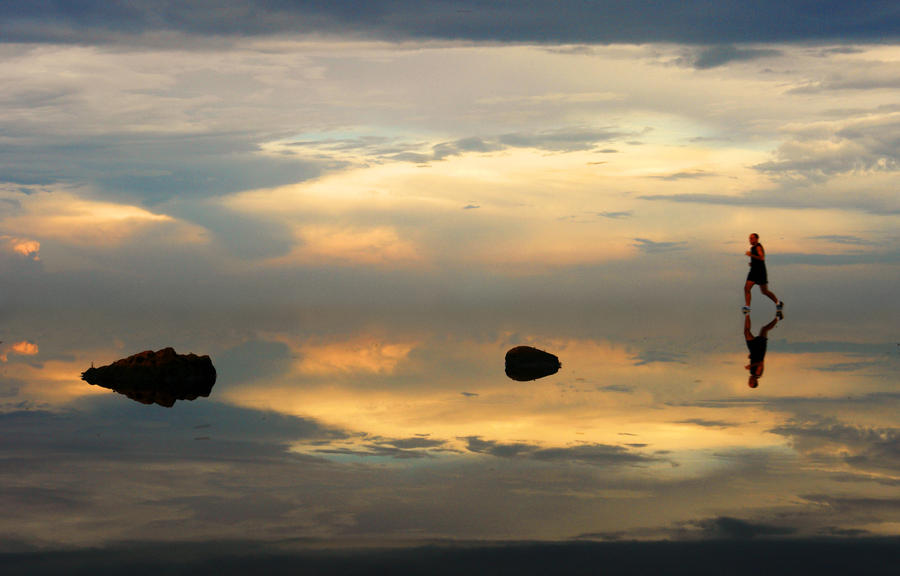
The language of the last line of this verse is a bit confusing, but I think what he is saying is that reality is like the wide open and empty nature of the sky. We may see images form in the clouds that float through the sky, but they are temporary and intangible. Things take form and appear to be real, but when we gain a wider perspective, the only lasting reality is that open space of blue, the canvas on which images appear and fade again.

When the secret of thoughts is revealed,
though active, they are but mind’s sport,
naked reflections of transcendent mind
unsullied by deliberation and correction.

The poetry of this verse stands out to me. We become so entranced by the content and movement of our own thoughts, but they are ultimately revealed to be “the mind’s sport.” Thoughts dance and dazzle, but they are like the glimmering light upon the surface of the transcendent mind, which remains pure and unaffected by that surface movement and all our attempts to control it.

When the secret of abiding is revealed,
you are in the state of self-cognition,
however long you remain, free of elaboration,
the expanse unstained by laxity and torpor.

This is an interesting one. The “secret of abiding” reveals itself as “self-cognition.” In other words, we come to rest, we discover stability and stillness, when we truly know ourselves. Words don’t express this truth easily. These ideas may seem to be disconnected, but there is an intimate connection we discover. The only place of rest is the true Self. It is only when we know the self that we can settle and abide.

Followed by a statement of movement…

When the secret of mobility is revealed,
however much you move, you remain
within clear light, unstained by distraction,
excitement, and so on, a true self-recognizer.

When we are a “true self-recognizer,” even in movement there is a clarity and inner stillness. We normally accompany action with psychic agitation. This is because we typically identify with the body and surface mind so, when there is movement, there is also disturbance. But identifying with the deep Self, movement is just the outer expression of that still spaciousness.

When the secret of samsara is revealed,
however often one may circle, the cycles
are illusion unaffected by joy and pain.
This is the realization of Buddha’s four bodies.

Samsara is the cycle of birth, death, and rebirth as understood within Buddhism. When the poet states that seeing through the secret of samsara, the cycles are revealed as illusion not affected by joy and pain, we can read that as a rather flat and disengaged insight, but that is not what is meant. He is not saying that there is no joy or pain or that life and death are meaningless; rather, the appearance of life and death along with the fluctuations of joy and pain are not truly part of the fundamental nature of being. Like the clouds forming and fading against the sky, those are all passing phenomena that have their own beauty and meaning, but the blissful expanse is the only lasting reality.

The mention of the Buddha’s “four bodies” is a reference to the four bodies (or kayas) a buddha recognizes upon enlightenment: the truth body, the form body, the enjoyment body, and the emanation body. Our true body or nature is of these eternal forms, and the rest is the dance of appearance.

When the secret of bliss is revealed,
its intensity cannot be bettered;
this is the state of spontaneous bliss,
free of all traces of contamination.

Sometimes we imagine the spiritual path to be one of self-denial and worldly disdain. We conjure up grim visions of enlightenment, and either embrace that or run from it. But the real experiences of mystics and visionaries and saints, as they constantly tell us, is one of bubbling delight and peace. When one’s nature is revealed, we dwell in bliss. No surface pleasure or joy can compare. “It’s intensity cannot be bettered.”

When the secret of emptiness is revealed,
though empty, it is the unsurpassed,
devoid of every contingent stain,
and free from every deception.

This was something that tripped me up for a long time. The constant refrain in Buddhism about emptiness, nirvana, the void can sound bleak. As a younger seeker I had a love-hate relationship with the teachings of Buddhism. There was clearly something uplifting, insightful, and compassionate there, an expression of profound truth. But it could also sound rather depressing.

It took my own sense of opening to finally see beyond my own mental block and recognize that that “emptiness” is actually filled with life and delight amidst vast spaciousness. It is not empty as in a suffocating vacuum, but rather it is free from the idea of separate and distinct things and beings. Within this blissful nondual space of being, there is only a living wholeness and, therefore, nothing (no objectified thing) exist there. It is empty, yet it is the unsurpassed.

naked nonduality dawns within;
the secret of samsara and nirvana is revealed!

I like that signature verse at the end. It brings us back to earth. Signed this day between meditation sessions, yours truly…

This song on the view of voidness
expounding the nature of the being of all,
spoken in words inspired by conviction,
was sung in a voice echoing itself,
unobstructed, in between meditation sessions.


Recommended Books: Karma Trinley

Songs of Spiritual Experience: Tibetan Buddhist Poems of Insight & Awakening


Karma Trinley

Tibet (1456 – 1539) Timeline
Buddhist : Tibetan

Continue Reading »

4 responses so far

May 30 2018

Rumi – This moment

Published by under Poetry

This moment
by Mevlana Jelaluddin Rumi

English version by Coleman Barks

This moment
This LOVE
comes to rest in me,
many beings in one being
In one wheat-grain
a thousand sheaf stacks.

Inside the needle’s eye
a turning night of stars.
This moment —
This LOVE.

— from The Illuminated Rumi, Translated by Coleman Barks / Michael Green


/ Image by Ha-Wee /

Leave it to a poet like Rumi to give us a phrase like–

Inside the needle’s eye
a turning night of stars.
This moment —
This LOVE.

The beauty of the image and words is so transporting that we can miss the profound esoteric truth being revealed here:

The human spirit, in its constant quest and hunger, looks for ever larger, greater experiences that expand our reach until we can encompass and hold everything. Even in the spiritual journey we want to be so big we don’t have to deal with the mundane moment. And this is the hardest part — letting go of that impulse.

You see, here’s the secret Rumi whispers to us in these lines… Don’t get bigger; get smaller. Become so small that you can finally rest in the tiniest of spaces — “this moment.” Do that, come to rest here, right here, fully, and this moment, which you feared would be so small you’d suffocate (“inside the needle’s eye”), surprises you by becoming a window to the Infinite (“a turning night of stars”).

Do that, and your heart unfolds in ways you hadn’t known possible, flooding you with an all-encompassing awareness of bliss and love.

It is not a journey of years, it is a journey of one moment–

This moment —
This LOVE.


Recommended Books: Mevlana Jelaluddin Rumi

The Longing in Between: Sacred Poetry from Around the World (A Poetry Chaikhana Anthology) Poetry for the Spirit: Poems of Universal Wisdom and Beauty Music of a Distant Drum: Classical Arabic, Persian, Turkish & Hebrew Poems Perfume of the Desert: Inspirations from Sufi Wisdom Open Secret: Versions of Rumi
More Books >>


Mevlana Jelaluddin Rumi, Mevlana Jelaluddin Rumi poetry, Muslim / Sufi poetry Mevlana Jelaluddin Rumi

Afghanistan & Turkey (1207 – 1273) Timeline
Muslim / Sufi

Continue Reading »

2 responses so far

May 30 2018

Hiatus and Health

My apologies for the unannounced hiatus in posting these poems. I went through a rather challenging bout of chronic fatigue/ME and I needed to gather my energies together to keep basic hours with my day job as a computer programmer. But I seem to be on the rebound now and I hope these posts will be more regular again.

One response so far

May 16 2018

Faiz Ahmad Faiz – Bol – Speak

Published by under Poetry

Bol – Speak
by Faiz Ahmad Faiz

English version by Ivan M. Granger

Speak! Your words are free.
Speak! Your tongue is still your own.

Your body is yours, strong and straight.

Speak! Your life is still your own.

Look! In the forge’s flames,
how your steel glows red.
See how the locked doors have opened
and every chain breaks.

Speak! The time left to you is enough.
Before body and tongue give out.
Speak! For truth still survives
Speak! Say what is in your heart!


/ Image by melaniumom /

It is worth taking some time to really pay attention to the news and some of the troubling events taking place right now. But it takes a deeper reading than we get in most US news sources to have a sense of what is really happening. The killing of the Palestinian protesters in Gaza in the wake of the US embassy move from Tel Aviv to Jerusalem. The decision by the US to unilaterally break the Iran nuclear agreement, which was the only real reason the Iranian government had to cooperate. The US government tightening its alliances with the extremist governments in Saudi Arabia and Israel, who seem to want to foment a war with Iran.

Events can unfold in several different directions, some terrible to contemplate.

In such moments, the temptation is to turn away, to shut the heart down, to focus exclusively on our own lives, our own families and circle of friends. I would suggest that we can handle more than we think we can. The heart, to be whole, must break a thousand times and be ready to break again. An empathic heart is what keeps us alive and on the spiritual path. A feeling heart reaches out to embrace even those outside our circles of familiarity, expanding our own sense of who we are.

And we have bodies, vehicles of action in the world. They are meant to express that awakened heart. They are meant to help, to soothe, to show kindness, to stop harm, for that is what the heart wishes.

And we can speak. For speaking is an act of the living, an affirmation of one’s humanity. Speaking is about connection, sharing one’s state of mind that we may meet one another in the currents of truth.

Speak! For truth still survives
Speak! Say what is in your heart!

Though speech we touch each other, heart to heart.

Speak.

Faiz Ahmad Faiz, Faiz Ahmad Faiz poetry, Muslim / Sufi poetry Faiz Ahmad Faiz

Pakistan (1911 – 1984) Timeline
Muslim / Sufi

More poetry by Faiz Ahmad Faiz

3 responses so far

May 11 2018

Thich Nhat Hanh – Walking Meditation

Published by under Poetry

Walking Meditation
by Thich Nhat Hanh

Take my hand.
We will walk.
We will only walk.
We will enjoy our walk
without thinking of arriving anywhere.
Walk peacefully.
Walk happily.
Our walk is a peace walk.
Our walk is a happiness walk.

Then we learn
that there is no peace walk;
that peace is the walk;
that there is no happiness walk;
that happiness is the walk.
We walk for ourselves.
We walk for everyone
always hand in hand.

Walk and touch peace every moment.
Walk and touch happiness every moment.
Each step brings a fresh breeze.
Each step makes a flower bloom under our feet.
Kiss the Earth with your feet.
Print on Earth your love and happiness.

Earth will be safe
when we feel in us enough safety.

— from Call Me by My True Names: The Collected Poems of Thich Nhat Hanh, by Thich Nhat Hanh


/ Image by Leonid Afremov /

Something for us today by Thich Nhat Hanh, Zen monk, peace activist, author, meditation teacher…

This doesn’t feel entirely like a “poem” to me; it’s more like rhythmic, chant-like set of instructions. Reading these words I can almost hear Thich Nhat Hanh’s gentle voice offering these suggestions to us as we engage in walking meditation.

Often we imagine a very stern notion of what meditation is, and it involves sitting rigidly still. Walking meditation invites us to move, to interact with our environment — but with a sense of presence, with full awareness, with resting mind. This allows the body to move in its natural fluidity without growing stiff. It encourages a full, easy flow of the breath.

But, in walking meditation, we are not marching from point A to point B–

We will enjoy our walk
without thinking of arriving anywhere.

We are dropping the purpose and destination from our stride. The way we walk is important. Resting mind, allowing mind, welcoming heart.

It is not an easy thing to move through a garden or down the sidewalk without becoming attached to the thousand things we see or think. The reflex is to collapse the awareness with each small encounter, like a fisherman with a net, trying to ensnare and possess the world. But to keep that net of awareness open, spread wide, to witness the magical moment, to watch it dance for its instant in the sun, and then to allow it to drift past, that is the gentle work of the meditator.

To walk through the world, with a sense of peace in the heart and belly, feeling simple happiness beneath the worries of the day, touching the earth and being touched by the earth, seeing and encountering without constricting the awareness, secure enough to know ourselves, where we are, what we are part of… we are doing walking meditation.

Kiss the Earth with your feet.
Print on Earth your love and happiness.

Earth will be safe
when we feel in us enough safety.

Have a beautiful day!


Recommended Books: Thich Nhat Hanh

Call Me by My True Names: The Collected Poems of Thich Nhat Hanh The Heart of the Buddha’s Teaching: Transforming Suffering Into Peace, Joy & Liberation


Thich Nhat Hanh, Thich Nhat Hanh poetry, Buddhist poetry Thich Nhat Hanh

Vietnam/France/US (1929 – )
Buddhist : Zen / Chan

More poetry by Thich Nhat Hanh

2 responses so far

May 09 2018

Rabindranath Tagore – I want thee, only thee

Published by under Poetry

(38) I want thee, only thee (from Gitanjali)
by Rabindranath Tagore

English version by Rabindranath Tagore

That I want thee, only thee — let my heart repeat without end. All desires that distract me, day and night, are false and empty to the core.
      As the night keeps hidden in its gloom the petition for light, even thus in the depth of my unconsciousness rings the cry — I want thee, only thee.
      As the storm still seeks its end in peace when it strikes against peace with all its might, even thus my rebellion strikes against thy love and still its cry is — I want thee, only thee.

— from Gitanjali, by Rabindranath Tagore


/ Image by madrush08 /

I want thee, only thee

This is the prayer of every heart, regardless of belief, regardless of how we live. Every kind gesture says, “I want thee.” So too does every angry action. Amidst our distracted lives, “I want thee” is the inner mantra. We just have to recognize it and encourage it to come forth.

All desires that distract me, day and night, are false and empty to the core.

I don’t write often about the nature of desires. Religious voices have a tendency to speak about desire with a certain gleeful cruelty, creating environments of suppression, rigidity, and shame. Fully realized spirituality does not foster those qualities and,instead, nurtures self-awareness, presence, and flow. If joy and a sense of fullness are not present, something is off balance.

Keeping that important point in mind, we should still take a moment to consider why legitimate spiritual teachers talk about desires as a problem. When we speak of desires, we immediately think of sexuality. But desires are anything we want or crave or seek out. Yes, desires can be about sex and sensual pleasures. Desires can be about possessions and wealth and acquisition. Desire can be directed toward social position or life goals. Desire is anything at everything that hooks our attention and pulls at the will.

Here’s the real issue: The things and experiences we desire are not necessarily bad or “unspiritual.” It is the dynamic of desire itself that is the problem. We imagine that if we get this or experience that we will be happy or fulfilled. When we finally get that experience or attain that sought thing, we do indeed receive a burst of satisfaction — for a moment, or a day. And then something is missing again. We are already angling for the next thing we want. A new desire.

That’s the nut of the problem: Individual goals are attainable, specific experiences can be had, but desires are endless. Satisfying those desires never brings happiness in a lasting way. We become caught on an endless road of pursuit, disappointment, and more pursuit. Yet we persist in the chase. Sometimes we think we are being smart by deciding we have been chasing the wrong things, and so we start to pursue different desires. Yet the problem remains. Experiences can be achieved, but desires themselves are never satisfied. In the process, they siphon off large portions of our awareness and life energy.

It takes real wisdom and courage to step off that treadmill. Actions cease to be about fulfilling desires and, instead, become an expression of the inner self. Possessions and experiences are received with a sense of gratitude and a light grasp, knowing that they will pass and true fulfillment is attained elsewhere.

But how do we free ourselves from desires without resorting to repression and self-cruelty? Perhaps that’s a discussion for another day. Let’s allow the question itself to simmer in our thoughts and see what rises to the surface. What do you think?

As the storm still seeks its end in peace when it strikes against peace with all its might, even thus my rebellion strikes against thy love and still its cry is — I want thee, only thee.

This closing line is my favorite. There is a kindness in how Tagore assesses our “rebellion” and stumbling. Even in our anger, even in self-destruction, even amidst our worst faults, we are seeking peace. Picturing Tagore’s storm, I imagine the individual with an excess of unfocused energy striking repeatedly against this mountain of peace, wanting to spend itself against that immutable stillness, until, in exhaustion, the soul settles and finds its own peace.

In the end, we are all trying to express the words, I want thee, only thee.


Recommended Books: Rabindranath Tagore

The Longing in Between: Sacred Poetry from Around the World (A Poetry Chaikhana Anthology) Gitanjali The Lover of God The Fugitive Lover’s Gift and Crossing
More Books >>


Rabindranath Tagore, Rabindranath Tagore poetry, Yoga / Hindu poetry Rabindranath Tagore

India (1861 – 1941) Timeline
Yoga / Hindu

Continue Reading »

2 responses so far

Apr 27 2018

Kahlil Gibran – Pain

Published by under Poetry

Pain
by Kahlil Gibran

And a woman spoke, saying, Tell us of Pain.
And he said:
Your pain is the breaking of the shell that encloses your understanding.
Even as the stone of the fruit must break, that its heart may stand in the sun, so must you know pain.
And could you keep your heart in wonder at the daily miracles of your life, your pain would not seem less wondrous than your joy;
And you would accept the seasons of your heart, even as you have always accepted the seasons that pass over your fields.
And you would watch with serenity through the winters of your grief.

Much of your pain is self-chosen,
It is the bitter potion by which the physician within you heals your sick self.
Therefore trust the physician, and drink his remedy in silence and tranquility:
For his hand, though heavy and hard, is guided by the tender hand of the Unseen,
And the cup he brings, though it burn your lips, has been fashioned of the clay which the Potter has moistened with His own sacred tears.

— from The Prophet, by Kahlil Gibran


/ Image by techn04life /

We hold idealized images of enlightened men and women who have risen above the struggles of the world. We tell ourselves, that is the spiritual life, while all of the pain and imperfection we feel in our own lives is proof of our own failures.

It is worth reminding ourselves that brokenness is often considered to be the marker of someone on the spiritual path. To open, we usually must be broken open. Our wounds become our doorways. Our bruises are marks of initiation. Compassion is awakened, self-awareness, the ability to see with one’s own eyes.

The shattered shaman, the wounded healer. Wisdom found in exile. Seekers are, by nature, outsiders and oddballs ill at ease in the world around them, forging their own path, sometimes painfully, but in the process learning to be truly themselves.

That pain is not proof of failure, it is our potential. It is the sign of life within us seeking fuller expression.

I don’t want to suggest that I believe pain is necessary. I do believe, however, that suffering can be used. Difficult experiences can serve a profound purpose — when we approach them with awareness and with heart.

Even as the stone of the fruit must break, that its heart may stand in the sun, so must you know pain.

But let’s explore this question from a few different angles. What if the suffering is the suffering of the ego?

When we believe that we are that ego, then we experience the ego’s suffering as pain. We take it personally, and fear it could lead to death and, worse, nonexistence.

But– when we carefully, elegantly free ourselves from the notion that we are the ego, not merely as a philosophical idea but as a directly experienced reality, then what does the suffering of the ego mean to us? What is the ego exactly? When we come to see the ego as nothing more than a phantom, a mental construction, then the suffering itself becomes phantom-like. It is more like the unfolding drama of a movie being watched. It can be intense, heart-breaking, occasionally beautiful, but we no longer experience it as personal. It is no longer seen as an attack on our being.

Suffering, from that perspective, is not about pain or loss of being; instead it is seen as a form of alchemical pressure. When we keep our awareness engaged, we can use suffering as a form of transformational intensity, turning the crushed grape into wine…

Let’s also keep in mind that mystics often use the language of pain to describe spiritual opening, often in a shockingly positive light. They may refer to a “sweet pain” or a “healing pain.” This “pain” has a few levels of meaning and types of experience.

On one level, the pain can be quite literal and even physical. But it might be more accurate to refer to this as “intensity” rather than “pain.” It can be as if the senses and the perceptual mind’s ability to process it all gets overloaded. The mystic then experiences a searing, cleansing sort of intensity, that might be called pain.

And could you keep your heart in wonder at the daily miracles of your life, your pain would not seem less wondrous than your joy;

Through profound opening, one feels everything more completely, a sort of universal empathy. There is a lot of hidden suffering in the world and, at a certain point, we feel it as our own. (Actually, we always feel it anyway, but the walls of denial fall away, and we become aware of it for the first time.) In a directly sentient way, we become aware of the interconnectedness of life. Initially, that flood of feeling is intense, even painful, but that is the pain of the heart breaking open. It becomes a sort of wound one carries, but it resolves itself to a beauty and sense of unity that manages to integrate even the most terrible suffering.

Other mystics speak of a wounding in a more metaphorical sense. The pain experienced is the perception of one’s separation from God. But that pain itself is the doorway to reunion. By allowing oneself to become completely vulnerable to that pain, to surrender to it, the mystic finds the pain transformed into the blissful touch of the Beloved.

Your pain is the breaking of the shell that encloses your understanding.

Ultimately, all of these forms of pain are the pain of the pierced ego. For one with inner balance, where the protective but limiting shell of the ego is no longer necessary, that pain points the way to freedom.

For this reason, mystics and saints describe the pain as being sweet or joyful or beautiful. It is, in fact, the beginning of bliss.

Be forgiving of your struggles. Rather than limiting you, let your secret wounds open new pathways. Sending much love to everyone!


Recommended Books: Kahlil Gibran

The Prophet The Beloved: Reflections on the Path of the Heart Broken Wings Jesus the Son of Man Kahlil Gibran: His Life & World
More Books >>


Kahlil Gibran, Kahlil Gibran poetry, Christian poetry Kahlil Gibran

Lebanon/US (1883 – 1931) Timeline
Christian
Secular or Eclectic

Continue Reading »

One response so far

Apr 27 2018

Stumble

Stumble
and so see the sky.

One response so far

Apr 25 2018

Philip Booth – First Lesson

Published by under Poetry

First Lesson
by Philip Booth

Lie back daughter, let your head
be tipped back in the cup of my hand.
Gently, and I will hold you. Spread
your arms wide, lie out on the stream
and look high at the gulls. A dead-
man’s float is face down. You will dive
and swim soon enough where this tidewater
ebbs to the sea. Daughter, believe
me, when you tire on the long thrash
to your island, lie up, and survive.
As you float now, where I held you
and let go, remember when fear
cramps your heart what I told you:
lie gently and wide to the light-year
stars, lie back, and the sea will hold you.

— from Lifelines: Selected Poems 1950-1999, by Philip Booth


/ Image by Vassilis /

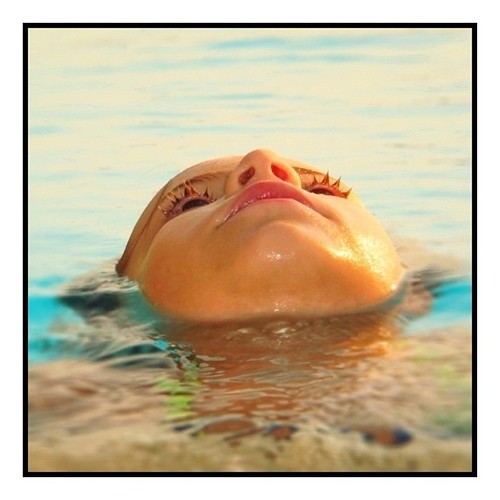
A father teaching his daughter to swim. The first lesson, how to float. He cradles her head in his hands and tells her to spread her arms and relax, looking up at the sky.

Very quickly this becomes a metaphor for life. Soon she will swim confidently. But it is a long effort to reach her “island.” When exhaustion inevitably sets in and fear seizes the heart, that first lesson comes back: rather than struggle, just rest, trust, lean back, float. Watch the stars.

the sea will hold you.


Recommended Books: Philip Booth

Lifelines: Selected Poems 1950-1999


Philip Booth, Philip Booth poetry, Secular or Eclectic poetry Philip Booth

US (1925 – 2007) Timeline
Secular or Eclectic

More poetry by Philip Booth

One response so far

Apr 20 2018

Janabai – You must accept those who surrender to you

Published by under Poetry

You must accept those who surrender to you
by Janabai

English version by Sarah Sellergren

If the Ganga flows to the ocean
and the ocean turns her away,
tell me, O Vitthal,
who would hear her complaint?

Can the river reject its fish?
Can the mother spurn her child?

Jan says,
Lord,
you must accept those
who surrender to you.

— from Images of Women in Maharashtrian Literature and Religion, Edited by Anne Feldhaus


/ Image by TheFoxAndTheRaven /

I wanted to highlight this poem today because of its emphasis on surrender.

The question of surrender is central to the spiritual journey, which is often a difficult idea for us to accept. The word “surrender” itself can seem terrifying or even hateful. Why surrender at all? Don’t we want victory and not surrender?

We need to surrender. Surrender is essential to the eventual victory of spiritual opening. Yet surrender can also be dangerous.

Different religious traditions frame the idea of surrender differently, but it is always present. There is the notion of submission to a guru or spiritual guide, which might make some of us wince. Or monastic vows of obedience, which probably makes even more of us cringe. Every tradition has some expression of surrender encoded within its practices. When both the seeker and the spiritual authority come to that relationship with pure intention, the dynamic of surrender becomes a very effective technique for swift unfolding.

The obvious problem is that surrender, particularly the profound forms of self-surrender that occur as part of the spiritual journey, make one deeply vulnerable to everything from mental manipulation to sexual abuse. Sadly, we can all cite several public examples of this very result.

So, we should never surrender, right? It’s not that simple. As I said, surrender is essential.

But to whom do we surrender? Why do we need to surrender? Leaving aside the religious trappings, let us first ask, what is the energetic purpose of surrender?

The surrender we need for success along our spiritual journey is the surrender of self — the little or false self, the ego. Not just the ego as an idea, but we must drop the limited reality the ego-self enforces upon our consciousness. We also need to surrender the ego-bolstering actions, or self-will, which continuously reaffirm the ego and its psychic hindrances.

Profound spiritual opening requires that we come to a place in which we deeply, utterly… let go. This does not even require effort. We merely have to cease all our efforts at maintaining the pretense of the little self. We have to give up what has, for most of us, become a lifelong endeavor. This may be disorienting or even frightening, so it should not be sought casually. But, done with determination and patience and balance, such surrender unlocks the doorway.

I have used rather solitary language so far. To whom do we surrender? A master or spiritual authority? Some would say yes. My personal perspective is that, such a figure can be helpful when, as I said earlier, everyone’s intentions are clear. But I still have trouble with that. Contrarian that I am, I tend to oppose most forms of authority, spiritual and secular.

What I have observed is that what we are surrendering to is not that teacher or guru or guide or institution. We are really surrendering to the universal divine spark that we have glimpsed in that person or ideal. That glowing essence is the real authority that we must surrender to. That is the real teacher. We may sense it in a guru or a saint or a teacher. We may recognize it in a spiritual organization or a holy book or a beloved icon. Or we may find it in a grove of trees, in the face of a homeless person on the street. When we are honest with ourselves, it is not the person or the institution or the teaching; they are its representatives or embodiments, but it is the shining spark itself that calls to us. It is to that do we bow. That is what we truly surrender to.

In this way, surrender need not be submission or the giving up of our critical faculties or appropriate forms of self-respect and self-protection. Perhaps it is appropriate to have an antiauthoritarian form of spiritual surrender.

Ultimately, that spirit-filled spark we see in some inspiration focus outside ourselves is what is trying to awaken within ourselves. This is really why surrender is required. We are dropping our resistance and allowing that ineffable presence to be born within. We surrender the small self as a sacred offering. Accepting this sacrifice, the divine Self, that sense of our being most deeply connected with God, steps forth. This is how surrender becomes victory.

Jan says,
Lord,
you must accept those
who surrender to you.


Recommended Books: Janabai

Women Writing in India: 600 BC to the Present: Volume 1 Images of Women in Maharashtrian Literature and Religion Women Saints in World Religions


Janabai

India (1298 – 1350?) Timeline
Yoga / Hindu : Vaishnava (Krishna/Rama)

Continue Reading »

2 responses so far

« Prev - Next »