Feb 23 2018

Philip Booth – How to See a Deer

Published by under Poetry

How to See a Deer
by Philip Booth

Forget roadside crossings.
Go nowhere with guns.
Go elsewhere your own way,

lonely and wanting. Or
stay and be early:
next to deep woods

inhabit old orchards.
All clearings promise.
Sunrise is good,

and fog before sun.
Expect nothing always;
find your luck slowly.

Wait out the windfall.
Take your good time
to learn to read ferns;

make like a turtle:
downhill toward slow water.
Instructed by heron,

drink the pure silence.
Be compassed by wind.
If you quiver like aspen

trust your quick nature:
let your ear teach you
which way to listen.

You’ve come to assume
protective color; now
colors reform to

new shapes in your eye.
You’ve learned by now
to wait without waiting;

as if it were dusk
look into light falling:
in deep relief

things even out. Be
careless of nothing. See
what you see.

— from Lifelines: Selected Poems 1950-1999, by Philip Booth

/ Image by Iamidaho /

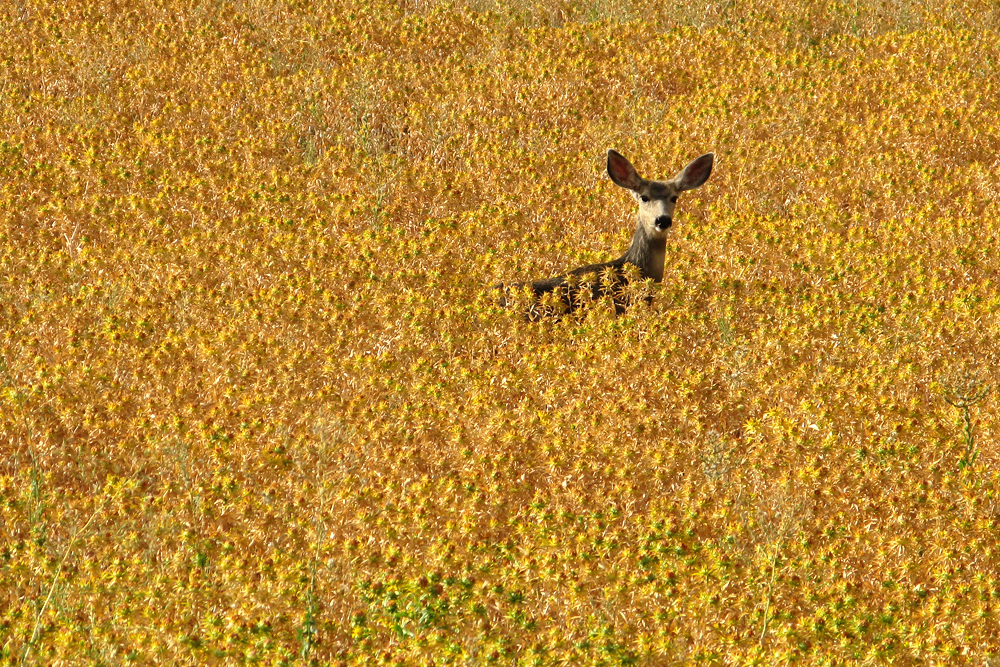
With its elusiveness and profound stillness even in movement, the way it appears in the mist or vanishes into the forest (perhaps beckoning us to follow), deer represent to us that intangible reality we all seek on some level. The doe’s gentle face, suggests to us peace, beauty, trust. The stag’s majestic stance displaying his antlers, naturally evokes a primal sense of kingship and otherworldly might.

Naturally, the deer becomes a symbol for God, the Divine Beloved, the Messiah. But even when we set aside our religious lenses, we can’t help but feel that the solitary deer, encountered in a quiet moment, is an ambassador between worlds, hinting to us of another reality.

How do we meet this quiet spirit? How do we have the sacred encounter? The poet says it so beautifully: We go elsewhere, our own way. Next to wild places, and spots that invite rest and contemplation. Without expectations. With patience and trust. Pay attention to the rhythms of life all around. Trust your own nature. Listen to the inner voice. Learn to see anew. See what you see.

(Special thanks to Lalita Vajra for introducing me to this poem.)


Recommended Books: Philip Booth

Lifelines: Selected Poems 1950-1999


Philip Booth, Philip Booth poetry, Secular or Eclectic poetry Philip Booth

US (1925 – 2007) Timeline
Secular or Eclectic

More poetry by Philip Booth

5 responses so far

Feb 23 2018

Spirituality, Poetry, and the Florida Shootings

I have intentionally waited to share any new poetry following the terrible mass shooting in Florida. I wanted to give everyone time to recover from the shock (though, sadly, these experiences have become so frequent in the US that they are a little less shocking each time they happen), and to allow your thoughts and responses to this latest massacre to take shape.

I can’t ignore horrifying events like the Florida shooting. I feel the need to address them directly in these emails and blog posts. If don’t, it feels strangely disconnected, as if I am pretending that everything is just fine.

In moments like this, I am not a fan of the “all is light” school of spirituality. While that is definitely a foundational truth — all of existence is an expression of the universal light, and this can be witnessed directly — there is a tendency to use these ideas superficially as a way to dismiss our discomforts and to not engage with our lives.

I believe that spirituality, and art, for that matter, must directly address the whole of human experience, including the horrifying and the traumatic, in order to be fit food for the spirit. Just as much as we need our eyes turned toward the stars, we need our feet on the ground, with our hands reaching out to help. We are not meant to float off to heaven. We are meant to bridge heaven and earth within ourselves. Perceptions and beliefs and the conscience want expression through us, through our lives, our words, our actions.

It is not fulfilling to turn to our spirituality or religion as a place to get away and get godly, or to get another “hit of bliss.” Real spirituality is about truth, reality, life. It encompasses everything, helping us to encounter life with a fullness of awareness and a true sense of who we really are and what we are capable of. Real spirituality is not about escape, it is about being present. It teaches us to drop our comfortable illusions and see clearly. It invites us to open our minds and our hearts. It challenges us to be the full beings we are, not the limited survivors we imagine ourselves to be.

And, when society is not embodying its highest ideals, real spirituality demands that we embody our own divine nature even more brightly, knowing that through interaction, communication, and the resonance of one’s being, society must respond and integrate each of us within the whole. What else is spirituality but finding that divine spark within ourselves, recognizing the same spark in everyone else, and then living by that truth courageously?

2 responses so far

Feb 06 2018

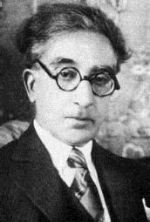
Constantine P. Cavafy – Ithaca

Published by under Poetry

Ithaca
by Constantine P. Cavafy

English version by George Barbanis

When you set out on your journey to Ithaca,
pray that the road is long,
full of adventure, full of knowledge.
The Lestrygonians and the Cyclops,
the angry Poseidon — do not fear them:
You will never find such as these on your path,
if your thoughts remain lofty, if a fine
emotion touches your spirit and your body.
The Lestrygonians and the Cyclops,
the fierce Poseidon you will never encounter,
if you do not carry them within your soul,
if your soul does not set them up before you.
 
Pray that the road is long.
That the summer mornings are many, when,
with such pleasure, with such joy
you will enter ports seen for the first time;
stop at Phoenician markets,
and purchase fine merchandise,
mother-of-pearl and coral, amber, and ebony,
and sensual perfumes of all kinds,
as many sensual perfumes as you can;
visit many Egyptian cities,
to learn and learn from scholars.
 
Always keep Ithaca on your mind.
To arrive there is your ultimate goal.
But do not hurry the voyage at all.
It is better to let it last for many years;
and to anchor at the island when you are old,
rich with all you have gained on the way,
not expecting that Ithaca will offer you riches.
 
Ithaca has given you the beautiful voyage.
Without her you would have never set out on the road.
She has nothing more to give you.
 
And if you find her poor, Ithaca has not deceived you.
Wise as you have become, with so much experience,
you must already have understood what these Ithacas mean.


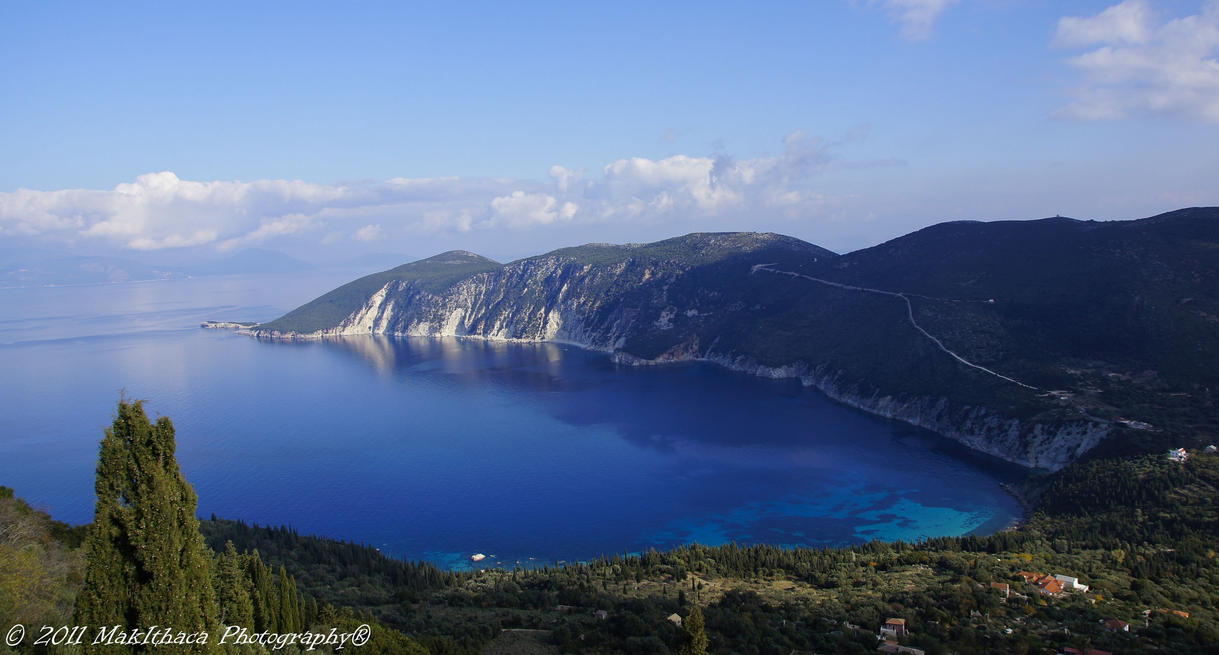
/ Image by makithaca /

A little motivation to take down that old copy of Homer’s Odyssey, dust it off, and crack it open once again. It was a favorite of mine when I was a teenager, with gods, monsters, heroes, adventure… and a reminder of my Greek heritage.

In the Odyssey, the hero Odysseus was returning home from the Trojan War to his island kingdom of Ithaca, but conflicts with gods and monsters and weather kept leading him off course into new adventures. It took him twenty years to finally return home!

When you set out on your journey to Ithaca,
pray that the road is long,
full of adventure, full of knowledge.

Cavafy’s poem reminds us of the Odyssey’s hidden truth, that the hero’s journey to Ithaca is the soul’s journey home.

Ancient tradition says that Homer’s epics, the Illiad and the Odyssey, combine into a grand mystery tale, understood by initiates as describing the stages and struggles of the soul’s inner journey.

pray that the road is long,
full of adventure, full of knowledge…

Too often seekers disparage the road, its bumps and turns, impatient for the destination.

To arrive there is your ultimate goal.
But do not hurry the voyage at all.

But the stops along the journey are not roadblocks, they are stepping stones. Actually, even that’s not true. Seen clearly, the journey and the destination are a single continuum. The river pours into the sea, and they are one. Seated on the slow-moving river, we already touch the sea.

…and purchase fine merchandise,
mother-of-pearl and coral, amber, and ebony,
and sensual perfumes of all kinds,
as many sensual perfumes as you can…

Cavafy suggests that worldly experience, the senses, a certain amount of materialism, these too are part of the journey. The physical world is the realm through which the soul journeys. Encountering marvels and terrors the soul strengthens and comes to know itself. Knowing itself in victory and adversity, the soul is finally ready to return.

But to navigate through such bewildering, overwhelming experiences, the destination must never be forgotten:

Always keep Ithaca on your mind.

Don’t rush through the journey, impatient only for its end. The adventure is our soul’s story.

Wise as you have become, with so much experience,
you must already have understood what these Ithacas mean.

The wisdom you attain with each step reveals the destination’s true meaning.

And it is just as true to say that the destination’s gift is contained in the journey itself:

Ithaca has given you the beautiful voyage.


Recommended Books: Constantine P. Cavafy

C. P. Cavafy: Collected Poems The Complete Poems of Cavafy: Expanded Edition Cavafy’s Alexandria Cavafy: A Biography


Constantine P. Cavafy, Constantine P. Cavafy poetry, Secular or Eclectic poetry Constantine P. Cavafy

Egypt (1863 – 1933) Timeline
Secular or Eclectic

More poetry by Constantine P. Cavafy

2 responses so far

Feb 02 2018

Ghraib Nawaz – The Second Jesus

Published by under Poetry

The Second Jesus
by Gharib Nawaz

English version by Peter Lamborn Wilson and Nasrollah Pourjavady

O Lord, it’s me: blanked out in divine light
and become a horizon of rays flashing from the Essence.

My every atom yearned for vision
till I fell drunk on the manifestations of lordship.

Love polished the rust from my heart’s mirror
till I began to see the mysteries;

I emerged from the darkness of my existence
and became what I am (you know me) from the Light of Being:

blackened like charcoal dark soul’s smoke
but mixed with love fires and illumined.

Some say the path is difficult;
God forgive them! I went so easily:

The Holy Spirit breathes his every breath into Mo’in–
who knows? Maybe I’m the second Jesus.

— from The Drunken Universe: An Anthology of Persian Sufi Poetry, Translated by Peter Lamborn Wilson / Translated by Nasrollah Pourjavady


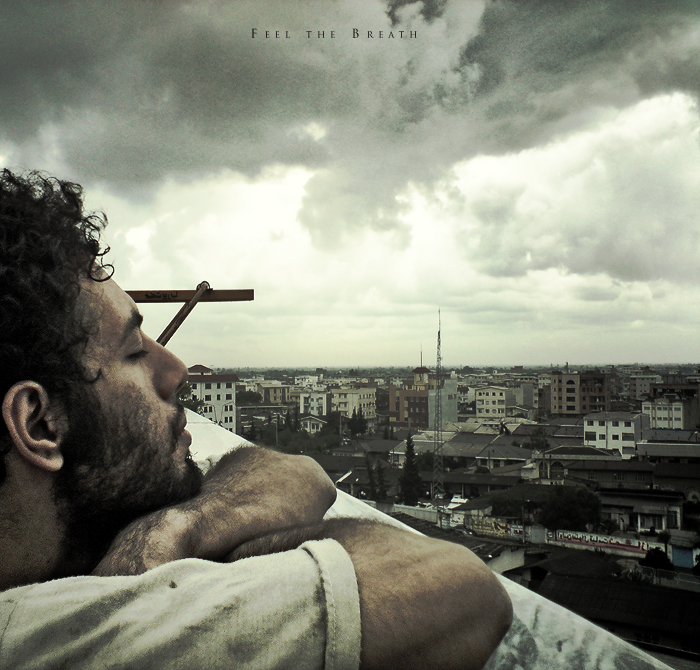
/ Image by proama /

I love the phrase in which the poet describes himself as being “blanked in divine light.” This beautifully describes the loss of the ego self, the loss of the separate self. Instead we perceive ourselves as a point of awareness within a vast living radiance.

Another great line:

Some say the path is difficult;
God forgive them! I went so easily.

This reflects the sense that true spiritual striving must be crushingly difficult, and sometimes too vague to even comprehend. Yet, the sacred experience reveals itself as our natural state, effortless. In fact, effort implies that we are trying to attain something we don’t already have, making it even harder to recognize the state as being already present. We just have to get out of the way of the truth that is already present. That is all. We just make it seem difficult.

who knows? Maybe I’m the second Jesus.

Some Christians may be troubled by this final line. It is certainly provocative, but not necessarily intended to be blasphemous or offensive. Devout Muslims greatly revere the figure of Jesus but not in the absolute and iconic way that Christians do. In Muslim traditions, Jesus is often associated with the breath of God. This is why the reference to Jesus follows the recognition that the breath of the Holy Spirit flows uninhibited through him. That breath is there, so is Jesus. Gharib Nawaz is reveling in the giddy recognition of oneness with that subtle divine flowing Presence — the same as in Jesus, the same as in all of us.

Who knows, maybe we are all the second Jesus?


Recommended Books: Gharib Nawaz

The Drunken Universe: An Anthology of Persian Sufi Poetry


Gharib Nawaz

Iran/Persia & India (1142? – 1236?) Timeline
Muslim / Sufi

Continue Reading »

2 responses so far

Feb 02 2018

Theory and debate

Theory and debate can never satisfy
the seeking heart.

2 responses so far

Jan 31 2018

blank page

Instead of memorizing the words of scripture,
become the blank page
that effortlessly displays them.

One response so far

Jan 26 2018

Buson – Miles of frost

Published by under Poetry

Miles of frost
by Buson

English version by Lucien Stryk and Takashi Ikemoto

Miles of frost —
on the lake
the moon’s my own.

— from Zen Poetry: Let the Spring Breeze Enter, Translated by Lucien Stryk / Translated by Takashi Ikemoto


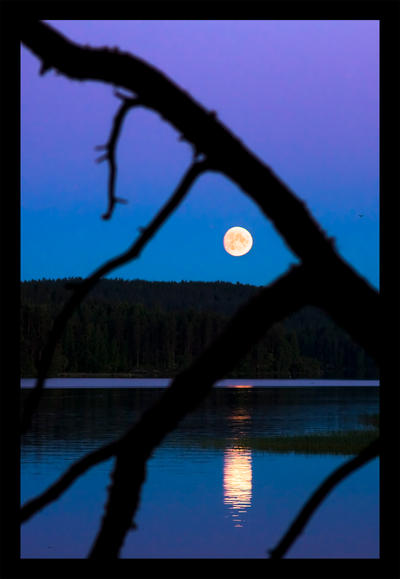
/ Image by 4k1 /

This haiku doesn’t emphasize that pivot that startles the awareness into new insight. Instead, it offers us a pure moment of winter solitude at dusk.

Miles of frost —

This phrasing suggests not only a chilly evening, but a landscape of silence. No activity. No carts on the road. No animals scurrying in the underbrush. Nothing but untouched frost upon the land.

In the midst of this scene of chill stillness stands the implied observer — us. We stand there alone in the quiet scene, elevated as the solitary presence, wrapped in curling mist of our own breath.

And then we see the moon reflected upon the lake’s surface at twilight.

on the lake
the moon’s my own.

With no one else to witness it, the moon becomes a private gift. The moon and the observer share this moment of intimacy in the silent company of the lake.

We can, if we choose, read this in a more consciously spiritual light: The full moon is often used to suggest enlightened awareness. The lake is mind. When the surface is still, the mind has grown quiet and it reflects the serene light of the moon. The miles of frost can suggest the wider world as perceived by the senses has also been quieted through spiritual practice. In this unified state of stillness, the moon, enlightenment, becomes one’s own.

Or perhaps it is only a lake and the moon on a quiet night. Then again, perhaps the moon’s reflection whispers to us of enlightenment, whether we recognize it or not.


Recommended Books: Buson

Zen Poetry: Let the Spring Breeze Enter The Poetry of Zen: (Shambhala Library) The Moon Over Tagoto: Selected Haiku of Buson


Buson, Buson poetry, Buddhist poetry Buson

Japan (1716 – 1784) Timeline
Buddhist : Zen / Chan

Continue Reading »

6 responses so far

Jan 19 2018

tapped bell

Some days it’s best
to do nothing
but ring like a tapped bell.

One response so far

Jan 12 2018

Wislawa Szymborska – A Contribution to Statistics

Published by under Poetry

A Contribution to Statistics
by Wislawa Szymborska

English version by Clare Cavanagh and Stanislaw Baranczak

Out of a hundred people

those who always know better
— fifty-two

doubting every step
— nearly all the rest,

glad to lend a hand
if it doesn’t take too long
— as high as forty-nine,

always good
because they can’t be otherwise
— four, well maybe five,

able to admire without envy
— eighteen,

suffering illusions
induced by fleeting youth
— sixty, give or take a few,

not to be taken lightly
— forty and four,

living in constant fear
of someone or something
— seventy-seven,

capable of happiness
— twenty-something tops,

harmless singly, savage in crowds
— half at least,

cruel
when forced by circumstances
— better not to know
even ballpark figures,

wise after the fact
— just a couple more
than wise before it,

taking only things from life
— thirty
(I wish I were wrong),

hunched in pain,
no flashlight in the dark
— eighty-three
sooner or later,

righteous
— thirty-five, which is a lot,

righteous
and understanding
— three,

worthy of compassion
— ninety-nine,

mortal
— a hundred out of a hundred.
Thus far this figure still remains unchanged.

— from Poems New and Collected, by Wislawa Szymborska / Translated by Stanislaw Baranczak


/ Image by Andy Maguire /

I always knew statistics had a poetic heart. After such terrible abuse by advertisers and politicians, statistics will redeem themselves in great and painful art.

worthy of compassion
— ninety-nine,

mortal
— a hundred out of a hundred.
Thus far this figure still remains unchanged.

Of course, even the best-natured of statistics exist to taunt us, to challenge us. Then again, that’s what those irascible poets do too…


Recommended Books: Wislawa Szymborska

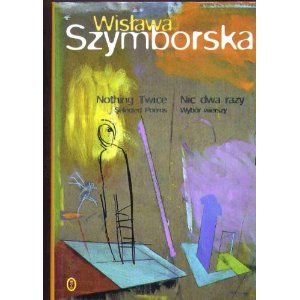
Poems New and Collected Miracle Fair: Selected Poems of Wislawa Szymborska View with a Grain of Sand: Selected Poems Nothing Twice: Selected Poems Dancing with Joy: 99 Poems
More Books >>


Wislawa Szymborska, Wislawa Szymborska poetry, Secular or Eclectic poetry Wislawa Szymborska

Poland (1923 – 2012) Timeline
Secular or Eclectic

Continue Reading »

2 responses so far

Jan 10 2018

behind the breastbone

The holiest place
we can discover

is immediately behind the breastbone.

One response so far

Jan 05 2018

Pat Schneider – The Patience of Ordinary Things

Published by under Poetry

The Patience of Ordinary Things
by Pat Schneider

It is a kind of love, is it not?
How the cup holds the tea,
How the chair stands sturdy and foursquare,
How the floor receives the bottoms of shoes
Or toes. How soles of feet know
Where they’re supposed to be.
I’ve been thinking about the patience
Of ordinary things, how clothes
Wait respectfully in closets
And soap dries quietly in the dish,
And towels drink the wet
From the skin of the back.
And the lovely repetition of stairs.
And what is more generous than a window?

— from Another River: New and Selected Poems, by Pat Schneider


/ Image by snap713 /

I’m back. We’re back. The Poetry Chaikhana is back.

Sorry about the unannounced hiatus, but I decided I should take some time to recharge my batteries.

I hope it was a special Christmas, Hanukkah, Solstice, New Year (pick any or all of the above) for you and your families.

=

I want to say, Thank you, Lalita, for introducing me to this poem. Since I am new to Pat Schneider’s writing, I don’t know much about her. I look forward to learning more.

It is a kind of love, is it not?
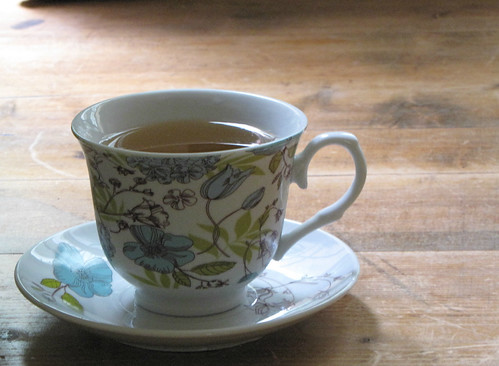
How the cup holds the tea…

There is something supremely settling about this poem. The poet reminds us to see how each object, simply by acting according to their nature is actually an embodiment of a sort of universal love.

How the chair stands sturdy and foursquare,
How the floor receives the bottoms of shoes
Or toes. How soles of feet know
Where they’re supposed to be.

Objects simply are as they are, and their “actions” naturally flow from their form. Through being, self-acceptance, and natural self-expression, these objects express a humble enlightenment and service in the world.

We just need to see it. And learn from these quiet teachers.

And what is more generous than a window?


Recommended Books: Pat Schneider

Another River: New and Selected Poems Writing Alone and with Others Olive Street Transfer How the Light Gets In: Writing as a Spiritual Practice Wake Up Laughing: A Spiritual Autobiography
More Books >>


Pat Schneider, Pat Schneider poetry,  poetry Pat Schneider

US (Contemporary)

More poetry by Pat Schneider

8 responses so far

Dec 08 2017

Umm Sinan – The Rose

Published by under Poetry

The Rose
by Ummi Sinan

English version by Jennifer Ferraro and Latif Bolat

I dreamt I came to a magnificent city
      whose palace was the rose, rose.
The crown and throne of the great sultan,
      his garden and chambers
            were the rose, rose.

Here they buy and sell but roses
      and the roses are the scales they use,
Weighing roses with more roses,
      the marketplace and bazaar
            are all roses, rose.

The white rose and the red rose
      grew coupled in one garden.
Their faces turn as one toward the thorn.
      Both thorn and blossom
            are the rose, rose.

Soil is the rose and stone is the rose,
      withered is the rose, fresh is the rose.
Within the Lord’s private gardens
      both slender cypress and old maple
            are the rose, rose.

The rose is turning the waterwheel
      and gets ground between the stones.
The wheel turns round as the water flows.
      Its power and its stillness
            are the rose, rose.

From the rose a tent appears
      filled with an offering of everything.
Its gatekeepers are the holy prophets.
      The bread and the wine they pour
            are the rose, rose.

Oh Ummi Sinan, heed the mystery
      of the sorrow of nightingale and rose.
Every cry of the forlorn nightingale
            is for the rose, the rose.

— from Quarreling with God: Mystic Rebel Poems of the Dervishes of Turkey, Translated by Jennifer Ferraro / Translated by Latif Bolat


/ Image by Jay Khemani /

Can’t you smell the perfume of roses in the air after reading this poem?

Ummi Sinan gives us a vision where all the world is filled with roses. A world made of roses. Not just roses, but “the rose” — The Rose.

In Sufi mystical language the Rose is often used as an image of God, and the heart — God as the true Heart of Being.

The rose unfolds in a gentle circling that invites one to yield inward. The rose is a symbol of lovers and of union. The rose resonates strongly with the gently awakened heart.

The rose grows from a bush of thorns yet reveals a delicate inner beauty and shares an intimate, sweet wine-like fragrance, symbolic of how the soul emerges from the tribulations of worldly difficulty and, in so doing, recognizes its innate beauty.

When Ummi Sinan recognizes the Rose everywhere, it is the mystic’s recognition that God has taken up residence within the heart (or, rather, that the Divine presence has finally been recognized there) — and it is the further recognition that all of creation is somehow within the awakened heart. Everything encountered is encountered in the heart.

Let’s get a little more specific with some of the sacred imagery here…

Ummi Sinan gives us an image of “the white rose and the red rose” that grow “coupled in one garden.” This is an important pairing of colors that appears in esoteric traditions all over the world, in Sufism, in western alchemy, as a sign of rank in the Catholic Church, painted on Hindu and Buddhist temples — and in our images of Santa Claus. The colors white and red represent the masculine and feminine energies on all levels. White is the male and red is the female. The white represents purity, essence, divine spirit; the red is the power of manifestation and awakening life. So when Ummi Sinan tells us of a white rose and a red rose that are “coupled” in the divine garden, he is giving us an image of the fundamental polarities in natural, eternal balance within the divine garden. Recognizing this harmony on all levels is a prerequisite to entering the rose garden.

In the closing lines, Sinan reminds himself (and us) to “heed the mystery / of the sorrow of the nightingale and rose.” In Sufi poetry, the nightingale is said to sing such an enchanting, mournful song because it is hopelessly in love with the rose. The rose is the Beloved, the Heart of hearts, and the nightingale is its lover, the seeker — the Sufi. “Every cry of the forlorn nightingale / is for the rose, the rose.” Every yearning in the world, every cry of longing and desire in the world is really the crying out of creation for the Beloved. It is the crying out for the intoxication of unity.

The wheel turns round as the water flows.
Its power and its stillness
are the rose, rose.


Recommended Books: Ummi Sinan

Quarreling with God: Mystic Rebel Poems of the Dervishes of Turkey Gul: The Rose (Audio CD)


Ummi Sinan

Turkey (16th Century) Timeline
Muslim / Sufi

Continue Reading »

2 responses so far

Dec 08 2017

fuel

Let every experience
be fuel for the fire
of love.

One response so far

Nov 17 2017

D. H. Lawrence – Pax

Published by under Poetry

Pax
by D. H. Lawrence

All that matters is to be at one with the living God
to be a creature in the house of the God of Life.

Like a cat asleep on a chair
at peace, in peace
and at one with the master of the house, with the mistress,
at home, at home in the house of the living,
sleeping on the hearth, and yawning before the fire.

Sleeping on the hearth of the living world
yawning at home before the fire of life
feeling the presence of the living God
like a great reassurance
a deep calm in the heart
a presence
as of the master sitting at the board
in his own and greater being,
in the house of life.

— from The Complete Poems of D. H. Lawrence, by D. H. Lawrence


/ Image by Dee.Dee.M /

All that matters is to be at one with the living God
to be a creature in the house of the God of Life.

I had a couple of very good friends in childhood, but in many ways my closest companion was a calico cat named, Kitty Kumbah (a singsong name made up by a four-year-old me). She saw me through my parents’ divorce, through a disorienting move from Oregon to Southern California, and along the bumpy road into adolescence. She sat patiently listening to my talking and tantrums. She slept on my bed each night and, one year, gave birth to a litter of kittens on my belly while I was asleep. When I was 16, Kitty Kumbah died in my arms, having carried me safely through my childhood.

feeling the presence of the living God
like a great reassurance
a deep calm in the heart

What I remember most was how she taught me meditation, stillness, poise, contentment, and the importance of a well-chosen seat. She taught me pax… peace. That cat was my first spiritual teacher.

Like a cat asleep on a chair
at peace, in peace


Recommended Books: D. H. Lawrence

The Complete Poems of D. H. Lawrence Birds, Beasts and Flowers: Poems The Selected Poems of D. H. Lawrence Acts of Attention: The Poems of D. H. Lawrence Self & Sequence: The Poetry of D. H. Lawrence
More Books >>


D. H. Lawrence, D. H. Lawrence poetry, Secular or Eclectic poetry D. H. Lawrence

England (1885 – 1930) Timeline
Secular or Eclectic

More poetry by D. H. Lawrence

2 responses so far

Nov 15 2017

Balance

Balance must be discovered
anew
each day.

One response so far

Nov 10 2017

Stephen Levine – Trust Your Vision

Published by under Poetry

Trust Your Vision
by Stephen Levine

Trust your vision
      make it whole
      hold it like the Navajo
      his solemn desert oracle
      in quest of shaman passage
      gaining his healing chant
      guiding him through life.

Hold the vision
      constantly rising
it is the way nature works
      through you
it is the only self
      an everchanging underdream
a vision (if you see it)
      up to you
to make real.

Act on your vision
      and pray that you are blessed.

— from Breaking the Drought: Visions of Grace, by Stephen Levine


/ Image by AlicePopkorn /

Trust your vision

So often we pour ourselves intensely into life’s purposes without actually pausing to consider why we are doing what we are doing. What is our real goal? How is it a reflection of who we truly are? How does it express our specific qualities and role within the larger panorama? What does it imply about the fundamental nature of reality?

Rarely in the modern world are we encouraged to discover our vision and to dedicate ourselves to it. To the prevailing mindset, one’s vision is thought to be intangible, suggesting something that a fantasy whose pursuit is narcissistic or even delusional. The focus of life must be practical with goals that are approved and easily measured.

That approach, while seemingly reasonable and safe, is devastating to both the individual and to society as a whole. While we certainly must live effectively within the physical and social worlds that require a certain level of practical purpose, we are not such stunted creatures that exist only on that level. We are magical beings, here to embody immensity and love and the will of the universe as it expresses itself uniquely through each of us.

Hold the vision
      constantly rising…

Vision is the way we discover our personal path through the world. Vision is the way we come to know ourselves, allowing us to be as we are, showing us how to act with strength and creativity in the service our true goals.

…it is the way nature works
      through you

I love the insight of this line. A vision is not the same as some fantasy or daydream. A true vision is the voice of nature, the intention of the universe, uniquely tuned to our soul.

The word “vision” can trip us up because we think of seeing things that are external to our physical bodies, so we often consider a vision to be external to us. But vision in the spiritual sense is the conscious mind’s way to assign meaning to the deep recognition of self as a harmonious expression of the self-aware universe.

In other words, vision is not so much about seeing as it is about being.

it is the only self
      an everchanging underdream

A vision is a challenge to ourselves to be more fully ourselves. Vision is vocation, the calling of the soul to its true role.

a vision (if you see it)
      up to you
to make real.

The first question is, how strongly do we want to see? And then we must answer the second question, do we dare live the truth seen? Then again, what’s the point to any other path but our own?

Act on your vision
      and pray that you are blessed.

Have a beautiful day!

(And thank you, everyone, for your patience with my irregular poetry schedule recently.


Recommended Books: Stephen Levine

The Longing in Between: Sacred Poetry from Around the World (A Poetry Chaikhana Anthology) Breaking the Drought: Visions of Grace A Year to Live: How to Live This Year as If It Were Your Last Who Dies?: An Investigation of Conscious Living and Conscious Dying Healing into Life and Death
More Books >>


Stephen Levine, Stephen Levine poetry, Secular or Eclectic poetry Stephen Levine

US (1937 – 2016) Timeline
Secular or Eclectic

Continue Reading »

One response so far

Nov 08 2017

Rainer Maria Rilke – I live my life in widening circles

Published by under Poetry

I live my life in widening circles
by Rainer Maria Rilke

English version by Anita Barrows and Joanna Macy

I live my life in widening circles
that reach out across the world.
I may not ever complete the last one,
but I give myself to it.

I circle around God, that primordial tower.
I have been circling for thousands of years,
and I still don’t know: am I a falcon,
a storm, or a great song?


/ Image by GPS /

I’m back. Not that I went away. I have been busy with my day job and still trying to resolve technical issues with the large poetry mailings. But, amidst all of that, I am pleased to be able to say that I have also been making good progress on the next Poetry Chaikhana anthology. I hope to have something more definite to announce about that soon.

Now, let’s return to the poetry…

I live my life in widening circles
that reach out across the world…

I circle around God, that primordial tower.

These images of circles and circling, revolving around a great center he names God, it makes me think of the cathedral labyrinths of Europe. Or the ancient spiral glyphs carved into rocks and cave faces. I see the circling pathway around some secret center. The road can be bewildering, twisting and turning, keeping us disoriented and uncertain of how near we are, but ever moving inward.

And that courageous line–

I may not ever complete the last one,
but I give myself to it.

We walk the winding path, not out of certainty, but because it is the only path worth walking. Walking that road, quietly, with attention, one foot in front of the other, becomes meditation. It becomes worship. Each ring, whether near or far, is a layer of our lives that is blessed by our passing through it.

Walking the circling path is not only the way to the center, it is actually part of the center. We learn to participate in the center by first walking the path. Obsession with the destination becomes an impediment to reaching it. Instead, by patiently inhabiting each step, we discover the center in ourselves… and our feet naturally end up there, as well.

We walk with our whole selves–

and I still don’t know: am I a falcon,
a storm, or a great song?

On this roundabout road to God, we question our own nature. We encounter the mystery of self. Who and what are we really? Ultimately, it is in that questioning of a self that eludes definition where we find the still center.


Recommended Books: Rainer Maria Rilke

The Enlightened Heart: An Anthology of Sacred Poetry Ahead of All Parting: The Selected Poetry and Prose of Rainer Maria Rilke The Soul is Here for its Own Joy: Sacred Poems from Many Cultures Rilke’s Book of Hours: Love Poems to God In Praise of Mortality: Rilke’s Duino Elegies & Sonnets to Orpheus
More Books >>


Rainer Maria Rilke, Rainer Maria Rilke poetry, Secular or Eclectic poetry Rainer Maria Rilke

Germany (1875 – 1926) Timeline
Secular or Eclectic

More poetry by Rainer Maria Rilke

One response so far

« Prev - Next »