Archive for January, 2021

Jan 29 2021

Edith Kanaka’ole – E ho mai

Published by under Poetry

E ho mai
by Edith Kanaka’ole


E ho mai
Ka ike mai luna mai e

O na mea huna no eau
O na mele e

E ho mai
E ho mai
E ho mai

Grant us
knowledge from above,

All the wisdom
of the songs.

Grant,
Bestow,
Grant us these things.

— from The Longing in Between: Sacred Poetry from Around the World (A Poetry Chaikhana Anthology), Edited by Ivan M. Granger


/ Image by Angela Sevin /

Years ago, when I lived in Hawai’i, I took a class in ho’oponopono. (If you sound it out slowly, it’s not the tounge-twister it first looks like.) Ho’oponopono means literally “to make things right, to return things to harmony.” It is a traditional healing method, but its emphasis is not on healing the body as it is on healing relationships, families, communities. If you think about it, what is the purpose of a healthy body except as an instrument to work for a healthier society? The small body serves the larger body.

As part of my training in ho’oponopono, I learned this chant. Hawaiian chant can be compared to Hindu mantra in that to truly say it properly can take a great deal of training. The inflections are important. The breath is important. Most of all, the sense of personal presence is important.

This Hawaiian chant must be said with force and with heart. It is a prayer, but it is not passive. It is a calling forth, a reaching out and a drawing in — of wisdom, of knowledge, of truth. It evokes in us pono, rightness.

Try sounding out the Hawaiian. Slowly at first, until the sounds become familiar. Then louder, with confidence. Say it over and over again. Imagine repeating this chant in a group. Let it ring through your body and your day!

To hear it chanted, click here
Aloha!


Recommended Books: Edith Kanaka’ole

The Longing in Between: Sacred Poetry from Around the World (A Poetry Chaikhana Anthology)


Edith Kanaka'ole, Edith Kanaka'ole poetry, Primal/Tribal/Shamanic poetry Edith Kanaka’ole

US, Hawaii (1913 – 1979) Timeline
Primal/Tribal/Shamanic : Hawaiian

Continue Reading »

2 responses so far

Jan 29 2021

supremely pragmatic

A mystic must be supremely pragmatic:
Use what works,
whatever opens the heart
and fires the spirit.

One response so far

Jan 22 2021

Civivakkiyar – In bricks and in granite

Published by under Poetry

In bricks and in granite
by Civivakkiyar

English version by Kamil V. Zvelebil

In bricks and in granite,
in the red-rubbed lingam,
in copper and brass
is Siva’s abode —
      that’s what you tell us,
      and you’re wrong.
Stay where you are
and study your own selves.
Then you will BECOME
the Temple of God,
      full of His dance and spell
            and song.

— from The Poets of the Powers: Freedom, Magic, and Renewal, Translated by Kamil V. Zvelebil


/ Image by Natesh Ramasamy /

I have always loved the poetry of Civivakkiyar since I first discovered it years ago. There is a directness that is at times blunt, along with a teasing quality, and underlying it all a radiant realization that rises up through the words. Even his name, Civivakkiyar, feels like poetry on the tongue.

This poem exhibits the Tamil Siddha opposition to orthodoxy and mindless ritualism — which tend to externalize God, separating the individual from the presence of the Divine. Civivakkiyar is proclaiming that God (Siva) is not only found in temples and objects of worship, places and things that have been separated out and defined as sacred. Not “in bricks and in granite,” not in the “lingam” (a common representation of Siva), not in the ritual objects of “copper and brass.”

To say that God is in the temple or the altar or the icon and not elsewhere impoverishes us spiritually. That perspective makes us strangers to the presence of the sacred, which is everywhere, always.

The truth is that God is not ‘out there’ (wherever we imagine ‘there’ to be). The Divine is right here, right now, within us:

Stay where you are
and study your own selves.
Then you will BECOME
the Temple of God…

It is only within ourselves that we find the proper ground to worship and ultimately encounter God, whether we stand in the temple precinct, or the marketplace, the forest grove, or the office space.

When we stop running from sacred place to sacred place and, instead, finally recognize the living sacred presence everywhere — and most especially within ourselves — then we experience such an uninhibited flow of life and delight that we become filled with the eternal “dance and spell / and song.”


Recommended Books: Civivakkiyar

The Poets of the Powers: Freedom, Magic, and Renewal


Civivakkiyar

India (9th Century) Timeline
Yoga / Hindu : Shaivite (Shiva)

Continue Reading »

One response so far

Jan 22 2021

by default

If you are not intensely dedicated
to a high ideal,
then comfort becomes your goal by default
and every difficulty becomes a crisis.

No responses yet

Jan 15 2021

Poetry Chaikhana Publications

I don’t often talk about book sales, but I thought I’d let you know that two Poetry Chaikhana publications — Haiku Enlightenment and The Longing in Between — have been selling well since the end of 2020. Haiku Enlightenment has been in the top 100 best selling haiku books on Amazon, and The Longing in Between has been hovering in the top 100 or 200 for poetry anthologies. Amazing! I love to see these book circulating, carrying their wild, illuminating poetry out into the world. A great deal of thanks is due to you, the Poetry Chaikhana community, for your steady support and encouragement through the years.

One response so far

Jan 15 2021

Mary Oliver – In Blackwater Woods

Published by under Poetry

In Blackwater Woods
by Mary Oliver

Look, the trees
are turning
their own bodies
into pillars

of light,
are giving off the rich
fragrance of cinnamon
and fulfillment,

the long tapers
of cattails
are bursting and floating away over
the blue shoulders

of the ponds,
and every pond,
no matter what its
name is, is

nameless now.
Every year
everything
I have ever learned

in my lifetime
leads back to this: the fires
and the black river of loss
whose other side

is salvation,
whose meaning
none of us will ever know.
To live in this world

you must be able
to do three things:
to love what is mortal;
to hold it

against your bones knowing
your own life depends on it;
and, when the time comes to let it go,
to let it go.

— from American Primitive, by Mary Oliver


/ Image by Claudio /

This is one of my favorite poems by Mary Oliver. It speaks to so many levels of the human experience.

Look, the trees
are turning
their own bodies
into pillars

of light…

Those opening lines draw me in every time I read them. They remind me that nature, too, is a heavenly realm. But there is also the beginning hint of loss here, something evanescent and fleeting. It is as if these trees, in their glow, are fading from the physical world, receding from us. It is a lovely, melancholy sort of transcendence.

Lines in this poem also suggest to me, at times, formless awareness:

and every pond,
no matter what its
name is, is

nameless now.

Notice the intentional ambiguity of that final line break above. She could be saying that the ponds are now nameless, or that they are nameless Now, nameless Presence. Contemplating that double meaning can throw the mind into meditation.

She uses a similar line break immediately preceding that: “name is, is”. The break forces us unconsciously to think of how no matter what a place (or person) is named, it IS. It’s existence is undeniable, not somehow dependent on human definitions or categories or names. The line break tricks the mind into contemplating the relationship between pure being and our mental categorization of existence.

But the part of the poem that touches me most is the courageous willingness to embrace both connection and loss:

To live in this world

you must be able
to do three things:
to love what is mortal;
to hold it

against your bones knowing
your own life depends on it;
and, when the time comes to let it go,
to let it go.


Recommended Books: Mary Oliver

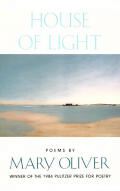
New and Selected Poems Why I Wake Early Dream Work House of Light Thirst: Poems
More Books >>


Mary Oliver, Mary Oliver poetry, Secular or Eclectic poetry Mary Oliver

US (1935 – 2019) Timeline
Secular or Eclectic

Continue Reading »

One response so far

Jan 15 2021

what we love

We become what we love.

Everything else is just movement.

No responses yet

Jan 08 2021

Namdev – The drum with no drumhead beats

Published by under Poetry

The drum with no drumhead beats
by Namdev

English version by Nirmal Dass

The drum with no drumhead beats;
clouds thunder without the monsoon;
rain falls without clouds.
Can anyone guess this riddle?

I have met Ram the beautiful,
and I too have become beautiful.

The philosopher’s stone turns lead into gold;
costly rubies I string with my words and thoughts.
I discovered real love; doubts, fears have left me.
I found comfort in what my guru taught me.

A pitcher will fill when plunged in water,
so Ram is the One in all.
The guru’s heart and the disciple’s heart are one.
Thus has the slave Namdeva perceived Truth.

— from Songs of the Saints from the Adi Granth, Translated by Nirmal Dass


/ Image by Waywuwei /

Namdev starts this song with a riddle: a drum sound “with no drumhead”, and “thunder without the monsoon”… We have the reverberation, but without an initiating event. In deep meditation an inner sound is heard resonating everywhere. In various Indian traditions this primal sound is called shabd or omkara.

And his riddle also tells us that “rain falls without clouds.” The rain that falls is amrita, the bliss-filled drink of divine communion. This is an actual substance, though a subtle one. When the mind is entirely clear and purified (“without clouds”), this “rain” descends from the sky-bowl of the skull, touching the tongue with indescribable sweetness, warming the heart, and filling the awareness with a transcendent joy.

Try rereading the poem with that sense of inner meaning. Read slowly this time, savoring it, feeling what this ecstatic saint is really saying. “The drum with no drumhead beats…” Do you hear it quietly resonating within your own settling awareness? “Clouds thunder without the monsoon…”

Here are my favorite lines:

I have met Ram the beautiful,
and I too have become beautiful.

In this state of bliss and profound unity, we recognize that we ourselves, as individual beings, are a pure emptiness, without any substance of our own. Finally seeing this, we recognize ourselves as being of the same nature as the Divine Reality we witness — and that presence is vast, radiant, whole, and “beautiful.” It is beautiful, and we too are that beauty!

It is as if by touching something utterly whole and perfect, all of our imperfections and divisions are dispelled by that total vision.

The philosopher’s stone turns lead into gold

It is that contact that transmutes the “lead” of the fragmented ego identity into the “gold” of unbounded awakened awareness.

I discovered real love; doubts, fears have left me…

In such an immense ocean of “real love” and the wholeness of gnosis, one’s underlying existential doubts and fears dissolve.

A pitcher will fill when plunged in water

This is a reference to popular yogic metaphor. The individual ego-self is like a leaky pitcher that requires constant refilling to keep even a small amount of water in it. The only way to fill it up is to toss it into the ocean. The pitcher is for the finally filled with water, surrounded by water. The separating walls of the ego become meaningless, since the water of that divine consciousness is both inside and outside with no difference… Suddenly we see a world of drowned pitchers, the same water filling and surrounding everything.

Ram is the One in all.

=

It is a new year, and that is always a time for hope, yet many problems remain unresolved, accompanied by much anger. It is easy to get caught up in the escalations of outrage. I am focusing my life to meet the uncertain road ahead with a combination of practicality, flexibility, and engaged love. Meditation and poetry are two excellent ways to continuously return to the heart that we may know the way forward.

Blessings to you all in the new year!


Recommended Books: Namdev

Songs of the Saints from the Adi Granth Namdev, His Mind and Art: A linguistic Analysis of Namdev’s Poetry Hindi Padavali of Namdev


Namdev, Namdev poetry, Yoga / Hindu poetry Namdev

India (1270 – 1350) Timeline
Yoga / Hindu : Vaishnava (Krishna/Rama)
Sikh

Continue Reading »

No responses yet

Jan 08 2021

learn the way

We learn the way
by knowing our hearts.

No responses yet