Feb 18 2022
Mansur al-Hallaj – Your spirit is mingled with mine
Your spirit is mingled with mine
by Mansur al-Hallaj
English version by Bernard Lewis
Your spirit is mingled with mine
as wine is mixed with water;
whatever touches you touches me.
In all the stations of the soul you are I.
 — from Music of a Distant Drum: Classical Arabic, Persian, Turkish & Hebrew Poems, Translated by Bernard Lewis
/ Image by Pawel Czerwinski /

In the past couple of weeks I have been reorganizing my small office space and cleaning up a lot of stored papers. In particular, I have been going through all of the mail I’ve received from the Poetry Chaikhana community over the years, quite literally hundreds of short notes, long letters, greeting cards.
I have to let you all know how profoundly moved I am by all of your messages of love and support over the past nearly twenty years, letting me know how much the Poetry Chaikhana means to you, has helped your through difficult times, has deepened your spiritual practice in some way, and has inspired you in your own creative expression. In many cases I have sent replies, but the sheer volume of correspondence has made my responses less frequent. But I read every message sent to me, and I always send an energetic response, even when I don’t send a written one. Today I am feeling especially humbled and grateful for the small mountain of letters and cards I’ve received from you all over the years.
Sending love to you all in return.
Now, for today’s poem…
—
The great Sufi mystic poet, Hallaj, was persecuted and eventually put to death by orthodox religious authorities for poems like this, in which he seems to be equating himself with God.
This is the danger faced by most mystics. The sacred experience is one of ecstatic union with the Divine. Where do “you” cease to be, and where does the Divine begin? In mystical union, these questions are artificial since the Divine is everywhere and no tangible sense of you as a separate individual remains. There aren’t two in which to have a relationship; there is only the One.
Particularly notice the image of wine mixing with water. This sounds like a passing metaphor, but it actually resonates with layers of esoteric meaning.
“Wine” here is not wine; it is the drink of divine union. It is the “water” of the purified soul, awakened and flavored with the fermenting fire of life. This is the celestial drink of initiates: the amrita of the yogis, the ambrosia of the Greeks, even the tea of our own poetry teahouse…
water = the purified individual soul
wine = the sweet, blissful flood of the Divine
When wine is poured into water, water takes on the nature of wine, until no difference can be perceived. This is how he comes to that final line of realization:
In all the stations of the soul you are I.
When the divine wine pours into the clear water of the soul, everything is turned to wine. God and self become indistinguishable. Rather, self is lost and only God remains.
As a result, mystics keep producing ecstatic and dangerous poems like this one, and orthodox authorities keep trying to silence or marginalize them.
Recommended Books: Mansur al- Hallaj
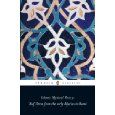


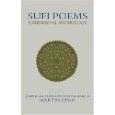
|
Mansur al- Hallaj
Iran/Persia (9th Century) Timeline |
Mansur al-Hallaj is one of the more controversial figures of Sufism. Considered by many to be a great poet-saint, he was executed for blasphemy.
The name Hallaj means “wool carder,” probably a reference to his family’s traditional occupation. Hallaj was born in the province of Fars, Persia (Iran). He later moved to what is now Iraq, where he took up religious studies and Sufi practice.
Orthodox religious authorities took offense at his poetry and teachings, particularly the line in one of his great poems “Ana ‘l-Haqq,” which translates as “I am the Real,” but can also be translated as “I am the Truth” or “I am God” — acknowledging the mystical realization of unity with the Eternal. He was condemned by a council of theologians, imprisoned for nine years, and eventually put to death. He is revered today as a martyr for truth by many Sufis and mystics.
Oh Ivan, this poem is beautiful and of course your commentary explained more.
Just yesterday I came across a quote of Thomas Merton, speaking of the True Self
and the false self where he makes clear that the self-proclaimed autonomy of the
false self is but an illusion. . .
“Every one of us is shadowed by an illusory person: a false self.
This is the person I want to be but who cannot exist, because God doesn’t know
anything about him. And to be unknown of God is altogether too much privacy,”
I believe Merton is saying something very similar to what Mansur al-Hallaj has said
all those years gone by.
What a beautiful commentary on Al-Hallaj’s poem.
“self is lost and only God remains”
This is expressed differently in the various spiritual traditions, but when experienced, it’s clear. And nothing further needs to be said.
thanks so much for sharing this.