Archive for the 'Poetry' Category

Jul 02 2021

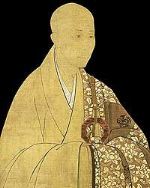
Muso Soseki – At the Nachi Kan’non Hall

Published by under Poetry

At the Nachi Kan’non Hall
by Muso Soseki

English version by W. S. Merwin

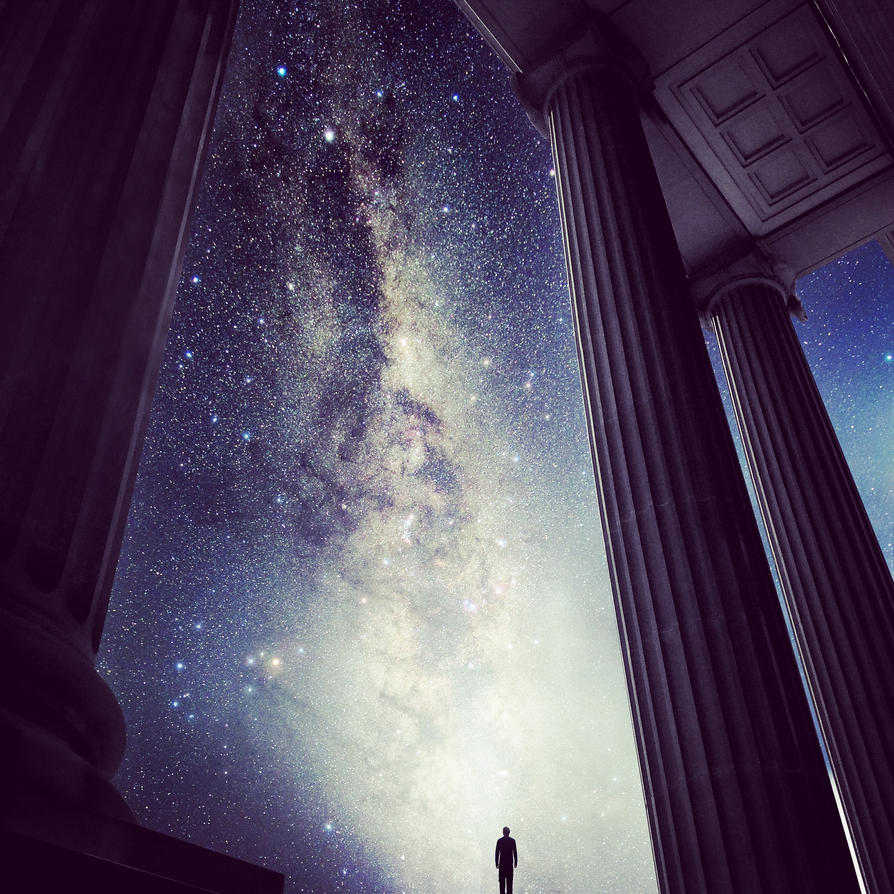
The Milky Way
      pours waterfalls
            over this human world
the cold
      rushing tumbling sounds
            echo through the blue sky
Veneration
      to the Great Compassionate
            Avilokiteshvara
How lucky I am
      to have no trouble
            hearing

— from Sun at Midnight: Muso Soseki – Poems and Sermons, Translated by W. S. Merwin / Translated by Soiku Shigematsu


/ Image by Dirk Dallas /

I love that opening phase–

The Milky Way
      pours waterfalls
            over this human world

I imagine stepping outside after a long day, standing beneath the night sky, and letting the waters of the universe wash over me. It’s a cleansing image, purifying, healing to the wearied spirit.

the cold
      rushing tumbling sounds
            echo through the blue sky

Soseki emphasizes sound, the waterfall-like sound of the night. Try it sometime to remind yourself. Late at night, step outside, or just open the window and lean your head out. Close your eyes. Listen. Do you hear it? In the absence of all other noise, with no movement around and with thoughts at rest… a soft sound is heard. At first it might be like the quiet chirping of crickets in the night, the hum of beesong, or the flowing of gentle stream. It is heard as a random, soothing “white noise” that seems to emanate from the base of the skull.

As we quiet more, the sound grows into a rushing sound, like a waterfall. Sometimes this sound resolves into a clear pitch that can resemble the pure note of a flute or the ringing of a bell.

First it is heard and, finally, felt throughout the body.

This sound is Krishna’s flute calling his devotees to him. It is the ringing of the bells of paradise. It is Soseki’s heavenly waterfall.

This sound signals the beginning of deep meditation. The more we sit with this sound, the more the awareness expands and the heart naturally opens with inherent compassion, as the universal waters pour over us, refreshing us, revitalizing, awakening.

How lucky I am
      to have no trouble
            hearing


Recommended Books: Muso Soseki

Sun at Midnight: Muso Soseki – Poems and Sermons East Window: Poems from Asia Roaring Stream: A New Zen Reader


Muso Soseki, Muso Soseki poetry, Buddhist poetry Muso Soseki

Japan (1275 – 1351) Timeline
Buddhist : Zen / Chan

Continue Reading »

No responses yet

Jun 25 2021

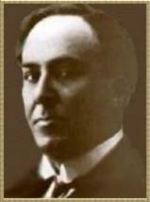
Antonio Machado – Last night, as I was sleeping

Published by under Poetry

Last night, as I was sleeping
by Antonio Machado

English version by Ivan M. Granger

      Last night, as I was sleeping,
I dreamt — blessed vision! —
that a fountain flowed
here in my heart.
I said: Why, O water, have you come
along this secret waterway,
spring of new life,
which I have never tasted?

      Last night, as I was sleeping,
I dreamt — blessed vision! —
that I had a beehive
here in my heart;
and the golden bees
were making
from all my old sorrows
white wax and sweet honey.

      Last night, as I was sleeping,
I dreamt — blessed vision! —
a blazing sun shone
here in my heart.
It was blazing because it gave heat
from a red home,
and it was sun because it gave light
and because it made me weep.

      Last night, as I was sleeping,
I dreamt — blessed vision! —
that it was God I had
here in my heart.

— from The Longing in Between: Sacred Poetry from Around the World (A Poetry Chaikhana Anthology), Edited by Ivan M. Granger


/ Image by Ecstatic Mark /

This is my favorite poem by the Spanish poet Antonio Machado. Actually, it’s one of my favorite poems, period.

Robert Bly’s English version is probably the best known. Although I generally like the feel and rhythm of Bly’s rendition, I find one important detail frustrating, even misleading: The repeated line, which I’ve translated as “blessed vision,” he renders as “marvelous error.” Machado’s actual line in Spanish is bendita ilusión. A more exact translation might be “blessed vision or dream.” Perhaps the poet can’t quite believe the beauty of his vision, but he hardly regards it as an “error.” Reading the original Spanish, I have the feeling Machado is teasing us by calling the experience a dream, seeing if we are foolish enough to cast it aside.

Let’s take just a moment to explore how this poem parallels the mystic’s ecstatic experience…

Machado discovers continual delights in his heart: a flowing fountain, a honey-filled beehive, a blazing sun, God… all found within the heart. Read enough descriptions of mystical union, and the same descriptions come up again and again — a heart ablaze with light and heat, filled with sweetness, bubbling and overflowing, a heart expanding to embrace all creation.

The fountain flows from the heart, running along a “secret waterway.” It is a “spring of new life.” This is often part of sacred ecstasy. Mystics experience a sensation of drinking some unknown liquid that warms the heart and fills one with a bubbling sense of life previously unknown and unimagined.

This “drink” is perceived as being sweet, eliciting comparisons to honey or wine. Thus, Machado discovers “white wax / and sweet honey” in his heart.

In such overwhelming delight one feels radically restored and whole. All past guilts and sorrows seem somehow resolved, transformed into the very matter from which this joy emerges.

And the awareness is filled with the perception of a radiant light, while the body is permeated with a great warmth — like a “blazing sun.”

Indeed, caught up in this experience, how can we doubt that it is God we have inside our hearts?


Recommended Books: Antonio Machado

The Longing in Between: Sacred Poetry from Around the World (A Poetry Chaikhana Anthology) Real Thirst: Poetry of the Spiritual Journey The Enlightened Heart: An Anthology of Sacred Poetry Times Alone: Selected Poems of Antonio Machado Border of a Dream: Selected Poems of Antonio Machado
More Books >>


Antonio Machado, Antonio Machado poetry, Secular or Eclectic poetry Antonio Machado

Spain (1875 – 1939) Timeline
Secular or Eclectic

Continue Reading »

3 responses so far

Jun 11 2021

Wendell Berry – How to Be a Poet

Published by under Poetry

How to Be a Poet
by Wendell Berry

(To remind myself)

i
Make a place to sit down.
Sit down. Be quiet.
You must depend upon
affection, reading, knowledge,
skill — more of each
than you have — inspiration,
work, growing older, patience,
for patience joins time
to eternity. Any readers
who like your poems,
doubt their judgment.

ii
Breathe with unconditional breath
the unconditioned air.
Shun electric wire.
Communicate slowly. Live
a three-dimensioned life;
stay away from screens.
Stay away from anything
that obscures the place it is in.
There are no unsacred places;
there are only sacred places
and desecrated places.

iii
Accept what comes from silence.
Make the best you can of it.
Of the little words that come
out of the silence, like prayers
prayed back to the one who prays,
make a poem that does not disturb
the silence from which it came.

— from Given: Poems, by Wendell Berry


/ Image by Louis Vest /

One doesn’t have to be a poet to inspired by this poem. In fact, it’s not really about writing poetry at all, is it? It’s really about how to be present, how to inhabit the world quietly and notice more than ourselves. That is when the best poetry is born.

The first verse invites is to settle down. Reading those first few lines, I feel my own bones settling awkwardly into a state of rest and stillness. And there is the slow interior work of reading, cultivating inspiration, the private work on the blank page. I love that he lists “growing older” as one of the necessary tasks of the poet. And patience–

for patience joins time
to eternity.

The second verse seems to be more about our relationship to place, both exterior and interior space. In recent years I haven’t done so well with avoiding electric wire and screens, but there was a time some years ago when I did just that, literally. I embraced my Luddite instincts as much as practical. It does shift one’s sense of reality and connection to the world. The transition feels stressful at first, and then, slowly, the world around us starts to take on a new depth and life, becoming a slow-speaking friend in constant, quiet communication.

What are the ways we have been taught to not recognize our ongoing dialog with all around us?

There are no unsacred places;
there are only sacred places
and desecrated places.

And he concludes with that wonderful meditation on silence. We think a poem is a collection of words, but the best poetry simply gives shape to silence.

Accept what comes from silence…

make a poem that does not disturb
the silence from which it came.

Have a beautiful weekend, remembering to breathe the unconditional breath!


Recommended Books: Wendell Berry

The Collected Poems of Wendell Berry, 1957-1982 Given: Poems Selected Poems of Wendell Berry A Timbered Choir: The Sabbath Poems 1979-1997 The Mad Farmer Poems
More Books >>


Wendell Berry, Wendell Berry poetry, Secular or Eclectic poetry Wendell Berry

US (1934 – )
Secular or Eclectic

Continue Reading »

3 responses so far

Jun 04 2021

John of the Cross – I Entered the Unknown

Published by under Poetry

I Entered the Unknown
by John of the Cross

English version by Ivan M. Granger

I entered the unknown,
and there I remained unknowing,
all knowledge transcended.

Where I entered I knew not,
but seeing myself there,
not knowing where,
great things then made themselves known.
What I sensed I cannot say,
for I remained unknowing,
all knowledge transcended.

In this peace and purity
was perfect knowledge.
In profoundest solitude
I understood with absolute clarity
something so secret
that I was left stammering,
all knowledge transcended.

So deep was I within,
so absorbed, transported,
that all senses fled,
and outer awareness fell away.
My spirit received the gift
of unknowing knowing,
all knowledge transcended.

He who reaches this realm
loses himself,
for all he once knew
now is beneath his notice,
and his mind so expands
that he remains unknowing,
all knowledge transcended.

And the higher he rises
the less he knows:
That is the dark cloud
that shines in the night.
The one who knows this
always remains unknowing,
all knowledge transcended.

This knowing by unknowing
is of such exalted power,
that the disputations of the learned
fail to grasp it,
for their knowledge does not reach
to knowing by unknowing,
all knowledge transcended.

Of such supreme perfection
is this knowledge
that no faculty or method of mind
can comprehend it;
but he who conquers himself
with this unknowing knowing,
will always transcend.

And if you are ready to receive it,
this sum of all knowledge is discovered
in the deepest ecstasy
of the Divine Essence.
Goodness and grace
grant us this unknowing,
all knowledge transcended.

— from This Dance of Bliss: Ecstatic Poetry from Around the World, Edited by Ivan M. Granger


/ Image by oddsock /

St. John of the Cross repeatedly contrasts knowledge with unknowing.

I entered the unknown,
and there I remained unknowing,

all knowledge transcended.

The Spanish word rendered here as “knowledge” is ciencia, which has the more obvious translation of “science.” But the poem’s archaic use of “science” implies not the scientific process, but a more general sense of knowledge acquired through reason and the testimony of the senses.

And John of the Cross emphasizes that his unknowing is superior.

He is not advocating ignorance, however. The Spanish saint is instead speaking about the mystical idea of “unknowing,” the state in which all concepts and mental filters have been set aside. In that state of unknowing, we rise above the elaborate constructions of the logical mind and come to rest in pure awareness (“knowing by unknowing”). He is contrasting true, unfiltered knowing, gnosis, with the mere accumulation and organization of information.

To be unknowing in this sense is to encounter every instant entirely as it is, in pure wonder, without projection, without anticipation or agitation. The intellectual mind—a hugely important tool!—has one very serious weakness: It never encounters the present moment nakedly. It is always processing, analyzing, making everything fit within its comprehension. It never truly witnesses; it only interprets.

We certainly want to cultivate a critical intellect, but we must always remember that it is not the whole of consciousness. The awareness can step beyond the intellect. To fully apprehend reality, it must.

So deep was I within,
so absorbed, transported,
that all senses fled,
and outer awareness fell away.

This state of supreme unknowing is not perception in the sense of drawing in and interpreting exterior input through the senses. In normal perception, the intellect sifts and sorts that sensory data and formulates it into a working hypothesis of what reality is. That hypothesis, however, is always an incomplete shorthand that only approximates reality.

By contrast, the mystic’s unknowing is the centered awareness of unfiltered reality. This awareness does not tilt off its seat in order to reach out through the senses. It is at rest, poised. It witnesses without an egoic agenda. The full awareness in this state of unknowing does not sift reality, it bathes in it.

Rather than an interpretation, one sees clearly, free from artificial mental constructions–knowing by unknowing.

And if you are ready to hear it,
this sum of all knowledge is discovered
in the deepest ecstasy
of the Divine Essence.
Goodness and grace
grant us this unknowing,

…all knowledge transcended.


Recommended Books: John of the Cross

The Longing in Between: Sacred Poetry from Around the World (A Poetry Chaikhana Anthology) Poetry for the Spirit: Poems of Universal Wisdom and Beauty Real Thirst: Poetry of the Spiritual Journey To Touch the Sky: Poems of Mystical, Spiritual & Metaphysical Light For Lovers of God Everywhere: Poems of the Christian Mystics
More Books >>


John of the Cross, John of the Cross poetry, Christian poetry John of the Cross

Spain (1542 – 1591) Timeline
Christian : Catholic

Continue Reading »

5 responses so far

May 28 2021

Niffari – Stand at the Throne

Published by under Poetry

Stand at the throne (from The Standing Of the Presence Chamber and the Letter)
by Niffari (Muhammad ibn al-Hasan an-Niffari)

English version by Michael A. Sells

He said to me:
      Stand at the throne.
      I saw the sanctuary.
      No gaze attained it.
      No cares entered it.
      In it I saw the doors of every reality.
      I saw the doors on fire.
      In the fire was a sanctuary.
      Nothing could enter it but the sincere act.
      When it entered, it came to the door.
      When it came to the door, it stood for the reckoning
      I saw the reckoning
            single out what was for the face of God
            from what was for the other-than-him.
      I saw the reward was other-than-him.
      I saw that the act, sincere in him and for him alone,
            raised from the door to the highest plane of vision.
      When it was raised, there was written upon the door:
      “It has passed the reckoning.”

Eat from my hand,
Drink from my hand
      Or you will not be equal to my obedience.

If you do not obey me on my account,
      You will not be equal to my worship.

If you cast off your fault
      you will cast off your ignorance.

If you recall your fault
      you will forget your lord.

In the garden
      is everything thought can bear
      and behind it more.

— from Early Islamic Mysticism: Sufi, Quran, Miraj, Poetic and Theological Writings (Classics of Western Spirituality), by Michael A. Sells


/ Image by red twolips /

There is so much to explore in this “standing” that I leave it with you to contemplate. Just a few of my own thoughts…

Nothing could enter it but the sincere act.

I love that.

I saw the reckoning
single out what was for the face of God
from what was for the other-than-him.

The day of reckoning, Judgment Day, is when we are sifted to discover what in us is a pure reflection of the face of God from that which is “other-than-him.” But Niffari sees that even the “reward” is “other-than-him.” He seems to be reminding us that to truly pass the “reckoning,” we must seek the Eternal not for the sake of a promised heavenly reward, but for the Eternal alone.

I saw that the act, sincere in him and for him alone,
raised from the door to the highest plane of vision.
When it was raised, there was written upon the door:
“It has passed the reckoning.”

A sacred puzzle: The reward is not the reward; God is the reward.

Eat from my hand,
Drink from my hand
      Or you will not be equal to my obedience.

This is a statement of inner mystical initiation. Depth here to explore…

If you cast off your fault
      you will cast off your ignorance.

If you recall your fault
      you will forget your lord.

I love these lines too. A reminder to us that obsessing on faults, imperfections, or sins keeps us cut off from the Divine. The proper approach is not to linger on one’s personal or spiritual failures; that simply strengthens the illusory walls between the individual awareness and the Eternal. No, one must see those “faults” clearly, and seeing them clearly no longer cling to them, allowing them to simply fall away without self-condemnation.

We define ourselves by our faults, and create spiritual separation through self-condemnation. When we let them simply fall, the walls we imagined separating ourselves from the Eternal show themselves to have never been. “Ignorance” finally disappears and we we have all along been standing in the presence of the Divine.

In the garden
      is everything thought can bear
      and behind it more.


Recommended Books: Niffari (Muhammad ibn al-Hasan an-Niffari)

Early Islamic Mysticism: Sufi, Quran, Miraj, Poetic and Theological Writings (Classics of Western Spirituality) The Mawaqif and Mukhatabat of Muhammad Ibn ‘Abdi ‘L-Jabbar Al-Niffari With Other Fragments


Niffari (Muhammad ibn al-Hasan an-Niffari)

Iraq (? – 965) Timeline
Muslim / Sufi

Continue Reading »

No responses yet

May 21 2021

Tukaram – All men to me are god-like Gods!

Published by under Poetry

All men to me are god-like Gods!
by Tukaram

English version by Ivan M. Granger

All men to me are god-like Gods!
      My eyes no longer see
      vice or fault.

Life on this suffering earth
      is now endless delight;
      the heart at rest and full,
                              overflowing.

In the mirror, the face and its reflection
      watch each other;
      different, but one.

And, when the stream pours into the ocean…
      no more stream!

— from Real Thirst: Poetry of the Spiritual Journey, by Ivan M. Granger


/ Image by Swami Stream /

A meditation on the fundamental unity and wholeness underlying the surface appearance of separation. Every pain, every broken heart, every human yearning is ultimately found to be an expression of that one psychic need — for wholeness. Satisfy that one need at its root, and what is there left to want? The heart in endless pursuit finally attains rest and contentment. Even the world that imagines itself in fragments is seen to be whole, one fluid unity. People are are not people but divine immensities, and the perception of suffering is replaced by timeless bliss.

And, when the stream pours into the ocean…
      no more stream!

(…but endless ocean.)

Have a beautiful day!


Recommended Books: Tukaram

Poetry for the Spirit: Poems of Universal Wisdom and Beauty Real Thirst: Poetry of the Spiritual Journey Love Poems from God: Twelve Sacred Voices from the East and West Says Tuka: Selected Poetry of Tukaram Wild Poets of Ecstasy: An Anthology of Ecstatic Verse
More Books >>


Tukaram, Tukaram poetry, Yoga / Hindu poetry Tukaram

India (1608 – 1649) Timeline
Yoga / Hindu : Vaishnava (Krishna/Rama)

Continue Reading »

One response so far

May 16 2021

Daniel Berrigan – Credentials

Published by under Poetry

Credentials
by Daniel Berrigan

I would it were possible to state in so
few words my errand in the world: quite simply
forestalling all inquiry, the oak offers his leaves
largehandedly. And in winter his integral magnificent order
decrees, says solemnly who he is
in the great thrusting limbs that are all finally
one: a return, a permanent riverandsea.

So the rose is its own credential, a certain
unattainable effortless form: wearing its heart
visibly, it gives us heart too: bud, fullness and fall.

— from Daniel Berrigan: Essential Writings (Modern Spiritual Masters), by Daniel Berrigan / Edited by John Dear


/ Image by Proseuche /

Since the last few poems I’ve sent out have been little morsels, I thought I would send out a bonus poem today…

In this poem we are given a couple of images to illustrate how we should understand ourselves and be in the world. In other words, what are our credentials? By what authority and quality do we come into the world and act in the world?

Like the oak tree, we should offer our leaves “largehandedly,” giving fully of ourselves and our very nature to the world. And, in winter, in bareness, the essential form that we are comes through. By not holding back our true nature, by being fully ourselves, even when when the world demands all of us, that is when we “return” and recognize that we are part of a grand, harmonious unity, “a permanent riverandsea.”

We are our own credentials. Our credentials, our spiritual stamp of approval, is there within us, in our most natural form. Like the rose, we must unfold, be as we are, allowing our innermost heart to become visible, to be seen, to let its beauty be present in the world, bringing healing to the world and to ourselves.

So the rose is its own credential, a certain
unattainable effortless form: wearing its heart
visibly, it gives us heart too: bud, fullness and fall.

Have a beautiful day, with a blossoming heart.


Recommended Books: Daniel Berrigan

Daniel Berrigan: Essential Writings (Modern Spiritual Masters) Prayer for the Morning Headlines: On the Sanctity of Life and Death And the Risen Bread: Selected and New Poems 1957-1997 Tulips in the Prison Yard: Selected Poems of Daniel Berrigan Prison Poems: Selected Poems of Daniel Berrigan


Daniel Berrigan, Daniel Berrigan poetry, Christian poetry Daniel Berrigan

US (1921 – 2016) Timeline
Christian : Catholic

Continue Reading »

4 responses so far

May 14 2021

Amir Khusrow Dehlawi – The River of Love

Published by under Poetry

The River of Love
by Amir Khusrow Dehlawi

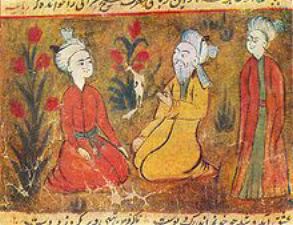
Khusro! the river of love has a reverse flow
He who enters will drown, he who drowns will get across.


/ Image by Maria /

This brief couplet is as much a riddle as the lines of a poem. Reading it, the first response may be that it is beautiful and somehow uplifting, but it doesn’t really make sense… until we dive in ourselves.

Khusro! the river of love has a reverse flow

We all have a flow of consciousness and life energy. That energy tends to flow outward and dissipate, especially when we keep our attention hooked without letup on outward experiences and the pull of the senses. The more we learn to quiet the mind and gather in the awareness through meditation and deep prayer, we can experience how that outward flow reverses, turning inward, tapping into a deep reservoir within. Reversing that flow, we discover the most amazing all-encompassing love and joy.

He who enters will drown, he who drowns will get across.

So much of our lives is spent in resisting the pull of that natural current drawing us in. When we allow ourselves to be swept away, to be engulfed by that joyful love, all of our old notions of self and reality are washed clean. The long held idea of who we are, the ego-self, disappears beneath the waves of that blissful stream. This is how one “drowns.”

But in drowning, we are stunned to find a new self. Something essential and vast awakens within us. We feel we have come home, we are finally ourselves for the first time. Knowing ourselves, we are surprised to be inherently whole and complete. Regardless of the movement and challenges around us, we stand on solid ground for the first time. This is how one drowns to get across to the other shore.

Maybe Khusrow’s riddle is not so much of a riddle as a map, an invitation. It’s a beautiful day — time to take a running leap and jump in.

To my many Muslim friends — Eid Mubarak! I hope you had a blessed and restorative Ramadan.

I am sending special blessings out to the region of Palestine/Israel. It is a fraught situation with wider repercussions. May sanity prevail and healing be sent to the situation with the least possible suffering. May we see clearly with open minds and compassionate hearts so we can help where we can.


Recommended Books: Amir Khusrow Dehlawi

Islamic Mystical Poetry: Sufi Verse from the Early Mystics to Rumi


Amir Khusrow Dehlawi, Amir Khusrow Dehlawi poetry, Muslim / Sufi poetry Amir Khusrow Dehlawi

India (1253 – 1325) Timeline
Muslim / Sufi

Continue Reading »

No responses yet

May 07 2021

Fakhruddin Iraqi – My eyes so fix

Published by under Poetry

My eyes so fix
by Fakhruddin Iraqi

English version by William Chittick and Peter Lamborn Wilson

My eyes so fix
      upon your image
that whatever I gaze at
      I imagine you.

— from Fakhruddin Iraqi: Divine Flashes (Classics of Western Spirituality) , Translated by William Chittick / Translated by Nasr Seyyed Hossein


/ Image by Khashayar Elyassi /

It has been a strange week. I lost access to the Poetry Chaikhana website for a few days when my web host changed my access info without notifying me. In trying to fix that issue, I then could not receive Poetry Chaikhana emails for a couple of days. We finally resolved those issues and the Poetry Chaikhana is back.

A new spring day. The birds celebrate the morning in song. And I have a short poem for you from the great Fakhruddin Iraqi…

That’s the way, isn’t it?

When we turn our full focus to the Divine, when our entire being hungrily reaches for the Eternal, the world around us conspires to reveal glimpses. The smallest thing, properly gazed upon with the whole self, unmasks itself as the Beloved.


Recommended Books: Fakhruddin Iraqi

Poetry for the Spirit: Poems of Universal Wisdom and Beauty The Drunken Universe: An Anthology of Persian Sufi Poetry Fakhruddin Iraqi: Divine Flashes (Classics of Western Spirituality) Love’s Alchemy: Poems from the Sufi Tradition


Fakhruddin Iraqi

Iran/Persia/India/Turkey (? – 1289) Timeline
Muslim / Sufi

Continue Reading »

2 responses so far

Apr 23 2021

Matsuo Basho – Skylark

Published by under Poetry

Skylark
by Matsuo Basho

English version by Lucien Stryk and Takashi Ikemoto

Skylark
sings all day,
and day not long enough.

— from Zen Poetry: Let the Spring Breeze Enter, Translated by Lucien Stryk / Translated by Takashi Ikemoto


/ Image by Chad Horwedel /

A haiku for us today, one that brings me a smile every time I read it.

This is one of those poems where any attempt at commentary feels absurd. What it says is simple and direct, yet it resonates in the mind and the heart. Reading it, I find myself questioning the importance of busy daily activities. On those weary days when I am just ready for the day to be over, have I misspent my day? Have I held back my song?

=

After a year of pretty good energies, I seem to be dealing with chronic fatigue patterns coming up again. I am always reminded of the need for balance and a clarity of purpose. The more scattered I get and try to accomplish everything at once, the more my system insists that I pause. Our struggles are often our best and most determined teachers…

=

Today might just be a day to burst forth in song!


Recommended Books: Matsuo Basho

Zen Poetry: Let the Spring Breeze Enter The Enlightened Heart: An Anthology of Sacred Poetry Haiku Enlightenment: New Expanded Edition The Poetry of Zen: (Shambhala Library) The Four Seasons: Japanese Haiku
More Books >>


Matsuo Basho, Matsuo Basho poetry, Buddhist poetry Matsuo Basho

Japan (1644 – 1694) Timeline
Buddhist : Zen / Chan

Continue Reading »

5 responses so far

Apr 12 2021

R. S. Thomas – But the silence in the mind

Published by under Ivan's Story,Poetry

But the silence in the mind
by R. S. Thomas

But the silence in the mind
is when we live best, within
listening distance of the silence
we call God. This is the deep
calling to deep of the psalm-
writer, the bottomless ocean.
We launch the armada of
our thoughts on, never arriving.

It is a presence, then,
whose margins are our margins;
that calls us out over our
own fathoms. What to do
but draw a little nearer to
such ubiquity by remaining still?

— from For Lovers of God Everywhere: Poems of the Christian Mystics, by Roger Housden


/ Image by MindSqueeZe /

A rare Monday poem email. Since it has been nearly a month since I last sent a Poetry Chaikhana email out, I decided not to wait until the end of the week. There are several reasons for the unannounced pause in the emails.

I live outside of Boulder, Colorado and, as many of you are probably aware, there was a terrible shooting in Boulder a few weeks ago at a local grocery store. When my wife and I first moved to the area years ago, we lived within a few blocks of that store and often shopped for groceries there. We now live several miles away and were not in immediate danger during the shooting. But, of course, we still felt the trauma of the community, magnified by our own personal history with the scene of so much bloodshed.

In the aftermath, I didn’t want to immediately send out a poem. I wasn’t quite ready to talk about the event, and it would have felt wrong to ignore it.

Soon after, I had a birthday and Easter came up. And through it all, my day job has been especially busy.

For all of those reasons I felt it was best to wait.

But with spring blossoming in our area, it feels like it is now time to return to poetry and the reawakening of life. So I have a beautiful poem of silences for us today…

=

But the silence in the mind
is when we live best…

Isn’t this poem delightful in its stillness?

This is the deep
calling to deep of the psalm-
writer, the bottomless ocean.

I particularly like the image of launching an armada of thoughts out on the bottomless ocean of silent mind.

We launch the armada of
our thoughts on, never arriving.

The silence is so vast that the thoughts can never arrive; they just fade into the misty distances. The image puts proper scale to our thoughts. They are small things with barely any substance amidst the great expanse we discover in silence.

The silence is seen, then, not as a negation or emptiness, but as an overlooked, all-encompasing dimension of reality and being:

It is a presence, then,
whose margins are our margins

And it is a challenge to us, a beckoning call…

that calls us out over our
own fathoms.

I was a teenager in the 1980s, when the first personal computers started to become available. And, yes, I was one of those nerdy computer kids, spending hours in front of the computer screen, when I wasn’t down at the neighborhood arcade feeding quarters into Pac Man and Space Invaders. It was a new medium, a new world built of light, different ways to display light, manipulate light, and finding meaning in that light. The mathematics, art, and movement of light were mesmerizing.

But once the giddiness and sense of power wears off, you realize how restless that world is. The human mind, never much at ease in any historical period, now has endless promptings to remain entranced and agitated.

I went through a period when I rejected computers along with as many other elements of modern technology as I could. I desperately wanted to find out what it meant to live in the essential state of being human. What did it mean to be human 500 years ago? 5,000 years ago? What is the essential human experience of life and self-awareness?

I began to seek remote places in nature, where I could meditate and fast.

I wanted to discover that “silence in the mind” that brings us–

…within
listening distance of the silence
we call God.

Don’t get me wrong– I’m a modern person, a product of the modern era. I would greatly resent being thrust back into some previous era. I don’t take the freedoms and possibilities of my modern life for granted.

But we so miss having a place in society for silence. We are given very little encouragement to cultivate stillness. More than ever we must fight to create the space for silence in our lives. I feel great love and respect for all you misfits and spiritual revolutionaries out there quietly holding ajar the doorways to silence. You are the hope of the world.

What to do
but draw a little nearer…?

…All this, typed on a computer, sent out over the Internet. (Ivan, still trying to find ways to make light move, yet in ways that inspire peace.)


Recommended Books: R. S. Thomas

For Lovers of God Everywhere: Poems of the Christian Mystics Soul Food: Nourishing Poems for Starved Minds R. S. Thomas: Selected Poems R. S. Thomas (Everyman Poetry) R. S. Thomas: Collected Poems 1945-1990
More Books >>


R. S. Thomas, R. S. Thomas poetry, Christian poetry R. S. Thomas

Wales (1913 – 2000) Timeline
Christian

Continue Reading »

4 responses so far

Mar 12 2021

Lalla – Coursing in emptiness

Published by under Poetry

Coursing in emptiness
by Lalla

English version by Coleman Barks

Coursing in emptiness,
I, Lalla,
dropped off body and mind,

and stepped into the Secret Self.

Look: Lalla the sedgeflower
blossomed a lotus.

— from Women in Praise of the Sacred: 43 Centuries of Spiritual Poetry by Women, Edited by Jane Hirshfield


/ Image by Crystalline Radical /

Yesterday was Maha Shivaratri, a celebration in honor of the Hindu god Shiva. So I thought we should have a poem dedicated to Lord Shiva…

I love the opening phrase in this poem’s translation: “Coursing in emptiness…” Reality is recognized as being vast and empty — but a living emptiness! — like a great formless sea. And the point of awareness, though supremely at rest, covers the entire spaciousness like one reclined on a coursing clipper ship carried along by a gentle, steady wind.

And in this pure state of awareness, the agitated ego-mind that constantly chants “I, me, mine!” — that part of the mind that we normally think of as ourselves — it grows thin and ghost-like until it disappears. Even the physical body becomes unreal to us and the awareness of it can completely fade away.

…Yet we remain. The collection of mental processes and agitations that we thought was our identity has ceased. The body has become at most an idea, a form of expression. It is a tool for interacting with an idea world. The body has dropped off, yet we remain. Completely stilled and settled, we are returned to the natural experience of bliss and wholeness. In the deepest way possible, we are at home, at one. We finally know who and what we really are. This is the return to the Secret Self. This is the way to step into the Secret Self.

Lalla’s final pair of lines — “Look: Lalla the sedgeflower / blossomed a lotus” — expresses the utter surprise and delight of this first recognition. A sedgeflower grows low among the grasses, close to the ground, hardly noticed. How can something so humble, something so lost among the weeds and dust of earthly existence come to such vibrant life? How could this little thing I call “me” have stepped into the radiant enlightenment that blossoms like a lotus in the crown? The sedgeflower — the little self — discovers within it the scintillating lotus of the True Self!

=

A personal note about Shiva–

I have always felt a special appreciation for the imagery of Shiva. When I was younger and more of an ascetic myself, I loved the iconography of Shiva as the bone-thin yogi with long matted hair meditating in bliss in the Himalayas. Austere, pure, the embodiment of what is essential and meaningful in existence.

These days I am fascinated by the image of Shiva Nataraj, the Lord of the Dance. Shiva, ecstatically dancing, creating and dissolving the universe with each step, his long hair flying about his shoulders as he spins in his perfect balance. To me this is an image of the way the Eternal expresses both stillness and movement, how the Divine moves masterfully through existence, how all life is an expression of the underlying joyful impulse to move and express.

Shiva Nataraj teaches us how to dance through life!

Have a beautiful day!


Recommended Books: Lalla

The Longing in Between: Sacred Poetry from Around the World (A Poetry Chaikhana Anthology) Women in Praise of the Sacred: 43 Centuries of Spiritual Poetry by Women Poetry for the Spirit: Poems of Universal Wisdom and Beauty This Dance of Bliss: Ecstatic Poetry from Around the World Naked Song
More Books >>


Lalla, Lalla poetry, Yoga / Hindu poetry Lalla

Kashmir (India/Pakistan) (14th Century) Timeline
Yoga / Hindu : Shaivite (Shiva)

Continue Reading »

8 responses so far

Mar 05 2021

Fakhruddin Iraqi – Everywhere veiled

Published by under Poetry

Everywhere veiled
by Fakhruddin Iraqi

English version by William Chittick and Peter Lamborn Wilson

Everywhere veiled
      by Your own Face
You are hidden from the world
      in Your very manifestation.
Look where I will
      I see Your Face alone;
in all these idols
      I see only You.
Jealous lest You be recognized
      at every instant
You dress Your Beauty
      in a different cloak.

— from Fakhruddin Iraqi: Divine Flashes (Classics of Western Spirituality) , Translated by William Chittick / Translated by Nasr Seyyed Hossein


/ Image by nasrul ekram /

Even amidst terrible suffering and devastation, we have the opportunity to glimpse the face of God. Sometimes it is in a helping hand or a healing voice. A kind gaze that doesn’t turn away is often the most powerful thing of all. A heart that breaks, yet remains engaged, that is what the world is always yearning for. To see, to feel, to care– these require courage and the willingness to face pain rather than run from it. But, when we do that, and breathe through it, we discover our deep humanity… and perhaps something of our shared divinity.

A broken heart, a willing hand, and a clear seeing eye, these are the pathways to God.

==

Iraqi suggests to us that all of life, all of reality is a game of divine hide-and-seek.

Reading this poem raises a question– As we walk daily through the world, do we merely look, or do we see? And when we truly see, how can we not occasionally pause in mute wonder and melt?

Look where I will
      I see Your Face alone


Recommended Books: Fakhruddin Iraqi

Poetry for the Spirit: Poems of Universal Wisdom and Beauty The Drunken Universe: An Anthology of Persian Sufi Poetry Fakhruddin Iraqi: Divine Flashes (Classics of Western Spirituality) Love’s Alchemy: Poems from the Sufi Tradition


Fakhruddin Iraqi

Iran/Persia/India/Turkey (? – 1289) Timeline
Muslim / Sufi

Continue Reading »

3 responses so far

Feb 26 2021

Mary Oliver – Spring

Published by under Poetry

Spring
by Mary Oliver

Somewhere
a black bear
has just risen from sleep
and is staring

down the mountain.
All night
in the brisk and shallow restlessness
of early spring

I think of her,
her four black fists
flicking the gravel,
her tongue

like a red fire
touching the grass,
the cold water.
There is only one question:

how to love this world.
I think of her
rising
like a black and leafy ledge

to sharpen her claws against
the silence
of the trees.
Whatever else

my life is
with its poems
and its music
and its glass cities,

it is also this dazzling darkness
coming
down the mountain,
breathing and tasting;

all day I think of her —
her white teeth,
her wordlessness,
her perfect love.

— from New and Selected Poems, by Mary Oliver


/ Image by Marie Hale /

We have snow on the ground here in Colorado, but spring is coming. You can see it in the brilliant morning sunlight, in the first tentative buds on branches. We are, all of us, beginning to shake off the long hibernation of winter to encounter the world once again, like Mary Oliver’s bear.

The poem evokes for us the image of this black bear, this huge being, “like a black and leafy ledge,” waking from its slumbers and rather roughly encountering the world once again. But that renewed interaction between bear and gravel, grass, and tree is a form a sacrament. It is the embodiment of a questions: how to love this world.

The poem circles back to the poet, her human life filled with creativity and cities…

Whatever else

my life is
with its poems
and its music
and its glass cities…

But we sense that the list is incomplete. Something fundamental has been left out of the first part of that list. That connection with nature. No… deeper even than that. Something archetypal. The great primal being within as it awakens and encounters the world.

it is also this dazzling darkness
coming
down the mountain,
breathing and tasting;

Despite its massive presence, it is silent. Without words. Beyond words.

(The phrase “dazzling darkness” is of particular significance within Western esoteric traditions, tracing back to a poem by the important early Christian mystic Dionysius the Areopagite. I suspect Ms. Oliver used it intentionally to suggest the same mysterious, vast, silent presence.)

all day I think of her -–
her white teeth,
her wordlessness,
her perfect love.

I have always felt a special connection with the animal world. As a child, for a time I planned to become a veterinarian. I remember often meditating as a boy on the wordlessness of animals. What sort of world do they inhabit without words, without names for things or places or people… or even for themselves? I tried to imagine that world, to enter it with my own wordlessness. Like Mary Oliver’s bear. In our wordlessness, when we stop naming things, we find that we encounter everything more immediately, more fully. When we name a thing or person or experience, we have labeled it, categorized it and, as a result, moved it outside of the realm of direct experience and shunted it safely into a mental idea of the moment, rather than the living moment itself. When we name things through incessant thought, we then encounter our thoughts about the experience and not the actual experience. We end up seeing only reflections of the mind and forget how to see the world as it is.

Mary Oliver’s bear reminds us to let that great black bear rise from its sleep and encounter the world in its wordlessness. This is how we can begin to answer the “only one question: how to love this world.” We embody perfect love when we are truly present in our dazzling silence and not elsewhere in our words and thoughts. Love is connection, contact, encountering a person or place as it is, as we are. Love is being right here.

Have a beautiful day, one of wordless spring awakening!


Recommended Books: Mary Oliver

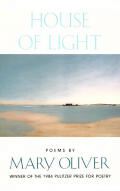
New and Selected Poems Why I Wake Early Dream Work House of Light Thirst: Poems
More Books >>


Mary Oliver, Mary Oliver poetry, Secular or Eclectic poetry Mary Oliver

US (1935 – 2019) Timeline
Secular or Eclectic

Continue Reading »

5 responses so far

Feb 12 2021

Patrul Rinpoche – Use the time of your life

Published by under Poetry

Use the time of your life
by Patrul Rinpoche

Use the time of your life.
Develop your inner happiness.
Recognize the impermanence
of all outer pleasure.

Live as a Yogi
Do your spiritual practices.
Work as a Bodhisattva
for a happy world.

Become an Amitabha
a Buddha of love and light.
Turn your world into the paradise Sukhavati,
by unfolding the enlightenment energy within you.

Search you a spiritual master,
who knows the goal of enlightenment.
Change your world into a place of grace,
by understanding all the phenomena as spiritual exercises.

Dedicate your actions to the benefit of all beings.
Send all beings light.
Live for the happiness of all beings.
So you get the energy of light.


/ Image by Hartwig HKD /

Today, February 12, is the beginning of Losar, the Tibetan New Year, a good time to release the old and welcome in the new.

I don’t often feature poetry from the Tibetan tradition, even though I love this rich heritage. The reason is that much of the sacred poetry that comes to us from Tibetan practitioners can seem to the casual reader to be rather technical and philosophically didactic. It is rarely the fluid and ecstatic outpouring of the heart, like Rumi’s poetry, for example. But, once you have explored Tibetan expressions of Buddhism a bit and understand some of the sacred terminology, then Tibetan poetry reveals itself to be a treasure trove of wisdom and beauty.

For today, I thought I’d choose a relatively simple and direct poem by Patrul Rinpoche.

Use the time of your life.
Develop your inner happiness.

This poem is a direct appeal to seize the opportunity of our being. We have the blessing of life and awareness, so let’s joyfully use them for what they were really made for — awakening.

The outer satisfaction of pleasures and acquisitions, while they may have their place in our lives too, are always limited and, because of their exterior nature, never provide us with lasting fulfillment.

Recognize the impermanence
of all outer pleasure.

When we are wise, we cultivate our inner happiness, our wellspring of inherent bliss, which does not fluctuate with outer experiences.

We can find parallels in the Christian tradition when Jesus advises his followers to store one’s treasures in heaven where they are not vulnerable to decay or theft.

Patrul Rinpoche gives us simple, clear guidance for a life of spiritual fruition:

Live as a Yogi
Do your spiritual practices.

He reminds us to remain engaged in the practices and activities that return our focus, again and again, to our higher purposes in life. Yes, we have our daily roles and responsibilities, but we must always return to the deeper meaning of our lives and find ways to infuse even our most mundane tasks with that extra spiritual magnetic charge so that increasingly every activity becomes a spiritual practice filled with inner purpose.

Work as a Bodhisattva
for a happy world.

A Bodhisattva is one who has taken vows to work for the healing and spiritual awakening of all beings. In other words, he advises us to live in service and act with kindness, healing the world as we move through it.

Become an Amitabha
a Buddha of love and light.

An Amitabha is a Buddha of light, a radiant and loving expression of pure awakening. The spiritual path is not one of drudgery or rigid progress. We blossom with love and light.

Turn your world into the paradise Sukhavati,
by unfolding the enlightenment energy within you.
…Change your world into a place of grace.

As we discover our inner bliss, we unleash it into the world, letting it do its transformative work. Allowing that energy to move through us, we naturally strive to build outer manifestations of that inner joy, trying to awaken that awareness of paradise in others and in the social fabric we collectively weave.

The well-lived spiritual life becomes a dance of inner and outer, in which kindness and joy are both natural and logical as we more fully recognize the interrelationship of being we all share.

Dedicate your actions to the benefit of all beings.
Send all beings light.
Live for the happiness of all beings.
So you get the energy of light.

May this be a time of cleansing endings and joyful new beginnings. Happy Losar!


[BOOK LIST REPEATING]

Patrul Rinpoche, Patrul Rinpoche poetry, Buddhist poetry Patrul Rinpoche

Tibet (1808 – 1887) Timeline
Buddhist : Tibetan

Continue Reading »

6 responses so far

Feb 05 2021

Rainer Maria Rilke – Want the change

Published by under Poetry

Want the change
by Rainer Maria Rilke

English version by Anita Barrows and Joanna Macy

Want the change. Be inspired by the flame
where everything shines as it disappears.
The artist, when sketching, loves nothing so much
as the curve of the body as it turns away.

What locks itself in sameness has congealed.
Is it safer to be gray and numb?
What turns hard becomes rigid
and is easily shattered.

Pour yourself out like a fountain.
Flow into the knowledge that what you are seeking
finishes often at the start, and, with ending, begins.

Every happiness is the child of a separation
it did not think it could survive. And Daphne, becoming
a laurel,
dares you to become the wind.

— from In Praise of Mortality: Rilke’s Duino Elegies & Sonnets to Orpheus, by Rainer Maria Rilke / Translated by Joanna Macy


/ Image by Lulu Lovering /

This poem is a lovely meditation on change and transitoriness — as signs of life. It is only those relationships and experiences which move, and evolve, and eventually disappear that are fully alive.

Want the change. Be inspired by the flame
where everything shines as it disappears.

We so want the opposite to be true. We reflexively want to grasp the world, to hold it fixed, so we can trust reality, know its rules, and feel secure every day. But Rilke invites us to see with the poet’s keen eye the truth of the matter: that which doesn’t change lacks life and loses beauty–

What locks itself in sameness has congealed.
Is it safer to be gray and numb?
What turns hard becomes rigid
and is easily shattered.

We can’t hold our lives fixed, and we can’t hold ourselves fixed within our lives. The only thing to do is to step fully into each mysterious unknown day.

I love the line–

Pour yourself out like a fountain.

This statement so powerfully evokes the courage each day requires and the generosity of self that we can bring to each encounter.

We give of ourselves not to secure our lives but to live our lives in fullness. And, in doing so, we discover more life in our lives.

Flow into the knowledge that what you are seeking
finishes often at the start, and, with ending, begins.

If you’re not a mythology nerd, you may not have picked up on Rilke’s reference to Daphne and the laurel…

And Daphne, becoming
a laurel,
dares you to become the wind.

In Greek mythology, Daphne was a stunningly beautiful nymph who lived and hunted in the woods. Because of her beauty men constantly sought her favors, but she refused everyone. Then the god Apollo fell in love with her, but she refused him as well. Daphne fled from Apollo, who continued to pursue her. When Apollo was about to grasp Daphne, she called upon her father’s magical power, and she was instantly transformed into a laurel tree. The god Apollo, still in love with Daphne, but unable to embrace her, plucked a branch of the laurel and wore it as a wreath upon his head.

By evoking Daphne, Rilke is calling up this rich myth of beauty, and the inability to posses it. Yet that beauty, in transforming itself into something that can no longer be truly held or lusted after, takes on a new life all its own, a life that yet dances in the wind.

Rilke seems to be inviting us to encounter life with full presence and, with the courage of a witness rather than one who grasps, to appreciate beauty both in the coming and goings of life.


Recommended Books: Rainer Maria Rilke

The Enlightened Heart: An Anthology of Sacred Poetry Ahead of All Parting: The Selected Poetry and Prose of Rainer Maria Rilke The Soul is Here for its Own Joy: Sacred Poems from Many Cultures Rilke’s Book of Hours: Love Poems to God In Praise of Mortality: Rilke’s Duino Elegies & Sonnets to Orpheus
More Books >>


Rainer Maria Rilke, Rainer Maria Rilke poetry, Secular or Eclectic poetry Rainer Maria Rilke

Germany (1875 – 1926) Timeline
Secular or Eclectic

Continue Reading »

4 responses so far

Jan 29 2021

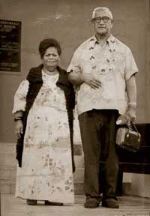
Edith Kanaka’ole – E ho mai

Published by under Poetry

E ho mai
by Edith Kanaka’ole


E ho mai
Ka ike mai luna mai e

O na mea huna no eau
O na mele e

E ho mai
E ho mai
E ho mai

Grant us
knowledge from above,

All the wisdom
of the songs.

Grant,
Bestow,
Grant us these things.

— from The Longing in Between: Sacred Poetry from Around the World (A Poetry Chaikhana Anthology), Edited by Ivan M. Granger


/ Image by Angela Sevin /

Years ago, when I lived in Hawai’i, I took a class in ho’oponopono. (If you sound it out slowly, it’s not the tounge-twister it first looks like.) Ho’oponopono means literally “to make things right, to return things to harmony.” It is a traditional healing method, but its emphasis is not on healing the body as it is on healing relationships, families, communities. If you think about it, what is the purpose of a healthy body except as an instrument to work for a healthier society? The small body serves the larger body.

As part of my training in ho’oponopono, I learned this chant. Hawaiian chant can be compared to Hindu mantra in that to truly say it properly can take a great deal of training. The inflections are important. The breath is important. Most of all, the sense of personal presence is important.

This Hawaiian chant must be said with force and with heart. It is a prayer, but it is not passive. It is a calling forth, a reaching out and a drawing in — of wisdom, of knowledge, of truth. It evokes in us pono, rightness.

Try sounding out the Hawaiian. Slowly at first, until the sounds become familiar. Then louder, with confidence. Say it over and over again. Imagine repeating this chant in a group. Let it ring through your body and your day!

To hear it chanted, click here
Aloha!


Recommended Books: Edith Kanaka’ole

The Longing in Between: Sacred Poetry from Around the World (A Poetry Chaikhana Anthology)


Edith Kanaka'ole, Edith Kanaka'ole poetry, Primal/Tribal/Shamanic poetry Edith Kanaka’ole

US, Hawaii (1913 – 1979) Timeline
Primal/Tribal/Shamanic : Hawaiian

Continue Reading »

2 responses so far

« Prev - Next »