Archive for the 'Poetry' Category

Oct 07 2019

Theodore Roethke – In a Dark Time

Published by under Poetry

In a Dark Time
by Theodore Roethke

In a dark time, the eye begins to see,
I meet my shadow in the deepening shade;
I hear my echo in the echoing wood —
A lord of nature weeping to a tree,
I live between the heron and the wren,
Beasts of the hill and serpents of the den.

What’s madness but nobility of soul
At odds with circumstance? The day’s on fire!
I know the purity of pure despair,
My shadow pinned against a sweating wall.
That place among the rocks — is it a cave,
Or winding path? The edge is what I have.

A steady storm of correspondences!
A night flowing with birds, a ragged moon,
And in broad day the midnight come again!
A man goes far to find out what he is —
Death of the self in a long, tearless night,
All natural shapes blazing unnatural light.


Dark, dark my light, and darker my desire.
My soul, like some heat-maddened summer fly,
Keeps buzzing at the sill. Which I is I?
A fallen man, I climb out of my fear.
The mind enters itself, and God the mind,
And one is One, free in the tearing wind.

— from The Collected Poems of Theodore Roethke, by Theodore Roethke


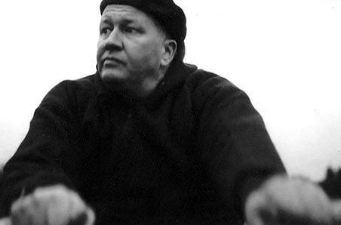
/ Image by iNeedChemicalX /

Over the weekend I came across the following article:

“Emergency Poet” Opens Literary Pharmacy to Support Mental Health

Keele University in the UK has decided to open up what they are calling a “poetry pharmacy” to issue poetic therapy and first aid. They’ve set it up so you can move through rooms based on your particular need, everything from affairs of the heart to when the world is just too much.

I love this idea! We need a poetic first aid center in every community. I suppose, in my way, I try to do that with the Poetry Chaikhana.

If this idea intrigues you, an excellent book to read on the healing power of poetry is Poetic Medicine, by John Fox.

Thinking about poetry as medicine brought to mind this poem by Theodore Roethke…

This poem by Roethke is one of those poems to keep close in difficult times.

In a dark time, the eye begins to see

The struggle against despair, disorientation, darkness. The solitary individual lost in a lost world. We have all been there at some point in our lives. Deep seekers have a particular tendency to travel through those shadowed spaces.

I know the purity of pure despair,
My shadow pinned against a sweating wall.

That despair is often a deep-seated sense that something is fundamentally wrong with the human world presented to us. It can feel uncaring, limited, violent, broken, and incomplete. In other words, it is a place that does not accept the individual as he or she is. To operate in the human world, we are forced into games of pretense and self-disguise. It is a feeling of homelessness and isolation.

What does one do when the soul is at odds with circumstance? It creates a terrible crisis. As social creatures, we align with the group mind, often without awareness or consent. The more naturally we do this, the better we fit into society and exist in the human world. But what about the eccentrics and visionaries, those who resist that psychic pull in order to answer the soul’s need to be itself and see beyond social artifice?

The edge is what I have.

They tend to dwell at the edges. That is where both danger and possibility are found. There we gain the possibility of seeing clearly for the first time, witnessing reality as a complete and self-fulfilled individual.

But the danger is very real, as well. No longer relying on socially constructed reality as our boundary we also lose our safe landmarks. The psyche becomes disoriented and fragile.

To navigate this dark and uncertain territory, the seeker and the artist must cultivate a highly refined inner sense of balance and discipline. This is an important reason for developing a vigorous spiritual practice. Without the necessary inner solidity, the tendency is to rely on dangerous crutches, like excessive drinking and drug use — a terrible problem for so many creative non-conformists.

Think of it this way: The normal consensus reality is like the rigid shell of an egg. It does an excellent job of safely containing the still-forming individual, giving protection from exposure to the unknown outside reality. But, if the individual remains within that shell forever, the soul never experiences the fullness of life. Through spiritual practice, one awakens the fire of life and takes on inner solidity not dependent on outer containment. At that point, the shell has become too confining and we break free into the open air, cracking the shell but without fragmenting the self. Spiritual practice and deepening self-awareness gives us the inner solidity needed to encounter the new world.

…Those dark periods we experience, they do actually serve a purpose, awakening clarity of vision and a compassionate heart. When we feel most vulnerable and lost, we are often going through our greatest growth and transformation, readying for the blaze of light.

Death of the self in a long, tearless night,
All natural shapes blazing unnatural light.

We must learn to work deeply amidst the darkness. We discover who we really are, slowly emerging from the shadows, for that is our stable landmark when all else shifts about.

The mind enters itself, and God the mind,
And one is One, free in the tearing wind.

=

Which poem do you keep close in your poetic medicine cabinet? What gives you comfort, clarity, or courage? Let me know.

Sending love.


Recommended Books: Theodore Roethke

Poetry for the Spirit: Poems of Universal Wisdom and Beauty The Collected Poems of Theodore Roethke Theodore Roethke: Selected Poems On Poetry and Craft The Glass House: The Life of Theodore Roethke
More Books >>


Theodore Roethke, Theodore Roethke poetry, Secular or Eclectic poetry Theodore Roethke

US (1908 – 1963) Timeline
Secular or Eclectic

More poetry by Theodore Roethke

7 responses so far

Oct 04 2019

William Butler Yeats – The Lake Isle of Innisfree

Published by under Poetry

The Lake Isle of Innisfree
by William Butler Yeats

I will arise and go now, and go to Innisfree,
And a small cabin build there, of clay and wattles made:
Nine bean-rows will I have there, a hive for the honeybee,
And live alone in the bee-loud glade.

And I shall have some peace there, for peace comes dropping slow,
Dropping from the veils of the morning to where the cricket sings;
There midnight’s all a glimmer, and noon a purple glow,
And evening full of the linnet’s wings.

I will arise and go now, for always night and day
I hear lake water lapping with low sounds by the shore;
While I stand on the roadway, or on the pavements grey,
I hear it in the deep heart’s core.

— from The Collected Poems of W. B. Yeats, by William Butler Yeats


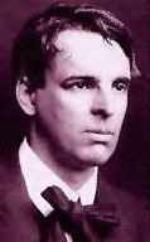
/ Image by hideraldo dwight leitao /

Something for us today by that seeker/sage/bard/mage Yeats — a portrait of peace.

I love the rhythms of this poem. To really appreciate it, you need to say it aloud and slowly. Let it roll off the tongue.

Yeats paints with his words, running them together like brushstrokes in watercolor.

…the bee-loud glade.


…And I shall have some peace there, for peace comes dropping slow, .

In the beauty of this rustic scene, we discover stillness, something of the eternal in the sound of the water lapping at the shore and the mesmerizing hum of bees.

Listening well, we discover the one who listens. We discover “the deep heart’s core.”


Recommended Books: William Butler Yeats

The Oxford Book of English Mystical Verse Holy Fire: Nine Visionary Poets and the Quest for Enlightenment The Collected Poems of W. B. Yeats Byzantium The Secret Rose
More Books >>


William Butler Yeats, William Butler Yeats poetry, Secular or Eclectic poetry William Butler Yeats

Ireland (1865 – 1939) Timeline
Secular or Eclectic
Primal/Tribal/Shamanic : Celtic

More poetry by William Butler Yeats

8 responses so far

Sep 30 2019

Mevlana Jelaluddin Rumi

Published by under Poetry

The Thirsty
by Mevlana Jelaluddin Rumi

English version by Ivan M. Granger

Not only do the thirsty seek water,
The water too thirsts for the thirsty.

— from The Longing in Between: Sacred Poetry from Around the World (A Poetry Chaikhana Anthology), Edited by Ivan M. Granger


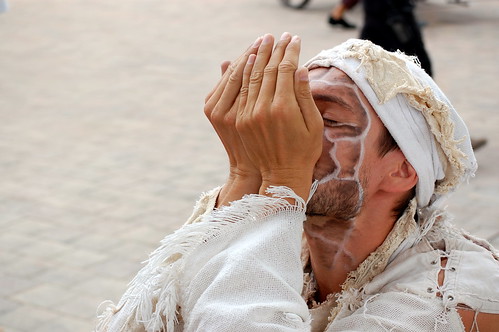
/ Image by sergis blog /

I thought I’d follow up on Friday’s poem with this short piece by Rumi continuing the theme of thirst…

Not only do the thirsty seek water

As I grow older, the idea of spiritual thirst becomes ever more real to me. As a young seeker, in my adolescence and early adulthood, I was consumed by such painful blind thirst that I couldn’t have named it “thirst” back then. It was simply the searing ache of my days. It was my whole world.

I went a little mad with my thirst. I kept seeking to withdraw, from society, from the world, retreating into the forests of Oregon, the mountains of Colorado, the jungles of Hawaii where perhaps I might glimpse what was truly essential. I fasted my body into emaciation. I meditated in caves. I walked barefoot and shirtless in the wilds. I spoke with drifters and the homeless, trying to know their hearts and see through their eyes.

Some part of me broke, I think. And then it broke open. That’s when I knew what it meant to drink and no longer thirst.

And a strange thing– what had felt like shattering effort driven by wild thirst suddenly seemed like nothing at all.

The water too thirsts for the thirsty.

Perhaps it wasn’t my terrible thirst that had driven me at all. Perhaps I was drawn by the water’s thirst for me. And all that strain and adventure, well, that was just the story I told myself along the way.

What has been most odd to me is my return to society since then. I made a conscious choice to come in from the wilderness, to rejoin the world, to hold a regular job, have a stable home, and reconnect with people (and try to share a taste of that sweet water with others). More than a decade later, it still feels strange to me. At times I find myself going through the motions, simply passing as a “normal” person. The challenges of daily life, of paying bills, of caring about my body’s health, of establishing regular patterns others can rely on, these practices still seem foreign to me at times, but I consider them a major part of my spiritual practice now. It used to be that the only things that made sense to me were transcendence and escape. These days I find the most humbling truth in being present, and watching with wonder, allowing life to be simply as it is.

I’m less consumed by my own thirst these days. I feel the water’s thirst for the thirsty world instead.


Recommended Books: Mevlana Jelaluddin Rumi

The Longing in Between: Sacred Poetry from Around the World (A Poetry Chaikhana Anthology) Poetry for the Spirit: Poems of Universal Wisdom and Beauty This Dance of Bliss: Ecstatic Poetry from Around the World Music of a Distant Drum: Classical Arabic, Persian, Turkish & Hebrew Poems Perfume of the Desert: Inspirations from Sufi Wisdom
More Books >>


Mevlana Jelaluddin Rumi, Mevlana Jelaluddin Rumi poetry, Muslim / Sufi poetry Mevlana Jelaluddin Rumi

Afghanistan & Turkey (1207 – 1273) Timeline
Muslim / Sufi

Continue Reading »

6 responses so far

Sep 27 2019

Mary Oliver – Thirst

Published by under Poetry

Thirst
by Mary Oliver

Another morning and I wake with thirst
for the goodness I do not have. I walk
out to the pond and all the way God has
given us such beautiful lessons. Oh Lord,
I was never a quick scholar but sulked
and hunched over my books past the
hour and the bell; grant me, in your
mercy, a little more time. Love for the
earth and love for you are having such a
long conversation in my heart. Who
knows what will finally happen or
where I will be sent, yet already I have
given a great many things away, expect-
ing to be told to pack nothing, except the
prayers which, with this thirst, I am
slowly learning.

— from Thirst: Poems, by Mary Oliver


/ Image by aeravi /

Another morning and I wake with thirst
for the goodness I do not have.

I suppose that’s the state of human existence. We wake and the thirst kicks in. There is always something we want, we crave, that somehow is missing but necessary for us to feel whole. Most of the time we don’t really know what that something is. We think it is this or that, this person, that thing, this feeling, that experience. But then, when we attain them, we may go to sleep satisfied but wake up the next morning and thirst again. The thirst remains. And so we refocus it on something else, a new thing, a new experience. And we begin again.

I walk
out to the pond and all the way God has
given us such beautiful lessons.

We start to pay attention (hopefully) and examine the thirst more deeply. This thirst, this ache, resides in a deeper part of ourselves, and it cries out for a deeper connection with reality.

Like the poet, I tend to find intimations of that deeper reality when I am quiet and surrounded by the rhythms and life of the natural world. I notice that my heart relaxes and opens, and my focus expands. My thoughts become less grasping and more fluid.

But is that too one more experience held onto, one more fixation that ultimately limits my ability to satisfy the thirst I feel?

Love for the
earth and love for you are having such a
long conversation in my heart.

These lines are so interesting. This conversation in the heart between the earth and God might suggest a personal crossroads between life and death. Perhaps it is a health crisis and she does not know if she will live or die and she is trying to make peace with all possibilities.

We can also read these lines as being about how one balances the love for outer forms and the inner spirit…

Any experience of beauty and fulfillment requires a delicate touch. If we become attached to its outer form, then the inner, soul-nourishing liquid begins to trickle away. When we say to ourselves, that meditation, that walk, that person, made me feel so wonderful yesterday, so I will repeat it today and tomorrow, then we have lost the essence that fed our spirit. The trick is to recognize the real thing beneath the thing. The real thing is intangible, subtle, fluid, and not contained or limited by the outer form. If it can be grasped or controlled, that’s the husk and not the sweet sap.

At first this recognition is frustrating. It is like a tug-of-war within the heart, the comfort and familiarity of outer forms everywhere on display upon the face of the earth, with the slow recognition that every form is really just a symbol, an incomplete representation of what lies within. And it’s that inner substance that alone satisfies. The path to mastery, I suspect, is to be able to dowse those secret waterways, remaining undistracted by outer forms and formulations of what has worked in the past. Even patterns of prayer and communion that fed us at one stage can fall barren. We are then challenged to let go of our fixation on the familiar in order to rediscover the sacred directly. For it is that living, nourishing fullness of spirit that is the real and only goal.

Yet the one is not entirely separate from the other. Landmarks and forms are useful pointers. So we have this dynamic relationship of inner and outer, complimentary and sometimes in conflict.

Who
knows what will finally happen or
where I will be sent, yet already I have
given a great many things away, expect-
ing to be told to pack nothing…

Why then do we so mightily cling to outer things? When that underground flow of life nourishment has moved on, then our focus must move with it. The material things that were once a conduit for us but no longer, let us pass them on for they may feed another. And when we leave the earth, we will still follow that secret flow. The wellspring, not the things that briefly pointed the way to it.

…except the
prayers which, with this thirst, I am
slowly learning.

Here I am sipping from a tall glass of water watching the sun dance on the leaves of the aspen outside my window. Have a beautiful day!


Recommended Books: Mary Oliver

New and Selected Poems Why I Wake Early Dream Work House of Light Thirst: Poems
More Books >>


Mary Oliver, Mary Oliver poetry, Secular or Eclectic poetry Mary Oliver

US (1935 – 2019) Timeline
Secular or Eclectic

Continue Reading »

2 responses so far

Sep 18 2019

Devara Dasimayya – Suppose you cut a tall bamboo

Published by under Poetry

Suppose you cut a tall bamboo
by Devara Dasimayya

English version by A. K. Ramanujan

Suppose you cut a tall bamboo
in two;
make the bottom piece a woman,
the headpiece a man;
rub them together
till they kindle:
                  tell me now,
the fire that’s born,
is it male or female,


                  O Ramanatha?

— from Speaking of Siva, by A K Ramanujan


/ Image by Christopher Michel /

Following up on the Kundalini theme of last week’s poem by Dorothy Walters…

I really love the poetry of the great Virasaiva saints of India but, on the surface, this particular poem by Devara Dasimayya doesn’t seem to have much to do with spirituality. Why is he talking about bamboo? And what does he mean when he speaks about making a piece of the bamboo “a woman” and a piece of it “a man”? Let’s unfold the poem a bit and see if the meaning becomes more clear…

Certain yogic practitioners carry with them a stick or a pole, often made of bamboo, called a danda. This “tall bamboo” is more than a walking stick, it is a ritual object that symbolizes the shushumna or the subtle spinal column that is the primary energetic pathway of awakened spiritual energies. The practitioner of Yoga strives to awaken the Kundalini energy which commonly sits dormant at the base of the spine. When aroused, the Kundalini moves up the spine along the shushumna, which is often compared to a hollow reed or stalk of bamboo. When the fiery Kundalini reaches the crown, the individual awareness merges with cosmic consciousness — the sacred marriage — and the new life of enlightenment is experienced.

Returning to Dasimayya’s poem, if you divide the “bamboo” of the spiritual spine “in two,” the “bottom piece” is the seat of the feminine Kundalini energy — thus you make it “a woman.” The “headpiece” is associated with the masculine transcendent form of the divine, in yogic tradition often identified with the God Shiva — making it “a man.” So we have the female and the male, magnetized poles of a spiritual circuit within the individual

We then “rub them together / till they kindle.” That is, if we continuously work to bring the energies of the feminine and masculine poles into contact, an electrical charge is built up, and eventually that spark gives birth to a “fire” — the awakened Kundalini that runs up the spine with a rush of heat. When the female and the male poles merge, the bliss of union is rapturous, releasing a new radiant life within us.

The question Dasimayya asks: Is this divine child of enlightenment, this living fire born of the union of polarities, is it male or female? Can one truly say that enlightenment somehow more masculine or feminine, that belongs to only one end of the pole? No, the fire consumes everything, including the feminine and masculine ends of the pole. There is no male and female left, no duality, no separation. All that remains is the formless living fire of awakened awareness.

The question itself seems to be a refutation of the idea that one gender is somehow inherently closer to godliness or more capable of attaining enlightenment. Energies that we might identify as “male” and “female” are important to the awakening process, but each individual has both and must harness both in harmony. And enlightenment itself? It is beyond the dualities epitomized by gender. Enlightenment encompasses everything and is not limited by categories, like gender.

The Virasaivas were a highly egalitarian group, recognizing social — and spiritual — equality in all people, regardless of caste or gender.

Try rereading the poem now and watch the sparks fly!


Recommended Books: Devara Dasimayya

Speaking of Siva


Devara Dasimayya

India (10th Century) Timeline
Yoga / Hindu : Shaivite (Shiva)

Continue Reading »

3 responses so far

Sep 13 2019

Dorothy Walters – Still Life

Published by under Poetry

Still Life
by Dorothy Walters

      The rose that no longer blooms in the garden,
      blooms inside her whole body, among the veins
      and organs and the skeleton.
                  — Linda Gregg

A hidden blossoming.
Petals flaming beneath the skin.
And a softness pressing,
as delicate as the mouth
of a blind lover.


Each movement,
each quiet gesture
awakens
a rosary in the blood.
Was it desire
which brought her to this moment,
this arrival at source,
or was it merely a need
to be still, to be richly fed
from this fountain
of dark silence.

— from Marrow of Flame : Poems of the Spiritual Journey, by Dorothy Walters


/ Image by Arielle Kincaid /

I consider Dorothy Walters to be a friend, as well as a source of inspiration. She is in her 90s and still very active with various spiritual groups, sometimes giving talks, and regularly offering advice to people who contact her online. She and I have a running joke — One of us suggests getting together for brunch and conversation… until we try to pin down a date. Her schedule is always so busy that she ends up saying something like, “How about in two months?”

Since I’m in fairly regular contact with her, I was surprised to randomly find a new interview she recently did for the YouTube channel Buddha at the Gas Pump. I was surprised because she didn’t tell me about it or send me a link, it just popped up unexpectedly in my YouTube queue.

You can watch the YouTube interview here: Dorothy Walters Interview – Buddha at the Gas Pump

A couple weeks ago I noticed that her book of poetry, Marrow of Flame, which the Poetry Chaikhana publishes, had experienced a bump in sales recently and I was curious why. Then I noticed the new interview on YouTube. That’s why. More people are discovering this fascinating, unconventional spiritual elder and are wanting to read her writings.

With Dorothy in my thoughts, it only seems natural to share one of her poems from Marrow of Flame today.

Let’s start with the poem’s title itself, “Still Life.” Normally, that suggests a static painting, something beautiful with life in it, but without movement. Reading this poem, there is so much vitality that it is easy to forget that it is all happening within. The person of the poem — Dorothy Walters herself, you or me as the reader — is actually not doing anything outwardly. All of that life, the blossoming and searing, that is all happening within, and outwardly there is stillness, or perhaps just a slight gesture here and there. Still life, life within, stillness without.

Dorothy Walters speaks very directly about the spiritual and energetic opening often referred to as Kundalini awakening. She regularly talks about the highs and lows of Kundalini, that it can be blissful, rapturous, transformative, but it can also be deeply challenging and disorienting. Not only is it spiritual, with profound affects on the consciousness and one’s sense of self and interconnectedness with all things, it can also be quite physical, bestowing the most delightful sensations down to the cellular level, but also sometimes producing physical difficulties and discomfort. Dorothy’s poetry gives voice to the entire range of the Kundalini experience.

When she takes Linda Gregg’s quote, the inner blossoming becomes a representation of the spiritual energies of the Kundalini, flaming like the fire so associated with the experience, and also delicate and soft, like a lover, since this opening is often likened to ecstatic union with the Divine Beloved.

A hidden blossoming.
Petals flaming beneath the skin.
And a softness pressing,
as delicate as the mouth
of a blind lover.

With her first lines we immediately feel the searing, possibly painful passion, somehow balanced with a sense of profound peace.

And let’s not forget the sense of life, an entire garden within, and that garden is waking up, blossoming.

Each movement,
each quiet gesture
awakens
a rosary in the blood.

I love that phrase, “a rosary in the blood.” When fully swept up in the experience of the awakened Kundalini, when the energy flows without hindrances, there is a profound sense of stillness and interconnection. It is as if there is no sense of a little self to cause disruption within the wide open expanse of being. And in that open stillness, if you then move the body slightly, or if it moves on its own, as sometimes happens in such moments, even if you shift your energies a bit, that profound inner stillness can become a gently flowing bliss that bubbles and anoints every cell of the body. There is a wondrous interplay between stillness and movement, movement emerging from stillness and returning back to stillness, highlighted with ripples of delight.

Was it desire
which brought her to this moment,
this arrival at source

What brings us here? Whether we call it Kundalini or by some other name, what brings us to moments of awakening and communion? Is it because of some inner drive, some effort or practice? Is it because we have found the right pathway or teacher?

Or is it because something in us hungers and can be fed by nothing else? Is the hunger itself the beginning of one’s awakening?

or was it merely a need
to be still, to be richly fed
from this fountain
of dark silence.

Whether we have some big experience that we label Kundalini awakening or simply live our lives day-to-day learning to better embody our true selves with kindness and compassion, that secret fountain feeds us.

In our quiet moments we can feel it, that secret life unfolding, a hidden blossoming.


Recommended Books: Dorothy Walters

The Longing in Between: Sacred Poetry from Around the World (A Poetry Chaikhana Anthology) This Dance of Bliss: Ecstatic Poetry from Around the World Marrow of Flame : Poems of the Spiritual Journey Diamond Cutters: Visionary Poets in America, Britain & Oceania The Ley Lines of the Soul: Poems of Ecstasy and Ascension
More Books >>


Dorothy Walters, Dorothy Walters poetry, Secular or Eclectic poetry Dorothy Walters

US (1928 – )
Secular or Eclectic

Continue Reading »

2 responses so far

Sep 13 2019

Dorothy Walters – Buddha at the Gas Pump

Published by under Poetry

Just recently the wonderful sage and poet Dorothy Walters did an extended interview with Buddha at the Gas Pump:

The Poetry Chaikhana publishes Dorothy’s best-known collection of poetry, Marrow of Flame.

Marrow of Flame: Poems of the Spiritual Journey
by Dorothy Walters

Also available through Wordery Free shipping anywhere in the world

She is also the author of a memoir, Unmasking the Rose: A Record of Kundalini Initiation, as well as several other excellent collections of poetry, including Some Kiss We Want: Poems Selected and New, The Kundalini Poems: Reflections of Radiance and Joy, and A Cloth of Fine Gold: Poems of the Inner Journey.

Dorothy Walters is a personal friend and I can attest to the depth of her wisdom and genuineness. At the age of 91, she continues to inspire me with her energy and enthusiasm.

Click here to read some poems by Dorothy Walters.

About Dorothy Walters

Dorothy Walters, PHD, spent most of her early professional life as a professor of English literature in various Midwestern universities. She helped to found one of the first women’s studies programs in this country and served as the director of this program for many years. After an extended residence in San Francisco, she now lives and writes in Colorado, where she has a close relationship with the mountains as well as various streams and canyons.

She underwent major Kundalini awakening in 1981 (a phenomenon totally unfamiliar to her as well as to most of her contemporaries at the time); since then she has devoted her life to researching and writing about this subject and to witnessing the unfolding of this process within herself as well as assisting others on a similar path through writing and other means. As someone who made her extensive journey without the direction of any external leader or guru, church, or established order, she is a strong believer in the “guru within,” the inner guide rather than the external authority figure or institution.

She feels that universal Kundalini awakening is the means for planetary and personal evolution of consciousness, and that evidence of planetary initiation is becoming more and more prevalent. Her Kundalini awakening and subsequent process of unfolding are described in her memoir Unmasking the Rose: A Record of Kundalini Initiation.  Her poems taken from her four previous volumes are published as Some Kiss We Want: Poems Selected and New. Her article on “Kundalini and the Mystic Path” was included in Kundalini Rising, an anthology from Sounds True Publications. Her poems, which have been included in many anthologies and journals, have been set to music and sung at the Royal Opera House in London as well as Harvard University, used as texts for sermons and read aloud in churches, included in doctoral projects, been frequently quoted, and have given inspiration to many.

She often gives counsel and referral free of charge to those undergoing spontaneous Kundalini awakening and/or spiritual transformation.

One response so far

Sep 06 2019

Abu-Said Abil-Kheir – Beg for Love

Published by under Poetry

Beg for Love
by Abu-Said Abil-Kheir

English version by Vraje Abramian

Beg for Love.
Consider this burning, and those who
burn, as gifts from the Friend.
Nothing to learn.
Too much has already been said.
When you read a single page from
the silent book of your heart,
you will laugh at all this chattering,
all this pretentious learning.

— from Nobody, Son of Nobody: Poems of Shaikh Abu-Saeed Abil-Kheir, Translated by Vraje Abramian


/ Image by greenzowie /

All of my life I have dealt with anxiety. At times quite severe. When I was younger, I used to twist myself into convoluted states of pretense to convince myself that it wasn’t there. Or I would mask it behind anger — someone or some situation must be to blame for my tension. At a certain point I grew tired of my evasions and I simply accepted the patterns of anxiety in my life. I made friends with it. And in befriending it, I came to know it better.

While the anxiety patterns are generally reduced in my life these days, I can’t say that they are entirely gone. When anxiety shows up, I sit with it and we talk. As I relax out of my reflexive resistance, I learn more about myself. The anxiety in its way is a teacher. It tears holes in the latest social facade I’ve begun constructing. Instead of imagining that the anxiety points to something being “wrong,” which implies that something must be fixed in a state of desperation, I tend now to relate to anxiety as an accent in the awareness — and as an intense sensation. Anxiety can seem physical at times and, as a sensation, it burns.

When anxiety appears the first thought is, What’s wrong? I go through a rapid assessment of the daily elements of my life: my current projects as a computer programmer, my income, my work with the Poetry Chaikhana, recent conversations with my wife, chores that need to be done, am I meditating enough, how is my health… The list expands to be as long as my anxiety-controlled mind wants to make it. But, if nothing truly worthy of concern emerges in that first quick self-assessment, what I’ve learned to do is stop shredding my life up in search of the “problem” and just sit with that burning sensation of anxiety itself and let it reveal what it has to say in its own way.

Nine times out of ten I find that it is not about practical life issues and, instead, it has shown up to tease and chide me as it highlights some ego pattern I hadn’t recognized in the midst of my daily busyness. It burns and stings until I remember, Oh, yes, I am not that neat, two-dimensional figure I once again had begun to imagine myself to be. When I let go of that cardboard cutout version of myself, the heat of the anxiety consumes it and, satisfied, it dissipates, leaving me somehow more fully myself.

So in my idiosyncratic reading of this poem by the great Abu-Said Abil-Kheir, when he talks about burning as being “gifts from the Friend,” I relate to it in a highly personal and visceral way. I hear in his words how the intense, often painful experiences in life can be embraced as a cleansing process that in some alchemical sense refines us, ushering us into a deeper sense of self.

Nothing to learn.
Too much has already been said.

The real path is not about thinking or book learning, but about falling silent and opening ourselves to the intense transformative energies already at work in our lives. That’s when we enter that most holy of places, the heart.

When you read a single page from
the silent book of your heart,
you will laugh at all this chattering,
all this pretentious learning.


Recommended Books: Abu-Said Abil-Kheir

The Longing in Between: Sacred Poetry from Around the World (A Poetry Chaikhana Anthology) This Dance of Bliss: Ecstatic Poetry from Around the World The Drunken Universe: An Anthology of Persian Sufi Poetry Nobody, Son of Nobody: Poems of Shaikh Abu-Saeed Abil-Kheir Love’s Alchemy: Poems from the Sufi Tradition
More Books >>


Abu-Said Abil-Kheir

Turkmenistan (967 – 1049) Timeline
Muslim / Sufi

Continue Reading »

13 responses so far

Aug 30 2019

Hogen Bays – In this passing moment

Published by under Poetry

In this passing moment
by Hogen Bays

“In the presence of Sangha, in the light of Dharma,
in oneness with Buddha — may my path
to complete enlightenment benefit everyone!”

In this passing moment karma ripens
and all things come to be.
I vow to choose what is:
If there is cost, I choose to pay.
If there is need, I choose to give.
If there is pain, I choose to feel.
If there is sorrow, I choose to grieve.
When burning — I choose heat.
When calm — I choose peace.
When starving — I choose hunger.
When happy — I choose joy.
Whom I encounter, I choose to meet.
What I shoulder, I choose to bear.
When it is my death, I choose to die.
Where this takes me, I choose to go.
Being with what is — I respond to what is.


This life is as real as a dream;
the one who knows it cannot be found;
and, truth is not a thing — Therefore I vow
to choose THIS dharma entrance gate!
May all Buddhas and Wise Ones
help me live this vow.

— from The Longing in Between: Sacred Poetry from Around the World (A Poetry Chaikhana Anthology), Edited by Ivan M. Granger


/ Image by Agustin Ruiz /

There’s something both delightful and deeply challenging about this vow poem.

The entire poem is summed up at the beginning:

I vow to choose what is

You would think the unavoidable nature of “what is” makes a statement like this meaningless, but the human mind is not entirely sane. It often chooses fantasy and imaginings, shoulds and coulds, possibilities and even impossibilities over what is. Very few of us truly dwell in reality. Rarely do we fully experience the moments of our lives.

What is it that we are straining for as we constantly lean away from “what is”? What do we think is missing that we need? We don’t need someone else’s life. We don’t need a perfect marriage, better finances, or a better place in society. We don’t even need to be a saint living in the mountains. What’s missing is ourselves. What we really need is to stand in our own shoes, to be utterly ourselves. We need that missing ingredient—being present. We need to live, with honesty and an open heart, the life that already moves through us.

When starving–I choose hunger.
When happy–I choose joy.

When we are hungry, can we choose anything other than hunger? When happy, isn’t joy automatic? The truth is that we constantly choose. Ask yourself, how often do we really sit with our hunger and sorrow? How often do we allow ourselves to dance with the joy bubbling up inside us? How often do we notice these things at all?

The power of a practice like Zen is that it defines the human journey, not as escape, but as coming home, of settling into ourselves and being present with the present. It challenges us to actually live the moment that continuously arrives and passes and renews itself.

By making this journey to “what is,” we finally meet ourselves and learn what this amazing thing is that we call life, with all its rich, joyful, painful, and transitory beauty.

May all Buddhas and Wise Ones
help me live this vow.


Recommended Books: Hogen Bays

The Longing in Between: Sacred Poetry from Around the World (A Poetry Chaikhana Anthology) Morning Dewdrops of the Mind: Teachings of a Contemporary Zen Master Path to Bodhidharma


Hogen Bays

United States (Contemporary)
Buddhist : Zen / Chan

Continue Reading »

7 responses so far

Aug 23 2019

Rasakhan – Enchanted

Published by under Poetry

Enchanted
by Rasakhan

English version by Shyamdas

I put my fingers in my ears
      to block the sound
            whenever Krishna gently plays His flute!

Declares Raskhan,
      “It happens when enchanter Mohan
            climbs to the rooftop
                  to call His cows.

“I issue a warning to all the people of Braja.
      Tomorrow, I will not be able to console them.

“O, friend! Having glimpsed His smile,
      I cannot…
            I cannot…
                  I will not
                        control my love.”

— from Treasure House of Love: Poems of Rasakhan, Translated by Shyamdas


/ Image by vishalmisra /

Today is Krishna Jayanti or Krishna Janmashtami in the Hindu calendar, the day celebrating the birth of Krishna. Naturally, I thought we should select a poem in honor of Krishna…

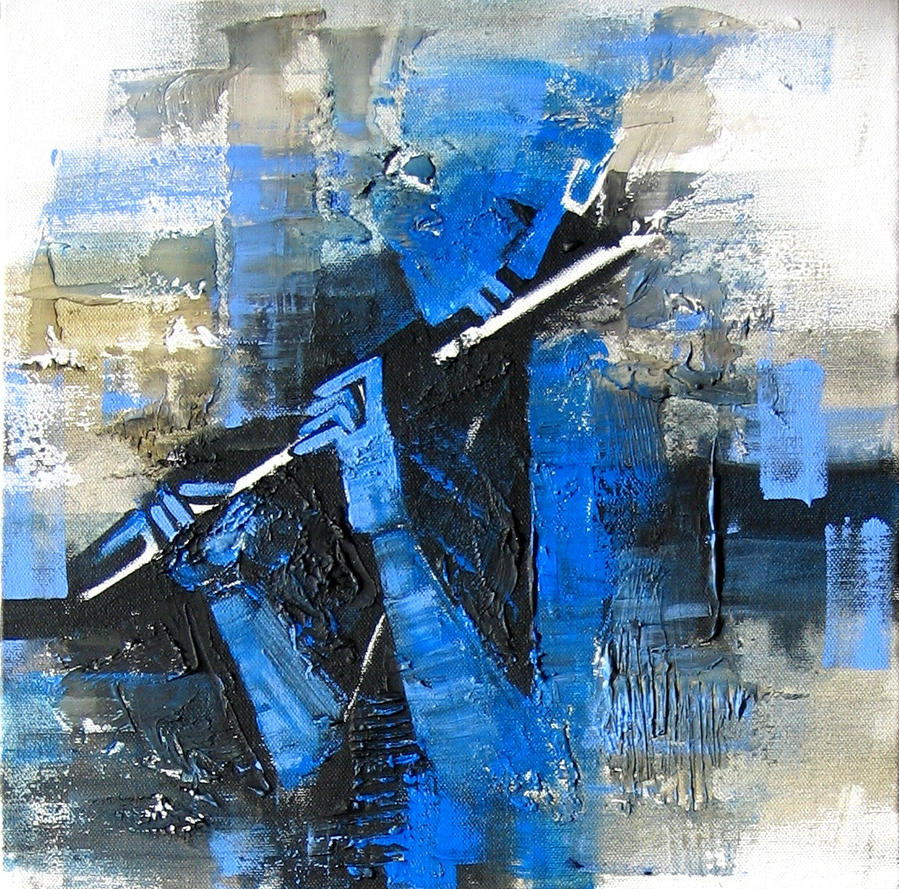
Krishna is often depicted standing in a relaxed posture holding a flute to his lips. Think of Krishna as the pied piper of India, but it is lost souls he calls to himself.

I put my fingers in my ears
      to block the sound
            whenever Krishna gently plays His flute!

When you think about it, this opening line can be read in two different ways. On the surface, Rasakhan (speaking as Radha, the cowherd girl who loves Krishna) seems to be petulantly blocking out the music of Krishna’s flute, not wanting to come when called. Of course, even this implies that the Lord’s music is so enchanting that the only way not to be drawn by it is to try to block it out. This hints that we are already hooked by the call of God, that union is inevitable, and we can only temporarily put it off.

But there is another, esoteric way to read this, as well. The flute of Krishna is the quiet tone heard deep within the base of the skull when we sit in silent, devoted meditation and prayer. It is this whisper in the inner ear that draws us to deepest union with the Eternal. Understood this way, Rasakhan could actually be describing a yogic technique of blocking out sound and quieting the external senses in order to better hear Krishna’s call within.

Declares Raskhan,
      “It happens when enchanter Mohan
            climbs to the rooftop
                  to call His cows.

We hear the flute when Mohan, another name for Krishna, climbs to the rooftop. In the language of yoga, this “rooftop” can be understood as a reference to the skull in general or, more specifically, the crown chakra.

“O, friend! Having glimpsed His smile,
      I cannot…
            I cannot…
                  I will not
                        control my love.”

I love those lines! That’s the passion felt by a true lover of God! “I cannot… I cannot… I will not control my love.”

=

Website Fixes

The reason there was no poem email last week was that I was focused on fixing some technical issues with the Poetry Chaikhana website. It turned out to be a more challenging undertaking than I first imagined, but everything should be running smoothly once again.


Recommended Books: Rasakhan

Treasure House of Love: Poems of Rasakhan


Rasakhan

India (1534? – 1619?) Timeline
Yoga / Hindu : Vaishnava (Krishna/Rama)
Muslim / Sufi

Continue Reading »

4 responses so far

Aug 09 2019

Lalla – Learning the scriptures is easy

Published by under Poetry

Learning the scriptures is easy
by Lalla

English version by Ivan M. Granger

Learning the scriptures is easy;
but living them, that’s hard.
Far easier to read words on a page
than to seek the living heart of things.


Fumbling through the fog of study,
stumbling, I lost my last words.
      — And my vision cleared.
      Oh the sight that met me then!

— from The Longing in Between: Sacred Poetry from Around the World (A Poetry Chaikhana Anthology), Edited by Ivan M. Granger

It has been a heartrending week if you follow the news. Here in the US, we had two mass shootings in a row last weekend perpetrated by racist right-wing extremists. The governmental response has been one of dogged inaction, despite huge support among the population for reinstating the assault weapons ban.

To heighten the sense of cruelty this week, there have also been a series of brutal raids on immigrant families by ICE in several US states.

I tend to feel these public traumas in very personal, physical ways. More than once I have woken up in the middle of the night flooded with a nameless agitated energy just hours before one of these events. It happened to me on the morning of 9/11. It has happened with several previous mass shootings. Needless to say, it has been a restless week.

I tend to see public violence like these events as dark rituals. They evoke darkness in the cultural consciousness, summoning fear in most and vicious exhilaration in a few. Each of these public rituals of violence and cruelty makes similar actions more conceivable, as if a doorway is being forced opened. The way to respond is not through fear but through engaged compassion. Feeling compassion in the midst of trauma, feeling anything in the midst of trauma, can be excruciating at first and requires immense courage — but it is the way of life, to keep life flowing within us and within the world. Preventing the heart from shutting down is just the first step. Our compassion must be engaged. It must be active. The energy of compassion naturally wants to act, to move through us and reach out into the world in order to help, to heal, and to protect the vulnerable. As more and more people light up with this compassion and offer their hands in genuine service, that doorway to violence and cruelty is again closed.

I have been talking about American events, but let’s not overlook the ratchetting up of tensions between India and Pakistan over Kashmir, which is perhaps the most concerning on the global stage. While the two nations have been skirmishing over the region since Partition, a genuine war between the two would be catastrophic, not just for them but for the planet.

I thought some words of clarity and wisdom from the great Kashmiri poet-saint Lalla might help–

Learning the scriptures is easy;
but living them, that’s hard.

Too often people slip into the bad habit of fundamentalism, confusing the ability to quote scripture and rules with actually embodying that truth in their daily lives. Memorization and carefully controlled behavior doesn’t do the job. It keeps things safely in the intellect and then we never have to truly confront the heart’s urge to open.

But Lalla reminds us:

Far easier to read words on a page
than to seek the living heart of things.

Not only is it not easy to seek the deep reality, it’s messy. We are confronted by aspects of ourselves that are frightening and frightened, hidden even from our own awareness. History, hopes, angers, ambitions…

Each human life is far too rich and multi-layered to be truncated into the safe, neat, predefined stories we are told to live out. The human soul is not a cartoon, without depth or detail. No, a full spirituality incorporates all that we are. To be holy is to be whole — nothing left out. The map of the human soul is a topographical map, with mountains and valleys, and rivers of life everywhere. Until we’ve acknowledged that entire landscape, we only have an incomplete sense of all that we are, and all that humanity is — that’s when compassion collapses, the world appears fragmented, and the vision of the the living heart of things is lost in the cracks.

Fumbling through the fog of study,
stumbling, I lost my last words.

After learning the scriptures, Lalla has swept her mental space clean. Now that’s real work! Instead of just memorizing the words of scripture, she has become the blank page that effortlessly displays them.

— And my vision cleared.
Oh the sight that met me then!

Sending love out into the world in the form of awakening empathy and compassion and self-awareness… and the will to act in their service.


Recommended Books: Lalla

The Longing in Between: Sacred Poetry from Around the World (A Poetry Chaikhana Anthology) Women in Praise of the Sacred: 43 Centuries of Spiritual Poetry by Women Poetry for the Spirit: Poems of Universal Wisdom and Beauty This Dance of Bliss: Ecstatic Poetry from Around the World Naked Song
More Books >>


Lalla, Lalla poetry, Yoga / Hindu poetry Lalla

Kashmir (India/Pakistan) (14th Century) Timeline
Yoga / Hindu : Shaivite (Shiva)

Continue Reading »

3 responses so far

Aug 02 2019

Hsu Yun – Searching for the Dharma

Published by under Poetry

Searching for the Dharma
by Hsu Yun

You’ve traveled up ten thousand steps in search of the Dharma.
So many long days in the archives, copying, copying.
The gravity of the Tang and the profundity of the Sung
make heavy baggage.
Here! I’ve picked you a bunch of wildflowers.
Their meaning is the same
but they’re much easier to carry.


/ Image by Riki-Tiki-Myu /

Something I wrote a few years back, in the springtime…

Walking yesterday, the trees are shyly showing their green buds, returning color to the world. I turned a corner and was bathed in the honey scent of new plum blossoms. These are the true books of the Dharma.

The great masters don’t wear an academic scowl; a silly grin sits easy on their faces. Must be from so much study on such a Spring day…


Recommended Books: Hsu Yun

The Longing in Between: Sacred Poetry from Around the World (A Poetry Chaikhana Anthology) A Drifting Boat: Chinese Zen Poetry A Pictoral Biography of the Venerable Master Hsu Yun Empty Cloud: The Autobiography of Chinese Zen Master, Hsu Yun


Hsu Yun, Hsu Yun poetry, Buddhist poetry Hsu Yun

China (1839 – 1959) Timeline
Buddhist : Zen / Chan

Continue Reading »

5 responses so far

Jul 27 2019

Fakhruddin Iraqi – Every word of every tongue

Published by under Poetry

Every word of every tongue
by Fakhruddin Iraqi

English version by Unknown

Every word of every tongue is
Love telling a story to her own ears.
Every thought in every mind,
She whispers a secret to her own Self.
Every vision in every eye,
She shows her beauty to her own sight.
Every smile on every face,
She reveals her own joy for herself to enjoy.


Love courses through everything,
No, Love is everything.
How can you say, there is no love,
when nothing but Love exists?
All that you see has appeared because of Love.
All shines from Love,
All pulses with Love,
All flows from Love–
No, once again, all IS Love!


/ Image by Edward Zulawski /

Every word of every tongue is
Love telling a story to her own ears.

I love this opening statement. It reminds me of an insight that completely overtook me during a period of intense spiritual practice several years ago. I summed it up this way–

Don’t take your joys and suffering personally.
We are — all of us — stories
      told by God
      to himself
      to illuminate himself.

We think we are… something. We imagine we exist as solid beings with supremely important events that happen to us. And, on one level, that is perfectly true. But if that’s the entire reality we imagine for ourselves, we’ve missed a deeper — and truer — reality, which is that we are an insubstantial play of awareness that flows through the universe. Not separate awareness-es, but a single flowing awareness that permeates everything. And that awareness expresses itself through movement and interaction that form what we might call stories. These stories contribute to universal self-illumination. Sometimes those stories are celebratory. Sometimes they are heartbreakingly tragic. But, when we stop identifying with the unfolding events, when we stop taking them personally but engage with a sense of presence and an open heart, we witness a surprising throughline of… joy, delight and, as Iraqi states, Love. Utter, all-embracing love.

(Notice that Iraqi refers to this Love as “she,” “her,” feminine language we too often miss out on in our descriptions of the divine — my own quote above, included. It should be obvious to all serious spiritual seekers that the Eternal is not defined by gender, but the limitations of language tend to require genderizing. When we restrict ourselves exclusively to male references to God, however, we have blinded ourselves to half of the divine reality. A part of the spirit becomes starved. On a societal level, suppression of women becomes conceivable, since men are seen as god-like while women are not. Qualities commonly associated with the feminine principle are repressed or regarded as useless, qualities like compassion, empathy, kindness, community, service. Not only do we need more prominent women spiritual leaders, we need to restore the feminine in our language of God. Iraqi’s meditation here is one of many contributions toward restoring that balance.)

Every thought in every mind,
She whispers a secret to her own Self.

Every vision in every eye,
She shows her beauty to her own sight.


Every smile on every face,
She reveals her own joy for herself to enjoy.

To the mystic in communion there is a sense of the universe as being comprised not of individuals engaged in individual actions, but of one Being engaged in internal interplay — but with an countless variety of individual points-of-view.

Love courses through everything,
No, Love is everything.

This, I think, is the heart of Iraqi’s insight. Too often we feel that the universe is loveless or that we ourselves struggle to feel love. But love in the sense that Iraqi uses, divine love, is not a feeling that comes and goes like an emotion. Love is not something we can be bereft of.

How can you say, there is no love,
when nothing but Love exists?

When we look deeply, we find that love is the foundational matter, the stuff we are all made of and exist in.

In our spiritual strivings we may cultivate a vision of a divine love that quietly touches everyone and everything. That is a basically true description, but if we want to be more precise, we can’t say that love touches or runs through everything, because that suggests that this divine essence is something separate and foreign. Everything is an expression of this divine Love presence. This love does not actually surround us or fill us. In the most real sense, it is us. We are it. Everything is.

Everything we think of as existence, all the seemingly separate beings and countless objects, is really a game of appearances upon the surface of this ocean of being that is love.

All that you see has appeared because of Love

Let me emphasize that this is not merely the conceptual theorizing of philosophers or theologians, it is directly perceived in the deepest states of communion. Love is. And it is the fundamental fact of existence. Mystics feel this love as a profound, joyful interconnection with all things. The immense compassion that results is actually a form of self-awareness, for we all exist within the same shared being. Love is perceived in every cell and by all the senses. The tongue tastes it as a heavenly sweetness. The eye sees it as a golden-white ocean of light (“All shines from Love”). And the heart blooms like a summer rose.

All flows from Love–
No, once again, all IS Love!

Have a beautiful day!


Recommended Books: Fakhruddin Iraqi

Poetry for the Spirit: Poems of Universal Wisdom and Beauty The Drunken Universe: An Anthology of Persian Sufi Poetry Fakhruddin Iraqi: Divine Flashes (Classics of Western Spirituality) Love’s Alchemy: Poems from the Sufi Tradition


Fakhruddin Iraqi

Iran/Persia/India/Turkey (? – 1289) Timeline
Muslim / Sufi

Continue Reading »

7 responses so far

Jul 21 2019

Mechthild of Magdeburg – A fish cannot drown in water

Published by under Poetry

A fish cannot drown in water
by Mechthild of Magdeburg

English version by Jane Hirshfield

A fish cannot drown in water,
A bird does not fall in air.
In the fire of creation,
God doesn’t vanish:
The fire brightens.
Each creature God made
must live in its own true nature;
How could I resist my nature,
That lives for oneness with God?

— from The Enlightened Heart: An Anthology of Sacred Poetry, by Stephen Mitchell


/ Image by kopita /

I missed sending a poem last week. I have been especially busy with my day job. I am actively editing a new book which Poetry Chaikhana will publish soon (and thinking a lot about haiku and enlightened awareness). And there was even a question for several weeks as to whether we would be moving. Life has been full! But when I go for more than a week without connecting with the Poetry Chaikhana community I feel I am missing something essential. I refer to the Poetry Chaikhana as a community because that’s what you are to me — a community, my community. Collectively, you are my home. Is that an odd thing to say? I have had the most wonderful correspondence with several of you. With others we share the occasional short, friendly note sent back and forth. But it’s not entirely about communication on that level. Even with those of you who quietly receive my poem emails without direct correspondence, I feel a connection, a shared exchange. I find nourishment in my time with all of you. I feel something vital and meaningful, a special energy shared in all directions through these poem emails and blog posts. I hope you feel it too.

I didn’t want to wait until the end of the new week to reconnect, so here’s a Monday poem…

A fish cannot drown in water,
A bird does not fall in air.

Variations on this metaphor are used in every culture. It’s simple, but such an important reminder. We are inherently in our element. Notice how some part of our mind instinctively comes to rest and uncoils at this reminder?

In the fire of creation,
God doesn’t vanish:
The fire brightens.

We have a tendency to be overwhelmed by the intensity of life… the “fire of creation.” In that overwhelm we often have a self-protective psychic reflex to wall out the things and experiences we label as painful. We create a mental separation and tell ourselves, “This is me. And that out there is the pain.” That’s natural, right? In extreme cases, maybe it’s even necessary — in the moment.

The problem with that in the long term is that, over time, as we live and experience more, we wall off more and more until we inhabit a fragmented psychic landscape. And, in that fragmentation, we lose the vision of unity. This is how God seems to “vanish” in the fire of creation. This is how we lose our connection with the fundamental ground of being and forget our true nature.

BUT- through spiritual practice, through profound self-acceptance, through fearless observation, those psychic walls come tumbling down. And then, all at once, the vision comes, and we are filled with its light!

Like a fish in water and a bird in the air, the Eternal lives and moves through all of creation. Material reality is the medium of expression for the Immaterial. It is That, and nothing less, which is the all-pervading animating warmth and life of all things. When we rediscover it, all of creation shines.

How could I resist my nature,
That lives for oneness with God?

So often spiritual seekers struggle with the question of how to find God, how to get to heaven, how to attain salvation, or enlightenment, or union… What are they really? Do they even have value in ‘real life’? But Mechthild reminds us that it is our very nature to seek that unity. The real key is to simply stop resisting our nature. Seekers strive, but saints get out of the way.


Recommended Books: Mechthild of Magdeburg

Women in Praise of the Sacred: 43 Centuries of Spiritual Poetry by Women Poetry for the Spirit: Poems of Universal Wisdom and Beauty The Enlightened Heart: An Anthology of Sacred Poetry German Mystical Writings: Hildegard of Bingen, Meister Eckhart, Jacob Boehme, and others The Mystic in Love: A Treasury of Mystical Poetry
More Books >>


Mechthild of Magdeburg, Mechthild of Magdeburg poetry, Christian poetry Mechthild of Magdeburg

Germany (1207 – 1297) Timeline
Christian : Catholic

Continue Reading »

5 responses so far

Jul 12 2019

Thomas Merton – Song for Nobody

Published by under Poetry

Song for Nobody
by Thomas Merton

A yellow flower
(Light and spirit)
Sings by itself
For nobody.

A golden spirit
(Light and emptiness)
Sings without a word
By itself.

Let no one touch this gentle sun
In whose dark eye
Someone is awake.

(No light, no gold, no name, no color
And no thought:
O, wide awake!)


A golden heaven
Sings by itself
A song to nobody.

— from Selected Poems of Thomas Merton, by Thomas Merton


/ Image by Jonathan Thorne /

Let us sing a song… for nobody.

A yellow flower
(Light and spirit)
Sings by itself
For nobody.

I imagine Thomas Merton on a morning walk through a dawn-lit field where nothing much is happening. Just some damp grasses and a few bright flowers waking to the sun. Those flowers stand there unnoticed, unseen until now, yet they carry such bold life, bright yellow petals radiant in the morning sun. They are an embodiment of light and spirit.

All of life, all of existence sings — but for whom?

The world dances with a golden light. Who is the real audience for this performance?

Perhaps the intended audience is God. Perhaps the flowers array themselves for their own private delight. But Merton says this song of light and spirit is for nobody because it is clearly not for him. He is utterly inconsequential to the scene. The flowers don’t care about him. They don’t adjust themselves to his presence. In fact, he is the one who is unnoticed, not the flowers.

(No light, no gold, no name, no color
And no thought:
O, wide awake!)

Enraptured by this moment of beauty, to which he is a non-entity, Merton disappears. Thought ceases, the mind quiets and brings to a halt its endless naming and categorizing. There is just stillness and the moment witnessed. That is when the ecstatic moment of awakening occurs — O, wide awake!

A golden heaven
Sings by itself
A song to nobody.

In this state of no-mind and no-self, we, along with Merton, are somehow profoundly alive! Awake, we see the world, perhaps for the first time, as it truly is — a golden heaven. And that heaven sings all around us, all the time! For whom? For no one in particular. Life sings to life. Spirit sings because it is spirit. The nature of being is song and light and life. When we quiet the busy mind and drop our own self-importance, we too join in that living symphony.

Have a beautiful day!


Recommended Books: Thomas Merton

Selected Poems of Thomas Merton The Collected Poems of Thomas Merton A Thomas Merton Reader The Strange Islands: Poems by Thomas Merton Thomas Merton Monk & Poet: A Critical Study


Thomas Merton, Thomas Merton poetry, Christian poetry Thomas Merton

US (1915 – 1968) Timeline
Christian : Catholic

Continue Reading »

6 responses so far

Jul 03 2019

Kahlil Gibran – Giving

Published by under Poetry

Giving
by Kahlil Gibran

You often say, “I would give, but only to the deserving.”
The trees in your orchard say not so, nor the flocks in your pasture.
They give that they may live, for to withhold is to perish.
Surely he who is worthy to receive his days and his nights, is worthy of all else from you.
And he who has deserved to drink from the ocean of life deserves to fill his cup from your little stream.
And what desert greater shall there be, than that which lies in the courage and the confidence, nay the charity, of receiving?
And who are you that men should rend their bosom and unveil their pride, that you may see their wealth naked and their pride unabashed?
See first that you yourself deserve to be a giver, and an instrument of giving.
For in truth it is life that gives unto life — while you, who deem yourself a giver, are but a witness.

— from The Prophet, by Kahlil Gibran


/ Image by Cristian Bernal /

This week I have been thinking about the suffering and cruelty embodied by the immigrant detention camps along the southern US border. I found myself turning to this poem by Gibran, himself an immigrant to the the US…

Whom do we help? To whom do we give? Which people do we choose to care for and consider part of our community?

It seems a reasonable response to say, “I would give, but only to the deserving.” The problem with such a reasonable approach is that reason, for all its usefulness, is stuck in the head. The questions of giving and connection are questions for the heart, not the head. And the heart knows what the head does not:

They give that they may live, for to withhold is to perish.

We don’t give to help the deserving. Everyone is deserving. And, ultimately, we don’t give to help those in need. We give to help ourselves, because giving is essential to our nature, while non-giving is a form of death.

When we work deeply with service and giving as part of our spiritual path, we begin to understand that the alleviation of want and the sharing of resources is not enough. That surface approach is usually a sign of ego’s touch, a way to crown oneself as the giver. We haven’t yet discovered what it means to be worthy to give. Seen clearly, there is no personal merit in giving. It is not about “karma points” or buying our way into heaven. Giving is our nature. Giving is who we are. It is what we do when we are true to ourselves. Giving and caring and help are the natural flow of life, and we are part of that life. When we give we have simply ceased to constrict our own spirit… and then our hearts untighten and we can witness life flowing through us all.

For in truth it is life that gives unto life — while you, who deem yourself a giver, are but a witness.

We should daily ask ourselves, “What gift can I give?”


Recommended Books: Kahlil Gibran

The Prophet The Beloved: Reflections on the Path of the Heart Broken Wings Jesus the Son of Man Kahlil Gibran: His Life & World
More Books >>


Kahlil Gibran, Kahlil Gibran poetry, Christian poetry Kahlil Gibran

Lebanon/US (1883 – 1931) Timeline
Christian
Secular or Eclectic

Continue Reading »

2 responses so far

Jun 28 2019

Rumi – No One Here but Him

Published by under Poetry

No One Here but Him
by Mevlana Jelaluddin Rumi

English version by Andrew Harvey

Watching my hand; He is moving it.
Hearing my voice; He is speaking…
Walking from room to room —
No one here but Him.

— from Perfume of the Desert: Inspirations from Sufi Wisdom, by Andrew Harvey / Eryk Hanut


/ Image by Ricardo Molina Peña /

Isn’t this a lovely snippet of a poem by the great Jelaluddin Rumi? But he’s not just making a pretty, pious statement about God being the motivating force behind things.

Watching my hand; He is moving it.
Hearing my voice; He is speaking…

Mystics often say odd things like this. It makes one ask: Do they refuse to take responsibility for their actions? Do they take no action at all?

Sufis speak of an aspect of the personality called the nafs. In yoga, it is called the ahamkara. In modern English, we tend to translate this as the ego. This is the little self, the self-focused self, the self that endlessly proclaims, “I, me, mine.”

Typically we pass all action through the nafs. When I am moving my hand, the “I” moving it is the nafs. In doing so, every action subtly proclaims the doer as the center of existence. Every action great and small becomes a sort of self-hypnosis, returning us back to the chant of the nafs: “I-me-mine.”

The heart of mysticism and true spiritual communion — whatever your tradition — is to overcome this petty ruler of the awareness. When we can let go of the nafs, our sense of self expands immensely. And the heart too glows and opens. As the old fences of the self fall, everyone and everything becomes a part of us in a very real way. Or, rather, we recognize that we have always been so, and it is as if our eyes have finally opened.

Now, imagine taking action from this state. Your hand still moves, but it is no longer moved by “I-me-mine.” There is an elegant stillness and spaciousness behind that movement, with a surprising capacity to affect transformation.

But who is doing this action if not the nafs? It is the larger Self, that aspect of us that does not separate itself from the Whole Reality. And despite the once constant protests of the nafs, was there ever anything other than that Wholeness anyway? Best check to be sure…

Walking from room to room —
No one here but Him.


Recommended Books: Mevlana Jelaluddin Rumi

The Longing in Between: Sacred Poetry from Around the World (A Poetry Chaikhana Anthology) Poetry for the Spirit: Poems of Universal Wisdom and Beauty This Dance of Bliss: Ecstatic Poetry from Around the World Music of a Distant Drum: Classical Arabic, Persian, Turkish & Hebrew Poems Perfume of the Desert: Inspirations from Sufi Wisdom
More Books >>


Mevlana Jelaluddin Rumi, Mevlana Jelaluddin Rumi poetry, Muslim / Sufi poetry Mevlana Jelaluddin Rumi

Afghanistan & Turkey (1207 – 1273) Timeline
Muslim / Sufi

Continue Reading »

One response so far

« Prev - Next »