Mar 13 2020
fullness
Yield
into fullness.
Mar 06 2020
i carry your heart with me
by e. e. cummings
i carry your heart with me(i carry it in
my heart)i am never without it(anywhere
i go you go,my dear;and whatever is done
by only me is your doing,my darling)
i fear
no fate(for you are my fate,my sweet)i want
no world(for beautiful you are my world,my true)
and it’s you are whatever a moon has always meant
and whatever a sun will always sing is you
here is the deepest secret nobody knows
(here is the root of the root and the bud of the bud
and the sky of the sky of a tree called life;which grows
higher than soul can hope or mind can hide)
and this is the wonder that’s keeping the stars apart
i carry your heart(i carry it in my heart)
 — from E.E. Cummings: Complete Poems 1904-1962, by e. e. cummings

/ Image by Florian L /
This poem grabbed my attention this morning, one of the most loved of e. e. cummings poems.
It is a love poem, but its language somehow elevates us beyond romantic sentiment.
I won’t say a lot today, just highlight a few of my favorite lines:
and it’s you are whatever a moon has always meant
and whatever a sun will always sing is you
…
here is the root of the root and the bud of the bud
and the sky of the sky of a tree called life
…
and this is the wonder that’s keeping the stars apart
…
and, most especially–
i carry your heart(i carry it in my heart)
Oh, and have a beautiful full moon weekend. It feels like an intense moon so go gentle on yourself and others. And maybe we’ll figure out “whatever a moon has always meant…”
Recommended Books: e. e. cummings
|
 |
 |
 |
|
| E.E. Cummings: Complete Poems 1904-1962 | 73 Poems | 1 x 1 [One Times One] | 50 Poems | 95 Poems |
| More Books >> | ||||
|
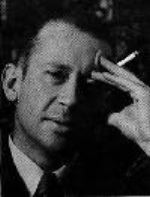
e. e. cummings
US (1894 – 1962) Timeline |
Feb 21 2020
O nobilissima viriditas
by Hildegard von Bingen
English version by Barbara Newman
Most noble
evergreen with your roots
in the sun:
you shine in the cloudless
sky of a sphere no earthly
eminence can grasp,
enfolded in the clasp
of ministries divine.
You blush like the dawn,
you burn like a flame
of the sun.
 — from Symphonia: A Critical Edition of the Symphonia armonie celstium revelationum, by Hildegard of Bingen / Translated by Barbara Newman

/ Image by joemacjr /
Every week or so I check the visitor statistics on the Poetry Chaikhana website to see which poets’ pages are the most visited. I regularly update the top ten on the Poetry Chaikhana home page, if you’re curious. Hildegard von Bingen is often one of the more popular poets on the site, but I realized it has been a while since I last selected one of her poems for an email. It also occurs to me that I have featured quite a few contemporary poets recently, and perhaps it is time to dip into the rich well of wisdom from our past. So something today by Hildegard von Bingen…
The evergreen tree is used by Hildegard von Bingen as a symbol of eternal life — it is always green and vibrant, even during winter, the season when the light withdraws, the season most associated with turning inwards, meditation and death. Within the Christian tradition, the evergreen is specifically a symbol of Christ, the one who overcomes death, the one who is the embodiment of light and eternal life. Christ is particularly associated with the tree based on prophetic associations of the messiah with a tree and, of course, because of his crucifixion (the cross being another representation of the tree).
So when Hildegard sings to the evergreen, she is singing to Christ, the Beloved, the Living One.
But what does Hildegard mean when she refers to the tree as having its “roots in the sun”? This is one of the more interesting lines to me. In the Western alchemical tradition, the seat of the body, the “root,” is sometimes associated with fire (in Yoga we would say the fiery Kundalini); and in alchemical engravings, we often find the the image of a sun at the body’s base. Hildegard von Bingen was apparently using the language of spiritual alchemy. This raises the fascinating question: Was Hildegard von Bingen, in addition to being a Catholic nun, also an initiate of secret esoteric traditions? Her work as a healer certainly could have introduced her to medical alchemy practiced at the time.
(An alternate way to read the roots in the sun metaphor is as a yogic image. In Yoga, the subtle energetic body is often described as a tree whose trunk is the subtle spine. Like this yogic tree, Hildegard’s evergreen is upside-down, with its roots in heaven, the radiant crown chakra, making its branches the energetic pathways of awareness that reach outward through the senses into the world. That reading, of course, raises even bigger questions…)
I love the description of the tree shining “in the cloudless / sky of a sphere no earthly / eminence can grasp…” It is as if she is describing a state of pure awareness. Not even a vapor or cloud of a thought exists there. It is a state beyond the control of any earthly power (or the grasping mind). In this space of radiance and life, there is nothing to hold onto — a vision of spacious presence.
This tree, Hildegard’s evergreen “shines,” it “blushes like the dawn.” Hildegard is clearly drawing a parallel with the burning bush Moses experienced in his direct encounter with God. If the burning bush witnessed by Moses is the same as Hildegard’s burning evergreen, and that tree is understood to be the structure of the subtle spiritual body in both cases… well, we, as mystics, have some interesting avenues to explore…
Recommended Books: Hildegard von Bingen

|
Hildegard von Bingen |
Feb 21 2020
There is something fierce
in every saint and sage.
How else could they free love
from its cage?
Feb 19 2020
Priceless Gifts
by Anna Swir
English version by Czeslaw Milosz and Leonard Nathan
An empty day without events.
And that is why
it grew immense
as space. And suddenly
happiness of being
entered me.
I heard
in my heartbeat
the birth of time
and each instant of life
one after the other
came rushing in
like priceless gifts.
 — from The Poetry of Impermanence, Mindfulness, and Joy, Edited by John Brehm

/ Image by Roman Iakoubtchik /
I think I’ll be quiet today and let this poem just hover there. Enjoy!
 |
 |
|
||
| Talking to My Body | Dancing with Joy: 99 Poems | The Poetry of Impermanence, Mindfulness, and Joy | ||

|
Anna Swir
Poland (1909 – 1984) Timeline |
Feb 19 2020
The heart, to be whole,
must break a thousand times
and be ready to break again.
Feb 14 2020
When he quickens all things (from The Gitagovinda)
by Jayadeva
English version by Barbara Stoler Miller
When he quickens all things
To create bliss in the world,
His soft black sinuous lotus limbs
Begin the festival of love
And beautiful cowherd girls wildly
Wind him in their bodies.
Friend, in spring young Hari plays
Like erotic mood incarnate.
 — from Love Song of the Dark Lord: Jayadeva’s Gitagovinda, Translated by Barbara Stoler Miller

/ Image by Infinite Eyes /
Today is Valentine’s Day, the day for lovers. But, you know, there is more than one way to be a lover.
When he quickens all things
To create bliss in the world,
His soft black sinuous lotus limbs
Begin the festival of love…
This excerpt from Jayadeva’s Gitagovinda strikes a surprisingly erotic note. Is it “spiritual” at all? Is it really just love poetry? The answer is that it is both.
The Gitagovinda is quite passionately erotic, but it is also considered a highly spiritual work, sung daily in many Indian temples dedicated to Krishna.
For many in the Krishna bhakti tradition, the Gitagovinda is read with a reverence similar to the Song of Songs in the Judeo-Christian tradition.
Through song, it tells of the love play, separation, and final union between Krishna (Hari) and the cowherdess Radha.
On an esoteric level, Radha is understood to be the individual soul that feels abandoned by God (Krishna/Hari) who, in turn, loves all souls (and is therefore accused of infidelity by Radha). But Radha finally overcomes her hurt and rejoins her lover in passionate union.
Using the hugely magnetic power of desire, this bhakti classic describes a pathway to return to Oneness with the Divine.
As a result, we can read this work as both an earthy, erotically charged song of love, and just as honestly it speaks deep truths about the journey of the soul through longing and integration to union and enlightenment. And it reminds us of the importance of intense passion, that it is meant to be fuel for awakening.
Whether or not your Valentine’s Day is a day of romance, I hope you find time for a secret passionate embrace with the Eternal!
 |
|
|||
| Songs of the Saints from the Adi Granth | Love Song of the Dark Lord: Jayadeva’s Gitagovinda | |||

|
Jayadeva
India (12th Century) Timeline |
Feb 11 2020
I am nobody
by Richard Wright
I am nobody:
A red sinking autumn sun
Took my name away
 — from Haiku Enlightenment: New Expanded Edition, by Gabriel Rosenstock

/ Image by Philip Male /
The great African-American writer, Richard Wright, is best known for his novels Native Son and Black Boy, but less well-known is that late in his life, while living in self-exile in Paris, he wrote thousands of haiku.
This is one I keep re-reading since I first discovered it as I was editing Gabriel Rosenstock’s Haiku Enlightenment.
This haiku resonates on so many levels.
I am nobody
We start with negation. The author is not there. We ourselves as readers are not there. I imagine an outline where a person might have stood, a shadow, a silhouette. Awareness is there, but no self.
A red sinking autumn sun
Then we have the massive glowing presence of the red sinking sun. We go from negation to immensity. The vastness of that vision has a gravitational pull to it. It has grabbed us and carried us away. It…
Took my name away
And that’s what it is, this state of being nobody. The witness — the author, the reader — is still there on some essential level, but the “name” has disappeared. That self-referential loop within the mind has stopped its ceaseless spinning and we have become a thing undefined. In that quiet, selfless state, we stand in open mystery with great beauty open before us.
=
I write all this, obviously not during the autumn, but looking out the window at a blanket of snow glistening in bright morning sunlight. Of course, anything can be that autumn sun for us, a mountain, a symphony, a thought. It’s not so much a matter of putting ourselves in the presence of the right thing, so much as being present ourselves, open, and ready to be swept away into silence.
=
…I have been reminded by a reader that it is important to remember that Richard Wright, as a black man who lived his later years in France in rejection of institutionalized American racism may also be making a comment about the experience of African Americans in the US down to literally having their names taken from them. I really appreciate that reminder about perspective. A good poem can be read in multiple ways at the same time.
Recommended Books: Richard Wright
|
 |
|||
| Haiku Enlightenment: New Expanded Edition | Haiku: The Last Poetry of Richard Wright | |||

|
Richard Wright
US (1908 – 1960) Timeline |
Feb 05 2020
Thief of hearts
by Ivan M. Granger
Thief of hearts,
you have ransacked
this beggar’s hut,
left me
nothing.
All I see
now
is the print
of your pilfering hand
everywhere.
 — from Real Thirst: Poetry of the Spiritual Journey, by Ivan M. Granger

/ Image by notsogoodphotography /
It has been a while since I featured one of my own poems. Here is one for you today in homage to that “thief of hearts,” who is, of course, the Beloved, God.
Let’s face it, from the ego’s point-of-view, the relationship with the Divine is a problematic one. What the heart recognizes as liberation, the ego sees as theft. It’s really very funny… when we’re not tormented by the spiritual dilemma, that is.
All that the ego claims as its own slips from its grip. Control and possession define the ego. So what is it to do when the master thief breaks into the awareness and reveals everything to be the filmy stuff of dreams and light?
In that ultimate moment, however, the emerging bliss is so all-pervasive that even the drowning ego laughs with its last gasp.
Something I thought I’d point out about the poem’s structure: The poem itself is a pair of thieving hands. It has two groups of five lines, suggesting two hands with five fingers each.
Also, notice that the lines “left me / nothing” are intentionally ambiguous. They could be saying that the thief of hearts has left me with nothing — having taken everything — or perhaps it is saying the thief has left me as nothing — without identity or sense of ego.
The line breaks for “All I see / now” leads the unconscious mind to read several layers of meaning into the lines. Some part of the awareness will read that first line as a complete statement of its own: “I see all.” To follow with the single word “now” snaps the awareness into the present moment. When one sees all, one is fully present, now. Or, when one sees, all is in the present moment.
In this supremely full moment, the “pilfering hand” has removed everything. The world normally perceived as a scattered collection of disconnected people and objects disappears. But — and here’s another secret — that hand secretly gives as it takes. The “print” of that hand leaves us, instead, within a magical universe filled with immensity and life and a giddy sense of being that flows everywhere.
===
Too much explanation? Maybe we should just let the poem itself do its work…
Recommended Books: Ivan M. Granger

|
Ivan M. Granger
US (1969 – ) |
Feb 05 2020
Words aren’t inherently meaningful;
they are the ornaments
that accompany the flow of awareness.
Jan 24 2020
On many an idle day have I grieved over lost time
by Rabindranath Tagore
English version by Rabindranath Tagore
On many an idle day have I grieved over lost time. But it is never lost, my lord. Thou hast taken every moment of my life in thine own hands.
Hidden in the heart of things thou art nourishing seeds into sprouts, buds into blossoms, and ripening flowers into fruitfulness.
I was tired and sleeping on my idle bed and imagined all work had ceased. In the morning I woke up and found my garden full with wonders of flowers.
 — from The Longing in Between: Sacred Poetry from Around the World (A Poetry Chaikhana Anthology), Edited by Ivan M. Granger

/ Image by James Petts /
Something for self-healing and inner nurturing today…
This chapter from Tagore’s Gitanjali, like most of the book, is addressed directly to God as a sort of a prayer. But Tagore is not asking for something. He is acknowledging a surprising truth, he is proclaiming to God the dawning realization that growth is taking place in his “garden” of spiritual awareness always, secretly, quietly, even when he despairs of his own efforts. He “imagined all work had ceased” — he felt his own spiritual work had come to nothing and his deflated spirit temporarily gives up — but he wakes up surprised to find his “garden full with wonders of flowers.” This happens all the time for those striving spiritually, but why?
The metaphor of a garden to represent one’s spiritual awareness is an ancient one used throughout the world, and it is perfect for what is being said here. Think about a garden for a moment. What is it? First, it is a place where things grow, a place of life. It is the opposite of death, which is the state of nonspirituality. The plants of the garden are rooted in the earth, yet they reach upward toward the light of the sun. On an even subtler level, a garden is a place of nourishment and of beauty. That which grows in our spiritual gardens feeds us through its “fruitfulness,” and it brings beauty, the awareness of harmony to our consciousness. The flowers of the garden represent the spiritual qualities that have opened within us, which in turn cause us to open to the Divine. The flowers are within us, and we are the flowers. From the yogic point of view, the flowers sometimes represent the chakras that open during spiritual awakening. Also, a garden is a place of contemplation and rest. It is a place where we give ourselves permission to simply be, to settle into the present moment. The garden represents the soul at rest in the living presence of the Divine.
But, returning to this verse from the Gitanjali, why is a garden such a perfect metaphor here? Because every plant of the garden grows with a life of its own. The gardener, the spiritual aspirant, may need to till the ground and plant the seeds, water them regularly, keep them free from encroaching weeds — but for all that work, the gardener does not actually make the seeds grow and flower. The gardener just prepares the environment, but it is the divine spark of life “hidden in the heart of all things” that nourishes “seeds into sprouts, buds into blossoms, and ripening flowers into fruitfulness.”
Tagore is surprised to realize that his only job is to prepare the garden bed and keep it ready, but the growth of the seeds is effortless, for the seeds are alive with the vitality of God. Even when he can conceive of no further effort, the seeds still grow. The seeds WANT to grow. And they will grow. It is their nature to grow once given the right environment. All we have to do is prepare ourselves, make ourselves ready. The spiritual growth will happen of its own accord. Then one morning we wake up surrounded by “wonders of flowers!”
Recommended Books: Rabindranath Tagore
|
 |
 |
|
|
| The Longing in Between: Sacred Poetry from Around the World (A Poetry Chaikhana Anthology) | Gitanjali | The Lover of God | The Fugitive | Lover’s Gift and Crossing |
| More Books >> | ||||
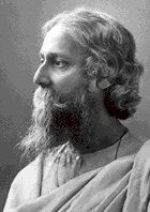
|
Rabindranath Tagore
India (1861 – 1941) Timeline |
Jan 24 2020
We must be open-minded, open-hearted,
curious, courageous, quiet, poised…
and humble enough to not notice
our own sweet melting.
Jan 21 2020
Rise early at dawn, when our storytelling begins
by Abu-Said Abil-Kheir
English version by Vraje Abramian
Rise early at dawn, when our storytelling begins.
In the dead of the night, when all other doors are locked,
the door for the Lovers to enter opens.
Be wide awake in the dark when Lovers
begin fluttering around the Beloved’s window,
like homing pigeons arriving with flaming bodies.
 — from Nobody, Son of Nobody: Poems of Shaikh Abu-Saeed Abil-Kheir, Translated by Vraje Abramian

/ Image by legends2k /
As I get older I more easily rise at dawn. Sometimes I am trying to sleep in, but the dawn insists. Reading these words by Abu-Said Abil-Kheir, however, makes me want to wake up full of energy in the middle of the night. That’s when our storytelling begins.
Actually, let’s not hurry past that reference to storytelling. It’s in the darkness that we tell stories. In a world before electricity or gas lights, nighttime is the end of activity. So we tell stories. Nighttime is when we normally sleep, and dream.
But most of us do this rather passively. We listen to another person’s story. Or in the modern world, perhaps we watch television. We go to sleep, we dream, we wake up, we forget.
Not so for the seeker. The stories we tell ourselves are the stories of the soul, the way the self understands itself. In dreams and stories we reformulate our perception of the world, deepen it. And in doing so the psyche becomes more dynamic and alive to its own possibilities.
Most people imagine life shuts down at night, but a lover knows better. When the rest of the world rests, the lover finds those sweet illicit moments with the Beloved. Even if it’s just a glimpse, a smile through the window’s lattice, that is what the lover lives for. We light up, we catch fire in the night.
Recommended Books: Abu-Said Abil-Kheir
|
Abu-Said Abil-Kheir
Turkmenistan (967 – 1049) Timeline |