Dec 19 2025

Issa – Buddha’s body

Buddha’s body
by Kobayashi Issa

English version by David G. Lanoue

Buddha’s body
accepts it…
winter rain

— from The Longing in Between: Sacred Poetry from Around the World (A Poetry Chaikhana Anthology), Edited by Ivan M. Granger


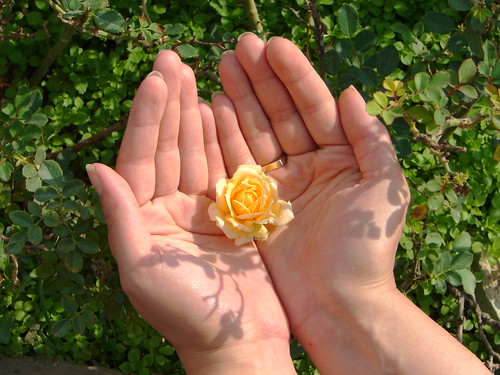
/ Image by piddy77 /

On this winter day with rain falling outside, I found myself speaking this poem aloud with appreciation…

I could just live on the nourishment of haiku every day. A few lines, so short they’re almost incoherent… the way they teeter on the edge of meaning and occasionally slip into the void… Something about that desperate line dares the mind to burst open with insight.

This haiku, for example — I don’t read it as being about enduring uncomfortable weather. There is more than that here. There is acceptance, a quiet contentment, even a welcoming. It is about the recognition of the rightness of things in their season. And that touches the eternal. The Buddha is simply here, always here, always present, and we feel the winter rain is simply passing by for its short moment. The rain touches the Buddha’s face, and then moves on. So too the wind, the sun, the rising of grasses, the blooming of flowers. They come. The Buddha sits, smiles, accepts. And the world moves along again in its cycles of life, becoming and unbecoming, while the Buddha remains.

And what is the Buddha’s body but us, our very nature? The body arises, the seasons of the self blossom and turn inward again, and through it all there is a still point within us quietly watching, and accepting, and smiling.

=

I recently recorded a dialog with Dr. Laurel Trujillo of The Yoga Hour podcast . We had a lovely conversation about poetry, the changing of the seasons — turning inward in the winter, the rediscovering of light and life within — and the way different spiritual traditions speak similarly of love, light and renewal. A sweet way to wrap up the year.

May we all discover light even in dark times!


Recommended Books: Kobayashi Issa

The Longing in Between: Sacred Poetry from Around the World (A Poetry Chaikhana Anthology) This Dance of Bliss: Ecstatic Poetry from Around the World Zen Poetry: Let the Spring Breeze Enter The Enlightened Heart: An Anthology of Sacred Poetry Haiku Enlightenment: New Expanded Edition
More Books >>


Kobayashi Issa, Kobayashi Issa poetry, Buddhist poetry Kobayashi Issa

Japan (1763 – 1828) Timeline
Buddhist : Zen / Chan

Continue Reading »

One response so far

Dec 19 2025

When that door opens

When that door opens,
does it really matter
how long you waited?

No responses yet

Dec 12 2025

Sarmad – My heart searched for your fragrance

Published by under Poetry

My heart searched for your fragrance
by Sarmad

English version by Isaac A. Ezekiel

My heart searched for your fragrance
      in the breeze moving at dawn,
      my eyes searched for the flower of your face
      in the garden of creation.
Neither could lead me to your abode —
      contemplation alone showed me the way.

— from Sarmad: Martyr to Love Divine, by Isaac A. Ezekiel


/ Image by Huy Binh /

Reading this lovely poem by Sarmad, I can honestly embrace either side of its point. He is saying that, no matter how beautiful and uplifting the world around us may be, the Eternal is only found within the inner space of deep contemplation. And that is such an important reminder for the human world that is perpetually hooked by the senses and the desire to comprehend everything in terms of material reality. Even the purest appreciation of the most stunning panorama does not hold God. Always, always, the Eternal is found within.

And yet– physical reality, especially the natural world in all its life and beauty, reveals something to us of the deeper Reality. In the sunrise, in a flower, we do not see the face of God… but, when we learn to look, we can see there a suggestion of a smile. Spirit playfully hides just behind the physical. Grasping at the physical world leads to failure and blindness, but recognizing its beauty can lead us to inner stillness and true seeing.

So, should we agree with Sarmad, or disagree? Both, I think.


Recommended Books: Sarmad

The Longing in Between: Sacred Poetry from Around the World (A Poetry Chaikhana Anthology) Real Thirst: Poetry of the Spiritual Journey The Drunken Universe: An Anthology of Persian Sufi Poetry Sarmad: Martyr to Love Divine Sarmad: Jewish Saint of India
More Books >>


Sarmad

Iran/Persia & India (? – 1659) Timeline
Muslim / Sufi
Jewish

Continue Reading »

One response so far

Dec 12 2025

what you are

Meditation is not what you do,
it is what you are.

No responses yet

Dec 05 2025

Pablo Neruda – The Poet’s Obligation

Published by under Poetry

The Poet’s Obligation
by Pablo Neruda

English version by Alistair Reed

To whoever is not listening to the sea
this Friday morning, to whoever is cooped up
in house or office, factory or woman
or street or mine or harsh prison cell:
to him I come, and, without speaking or looking,
I arrive and open the door of his prison,
and a vibration starts up, vague and insistent,
a great fragment of thunder sets in motion
the rumble of the planet and the foam,
the raucous rivers of the ocean flood,
the star vibrates swiftly in its corona,
and the sea is beating, dying and continuing.

So, drawn on by my destiny,
I ceaselessly must listen to and keep
the sea’s lamenting in my awareness,
I must feel the crash of the hard water
and gather it up in a perpetual cup
so that, wherever those in prison may be,
wherever they suffer the autumn’s castigation,
I may be there with an errant wave,
I may move, passing through windows,
and hearing me, eyes will glance upward
saying, “How can I reach the sea?”
And I shall broadcast, saying nothing,
the starry echoes of the wave,
a breaking up of foam and of quicksand,
a rustling of salt withdrawing,
the grey cry of sea-birds on the coast.

So, through me, freedom and the sea
will make their answer to the shuttered heart.

— from On the Blue Shore of Silence: Poems of the Sea, by Pablo Neruda / Translated by Alastair Reid


/ Image by Nina Stawski /

The poet is telling us that it is time for a prison break!

Neruda is reminding us that poetry is an act of rebellion. The most binding chains are the hidden ones we forge ourselves. Poetry frees the mind and the heart. Poetry — and, by extension, all art — is a revolutionary act, a declaration of psychic freedom. More than a declaration, it is a remembrance, a recollection of the wider, untamed life that awaits us.

All freedoms we strive for in the troubled world around us must first be imagined and felt. Through poetry and art, we shift and reawaken. That is the real freedom regardless of outer circumstance. When enough people carry within themselves that inner freedom, how can it be stopped in the world?

So, through me, freedom and the sea
will make their answer to the shuttered heart.


Recommended Books: Pablo Neruda

The Book of Questions Neruda: Selected Poems On the Blue Shore of Silence: Poems of the Sea Pablo Neruda: Selected Poems Extravagaria: A Bilingual Edition
More Books >>


Pablo Neruda, Pablo Neruda poetry, Secular or Eclectic poetry Pablo Neruda

Chile (1904 – 1973) Timeline
Secular or Eclectic

More poetry by Pablo Neruda

2 responses so far

Dec 05 2025

a book and a building

A book and a building are not enough.
The human spirit needs cathedrals of trees,
towering mountains, and fields
of spring wildflowers as places of prayer.

No responses yet

Nov 20 2025

Mary Oliver – What I Have Learned So Far

Published by under Poetry

What I Have Learned So Far
by Mary Oliver

Meditation is old and honorable, so why should I
not sit, every morning of my life, on the hillside,
looking into the shining world? Because, properly
attended to, delight, as well as havoc, is suggestion.
Can one be passionate about the just, the
ideal, the sublime, and the holy, and yet commit
to no labor in its cause? I don’t think so.

All summations have a beginning, all effect has a
story, all kindness begins with the sown seed.
Thought buds toward radiance. The gospel of
light is the crossroads of — indolence, or action.

Be ignited, or be gone.

— from New and Selected Poems, by Mary Oliver


/ Image by Hamed Saber /

This, to me, is an interesting poem, the way it wrestles with that age-old question of spirituality: faith or works, jnana or karma… or, as she bluntly frames it, indolence or action.

Does the seeking of wisdom lead one into such an internalized state that one abandons the world to its confusion and suffering? Even when we awaken profound compassion within ourselves, is compassion enough without action to back it up? Ultimately the question boils down to, is enlightenment a good in and of itself, or does it only fulfill itself through service?

Different traditions and teachers give us different answers. Many teachers will say that trying to “do good” without first achieving some measure of inner clarity cannot achieve its full potential. Some even say that spiritual opening has a natural resonance; the enlightened are like radio transmitters, apparently doing little, apparently silent, they broadcasting powerful waves into the world. There is even an argument that action, no matter how well intentioned, is empty and unstable without true insight, while there can be seeming inaction that shakes the universe.

Others say that spirituality and compassion without heartful action is anemic at best, that the physical and social world are themselves part of our spiritual landscape, that we must embody our spirituality on that level too. This criticism can go so far as to say that spirituality in a cave is easy, spirituality in the world is hard; that’s where we truly prove our awakening love. They argue that action always exists, even the avoidance of action is action. One must always seek to express the inner state with outer action. And for the spiritually minded, that action must be in the form of compassionate service to a struggling world.

Mary Oliver seems to finally favor the latter philosophy:

Can one be passionate about the just, the
ideal, the sublime, and the holy, and yet commit
to no labor in its cause? I don’t think so.

Me? I have a fiery nature, and I like a statement like Mary Oliver’s. I see too much passivity in good-hearted people, myself included sometimes.

But I don’t ultimately see a great conflict with any of these philosophies. The universe is a big universe, with endless pathways for the human spirit to travel. The more we unfetter our enlightened selves, the more we naturally embody the fullness of who we are.

For some, that resolves itself into a profound stillness that is outer as well as inner. And do they not ring out from their mountaintops and closets? Do we not, on some level, hear them and ring out a little more ourselves?

For others, stillness and love seeks a pathway of expression through action and service. The healing way they use their hands, the same two hands we all possess — doesn’t it make our own fingers itch for movement?


Recommended Books: Mary Oliver

New and Selected Poems Why I Wake Early Dream Work House of Light Thirst: Poems
More Books >>


Mary Oliver, Mary Oliver poetry, Secular or Eclectic poetry Mary Oliver

US (1935 – 2019) Timeline
Secular or Eclectic

Continue Reading »

No responses yet

Nov 20 2025

obsessed

People become violently obsessed
with rules and traditions and texts
only when they have lost the sense
of what they really point to.

No responses yet

Nov 14 2025

Denise Levertov – Primary Wonder

Published by under Poetry

Primary Wonder
by Denise Levertov

Days pass when I forget the mystery.
Problems insoluble and problems offering
their own ignored solutions
jostle for my attention, they crowd its antechamber
along with a host of diversions, my courtiers, wearing
their colored clothes; cap and bells.
And then
once more the quiet mystery
is present to me, the throng’s clamor
recedes: the mystery
that there is anything, anything at all,
let alone cosmos, joy, memory, everything,
rather than void: and that, O Lord,
Creator, Hallowed One, You still,
hour by hour sustain it.

— from Denise Levertov: Selected Poems, by Denise Levertov


/ Image by ryoung /

Days pass when I forget the mystery.
Problems insoluble and problems offering
their own ignored solutions…

We all wrestle with this, the demands of daily life, of work and family, all our plans and hopes and fears, the need to order everything every moment. In the midst of it all we struggle to remember that “quiet mystery.” Balancing a life in this world with that wide open wonder, it can feel like too much to achieve at times. The demands of the day sometimes demand our all. Yet it is the wonder and the mystery that fills our our lives and gives them meaning.

When “problems” fill the day, then those problems are the day’s worship. The most mundane and seemingly meaningless effort, when approached with a sense of service and a questing heart, becomes an act of beauty. And when we finally come exhausted to a quiet moment, we are ready to fall silent before the mystery. Too tired to maintain our pretenses, we rest in awe.

And then
once more the quiet mystery
is present to me…


Recommended Books: Denise Levertov

Denise Levertov: Selected Poems Poems of Denise Levertov: 1960-1967 Breathing the Water The Great Unknowing: Last Poems Candles in Babylon
More Books >>


Denise Levertov, Denise Levertov poetry, Secular or Eclectic poetry Denise Levertov

US (1923 – 1997) Timeline
Secular or Eclectic : Beat
Jewish

More poetry by Denise Levertov

One response so far

Nov 14 2025

act of seeing

The individual is really
a magical act of seeing
with no fixed eye.

No responses yet

Oct 31 2025

Ivan M. Granger – Medusa

Published by under Ivan's Story,Poetry

Medusa
by Ivan M. Granger

Medusa says –

I was wisdom
once,
black as night.

Now they call me:
      monster,
      gorgon,
      hideous-faced.

So I hide
behind this hissing curtain
of hair.

Lost
little ones,
breathe easy;
you are free
to not see.

But
what is a lonely
old lady to do?

I still wait
for some daughter,
      some son,
so wounded by the world,
to seize these snakes
and part my locks wide.

I still wait
for some bold, tired
      wild child of mine,
determined to die
seeing what’s reflected
in my unblinking eye.
— from Real Thirst: Poetry of the Spiritual Journey, by Ivan M. Granger
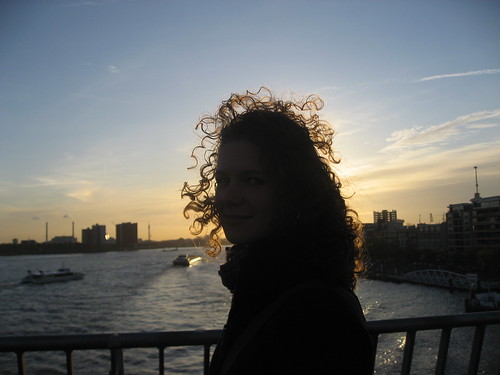

/ Image by Emanuello Brigant /

Something to honor the Divine Goddess (and Halloween!) today–

Every now and then I awake early, before the sun. Observing the nighttime before dawn, its embodiment of mystery, the unknown, vastness. Night brings both peace and fear. It does not distract us from ourselves. Whatever we bring with us into the night we must confront…

I read a lot of Greek mythology in my childhood. I loved the fantastical adventures, the heroes, the monsters, the convoluted relationships of the gods. I was fascinated that so many common words and phrases have their origins in the names and stories of Greek myths. It connected me with the Greek ancestry I have through my father.

And I also had the vague, semi-formed idea that there was something deeper being said in these myth stories.

I discovered something several years back that struck me: Medusa, the quintessential monster of Greek mythology, was originally a much loved Goddess. Her name comes from the Greek word “metis” (related to the Sanskrit “medha”) meaning “wisdom.” Her worship is thought to have originated in North Africa and been imported into early Greek culture. She was black-skinned, wore wild, matted hair (with, of course, snakes), stood naked, wide-eyed, and embodied the mystery of woman, the wisdom of the night, the truths too profound or terrible to face in the daylight.

Medusa is, in effect, a Mediterranean version of the Bengali Goddess Kali.

Medusa was eventually subsumed into the safer, patriarchal worship of Athena, who carries Medusa’s head upon her shield.

This discovery inspired me to look at the figure of Medusa more deeply, more reverently. What is the wisdom that terrifies? Why the snakes? Why the petrifying open-eyed stare? And how does such a bringer of terrible wisdom feel about being rejected by her children as a “monster”?

So I hide
Behind this hissing curtain
Of hair.

One way to understand the snakes about Medusa’s head is as the awakened Kundalini energy, having risen from the base of the spine to the skull — something well-understood in the Mediterranean mystery schools of the ancient world. This vital, snake-like energy is the Goddess energy. Medusa, the Goddess, is the Snake Mother.

(The more monstrous aspect of Medusa can also be understood as a rageful expression of the Kundalini, the Divine Feminine energy, when it is repressed in society. A society that does not respect the strength and mystery of Woman, that does not allow the feminine energy to move freely, that society is lost in a state of calcifying fear. Too many societies see only the terrible Gorgon when looking at the Divine Mother.)

In my poem, Medusa has formed of this feminine life-energy a curtain, a veil that hides Her Face from a world not ready to bear witness to Her. This curtain is the veil of illusion that creates an artificial sense of separation between the world and the Divine.

And the curtain does indeed hiss. When you are quiet and your thoughts settle, we begin to hear a soft sound seeming to issue from the base of the skull. Initially, it sounds like a creaking or crackling noise, a white noise, a sort of a hissing. The deeper we go into silence, the more the sound resolves itself. Eventually, we recognize it permeating our whole body and all things.

We must pass through this hissing curtain in order to meet the deep truth waiting for us on the other side.

I still wait
For some bold, tired
      Wild child of mine,
Determined to die
Seeing what’s reflected
In my unblinking eye.

Medusa’s eye does not blink. This is partly what is so terrifying about her gaze. She stares boldly out and sees Reality as it is. She sees it plainly, fearlessly, and without interruption. There is no pause for interpretation or “filtering.” Medusa’s truth is raw. She is the Divine Mother who sees all of Her Creation in every living instant.

Looking in Medusa’s eye, what is it that we see reflected? Our own self, of course. And this truly is shattering, for we see the truth about ourselves. We see the unreality of the little self, the social self, the ego self we imagine ourselves to be. That little self is a phantom, a mental creation only.

Medusa, in her shattering wisdom, does not protect us from this realization. Her love will not allow us to struggle on with such a false notion holding us back from our true nature.

Seeing this truth, we die. The little self dies.

But, in dying to the little self, our true nature suddenly shines forth. The real Self, which is one with the Divine, emerges. Every aspect of ourselves that felt broken and that we labored so long to fix, is suddenly made whole. In fact, we realize that nothing was ever broken in the first place. That sense of incompleteness was the result of denying the vastness we already are while clinging to the illusion of the little self.

This is Medusa’s gift to Her children. This is Her terrible wisdom. It is the truth that blesses us through death, and then gives us greater life than we had previously imagined possible.

Halloween, Samhain, el Dia de los Muertos. The ancestors speak to us at this time, as do our fears. In this season we face the darkness, the unknown. We rediscover the hard truths we’ve exiled and encounter the possibilities we haven’t yet dreamed.

As a child, Halloween was always one of my favorite holidays. I loved the masks and costumes, toying with notions of self and identity, a game of hide-and-seek with the world. I loved the season, the chill breeze and thick sweaters, bare branches with a few bright leaves, the brilliant daylight, bold and brief, streaming through. And, I have to admit, I loved the giddy, creeping sense of death… along with the whispered question of what might lay beyond it.

Spirits, magic, monsters, and nighttime, they evoked in me a childish delight in the sense that there was something more to the world than seen in the daylight, something hidden, secret, another reality in the shadows. I felt the holiday tugging at me, my goosebumps an invitation into secret worlds…

It is said that at this time of year the veil between this world and the Otherworld thins, when we can reconnect with the spirits of our forerunners, when we can gain unexpected insight. It is a time of magic and reconnection and stepping into the unknown.

This is the time of year when the light of summer and the harvest season recedes, the days grow shorter, and the darkness of winter takes ascendance. This is the good darkness that balances the year. With darker, shorter, colder days, we are less active and turn inward. It summons us back to the cave of the self. In this internal, inturning time we gain insight and strength and, through endurance, find ourselves renewed and ready for the new light to come in springtime. This darkness is the time of spiritual practice that prepares us for the renewed light and life of springtime. For only in darkness does new life gestate. Only in darkness do our eyes learn to see.

Let’s honor those who came before us and made a way for us in the world. Let’s discover the unknown possibilities yet available to us. And let’s celebrate the good darkness — along with the hidden light and life we discover there!


Recommended Books: Ivan M. Granger

The Longing in Between: Sacred Poetry from Around the World (A Poetry Chaikhana Anthology) This Dance of Bliss: Ecstatic Poetry from Around the World Real Thirst: Poetry of the Spiritual Journey For Lovers of God Everywhere: Poems of the Christian Mystics Diamond Cutters: Visionary Poets in America, Britain & Oceania
More Books >>


Ivan M. Granger, Ivan M. Granger poetry, Secular or Eclectic poetry Ivan M. Granger

US (1969 – )
Secular or Eclectic
Yoga / Hindu : Advaita / Non-Dualist

Continue Reading »

5 responses so far

Oct 31 2025

dispell

Consensus reality
is a facade
of words.

Dis-spell it.

No responses yet

Oct 17 2025

Juan Ramon Jimenez – Who Knows What is Going On

Published by under Poetry

Who Knows What is Going On
by Juan Ramon Jimenez

English version by Robert Bly

      Who knows what is going on on the other side of each hour?

      How many times the sunrise was
there, behind a mountain!

      How many times the brilliant cloud piling up far off
was already a golden body full of thunder!

      This rose was poison.

      That sword gave life.

      I was thinking of a flowery meadow
at the end of a road,
and found myself in the slough.

      I was thinking of the greatness of what was human,
and found myself in the divine.

— from The Winged Energy of Delight, Translated by Robert Bly


/ Image by Pramod Tiwari /

Who knows what is going on on the other side of each hour?

Isn’t that just a wonderful opening line? It’s one of those profound, enigmatic statements that can trip you up full stop, making the rest of the poem an afterthought.

But what is the poet saying? I think he’s encouraging us to not bring our assumptions to each experience in life. We have to encounter each experience, each hour, as it is, not as we expect it to be. This is why he turns our expectations on their head with lines like:

This rose was poison.

That sword gave life.

Every single moment holds its secret and is pregnant with surprise…

How many times the sunrise was
there, behind a mountain!

To approach life without the false certainty of what each experience holds requires a supreme humility. More than that, it requires courage, especially when things seem dark or hopeless. It requires us to cherish the unexpected possibilities of each encounter more deeply than our own accumulating history. It requires a silence of mind, a sense of wonder, and a restoration of our inherent innocence. And a boldness. But, when we truly learn to live this way, magic happens! We open ourselves and, in turn, the common things we encounter open themselves to us, revealing hidden worlds within…

I was thinking of the greatness of what was human,
and found myself in the divine.


Recommended Books: Juan Ramon Jimenez

The Winged Energy of Delight The Soul is Here for its Own Joy: Sacred Poems from Many Cultures News of the Universe: Poems of Twofold Consciousness Invisible Reality Time and Space: A Poetic Autobiography
More Books >>


Juan Ramon Jimenez, Juan Ramon Jimenez poetry, Secular or Eclectic poetry Juan Ramon Jimenez

Spain (1881 – 1958) Timeline
Secular or Eclectic

Continue Reading »

2 responses so far

Oct 17 2025

What we seek

What we seek is never what we seek,
but the affect it has on us.

No responses yet

Oct 09 2025

Daniel Berrigan – Credentials

Published by under Poetry

Credentials
by Daniel Berrigan

I would it were possible to state in so
few words my errand in the world: quite simply
forestalling all inquiry, the oak offers his leaves
largehandedly. And in winter his integral magnificent order
decrees, says solemnly who he is
in the great thrusting limbs that are all finally
one: a return, a permanent riverandsea.

So the rose is its own credential, a certain
unattainable effortless form: wearing its heart
visibly, it gives us heart too: bud, fullness and fall.

— from Daniel Berrigan: Essential Writings (Modern Spiritual Masters), by Daniel Berrigan / Edited by John Dear


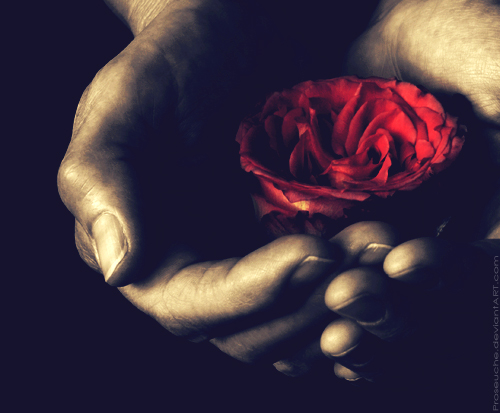
/ Image by Proseuche /

I have featured this poem before, but I find myself reading it again on this chilly October morning.

In this poem we are given a couple of images to illustrate how we should understand ourselves and be in the world. In other words, what are our credentials? By what authority and quality do we come into the world and act in the world?

Like the oak tree, we should offer our leaves “largehandedly,” giving fully of ourselves and our very nature to the world. And, in winter, in bareness, the essential form that we are comes through. By not holding back our true nature, by being fully ourselves, even when when the world demands all of us, that is when we “return” and recognize that we are part of a grand, harmonious unity, “a permanent riverandsea.”

We are our own credentials. Our credentials, our spiritual stamp of approval, is there within us, in our most natural form. I hear in the words of this Catholic priest and activist the question, how do we properly embody our “errand in the world”? How do we make it so our actions are not mere pretense? How do we instead come to embody the spirit which comes into the world through us in such a way that there is no division between being and expression?

Like the rose, we must unfold, be as we are, allowing our innermost heart to become visible, to be seen, to let its beauty be present in the world, bringing healing to the world and to ourselves. Effortless. Full. Strong. Guileless. Self-sacrificing.

So the rose is its own credential, a certain
unattainable effortless form: wearing its heart
visibly, it gives us heart too: bud, fullness and fall.

Have a beautiful day, with a blossoming heart.


Recommended Books: Daniel Berrigan

Daniel Berrigan: Essential Writings (Modern Spiritual Masters) Prayer for the Morning Headlines: On the Sanctity of Life and Death And the Risen Bread: Selected and New Poems 1957-1997 Tulips in the Prison Yard: Selected Poems of Daniel Berrigan Prison Poems: Selected Poems of Daniel Berrigan


Daniel Berrigan, Daniel Berrigan poetry, Christian poetry Daniel Berrigan

US (1921 – 2016) Timeline
Christian : Catholic

Continue Reading »

One response so far

Oct 09 2025

Use everything

Use everything:
Joy, fear, success, suffering.
A seeker doesn’t have the luxury
to waste their journey in pursuit
of easy, grand experiences.

No responses yet

Sep 26 2025

Hsu Yun – An Exquisite Truth

Published by under Poetry

An Exquisite Truth
by Hsu Yun

This is an exquisite truth:
Saints and ordinary folks are the same from the start.
Inquiring about a difference
Is like asking to borrow string
when you’ve got a good strong rope.
Every Dharma is known in the heart.
After a rain, the mountain colors intensify.
Once you become familiar with the design of fate’s illusions
Your ink-well will contain all of life and death.

— from The Longing in Between: Sacred Poetry from Around the World (A Poetry Chaikhana Anthology), Edited by Ivan M. Granger


/ Image by Alain Bonnardeaux /

I like what that opening statement says:

This is an exquisite truth:
Saints and ordinary folks are the same from the start.

Whether we’re talking about inspired reformers or shining examples of enlightenment, our instinct is to elevate great souls as unique phenomena. We assume they are somehow other than us. But the liberating and challenging truth is that saints are the same as everyone else. The only difference, if we want to call it a difference, is that they don’t cloak their nature as most of us have learned to do. We all have that same steady glow within us. A saint is simply someone who doesn’t damp it down.

Understood this way, the spiritual journey is not one of crushing effort to acquire virtues, to build wisdom, and to learn love. We already have all of that in abundance. The only work necessary is to let go of the assumptions that keep our true nature hidden.

Once you become familiar with the design of fate’s illusions
Your ink-well will contain all of life and death.

I think these are the lines I respond to most. I don’t know about you, but I spent so much of my life as a teenager and young adult feeling disappointed with where I found myself in the world. I wanted something profound, adventurous, bursting with meaning. Instead, I had a very ordinary lower middle-class American upbringing. I sabotaged my college education and decided to search for something deeper. Most of that search was a painful flailing about, but it did bring me adventures, both internal and external. I lived on Maui for several years. I lived high up in the Rocky Mountains. I’ve been homeless. I’ve had friends in wheelchairs, friends with wealth. I’ve known hippies and bikers and techies and farmers.

While all of that makes for good stories, that ache for something extraordinary just fell away the moment I first settled into a sense of spiritual opening. With that dawning of peace, I also found rest… and a profound sense of self-acceptance. It wasn’t that I had somehow changed into someone new and extraordinary. Instead, I felt profoundly myself for the first time, profoundly my ordinary self. And I can’t describe how blissful that recognition of ordinariness is. I no longer felt the constant need to struggle after the extraordinary; the simple and the plain stood revealed as a stunning work of art filling every day.

These lines by Hsu Yun about “fate’s illusions” remind me of how I spent the first three decades of my life struggling against my circumstances to find a fate with meaning, only to discover that the struggle was unnecessary. All I had to do was open my eyes. In every corner of the world, in every life, great and humble, the entire mystery of life and death can be found.

After a rain, the mountain colors intensify.


Recommended Books: Hsu Yun

The Longing in Between: Sacred Poetry from Around the World (A Poetry Chaikhana Anthology) A Drifting Boat: Chinese Zen Poetry A Pictoral Biography of the Venerable Master Hsu Yun Empty Cloud: The Autobiography of Chinese Zen Master, Hsu Yun


Hsu Yun, Hsu Yun poetry, Buddhist poetry Hsu Yun

China (1839 – 1959) Timeline
Buddhist : Zen / Chan

Continue Reading »

2 responses so far

« Prev - Next »