Jan 21 2022
gentle prodding
We all feel it, a gentle prodding
to let the heart open,
to know ourselves truly, to be present
and radiate ourselves into the world.
Jan 21 2022
We all feel it, a gentle prodding
to let the heart open,
to know ourselves truly, to be present
and radiate ourselves into the world.
Jan 14 2022
Looking, Walking, Being
by Denise Levertov
“The World is not something to
look at, it is something to be in.”
— Mark Rudman
I look and look.
Looking’s a way of being: one becomes,
sometimes, a pair of eyes walking.
Walking wherever looking takes one.
The eyes
dig and burrow into the world.
They touch
fanfare, howl, madrigal, clamor.
World and the past of it,
not only
visible present, solid and shadow
that looks at one looking.
And language? Rhythms
of echo and interruption?
That’s
a way of breathing.
breathing to sustain
looking,
walking and looking,
through the world,
in it.
 — from Poems of Denise Levertov: 1960-1967, by Denise Levertov

/ Image by Amizyolaroid /
Okay, let’s start off with those wonderful lines:
Looking’s a way of being: one becomes,
sometimes, a pair of eyes walking.
This poem is a response to the Mark Rudman quote, “The World is not something to / look at, it is something to be in.” Denise Levertov answers that looking IS being.
The eyes
dig and burrow into the world.
They touch…
I suspect that Rudman was discouraging passivity and lack of presence, but Levertov, I think, is getting at something deeper still. Humans, all beings, in fact, are fundamentally beings of awareness. Each individual is a point of perception, a viewpoint in the universe. We are, each of us, “a pair of eyes walking.”
We are present through perception, not action. Yes, action and interaction can be a powerful way to force us to pay attention, but it is also common to use action to shut down the awareness. Whether in movement or in stillness, the real goal is to keep the eyes open and feel fully with the heart and with the gut. We want to do more than look, but to see and see deeply. We need to see what is ignored and glossed over, to “dig and burrow in the world.”
Even in complete stillness, truly seeing is one of the most profound actions we can engage in. People are brought to tears by a gentle gaze in the eyes. This is what the soul craves, to be seen, to be recognized, to be truly acknowledged. This is true not just of the human soul, but of the world soul. I think of this when Denise Levertov writes of how the world “looks at one looking.”
And language? Rhythms
of echo and interruption?
That’s
a way of breathing.
We forget that language is built of breath. We see the written word and we read it silently. Words become mental concepts, tools of the intellect. But words are not fundamentally discrete units of meaning. They flow and stop and flow again, as the breath does. Words aren’t inherently meaningful; they are the ornaments that accompany the flow of awareness.
Words affect breath. Thoughts affect breath. Breath guides awareness.
…breathing to sustain
looking…
Through the breath, we bring the outside world inside us, inside the body, inside the awareness. The boundary between self and the world is bridged by the breath. Through breath, we touch, we feel, we internalize, we connect, we participate, we come alive. Through breath we move and we see.
…walking and looking,
through the world,
in it.
Vision, language, breath… communion.
Recommended Books: Denise Levertov
 |
|
 |
 |
 |
| Denise Levertov: Selected Poems | Poems of Denise Levertov: 1960-1967 | Breathing the Water | The Great Unknowing: Last Poems | Candles in Babylon |
| More Books >> | ||||

|
Denise Levertov
US (1923 – 1997) Timeline |
Dec 17 2021
The Sum of Perfection
by John of the Cross
English version by Ivan M. Granger
Creation forgotten,
Creator only known,
Attention turned inward
In love with the Beloved alone.
 — from Real Thirst: Poetry of the Spiritual Journey, by Ivan M. Granger
/ Image by bran.deann. /
As we approach Christmas, I wanted to feature something simple and luminous. This is one of my favorite short poems by St. John of the Cross.
Where else is the mystic path stated so succinctly yet so completely? These four lines by St. John of the Cross contain all the instructions necessary.
Creation forgotten…
Attention turned inward
This is is a bit of a jump, but these lines call to my mind Patanjali’s Yoga Sutras, one of the foundational scriptures of yogic practice, which speaks of pratyahara or ‘sense withdrawal’ as an essential practice. This leads to dharana or ‘concentration,’ which matures into dhyana (meditation) and finally samadhi (divine union). Done deeply, sense withdrawal and concentration are profound practices, but they sound so… effortful, don’t they? Almost severe. ‘Concentration’ reminds me of studying for college exams. Translated into English like this, these words don’t convey quite the right tone. These spiritual practices do not have to be a strain; the attention can simply turn and glide inward. My experience is that this is the natural tendency of the awareness, anyway, we just have to stop pushing it to the exterior all the time. Sense withdrawal and concentration don’t require a harsh act of force so much as trust: trust to release the constant fixation on outer reality, trust that what we discover in the spacious silence within is just as real and delightful.
Half a world away, in Catholic Spain, St. John of the Cross is telling us the same thing. Forget the outer world of phenomena, at least for the moment. Turn inward.
Doing this, creation is seen as having no fundamental reality of its own; it is only an expression or emanation of the Eternal. It is like watching a movie. The movie may seem real while we are caught up in the story, but if we pause and look around the auditorium, we can see that the movie is actually streaming through the darkness in a funnel of light. It’s source is really the projector.
Creator only known.
Remembering this on every level, we are only aware of the Source, the Creator. Creation itself then becomes simply a reflection of the Divine. Knowing only the Creator, the Divine fills all of perception — that is true meditation.
Seeing through the insubstantial nature of mundane reality, one is filled with ecstatic, uncontainable love and bliss. This is not a surface happiness directed at exterior objects or people, but for all of creation and, more fundamentally, for the immense life that brings that creation into existence.
In love with the Beloved alone.
The original Spanish verse has a fluid, chant-like rhythm that’s difficult to reproduce in English translation:
Olvido de lo criado,
memoria del Criador,
atencion a lo interior
y estarse amando al Amado.
(My translation of this poem appears both in my collection of poems and translations, Real Thirst, but is also included in For Lovers of God Everywhere: Poems of the Christian Mystics, edited by Roger Housden. Roger Housden’s contemplative collections of poetry are always worth reading.)
—
May we all remember that this time of Christmas, Hanukkah, and Solstice, is for the renewal of the light within ourselves and our world. (It’s no accident that Christmas and Hanukkah occur near the Winter Solstice, when the world is plunged in darkness and awaits the renewal of the light.) Regardless of religion, may we recognize our shared brotherhood and sisterhood within the human family, all within the lap of the generous green earth that is our home. Sending love to everyone!
Recommended Books: John of the Cross

|
John of the Cross |
Dec 10 2021
This is an interview I did with PMC last year about spirituality, poetry, and my own personal journey.
(The introduction and questions are in Hindi, but my responses are in English. Hopefully, an interesting puzzle to solve for non-Hindi speakers.)
Dec 10 2021
Worship
by Eihei Dogen
English version by Ivan M. Granger
Beneath the snows
the hidden world of winter grass.
And in the field of white, a white heron
hides himself.
 — from This Dance of Bliss: Ecstatic Poetry from Around the World, Edited by Ivan M. Granger
/ Image by Birger Strahl /
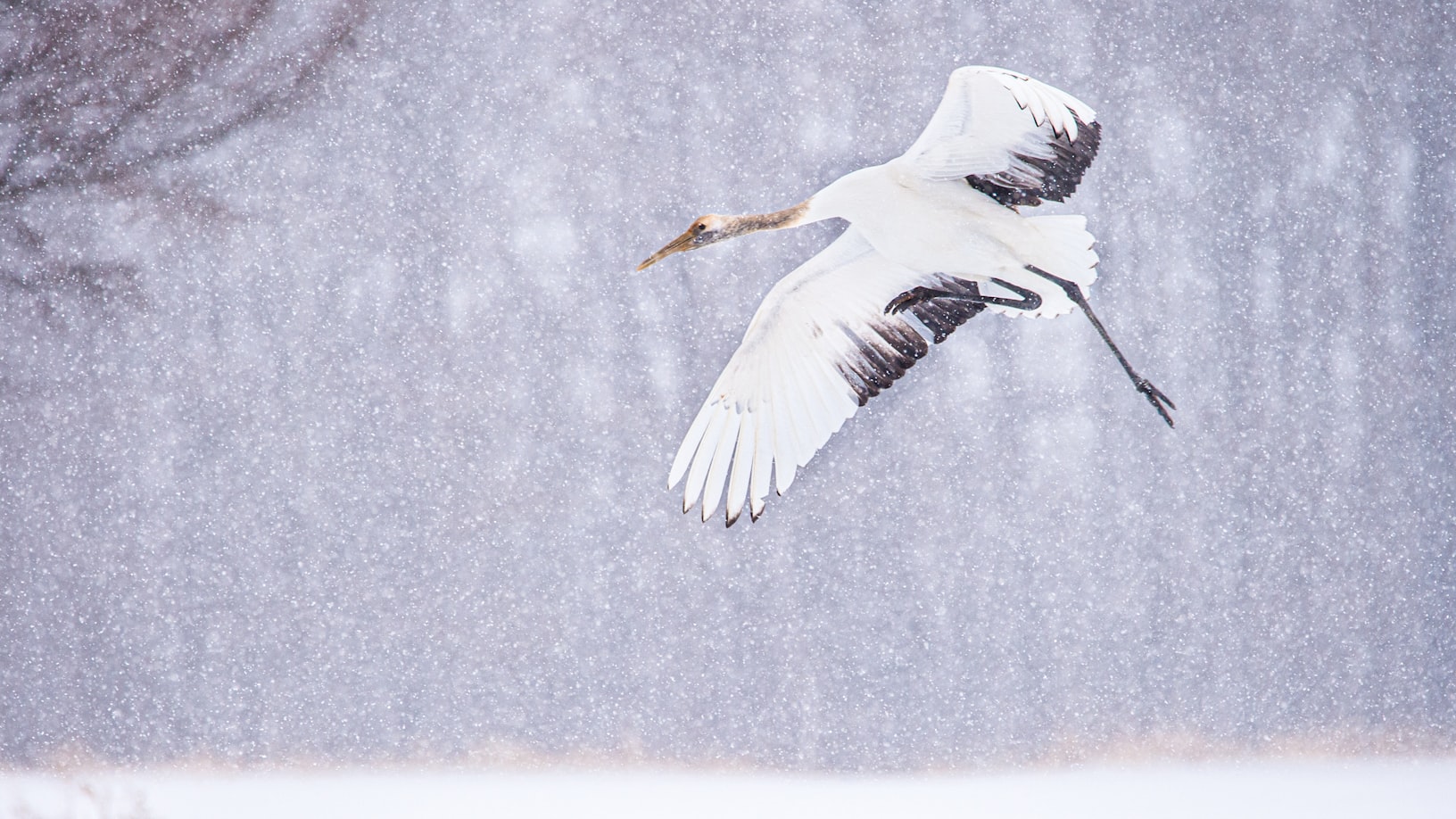
I woke up to light snow this morning in Colorado, snowflakes following meandering, individual paths down to settle on the ground, just beginning to cover it. I thought of this poem and commentary…
Looking out my window, I see a quiet winter morning, mist trickling in among the bare branches, yesterday’s snow still new upon the ground. I think of this poem…
Reading this poem, we immediately ask what a white heron in snow has to do with worship, as suggested by the title.
And in the field of white, a white heron
hides himself.
Have you ever watched a heron fishing, wading at the edge of a lake? Its entire being is focused. Even when it moves it seems utterly still. Because of these qualities, the heron is a natural symbol for the meditator.
We have a being of white — the heron, the meditator — disappearing into an environment of white — the snow-covered field. In fact, the heron is not passively disappearing, it is actively engaged in the process. He “hides himself” in the snow. How does the heron hide? Through stillness. The heron settles into its own nature. It is already as white as the snowy world it inhabits. The heron just has to grow quiet, be itself, and it naturally disappears from sight.
Snow represents the glowing world as perceived by the enlightened awareness. Everything, when draped in new-fallen snow, becomes one. Everything is the same “white” radiance. Everything comes to rest within this shared glow of being. The idea of separation is lost in that light. Beings and objects are suddenly seen as a fluid continuity within that “field of white.”
So this, according to Dogen, is what constitutes true worship: Through meditation and stillness we recognize our own incandescent nature in the midst of the bright field of being. As we settle into ourselves, we gently merge with the luminous reality that surrounds us.
Recommended Books: Eihei Dogen
|
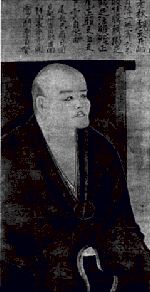
Eihei Dogen
Japan (1200 – 1253) Timeline |
Dec 10 2021
Every person: God.
Every animal, every plant: God.
Everything: God, God!
The slightest contact is worship.
Nov 19 2021
Holy Ground
by Ivan M. Granger
Let the vision
of the vastness
you are
leave you
in glorious
ruins.
Pilgrims will come
to imagine
the grand temple
that once stood,
not realizing
the wreck
made this empty plain
holy ground.
— from Real Thirst: Poetry of the Spiritual Journey, by Ivan M. Granger

/ Image by Stuzal /
I thought I’d share one of my own poems with you today…
So often we imagine our spiritual journey to be one of construction. We want to build a great shining monument within ourselves. It comes as a terrible shock how much the real spiritual work is actually about tearing down our structures.
Watch a wild field at dawn. Sit among the uneven grasses and opening wildflowers. Look at that empty space all around you. It is empty, yes, empty of our own constructions. But it is filled with life. It is an inherently holy space.
The same is true of the quiet depths in the heart. No perfect construction of spirituality is needed. We need to reveal the holy life that is already the foundation of our being. With courage and supreme balance, stand back and do nothing. Staying poised, just look. Notice all those fine structures we’ve erected over a lifetime, proclaiming, “Here I am!” Look closely, look long enough, and we start to see fine cracks appear. When we don’t actively shore them up, the cracks quickly expand. And then, all of a sudden — RUMBLE — the whole facade collapses.
THAT is the moment we’re waiting for! That is when we discover the empty plain beneath our feet. And we are a part of that living space.
The saints and sages of the past, the great artists and visionaries too — we imagine the grandeur of spirit they attained. But the truth is that their greatness was attained in their own collapse, amidst the ruins… and the giddy open spaces they then discovered.
Recommended Books: Ivan M. Granger
|
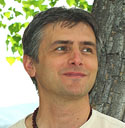
Ivan M. Granger
US (1969 – ) |
Nov 12 2021
Gift
by Czeslaw Milosz
A day so happy.
Fog lifted early I worked in the garden.
Hummingbirds were stopping over honeysuckle flowers.
There was no thing on earth I wanted to possess.
I knew no man worth my envying him.
Whatever evil I had suffered, I forgot.
To think that once I was the same man didn’t embarrass me.
In my body I felt no pain.
On straightening up, I saw the blue sea and sails.
/ Image by Christine Tutunjian /
A moment of pure, natural bliss.
Hummingbirds were stopping over honeysuckle flowers.
There is such relief for the spirit in the lines–
There was no thing on earth I wanted to possess.
I knew no man worth my envying him.
Whatever evil I had suffered, I forgot.
We imagine that there is so much to do — to provide for ourselves, to ornament our lives, to right wrongs — but they can be a terrible burden. The burden is not in the effort of accomplishment; rather, it is because we have taken the joy and the wholeness that is inherent and always present within ourselves and we have externalized it. We tell ourselves, “I can experience happiness and rest when I make this happen or when I have corrected that.” But this and that are never fully attained, so we strive relentlessly while depriving ourselves of the fulfillment that is our birthright.
All that can be healed with a holy moment, a quiet moment in the garden at dawn with the fog lifting.
In my body I felt no pain.
On straightening up, I saw the blue sea and sails.
Have a beautiful morning!
Recommended Books: Czeslaw Milosz

|
Czeslaw Milosz
Poland (1911 – 2004) Timeline |
Nov 05 2021
Mindful
by Mary Oliver
Every day
I see or hear
something
that more or less
kills me
with delight,
that leaves me
like a needle
in the haystack
of light.
It was what I was born for —
to look, to listen,
to lose myself
inside this soft world —
to instruct myself
over and over
in joy,
and acclamation.
Nor am I talking
about the exceptional,
the fearful, the dreadful,
the very extravagant —
but of the ordinary,
the common, the very drab,
the daily presentations.
Oh, good scholar,
I say to myself,
how can you help
but grow wise
with such teachings
as these —
the untrimmable light
of the world,
the ocean’s shine,
the prayers that are made
out of grass?
 — from Why I Wake Early, by Mary Oliver
/ Image by Kristopher Roller /
I’m back. Thank you, everyone, for your patience. It has been a few weeks since the last Poetry Chaikhana email. A busy time with my day job and helping my wife with some important projects. Mary Oliver seems a good poet to welcome us back…
Every so often I come across a poem by Mary Oliver I haven’t read in a few years, and rereading it I get to say, “Wow!” once again.
Read this poem a few times. Each statement rings in the air.
Sometimes I can appreciate a poem more fully when I read it as if the line breaks weren’t there, allowing me to really take in the meaning and imagery (then, when I reread with awareness of the line breaks once again, I can insert the sense of rhythm and stillness they imply)…
Every day I see or hear something that more or less kills me with delight…
that leaves me like a needle in the haystack of light.
That phrase to be killed with delight startles us. It is disturbing and yet somehow joyful. I take it to mean that we are so swept away with delight that the normal functioning of the self and our constant concerns all comes to a halt. We disappear in the midst of the beautiful moment.
Notice, by the way, how I have reshaped the line breaks here so you don’t miss the rhyme in the middle of the second and third sections? Worth saying out loud to appreciate it.
It was what I was born for — to look, to listen, to lose myself inside this soft world —
That’s such a great line, isn’t it? “To lose myself inside this soft world.”
to instruct myself over and over in joy, and acclamation.
There is a fundamental delight to the encounters and experiences of each day — but we must continuously “instruct” ourselves in it. Each time we recognize that joy, we are learning. The opposite is also true: each time we ignore it, we are forgetting.
Nor am I talking about the exceptional, the fearful, the dreadful, the very extravagant — but of the ordinary, the common, the very drab, the daily presentations.
I think this is the poem’s true epiphany. The delight she speaks of, the magic in the day, is not discovered through having some sort of extraordinary experience. It is, surprisingly, in “the ordinary, the common,” the eventless moments.
How do we see? The title tells us — through being mindful. Through paying attention. Through stillness of mind, accompanied by relaxed, open awareness. It is then that the day’s delight reveals itself and we come to see even the most mundane moment for the immense landscape it truly is.
Oh, good scholar, I say to myself, how can you help but grow wise with such teachings as these —
The day is teaching us. Are we being a good scholar? Are we paying attention to the lessons in awareness presented to us each day? Are we drinking in the joy given to us? It is there, when we are mindful:
the untrimmable light of the world, the ocean’s shine, the prayers that are made out of grass?
Have a beautiful day, noticing the untrimmable light of the world!
Recommended Books: Mary Oliver
 |
|
 |
 |
 |
| New and Selected Poems | Why I Wake Early | Dream Work | House of Light | Thirst: Poems |
| More Books >> | ||||

|
Mary Oliver
US (1935 – 2019) Timeline |
Nov 05 2021
We don’t actually have histories.
We make up stories about ourselves
to connect our memories and discover meaning.
We can change those stories at any time.
Oct 08 2021
So I say: Mind, don’t you sleep
by Ramprasad (Ramprasad Sen)
English version by Leonard Nathan and Clinton Seely
So I say: Mind, don’t you sleep
Or Time is going to get in and steal from you.
You hold on to the sword of Kali’s name.
The shield of Tara’s name.
Can Death overwhelm you?
Sound Kali’s name on a horn and sound it loud.
Chant “Durga, Durga,”
Until you bring the dawn around.
If She won’t save you in this Dark Age –.
But how many great sinners have been saved!
Is Ramprasad then
So unsalvageable a rogue?
— from This Dance of Bliss: Ecstatic Poetry from Around the World, Edited by Ivan M. Granger
/ Image by Sankhadeep Barman /
For Hindus, the festival of Navratri, the Nine Nights of the Goddess, has begun. So I thought we’d feature a poem in honor of the Goddess, by one of the great Kali poets, Rampasad.
Ramprasad’s songs to the Mother Goddess were like dynamite to my early seeking. I was introduced to his poetry while reading about the 19th century Hindu saint, Ramakrishna, who, in ecstatic states, would recite the poetry of Ramprasad. Ramprasad’s poetry can be intense, not to everyone’s taste, but they speak to me…
—
So I say: Mind, don’t you sleep
Or Time is going to get in and steal from you.
I like the urging of that opening phrase: “Mind, don’t your sleep!” I like the way Ramprasad neatly defines the relationship with the mind. Most people, in the West especially, think they are the mind. But here the poet speaks to the mind as a separate entity. He creates a parental sort of relationship, both protective and insistent. I can’t quite articulate why, but I find that deeply touching on some level… and, for the mystic, a supremely effective approach. When the mind wants to scatter, if we think we are the mind, then what can we do? But when we recognize the mind as a flow of consciousness under our care, then we can influence it against its worst habits to remain alert and still — “Mind, don’t you sleep.”
There is a play of meanings here that you shouldn’t miss: The Great Goddess manifests through the cycles of becoming and dissolution… and, thus, She is associated with time. Time is Kali’s illusory game of apparent change. The root word for time is “Kal.” Kali overcomes Kal.
You hold on to the sword of Kali’s name.
The shield of Tara’s name.
Ramprasad is making a subtle distinction between the Mother Goddess as Kali and as Tara. Kali is the Goddess in her terrifying aspect, She Who ecstatically cuts through delusion; so She carries a sword. Tara is Her more protective aspect, so Her name is a shield.
Time (“Or Time is going to get in…”) and Death (“Can Death overwhelm you?”) are paired in this poem as the ultimate limitations of mortal life which must be transcended in order to experience the eternal nature of being. But we’re not talking fantasy here, where you can snap your fingers and stop time or answer a riddle to cheat death. Ramprasad is giving us a formulation for keeping the mind awake and chanting the Divine Name. What does this have to do with time and death? This practice, done deeply, eventually brings the mind to a focused stillness.
As this deepens, a few things become clear. One’s relationship with time shifts. In mundane awareness, we tend to take time for granted as the inevitable unfolding of serial events. But time reveals itself as something slightly different to the quiet awareness. Events still occur, but you stop inserting the ego-self into the midst of them. Instead of tumbling helplessly with the flow of time, it is as if we have found our footing and stand still as witness to the flow all around us. Movement occurs, but the personal sense of time stops.
And here’s the thing about death: In deep states of spiritual awareness, the mystic is flooded with an immense and unimpeded sense of Life. By comparison, all experiences up to that point seem like they belong to the realm of sleep. There is the sense that the common experience of life is somehow encrusted with a layer of — let’s call it “death” — that has dampened the full awareness of life. In this awareness, death has left us. Only life remains. This doesn’t mean that the physical body won’t eventually grow old and cease to function. But life’s experiences lose the flavor of death.
This shining recognition is the moment of awakening — “the dawn.”
That may sound like something attainable only through unimaginable effort by only the most perfect masters, but that thought too is an excuse used by the mind to allow it to continue sleeping. Ramprasad laughs and cuts through that lethargy.
Is Ramprasad then
So unsalvageable a rogue?
Look at the strange lot of people who have stumbled their way to enlightenment. Is any one of us “so unsalvageable a rogue?” There is a saying: A saint is a sinner who never gave up. Rogues too realize.
Recommended Books: Ramprasad (Ramprasad Sen)
|
Ramprasad (Ramprasad Sen)
India (1718? – 1775?) Timeline |
Oct 01 2021
The Path of the Beautiful
by Asik Ali Izzet
English version by Jennifer Ferraro & Latif Bolat
Appreciating beauty is said to be a virtue.
To see beauty beautifully
is beautiful.
Those who have a beautiful beloved in Paradise are beautiful.
To travel the path of beauty,
is beautiful.
The sun rises from the beautiful one’s eyebrows.
The beautiful one’s teeth are just like pearls.
To share beautiful food at Beauty’s table
is beautiful.
To linger with the beautiful one beautifully
is beautiful —
To write the beautiful name:
beautiful —
To drink with the beautiful one:
beautiful —
To kiss the hand of the beautiful one:
beautiful.
The light drips from the cheeks of the beautiful.
Honey drips from the lips of the beautiful.
Hold the hand of the beautiful beautifully.
To serve the beautiful one
is beautiful.
The eyes that perceive beauty will never suffer.
Who loves beauty may die but will never decay;
Ali Izzet never shies away from beauty —
To love beauty from the depths of one’s soul
is beautiful.
 — from Quarreling with God: Mystic Rebel Poems of the Dervishes of Turkey, Translated by Jennifer Ferraro / Translated by Latif Bolat

/ Image by benleto /
A reminder to us all not to get lost in life’s minutia and bruises and anxieties… beneath it all we can always find beauty.
To see beauty beautifully
is beautiful.
That beauty can be a window that reveals the beautiful one behind it all.
To travel the path of beauty,
is beautiful.
Beauty is a pathway, a spiritual practice. Bearing witness to beauty takes skill: quiet eyes, a calm heart.
To love beauty from the depths of one’s soul
is beautiful.
May we all discover the beauty in the paths we walk!
Recommended Books: Asik Ali Izzet
|
||||
| Quarreling with God: Mystic Rebel Poems of the Dervishes of Turkey | ||||

|
Asik Ali Izzet
Turkey (1902 – 1981) Timeline |