Feb 12 2021
gathering silence
Once you have gathered enough silence,
silence gathers you.
Feb 05 2021
Want the change
by Rainer Maria Rilke
English version by Anita Barrows and Joanna Macy
Want the change. Be inspired by the flame
where everything shines as it disappears.
The artist, when sketching, loves nothing so much
as the curve of the body as it turns away.
What locks itself in sameness has congealed.
Is it safer to be gray and numb?
What turns hard becomes rigid
and is easily shattered.
Pour yourself out like a fountain.
Flow into the knowledge that what you are seeking
finishes often at the start, and, with ending, begins.
Every happiness is the child of a separation
it did not think it could survive. And Daphne, becoming
a laurel,
dares you to become the wind.
 — from In Praise of Mortality: Rilke’s Duino Elegies & Sonnets to Orpheus, by Rainer Maria Rilke / Translated by Joanna Macy

/ Image by Lulu Lovering /
This poem is a lovely meditation on change and transitoriness — as signs of life. It is only those relationships and experiences which move, and evolve, and eventually disappear that are fully alive.
Want the change. Be inspired by the flame
where everything shines as it disappears.
We so want the opposite to be true. We reflexively want to grasp the world, to hold it fixed, so we can trust reality, know its rules, and feel secure every day. But Rilke invites us to see with the poet’s keen eye the truth of the matter: that which doesn’t change lacks life and loses beauty–
What locks itself in sameness has congealed.
Is it safer to be gray and numb?
What turns hard becomes rigid
and is easily shattered.
We can’t hold our lives fixed, and we can’t hold ourselves fixed within our lives. The only thing to do is to step fully into each mysterious unknown day.
I love the line–
Pour yourself out like a fountain.
This statement so powerfully evokes the courage each day requires and the generosity of self that we can bring to each encounter.
We give of ourselves not to secure our lives but to live our lives in fullness. And, in doing so, we discover more life in our lives.
Flow into the knowledge that what you are seeking
finishes often at the start, and, with ending, begins.
If you’re not a mythology nerd, you may not have picked up on Rilke’s reference to Daphne and the laurel…
And Daphne, becoming
a laurel,
dares you to become the wind.
In Greek mythology, Daphne was a stunningly beautiful nymph who lived and hunted in the woods. Because of her beauty men constantly sought her favors, but she refused everyone. Then the god Apollo fell in love with her, but she refused him as well. Daphne fled from Apollo, who continued to pursue her. When Apollo was about to grasp Daphne, she called upon her father’s magical power, and she was instantly transformed into a laurel tree. The god Apollo, still in love with Daphne, but unable to embrace her, plucked a branch of the laurel and wore it as a wreath upon his head.
By evoking Daphne, Rilke is calling up this rich myth of beauty, and the inability to posses it. Yet that beauty, in transforming itself into something that can no longer be truly held or lusted after, takes on a new life all its own, a life that yet dances in the wind.
Rilke seems to be inviting us to encounter life with full presence and, with the courage of a witness rather than one who grasps, to appreciate beauty both in the coming and goings of life.
Recommended Books: Rainer Maria Rilke
|
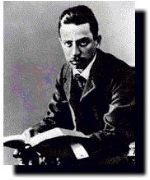
Rainer Maria Rilke
Germany (1875 – 1926) Timeline |
Feb 05 2021
The goal is to become a non-believer,
to abandon belief — and dogma and hearsay —
in favor of direct knowing.
Jan 29 2021
E ho mai
by Edith Kanaka’ole
E ho mai
Ka ike mai luna mai e
O na mea huna no eau
O na mele e
E ho mai
E ho mai
E ho mai
Grant us
knowledge from above,
All the wisdom
of the songs.
Grant,
Bestow,
Grant us these things.
 — from The Longing in Between: Sacred Poetry from Around the World (A Poetry Chaikhana Anthology), Edited by Ivan M. Granger

/ Image by Angela Sevin /
Years ago, when I lived in Hawai’i, I took a class in ho’oponopono. (If you sound it out slowly, it’s not the tounge-twister it first looks like.) Ho’oponopono means literally “to make things right, to return things to harmony.” It is a traditional healing method, but its emphasis is not on healing the body as it is on healing relationships, families, communities. If you think about it, what is the purpose of a healthy body except as an instrument to work for a healthier society? The small body serves the larger body.
As part of my training in ho’oponopono, I learned this chant. Hawaiian chant can be compared to Hindu mantra in that to truly say it properly can take a great deal of training. The inflections are important. The breath is important. Most of all, the sense of personal presence is important.
This Hawaiian chant must be said with force and with heart. It is a prayer, but it is not passive. It is a calling forth, a reaching out and a drawing in — of wisdom, of knowledge, of truth. It evokes in us pono, rightness.
Try sounding out the Hawaiian. Slowly at first, until the sounds become familiar. Then louder, with confidence. Say it over and over again. Imagine repeating this chant in a group. Let it ring through your body and your day!
To hear it chanted, click here
Aloha!
Recommended Books: Edith Kanaka’ole
|
||||
| The Longing in Between: Sacred Poetry from Around the World (A Poetry Chaikhana Anthology) | ||||

|
Edith Kanaka’ole
US, Hawaii (1913 – 1979) Timeline |
Jan 29 2021
A mystic must be supremely pragmatic:
Use what works,
whatever opens the heart
and fires the spirit.
Jan 22 2021
In bricks and in granite
by Civivakkiyar
English version by Kamil V. Zvelebil
In bricks and in granite,
in the red-rubbed lingam,
in copper and brass
is Siva’s abode —
that’s what you tell us,
and you’re wrong.
Stay where you are
and study your own selves.
Then you will BECOME
the Temple of God,
full of His dance and spell
and song.
 — from The Poets of the Powers: Freedom, Magic, and Renewal, Translated by Kamil V. Zvelebil

/ Image by Natesh Ramasamy /
I have always loved the poetry of Civivakkiyar since I first discovered it years ago. There is a directness that is at times blunt, along with a teasing quality, and underlying it all a radiant realization that rises up through the words. Even his name, Civivakkiyar, feels like poetry on the tongue.
This poem exhibits the Tamil Siddha opposition to orthodoxy and mindless ritualism — which tend to externalize God, separating the individual from the presence of the Divine. Civivakkiyar is proclaiming that God (Siva) is not only found in temples and objects of worship, places and things that have been separated out and defined as sacred. Not “in bricks and in granite,” not in the “lingam” (a common representation of Siva), not in the ritual objects of “copper and brass.”
To say that God is in the temple or the altar or the icon and not elsewhere impoverishes us spiritually. That perspective makes us strangers to the presence of the sacred, which is everywhere, always.
The truth is that God is not ‘out there’ (wherever we imagine ‘there’ to be). The Divine is right here, right now, within us:
Stay where you are
and study your own selves.
Then you will BECOME
the Temple of God…
It is only within ourselves that we find the proper ground to worship and ultimately encounter God, whether we stand in the temple precinct, or the marketplace, the forest grove, or the office space.
When we stop running from sacred place to sacred place and, instead, finally recognize the living sacred presence everywhere — and most especially within ourselves — then we experience such an uninhibited flow of life and delight that we become filled with the eternal “dance and spell / and song.”
Recommended Books: Civivakkiyar
|
||||
| The Poets of the Powers: Freedom, Magic, and Renewal | ||||
|
Civivakkiyar
India (9th Century) Timeline |
Jan 22 2021
If you are not intensely dedicated
to a high ideal,
then comfort becomes your goal by default
and every difficulty becomes a crisis.
Jan 15 2021
I don’t often talk about book sales, but I thought I’d let you know that two Poetry Chaikhana publications — Haiku Enlightenment and The Longing in Between — have been selling well since the end of 2020. Haiku Enlightenment has been in the top 100 best selling haiku books on Amazon, and The Longing in Between has been hovering in the top 100 or 200 for poetry anthologies. Amazing! I love to see these book circulating, carrying their wild, illuminating poetry out into the world. A great deal of thanks is due to you, the Poetry Chaikhana community, for your steady support and encouragement through the years.
Jan 15 2021
In Blackwater Woods
by Mary Oliver
Look, the trees
are turning
their own bodies
into pillars
of light,
are giving off the rich
fragrance of cinnamon
and fulfillment,
the long tapers
of cattails
are bursting and floating away over
the blue shoulders
of the ponds,
and every pond,
no matter what its
name is, is
nameless now.
Every year
everything
I have ever learned
in my lifetime
leads back to this: the fires
and the black river of loss
whose other side
is salvation,
whose meaning
none of us will ever know.
To live in this world
you must be able
to do three things:
to love what is mortal;
to hold it
against your bones knowing
your own life depends on it;
and, when the time comes to let it go,
to let it go.
 — from American Primitive, by Mary Oliver

/ Image by Claudio /
This is one of my favorite poems by Mary Oliver. It speaks to so many levels of the human experience.
Look, the trees
are turning
their own bodies
into pillars
of light…
Those opening lines draw me in every time I read them. They remind me that nature, too, is a heavenly realm. But there is also the beginning hint of loss here, something evanescent and fleeting. It is as if these trees, in their glow, are fading from the physical world, receding from us. It is a lovely, melancholy sort of transcendence.
Lines in this poem also suggest to me, at times, formless awareness:
and every pond,
no matter what its
name is, is
nameless now.
Notice the intentional ambiguity of that final line break above. She could be saying that the ponds are now nameless, or that they are nameless Now, nameless Presence. Contemplating that double meaning can throw the mind into meditation.
She uses a similar line break immediately preceding that: “name is, is”. The break forces us unconsciously to think of how no matter what a place (or person) is named, it IS. It’s existence is undeniable, not somehow dependent on human definitions or categories or names. The line break tricks the mind into contemplating the relationship between pure being and our mental categorization of existence.
But the part of the poem that touches me most is the courageous willingness to embrace both connection and loss:
To live in this world
you must be able
to do three things:
to love what is mortal;
to hold it
against your bones knowing
your own life depends on it;
and, when the time comes to let it go,
to let it go.
Recommended Books: Mary Oliver
 |
 |
 |
 |
 |
| New and Selected Poems | Why I Wake Early | Dream Work | House of Light | Thirst: Poems |
| More Books >> | ||||

|
Mary Oliver
US (1935 – 2019) Timeline |
Jan 08 2021
The drum with no drumhead beats
by Namdev
English version by Nirmal Dass
The drum with no drumhead beats;
clouds thunder without the monsoon;
rain falls without clouds.
Can anyone guess this riddle?
I have met Ram the beautiful,
and I too have become beautiful.
The philosopher’s stone turns lead into gold;
costly rubies I string with my words and thoughts.
I discovered real love; doubts, fears have left me.
I found comfort in what my guru taught me.
A pitcher will fill when plunged in water,
so Ram is the One in all.
The guru’s heart and the disciple’s heart are one.
Thus has the slave Namdeva perceived Truth.
 — from Songs of the Saints from the Adi Granth, Translated by Nirmal Dass

/ Image by Waywuwei /
Namdev starts this song with a riddle: a drum sound “with no drumhead”, and “thunder without the monsoon”… We have the reverberation, but without an initiating event. In deep meditation an inner sound is heard resonating everywhere. In various Indian traditions this primal sound is called shabd or omkara.
And his riddle also tells us that “rain falls without clouds.” The rain that falls is amrita, the bliss-filled drink of divine communion. This is an actual substance, though a subtle one. When the mind is entirely clear and purified (“without clouds”), this “rain” descends from the sky-bowl of the skull, touching the tongue with indescribable sweetness, warming the heart, and filling the awareness with a transcendent joy.
Try rereading the poem with that sense of inner meaning. Read slowly this time, savoring it, feeling what this ecstatic saint is really saying. “The drum with no drumhead beats…” Do you hear it quietly resonating within your own settling awareness? “Clouds thunder without the monsoon…”
Here are my favorite lines:
I have met Ram the beautiful,
and I too have become beautiful.
In this state of bliss and profound unity, we recognize that we ourselves, as individual beings, are a pure emptiness, without any substance of our own. Finally seeing this, we recognize ourselves as being of the same nature as the Divine Reality we witness — and that presence is vast, radiant, whole, and “beautiful.” It is beautiful, and we too are that beauty!
It is as if by touching something utterly whole and perfect, all of our imperfections and divisions are dispelled by that total vision.
The philosopher’s stone turns lead into gold
It is that contact that transmutes the “lead” of the fragmented ego identity into the “gold” of unbounded awakened awareness.
I discovered real love; doubts, fears have left me…
In such an immense ocean of “real love” and the wholeness of gnosis, one’s underlying existential doubts and fears dissolve.
A pitcher will fill when plunged in water
This is a reference to popular yogic metaphor. The individual ego-self is like a leaky pitcher that requires constant refilling to keep even a small amount of water in it. The only way to fill it up is to toss it into the ocean. The pitcher is for the finally filled with water, surrounded by water. The separating walls of the ego become meaningless, since the water of that divine consciousness is both inside and outside with no difference… Suddenly we see a world of drowned pitchers, the same water filling and surrounding everything.
Ram is the One in all.
=
It is a new year, and that is always a time for hope, yet many problems remain unresolved, accompanied by much anger. It is easy to get caught up in the escalations of outrage. I am focusing my life to meet the uncertain road ahead with a combination of practicality, flexibility, and engaged love. Meditation and poetry are two excellent ways to continuously return to the heart that we may know the way forward.
Blessings to you all in the new year!
|
|
|
||
| Songs of the Saints from the Adi Granth | Namdev, His Mind and Art: A linguistic Analysis of Namdev’s Poetry | Hindi Padavali of Namdev | ||

|
Namdev
India (1270 – 1350) Timeline |
Dec 11 2020
We awaken in Christ’s body
by Symeon the New Theologian
English version by Stephen Mitchell
We awaken in Christ’s body
as Christ awakens our bodies,
and my poor hand is Christ, He enters
my foot, and is infinitely me.
I move my hand, and wonderfully
my hand becomes Christ, becomes all of Him
(for God is indivisibly
whole, seamless in His Godhood).
I move my foot, and at once
He appears like a flash of lightning.
Do my words seem blasphemous? — Then
open your heart to Him
and let yourself receive the one
who is opening to you so deeply.
For if we genuinely love Him,
we wake up inside Christ’s body
where all our body, all over,
every most hidden part of it,
is realized in joy as Him,
and He makes us, utterly, real,
and everything that is hurt, everything
that seemed to us dark, harsh, shameful,
maimed, ugly, irreparably
damaged, is in Him transformed
and recognized as whole, as lovely,
and radiant in His light
he awakens as the Beloved
in every last part of our body.
 — from The Enlightened Heart: An Anthology of Sacred Poetry, by Stephen Mitchell

/ Image by rpphotos /
Since we are coming into the Christmas season, I thought I would take the opportunity to share one of my favorite poems by Symeon the New Theologian.
Symeon doesn’t urge us to merely honor or love the Beloved (Christ within the Christian tradition) from a distance. We melt into the Divine, become one with the Divine, share the same body.
I move my hand, and wonderfully
my hand becomes Christ, becomes all of Him
Some of these lines remind me of the poem attributed to Teresa of Avila, You Are Christ’s Hands with it’s lines– “Christ has no body now on earth but yours, / no hands but yours…”
This poem by Symeon is one I just want to drink in — it feels so deeply healing and generous to the soul.
and everything that is hurt, everything
that seemed to us dark, harsh, shameful,
maimed, ugly, irreparably
damaged, is in Him transformed
and recognized as whole, as lovely,
and radiant in His light
he awakens as the Beloved
in every last part of our body.
Thinking of Christmas, I have always felt a particular love for manger scenes, ceramic, porcelain, or carved wooden figurines of the Christ Child laid in a bed of straw, Mary knelt over her new child, Joseph with his lamp, the Three Magi holding their gifts, a shepherd with a few sheep, an ox and an ass at rest. Often the scene has a hut-like manger as background, the roof covered with moss — with the announcing angel and the Christmas star shining above. That iconic scene has always felt magical and alive to me, rich with unspoken meaning.
And it is. We can read the gospel stories of the birth of Christ as simply describing events, or we can read it more deeply as being imbued with spiritual meaning.
In the Nativity, we discover the pure spark of light that is the Christ child — also represented by the star — surrounded by the emptiness of the night. The Nativity is an image of light in the darkness. A small child, vulnerable, humble, poor, a tiny point of existence, surrounded by the immensity of the night… but with the promise that the light will increase until it floods the world with its light. (It is no accident that Christmas is set near the Winter Solstice, when the world is plunged in darkness and awaits the rebirth of the sun.)
Looking at Mary and Joseph, one way to understand Mary in the Nativity story is that she represents the heart or the soul, while Joseph represents the intellect. From this perspective, the gospel story of the virgin birth takes on ever deeper dimensions.
In the mystical tradition, the soul must first stop attempting to take false lovers through every outer experience, and yearn so deeply for the true Beloved within that she (the soul) becomes restored to her natural “untouched” state (Mary’s virginity). That is, the soul must become purified, inward focused, unattached, “untouched” by the experiences of the outer world. Mary’s virginity is a virginity of awareness.
When this happens deeply enough, the divine touch comes, and a new life (the Christ child in Christian tradition) is formed within the soul. The overwhelming sense of joy and spiritual bliss that is felt becomes a new presence in the body and mind.
But the father of this new life is not Joseph. The heart does not conceive by the intellect, but through direct communion with the Eternal. At this stage, the intellect has a choice: Retreat into cold denial, proclaiming, ‘I do not know that child’ and reject the heart and the life it carries; or it can recognize that something deeply sacred is taking place, something not of its own making, and then take responsibility and provide for the growth and maturation of that inner illumination.
In this way, the Christian gospel drama is played out in you and me and in all devout mystics. This isn’t something experienced only by Christians; here, we are simply using Christian language to describe a universal mystical experience…
In the traditional iconography, we see the infant Christ on a bed of straw in a manger surrounded by animals. In the gospel tale, two animals are mentioned specifically: an ox and an ass. Why those two animals? Esoteric Christian teachings sometimes explain it this way: the ox (an ancient symbol of Venus), represents sensuality and passion; the ass can be seen as embodying either the ego or reason. What are they doing in this image of divine birth? Notice that they are not suppressed; the ox and ass are not chained or slaughtered. No, they rest, they are at peace, tamed by the presence of spiritual light. More than that, they are actually protecting the infant, giving him their strength. As one 20th century Christian teacher phrased it, “They are warming the Christ child with their breath.” Viewed this way, the nativity gives us an image not of suppression, but of integration of the energies of life in support of the awakening soul.
There is, of course, much more to explore. The cave or manger of the birth. The three Magian wise men from the east. But I hope I have suggested some good ideas to contemplate and inspire a bit more spiritual connection this Christmas.
he awakens as the Beloved
in every last part of our body.
Wishing each and every one of you a beautiful Christmas, Hanukkah, and Solstice. May this time when the light renews itself amidst the darkness also bring a renewal of the light and life within you and everyone your life touches.
Recommended Books: Symeon the New Theologian
|
Symeon the New Theologian
Turkey (949 – 1032) Timeline |
Dec 11 2020
Don’t resent the work.
It gives you the strength to stand
whole and silent
before the Mystery.
Dec 04 2020
What is There Beyond Knowing?
by Mary Oliver
What is there beyond knowing that keeps
calling to me? I can’t
turn in any direction
but it’s there. I don’t mean
the leaves’ grip and shine or even the thrush’s
silk song, but the far-off
fires, for example,
of the stars, heaven’s slowly turning
theater of light, or the wind
playful with its breath;
or time that’s always rushing forward,
or standing still
in the same — what shall I say —
moment.
What I know
I could put into a pack
as if it were bread and cheese, and carry it
on one shoulder,
important and honorable, but so small!
While everything else continues, unexplained
and unexplainable. How wonderful it is
to follow a thought quietly
to its logical end.
I have done this a few times.
But mostly I just stand in the dark field,
in the middle of the world, breathing
in and out. Life so far doesn’t have any other name
but breath and light, wind and rain.
If there’s a temple, I haven’t found it yet.
I simply go on drifting, in the heaven of the grass
and the weeds.
— from New and Selected Poems, by Mary Oliver

/ Image by rema1n5 /
I don’t think I’ll say much about this poem today, just encourage you to read it again, savoring its words…
heaven’s slowly turning
theater of light
and its imagery…
But mostly I just stand in the dark field,
in the middle of the world, breathing
in and out. Life so far doesn’t have any other name
but breath and light, wind and rain.
and finding the peace and self-acceptance held within.
If there’s a temple, I haven’t found it yet.
I simply go on drifting, in the heaven of the grass
and the weeds.
Have a beautiful day!
Recommended Books: Mary Oliver
|
|
|
|
|
| New and Selected Poems | Why I Wake Early | Dream Work | House of Light | Thirst: Poems |
| More Books >> | ||||
|
|
Mary Oliver
US (1935 – 2019) Timeline |
Nov 29 2020
 |
It has been a challenging year for most of us, I know. As we approach the winter holidays, our normal celebratory feeling is muted. We are more cautious about big family gatherings. Economic times are uncertain for many. And the new year remains unknown. But we can choose to use this as a time of spiritual opportunity. So much that we have taken for granted — in the world around us and within ourselves — has been losing its rigid certainty. When things return to a formless and changing state, that is when the greatest potential is available to us. This is a time for dreaming as new patterns form and take shape. And what better time to dream than in the deep of winter? Let us cultivate new visions for who we are and who we are becoming. Let us rediscover our native voices. I strongly believe that poetry is one of the most powerful, resonant tools for the spirit to reach out into the world. Words and images, rhythms and silences, these expand our awareness, they shift our focus, they open our hearts — and we, in turn, inevitably affect the world around us. So consider treating yourself to some enlightening moments of poetry this winter. Offer it as a transformative and healing gift to your family and friends. Watch as it works its magic within you and the world around you. “Poetry has an immediate effect on the mind. The simple act of reading poetry alters thought patterns and the shuttle of the breath. Poetry induces trance. Its words are chant. Its rhythms are drumbeats. Its images become the icons of the inner eye. Poetry is more than a description of the sacred experience; it carries the experience itself.” |
Here is a a holiday sampler to consider as gifts for you and your loved ones:
Poetry Chaikhana Publications
Of course, we have to start with the Poetry Chaikhana’s books!
To satisfy that longing (or awaken it)…
In many ways this is my most personal publication, combining favorite soul-inspiring poems from the world’s great religious and spiritual traditions, accompanied by the thoughts, meditations, commentary, and occasional tangents that have been central to the Poetry Chaikhana poem emails for years. Selections from Rumi, Whitman, Kabir, Machado, Issa, Teresa of Avila, Dickinson, Blake, Yunus Emre, John of the Cross, Lalla, and many others. These are poems of seeking and awakening… and the longing in between. “The Longing in Between is a work of sheer beauty. Ivan M. Granger has done a great service, not only by bringing [these poems] to public attention, but by opening their deeper meaning with his own rare poetic and mystic sensibility.”
|
| ||||||||||
|
the moon Michael McClintock
the body of the Buddha Issa
|
|
Dorothy Walters explores the spiritual journey through its ecstasies, struggles, and vistas. Each step is observed with the keen insight and clear voice of a modern woman who is both a skilled poet and genuine mystic. | |
This year I thought I would change things up a bit with a more personal list. Rather than giving you a list of general gift suggestions, I thought why not create a list of the sacred poetry books that have meant the most to me at key points in my life.
I had a pleasant afternoon going through my bookshelves, pulling books I’ve loved, remembering key moments in my journeys of spiritual and poetic exploration, until I was surrounded by stacks of cherished books. I thought, this is it! This will be my holiday recommended book list this year. It was only when I then went back and checked my holiday book lists from the previous few years that I realized I have been recommending many of these personally beloved books all along. So here they are (again): my list of books recommended for the holidays, books that have opened doorways in my mind and heart, awakening a deep love of poetry as a way to express the ineffable. I hope these books will mean something special to you and your loved ones these holidays…
A Sampling of Sufi Wisdom…
Something about Andrew Harvey’s selections and translations always strike a pure note. This book is a delightful collection of poetry and Sufi wisdom stories. Rumi, Kabir, al-Hallaj, Shabistari, Ansari… This is one I return to again and again. |
I read this book early in my exploration of Sufi poetry — and I was hooked! Abu Said Abil-Kheir’s poetry ranges from the ecstatic and celestial, to struggles with abandonment. His poetry has an immediacy and even a sort of devoutly wry petulance. This book remains a personal favorite of mine. |
For the wise woman…
This is the first anthology I got years ago that made me say, Wow! Includes Sappho, Rabia, Yeshe Tsogyel, Hildegard von Bingen, Mechthild of Magdeburg, Hadewijch of Antwerp, Lalla, Mirabai, Bibi Hayati, Marina Tsvetaeva. The best collection I’ve found of women’s voices in sacred poetry. |
Not really a poetry collection, but this was the book that first introduced me to the fierce and passionate poetry of the great Kali devotees, like Ramprasad and Kalamakanta. Elisabeth Harding has done a beautiful job of gathering together Kali lore and presenting it to a primarily Western audience, while remaining reverent toward Kali and traditions of Kali worship. She discusses the traditional symbolism of Kali and the shocking, violent images associated with Her. Kali emerges in the reader’s mind as the loving destroyer of illusion, ecstatic slayer of demonic qualities. |
For illumination…
This is a compact anthology, but a wonderful collection that includes Li Po, Wu-Men, Rumi, Kabir, Mirabai, Rilke… And the added bonus of Stephen Mitchell’s way with words. One of my personal favorites. |
I keep recommending this year after year. It is a beautiful gift book with excerpts of Rumi’s poetry accompanied by amazing digital collage artwork that draws you deeply into each page. This book entrances on several levels. An excellent gift book. |
For the Christian contemplative…
This is the book that, years ago, introduced me to the stunning poetry of Symeon the New Theologian, igniting my passion for his visionary poetry of light and transformation. You’ll also find poems and poetic renditions of writings from many other saints and mystics of the Eastern Orthodox Church. Still a favorite of mine. |
I can’t recommend this collection highly enough. Merton, in addition to being a deep mystic, was a truly excellent contemporary poet. His poems feel entirely modern, yet touch on the eternal. While drawing on Catholic imagery, one can hear whispers of Eastern philosophy and insight in his words. Poems to reread and meditate deeply upon. |
I was introduced to the divine love poetry of the Flemish mystic Hadewijch in the excellent anthology Women in Praise of the Sacred, edited by Jane Hirshfield. I knew I had encountered a something amazing, but the sampling in that book was frustratingly small. I finally found this book with the complete works of this mysterious Beguine spiritual figure — visions, letters, and a beautiful collection of sacred poetry. The love mysticism of her poetry rightly draws comparisons to the rich traditions of Sufi and Bhakti poetry. |
For the Jewish mystic…
The most complete collection I’ve found of sacred Hebrew poetry, including Judah ha Levi, Solomon ibn Gabirol, Samuel Hanagid, the early Hekhalot Hymns, and many more. My only complaint: the translations in this encyclopedic collection are not versified, even though the Hebrew originals were. I still love it simply because it pointed me in a dozen enlightening different directions. |
Finally we have a truly excellent collection of sacred Jewish poetry. While T. Carmi’s Penguin Book of Hebrew Verse is more comprehensive, Cole’s The Poetry of Kabbalah has more of a poet’s sense of language and even catches of few sparks from the mystic’s fire. This is poetry that startles and transports. The Poetry of Kabbalah has become my favorite source for Jewish mystical poetry in English. |
A moment of Zen…
Although best known for his Zen discourses and his role establishing Zen practice in Japan, Dogen was an exceptional poet too. Quiet moments of insight expressed in a bare minimum of lines. One of my favorites. |
A good collection without being overwhelming. I especially like it’s selection of Japanese haiku: Basho, Buson, Issa, Masahide… |
A friend introduced me to this collection, and I was entranced. Muso Soseki is known today for establishing rock gardening as meditative Zen practice, but his poetry — wonderful! And with translations by WS Merwin, you can’t ask for more! |
Artist, Therapist, Shaman…
 |
Poetic Medicine: The Healing Art of Poem-Making By John Fox |
Not a book of poetry, but a book that belongs on every poetry lover’s bookshelf. This is a book about the transformational nature of poetry – reading it, speaking it, writing it. Poetry as therapy. Poetry as a pathway to self-exploration. Poetry to rediscover your true voice. I was surprised how much I liked this book.
Transcendent Hindu verses…
This book became an immediate favorite of mine ever since I picked up a copy of it a few years ago. Stunning poems from the Shiva bhakti tradition of India. Basava, Devara Dasimayya, Akka Mahadevi, Allama Prabhu. The commentary in the book, though a little academic, is genuinely insightful. Enthusiastically recommended! |
Andrew Schelling’s translations embody that tension between heartbreak and ecstasy that runs through all of Mirabai’s poetry. These poems can be read as love poems or as spiritual poems — but, of course, they are both. A lovely collection. |
And for blessings…
I keep being told by people how much they love this book of poetic blessings from the Irish philosopher, poet, and mystic, John O’Donohue. These poetically crafted blessings and meditations on the passages of life manage to elevate the spirit, warm the heart, and, on occasion, bring a tear to the eye. |
For even more book recommendations, click here.
(Every year my list gets longer. Even so, I had to leave off so many amazing books.)
Let’s remember that, in the midst of winter’s dark, this is the time to renew the light — within ourselves and our world. Regardless of religion, may we recognize our shared brotherhood and sisterhood within the human family, all within the lap of the generous green earth that is our home.
I hope you and your loved ones have a wonderful holiday season — and that the new year offers you new life and new inspiration!
Ivan