Nov 20 2020

Mirabai – Out in a downpour

Published by under Poetry

Out in a downpour
by Mirabai

English version by Andrew Schelling

Out in a downpour
in a sopping wet
skirt.
And you have gone to a distant country.
Unbearable heart,
letter after letter
just asking when,
my lord, when
      are you coming?
— from For Love of the Dark One: Songs of Mirabai, Translated by Andrew Schelling


/ Image by jarr1520 /

I don’t know what it is about this imagery, but this poem has stuck with me ever since I first read it. A woman standing out in a downpour and not caring, consumed by a great and terrible love — it is like a scene from a classic film. Visceral, intimate, yet epic.

(This picture I found doesn’t do justice to the image in my mind. I see something in black-and-white. A lovely young Indian woman, the camera looking down upon her, as she lifts her face and opens her arms to the downpour. And the open-mouthed expression I see on her face, is it one of pain? Or the beginning of laughter? Or a feral combination of the two…?)

We are witnessing a moment in a great love story. But this is Mirabai, and her beloved is God.

Often we like our saints and sages to be born in stable, perfect enlightenment, a simple picture with no struggle or drama, never having sensed separation. But that pain of separation, desperately looking for the lost love, is essential for the flowering of full self-awareness and true union.

And you have gone to a distant country.

That sense of separation — separation from God, separation from Source, separation from Home — is the fundamental pain of the soul. Every life pain, when we really trace its tendrils, reaches down to that root pain. The basic belief of separation from the Eternal. Every hunger, every craving, is an attempt to spread a thin layer of pleasure, or at least comfort, over that pain. Every self-inflicted hurt is an attempt to overpower that great ache with the sharp intensity of the moment. Most actions, when carefully dissected, are an attempt to distract ourselves from that terrible emptiness.

You can see that so much of our life force is spent in avoidance, avoidance of confrontation with that gulf between the individual and the Eternal.

letter after letter…

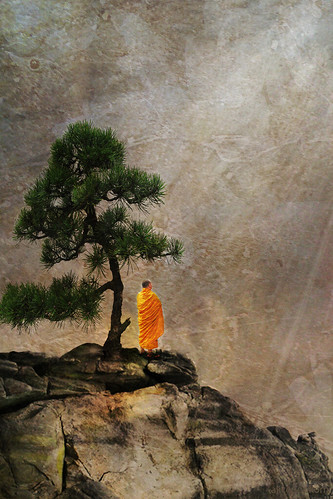
Most people look away, spend all their life running from that canyon of separation. But the mystic sits on the cliff edge and, though frightened, stares endlessly into the great space… until suddenly an amazing thing happens — in a flash the emptiness is seen to be not a distance but a connection, a joining. The gulf is itself the bridge spanning the distance, and we discover that we can walk upon it, that there was, in fact, never any separation or distance.

It is the very intensity of our yearning that is finally recognized as the point of connection with the Eternal. And then the pain flips, turning to such sweetness.

Next time it rains, don’t run for cover. Step out in the downpour, feel what it’s like to be drenched!


Recommended Books: Mirabai

Women in Praise of the Sacred: 43 Centuries of Spiritual Poetry by Women The Enlightened Heart: An Anthology of Sacred Poetry To Touch the Sky: Poems of Mystical, Spiritual & Metaphysical Light The Winged Energy of Delight Songs of the Saints of India
More Books >>


Mirabai, Mirabai poetry, Yoga / Hindu poetry Mirabai

India (1498 – 1565?) Timeline
Yoga / Hindu : Vaishnava (Krishna/Rama)

Continue Reading »

4 responses so far

Nov 20 2020

to find perfection

To find its perfection
the soul must reveal
its imperfections.

One response so far

Nov 13 2020

Ivan M. Granger – The Warbler Knows

Published by under Poetry

The Warbler Knows
by Ivan M. Granger

The warbler knows
only dawn’s shaft
of light
on her breast.

Forgetting false future
suns, she sings

in no voice
but her own.

— from Real Thirst: Poetry of the Spiritual Journey, by Ivan M. Granger


/ Image by B W /

I know this feels like a difficult time for many of us. New Covid lockdowns as we approach the winter months, holidays that feel uncharacteristically isolated, a US presidential election that is over but without a smooth transition of power, and more economic uncertainties. Anxiety is high. Depression is not uncommon. Everyone is facing some form of struggle in this period. I would like to remind us all to be kind toward one another — and kind toward ourselves. Compassion and being willing to help when we can will help us through.

It is useful to think of this period as a sort of doubled winter, an enforced time of inturning, reflection, and inner work. We can either exhaust ourselves by fighting the larger pattern or we can work with it, use it. This is a good time for meditation and rediscovering our purpose, so that, when the thaw comes, we can step out into the world renewed and strengthened.

Another important reminder is that even amidst the darkest days, the light we seek we carry within ourselves. The dark days are the best days to recognize that light, to tend to it and help it to grow.

So I thought today I would share a poem of light and renewal, one of my own poems…

=

Dawn is the flood of light that comes from the east which causes us to awaken. When we allow ourselves to become fully aware of this sacred state, we know nothing else, see nothing else; the spiritual dawn engulfs all, enlightening everything.

And we experience this state most strongly in the breast, a warming and radical opening and deep centering in the heart.

Utterly content in the eternal present, we forget the mind’s endless fantasies and fears about the future. All the future ever can be is an extension of the present, and it is here, now that we reside — always.

Recognizing this, we settle into silence, “no voice.” Yet a song emerges from the stillness, nonetheless. The voice that sings is not the mind or the ego, but the presence quietly and eternally seated behind those fluctuating elements; it is the deeply familiar voice the true Self.

The poet Gabriel Rosenstock translated this poem into the Irish language —

Ní heol don cheolaire
ach maide gréine
an mhaidneachain
ar a brollach.

Dearúdann sí na bréag-ghrianta
a thiocfaidh, ní chanann

i nguth ar bith
ach ina guth féin.

Something about reading this poem in an unfamiliar language makes me smile. It’s like seeing an old friend through new eyes.


Recommended Books: Ivan M. Granger

The Longing in Between: Sacred Poetry from Around the World (A Poetry Chaikhana Anthology) This Dance of Bliss: Ecstatic Poetry from Around the World Real Thirst: Poetry of the Spiritual Journey For Lovers of God Everywhere: Poems of the Christian Mystics Diamond Cutters: Visionary Poets in America, Britain & Oceania
More Books >>


Ivan M. Granger, Ivan M. Granger poetry, Secular or Eclectic poetry Ivan M. Granger

US (1969 – )
Secular or Eclectic
Yoga / Hindu : Advaita / Non-Dualist

Continue Reading »

3 responses so far

Nov 13 2020

most sacred place

You live in the most sacred place
in the universe:
right here,
right now.

One response so far

Oct 30 2020

William Wordsworth – Thus while the days flew by

Published by under Ivan's Story,Poetry

Thus while the days flew by, and years passed on (from The Prelude, Book 2)
by William Wordsworth

Thus while the days flew by, and years passed on,
From Nature and her overflowing soul,
I had received so much, that all my thoughts
Were steeped in feeling; I was only then
Contented, when with bliss ineffable
I felt the sentiment of Being spread
O’er all that moves and all that seemeth still;
O’er all that, lost beyond the reach of thought
And human knowledge, to the human eye
Invisible, yet liveth to the heart;
O’er all that leaps and runs, and shouts and sings,
Or beats the gladsome air; o’er all that glides
Beneath the wave, yea, in the wave itself,
And mighty depth of waters. Wonder not
If high the transport, great the joy I felt,
Communing in this sort through earth and heaven
With every form of creature, as it looked
Towards the Uncreated with a countenance
Of adoration, with an eye of love.
One song they sang, and it was audible,
Most audible, then, when the fleshly ear,
O’ercome by humblest prelude of that strain
Forgot her functions, and slept undisturbed.

— from Complete Poetical Works, by William Wordsworth


/ Image by Justin Kern /

Fires have been burning here in Colorado and last week we were busily preparing for the possibility of having to evacuate. Firefighters, helped at times by the weather, were eventually able to contain the two fires closest to us, though major fires are still causing terrible destruction elsewhere in the state. I know people who have lost cherished family homes. Entire communities have been uprooted. And, of course, these fires are devastating to the wildlife and the beautiful land itself. I know California, Oregon and other western states have been going through similar ordeals. Heartbreaking.

Thinking about these fires returns me to my love of the natural world, reminding me what nature represents, how it expresses the divine vastness and interconnectedness.

From Nature and her overflowing soul,
I had received so much…

This is a poem worth repeating. Speak it aloud. Feel the sound of it resonating in the air.

when with bliss ineffable
I felt the sentiment of Being spread
O’er all that moves and all that seemeth still;
O’er all that, lost beyond the reach of thought
And human knowledge, to the human eye
Invisible, yet liveth to the heart;
O’er all that leaps and runs, and shouts and sings,
Or beats the gladsome air; o’er all that glides
Beneath the wave, yea, in the wave itself,
And mighty depth of waters.

…beats the gladsome air…

When we remember, we recognize the natural world as the foundational ground upon which our endless physical and mental creations rest. It is the deep green embrace which is our shared home.

Communing in this sort through earth and heaven
With every form of creature, as it looked
Towards the Uncreated with a countenance
Of adoration, with an eye of love.
One song they sang

It is where we rediscover our song within the upraised voice of life.

Have a beautiful day!


Recommended Books: William Wordsworth

The Longing in Between: Sacred Poetry from Around the World (A Poetry Chaikhana Anthology) Poetry for the Spirit: Poems of Universal Wisdom and Beauty The Oxford Book of English Mystical Verse Complete Poetical Works William Wordsworth: Selected Poems
More Books >>


William Wordsworth, William Wordsworth poetry, Secular or Eclectic poetry William Wordsworth

England (1770 – 1850) Timeline
Secular or Eclectic

Continue Reading »

One response so far

Oct 30 2020

spark

Let that charged space
spark inside you and flash.

No responses yet

Oct 16 2020

Shankara – You are my true self, O Lord

Published by under Poetry

You are my true self, O Lord
by Shankara

English version by Ivan M. Granger

You are my true self, O Lord.
      My pure awareness is your consort.
      My breath, my body are your handmaids.
I am your holy ground.

My every action is an offering to you.
      My rest is my melting into you.
Every step I take circles you.
      Every word I speak is a song for you.

Whatever work I do, that work is worship of you,
      O Fountain of Bliss!

— from This Dance of Bliss: Ecstatic Poetry from Around the World, Edited by Ivan M. Granger


/ Image by DieselDemon /

I feel like I should say something about this poem by the great Adi Shankara, but I’m not feeling especially verbal this morning. Sometimes it’s best for me to just step aside and let the poem speak for itself. Enjoy!

And be well.


Recommended Books: Shankara

The Longing in Between: Sacred Poetry from Around the World (A Poetry Chaikhana Anthology) A Treasury of Sanskrit Poetry Shankara’s Crest Jewel of Discrimination Upadesa Sahasri: A Thousand Teachings Shankara and Indian Philosophy
More Books >>


Shankara, Shankara poetry, Yoga / Hindu poetry Shankara

India (788 – 820) Timeline
Yoga / Hindu : Advaita / Non-Dualist

Continue Reading »

2 responses so far

Oct 16 2020

immense journey

Whether our stories are epic or humble,
whether we live on the sharp edges or the flat plains,
we are all on an immense journey.

No responses yet

Oct 09 2020

Thich Nhat Hanh – Please Call Me by My True Names

Published by under Poetry

Please Call Me by My True Names
by Thich Nhat Hanh

Don’t say that I will depart tomorrow —
even today I am still arriving.

Look deeply: every second I am arriving
to be a bud on a Spring branch,
to be a tiny bird, with still-fragile wings,
learning to sing in my new nest,
to be a caterpillar in the heart of a flower,
to be a jewel hiding itself in a stone.

I still arrive, in order to laugh and to cry,
to fear and to hope.

The rhythm of my heart is the birth and death
of all that is alive.

I am the mayfly metamorphosing
on the surface of the river.
And I am the bird
that swoops down to swallow the mayfly.

I am the frog swimming happily
in the clear water of a pond.
And I am the grass-snake
that silently feeds itself on the frog.

I am the child in Uganda, all skin and bones,
my legs as thin as bamboo sticks.
And I am the arms merchant,
selling deadly weapons to Uganda.

I am the twelve-year-old girl,
refugee on a small boat,
who throws herself into the ocean
after being raped by a sea pirate.
And I am the pirate,
my heart not yet capable
of seeing and loving.

I am a member of the politburo,
with plenty of power in my hands.
And I am the man who has to pay
his “debt of blood” to my people
dying slowly in a forced-labor camp.

My joy is like Spring, so warm
it makes flowers bloom all over the Earth.
My pain is like a river of tears,
so vast it fills the four oceans.

Please call me by my true names,
so I can hear all my cries and my laughter at once,
so I can see that my joy and pain are one.

Please call me by my true names,
so I can wake up,
and so the door of my heart
can be left open,
the door of compassion.

— from Call Me by My True Names: The Collected Poems of Thich Nhat Hanh, by Thich Nhat Hanh


/ Image by AlicePopkorn /

A number of days ago, word began to circulate that the great Vietnamese Zen teacher, Thich Nhat Hanh, who is nearly 94, had stopped eating and his followers felt he may be ready to pass any day. Just a couple of days ago, however, a new message was posted by his community that he is now stable and that there is no immediate cause for concern. Thich Nhat Hanh has been such an important international figure of spirituality, integrity, and compassion, all combined with peace activism, that his passing, when it comes, will be felt by so many across the globe.

Because he has been in my thoughts this week, I thought I’d share one of his most loved poems today…

=

This is a lovely, unflinching meditation on how all of being and all of human experience weaves together into a single tapestry of the whole. It can even draw comparisons with Walt Whitman’s “Song of Myself,” where everything, terrible and beautiful, is one, is witnessed, and is found within oneself.

Don’t say that I will depart tomorrow —
even today I am still arriving.

Most of us have learned to anticipate what will happen next, and we end up mentally dwelling in our fantasies and fears about the future. But the future is merely an idea; it never has reality. The present moment is all that is ever real. And that is where we must dwell if we want to truly be alive and know what is real.

The present is a state of “still arriving.” Because the present moment is not a fixed space in time, we can’t say that anything encountered in the present is fixed and settled either. The present is a gossamer thin, moving thread of light where all things are just barely stepping into the visibility of being… as the moment keeps moving. Everything, everyone, in every second is always just arriving. The present is a continuous becoming.

Look deeply: every second I am arriving
to be a bud on a Spring branch,
to be a tiny bird, with still-fragile wings,
learning to sing in my new nest…

Another fascinating thing is discovered when we truly, deeply perceive the present moment: Not only are we and all things “still arriving,” but the illusion of boundaries and separate being falls away. The notion of identity expands and recognizes itself just as naturally in all things witnessed. We find we are not just the person watching the bud on the Spring branch, but in our arriving we are equally the Spring bud, the young bird, the caterpillar in the flower, the jewel waiting in the stone. This is not some poetic game of words; it is what we actually perceive ourselves to be.

The rhythm of my heart is the birth and death
of all that is alive.

When we finally see this truth, for the first time we can truly witness the world as it is. And that is what this poem is most about: witnessing. Thich Nhat Hanh invites us to courageously witness the panorama of life, wonders and horrors alike. Through this honest witnessing, we are not spectators watching others from a distance; no, it all unfolds upon us and in us. We are witnessing ourselves in many forms. We recognize that anything that happens anywhere in the world, is actually happening to us. Everything done, is done by ourselves… to ourselves. There is no unfolding experience in the world that we are not participants in.

Please call me by my true names,
so I can wake up,
and so the door of my heart
can be left open,
the door of compassion.

This is why compassion is not altruistic. This is why service is no effort. When we finally see things as they are, it is all part of our own selves. When we offer our heart, when we offer our hand, we are simply helping ourselves. Who among us, when he touches a hot iron, doesn’t immediately pull back and then soothe the burn under cool water? That’s not altruism, it is the natural response to pain in one’s body. When we see clearly, we see we are all of one body, and the joys and pains of any other is our own as well.

Compassion and a heart that has broken open are the natural result of being awake to this truth, and they are no effort at all.


Recommended Books: Thich Nhat Hanh

Call Me by My True Names: The Collected Poems of Thich Nhat Hanh The Heart of the Buddha’s Teaching: Transforming Suffering Into Peace, Joy & Liberation


Thich Nhat Hanh, Thich Nhat Hanh poetry, Buddhist poetry Thich Nhat Hanh

Vietnam/France/US (1929 – )
Buddhist : Zen / Chan

More poetry by Thich Nhat Hanh

3 responses so far

Oct 09 2020

gateways

We don’t find gateways.
We ourselves open.

2 responses so far

Sep 30 2020

Awhad al-Din Kirmani – Swept Away

Published by under Poetry

Swept Away
by Awhad al-Din Kirmani

English version by David and Sabrineh Fideler

At first, the way of your love
seemed easy.

I thought I’d reach
your union
with speed.

After taking a few steps,
I found
the way
is an ocean.

When I stepped in,
a wave swept me away.

— from Love’s Alchemy: Poems from the Sufi Tradition, Translated by David Fideler / Translated by Sabrineh Fideler


/ Image by mikebaird /

I love what this poem has to say about the spiritual path…

At first, the way of your love
seemed easy.

I thought I’d reach
your union
with speed.

At the beginning, when we first decide to explore the path of spirit, it can appear all too easy. We imagine we just need to profess a certain belief, join a certain group, read a certain scripture, pray a certain way. Do that, and everything is assured.

Sadly, this is where much of the religious world stays stuck. This approach too often leads to narrow minds and constricted hearts.

After taking a few steps,
I found
the way
is an ocean.

But when we take those first steps beyond that overly simplistic notion and begin to explore more deeply and sincerely, we come to an honesty with ourselves. That honesty overwhelms us, if we let it, by showing us the immense path ahead. So much to strive for within ourselves, so much suffering in the world to soothe… Seeing this, how can one hope to attain heaven, or wholeness, or peace?

In that moment, the best response is one of courageous determination… without expectation. We commit to the patient inner work and outer service, not because of some immediate spiritual “payoff” of enlightenment or fixing of the world’s wrongs, but because, simply, that is what is needed. It is what the heart requires of us, so why do anything less?

Head lowered, we put our shoulders to the task. That’s when the work works on us — challenging, overturning, refining.

At some point, we stop holding back. The effort ceases to be effort and it becomes rhythm, instead. We begin to dance in the waves of the ocean we once feared.

When there is less “doing,” there is less “me” doing it. Laughing, looking around, there is no “me” there, just the movement of the waves endlessly kissing the shoreline.

When I stepped in,
a wave swept me away.


Recommended Books: Awhad al-Din Kirmani

Love’s Alchemy: Poems from the Sufi Tradition Awhad al-Dīn Kirmānī and the Controversy of the Sufi Gaze


Awhad al-Din Kirmani

(1163 – 1238) Timeline
Muslim / Sufi

Continue Reading »

3 responses so far

Sep 30 2020

permission

You have permission
to be rude
when protecting the vulnerable.

No responses yet

Sep 25 2020

Denise Levertov – Beginners

Published by under Poetry

Beginners
by Denise Levertov

Dedicated to the memory of Karen Silkwood and Eliot Gralla

“From too much love of living,
Hope and desire set free,
Even the weariest river
Winds somewhere to the sea–“

But we have only begun
To love the earth.

We have only begun
To imagine the fullness of life.

How could we tire of hope?
— so much is in bud.

How can desire fail?
— we have only begun

to imagine justice and mercy,
only begun to envision

how it might be
to live as siblings with beast and flower,
not as oppressors.

Surely our river
cannot already be hastening
into the sea of nonbeing?

Surely it cannot
drag, in the silt,
all that is innocent?

Not yet, not yet–
there is too much broken
that must be mended,

too much hurt we have done to each other
that cannot yet be forgiven.

We have only begun to know
the power that is in us if we would join
our solitudes in the communion of struggle.

So much is unfolding that must
complete its gesture,

so much is in bud.

— from Candles in Babylon, by Denise Levertov


/ Image by ShinyPhotoScotland /

A beautiful, questioning poem by the American poet Denise Levertov. She is holding the Buddhist ideals of compassion and awareness up against the realization of the nature of nonbeing. She asks, how can we let go into nirvana when there is so much undone, and so much cruelty done, and so much beauty we’re disconnected from? How can we leave the living world when there is so much yet unlived?

I think Denise Levertov wants us to struggle and to strive, and discover the communion we share with each other in the process. She wants us to recognize the heaven, or the potential heaven, we already inhabit, before we rush off to vague spiritual realms.

Rather than try to offer a simple answer to the questions she is raising, let me ask what you think… How are compassion, service, respect for each other and the natural world in conflict with the pursuit of spiritual liberation and freedom from the pains of the world? How are they served by it? Does our history of imperfections make the spiritual quest irresponsible? Is the ideal of desirelessness and the awareness of nonbeing just an attempt to escape? Is it appropriate for “beginners,” greatly stumbling beginners, to rush to the end point?

Important questions… The way we answer these questions colors our path to deep awakening.


Recommended Books: Denise Levertov

Denise Levertov: Selected Poems Poems of Denise Levertov: 1960-1967 Breathing the Water The Great Unknowing: Last Poems Candles in Babylon
More Books >>


Denise Levertov, Denise Levertov poetry, Secular or Eclectic poetry Denise Levertov

US (1923 – 1997) Timeline
Secular or Eclectic : Beat
Jewish

More poetry by Denise Levertov

One response so far

Sep 25 2020

language

Language is the first tool wielded
and the last chain escaped.

No responses yet

Sep 17 2020

Rolf Jacobsen – When They Sleep

Published by under Poetry

When They Sleep
by Rolf Jacobsen

English version by Robert Hedin

All people are children when they sleep.
there’s no war in them then.
They open their hands and breathe
in that quiet rhythm heaven has given them.
They pucker their lips like small children
and open their hands halfway,
soldiers and statesmen, servants and masters.
The stars stand guard
and a haze veils the sky,
a few hours when no one will do anybody harm.
If only we could speak to one another then
when our hearts are half-open flowers.
Words like golden bees
would drift in.
— God, teach me the language of sleep.

— from Night Music: Selected Poems, by Rolf Jacobsen / Translated by Robert Hedin


/ Image by Wayne S. Grazio /

For much of the past year I have been free from chronic fatigue symptoms, but they have been kicking up again in the last few weeks. So today why not a meditation on the easy wisdom of rest and sleep?

In sleep, we rediscover our simple innocent being. We are open, vulnerable, in an odd way supremely present in that unconscious state.

All people are children when they sleep.
there’s no war in them then.

All our careful defenses, which have a way of mutating into unnoticed cruelties, loosen in sleep, and slide off our shoulders like a heavy coat. All harm and armor are set aside.

…a few hours when no one will do anybody harm.

Even when our hearts struggle to trust and rest, we have a built-in biological faith that kicks in at night.

The stars stand guard…

The chest unlocks, and the stifled tide of the breath resumes its flow in and out again.

They open their hands and breathe
in that quiet rhythm heaven has given them.

Imagine the waking world blessed with such unavoided honesty. Think what words and deeds our blossoming hearts would draw to them.

If only we could speak to one another then
when our hearts are half-open flowers.
Words like golden bees
would drift in.

I look outside the window to see a hazy morning sun. The call of a lone finch echoes through the morning air. My breath slows and deepens. My eyelids grow heavy.

– God, teach me the language of sleep.


Recommended Books: Rolf Jacobsen

The Winged Energy of Delight The Roads Have Come to an End Now: Selected and Last Poems of Rolf Jacobsen Night Music: Selected Poems North in the World: Selected Poems of Rolf Jacobsen, A Bilingual Edition Night Open: Selected Poems


Rolf Jacobsen, Rolf Jacobsen poetry, Secular or Eclectic poetry Rolf Jacobsen

Norway (1907 – 1994) Timeline
Secular or Eclectic
Christian : Catholic

Continue Reading »

5 responses so far

Sep 17 2020

The deepest mystery

The deepest mystery
is in the mirror.

No responses yet

Sep 04 2020

Bawa Muhaiyaddeen – There is One God

Published by under Poetry

There is One God
by Bawa Muhaiyaddeen

There is One God.
He created all beings,
And He exists beyond the beyond of religions,
Beyond the separations of race,
Religion, and philosophies.
He is beyond mind, desire, and physical vision
He is beyond the world, lust, torpor, and illusion.
God resides in that spotlessly pure place known as the heart
And sees and knows everything.
He sees each and every heart and mind and understands all things.


/ Image by Muslimnity /

There is One God.
He created all beings…

Several of the short statements of this poem can be read as rather simple, standard religious formulations. But when approached with a deeper understanding and an openness, these statements unfold to reveal profound truths…

That opening line, “there is One God,” for example, is an important affirmation in all of the monotheistic traditions. For many, this is an assertion that their image of God is the right one, while all other ideas of God are false, especially religions that embrace a multiplicity of gods.

For genuine mystics, however, the affirmation of One God is not about surface theologies. In the deepest blissful experiences of communion, the Divine is experienced as a profound, all-encompassing Unity. “There is One God” is another way of saying that God is One, God is Oneness, that all things are One in the Divine Embrace. For the mystic in deepest communion, God is the living Wholeness in which all things have their being.

Properly understood, “There is One God” is not a sectarian war cry, it is an affirmation of the sacred unified nature of reality.

“He created all beings,” similarly can be read as a bland formulation about a creator God, but from the mystic’s perspective it is a statement of observed reality. Mystics often report being flooded with a numinous light which is perceived as filling and animating all of creation. That light is recognized as the underlying strata of existence from which all beings and all things emerge. That living radiance is quite literally the source and creator of all beings.

God resides in that spotlessly pure place known as the heart…

Here again we can read this line as a pretty but rather meaningless statement about some metaphorical heart — or we can settle deeply into ourselves and experience with the mystics the space of the heart, which reveals itself to be a wide-open, bliss and love-filled space in which we come to know ourselves as we truly are in profound simplicity and innocence.

This is the pure space in which we see ourselves not as ourselves but in the image of the true Self, as an emanation of that Divine One.

…And sees and knows everything.

I know that for some who worked hard to escape the rigid ideas of their religious upbringing, a statement like this can trigger negative reactions. Too many religious leaders view God as a sort of cosmic cop, always watching and ready to punish. (I am reminded of that Christmas song, “You better watch out. You better not shout. Santa Claus is coming to town. …He sees you when you’re sleeping. He knows when you’re awake. He knows when you’ve been bad or good, so be good for goodness sake!”) I hope it is obvious that this is not the nature of divine reality.

What then does a statement like this really mean, that God sees and knows everything? We’re not really talking about God as a source of information. What’s the point of God being the heavenly Google? When mystics talk about God seeing everything or knowing everything, they are not talking about data, they are talking about gnosis. Yes, in communion, one’s intuition may become highly refined and the ability to pluck surprisingly insightful pieces of information from the ether may be enhanced, but that is secondary. For many, the experience is as if one is bathing in an immense pool of Knowing itself. It is not so much the endless particles of information one sees as the living fluid that fills the spaces between all of those particles, allowing everything to interrelate and take on meaning within the universal whole. One becomes immersed not in informational knowledge so much as knowingness itself.

And from this state one sees with a compassionate understanding the living web of interconnection we all share.

The statement at the poems center is one of universalism and inclusion–

And He exists beyond the beyond of religions,
Beyond the separations of race,
Religion, and philosophies.

When we overcome simplistic theological explanations and connect more directly with the divine reality, sectarianism, prejudices, and separations fall away.

The universe with its kaleidoscopic diversity of expression is, beneath it all, a living Unity. All beings, all people are born from that same living Oneness. How then can we be troubled by differences in race or religion?


Recommended Books: Bawa Muhaiyaddeen

A Book of God’s Love Song of Muhammad Come to the Secret Garden: Sufi Tales of Wisdom Asma’Ul-Husna: The 99 Beautiful Names of Allah A Mystical Journey
More Books >>


Bawa Muhaiyaddeen, Bawa Muhaiyaddeen poetry, Muslim / Sufi poetry Bawa Muhaiyaddeen

Sri Lanka (1900? – 1986) Timeline
Muslim / Sufi

Continue Reading »

2 responses so far

« Prev - Next »