Sep 04 2020
gift of life
Each day should be approached
with amazement, wonder, gratitude.
After all, what have you done
to earn the inconceivable gift of life?
Sep 04 2020
Each day should be approached
with amazement, wonder, gratitude.
After all, what have you done
to earn the inconceivable gift of life?
Aug 28 2020
Place your mind before the mirror of eternity!
by Clare of Assisi
English version by Regis J. Armstrong, OFM CAP & Ignatius C. Brady, OFM
Place your mind before the mirror of eternity!
Place your soul in the brilliance of glory!
Place your heart in the figure of the divine substance!
And transform your whole being into the image of the Godhead Itself
through contemplation!
So that you too may feel what His friends feel
as they taste the hidden sweetness
which God Himself has reserved
from the beginning
for those who love Him.
 — from Francis and Clare: The Complete Works: The Classics of Western Spirituality, Translated by Regis J. Armstrong, OFM CAP / Translated by Ignatius C. Brady, OFM

/ Image by Xavier Mazellier /
I especially like the Clare’s opening line:
Place your mind before the mirror of eternity!
That could just as easily be a statement from the Buddhist canon. Think about this exhortation for a moment. What does it mean to place one’s mind before the mirror of eternity? The mirror of eternity is that which reflects everything back to us. To place the mind before it is to be utterly naked to oneself. Everything within our awareness is shown back to us, our faults and foibles, as well our victories and inherent goodness — all simply as it is. It is the unblinking view of our own heart. Imagine the steadiness, courage, and supreme humility required to truly do this. To witness our true self that openly, the ego and its constant editing of reality can’t come along.
Place your soul in the brilliance of glory!
A lot of religious language, particularly Christian language, talks about “glory.” The word is used so often that most people just skip over it as churchy filler language. But there is a reason the word “glory” keeps getting used. Glory is radiant, numinous light. Glory is that which shines. Glory is “brilliance.”
For genuine mystics, this light is not empty praise language — it is directly experienced. For the mystic, this light is perceived as being a living radiance that permeates everything, everywhere, always.
The sense of boundaries and separation, long taken for granted by the mind as the fundamental nature of existence, suddenly seems illusory, for this light shines through all people and things.
This is Clare’s “brilliance of glory.”
To “place your soul” in that brilliance is to allow the little self to be disappear into the large Self, like a lamp lost in daylight.
This is the radical path of the mystic, allowing that divine radiance to “transform your whole being into the image of the Godhead.”
I also want to point out the closing reference to “sweetness”:
So that you too may feel what His friends feel
as they taste the hidden sweetness
which God Himself has reserved
from the beginning
for those who love Him.
Those who lose themselves in the divine light in order to gain the light itself, experience — literally — sweetness on the tongue. This is the amrita of Hinduism, the ambrosia of ancient Greece, the wine of the Sufis.
When one enters the sacred ecstatic state, the sensory portion of the mind does its best to interpret the overwhelming bliss through the senses. This is why many mystics taste the most ethereal sweetness on the palette and at the back of the throat, accompanied by a warmth in the belly and heart.
That sweetness is not just a metaphor; it is real, and “reserved” for each of us, as we become an ever more intimate friend to the Friend.
Reflection, light, transformation, friendship, sweetness…
Recommended Books: Clare of Assisi

|
Clare of Assisi |
Aug 21 2020
The Moon of Your Love
by Muhammad Shirin Maghribi
English version by David & Sabrineh Fideler
Not a single soul lacks
a pathway to you.
There’s no stone,
no flower —
not a single piece of straw —
lacking your existence.
In every particle of the world,
the moon of your love
causes the heart
of each atom to glow.
 — from Love’s Alchemy: Poems from the Sufi Tradition, Translated by David Fideler / Translated by Sabrineh Fideler

/ Image by alicepopkorn /
When I first discovered this poem I instantly fell in love with it.
Not a single soul lacks
a pathway to you.
This simple statement is so profoundly healing to the questing human heart.
In a world that places so many demands upon us, in which we pile up our own countless goals and deadlines, it becomes all too easy to feel lost and separated from the Divine. But it is never so…
There’s no stone,
no flower —
not a single piece of straw —
lacking your existence.
The pathway is to simply and entirely recognize the divine existence already present.
We imagine Herculean efforts are required, isolation, smothering asceticism, travels to exotic lands. We forget that the holiest place we can discover is immediately behind the breastbone.
Every effort, in the end, is to reach exhaustion, until we are finally too tired to continue telling ourselves stories about our lives. Finally, finally we fall silent. Finally, we witness ourselves as we are.
What we discover leaves us speechless.
In every particle of the world,
the moon of your love
causes the heart
of each atom to glow.
Every effort, the entire pathway, leads to precisely one step: a step out of the way. That’s when real opening occurs, and it is effortless. The love and light already present blossom within the heart. And every atom, all the universe, is lit up with us.
(You think I’m just spinning another pretty story, don’t you?)
Recommended Books: Muhammad Shirin Maghribi
 |
|
 |
||
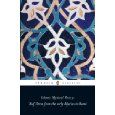
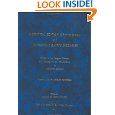
| Islamic Mystical Poetry: Sufi Verse from the Early Mystics to Rumi | Love’s Alchemy: Poems from the Sufi Tradition | A Critical Edition of the Divan of Muhammad Shirin Maghribi | ||
|
Muhammad Shirin Maghribi
Iran/Persia (1349 – 1408) Timeline |
Aug 21 2020
Love and compassion are effortless.
The soul is exhausted by the effort
to stop this natural outpouring
of the living heart.
Aug 14 2020
Sabbaths 1999, VII
by Wendell Berry
Again I resume the long
lesson: how small a thing
can be pleasing, how little
in this hard world it takes
to satisfy the mind
and bring it to its rest.
With the ongoing havoc
the woods this morning is
almost unnaturally still.
Through stalled air, unshadowed
light, a few leaves fall
of their own weight.
The sky
is gray. It begins in mist
almost at the ground
and rises forever. The trees
rise in silence almost
natural, but not quite,
almost eternal, but
not quite.
What more did I
think I wanted? Here is
what has always been.
Here is what will always
be. Even in me,
the Maker of all this
returns in rest, even
to the slightest of His works,
a yellow leaf slowly
falling, and is pleased.
 — from Given: Poems, by Wendell Berry

/ Image by Mark Grant-Jones /
It’s been a while since we’ve had a poem by Wendell Berry. And, yes, maybe this poem is for a misty autumn morning, but it suits today just as well…
Again I resume the long
lesson: how small a thing
can be pleasing…
That’s the “long lesson,” the slow realization of a lifetime lived with attention: the deep satisfaction of simple moments. Grand experiences may serve as important punctuation marks to life, but it is only when we deeply engage with the gentle flow of small events that we come to know our lives. Remember, real magic is hidden; it is hidden in those quiet moments.
how little
in this hard world it takes
to satisfy the mind
and bring it to its rest.
And nature is our constant teacher and guide, again and again bringing us back to ourselves.
With the ongoing havoc
the woods this morning is
almost unnaturally still.
When we walk well among the woods, with the quiet attention that comes only when self is left behind, we glide through the eternal moment.
What more did I
think I wanted? Here is
what has always been.
Here is what will always
be.
And we just might come to recognize the Source of “all this” — right here, within this moment, within our own breast.
Even in me,
the Maker of all this
returns in rest…
Berry’s title tells us this poem is about the Sabbath. He understands the real meaning of the Sabbath. It is not the one day out of seven when one goes to church or synagogue. Sabbath is the living moment of sacred rest. It isn’t a question of how often we sit within a steepled hall. Until the mind quiets and comes to rest in the heart, we have not yet honored the Sabbath.
The image of the falling leaf, the reference to the day of rest, this also gently suggests something of death to us. The poet is walking through the woods in autumn and contemplating the how things end, how our own lives play out and come to a close, and there is a quiet contentment. We might find a fullness in that moment of awareness when we simply allow ourselves to be at rest in the natural rhythm of things. Death is not a horror or a source of dread but, in its right time, a strangely sweet yielding, a sabbath.
Whichever day of the week you read this, have a beautiful day of rest and contemplation!
Recommended Books: Wendell Berry
 |
|
 |
 |
 |
| The Collected Poems of Wendell Berry, 1957-1982 | Given: Poems | Selected Poems of Wendell Berry | A Timbered Choir: The Sabbath Poems 1979-1997 | The Mad Farmer Poems |
| More Books >> | ||||
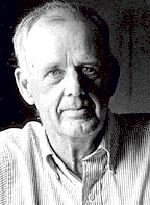
|
Wendell Berry
US (1934 – ) |
Aug 07 2020
My heart wears all forms
by Muhyiddin ibn Arabi
English version by Ivan M. Granger
My heart wears all forms:
For gazelles it is an open field,
for monks a cloister.
It is a temple for idols,
and for pilgrims the Ka’ba.
It is the Torah’s tablets
and the pages of the Quran.
Love is the faith I follow.
Whichever path Love’s caravan takes,
that is my road and my religion.

/ Image by bachmont /
These lines from The Interpreter of Desires are probably Ibn ‘Arabi’s most famous. The entire work is a multi-layered love poem that, like The Song of Solomon in the Bible, can be read as an exploration of the soul’s yearning for God. Ibn ‘Arabi’s poem tells of a pilgrimage to Mecca in which he meets a beautiful young woman named Nizham (Harmony). The ardor awakened by this encounter inspires a quest for the eternal harmony she embodies. Her earthly beauty and grace awakens a yearning for the true Beloved, for God.
My heart wears all forms.
The heart, in this sense, is not just how we feel love, it is the center of our awareness. It is the mirror that reflects whatever we focus on. In other words, the heart, the core of awareness, doesn’t just feel, it takes on the form of what we love. This is why we ultimately become what we love or fixate on, for good and for bad.
When we fall silent, perhaps stunned into silence through a radical encounter with beauty and harmony, we find everything reflected within the heart. Every person. Every creature. Every object. Every thought. We find all of existence reflected within the heart.
And each reflection is recognized as an expression of the Beloved. While we ourselves become formless.
For gazelles it is an open field,
for monks a cloister.
It is a temple for idols,
and for pilgrims the Ka’ba.
It is the Torah’s tablets
and the pages of the Quran.
Can such an awakened heart then reject any school of awakening?
Love is the faith I follow.
Whichever path Love’s caravan takes,
that is my road and my religion.
But, of course, one must understand what real religion is. It is not stone walls or steeples. It is not crosses or crescents. It is neither creeds nor rituals nor books. Though any one of these, properly approached, can open the door.
Like all true masters, Ibn ‘Arabi reminds us that the true religion is nothing less than Love.
This is an all-embracing vision of reality in which the heart has grown wide enough to recognize everyone and everything at rest within itself. An overwhelming, blissful experience of wholeness, interconnectedness, and joy. Words fail, but that pulse of the universal life does not.
That is what religion is. That is the road.
Recommended Books: Muhyiddin ibn Arabi

|
Muhyiddin ibn Arabi
Spain (1165 – 1240) Timeline |
Jul 31 2020
Navajo Prayer – May it be beautiful
by Navajo (Anonymous)
English version by Gladys A. Reichard
Dark young pine, at the center of the earth originating,
I have made your sacrifice.
Whiteshell, turquoise, abalone beautiful,
Jet beautiful, fool’s gold beautiful, blue pollen beautiful,
Red pollen, pollen beautiful, your sacrifice I have made.
This day your child I have become, I say.
Watch over me.
Hold your hand before me in protection.
Stand guard for me, speak in defense of me.
As I speak for you, speak for me.
May it be beautiful before me.
May it be beautiful behind me.
May it be beautiful below me.
May it be beautiful above me.
May it be beautiful all around me.
I am restored in beauty.
I am restored in beauty.
I am restored in beauty.
I am restored in beauty.
 — from The Longing in Between: Sacred Poetry from Around the World (A Poetry Chaikhana Anthology), Edited by Ivan M. Granger

/ Image by Russ Seidel /
I have come across several variations of this prayer-poem; they all manage to return me to my feet and bring me into quiet awe of the moment.
This version, with its introductory offering to the pine tree is especially moving to me. According to ethnographic notes, this version of the prayer was evoked during healing ceremonies performed in front of a sacred pine tree. The pine tree here is the pillar of life that stands “at the center of the earth,” the world navel, the center of being. This pine is the mediator between heaven and earth, a bridge or doorway between the two realms. This is a healing ceremony performed at the point where the sacred and the mundane touch. And that is where we witness the beauty that heals.
I love the evocation: “This day your child I have become, I say.” Right relationship is restored. More than restored, it is recognized. The soul uncontracts when it remembers it is the child of something profound, alive, divine… and beautiful.
May you be restored in beauty.
Recommended Books: Navajo (Anonymous)
|
 |
|||
| The Longing in Between: Sacred Poetry from Around the World (A Poetry Chaikhana Anthology) | The Essential Mystics: Selections from the World’s Great Wisdom Traditions | |||
|
Navajo (Anonymous)
US (19th Century) Timeline |
Jul 27 2020
Reason and Passion
by Kahlil Gibran
And the priestess spoke again and said: Speak to us of Reason and Passion.
And he answered, saying:
Your soul is oftentimes a battlefield, upon which your reason and your judgment wage war against your passion and your appetite.
Would that I could be the peacemaker in your soul, that I might turn the discord and the rivalry of your elements into oneness and melody.
But how shall I, unless you yourselves be also the peacemakers, nay, the lovers of all your elements?
Your reason and your passion are the rudder and the sails of your seafaring soul.
If either your sails or your rudder be broken, you can but toss and drift, or else be held at a standstill in mid-seas.
For reason, ruling alone, is a force confining; and passion, unattended, is a flame that burns to its own destruction.
Therefore let your soul exalt your reason to the height of passion, that it may sing;
And let it direct your passion with reason, that your passion may live through its own daily resurrection, and like the phoenix rise above its own ashes.
I would have you consider your judgment and your appetite even as you would two loved guests in your house.
Surely you would not honour one guest above the other; for he who is more mindful of one loses the love and the faith of both.
Among the hills, when you sit in the cool shade of the white poplars, sharing the peace and serenity of distant fields and meadows — then let your heart say in silence, “God rests in reason.”
And when the storm comes, and the mighty wind shakes the forest, and thunder and lightning proclaim the majesty of the sky, — then let your heart say in awe, “God moves in passion.”
And since you are a breath in God’s sphere, and a leaf in God’s forest, you too should rest in reason and move in passion.
 — from The Prophet, by Kahlil Gibran

/ Image by zabaraorg /
This is such an interesting section of Kahlil Gibran’s “The Prophet,” especially the way he emphasizes the positive nature of passion. Religious and spiritual traditions, both East and West, have a tendency to want to control or even suppress passion. Passion is sex. Passion is emotion. Passion is powerful, intense, turbulent.
Gibran acknowledges that “passion, unattended, is a flame that burns to its own destruction.” Passion, without limitation or conscious guidance, can become a chaotic, consuming force in our lives. But he does not say we should get rid of passion or that reason should subjugate it. He speaks in terms of balanced, integrated use of passion in our lives.
Passion is the engine in our lives. Gibran gives us the image of a ship: passion is the ship’s sails, and reason is the rudder. The sails catch the power of the wind, propelling the ship forward. Passion is power, vitality, life!
But movement without direction is, at best, meaningless and, at worst, can lead us onto rocks. That is why we need the rudder of reason to intelligently use the power of passion’s movement so that we can reach our destination.
One is not “good” and the other “bad.” Both reason and passion are necessary. They must be understood, brought into harmony, used effectively to balance each other.
This may sound like a bit of a tangent, but I’m reminded of the imagery of the Christian Nativity. In the traditional iconography, we see the infant Christ on a bed of straw in a manger surrounded by animals. In the gospel tale, two animals are mentioned specifically: an ox and an ass. Why those two animals? Esoteric Christian teachings sometimes explain it this way: the ox (an ancient symbol of Venus), represents sensuality and passion; the ass can be seen as embodying either the ego or the reasoning mind. What are they doing in this image of divine birth? Notice that they are not suppressed; the ox and ass are not chained or slaughtered. No, they rest, they are at peace, tamed by the presence of the Christ child. More than that, they are actually protecting the infant, giving him their strength. As one 20th century Christian teacher phrased it, “They are warming the Christ child with their breath.” Viewed this way, the nativity gives us an image not of suppression, but of harmonious integration of the energies of life in support of the awakening soul.
I especially like Kahlil Gibran’s summations at the end–
“God rests in reason.”
“God moves in passion.”
Movement and stillness, when we balance both we have discovered how to dance!
Recommended Books: Kahlil Gibran
|
 |
 |
 |
 |
| The Prophet | The Beloved: Reflections on the Path of the Heart | Broken Wings | Jesus the Son of Man | Kahlil Gibran: His Life & World |
| More Books >> | ||||

|
Kahlil Gibran
Lebanon/US (1883 – 1931) Timeline |
Jul 17 2020
The Canticle of Brother Sun
by Francis of Assisi
English version by Ivan M. Granger
My Lord most high, all-powerful, all-good,
Celebration, light, and all sweet blessings are yours,
yours alone.
No man speaks
who can speak your Name.
Praise to you, my Lord, and to all beings of your creation!
Praise especially to brother sun,
who fills the day with light
— through whom you shine!
Beautiful and bright, magnificent with splendor,
He shows us your Face.
Praise to my Lord for sister moon
and for the stars.
You have formed them in the firmament,
fine and rare and fair.
Praise to you, Lord, for brother wind,
for the air, for the clouds,
for fair days and every turn of weather
— through which you feed the world.
Praise to my Lord for sister water,
precious and pure, who selflessly serves all.
Praise to my Lord for brother fire,
through whom you fill the dark with light.
Lovely is he in his delight, mighty and strong.
Praise to my Lord for our sister, mother earth,
who nourishes us and surrounds us
in a world ripe with fruit, pregnant
with grassy fields,
spangled with flowers.
Praise to my Lord for those seeking your love,
who discover within themselves forgiveness,
rejecting neither frailty nor sorrow.
Enduring in serenity, they are blessed,
For they shall be crowned by your hand, Most High.
Praise to my Lord for our sister death,
the body’s death,
whom none avoid.
A great sadness for those who die having missed life’s mark;
Yet blessed they whose way
is your most holy will —
Having died once, the second death
does them no ill.
Sing praises!
Offer holy blessings to my Lord!
In gratitude, selflessly offer yourself to him.
— from The Longing in Between: Sacred Poetry from Around the World (A Poetry Chaikhana Anthology), Edited by Ivan M. Granger

/ Image by rkramer62 /
Thank you to everyone who sent a note of concern about my absence from these poetry emails. I apologize about that unannounced pause. Let me reassure you that I am doing well and my health is okay. The reason I haven’t sent any poems during this past month or so is because my wife’s mother needed to go to the hospital, then hospice care, and then passed away. (Her death was not related to the current pandemic, however.)
Since my wife was her mother’s only relative, she bore a heavy burden in caring for her and in handling each new challenge and crisis as it arose. It is a profoundly difficult balance to deal with the whirlwind of decisions and responsibilities while also feeling the grief and complex emotions surrounding a close family member’s death. I went through all of this myself when both of my parents died about ten years ago. I was also an only child, but my mother had an extended family of many sisters who helped with everything. My wife has been on her own in dealing with her mother’s death, having only me to help her.
So we have been dealing with nurses and doctors and hospital administrators, sometimes having to fight with them on her mother’s behalf. Worrying questions of nursing homes and healthcare coverage switched to meetings with hospice care workers, who are the saints of the healthcare world. We wrestled with the uncomfortable questions of burial versus cremation and meetings with funeral home directors. We did a weekend sprint to move all of her mother’s worldly possessions from her tiny apartment before month’s end, rapidly sorting through things of emotional significance as if they were random objects that take up too much space. We navigated the bureaucracy necessary to close out financial accounts. I say ‘we’ but much of that effort was led by my wife. While I have helped in all the ways I could as well as acting as emotional support, I have primarily been pushing to keep my work hours high in my day job through all of this so that, in the midst of everything else, my wife can also take time to grieve without worrying about her own work.
Death is such a huge event, the final life passage. I like to think of it as our final initiation, our graduation ceremony. It is quite a challenge to find the balance that allows us to hold the appropriate sense of reverence in the midst of so many pressing practical demands. As a poet and a spiritual practitioner, I naturally want to be internal, contemplative and, of course, a loving presence to the person crossing such a profound threshold, but it takes real skill to accomplish all that is necessary and still hold that inner sacred space.
I continually stand in wonder at the immensity and beauty and crushing challenges of this human life — as well as its closure. I am in awe of every single person on this planet: we all walk a courageous path through this life.
—
St. Francis composed his masterpiece, the Canticle of Brother Sun, in three parts. The first part in praise of the beauty and holiness of nature as a reflection of the Divine, was written in the Spring of 1225, immediately after he received the stigmata during an extended meditation retreat among a group of caves.
The second section, the segment on forgiveness and peace, was composed soon after, perhaps in response to the squabbling of political and religious authorities in Assisi.
The final verses were written late the following year as St. Francis was dying, in which he seems to be greeting “sister death.”
This hymn is one of the first great works written in Italian. At the time, Latin was the language of the Church and of learning. Yet, as part of Francis’s humility and affinity with the common people, he composed this praise poem in simple Italian so all could be inspired by it.
Praise for brother sun and sister moon, for the living wind and water and fire and earth. Praise for love and peace, without which the living awareness collapses to barrenness. And praise to death, too, who, in the fulness of time, brings completion and life’s final initiation. Through this poem we witness the whole pageant of life as it expresses itself through us and all the world.
—
Be well, everyone — and bright blessings!
Recommended Books: Francis of Assisi

|
Francis of Assisi |
Jun 12 2020
Between the conscious and the unconscious, the mind has put up a swing
by Kabir
English version by Robert Bly
Between the conscious and the unconscious, the mind has put up a swing:
all earth creatures, even the supernovas, sway between these two trees,
and it never winds down.
Angels, animals, humans, insects by the million, also the wheeling sun and moon;
ages go by, and it goes on.
Everything is swinging: heaven, earth, water, fire,
and the secret one slowly growing a body.
Kabir saw that for fifteen seconds, and it made him a servant for life.
 — from The Enlightened Heart: An Anthology of Sacred Poetry, by Stephen Mitchell

/ Image by Johnny Jet /
This is a rather loose translation, but I like it.
Everything is swinging: heaven, earth, water, fire,
and the secret one slowly growing a body.
There is a continuous flowing between the subtle and the manifest, between spirit and matter. Spirit pours through matter, giving it life and awareness. Matter, in turn, gives form to spirit, striving to embody the limitless amidst limitation.
And so the swing goes back and forth, patiently, playfully, sometimes exhilarating, sometimes frightening.
It isn’t a process where we find that perfect spot and then it all stops. “It never winds down.” It is an interplay that continues, and we find our rightful place by seeing the entire dance…
Kabir saw that for fifteen seconds, and it made him a servant for life.

|
Kabir
India (15th Century) Timeline |