Jul 12 2019

Thomas Merton – Song for Nobody

Published by under Poetry

Song for Nobody
by Thomas Merton

A yellow flower
(Light and spirit)
Sings by itself
For nobody.

A golden spirit
(Light and emptiness)
Sings without a word
By itself.

Let no one touch this gentle sun
In whose dark eye
Someone is awake.

(No light, no gold, no name, no color
And no thought:
O, wide awake!)


A golden heaven
Sings by itself
A song to nobody.

— from Selected Poems of Thomas Merton, by Thomas Merton


/ Image by Jonathan Thorne /

Let us sing a song… for nobody.

A yellow flower
(Light and spirit)
Sings by itself
For nobody.

I imagine Thomas Merton on a morning walk through a dawn-lit field where nothing much is happening. Just some damp grasses and a few bright flowers waking to the sun. Those flowers stand there unnoticed, unseen until now, yet they carry such bold life, bright yellow petals radiant in the morning sun. They are an embodiment of light and spirit.

All of life, all of existence sings — but for whom?

The world dances with a golden light. Who is the real audience for this performance?

Perhaps the intended audience is God. Perhaps the flowers array themselves for their own private delight. But Merton says this song of light and spirit is for nobody because it is clearly not for him. He is utterly inconsequential to the scene. The flowers don’t care about him. They don’t adjust themselves to his presence. In fact, he is the one who is unnoticed, not the flowers.

(No light, no gold, no name, no color
And no thought:
O, wide awake!)

Enraptured by this moment of beauty, to which he is a non-entity, Merton disappears. Thought ceases, the mind quiets and brings to a halt its endless naming and categorizing. There is just stillness and the moment witnessed. That is when the ecstatic moment of awakening occurs — O, wide awake!

A golden heaven
Sings by itself
A song to nobody.

In this state of no-mind and no-self, we, along with Merton, are somehow profoundly alive! Awake, we see the world, perhaps for the first time, as it truly is — a golden heaven. And that heaven sings all around us, all the time! For whom? For no one in particular. Life sings to life. Spirit sings because it is spirit. The nature of being is song and light and life. When we quiet the busy mind and drop our own self-importance, we too join in that living symphony.

Have a beautiful day!


Recommended Books: Thomas Merton

Selected Poems of Thomas Merton The Collected Poems of Thomas Merton A Thomas Merton Reader The Strange Islands: Poems by Thomas Merton Thomas Merton Monk & Poet: A Critical Study


Thomas Merton, Thomas Merton poetry, Christian poetry Thomas Merton

US (1915 – 1968) Timeline
Christian : Catholic

Continue Reading »

6 responses so far

Jul 03 2019

Kahlil Gibran – Giving

Published by under Poetry

Giving
by Kahlil Gibran

You often say, “I would give, but only to the deserving.”
The trees in your orchard say not so, nor the flocks in your pasture.
They give that they may live, for to withhold is to perish.
Surely he who is worthy to receive his days and his nights, is worthy of all else from you.
And he who has deserved to drink from the ocean of life deserves to fill his cup from your little stream.
And what desert greater shall there be, than that which lies in the courage and the confidence, nay the charity, of receiving?
And who are you that men should rend their bosom and unveil their pride, that you may see their wealth naked and their pride unabashed?
See first that you yourself deserve to be a giver, and an instrument of giving.
For in truth it is life that gives unto life — while you, who deem yourself a giver, are but a witness.

— from The Prophet, by Kahlil Gibran


/ Image by Cristian Bernal /

This week I have been thinking about the suffering and cruelty embodied by the immigrant detention camps along the southern US border. I found myself turning to this poem by Gibran, himself an immigrant to the the US…

Whom do we help? To whom do we give? Which people do we choose to care for and consider part of our community?

It seems a reasonable response to say, “I would give, but only to the deserving.” The problem with such a reasonable approach is that reason, for all its usefulness, is stuck in the head. The questions of giving and connection are questions for the heart, not the head. And the heart knows what the head does not:

They give that they may live, for to withhold is to perish.

We don’t give to help the deserving. Everyone is deserving. And, ultimately, we don’t give to help those in need. We give to help ourselves, because giving is essential to our nature, while non-giving is a form of death.

When we work deeply with service and giving as part of our spiritual path, we begin to understand that the alleviation of want and the sharing of resources is not enough. That surface approach is usually a sign of ego’s touch, a way to crown oneself as the giver. We haven’t yet discovered what it means to be worthy to give. Seen clearly, there is no personal merit in giving. It is not about “karma points” or buying our way into heaven. Giving is our nature. Giving is who we are. It is what we do when we are true to ourselves. Giving and caring and help are the natural flow of life, and we are part of that life. When we give we have simply ceased to constrict our own spirit… and then our hearts untighten and we can witness life flowing through us all.

For in truth it is life that gives unto life — while you, who deem yourself a giver, are but a witness.

We should daily ask ourselves, “What gift can I give?”


Recommended Books: Kahlil Gibran

The Prophet The Beloved: Reflections on the Path of the Heart Broken Wings Jesus the Son of Man Kahlil Gibran: His Life & World
More Books >>


Kahlil Gibran, Kahlil Gibran poetry, Christian poetry Kahlil Gibran

Lebanon/US (1883 – 1931) Timeline
Christian
Secular or Eclectic

Continue Reading »

2 responses so far

Jun 28 2019

Rumi – No One Here but Him

Published by under Poetry

No One Here but Him
by Mevlana Jelaluddin Rumi

English version by Andrew Harvey

Watching my hand; He is moving it.
Hearing my voice; He is speaking…
Walking from room to room —
No one here but Him.

— from Perfume of the Desert: Inspirations from Sufi Wisdom, by Andrew Harvey / Eryk Hanut


/ Image by Ricardo Molina Peña /

Isn’t this a lovely snippet of a poem by the great Jelaluddin Rumi? But he’s not just making a pretty, pious statement about God being the motivating force behind things.

Watching my hand; He is moving it.
Hearing my voice; He is speaking…

Mystics often say odd things like this. It makes one ask: Do they refuse to take responsibility for their actions? Do they take no action at all?

Sufis speak of an aspect of the personality called the nafs. In yoga, it is called the ahamkara. In modern English, we tend to translate this as the ego. This is the little self, the self-focused self, the self that endlessly proclaims, “I, me, mine.”

Typically we pass all action through the nafs. When I am moving my hand, the “I” moving it is the nafs. In doing so, every action subtly proclaims the doer as the center of existence. Every action great and small becomes a sort of self-hypnosis, returning us back to the chant of the nafs: “I-me-mine.”

The heart of mysticism and true spiritual communion — whatever your tradition — is to overcome this petty ruler of the awareness. When we can let go of the nafs, our sense of self expands immensely. And the heart too glows and opens. As the old fences of the self fall, everyone and everything becomes a part of us in a very real way. Or, rather, we recognize that we have always been so, and it is as if our eyes have finally opened.

Now, imagine taking action from this state. Your hand still moves, but it is no longer moved by “I-me-mine.” There is an elegant stillness and spaciousness behind that movement, with a surprising capacity to affect transformation.

But who is doing this action if not the nafs? It is the larger Self, that aspect of us that does not separate itself from the Whole Reality. And despite the once constant protests of the nafs, was there ever anything other than that Wholeness anyway? Best check to be sure…

Walking from room to room —
No one here but Him.


Recommended Books: Mevlana Jelaluddin Rumi

The Longing in Between: Sacred Poetry from Around the World (A Poetry Chaikhana Anthology) Poetry for the Spirit: Poems of Universal Wisdom and Beauty This Dance of Bliss: Ecstatic Poetry from Around the World Music of a Distant Drum: Classical Arabic, Persian, Turkish & Hebrew Poems Perfume of the Desert: Inspirations from Sufi Wisdom
More Books >>


Mevlana Jelaluddin Rumi, Mevlana Jelaluddin Rumi poetry, Muslim / Sufi poetry Mevlana Jelaluddin Rumi

Afghanistan & Turkey (1207 – 1273) Timeline
Muslim / Sufi

Continue Reading »

One response so far

Jun 20 2019

Gabriel Rosenstock – inch by inch

Published by under Poetry

inch by inch
by Gabriel Rosenstock

inch by inch
through the trees
— the rising moon


orlach ar orlach
trí na crainn
— an ghealach ag éirí


/ Image by Gautam & Chitrabhanu Chakrabarti /

A haiku today in honor of the recent full moon.

Notice the way this poem unfolds, each short line shifting the frame of our mind’s perception…

inch by inch…

Something is moving oh so slowly, we might even say that it is creeping up. And the phrase, “inch by inch” is so minute that the initial frame of our mental image is minuscule.

But with the next line…

through the trees…

…we suddenly have trees in our minds eye. Our inner vision has widened. It is as if we went from a peering crouch to having to stand back in order to take in the picture.

Then we get that unexpected shift — what we call the kireii or cutting word in a haiku — where the focus of the haiku leaps in an unanticipated direction:

— the rising moon

We’re not really looking at trees at all, but the rising moon behind them.

The frame in our mind’s eye has just slammed wide open to include the moon and the entire night sky. We went from our crouch to standing back to being knocked flat on our backs.

Now that’s a rising moon!

Are you wondering which language the second version is in? This poem is by the great Irish haikuist Gabriel Rosenstock, and he usually writes his haiku in both English and Irish. I’m assuming that most of you, like myself, don’t speak Irish, but try to sound it out anyway. What does the shape and rhythm of the language say to you? Perhaps you will witness a second rising moon in its lines.

==

New Book on Haiku – Coming Soon

There is another reason I selected this poem today. This is a sort of pre-announcement to the Poetry Chaikhana community that I am currently preparing a new book for publication. The new book — yet to be titled — is an exploration of haiku by Gabriel Rosenstock, a master of the art meditating on his art.

Unlike other similar books that might tend to be scholarly or focused on the technicalities of craft, this is a delightful, often playful look at haiku as a personal practice and a spiritual path — for both the reader and the writer of haiku. Through the eyes of Gabriel Rosenstock, haiku becomes a practice of attention and awareness. It is a way of stepping out of ordinary mind and encountering each moment with openness. Noticing what is overlooked. Walking in the natural world. Recognizing how the minute and the mundane reveals immensities. Ultimately, haiku is the art of presence.

From the book…

What will be the next haiku moment? Anticipation is foolish. Each moment is as unique as your fingerprints, your iris, each second as fleeting as your breath. And a haiku moment can happen at any time. But it will not happen without you. You must be there for it to happen. You must be there, before you disappear. It takes two to haiku, you and the witnessed phenomenon in a unifying embrace.

It can occur in such an intense, pure form that it appears to have happened without you. That brief, piercing insight, that moment of haiku enlightenment, strips you of the thousand and one items that are the jigsaw of your ego, the patchwork of your identity. Then we’re simply jumbled back again into the duality of the world, its conflicts, routines and distractions. But we know that another pure surprise waits around the corner, whatever it may be. The wellsprings of the haiku moment are infinite, bottomless, inexhaustible.

***

Haiku can be pursued by atheist, sceptic and believer alike. It can adapt to any language, any culture. Someone once asked the former Zen teacher, Toni Packer, ‘Can a leaf swirling to the ground be my teacher?’ Her answer is what every haikuist should know. ‘Yes! Of course! This instant of seeing is the timeless teacher, the leaves are just what they are …’

summer drought —
the dazzling stars
all become pale
~ Marijan Cekolj

I am so pleased that I will soon be able to make this book available. As you can see, its pages are filled with illuminated moments of creativity and awareness. This is a book that should be read in classrooms and meditation halls and coffee shops, as well as all of you wise, wild folks within the Poetry Chaikhana community.

Look for it in late summer or early autumn. I will let you know more as we get closer to the publication date.


Recommended Books: Gabriel Rosenstock

The Longing in Between: Sacred Poetry from Around the World (A Poetry Chaikhana Anthology) Bliain an Bhandé – Year of the Goddess Uttering Her Name Haiku Enlightenment Haiku: The Gentle Art of Disappearing
More Books >>


Gabriel Rosenstock, Gabriel Rosenstock poetry, Secular or Eclectic poetry Gabriel Rosenstock

Ireland (1949 – )
Secular or Eclectic
Primal/Tribal/Shamanic : Celtic

Continue Reading »

3 responses so far

Jun 07 2019

Hafiz – Spring and all its flowers

Published by under Poetry

Spring and all its flowers
by Hafiz

English version by Homayun Taba & Marguerite Theophil

Spring and all its flowers
      now joyously break their vow of silence.
It is time for celebration, not for lying low;
You too — weed out those roots of sadness from your heart.

The Sabaa wind arrives;
      and in deep resonance, the flower
      passionately rips open its garments,
      thrusting itself from itself.

The Way of Truth, learn from the clarity of water,
Learn freedom from the spreading grass.

Pay close attention to the artistry of the Sabaa wind,
that wafts in pollen from afar,
And ripples the beautiful tresses
      of the fields of hyacinth flowers.

From the privacy of the harem, the virgin bud slips out,
      revealing herself under the morning star,
branding your heart and your faith
      with beauty.

And frenzied bulbul flies madly out of the House of Sadness
      to unite with the flowers;
its love-crazed cry like a thousand-trumpet blast.

Hafez says, and the experienced old ones concur:

All you really need
      is to tell those Stories
      of the Fair Ones and the Goblet of Wine.


/ Image by Ignacio Ferre Pérez /

I know it is a few days late, but I want to wish Eid Mubarak to all of my Muslim friends. I hope your Ramadan brought inspiration and renewal…

Spring and all its flowers
      now joyously break their vow of silence.

Something by the great Sufi poet Hafez in honor of spring and Norooz, the Persian New Year.

You too — weed out those roots of sadness from your heart.

Spring has something to teach us about living with selfless exuberance.

The Sabaa wind arrives;
      and in deep resonance, the flower
      passionately rips open its garments,
      thrusting itself from itself.

The Sabaa is a wind at sunrise coming from the East. Traditionally, lovers confide their secrets to the Sabaa. Spiritual poets associate the Sabaa with the breath of the Beloved; coming from the East, it is the first whisper of daylight, of spiritual enlightenment. It carries the perfumed promise of the new day. It is a messenger of awakening, subtle, playful, revealing new beauty.

I have also been told that sabaa means seven, so the Sabaa is the seventh wind, the wind of paradise. It is the seventh and final wind that causes the flower to shed its petals, its material garments in order to release its inner glory.

Pay close attention to the artistry of the Sabaa wind,
that wafts in pollen from afar,
And ripples the beautiful tresses
      of the fields of hyacinth flowers.

A reference to “beautiful tresses” of hair is often used in Sufi poetry to suggest the enticing beauty of the Beloved. The beauty of God is embodied in the field of hyacinth flowers, in the flowering earth.

The bulbul is a songbird, a nightingale.

And frenzied bulbul flies madly out of the House of Sadness
      to unite with the flowers;
its love-crazed cry like a thousand-trumpet blast.

The bulbul’s song in the garden aches with love for the flower’s beauty. But, to the spiritually minded, to the lover, this “House of Sadness” is sought, not avoided, for yearning becomes union. Then the House of Sadness becomes the House of Revelry, where the wine of bliss flows and stories find their fulfillment.

And a note about that final reference to wine. Why do so many Sufi poets write in praise of wine?

Sacred poetry traditions from all over the world compare ecstatic union with drunkenness. The wine described is real, but not the wine most people think of. In states of deep spiritual communion, a subtle flowing substance is sensed upon the palette. Its a taste of ethereal sweetness can be compared with wine or honey. There is a sensation of drinking and a warming of the heart. The attention blissfully turns inward, the eyelids grow pleasantly heavy and the gaze may become unfocused. A giddy smile naturally blooms for no apparent reason. When the ecstasy comes on strongly, the body can tremble, sometimes the consciousness even leaves the body.

With these experiences, it not only makes sense for mystics to use the language of wine, observers sometimes mistake this state for actual drunkenness.

The Way of Truth, learn from the clarity of water,
Learn freedom from the spreading grass.

I hope you have a beautiful spring weekend!


Recommended Books: Hafiz

The Gift: Poems by Hafiz the Great Sufi Master Music of a Distant Drum: Classical Arabic, Persian, Turkish & Hebrew Poems Islamic Mystical Poetry: Sufi Verse from the Early Mystics to Rumi Love’s Alchemy: Poems from the Sufi Tradition The Hand of Poetry: Five Mystic Poets of Persia, with Lectures by Inayat Khan
More Books >>


Hafiz

Iran/Persia (1320 – 1389) Timeline
Muslim / Sufi

If you are looking for versions of Hafiz by Daniel Ladinsky, click here.

More poetry by Hafiz

2 responses so far

May 31 2019

Leza Lowitz – Waiting

Published by under Poetry

Waiting
by Leza Lowitz

You keep waiting for something to happen,
the thing that lifts you out of yourself,

catapults you into doing all the things you’ve put off
the great things you’re meant to do in your life,

but somehow never quite get to.
You keep waiting for the planets to shift

the new moon to bring news,
the universe to align, something to give.

Meanwhile, the pile of papers, the laundry, the dishes the job —
it all stacks up while you keep hoping

for some miracle to blast down upon you,
scattering the piles to the winds.

Sometimes you lie in bed, terrified of your life.
Sometimes you laugh at the privilege of waking.

But all the while, life goes on in its messy way.
And then you turn forty. Or fifty. Or sixty…

and some part of you realizes you are not alone
and you find signs of this in the animal kingdom —

when a snake sheds its skin its eyes glaze over,
it slinks under a rock, not wanting to be touched,

and when caterpillar turns to butterfly
if the pupa is brushed, it will die —

and when the bird taps its beak hungrily against the egg
it’s because the thing is too small, too small,

and it needs to break out.
And midlife walks you into that wisdom

that this is what transformation looks like —
the mess of it, the tapping at the walls of your life,

the yearning and writhing and pushing,
until one day, one day

you emerge from the wreck
embracing both the immense dawn

and the dusk of the body,
glistening, beautiful

just as you are.

— from Poems of Awakening: An International Anthology of Spiritual Poetry, Edited by Betsy Small


/ Image by geekounet /

It is part of my morning ritual, I shuffle to the sink and wash last night’s dishes by hand. I like the tactile quality of it, the warm soapy water on my hands, slowly watching the order of clean, neatly arranged dishes emerging from the mess. This is spiritual practice at midlife: a fifty year old man, hair sleep mussed, still in his bed clothes, doing the dishes.

I like the poet’s suggestion that the wisdom of midlife is not raging against the chaos and mess of life, but the interaction with it until we ourselves emerge transformed.

We stop expecting the mess to go away or somehow be made right. When I do the dishes in the morning, a whole new stack of dirty dishes have reappear with the next meal. Sometimes I’m convinced that my wife and I couldn’t possibly have created so many dirty dishes in such a short time, that hungry house hobbs have been secretly adding to the stack.

That’s the thing, life is about mess. The act of living and interacting with the world, with other people creates a certain amount of disorder. We don’t want to be utterly free of mess and chaos or even problems. They are the signs of life being lived. We make a mess. We clean up the mess. This is the natural rhythm of life.

until one day, one day

you emerge from the wreck
embracing both the immense dawn

and the dusk of the body,
glistening, beautiful

just as you are.

I love the way she contrasts the embrace of the dawn while also embracing the “dusk of the body.” Embracing dawn suggests to me that we recognize in ourselves something filled with new life, something vast and glowing. But there is also the increasingly sense of the fading of the body. Even if we remain healthy and strong as we grow older, maturity requires us to recognize that this body is limited and has a looming expiration date. And this is wisdom, the integration of these two truths.

Seeing both, at peace with both, we step into the present moment and come to know ourselves– “glistening, beautiful / just as you are.”

Have a beautiful day! Enjoy the mess. And enjoy cleaning it up again.


Recommended Books: Leza Lowitz

Poems of Awakening: An International Anthology of Spiritual Poetry Yoga Poems: Lines to Unfold By


Leza Lowitz, Leza Lowitz poetry, Secular or Eclectic poetry Leza Lowitz

US (1962 – )
Secular or Eclectic

More poetry by Leza Lowitz

5 responses so far

May 29 2019

Mahmud Shabistari – One Light

Published by under Poetry

One Light
by Mahmud Shabistari

English version by Andrew Harvey

What are “I” and “You”?
Just lattices
In the niches of a lamp
Through which the One Light radiates.

“I” and “You” are the veil
Between heaven and earth;
Lift this veil and you will see
How all sects and religions are one.

Lift this veil and you will ask —
When “I” and “You” do not exist
What is mosque?
What is synagogue?
What is fire temple?

— from The Longing in Between: Sacred Poetry from Around the World (A Poetry Chaikhana Anthology), Edited by Ivan M. Granger


/ Image by Pieroc /

With the recent ratcheting up of tensions between the US and Iran, I thought it would be worthwhile to be reminded of the cultural and spiritual richness has come to us from Iran/Persia. Mahmud Shabistari is one of my favorite poets from the golden age of Persian Sufism…

“I” and “You” — What is Shabistari talking about here? “I” and “You” is the normal perception of existence. Here “I” stand, and “You” are a separate entity over there. It is the perception of duality in which we see the entire universe as a fragmented space of disconnected beings and objects. On the one hand, that perception allows us to feel supremely important in contrast to all else, but it also isolates us and imprisons us in a physicalized notion of reality. Even when we touch, we never quite make contact. The heart ever yearns for real unity.

To show us the way out of this perceptual trap, Shabistari has given us an image to contemplate: a lamp surrounded by latticework. The lamp shines with a single light, but the lattices divide up the radiance into several individual shafts of light. He tells us the world of separation between “I” and “You” is like that — one light divided into many rays.

Think about this image for a moment. So long as we look outward, we only see separated beams of light reaching through the air and patterning the wall. But the moment it occurs to us to look at the lamp itself, we turn around and discover the single light that is its source within. Finally seeing that one light, we then know that there has only ever been that one light. Does the lattice somehow create many lights of the one light? No. It is still the one light, but expressing itself through the many beams. To prove this to ourselves, all we need do is remove the latticework, and then the light shines everywhere, undivided. And the whole time the light itself has never changed its action or nature.

Shabistari makes an interesting shift in the second part of this verse. The separation of “I” and “You” expands to encompass the realm of the world’s religious divisions. And the metaphor of the lamp’s lattice has become a veil (which, of course, covers the face of the Beloved). Even the many sects and religions are one—when we finally look inward toward the light that shines at the heart of each tradition. To one who has lifted the veil and witnessed the underlying Beauty, the distinctions of each tradition and theology no longer separate them. Instead, we can say that the best of each religious tradition adorns the Face differently—but it is the same Face.

Lift this veil…
…and separation is lost, the soul’s isolation ends. And every place becomes a place of worship.


Recommended Books: Mahmud Shabistari

The Longing in Between: Sacred Poetry from Around the World (A Poetry Chaikhana Anthology) Perfume of the Desert: Inspirations from Sufi Wisdom The Secret Rose Garden: Mahmud Shabistari Beyond Faith and Infidelity: The Sufi Poetry and Teachings of Mahmud Shabistari


Mahmud Shabistari, Mahmud Shabistari poetry, Muslim / Sufi poetry Mahmud Shabistari

Iran/Persia (1250? – 1340) Timeline
Muslim / Sufi

Continue Reading »

2 responses so far

May 17 2019

Wendell Berry – The Peace of Wild Things

Published by under Poetry

The Peace of Wild Things
by Wendell Berry

When despair for the world grows in me
and I wake in the night at the least sound
in fear of what my life and my children’s lives may be,
I go and lie down where the wood drake
rests in his beauty on the water, and the great heron feeds.
I come into the peace of wild things
who do not tax their lives with forethought
of grief. I come into the presence of still water.
And I feel above me the day-blind stars
waiting with their light. For a time
I rest in the grace of the world, and am free.

— from Selected Poems of Wendell Berry, by Wendell Berry


/ Image by DeingeL /

Rereading my comments from a few years ago, I smile at the memory. A special moment, a special day…

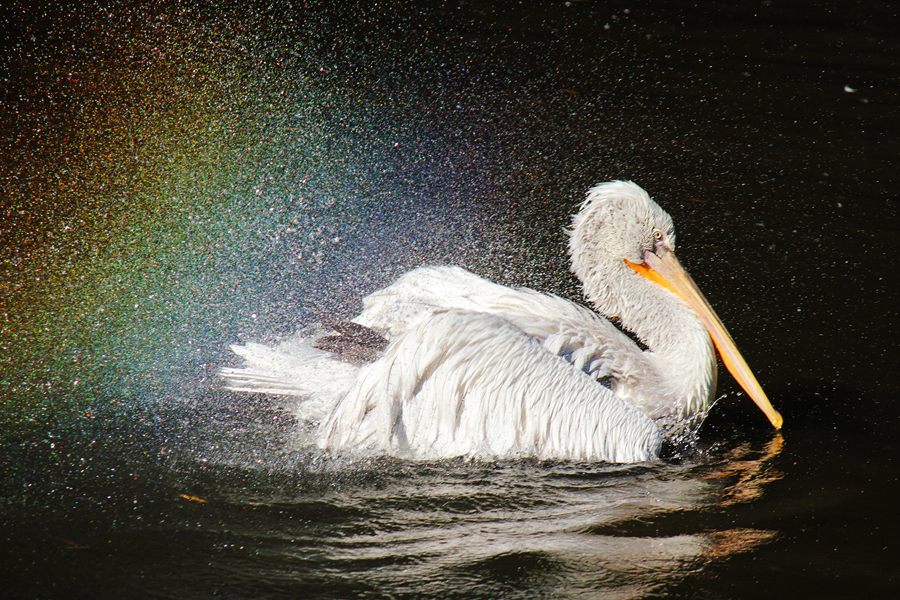
My wife and I have been going for walks recently in an area called Roger’s Grove. The park has a small lake with a couple of islands at its center. It is a favorite spot for Canadian geese this time of year. As we stroll around the lake we sometimes see a gray heron standing in meditative stillness among the reeds along the banks. Most recently we noticed some new visitors: one and then two bright white pelicans, looking a bit awkward in form but moving with the grace of swans upon the lake’s surface.

Yesterday, we had an unexpected sight: Those two pelicans had become thirty pelicans! The lake was filled with the bright white beings! We walked around the lake in an awed daze. We watched as the birds paddled around the lake in groups, tacking together in their movements, like a synchronized drifting dance, all gliding to the left and then, with some unseen signal, all turning right again. They even dipped their heads beneath the water all at once, sometimes several times in a row, down and up and down and up, a quiet undulation rippling through the group. They seemed to revel in this sleepy synchronicity of movement beneath the warming sun.

It was a magical moment. A healing moment. An encounter with the peace of wild things.

That’s just it– these, like all living beings, experience struggle, trauma, death, yet they continue to reside in the present moment and celebrate the bliss of a sweet afternoon when it is upon them. And in this way wild things are teachers to us all.

I rest in the grace of the world, and am free.


Recommended Books: Wendell Berry

The Collected Poems of Wendell Berry, 1957-1982 Given: Poems Selected Poems of Wendell Berry A Timbered Choir: The Sabbath Poems 1979-1997 The Mad Farmer Poems
More Books >>


Wendell Berry, Wendell Berry poetry, Secular or Eclectic poetry Wendell Berry

US (1934 – )
Secular or Eclectic

More poetry by Wendell Berry

8 responses so far

May 10 2019

Mevlana Jelaluddin Rumi – There is some kiss we want

Published by under Poetry

There is some kiss we want
by Mevlana Jelaluddin Rumi

English version by Coleman Barks

There is some kiss we want
with our whole lives,
the touch of Spirit on the body.

Seawater begs the pearl
to break its shell.

And the lily, how passionately
it needs some wild Darling!

At night, I open the window
and ask the moon to come
and press its face against mine.
Breathe into me.

Close the language-door,
and open the love-window.

The moon won’t use the door,
only the window.


/ Image by Unionhoney /

Isn’t this a wonderful selection?

I haven’t identified the original verses, so I don’t know how closely Barks’s version reflects the original lines. Barks tends to do rather loose renditions of Rumi, but with a sense of the poem’s heart and passionate abandon.

There is some kiss we want
with our whole lives…

Whatever we spend our lives doing, whatever we desperately seek or crave through the decades, underlying it all, that’s what we really want– that secret kiss, that feeling of being touched by Spirit. Not is some intellectual or philosophical sense, but in our embodied lives, not as a feeling or a thought or a belief, but as a sort of recognition. A self-recognition. We want to know in the deepest sense. Everything else we seek on a more surface level is either in pursuit of that, or sometimes in denial of that, but always an outgrowth of it, that kiss we want with our whole lives.

Close the language-door,
and open the love-window.

Try as we might, we can’t think our way into heaven. No matter how skillfully we conceptualize and elaborate even the most elevated ideas, that isn’t the way in.

The open heart is the way. It is the open window. Best for the verbalizing mind to fall silent or, when it is active, to work in service to the awakening heart.

Because, after all…

The moon won’t use the door,
only the window.

PS- Website Adventures

I have been a bit distracted this week trying to sort out multiple technical problems with the Poetry Chaikhana’s website and Internet service provider. Hopefully, this is nothing you have bumped into trying to visit the site. We should have everything resolved soon. It’s all behind the scenes stuff that you don’t need to be especially concerned with, but since it has been a major focus for my week, I thought I would mention it.

At some point I should probably do a major redesign of the Poetry Chaikhana site. I have had the site up for 15 years now. Quite an accomplishment on the peripatetic web! While the content has expanded and changed, much of the basic design and structure is the same as when I started. Since I run the Poetry Chaikhana in my spare time, and balanced with chronic fatigue issues, I have only done basic maintenance since that initial creation. It might be getting time to bring the site into the modern era of web design before long. It’s a matter of being able to organize my schedule and finances to dedicate the time necessary.

Maybe I should ask you, the Poetry Chaikhana community: Would you appreciate an updated Poetry Chaikhana site? Not only the look and feel, which feels a bit static by modern sensibilities, but with a more dynamic and searchable structure. While I don’t know exactly when I will get to changes, I do welcome your feedback.


Recommended Books: Mevlana Jelaluddin Rumi

The Longing in Between: Sacred Poetry from Around the World (A Poetry Chaikhana Anthology) Poetry for the Spirit: Poems of Universal Wisdom and Beauty This Dance of Bliss: Ecstatic Poetry from Around the World Music of a Distant Drum: Classical Arabic, Persian, Turkish & Hebrew Poems Perfume of the Desert: Inspirations from Sufi Wisdom
More Books >>


Mevlana Jelaluddin Rumi, Mevlana Jelaluddin Rumi poetry, Muslim / Sufi poetry Mevlana Jelaluddin Rumi

Afghanistan & Turkey (1207 – 1273) Timeline
Muslim / Sufi

Continue Reading »

8 responses so far

May 08 2019

Omar Khayyam – AWAKE! for Morning in the Bowl of Night

Published by under Poetry

[1] AWAKE! for Morning in the Bowl of Night
by Omar Khayyam

English version by Edward FitzGerald

AWAKE! for Morning in the Bowl of Night
Has flung the Stone that puts the Stars to Flight:
      And Lo! the Hunter of the East has caught
The Sultan’s Turret in a Noose of Light.

— from The Rubaiyat of Omar Khayyam, by Omar Khayyam / Translated by Edward FitzGerald


/ Image by John Spooner /

I thought I would select the opening quatrain from The Rubaiyat of Omar Khayyam today in honor of the month of Ramadan for all of my Muslim brothers and sisters.

Reading this, we immediately notice the delightful sense of rhyme and meter in FitzGerald’s translation. It invites us to say it out loud. We almost want to sing it.

But beyond the sheer poetic pleasure, is there anything of significance being said here? The poet is saying something about night and light and telling us to wake up, but we have to puzzle it out a bit before a clear image forms in our minds.

He describes the Bowl of Night, the night sky. Morning has flung a Stone into the Bowl of Night. If we imagine a large dark clay bowl, and a stone has been thrown into it, that stone will break through, creating a hole, allowing a sharp point of light to appear. He is describing the burst of light that is the suddenly rising sun.

The light of the sunrise puts the Stars to Flight by outshining the stars. In the sunrise, the night stars recede and all we see is the sun.

The next two lines might seem especially obscure. Who or what is the Hunter of the East? This is a way of referring to the constellation Orion, with his distinctive belt of three stars. Late in the year in the Northern Hemisphere, Orion ascends above the horizon in the east just before dawn.

Orion is traditionally seen as a hunter. But he is also associated with the east and the rising sun. It is as if the rising sun in the east is hunting, but hunting what?

He has caught the Sultan’s Turret in a Noose of Light. The Sultan’s Turret might be understood to be a minaret, the tower that calls the faithful to prayer. Or the turret might suggest the head or the crown, the rim of the earth itself encircled with a ring of light in that first flash of dawn.

As we unlock the language, it becomes a vibrant scene of waking up to the dawn.

But there is more going on here. Have you noticed how this imagery also resolves itself into the Muslim imagery of the Star and Crescent? Orion’s Noose of Light encircles the darkened world. The stone has created a single point of light in the night sky in the east.

This is not simply an image of religious or national pride, it has profound meaning for the individual. The Star and the Crescent are themselves representations of enlightenment. We have the bowl of night, the skull, encircled by light. But that circle, as a crescent, is incomplete on one side to allow the star to rise in the east — enlightenment. This small break in the circle of the individual identity, allows the spiritual light to flood in. This has been deeply understood and commented on by Muslim mystics over the centuries.

When we see the Star and Crescent, we should be thinking not of flags or nations, but the wali’s enlightenment. Whenever we witness the rising sun, it too paints for us a picture of enlightenment.

Of course we start off with that command of the spirit: Awake! Enlightenment is ready to dawn in the soul, do not miss it! Awake! Awake!


Recommended Books: Omar Khayyam

The Rubaiyat of Omar Khayyam The Rubaiyat of Omar Khayyam Explained The Sufism of the Rubaiyat or the Secret of the Great Paradox Wine of the Mystic: The Rubaiyat of Omar Khayyan: A Spiritual Interpretation The Rubaiyat of Omar Khayyam (Illustrated Edition)
More Books >>


Omar Khayyam, Omar Khayyam poetry, Muslim / Sufi poetry Omar Khayyam

Iran/Persia (11th Century) Timeline
Muslim / Sufi

Continue Reading »

3 responses so far

Apr 26 2019

Muso Soseki – Temple of Eternal Light

Published by under Poetry

Temple of Eternal Light
by Muso Soseki

English version by W. S. Merwin

The mountain range
      the stones in the water
            all are strange and rare
The beautiful landscape
      as we know
            belongs to those who are like it
The upper worlds
      the lower worlds
            originally are one thing
There is not a bit of dust
      there is only this still and full
            perfect enlightenment

— from Sun at Midnight: Muso Soseki – Poems and Sermons, Translated by W. S. Merwin / Translated by Soiku Shigematsu


/ Image by sagefille20 /

It has been a couple of years since I last featured something by Muso Soseki.

The mountain range
      the stones in the water
            all are strange and rare

Considering Soseki’s role as father of Zen gardening practice, whenever he says anything about the natural world, we should pause and pay special attention.

When he describes the mountain range and river stones as “strange and rare,” he is not shrugging his shoulders at something unusual or interesting. He sees something unique, utterly specific, a now-ness only truly recognized when we ourselves are present and genuinely seeing.

The beautiful landscape
      as we know
            belongs to those who are like it

We only ever perceive what we already are. We may all look and see the same lines and colors of a mountain range, but to actually see it and, on a deep level, recognize what it is, something within ourselves must recognize a shared being with the mountain range.

True seeing is about relationship. It is about inter-being.

This is how we lead into his next statement:

The upper worlds
      the lower worlds
            originally are one thing

When we settle into the original state, we perceive as part of an inherent oneness. We may still see a mountain range or individual stones in a river, but they are not truly separate from us or from each other. There really are not separate objects in the world, there is, in truth, just one thing with a variety of surfaces and vantage points.

From this perspective, there are no objects, nothing that can be separated out as its own self-existing thing, not even something as small as a mote of dust–

There is not a bit of dust
      there is only this still and full
            perfect enlightenment

–just this beautiful moment of living awareness we all are.

Have a beautiful day!

PS- I was devastated to hear about the Easter Sunday bombings in Sri Lanka. Always more reason to cultivate awareness, understanding, and healing within our hearts and within our societies.


Recommended Books: Muso Soseki

Sun at Midnight: Muso Soseki – Poems and Sermons East Window: Poems from Asia Roaring Stream: A New Zen Reader


Muso Soseki, Muso Soseki poetry, Buddhist poetry Muso Soseki

Japan (1275 – 1351) Timeline
Buddhist : Zen / Chan

Continue Reading »

5 responses so far

Apr 19 2019

Li-Young Lee – One Heart

Published by under Poetry

One Heart
by Li-Young Lee

Look at the birds. Even flying
is born

out of nothing. The first sky
is inside you, open

at either end of day.
The work of wings


was always freedom, fastening
one heart to every falling thing.

— from Book of My Nights, by Li-Young Lee


/ Image by hashmil /

It is both Passover and Easter this weekend, a time to celebrate liberation, the renewal of life and hope and possibility.

Look at the birds. Even flying
is born


out of nothing.

To take flight, birds launch themselves into apparent emptiness. Of course, successful flight requires an awareness that the sky is not truly empty, but a realm of subtle substance that can support us.

One must cultivate an inner emptiness and lightness in order to let go of the comforting certainty of the earth, to confidently leave it behind and meet that intangible space of open sky, and there dance among its secret currents.

The first sky
is inside you, open


at either end of day.

This, I think, is an important reason why practices such as fasting and other expressions of moderate asceticism are encouraged on occasion by most spiritual traditions. Forget the tormented dogmas of self-denial that tend to lead to hatred of the body — which should automatically be seen as a spiritual dead end. The real purpose of these sorts of practices is not disdain for the body but, rather, to awaken in our awareness that sense of openness, spaciousness, and inner quiet… while allowing the body to rest and regenerate and become more finely attuned to our higher purposes in life.

If we don’t cultivate awareness of the inner sky, the “first sky,” we fail to recognize that taking flight in the world around us is our natural expression. Instead, we fear that we will fall.

The work of wings


was always freedom, fastening
one heart to every falling thing.

Perhaps we can think of flight as intentionally falling without ever hitting the ground. We leap into space, letting that inner emptiness lift us up. And perhaps what we thought was fear was in reality the exhilaration of the heart encountering the openness of the living moment while we soar upon nothing.

(This is a poem I have featured more than once, but each time I come across it again, it carries new life, and I think, Oh, I have to share this with the Poetry Chaikhana once more!)

Have a beautiful day!


Recommended Books: Li-Young Lee

Book of My Nights Rose The City in Which I Love You Behind My Eyes: Poems


Li-Young Lee, Li-Young Lee poetry, Secular or Eclectic poetry Li-Young Lee

US (1957 – )
Secular or Eclectic

Continue Reading »

4 responses so far

Apr 17 2019

Ivan M. Granger – in love with the new sun

Published by under Ivan's Story,Poetry

in love with the new sun
by Ivan M. Granger

in love with the new sun
the cherry blossom forgets
the night’s frost

— from Real Thirst: Poetry of the Spiritual Journey, by Ivan M. Granger


/ Image by A-Daly /

I wrote this poem several years ago in my Maui days, on a spring morning after emerging from a meditation. It was a time of opening for me, a time of surprising bliss, a time of settling into myself. I had gone through such terrible internal struggles up to that point, but what had kept be balanced and focused through it all had been my fierce determination to seek meaning and insight, a sense of a greater love and truth. And then one day, whoosh!, it was like I had come through the storm and found myself at rest in a wide peaceful sea.

That struggle I went through to get there, it wasn’t even that I thought it had been “worth it;” it was is if even the struggle itself had been subsumed by that expansive bliss until it no longer existed, except as a story I had told myself.

I had the image of spring after a hard winter. Bright, blossoming with new life. And I wrote this haiku.


in love with the new sun
the cherry blossom forgets
the night’s frost

A few years back I was contacted by a young woman in San Francisco who asked my permission to use this haiku in a tattoo she planned to get. I was flattered and surprised. I mean, to have these words, which popped into my mind in a moment of inspiration, tattooed onto your body, to carry them with you for the rest of your days, that is humbling indeed. More than that, it was a responsibility after the fact. I really had to sit with the haiku for a bit and decide if I thought it was worthy of such an honor.

In her email, she said that the poem spoke to her, that the cherry blossoms suggested to her that, because life is short, you need to live to the fullest and seize opportunities, and that any difficulties or sorrows are temporary. She mentioned that she had been through many hardships in her life but that she recognized the importance of not holding grudges or dwelling in the past “because every day is special… like cherry blossoms that bloom for a short time.” Clearly a wise woman, wisdom that has been hard-earned.

I gladly gave her my permission to use the poem in her tattoo. But I still had a bit of a dilemma: With this haiku being utilized in such a special way, I wanted to ask for a photograph, but, you know, I wasn’t sure exactly where the tattoo would be placed on her body. I tried to find the most diplomatic language possible to ask for a photo “if appropriate.” A few weeks later she sent back a snapshot of the lines of the haiku tattooed in an elegant script running along her lower ribs on one side

(Whew.)

Have a beautiful day! Don’t forget to feel the new sun on your face.

=

First PS– Notre Dame
We are all stunned and shocked by the burning of Notre Dame in Paris. This is more than the destruction of a great landmark. Whether or not one is a Catholic or a Christian, Notre Dame Cathedral is one of the great sacred spots on the planet. Notre Dame, of course, means Our Lady, a reference to Mother Mary. Notre Dame is a focal point for the Divine Feminine. What aspect of the Divine Mother is in flames? The natural world? The treatment of women in culture? Nurturing and compassion in society? But I also find myself asking, How does fire change from destruction to renewal?

PPS– Rabbits!
Yesterday my wife and I were surprised to see a rabbit sitting on our front lawn. We occasionally see rabbits on our walks, but this rabbit seemed contentedly camped out right in front of our house. Then we saw a second rabbit, and eventually a third. As we watched them, we noticed they were scurrying in and out from under our front porch. One rabbit in particular would pop out, grab several fallen pine needles and other leaves, then dart back under the porch. We think they are building a new warren under there. We’ve been blessed by a family of rabbits just a few days before Easter.


Recommended Books: Ivan M. Granger

The Longing in Between: Sacred Poetry from Around the World (A Poetry Chaikhana Anthology) This Dance of Bliss: Ecstatic Poetry from Around the World Real Thirst: Poetry of the Spiritual Journey For Lovers of God Everywhere: Poems of the Christian Mystics Diamond Cutters: Visionary Poets in America, Britain & Oceania
More Books >>


Ivan M. Granger, Ivan M. Granger poetry, Secular or Eclectic poetry Ivan M. Granger

US (1969 – )
Secular or Eclectic
Yoga / Hindu : Advaita / Non-Dualist

Continue Reading »

4 responses so far

Apr 11 2019

Goethe – Something Like the Sun

Published by under Poetry

Something Like the Sun
by Johann Wolfgang von Goethe

English version by John White

The eye must be something like the sun,
Otherwise no sunlight could be seen;
God’s own power must be inside us,
How else could Godly things delight us?

— from Art & Wonder: An Illustrated Anthology of Visionary Poetry, Edited by Kate Farrell


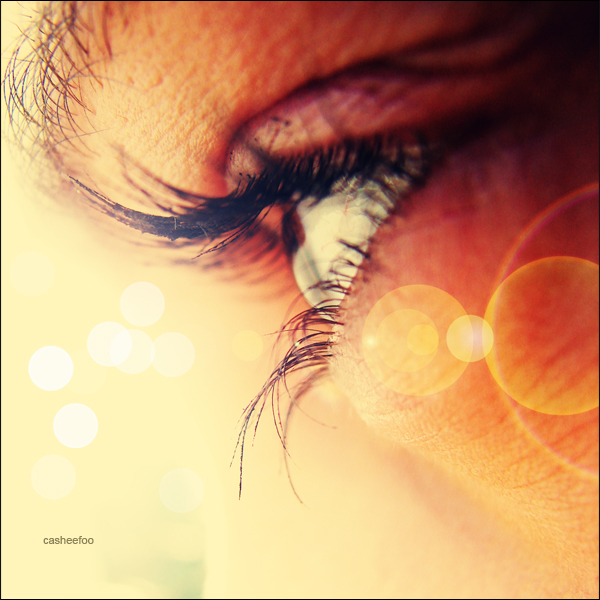
/ Image by CasheeFoo /

We might react to a casual reading of this selection by Goethe with the thought that it’s poetically inspiring, but is the poet doing anything more that just playing with pretty ideas? The answer, when we really contemplate these lines is, yes, there is something of deep insight being conveyed in these lines.

We only ever perceive what is already inside of us.

The eye must be something like the sun,
Otherwise no sunlight could be seen

In a literal, material sense, we don’t have a massive stellar object burning within each of us. (Or, well… I’ll avoid the many tangents I could go off on here…) Anyone with biologically functional eyes can see the sun and sunlight on a spring day. But we see that brilliant object in the sky as “sun” because we carry an idea of the sun within ourselves. The physical object is just a brightness in the sky that we could be indifferent to, but we have an intensely personal relationship with the sun. In the light and warmth and daily rhythms of the sun, we see our own potential for clarity, hope, comfort, love, life, strength, and steadiness. The object may be physically outside of our bodies, but the “sun” is really inside ourselves.

Ultimately, whatever we perceive outside of ourselves is actually an archetypal presence within us reflecting back to us.

Every relationship and interaction, everything we perceive, when we really pay attention, is actually mirroring back to us something we are trying to see within ourselves. Every person we love, every thing we desire, is really telling us about something we want to bring forth within ourselves. And everything we hate or reject also tells us about something within ourselves we fear or are afraid to discover.

Every perception and every aspiration is a conversation between spirit and material existence to deepen self-awareness and inspire greater wholeness. It’s not really the experiences “out there” we want. They just tell us what we are uncovering and integrating within ourselves. One way to understand the complexity of material existence is as a dialog of self-awareness within consciousness.

This is true even of God, or our ideas about God.

God’s own power must be inside us,
How else could Godly things delight us?

God is not some person or thing out there to be found. Divinity is found within, as well. The fact that we seek something eternal and true, the fact that we are elevated by kindness, compassion, creativity, beauty, purity, truth, these tell us not only that they already exist, but that they reside within ourselves. We don’t need to tenuously hope to one day uncover them. Whatever we feel and perceive or even imagine already has full existence within us. We just need to recognize and embrace them, then allow them to lead us deeper within to their brilliant source at our own core.


Recommended Books: Johann Wolfgang von Goethe

This Dance of Bliss: Ecstatic Poetry from Around the World Faust News of the Universe: Poems of Twofold Consciousness


Johann Wolfgang von Goethe, Johann Wolfgang von Goethe poetry, Secular or Eclectic poetry Johann Wolfgang von Goethe

Germany (1749 – 1832) Timeline
Secular or Eclectic

Continue Reading »

6 responses so far

Apr 02 2019

Ivan M. Granger – To goslings

Published by under Ivan's Story,Poetry

To goslings
by Ivan M. Granger

To goslings
just hatched, all the world
is a spring day


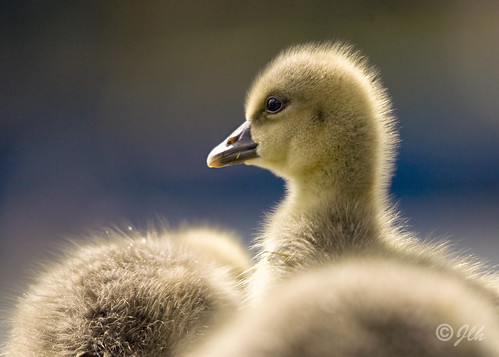
/ Image by Jlhopgood /

Today is my birthday. To paraphrase Dylan Thomas, it is my fiftieth year to heaven. Or, as I said on Facebook, I am now halfway to my first century.

I thought I’d celebrate by sharing this poem of new life and fresh vision with you today. (And thank you to Kris H. for suggesting it!)

I wrote this poem a few years back while on a walk by a local lake during a golden spring day. The Canadian geese were out, gliding through the water or on shore cropping at the grasses. Several paraded their new families of goslings. I watched these little ones, new arrivals to the world, with their fuzzy yellow feathers halloed by the sun. Such a pure moment of new life. I was reminded that that same life is in me too, and in everyone.

Have a beautiful day!


Recommended Books: Ivan M. Granger

The Longing in Between: Sacred Poetry from Around the World (A Poetry Chaikhana Anthology) This Dance of Bliss: Ecstatic Poetry from Around the World Real Thirst: Poetry of the Spiritual Journey For Lovers of God Everywhere: Poems of the Christian Mystics Diamond Cutters: Visionary Poets in America, Britain & Oceania
More Books >>


Ivan M. Granger, Ivan M. Granger poetry, Secular or Eclectic poetry Ivan M. Granger

US (1969 – )
Secular or Eclectic
Yoga / Hindu : Advaita / Non-Dualist

Continue Reading »

10 responses so far

Apr 02 2019

thoughts are a dialog

Thoughts are a dialog
with God, the Eternal Self.
When we remember we are the Self,
thoughts stop.

One response so far

Mar 29 2019

Yunus Emre – One Who Is Real Is Humble

Published by under Poetry

One Who Is Real Is Humble
by Yunus Emre

English version by Jennifer Ferraro & Latif Bolat

To be real on this path you must be humble —
If you look down at others you’ll get pushed down the stairs.

If your heart goes around on high, you fly far from this path.
There’s no use hiding it —
What’s inside always leaks outside.

Even the one with the long white beard, the one who looks so wise —
If he breaks a single heart, why bother going to Mecca?
If he has no compassion, what’s the point?

My heart is the throne of the Beloved,
the Beloved the heart’s destiny:
Whoever breaks another’s heart will find no homecoming
in this world or any other.

The ones who know say very little
while the beasts are always speaking volumes;
One word is enough for one who knows.

If there is any meaning in the holy books, it is this:
Whatever is good for you, grant it to others too —

Whoever comes to this earth migrates back;
Whoever drinks the wine of love
understands what I say —

Yunus, don’t look down at the world in scorn —

Keep your eyes fixed on your Beloved’s face,
then you will not see the bridge
on Judgment Day.

— from Quarreling with God: Mystic Rebel Poems of the Dervishes of Turkey, Translated by Jennifer Ferraro / Translated by Latif Bolat


/ Image by Hossein Ghodsi /

Yunus Emre gives us several wonderful lines in this poem…

There’s no use hiding it —
What’s inside always leaks outside.

That just about sums up the spiritual perspective of everything, doesn’t it? One way or another, the inner world always reveals itself. Whatever masks we wear eventually fall away or slowly take the shape of what lies beneath. Why hide what’s inside? We should cultivate and celebrate that inner self. It will show itself anyway.

This poem in general seems to be a critique of religious hypocrisy, and specifically it deflates the idea of religious superiority. Those first lines give us a strong image:

To be real on this path you must be humble —
If you look down at others you’ll get pushed down the stairs.

I imagine a stern imam (or bishop or preacher or rabbi) who has spent his life carefully studying the minutia of religious law and has come to see everyone as falling short. He casts a cold eye on flawed and worldly humanity and judges them all to be far beneath him. It’s as if he is looking down a long staircase at the world.

That figure is in far greater spiritual danger than most of the people he looks down upon. The thing he hasn’t recognized is how unstable those stairs are. Any distance of spiritual perfectionism we construct in our minds is inherently rigid and brittle, yet it must stand on a living, shifting ground. Those stairs will always collapse in the end.

The more people “look down on the world in scorn,” the further they fall. This is simple gravity.

Even the one with the long white beard, the one who looks so wise —
If he breaks a single heart, why bother going to Mecca?
If he has no compassion, what’s the point?

Yunus Emre gives us the essential keys: humility and compassion. Everything else leads to pretense, which disjoints the soul. False superiority enforces the illusion of separation and leads to collapse.

Yunus, don’t look down at the world in scorn —
Keep your eyes fixed on your Beloved’s face,
then you will not see the bridge
on Judgment Day.

We shouldn’t miss the logic of the first two lines: When we cast scornful eyes on the world, we can’t possibly see the Beloved’s face. The opposite is true, as well; when we are transfixed by the beauty of the Beloved, we see nothing but beauty. This is a clue… any religious figure who speaks with scorn, is not engulfed by the vision of the Divine and should be avoided.

The final couple of lines are also worth understanding. What does he mean about not seeing a bridge on Judgment Day? According Muslim tradition, in order to enter Paradise, one must cross as-Sirat, a bridge that is as thin as a hair and as sharp as a blade. But the purest never have to encounter the bridge. Yunus Emre is saying that it is only when we are not already lost in the vision of the Beloved that we must face the bridge. It is only when we cling to separation and duality that we encounter that cutting bridge. With that hair-thin bridge waiting, wasting focus on scorn is a dangerous thing, indeed.

To me, this is a powerful poem on the importance of compassion, humility, and proper spiritual focus. And it is a good reminder to us all that everything returns to the Golden Rule:

If there is any meaning in the holy books, it is this:
Whatever is good for you, grant it to others too —


Recommended Books: Yunus Emre

The Longing in Between: Sacred Poetry from Around the World (A Poetry Chaikhana Anthology) Poetry for the Spirit: Poems of Universal Wisdom and Beauty Music of a Distant Drum: Classical Arabic, Persian, Turkish & Hebrew Poems The Drop That Became the Sea: Lyric Poems of Yunus Emre Quarreling with God: Mystic Rebel Poems of the Dervishes of Turkey
More Books >>


Yunus Emre, Yunus Emre poetry, Muslim / Sufi poetry Yunus Emre

Turkey (1238 – 1320) Timeline
Muslim / Sufi

Continue Reading »

2 responses so far

« Prev - Next »