Archive for the 'Poetry Chaikhana Misc.' Category

Mar 11 2022

Ivan’s poetry in Nameless

I am honored to have been included in the new poetry anthology nameless: a riff of 44 images complemented by poetry, by Rashani Réa & Six Contemporary Poets. This is a delightful collection collage art by Rashani Réa, accompanied by haiku and short poems by six poets, yours truly included. One of mine from the book:

chance meeting
were we ever apart
my many selves and i?

A lovely book to sit down with and read at any page.

You can support Rashani Réa’s work by purchasing a copy through Amazon:
click here.

2 responses so far

Dec 10 2021

Ivan Interview: Poetry, Spirituality & Meditating in a Cave

This is an interview I did with PMC last year about spirituality, poetry, and my own personal journey.

(The introduction and questions are in Hindi, but my responses are in English. Hopefully, an interesting puzzle to solve for non-Hindi speakers.)

One response so far

Sep 03 2021

Dogen – midnight – no waves, no wind

midnight — no waves, no wind
by Eihei Dogen

English version by Adjei Agyei-Baah & Gabriel Rosenstock

midnight — no waves, no wind
empty boat
flooded with moonlight

— from The Awakened One: Buddha-Themed Haiku from Around the World, Edited by Adjei Agyei-Baah / Edited by Gabriel Rosenstock


/ Image by Osman Rana /

We don’t have to hand this haiku over to the intellect to immediately understand its implications, do we? Let’s briefly sketch it out.

Midnight. A still lake, an empty boat filled with moonlight.

No activity. The mind is at rest. Emotions are calm, the will is content. In this quiet moment what we normally think of as ourselves is found to be empty, spacious, egoless. But the emptiness is not empty, it is filled with with the light of awareness. More than filled, flooded. And what does a flooded boat do? It sinks. It gives itself to the embrace of the illuminated water. Only the light and the quiet lake remain.

Or perhaps it is just a moment in time. It is what it is and nothing more: Midnight. A still lake, an empty boat filled with moonlight.

=

Eihei Dogen, sometimes respectfully referred to as Dogen Zenji, was a key figure in the development of Japanese Zen practice and the founder of the Soto Zen sect.

Dogen was born in about 1200 in Kyoto, Japan. At the age of 17, he was formally ordained as a Buddhist monk. Considering the Japanese Buddhism of the time to be corrupt and influenced by secular power struggles, Dogen traveled to China to discover the heart of the Dharma by studying Ch’an (Zen) Buddhism at several ancient monasteries.

Much of the Ch’an Buddhism he explored utilized koans and “encounter dialogues” to startle the consciousness into enlightenment, but Dogen was critical of this practice. Instead, he was drawn to the teachings of silent meditation.

Dogen returned to Japan in 1236. He left the politicized environment of Kyoto and settled in the mountains and snow country of remote Echizen Province, where he established his own school of Zen, the Soto school.

While he proved to be a talented writer and poet, the core of Dogen’s teaching was to transcend the mind’s addiction to language and form in order to become fully present and recognize one’s inherent enlightenment.

=

Hurricane Ida and its aftermath are very much in my thoughts. And the fires in California and elsewhere around the globe.

The earth speaks, sometimes we listen.

I hope you are all safe and well.

=

The Awakened One

The Awakened One
Buddha-Themed Haiku from Around the World
Edited by Adjei Agyei-Baah and Gabriel Rosenstock

$8.95 / £6.50 / €7.60

USCANUKFRDEITESAUS

I am still playing catching up with the release of the Poetry Chaikhana’s new publication, The Awakened One: Buddha-Themed Haiku from Around the World, edited by Adjei Agyei-Baah and Gabriel Rosenstock. Initial sales have been solid, but I am still investigating the best ways to ship copies to readers (and some of the haiku writers!) in countries such as Nigeria, Croatia, and Japan. The Poetry Chaikhana website itself is patiently waiting for me to add a new page highlighting The Awakened One. A lot of work goes into a little book!

The Awakened One is a beautiful book, a good gift to yourself and one to share with friends. Purchasing a copy is also an excellent way to support the Poetry Chaikhana. It makes a perfect companion to Gabriel Rosenstock’s explorations of haiku and awareness in Haiku Enlightenment.

May you be flooded with moonlight!


Recommended Books: Eihei Dogen

Zen Poetry: Let the Spring Breeze Enter Haiku Enlightenment: New Expanded Edition The Poetry of Zen: (Shambhala Library) The Zen Poetry of Dogen: Verses from the Mountain of Eternal Peace The Soul is Here for its Own Joy: Sacred Poems from Many Cultures
More Books >>


Eihei Dogen, Eihei Dogen poetry, Buddhist poetry Eihei Dogen

Japan (1200 – 1253) Timeline
Buddhist : Zen / Chan

Continue Reading »

2 responses so far

Aug 27 2021

New Book: The Awakened One

I am so pleased to announce the latest publication from the Poetry Chaikhana:


The Awakened One


Buddha-Themed Haiku from Around the World
Edited by Adjei Agyei-Baah and Gabriel Rosenstock

$8.95 / £6.50 / €7.60

USCANUKFRDEITESAUS

This new collection pairs contemporary haiku by poets from around the world with classical Japanese haiku.


     heavenly mystery . . .
     autumn leaves
     descend on a stone buddha

     – Imaizumi Sogetsu-ni (1750-1804)

          sudden wind
          the garden buddha’s head crowned
          with cherry blossoms

          rafale de vent
          le bouddha du jardin couronne
          de fleurs de cerisier

          – Olivier Schopfer (Switzerland)


Modern haikuists from the UK, the US, Croatia, India, Nigeria and a dozen other countries converse via haiku with Japanese masters, like Basho, Issa and Buson, sharing moments of insight expressed in poetry of a single breath.


     in a cloudy well
     this one moon . . .
     let us all adore it

     – Tagami Kikusha-ni (1753–1826)

          cherry blossoms
          the morning moon mingles
          with the petals

          trešnja u cvatu
          stopljen s laticama
          jutarnji mjesec

          – Tomislav Maretić (Croatia)


The Awakened One offers us a poetic dialog on the nature of awareness across culture and time.


     many solemn nights
     blond moon, we stand and marvel . . .
     sleeping our noons away

     – Matsunaga Teitoku (1571–1654)

          hilltop buddha
          moonlight in the emptiness
          of his cupped hand

          – Katherine Raine (New Zealand)


Poetry has helped me navigate through the past couple of years. Some poems bring me to silence, others give voice to my grief and anger. Some awaken pure delight, others remind me to flow with life. The Awakened One is a perfect collection for this time. Within these haiku we hear the voices of poets, men and women from all over the world contemplating a moment, a feeling, or the vast expanse, all within just a few lines. Reading them, there is a shared experience, a shared breath, a shared spark of awareness. Reading these haiku grounds us and reweaves us into the world community.

This is one to spend time with, keeping it nearby to read just a page or two at a time.

Your purchase of The Awakened One is an excellent way to support the Poetry Chaikhana. Remember to buy additional copies to send as gifts to friends and fellow poetry lovers. Copies can also be donated to schools, libraries and prisons – allowing haiku to work its healing alchemy in the world.

Have a beautiful, poetic day!

Ivan
PS – Although The Awakened One has just been published, it is already listed at #16 on Amazon’s best sellers in their Haiku & Japanese Poetry category! The longer that number remains high, the more awareness of the book will spread beyond the Poetry Chaikhana community.


Available through Amazon:
USCANUKFRDEITESAUS
Available soon through other online outlets, like Barnes & Noble, Wordery and The Book Depository.
Also available through your local bookstore by request.

4 responses so far

Jan 15 2021

Poetry Chaikhana Publications

I don’t often talk about book sales, but I thought I’d let you know that two Poetry Chaikhana publications — Haiku Enlightenment and The Longing in Between — have been selling well since the end of 2020. Haiku Enlightenment has been in the top 100 best selling haiku books on Amazon, and The Longing in Between has been hovering in the top 100 or 200 for poetry anthologies. Amazing! I love to see these book circulating, carrying their wild, illuminating poetry out into the world. A great deal of thanks is due to you, the Poetry Chaikhana community, for your steady support and encouragement through the years.

One response so far

Nov 29 2020

Holiday Poetry Book Recommendations 2020

It has been a challenging year for most of us, I know. As we approach the winter holidays, our normal celebratory feeling is muted. We are more cautious about big family gatherings. Economic times are uncertain for many. And the new year remains unknown. But we can choose to use this as a time of spiritual opportunity. So much that we have taken for granted — in the world around us and within ourselves — has been losing its rigid certainty. When things return to a formless and changing state, that is when the greatest potential is available to us. This is a time for dreaming as new patterns form and take shape. And what better time to dream than in the deep of winter? Let us cultivate new visions for who we are and who we are becoming. Let us rediscover our native voices.

I strongly believe that poetry is one of the most powerful, resonant tools for the spirit to reach out into the world. Words and images, rhythms and silences, these expand our awareness, they shift our focus, they open our hearts — and we, in turn, inevitably affect the world around us.

So consider treating yourself to some enlightening moments of poetry this winter. Offer it as a transformative and healing gift to your family and friends. Watch as it works its magic within you and the world around you.

“Poetry has an immediate effect on the mind. The simple act of reading poetry alters thought patterns and the shuttle of the breath. Poetry induces trance. Its words are chant. Its rhythms are drumbeats. Its images become the icons of the inner eye. Poetry is more than a description of the sacred experience; it carries the experience itself.”


Here is a a holiday sampler to consider as gifts for you and your loved ones:

Poetry Chaikhana Publications

Of course, we have to start with the Poetry Chaikhana’s books!

To satisfy that longing (or awaken it)…

The Longing in Between

Sacred Poetry from Around the World
A Poetry Chaikhana Anthology

Edited with Commentary by Ivan M. Granger

In many ways this is my most personal publication, combining favorite soul-inspiring poems from the world’s great religious and spiritual traditions, accompanied by the thoughts, meditations, commentary, and occasional tangents that have been central to the Poetry Chaikhana poem emails for years. Selections from Rumi, Whitman, Kabir, Machado, Issa, Teresa of Avila, Dickinson, Blake, Yunus Emre, John of the Cross, Lalla, and many others.

These are poems of seeking and awakening… and the longing in between.

The Longing in Between is a work of sheer beauty. Ivan M. Granger has done a great service, not only by bringing [these poems] to public attention, but by opening their deeper meaning with his own rare poetic and mystic sensibility.”

ROGER HOUSDEN
author of the best-selling Ten Poems to Change Your Life series


READ MOREPURCHASE


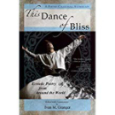
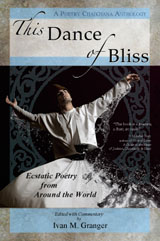
This Dance of Bliss, Ecstatic Poetry from Around the World, A Poetry Chaikhana Anthology, Ivan M. Granger


This Dance of Bliss

Ecstatic Poetry From Around the World

A Poetry Chaikhana Anthology

Edited with Commentary by Ivan M. Granger

This Dance of Bliss is an inspiring collection of poems and wisdom stories from the world’s great sacred traditions. Rumi, St. John of the Cross, Lalla, Goethe, Hildegard von Bingen, Dogen, Khayyam, and many others gather together within these pages to sing their ecstatic songs.

Ivan M. Granger accompanies each poem with his own reflections and meditative commentaries, inviting us to explore the insights and private raptures of these mystics, seers, and saints-until we too are swept up in this dance of bliss!

This book is a treasure, a feast, an oasis. Ivan M. Granger’s profound gift for selecting the kind of poetry that lights up the cave of the heart and melts the boundaries between the soul and the Divine is fully met by his lucid reflections on the soul-transfiguring power of each piece in this magnificent collection.

MIRABAI STARR
author of God of Love: A Guide to the Heart of Judaism, Christianity & Islam


READ MOREPURCHASE

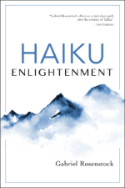
Haiku Enlightenment, Gabriel Rosenstock

Haiku Enlightenment
New Expanded Edition

by Gabriel Rosenstock


PURCHASE


or ask at your local independent book store

Haiku Enlightenment is a delightful, often playful look at haiku as both a poetic craft and a pathway of awakening – for poets, seekers and creative rebels.

Gabriel Rosenstock has given us a rich collection of insights, distilled from a lifetime dedicated to the art and practice of poetry, on stepping into inspired moments. Using a generous selection of contemporary and classical haiku, he explores ideas of creativity and perception, encouraging us to calm the restless mind, notice what is overlooked, explore the world around us, and fully encounter each glowing moment.

From such moments, haiku – and enlightenment – emerge.

Haiku happens in this world of daily miracles and is a perfect prism through which Nature herself enlightens us.
– Gabriel Rosenstock, from Haiku Enlightenment

READ MORE

the moon    
has found it for me    
a mountain path    

    Michael McClintock   

    the body of the Buddha
    accepts it–
    winter rain

         Issa


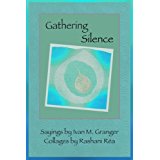
Gathering Silence

Sayings by Ivan M. Granger
Collages by Rashani Réa

All of mysticism comes down to this:
to recognize
what is already
and always here.

Gathering Silence is a collection of meditative sayings and bits of poetry, accompanied throughout by stunning full-color artwork by internationally-known collage artist, Rashani Réa. This is beautiful book, filled with color, creative thoughts, and meditative moments. Perfect for an altar or meditation space, by your bed or on a coffee table. A wonderful gift for family, friends, and fellow seekers!

READ MOREPURCHASE

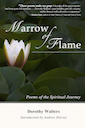
Marrow of the Flame
Poems of the Spiritual Journey
by Dorothy Walters

Introduction by Andrew Harvey

Dorothy Walters explores the spiritual journey through its ecstasies, struggles, and vistas. Each step is observed with the keen insight and clear voice of a modern woman who is both a skilled poet and genuine mystic.

READ MORE
PURCHASE


This year I thought I would change things up a bit with a more personal list. Rather than giving you a list of general gift suggestions, I thought why not create a list of the sacred poetry books that have meant the most to me at key points in my life.

I had a pleasant afternoon going through my bookshelves, pulling books I’ve loved, remembering key moments in my journeys of spiritual and poetic exploration, until I was surrounded by stacks of cherished books. I thought, this is it! This will be my holiday recommended book list this year. It was only when I then went back and checked my holiday book lists from the previous few years that I realized I have been recommending many of these personally beloved books all along. So here they are (again): my list of books recommended for the holidays, books that have opened doorways in my mind and heart, awakening a deep love of poetry as a way to express the ineffable. I hope these books will mean something special to you and your loved ones these holidays…

A Sampling of Sufi Wisdom…

Perfume of the Desert: Inspirations from Sufi Wisdom
By Andrew Harvey and Eryk Hanut

Something about Andrew Harvey’s selections and translations always strike a pure note. This book is a delightful collection of poetry and Sufi wisdom stories. Rumi, Kabir, al-Hallaj, Shabistari, Ansari… This is one I return to again and again.

Nobody, Son of Nobody: Poems of Shaikh Abu-Saeed Abil-Kheir
Renditions by Vraje Abramian

I read this book early in my exploration of Sufi poetry — and I was hooked! Abu Said Abil-Kheir’s poetry ranges from the ecstatic and celestial, to struggles with abandonment. His poetry has an immediacy and even a sort of devoutly wry petulance. This book remains a personal favorite of mine.

For the wise woman…

Women in Praise of the Sacred: 43 Centuries of Spiritual Poetry by Women
Edited by Jane Hirshfield

This is the first anthology I got years ago that made me say, Wow! Includes Sappho, Rabia, Yeshe Tsogyel, Hildegard von Bingen, Mechthild of Magdeburg, Hadewijch of Antwerp, Lalla, Mirabai, Bibi Hayati, Marina Tsvetaeva. The best collection I’ve found of women’s voices in sacred poetry.

Kali: The Black Goddess of Dakshineswar
by Elizabeth U. Harding

Not really a poetry collection, but this was the book that first introduced me to the fierce and passionate poetry of the great Kali devotees, like Ramprasad and Kalamakanta. Elisabeth Harding has done a beautiful job of gathering together Kali lore and presenting it to a primarily Western audience, while remaining reverent toward Kali and traditions of Kali worship. She discusses the traditional symbolism of Kali and the shocking, violent images associated with Her. Kali emerges in the reader’s mind as the loving destroyer of illusion, ecstatic slayer of demonic qualities.

For illumination…

The Enlightened Heart: An Anthology of Sacred Poetry
Edited by Stephen Mitchell

This is a compact anthology, but a wonderful collection that includes Li Po, Wu-Men, Rumi, Kabir, Mirabai, Rilke… And the added bonus of Stephen Mitchell’s way with words. One of my personal favorites.

The Illuminated Rumi
Translations by Coleman Barks
Art by Michael Green

I keep recommending this year after year. It is a beautiful gift book with excerpts of Rumi’s poetry accompanied by amazing digital collage artwork that draws you deeply into each page. This book entrances on several levels. An excellent gift book.


For the Christian contemplative…

The Book of Mystical Chapters:
Meditations on the Soul’s Ascent from the Desert Fathers and Other Early Christian Contemplatives
Translated and Introduced by John Anthony McGuckin

This is the book that, years ago, introduced me to the stunning poetry of Symeon the New Theologian, igniting my passion for his visionary poetry of light and transformation. You’ll also find poems and poetic renditions of writings from many other saints and mystics of the Eastern Orthodox Church. Still a favorite of mine.

Selected Poems of Thomas Merton
by Thomas Merton

I can’t recommend this collection highly enough. Merton, in addition to being a deep mystic, was a truly excellent contemporary poet. His poems feel entirely modern, yet touch on the eternal. While drawing on Catholic imagery, one can hear whispers of Eastern philosophy and insight in his words. Poems to reread and meditate deeply upon.

Hadewijch: The Complete Works
Translations by Mother Columba Hart

I was introduced to the divine love poetry of the Flemish mystic Hadewijch in the excellent anthology Women in Praise of the Sacred, edited by Jane Hirshfield. I knew I had encountered a something amazing, but the sampling in that book was frustratingly small. I finally found this book with the complete works of this mysterious Beguine spiritual figure — visions, letters, and a beautiful collection of sacred poetry. The love mysticism of her poetry rightly draws comparisons to the rich traditions of Sufi and Bhakti poetry.


For the Jewish mystic…

The Penguin Book of Hebrew Verse
Edited and Translated by T. Carmi

The most complete collection I’ve found of sacred Hebrew poetry, including Judah ha Levi, Solomon ibn Gabirol, Samuel Hanagid, the early Hekhalot Hymns, and many more. My only complaint: the translations in this encyclopedic collection are not versified, even though the Hebrew originals were. I still love it simply because it pointed me in a dozen enlightening different directions.

The Poetry of Kabbalah: Mystical Verse from the Jewish Tradition
Translated and Edited by Peter Cole

Finally we have a truly excellent collection of sacred Jewish poetry. While T. Carmi’s Penguin Book of Hebrew Verse is more comprehensive, Cole’s The Poetry of Kabbalah has more of a poet’s sense of language and even catches of few sparks from the mystic’s fire. This is poetry that startles and transports. The Poetry of Kabbalah has become my favorite source for Jewish mystical poetry in English.
While T. Carmi’s Penguin Book of Hebrew Verse is more comprehensive, Cole has more of a poet’s sense of language. Very highly recommended.


A moment of Zen…

The Zen Poetry of Dogen: Verses from the Mountain of Eternal Peace
Translations by Steven Heine

Although best known for his Zen discourses and his role establishing Zen practice in Japan, Dogen was an exceptional poet too. Quiet moments of insight expressed in a bare minimum of lines. One of my favorites.

Zen Poetry: Let the Spring Breeze Enter
Edited by Lucien Stryk and Takashi Ikemoto

A good collection without being overwhelming. I especially like it’s selection of Japanese haiku: Basho, Buson, Issa, Masahide…

Sun at Midnight: Muso Soseki – Poems and Sermons
Translations by W. S. Merwin and Soiku Shigematsu

A friend introduced me to this collection, and I was entranced. Muso Soseki is known today for establishing rock gardening as meditative Zen practice, but his poetry — wonderful! And with translations by WS Merwin, you can’t ask for more!

(And don’t forget the Poetry Chaikhana’s publication of Gabriel Rosenstock’s, Haiku Enlightenment!)


Artist, Therapist, Shaman…

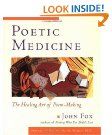
Poetic Medicine: The Healing Art of Poem-Making
By John Fox

Not a book of poetry, but a book that belongs on every poetry lover’s bookshelf. This is a book about the transformational nature of poetry – reading it, speaking it, writing it. Poetry as therapy. Poetry as a pathway to self-exploration. Poetry to rediscover your true voice. I was surprised how much I liked this book.


Transcendent Hindu verses…

Speaking of Siva
Translated by A. K. Ramanujan

This book became an immediate favorite of mine ever since I picked up a copy of it a few years ago. Stunning poems from the Shiva bhakti tradition of India. Basava, Devara Dasimayya, Akka Mahadevi, Allama Prabhu. The commentary in the book, though a little academic, is genuinely insightful. Enthusiastically recommended!

For Love of the Dark One: Songs of Mirabai
Translations by Andrew Schelling

Andrew Schelling’s translations embody that tension between heartbreak and ecstasy that runs through all of Mirabai’s poetry. These poems can be read as love poems or as spiritual poems — but, of course, they are both. A lovely collection.

And for blessings…

To Bless the Space Between Us: A Book of Blessings
by John O’Donohue

I keep being told by people how much they love this book of poetic blessings from the Irish philosopher, poet, and mystic, John O’Donohue. These poetically crafted blessings and meditations on the passages of life manage to elevate the spirit, warm the heart, and, on occasion, bring a tear to the eye.

For even more book recommendations, click here.


(Every year my list gets longer. Even so, I had to leave off so many amazing books.)


Let’s remember that, in the midst of winter’s dark, this is the time to renew the light — within ourselves and our world. Regardless of religion, may we recognize our shared brotherhood and sisterhood within the human family, all within the lap of the generous green earth that is our home.

I hope you and your loved ones have a wonderful holiday season — and that the new year offers you new life and new inspiration!

Ivan

No responses yet

Mar 13 2020

Mevlana Jelaluddin Rumi – Like This

Like This
by Mevlana Jelaluddin Rumi

English version by Jonathan Star

If someone asks,
“What does perfect beauty look like?”
Show him your own face and say,
Like this.

If someone asks,
“What does an angel’s wing look like?” — smile.
If he asks about divine fragrance
Pull him close, his face in your hair,
Like this.

If someone asks,
“How did Jesus bring the dead back to life?” —
Don’t say a word —
just kiss him softly on the cheek,
Like this.

If someone asks,
“How does it feel to be slain by love?”
Close your eyes and tear open your shirt,
Like this.

If someone asks about my stature,
Stare into space with your eyes wide open,
Like this.

The soul enters one body, then another.
If someone argues about this
Enter my house and wave him good-bye,
Like this.

I am the storehouse of all pleasure,
I am the pain of self-denial.
To see me, lower your eyes to the ground
Then raise them up to heaven,
Like this.

Only the gentle breeze
Knows the secret of union.
Listen as it whispers a song to every heart,
Like this.

If someone asks,
How does a servant attain the glory of God?
Become the shining candle
That every eye can see,
Like this.

I asked about Joseph’s perfume
Which rode the wind from city to city —
It was your scent
Blowing in from God’s perfect world,
Like this.

I asked how Joseph’s perfume
Gave sight to the blind —
It was your breeze
Clearing the darkness from my eyes,
Like this.

Perhaps Shams will be generous
And fill our hearts with love.
Perhaps he will raise one eyebrow
And cast us a glance,
Like this.

— from Rumi: In the Arms of the Beloved, by Jonathan Star


/ Image by Fadzly Mubin /

I was considering holding off on sending out a poem this week. I’ve been busy with my day job and rather tired, but mostly there are such important concerns demanding our attention — people are anxious about the coronavirus pandemic and, in the US, the elections. I don’t want to ignore these issues and share poems that can feel disconnected from people’s real worries.

Of course, poetry, especially sacred poetry, is not disconnected or merely ornamental. Poetry speaks to the heart of the matter much better than any headline. Poetry reminds us of our humanity… and our divinity. It is an exploration of feeling and perception and reality. It leads us into an open field with unanticipated possibilities. It is our companion in grief and fear, and it gives us words for our exultation and raptures. Poetry allows us to be more fully ourselves. It invites us to fill out our lives with a richer sense of who we are.

So more poetry not less.

Like this.

=

Have a beautiful weekend. Be appropriately aware and cautious, but don’t give in to paranoia. The real sickness being spread by this disease is a breakdown of human connection within society. Find a healthy balance that keeps a warm, supportive sense of community alive.


Recommended Books: Mevlana Jelaluddin Rumi

The Longing in Between: Sacred Poetry from Around the World (A Poetry Chaikhana Anthology) Poetry for the Spirit: Poems of Universal Wisdom and Beauty This Dance of Bliss: Ecstatic Poetry from Around the World Music of a Distant Drum: Classical Arabic, Persian, Turkish & Hebrew Poems Perfume of the Desert: Inspirations from Sufi Wisdom
More Books >>


Mevlana Jelaluddin Rumi, Mevlana Jelaluddin Rumi poetry, Muslim / Sufi poetry Mevlana Jelaluddin Rumi

Afghanistan & Turkey (1207 – 1273) Timeline
Muslim / Sufi

Continue Reading »

8 responses so far

Feb 05 2020

Ivan M. Granger – Thief of hearts

Thief of hearts
by Ivan M. Granger

Thief of hearts,
you have ransacked
this beggar’s hut,
left me
nothing.

All I see
now
is the print
of your pilfering hand
everywhere.

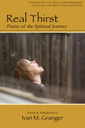
— from Real Thirst: Poetry of the Spiritual Journey, by Ivan M. Granger


/ Image by notsogoodphotography /

It has been a while since I featured one of my own poems. Here is one for you today in homage to that “thief of hearts,” who is, of course, the Beloved, God.

Let’s face it, from the ego’s point-of-view, the relationship with the Divine is a problematic one. What the heart recognizes as liberation, the ego sees as theft. It’s really very funny… when we’re not tormented by the spiritual dilemma, that is.

All that the ego claims as its own slips from its grip. Control and possession define the ego. So what is it to do when the master thief breaks into the awareness and reveals everything to be the filmy stuff of dreams and light?

In that ultimate moment, however, the emerging bliss is so all-pervasive that even the drowning ego laughs with its last gasp.

Something I thought I’d point out about the poem’s structure: The poem itself is a pair of thieving hands. It has two groups of five lines, suggesting two hands with five fingers each.

Also, notice that the lines “left me / nothing” are intentionally ambiguous. They could be saying that the thief of hearts has left me with nothing — having taken everything — or perhaps it is saying the thief has left me as nothing — without identity or sense of ego.

The line breaks for “All I see / now” leads the unconscious mind to read several layers of meaning into the lines. Some part of the awareness will read that first line as a complete statement of its own: “I see all.” To follow with the single word “now” snaps the awareness into the present moment. When one sees all, one is fully present, now. Or, when one sees, all is in the present moment.

In this supremely full moment, the “pilfering hand” has removed everything. The world normally perceived as a scattered collection of disconnected people and objects disappears. But — and here’s another secret — that hand secretly gives as it takes. The “print” of that hand leaves us, instead, within a magical universe filled with immensity and life and a giddy sense of being that flows everywhere.

===

Too much explanation? Maybe we should just let the poem itself do its work…


Recommended Books: Ivan M. Granger

The Longing in Between: Sacred Poetry from Around the World (A Poetry Chaikhana Anthology) This Dance of Bliss: Ecstatic Poetry from Around the World Real Thirst: Poetry of the Spiritual Journey For Lovers of God Everywhere: Poems of the Christian Mystics Diamond Cutters: Visionary Poets in America, Britain & Oceania
More Books >>


Ivan M. Granger, Ivan M. Granger poetry, Secular or Eclectic poetry Ivan M. Granger

US (1969 – )
Secular or Eclectic
Yoga / Hindu : Advaita / Non-Dualist

Continue Reading »

12 responses so far

Dec 17 2019

Gabriel Rosenstock – frosty morning

frosty morning
by Gabriel Rosenstock

frosty morning
      a robin bares his breast
            to the whole world

— from Haiku Enlightenment: New Expanded Edition, by Gabriel Rosenstock


/ Image by Richard Towell /

A frosty morning here in Colorado.

It still has that special sense of life to me, like a newborn: the Poetry Chaikhana’s latest publication, Haiku Enlightenment, by Gabriel Rosenstock. I couldn’t help but feature another selection from its pages, this by the author himself.

Remember poetry when you are planning gifts and maybe a year-end treat for yourself. Purchasing a copy of Haiku Enlightenment is a wonderful way to welcome the magic of haiku into your home, as well as Gabriel’s inspired observations on haiku as a pathway of awareness, compassion, and reconnection. And, of course, your purchase helps support the Poetry Chaikhana.

If you are on Facebook, I have just set up new Haiku Enlightenment Facebook page inspired by the new book. Personally, I’m always happy to see a haiku or short poem slip into my FB newsfeed when I check it — a secret invitation to pause, take a breath, and notice the world again. I invite you to visit and hang out with the haiku.

Okay, time to step out into that chilly morning and fill my lungs with the crisp air. The world awaits.

Have a beautiful day!


Recommended Books: Gabriel Rosenstock

The Longing in Between: Sacred Poetry from Around the World (A Poetry Chaikhana Anthology) Bliain an Bhandé – Year of the Goddess Haiku Enlightenment: New Expanded Edition Uttering Her Name Where Light Begins: Haiku
More Books >>


Gabriel Rosenstock, Gabriel Rosenstock poetry, Secular or Eclectic poetry Gabriel Rosenstock

Ireland (1949 – )
Secular or Eclectic
Primal/Tribal/Shamanic : Celtic

Continue Reading »

One response so far

Sep 12 2018

Statement about Amazon

Amazon has been in the news lately and rightly criticized for the absurd sums of money claimed by the CEO while many of its employees earn poverty wages and lack basic job security. Amazon is just one of the more notable companies among far too many that have come to embody a brutal and predatory corporate mindset.

But given how ubiquitous Amazon is in the world of online book sales, I have not yet come up with an entirely satisfying alternative that will work for everyone.

I regularly point out that Poetry Chaikhana books are available through other online sources, like Barnes & Noble, but they don’t cater to as many countries around the globe, and the Poetry Chaikhana is a global community.

There is also the more direct approach: I can take orders and ship the books myself, as I have been doing with the recent pre-orders for This Dance of Bliss. That is something I have generally done only for limited periods of time, when I want to offer personally inscribed books. My hesitation to do that on a more regular basis is primarily because I do my Poetry Chaikhana work in my spare time. Poetry Chaikhana publications provide some welcome income, but it is not yet enough to allow me to lessen my commitments to my day job. As many of you are aware, I need to be especially careful with my time and energy because of the chronic fatigue patterns I deal with, so I can’t casually add to my weekly workload. Even so, I am giving this option some serious thought.

One of the most positive ways to purchase Poetry Chaikhana books, in my opinion, is to request them through your local independent bookstore. I receive less of a sales royalty that way, but when you purchase through a neighborhood brick-and-mortar bookstore, you are supporting a local business, you get to chat with interesting people who love books, and it’s an excuse to browse their shelves for other hidden treasures. Bookstores build communities.

If you have other good recommendations, please share them with me. I welcome your suggestions.

2 responses so far

Aug 20 2018

Book Announcement: This Dance of Bliss

It’s ready! I am so happy to announce the publication of the latest Poetry Chaikhana anthology:

This Dance of Bliss, Ecstatic Poetry from Around the World, A Poetry Chaikhana Anthology, Ivan M. Granger


This Dance of Bliss

Ecstatic Poetry From Around the World
A Poetry Chaikhana Anthology


This Dance of Bliss is a new collection poems by beloved classical sacred poets along with a few modern visionaries — accompanied by my own thoughts, meditations, personal stories, and commentary.

The new anthology will officially be available in late September through Amazon and Barnes & Noble, as well as by request through your local independent bookstore.

But I wasn’t planning on making you wait that long.

For the Poetry Chaikhana community, I am offering a special pre-order deal on This Dance of Bliss. If your purchase a copy directly through the Poetry Chaikhana before September 1st–

  • You will receive a discounted price of $12.95 (rather than the regular retail price of $16.95 USD)
  • I will personally autograph your copy
  • You will receive a special extra or two, like a Poetry Chaikhana bookmark
  • Most importantly, you will be helping me greatly by making sure we cover initial publication expenses
This Dance of Bliss, Ecstatic Poetry from Around the World, A Poetry Chaikhana Anthology, Ivan M. Granger This Dance of Bliss
Ecstatic Poetry From Around the World

A Poetry Chaikhana Anthology

Edited with Commentary by Ivan M. Granger

Pre-Order
before Sept. 1

$12.95
$16.95


PURCHASE
This Dance of Bliss is an inspiring collection of poems and wisdom stories from the world’s great sacred traditions. Rumi, St. John of the Cross, Lalla, Goethe, Hildegard von Bingen, Dogen, Khayyam, and many others gather together within these pages to sing their ecstatic songs.

Ivan M. Granger accompanies each poem with his own reflections and meditative commentaries, inviting us to explore the insights and private raptures of these mystics, seers, and saints-until we too are swept up in this dance of bliss!


Available soon through Amazon, Barnes & Noble,
and by request through your local bookseller


This book is a treasure, a feast, an oasis. Ivan M. Granger’s profound gift for selecting the kind of poetry that lights up the cave of the heart and melts the boundaries between the soul and the Divine is fully met by his lucid reflections on the soul-transfiguring power of each piece in this magnificent collection.
     ~ MIRABAI STARR, author of God of Love: A Guide to the Heart of Judaism, Christianity & Islam


To purchase a special pre-order copy of This Dance of Bliss click here or the ‘Purchase’ link above for payment through PayPal.

     If you prefer to pay by check or money order, you can mail it to:

     Poetry Chaikhana
     PO Box 2320
     Boulder, CO 80306

Shipping and handling: $4.50 US, $7.50 Canada, $12.00 International.
(Payments should be made in US funds to “Poetry Chaikhana.”
And please don’t forget to include your mailing address.)

All pre-order copies will be shipped as soon as they are available, which will be at the beginning of September.

This Dance of Bliss, Ecstatic Poetry from Around the World, A Poetry Chaikhana Anthology, Ivan M. Granger


This Dance of Bliss

Ecstatic Poetry From Around the World
A Poetry Chaikhana Anthology


Here is a small sampling from This Dance of Bliss.

You can read more by clicking here: Read More:
Table of Contents + Introduction + Sample Poems


A hundred flowers in spring, the moon in autumn,
the breeze in summer, in winter snow.
When the mind is unclouded,
this is the best season of life.


Wu Men

IMG


A hundred flowers in spring, the moon in autumn,
the breeze in summer, in winter snow.

The shifting seasons against the living canvas of the world invite us to notice the cycles of life, how everything flows and changes and returns again. Because the world is filled with life, nothing remains the same. Everything grows and changes and comes around again renewed.

When the mind is unclouded…

Watching that flow, we witness such beauty. But we can only truly see it we let the mind quiet and become clear.

In such moments, a fullness of the soul overwhelms us. We become creatures of silent delight, content and complete in ourselves as we watch the parade of life’s seasons move past, leaving us fully alive in this very moment.

…this is the best season of life.


The sum total of our life is a breath
spent in the company of the Beloved.

Abu-Said Abil-Kheir
English version by Vraje Abramian


I find it intriguing that “breath” and “life” and “spirit” are synonyms in many languages. When you read sacred writings and the word “spirit” is used, substitute the word “breath” and see how the meaning changes and expands.

The relationship between breath, life, and spirit is more profound than the observation that the living breathe and the dead do not.

We think in terms of borders and boundaries, constantly noting what separates ourselves, mentally and physically, from everything else. But the reality is that there is a constant flow of awareness across those borders. Every one of us has the unseen movement of the breath. Through the breath, what is outside comes inside. What is non-self becomes self. And what was self is released again out into the world. This is communion, nothing less.

That inbreath of yours is the outbreath of another. The air we breathe is the breath of all.

A deep breath opens the chest and expands the heart. A full breath requires us to feel. We feel ourselves, and we feel others. Feeling, too, is communion. When feeling is shut down, the breath is shut down, and life has become limited.

The current of the breath continuously teaches us that the boundaries of self exist only in the mental map. In reality, we flow out into the universe, and the universe flows back in. The only way to secure our borders is to stop breathing, which is, of course, death. Life requires breath, and we live in each other, within the same shared breath.

When we really breathe, we might just come to the same conclusion as the poet: An individual’s lifetime may be brief or long, the experiences of life may be lasting or fleeting, but this communal breath-life-spirit in which we participate is the very breath of the Beloved.


Whoever finds love
beneath hurt and grief
disappears into emptiness
with a thousand new disguises

Rumi
English version by Coleman Barks


Ivan M. Granger writes as though God is looking over his shoulder. He inspires appreciation of the literature of awakening as he inspires the reader’s own heart awakening. This anthology features poetic masterpieces from around the world, each one revealing the profound interconnectedness of all things. The comments accompanying each selection are direct and engaging, unfolding layers of meaning, further enhancing the themes of union, interconnection, and non-separation.”
     ~ JERRY KATZ, editor of One: Essential Writings on Nonduality


This Dance of Bliss, Ecstatic Poetry from Around the World, A Poetry Chaikhana Anthology, Ivan M. Granger


This Dance of Bliss

Ecstatic Poetry From Around the World
A Poetry Chaikhana Anthology

Ivan M. Granger Consider purchasing a pre-order copy of This Dance of Bliss in support of the Poetry Chaikhana!

And thank you to everyone for all of the encouragement and support along the way!

Ivan

2 responses so far

Aug 15 2018

New Anthology Almost Ready

I know, I haven’t sent a poem out for the last couple of weeks. The reason is that I have been deep into the final edits on the printed proof of the new Poetry Chaikhana anthology.

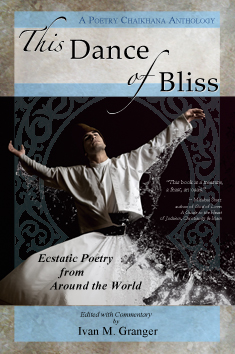
The new book will be called This Dance of Bliss: Ecstatic Poetry from Around the World. Here’s an advanced glimpse at the cover:

I’m so pleased with how it is coming together. I hope you will be too. Like the previous Poetry Chaikhana anthology, This Dance of Bliss will feature historical sacred poets along with a few contemporary voices. Rumi, St. John of the Cross, Lalla, Goethe, Hildegard von Bingen, Dogen, Khayyam, and many other favorites. Each poem is accompanied by the same sort of short meditations, musings, and commentaries you know so well from these emails. I will share more of a sampling from the book soon.

Several of you have already asked about pre-ordering copies of the book and, yes, I will be making this new anthology available for pre-orders very soon. Pre-ordered copies will come with a discount and a few other extras. Stay tuned!

As I bring this new anthology to publication, I may not be able maintain my normal weekly pattern with these poem emails. I am also trying to keep my work hours up at my day job, which is not always an easy balance, so sometimes these poem emails have had to wait. But the new book is very nearly ready — and then we call all join in on this dance of bliss!

One response so far

Aug 08 2018

New Anthology Book Cover

Last week I received the printed proof copy of the new Poetry Chaikhana anthology, and I am now deep into reading it and making final edits to the text.

Here’s an advanced peek at the cover–

3 responses so far

Jul 05 2018

Poems Once a Week (for now)

I have shifted to a rhythm of sending out poems once a week. Partly this is because I am dedicating more of my available time to completion of the new anthology. The other reason is purely financial. Recently, I shifted over to a new emailing service for these poetry emails. All seems to be going well, and they solved several technical issues that I had dealing with for some time. While their price is reasonable for higher volume of emails, they have an offer that saves considerable expense if I send out these emails once a week.

For both reasons, one email a week makes sense for now. Let me know what you think. Is one poem email per week enough? Or is it worth a bit of extra expense to switch back to several emails per week, once the new anthology is available?

5 responses so far

Jun 27 2018

New Anthology Update & Request for Help with Proofreading

The new Poetry Chaikhana anthology is now at a point that I can tell you a bit more about it. The manuscript is complete and I have all of the necessary poem permissions. It is now in the final stages of editing. I now am putting the final touches on the book cover design.

It is taking its final form.

The next step is to do a final proofreading. Since the anthology includes my commentary and poet biographies, as well as the poems themselves, there is a plenty to review (and plenty to enjoy as a reader!). Volunteer proofreaders were a great help with the previous anthology-I’d love to ask once again for your help. Ideally, I would like half a dozen or more people, and I will send each person a small section of pages to look over. You don’t need to be a professional proofreader, but it helps to have a keen eye, a solid sense of English grammar, and maybe just a drop of OCD.

I will gladly send a copy of the new anthology as a thank you for your help when it is published.

If you’d like to help with the proofreading, please let me know by sending me a note at ivan@poetry-chaikhana.com. Thank you so much!

Once the proofreading is done, I still have some marketing and publishing details to take care of, and then the book goes to the printers-and we have our new book!

2 responses so far

Jun 27 2018

The Story of Tea

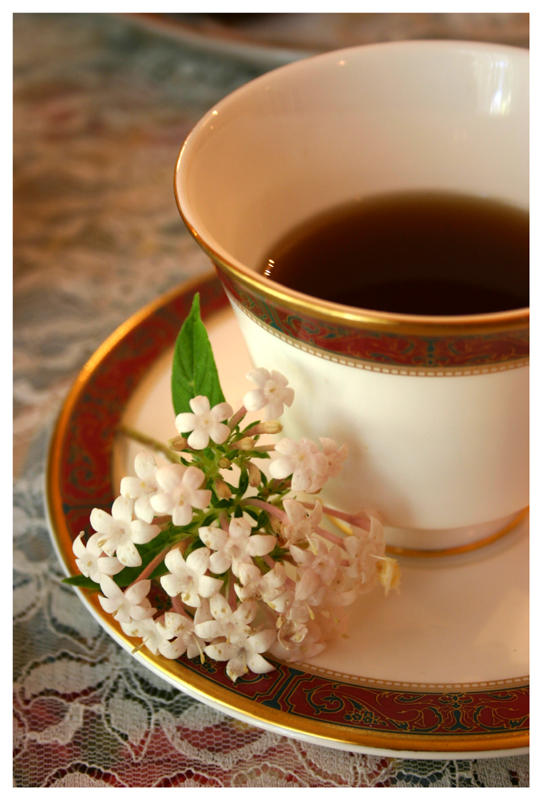
I often get asked what a “chaikhana” is. The short answer is that it is a tea house. (Chai = tea). The inevitable second question is, why a “poetry chaikhana”? What does poetry, especially sacred poetry, have to do with tea? The act of sipping tea naturally has a contemplative quality to it, but there’s a deeper reason why I chose the name Poetry Chaikhana all those years ago. It was inspired by a Sufi story–


/ Photo by Doubtful-Della /

The Story of Tea

In ancient times, tea was not known outside China. Rumours of its existence had reached the wise and the unwise of other countries, and each tried to find out what it was in accordance with what he wanted or what he thought it should be.

The King of Inja (‘here’) sent an embassy to China, and they were given tea by the Chinese Emperor. But, since they saw that the peasants drank it too, they concluded that it was not fit for their royal master: and, furthermore, that the Chinese Emperor was trying to deceive them, passing off some other substance for the celestial drink.

The greatest philosopher of Anja (‘there’) collected all the information he could about tea, and concluded that it must be a substance which existed but rarely, and was of another order than anything then known. For was it not referred to as being an herb, a water, green, black, sometimes bitter, sometimes sweet?

In the countries of Koshish and Bebinem, for centuries the people tested all the herbs they could find. Many were poisoned, all were disappointed. For nobody had brought the tea-plant to their lands, and thus they could not find it. They also drank all the liquids which they could find, but to no avail.

In the territory of Mazhab (‘Sectarianism’) a small bag of tea was carried in procession before the people as they went on their religious observances. Nobody thought of tasting it: indeed, nobody knew how. All were convinced that the tea itself had a magical quality. A wise man said: ‘Pour upon it boiling water, ye ignorant ones!’ They hanged him and nailed him up, because to do this, according to their belief, would mean the destruction of their tea. This showed that he was an enemy of their religion.

Before he died, he had told his secret to a few, and they managed to obtain some tea and drink it secretly. When anyone said: ‘What are you doing?’ they answered: ‘It is but medicine which we take for a certain disease.’

And so it was throughout the world. Tea had actually been seen growing by some, who did not recognize it. It had been given to others to drink, but they thought it the beverage of the common people. It had been in the possession of others, and they worshipped it. Outside China, only a few people actually drank it, and those covertly.

Then came a man of knowledge, who said to the merchants of tea, and the drinkers of tea, and to others: ‘He who tastes, knows. He who tastes not, knows not. Instead of talking about the celestial beverage, say nothing, but offer it at your banquets. Those who like it will ask for more. Those who do not, will show that they are not fitted to be tea-drinkers. Close the shop of argument and mystery. Open the teahouse of experience.’

The tea was brought from one stage to another along the Silk Road, and whenever a merchant carrying jade or gems or silk would pause to rest, he would make tea, and offer it to such people as were near him, whether they were aware of the repute of tea or not. This was the beginning of the Chaikhanas, the teahouses which were established all the way from Peking to Bokhara and Samarkand. And those who tasted, knew.

At first, mark well, it was only the great and the pretended men of wisdom who sought the celestial drink and who also exclaimed: ‘But this is only dried leaves!’ or: ‘Why do you boil water, stranger, when all I want is the celestial drink?’, or yet again: ‘How do I know that this is? Prove it to me. Besides the colour of the liquid is not golden, but ochre!’

When the truth was known, and when the tea was brought for all who would taste, the roles were reversed, and the only people who said things like the great and intelligent had said were the absolute fools. And such is the case to this day.

– Ayn al-Qozat Hamadani (1098 – 1131)

Tales of the Dervishes: Teaching Stories of the Sufi Masters over the Past Thousand Years
by Idries Shah

In this way, I hope the poems and thoughts I share through the Poetry Chaikhana bring a hint of that celestial drink to your lips. These are poems not to be praised for mere artistry, not to be worshipped from afar, not to be exclusively studied or analyzed. These are poems to be tasted. They are meant to be imbibed until we feel warmth in the belly and sweetness in the heart.

‘He who tastes, knows. He who tastes not, knows not… Close the shop of argument and mystery. Open the teahouse of experience.’

Have a beautiful day! I think I’m going to go to the local teahouse and order a tall glass of tea!

2 responses so far

May 30 2018

Hiatus and Health

My apologies for the unannounced hiatus in posting these poems. I went through a rather challenging bout of chronic fatigue/ME and I needed to gather my energies together to keep basic hours with my day job as a computer programmer. But I seem to be on the rebound now and I hope these posts will be more regular again.

One response so far

« Prev - Next »